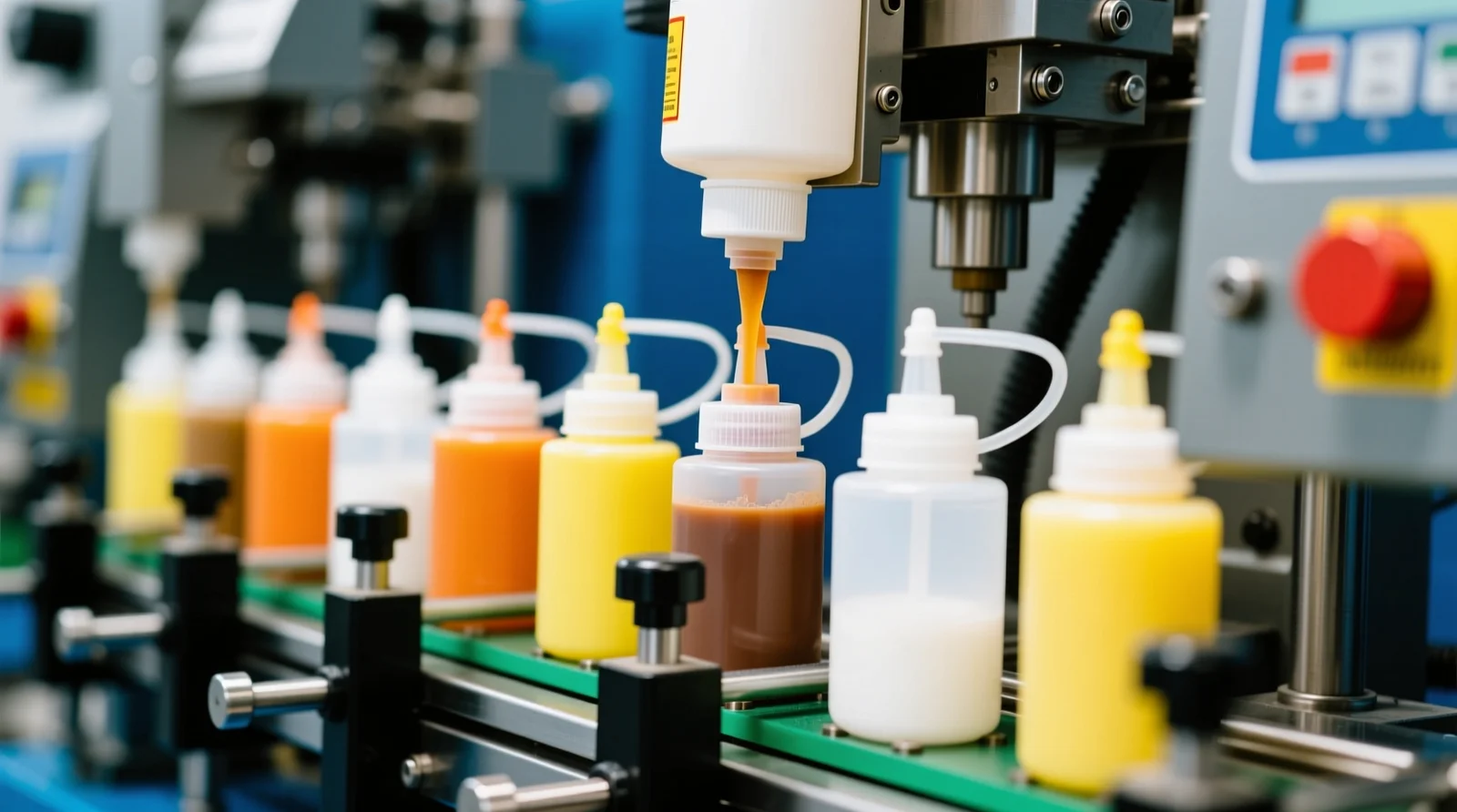
Last updated: September 8, 2026. A sealing machine is the equipment that closes a package so its contents stay in and the environment stays out. That single job splits into very different machines: a heated band closing a poly bag, a tray sealer welding film to a tray flange, a vacuum chamber pulling air out of a pouch before it seals, an induction sealer melting a foil liner inside a bottle cap, and a can seamer rolling a double seam. Choosing one starts with naming the closure problem precisely — the package format, the product's shelf-life requirement and the seal strength that must be guaranteed.
The core idea of this page: “sealing machine” is one phrase covering five different closure problems — heat, tray, vacuum, induction and seaming. The package names the machine: fix the package format first, and every other decision follows. The rest of this guide is the map from package to machine.
The five closing methods that cover most packaging
| Method | How it closes | Typical formats | Shelf-life lever | What to verify |
|---|---|---|---|---|
| Heat (impulse / band) sealing | Heated elements or bands melt and weld thermoplastic film | Poly bags, pouches, sachets | None — closure only | Seal width, temperature, dwell |
| Tray sealing | Heated tool presses lidding film onto a tray flange | MAP trays, ready meals, fresh produce | Gas atmosphere (MAP) | Seal integrity, residual oxygen |
| Vacuum chamber sealing | Air is evacuated from a chamber, then the bag is sealed | Vacuum pouches for meat, cheese | Oxygen removal | Residual oxygen, seal fusion |
| Induction sealing | A magnetic field heats a foil liner inside the cap | Bottles, jars, closures | Hermetic + tamper evidence | Torque, liner bond, leak test |
| Can seaming | Rollers fold lid and body flanges into a double seam | Metal cans | Hermetic, retort-capable | Seam overlap, tightness, teardown |
Heat sealing: the workhorse for flexible film
Heat sealing welds two layers of thermoplastic film by pressing them between heated elements (impulse or constant-heat) or passing them through heated bands. The bond forms when the polymer surfaces reach their sealing range and flow together under pressure, then cool while still compressed. The engineering variables are temperature, pressure and dwell time — and they interact: a hotter jaw needs less dwell, but too hot burns through; too cool leaves a weak peelable weld that fails the drop test. The actual sealing window is film-specific — it depends on the seal-layer polymer, the film thickness and the machine — so the recipe must be developed on your real film, not copied from a handbook.
Band sealers like the Hualian FR-900 run filled bags continuously between two heated bands and are the standard entry machine for poly bags; impulse sealers use a ribbon element that heats only during the seal cycle — cheap, but slower and less consistent than constant-heat jaws on long shifts.
Tray sealing and MAP: closing the flange, controlling the atmosphere
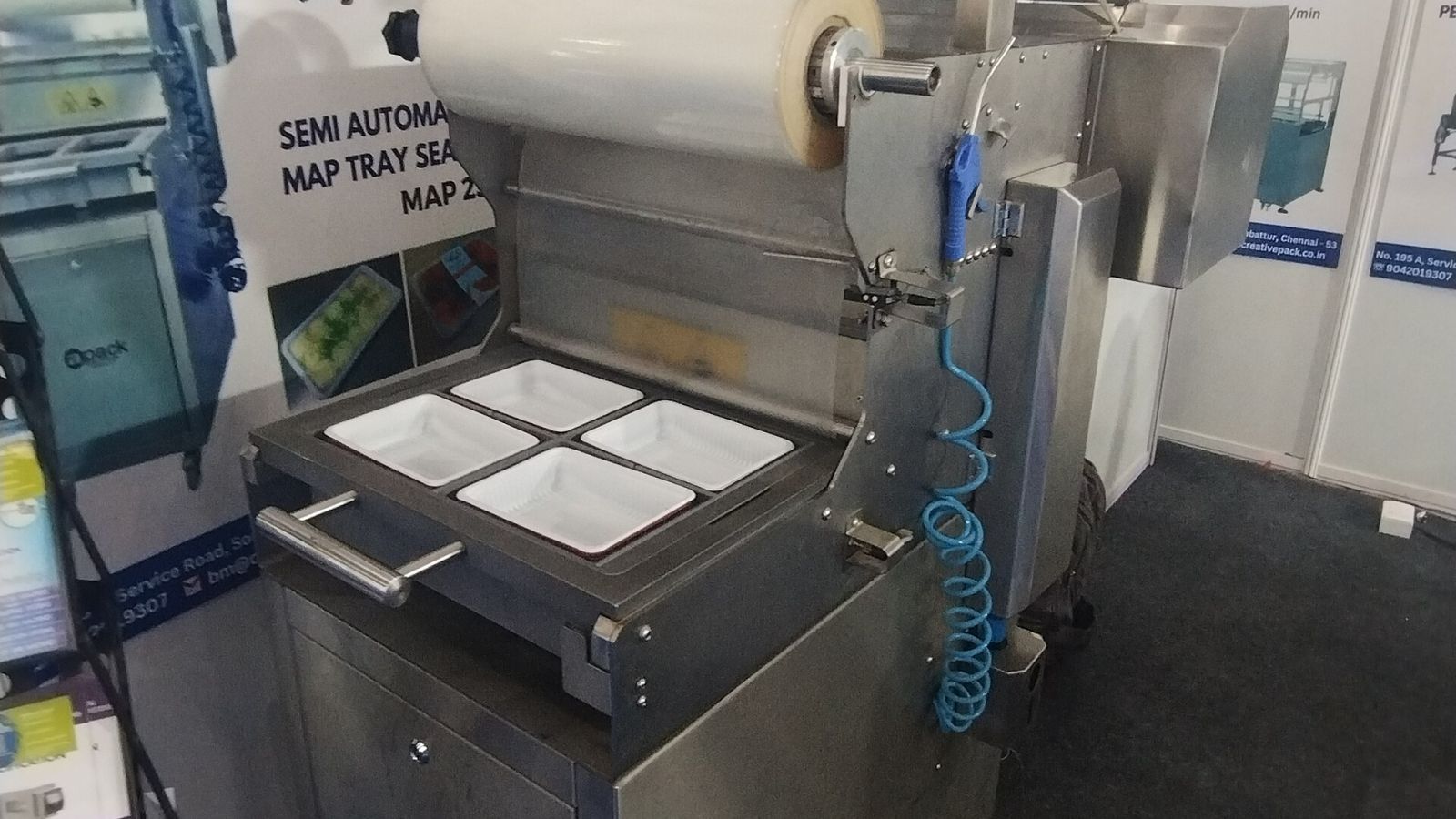
A tray sealer presses a heated sealing tool onto a preformed tray carrying lidding film, welding the film to the tray flange. Before the weld, MAP versions flush the headspace with a protective gas mixture, which is why seal integrity and gas composition are inseparable: a perfect-looking seal that leaks has already wasted the gas flush. The right mixture is product-specific — research on beef steaks, for example, documents 70% oxygen / 30% carbon dioxide MAP for keeping the bright red colour, and gas suppliers publish product-specific mixture guidance for raw red meat and raw poultry. After sealing, the headspace composition is verified with a gas analyser — the instrument, not the operator's eye, is the acceptance tool. See Modified Atmosphere Packaging (MAP) for the gas side, and How a Tray Sealer Works for the machine sequence.
Representative platforms: Proseal GT2s, Sealpac A7, G.Mondini Trave LC and Ulma TSA 680. These compete on sealing speed, tool-change time and format reach (MAP, vacuum skin, fibre-based lidding) more than on headline speed alone.
Vacuum sealing: removing air before closing
Vacuum sealing evacuates air from the package before the seal is made, so the product is held under atmospheric pressure with minimal residual oxygen. Chamber machines place the whole bag inside a vacuum chamber and draw a hard vacuum before the seal bar closes the bag; external machines draw only the bag mouth. Chamber machines are the industrial standard for meat, cheese and prepared food, and scale from tabletop units to automatic belt chambers. The machine class is covered in Tray Sealing vs Vacuum Chamber Sealing.
Induction sealing: closing the cap from the inside
Induction sealing welds a foil liner inside a bottle or jar cap without touching the cap. A sealing head under the conveyor generates an electromagnetic field that induces eddy currents in the foil, heating it until the polymer coating bonds to the container lip. The result is a hermetic, tamper-evident closure. The physics is explained in How Induction Sealing Works, and the technology choice against heat sealing in Heat Sealing vs Induction Sealing. The benchmark machine is the Enercon Super Seal Max.
Can seaming: a mechanical, not thermal, closure
Can sealing (seaming) folds the lid curl and body flange together into a double seam with rollers — no heat, no film. Because a failed seam is a food-safety failure, seamers are bought with seam inspection: teardown gauges measure seam tightness, overlap and body hook. Machines like the Levapack can sealer serve small and mid-size canning lines.
How to choose: the four questions in order
- Name the package: poly bag, preformed tray, vacuum pouch, bottle or can. The format picks the method — nothing else matters until this is fixed.
- Name the shelf-life requirement: if the product needs gas flushing or vacuum, you are in tray sealing or vacuum chamber territory, and seal verification becomes a line requirement, not an option.
- Name the output: impulse and band sealers cover low output; automatic tray sealers and belt chambers cover industrial rates; induction sealers scale from benchtop to high-speed beverage lines.
- Define the acceptance test: agree seal-strength testing (peel methods such as ASTM F88), leak testing and — for MAP — headspace gas verification before the order. Budget numbers by type are in the Sealing Machine Price Guide; the vendor shortlist starts with the Top 10 Sealing Machine Manufacturers.
Where to go next from this page
- Deciding between machine classes: Tray Sealing vs Vacuum Chamber Sealing, Heat Sealing vs Induction Sealing, MAP vs Vacuum Skin Packaging
- Understanding the machines: How a Tray Sealer Works, How Induction Sealing Works, Modified Atmosphere Packaging (MAP)
- Budget and vendors: Sealing Machine Price Guide, Top 10 Sealing Machine Manufacturers
Last verified: September 8, 2026.