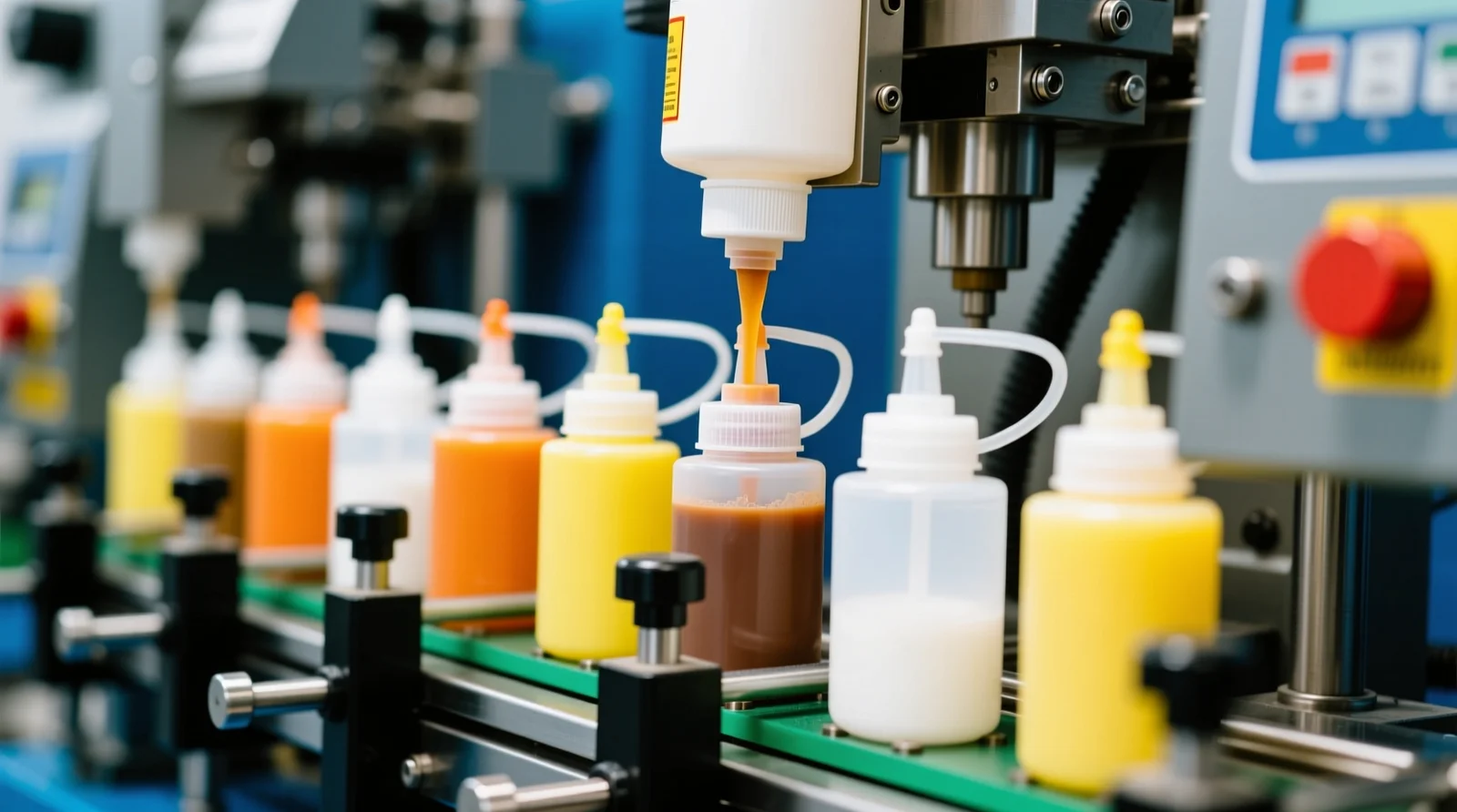
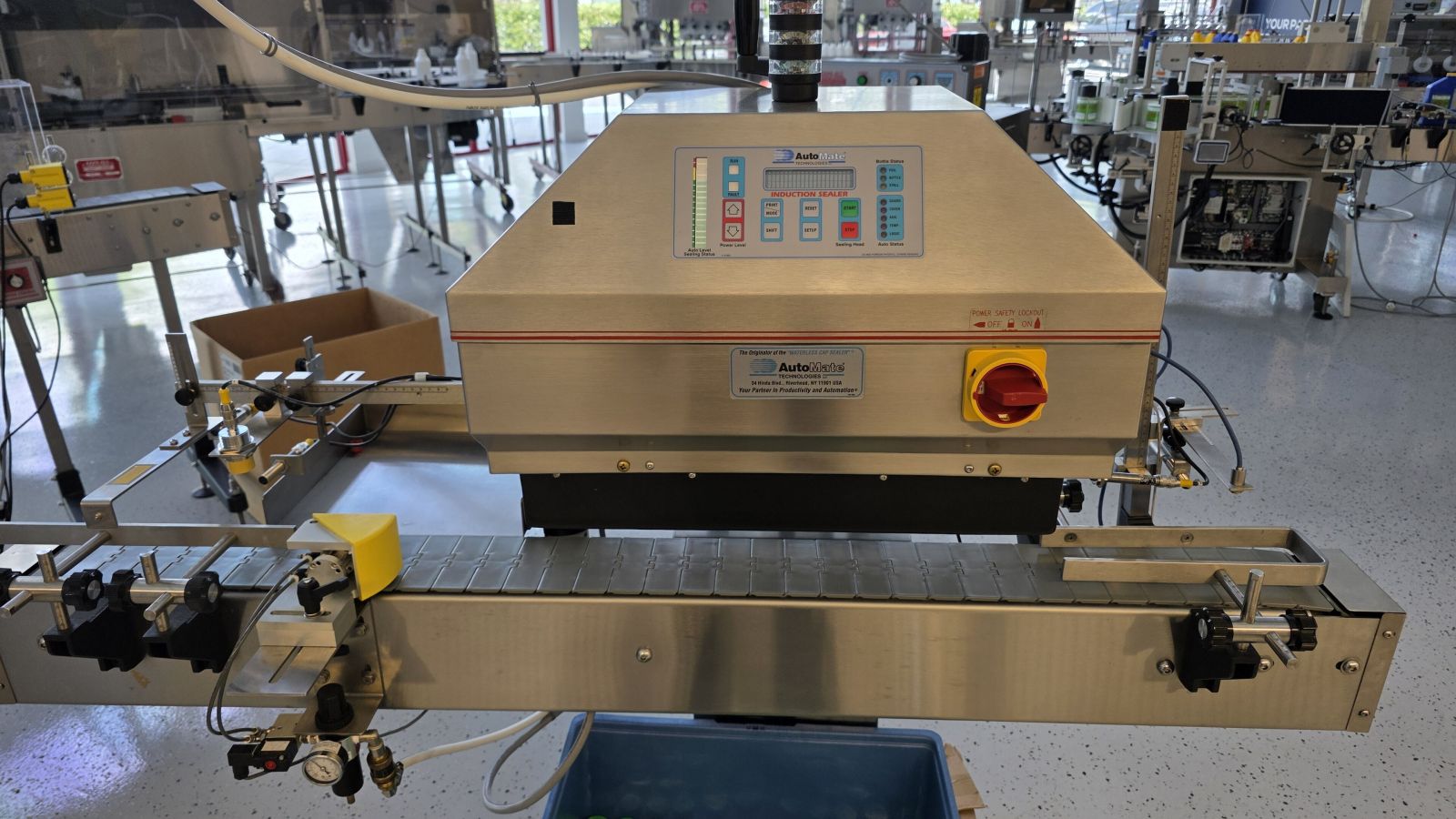
The core idea of this page: induction sealing welds a foil liner inside a bottle cap by generating heat inside the foil with an electromagnetic field — no contact, no open flame. It produces a hermetic, tamper-evident seal that a heat sealer on film cannot. Choose it when you need a leak-proof, tamper-evident closure on a bottle or jar.
For the machine landscape, see Heat Sealing vs Induction Sealing and Top 10 Sealing Machine Manufacturers.
How induction sealing works
The foil liner
The cap contains a multi-layer liner: a foil layer, a heat-seal layer that bonds to the container lip, and a backing. The liner is placed in the cap before capping.
The sealing head
After capping, the container passes under an induction sealing head. The head generates a high-frequency electromagnetic field, which induces eddy currents in the foil liner — heating the foil and melting the heat-seal layer onto the container lip.
The result
The foil bonds to the rim to form a hermetic, tamper-evident seal under the cap. The consumer must break the foil to open the pack — which is the tamper-evidence and the leak-proofing.
Failure modes to design around
- Liner or cap mismatch. The liner must match the cap and container material; a liner that is too small or the wrong heat-seal layer does not bond.
- Under-sealing. Too little power or too fast a line leaves an incomplete bond — the pack leaks and the tamper-evidence fails.
- Over-sealing. Too much power overheats the liner and can damage the product or the cap.
- Head alignment. The sealing head must sit at the right distance and alignment over the cap for even heating.
How to verify an induction sealer
- Seal-integrity test: apply pressure or a vacuum to sealed containers and confirm no leak.
- Tamper-evidence check: confirm the foil tears when the cap is first opened.
- Line-speed tuning: confirm the seal holds at your line speed on your container and cap.
- Liner compatibility: confirm the liner and heat-seal layer match your container material.
Frequently asked questions
Is induction sealing the same as heat sealing?
No — heat sealing presses heated elements onto film; induction sealing heats a foil liner inside the cap with an electromagnetic field. They close different package features.
Does induction sealing work on any container?
No — it needs a conductive foil liner and a compatible cap and neck. Plastic and glass containers both work if the liner is right.
Why is induction sealing tamper-evident?
The foil bonds to the container rim, so the consumer must break the foil to open the pack — the break is visible evidence of tampering.
Related guides
- Sealing Machines: Top 10 Tray Sealers Compared (2026) — Five automatic tray sealers compared across sealing capability, format…
- Tray Sealing vs Vacuum Chamber Sealing: Which Closure Fits Your Pack — Tray sealing and vacuum chamber sealing solve different closure proble…
- Heat Sealing vs Induction Sealing: Closing Methods Compared — Heat sealing welds film with heated elements; induction sealing welds …
- MAP vs Vacuum Skin Packaging: Sealing for Shelf Life — MAP gas-flushes a tray headspace; vacuum skin packaging draws the film…
- Modified Atmosphere Packaging (MAP): Gases, Sealing and Shelf Life — modified atmosphere packaging (MAP) extends shelf life by replacing th…
- How a Tray Sealer Works: Film Feed, Gas Flush and Seal — a tray sealer welds a lidding film onto a rigid preformed tray in a se…
- Top 10 Sealing & Tray Sealing Machine Manufacturers Global (2026 Edition) — An independent ranking of the top global sealing machine manufacturers…
- Top 10 China Sealing Machine Manufacturers (2026) — An independent ranking of Chinese sealing machine builders across band…
Last verified: September 10, 2026.