Enterprise Selection and Procurement Guide
When enterprises invest in new equipment—especially high-capacity machinery such as bottling or liquid filling machines—the selection and procurement process becomes a strategic decision. This guide helps decision-makers evaluate technology options based on operational efficiency, cost-effectiveness, production compatibility, and long-term ROI. By taking a structured approach, businesses can align procurement with their production goals, budgets, and scalability needs.
Enterprise Liquid Filling Machine Selection Guide (From Requirements to Decision)
1. Clarify Product Characteristics (Shape, Viscosity, Weight, Fragility)
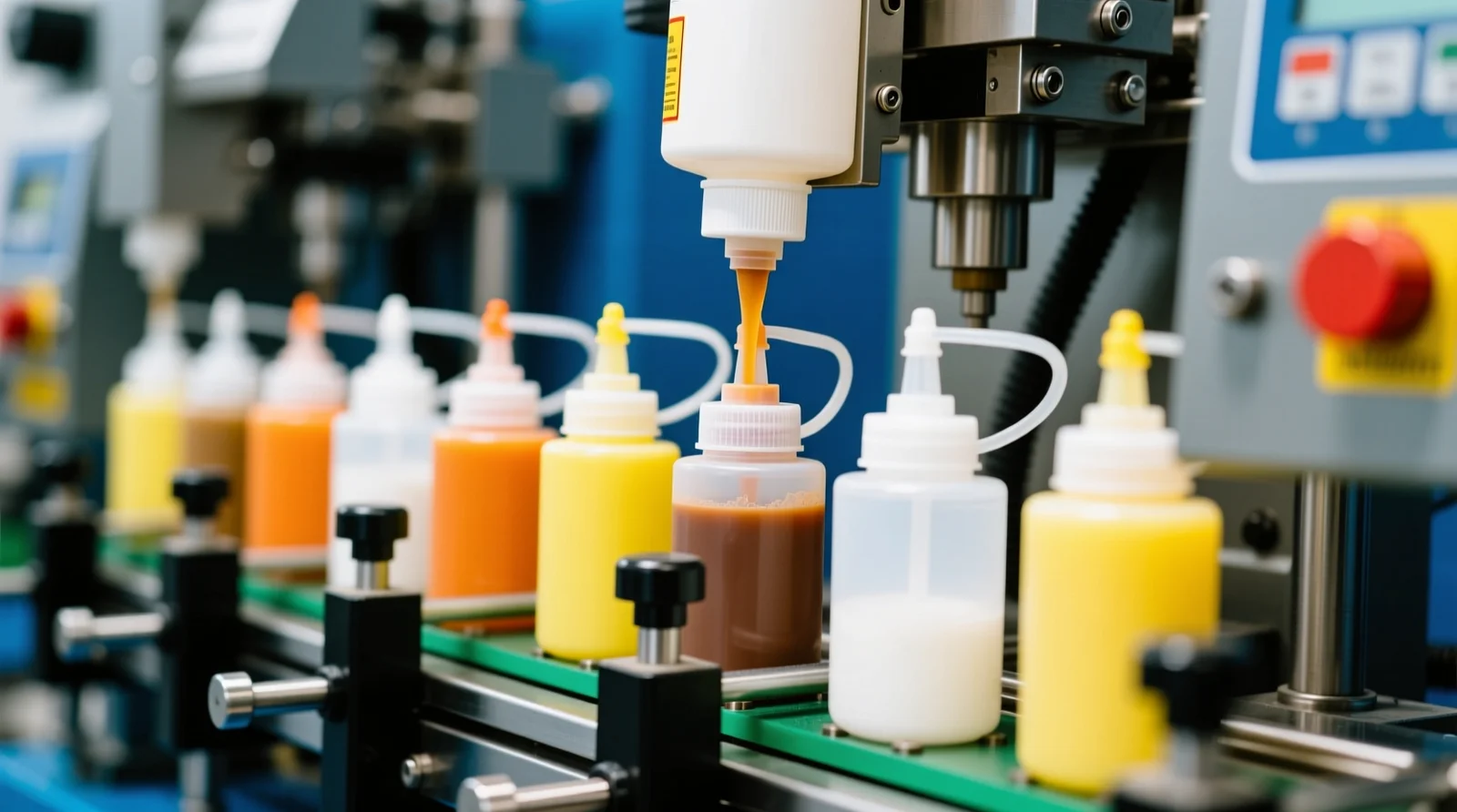
Understanding product attributes is fundamental to Liquid Filling Machine selection. For example, filling thick, viscous fluids like sauces requires piston-based systems, whereas lightweight liquids like water are suited for gravity or overflow fillers. Fragile packaging might need gentle handling, which impacts machine type.
Example: A pharmaceutical company filling viscous cough syrup chose a piston-based automated Bottling Machine solution with anti-drip nozzles to ensure accuracy and hygiene.
2. Clarify Production Capacity and Order Fluctuations
Capacity planning requires analyzing average and peak output needs. Estimating shifts, batch sizes, and seasonal demand ensures that the machine won’t become a bottleneck or sit idle during low demand.
Example: A beverage manufacturer producing 10,000 bottles/hour during peak season opted for a dual-head filling machine that could later scale to four heads based on orders.
3. Bottling Machine Form and Material Selection
Material type (PET, glass, aluminum) and container form (round, oval, square) affect conveyor design, nozzle type, and sealing systems. Improper matches can lead to reduced stability and higher waste.
Example: A dairy producer using glass bottles selected a rotary filling system with vibration-free guidance to avoid breakage.
4. Automation Level Requirement (Manual / Semi-Automatic / Fully Automatic)
Choose based on labor availability, desired throughput, and precision. Automated Bottling Machine solutions reduce labor dependency and increase consistency, though they often involve higher upfront investment.
Example: A mid-sized cosmetics company with high labor costs moved from semi-automatic systems to fully automatic fillers, increasing throughput by 40%.
5. Budget and Equipment Lifecycle Assessment
Focus on total cost of ownership rather than just initial price. Factor in lifespan, maintenance intervals, spare parts cost, and residual value. Consider leasing if your budget is tight but needs are immediate.
Example: A food startup chose a mid-range machine with 5-year warranty and low maintenance, realizing a lower lifecycle cost than cheaper alternatives.
6. Equipment Compatibility (Support for Multiple Specifications / SKUs)
If your product line includes various SKUs, opt for a machine with tool-less changeovers or adjustable formats. This enhances operational flexibility and speed-to-market.
Example: A chemical manufacturer selling products in 250ml, 500ml, and 1L bottles selected a servo-based solution with dynamic volume configuration.
Real Enterprise Case Study
Case: GreenLeaf Beverages needed a machine to handle four flavors across two bottle sizes. Out of three vendors, they chose a fully automatic rotary Bottling Machine machine offering tool-free size adjustments and dual-lane filling. This equipment decision-making cut their setup time by 60% and improved output reliability.
5 Key Parameters to Consider When Purchasing Liquid Filling Machine
-
Speed and Power
Definition: Output per hour and energy efficiency.
Importance: Determines how fast production goals can be met, hence influencing ROI.
Range:
- Low-end: 500–1,000 bottles/hour, low motor power
- Mid-range: 2,000–5,000 bottles/hour
- High-end: 8,000+ bottles/hour, energy-efficient drives
Advice: Match speed to average demand, and ensure power reserves for peak loads.
-
Accuracy (Filling Precision / Sealing Stability)
Definition: The deviation from target fill volume or leak-free sealing capability.
Importance: Critical in pharmaceuticals, chemicals, and beverages, where underfilling or overfilling leads to compliance issues or waste.
Range:
- Low-end: ±3–5%
- Mid-range: ±1–2%
- High-end: ±0.2% with automated calibration
Advice: Evaluate in-field validation data, particularly if regulatory environments are strict.
-
Material Compatibility
Definition: Ability of equipment to handle product characteristics (corrosive, foamy, oily, etc.)
Importance: Prevents contamination, corrosion, or machine damage.
Range:
- Low-end: Limited to water-based fluids
- Mid-range: Supports oils and mild chemicals
- High-end: Resistant to acids, alcohols, solvents
Advice: Always specify your product composition for correct nozzle and seal selection.
-
Automation and Intelligence Features
Definition: Includes PLC, HMI, sensors, remote control, auto-cleaning systems
Importance: Streamlines operations and enables data-driven maintenance and troubleshooting.
Range:
- Low-end: Manual/analog systems
- Mid-range: Basic PLC with manual calibration
- High-end: Full SCADA integration, self-diagnostics
Advice: Choose smart controls if uptime and batch traceability are key priorities.
-
Safety and Maintenance Costs
Definition: Frequency of service, ease of cleaning, safety interlocks
Importance: Impacts downtime, worker safety, and operational compliance
Range:
- Low-end: Manual cleaning, minimal shielding
- Mid-range: Removable nozzles, safety locks
- High-end: CIP (Clean-In-Place), full shields, predictive maintenance alerts
Advice: Prioritize tools with faster cleanability and accessible components to reduce downtime.
| Parameter | Low-End | Mid-Range | High-End |
|---|---|---|---|
| Speed & Power | Up to 1,000/hr | 2,000–5,000/hr | 8,000+ bottles/hr |
| Sealing Accuracy | ±5% | ±2% | ±0.2% |
Domestic vs Imported Bottling Machine Machine Comparison
1. Performance Differences (Speed, Stability, Intelligence Level)
Domestic Bottling Machine machines generally offer competitive performance for medium runs but may lack advanced sensors or software seen in imported models.
2. Price Range
Domestic: 80k–500k RMB
Imported: 300k–1.5 million RMB+
3. Maintenance and After-Sales Service
Domestic machines offer shorter lead times and local servicing. Imported machines might have slower turnaround due to overseas parts or knowledge gaps.
4. Spare Parts Supply Cycle
Domestic: 3–7 days
Imported: 2–6 weeks depending on brand and part
5. Service Life and Total Cost of Ownership (TCO)
While imported machines may outlast domestic versions, high spare part and maintenance costs can offset longevity for some users.
| Feature | Domestic | Imported |
|---|---|---|
| Speed & Stability | Moderate | High |
| Price | Lower | 3–5x more |
| After-Sales Service | Faster | Slower / Abroad |
Customer Suitability
- Domestic Bottling Machine machines: Ideal for SMEs, price-sensitive buyers
- Imported Bottling Machine machines: Suitable for pharma/food industries requiring precision and documentation
Upgrade Case
A mid-tier beverage company switched from an imported filler to a domestic machine to reduce overhead. While processing speed decreased by 10%, overall costs reduced by 35%, improving profit margins without compromising quality.
2026 Liquid Filling Machine Procurement Budget Guide
1. Major Factors Affecting Liquid Filling Machine Price
- Production speed
- Machine structure (rotary vs linear)
- Material (SS304 vs SS316)
- Functionality (multi-nozzle, auto-clean)
- Automation level
2. 2026 Industry Price Trend Analysis
In 2026, rising labor costs and regional policy incentives are driving greater investment in automation. Expect higher CAPEX but lower long-term OPEX.
3. Recommended Equipment Types for Different Budget Ranges
| Budget Range (RMB) | Typical Equipment |
|---|---|
| 30–100k | Manual/semi-auto filling units |
| 100–300k | Mid-tier volume fillers (pillow/vertical) |
| 300–800k | Automated Bottling Machine lines |
| 800k+ | SCADA-integrated intelligent lines |
4. Multi-Brand Price Examples (Fictional)
- Brand A (Domestic): Full-auto linear filler – 280k
- Brand B (German): Servo rotary filler – 950k
- Brand C (Japanese): Multi-viscous intelligent filler – 1.2M
5. Product Recommendation
Our [Advanced FillLine X88] system offers excellent speed (6,000 bottles/hr), CIP capability, and 3-year warranty. Backed by local support centers across 7 provinces.
Case Study: Annual Budget Plan for 2026
Company: FreshDairy Co.
Plan: Allocate 600k RMB for machinery upgrade. Split into:
- 300k for a mid-speed auto filler
- 200k for labeling and secondary packaging
- 100k reserved for service and parts
This plan aligns their capacity growth with reduced OPEX by adopting smarter tech under a controlled budget.