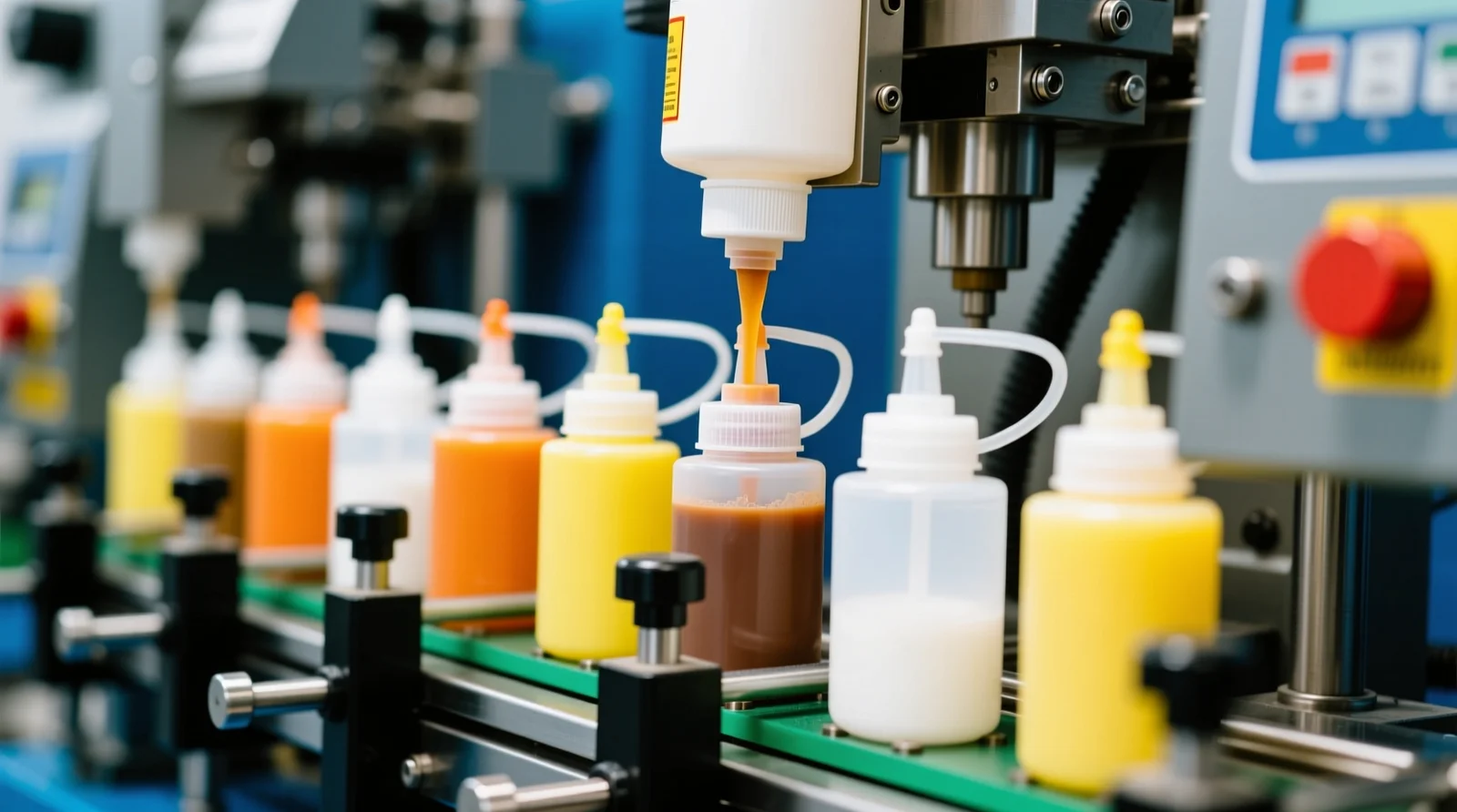
The core idea of this page: labeling and coding are two different machines that buyers routinely conflate — a labeler applies a pre-printed label, a coder prints variable data directly on the pack. The shortlist splits at that line, and splitting it wrong is the most common sourcing mistake in this category. Decide label-first or code-first, then pick the technology your substrate and code-life actually demand.
This entry explains the principles behind labeling and coding. For the supplier landscape, see the Top 10 Labeling & Coding Machine Manufacturers ranking and the Top 10 China Labeling & Coding ranking; browse the Labeling & Coding equipment category.
Label application: three ways to put a label on
Pressure-sensitive (self-adhesive)
A pressure-sensitive labeler peels a pre-cut label from its liner and applies it with a tamp, blow-on or wipe-on head as the product passes. It suits flat and shaped surfaces, and it is the default for pharma and cosmetics because placement accuracy is high and no glue or heat is involved. The trade-off is label stock cost — self-adhesive labels are the most expensive per unit.
Sleeve (shrink-sleeve)
A sleeve labeler drops a printed shrink sleeve over the container and heat-shrinks it to conform. It wins on 360-degree decoration and tamper-evident full-body coverage, so it is the standard for beverage and premium food. It adds a shrink tunnel and a film-sleeve supply, which raises line cost and energy use.
Roll-fed (wrap-around)
A roll-fed labeler cuts a label from a continuous web and wraps it around the container, usually with hot-melt or cold glue. It is the lowest-cost-per-label route for high-volume cylindrical containers (bottles, cans) — the reason it dominates beverage lines. Format change is tooling-heavy, so it suits long runs more than frequent changeover.
Product coding: three ways to print variable data
Continuous inkjet (CIJ)
CIJ sprays conductive ink droplets through a nozzle and electrostatically deflects them to form characters. It is the workhorse for date and lot codes on high-speed lines because it is non-contact and fast — but the code is low-resolution and the ink can be removed by solvents, so it is not the choice for permanent or tamper-evident marking.
Thermal transfer overprinting (TTO)
TTO melts a wax-resin ribbon onto the substrate to form a crisp, high-contrast, durable code. It is the choice for flexible film (flow wrap, pouches) where the code must survive scuffing, and it is the closest thing to a "print-quality" code on film. The ribbon is a consumable that adds a running cost.
Laser coding
Laser coding etches or ablates the surface with no ink or ribbon, producing a permanent mark. It is chosen where the code must survive condensation, freezer or retort — and where eliminating consumables matters. It is slower to set up and surface-dependent (the substrate must respond to the laser wavelength).
Print-and-apply: when the code must be on a label
Print-and-apply systems print the code onto a label and then apply the label in one station — the bridge between coding and labeling. They are used for case labels with barcodes, pallet labels and shipping labels, where the code must be both printed and adhered. The key spec is print resolution (dpi) and the accuracy of label placement on a moving case.
Failure modes to design around
- Code adhesion failure. CIJ ink on a wet, greasy or coated surface can wipe off. Specify the substrate and test the code against scuff, condensation and freezer before committing.
- Label flagging or peeling. A label applied to a curved or cold surface can lift at the edges. Confirm the adhesive and the container surface in a trial.
- Sleeve distortion. A shrink sleeve overheated on a thin container can distort or melt. Match the shrink tunnel temperature to the film and container.
- Consumables lock-in. CIJ ink/make-up, TTO ribbon and label stock are recurring costs that dwarf the machine price over its life — price them together.
How to verify a labeling or coding solution
- Print sample test: run your actual substrate through a coder and inspect resolution, contrast and legibility under your line conditions.
- Adhesion and scuff test: rub, tape-peel or water-soak the code/label to confirm it survives your distribution chain.
- Placement accuracy: measure label or code position repeatability (±1 mm is typical) across a run, not a single sample.
- Speed test: confirm the measured labels/min or m/min on your container, not the brochure figure.
Frequently asked questions
Do I need a labeler, a coder, or both?
If the pack carries a printed label, start with the labeler; if it needs a date, lot or barcode, start with the coder. A line with both pre-printed labels and variable data needs both — often a print-and-apply system bridges them.
Which coding technology is most durable?
Laser is the most durable (etched into the surface), then TTO, then CIJ. The right choice depends on what the code must survive — scuffing, moisture, freezer or retort.
Why do CIJ and TTO have recurring costs?
CIJ consumes ink and make-up fluid, and TTO consumes ribbon. Label stock is a recurring cost for labelers. Always budget the consumables alongside the machine.
Can one machine label both round bottles and flat cartons?
Usually not at the same speed and accuracy — a high-speed roll-fed labeler for round bottles is a different tool from a pressure-sensitive labeler for flat cartons. Specify the container and surface first.
Last verified: September 10, 2026.