
The core idea of this page: changeover is lost output you schedule yourself, which makes it the most controllable loss on a packaging line. SMED — separating internal from external setup, then converting, streamlining and standardising — routinely cuts setup time by half or more without new machines.
Last updated: October 20, 2026. Every SKU you add to a line adds a changeover, and on a multi-SKU line the changeovers can eat more time than the breakdowns. SMED (Single-Minute Exchange of Die, from the Toyota Production System) is a method for cutting that time, and it works on packaging machines the same way it works on presses. For the machine categories involved, see Types of Packaging Machines.
Why changeover matters more each year
Shorter runs, more SKUs and just-in-time production mean a line that changes over slowly is a line that runs small batches inefficiently. The cost is not just the minutes of the changeover — it is the start-up scrap and the slow running while the line stabilises afterwards, plus the batches you could not fit into the day.
The SMED sequence
- Separate internal and external setup. Internal setup can only happen while the machine is stopped; external setup can happen while it is still running. Moving work out of internal setup is the biggest single win — stage the next SKU’s film, labels, parts and tools before the line stops.
- Convert internal to external. Preheat the next sealing jaw, pre-stage the next format parts on a cart, and prepare the next product while the current run finishes.
- Streamline internal setup. Replace bolts with clamps or quick-release fasteners, standardise adjustment positions with pins or gauges, and eliminate “adjust-and-try” by writing the setting values down.
- Standardise and repeat. Write the changeover as a checklist with times, assign roles, and train every crew the same way. A changeover that depends on one experienced operator is a single point of failure.
Machine-specific checkpoints
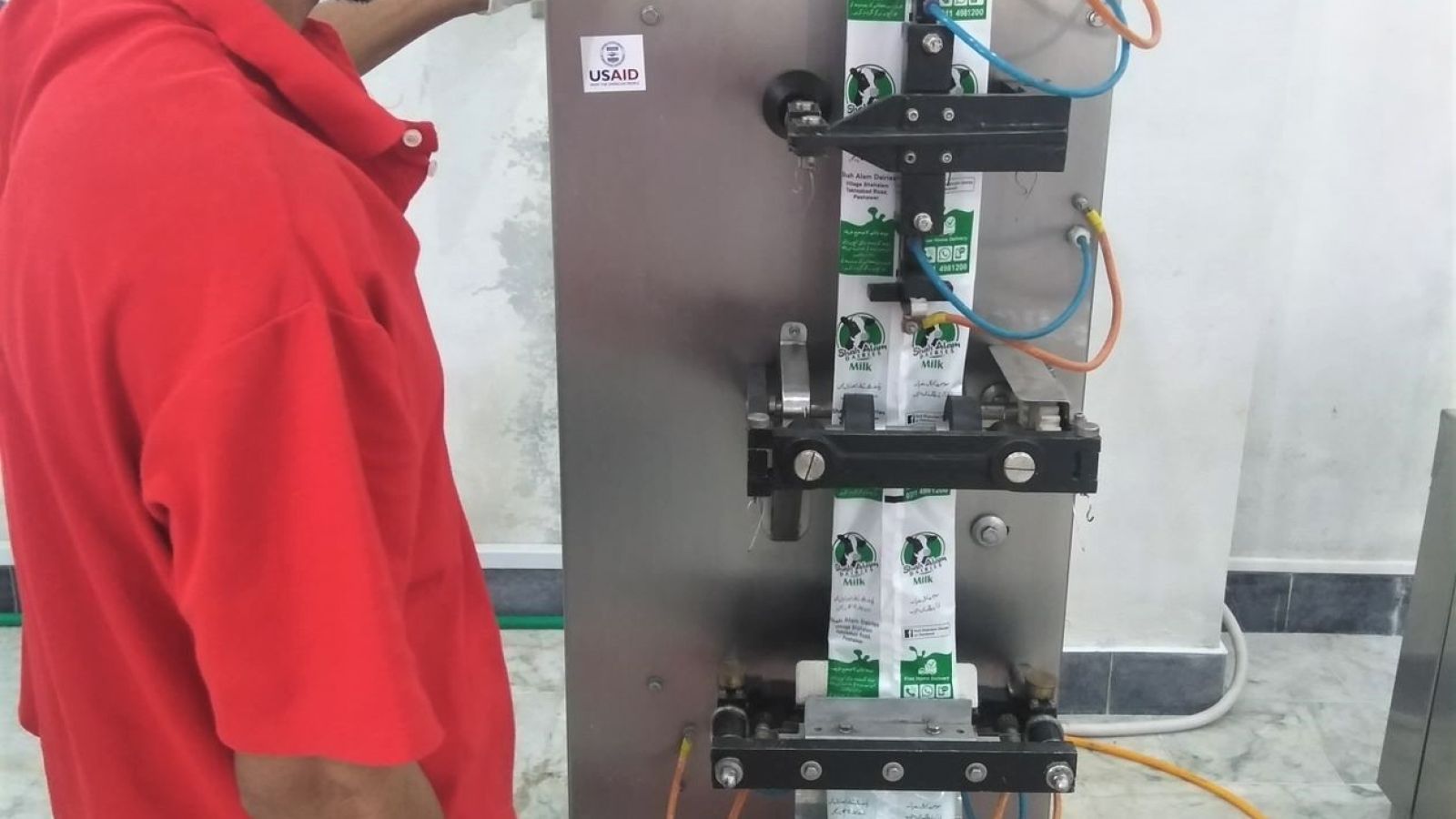
- Form-fill-seal: the forming shoulder and sealing jaws are the long pole. Pre-heat jaws externally, and use quick-change film roll and former handling. See the FFS category.
- Filling: nozzle or dosing changes and product changeover. Wherever possible, use pre-cleaned, pre-set dosing sets swapped as a unit — and keep CIP runs off the changeover critical path where the product allows.
- Labeling & coding: label roll and ribbon change plus format recipe load. Recipe-driven labelers cut the mechanical part to a tape-up and a program call.
- Case packing & palletizing: case size and pattern change are tooling-heavy. Time a full size-and-pattern change and write the tool positions down rather than re-deriving them each run.
Measure changeover the same way every time
Define changeover as last good pack of SKU A to first good pack of SKU B, and measure it with a stopwatch, not by asking the operator afterwards. Build a changeover matrix (from-SKU × to-SKU × time) to find the expensive transitions, then attack the worst first. Fold the target time into FAT/SAT so new machines are bought against a changeover requirement, not just a speed.
Frequently asked questions
What is the difference between internal and external setup?
Internal setup happens while the machine is stopped; external setup can happen while it runs. The fastest way to cut changeover is to move work from internal to external — stage everything before the line stops.
How much changeover time can SMED remove?
Reductions of 50% or more are common on flexible lines, because much of the “setup” is really searching, fetching and adjusting — all removable by preparation and standardisation.
Should I buy a faster changeover machine instead?
Only after measuring where the time actually goes. Recipe-driven format change and quick-release tooling are worth paying for; a faster machine that still changes over slowly just makes the same loss bigger.
Source: Single-minute exchange of die — Wikipedia
"Over time, Toyota decreased changeover times from hours to fifteen minutes by the 1960s, three minutes by the 1970s, and ultimately just 180 seconds by the 1990s."
Related guides
- VFFS Baggers: Top 10 Machines Compared (2026) — Ten vertical form-fill-seal (VFFS) machines compared across speed, mot…
- Intermittent vs Continuous vs Rotary VFFS: Motion Type Drives Speed, Seal and Cost — How the three VFFS motion types — intermittent, continuous and rotary …
- Heat Seal vs Ultrasonic vs Long-Dwell: Choosing FFS Sealing Technology — How heat seal, ultrasonic and long-dwell sealing compare for VFFS/HFFS…
- Multihead Weigher vs Volumetric Cup vs Auger Filler: Choosing FFS Dosing — How multihead weighers, volumetric cups and auger fillers compare for …
- How a Vertical Form-Fill-Seal (VFFS) Machine Works: Film Path, Sealing and Fill — a vertical form-fill-seal machine makes the bag around the product. Fi…
- How a Horizontal Flow Wrapper (HFFS) Works — a horizontal flow wrapper turns a flat film into a tube around the pro…
- How a Multihead Weigher Achieves Accuracy — a multihead weigher does not weigh a portion — it weighs many sm…
- Changeover and SMED — changeover time is not fixed by the machine — it is fixed by how…
Last verified: October 20, 2026.