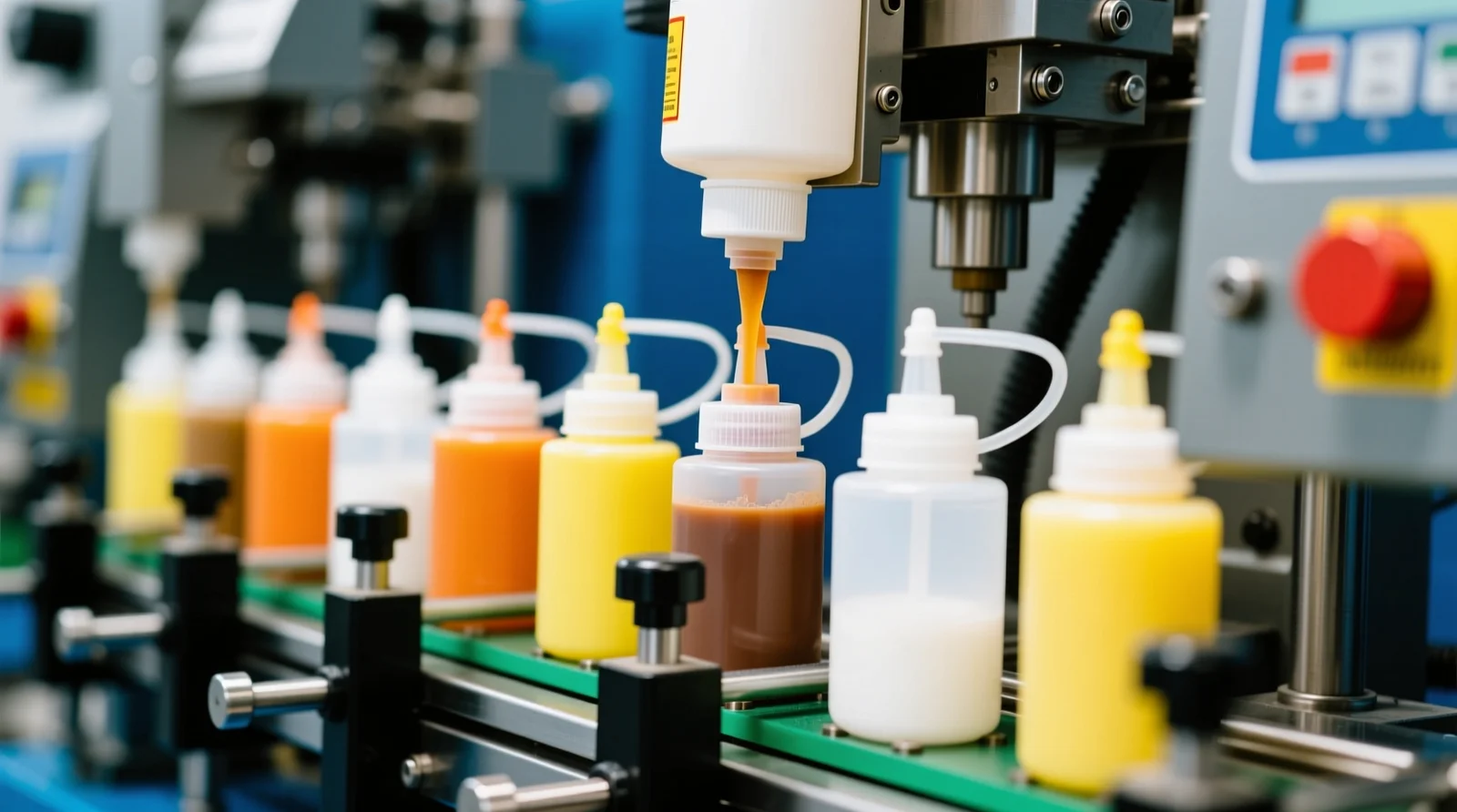
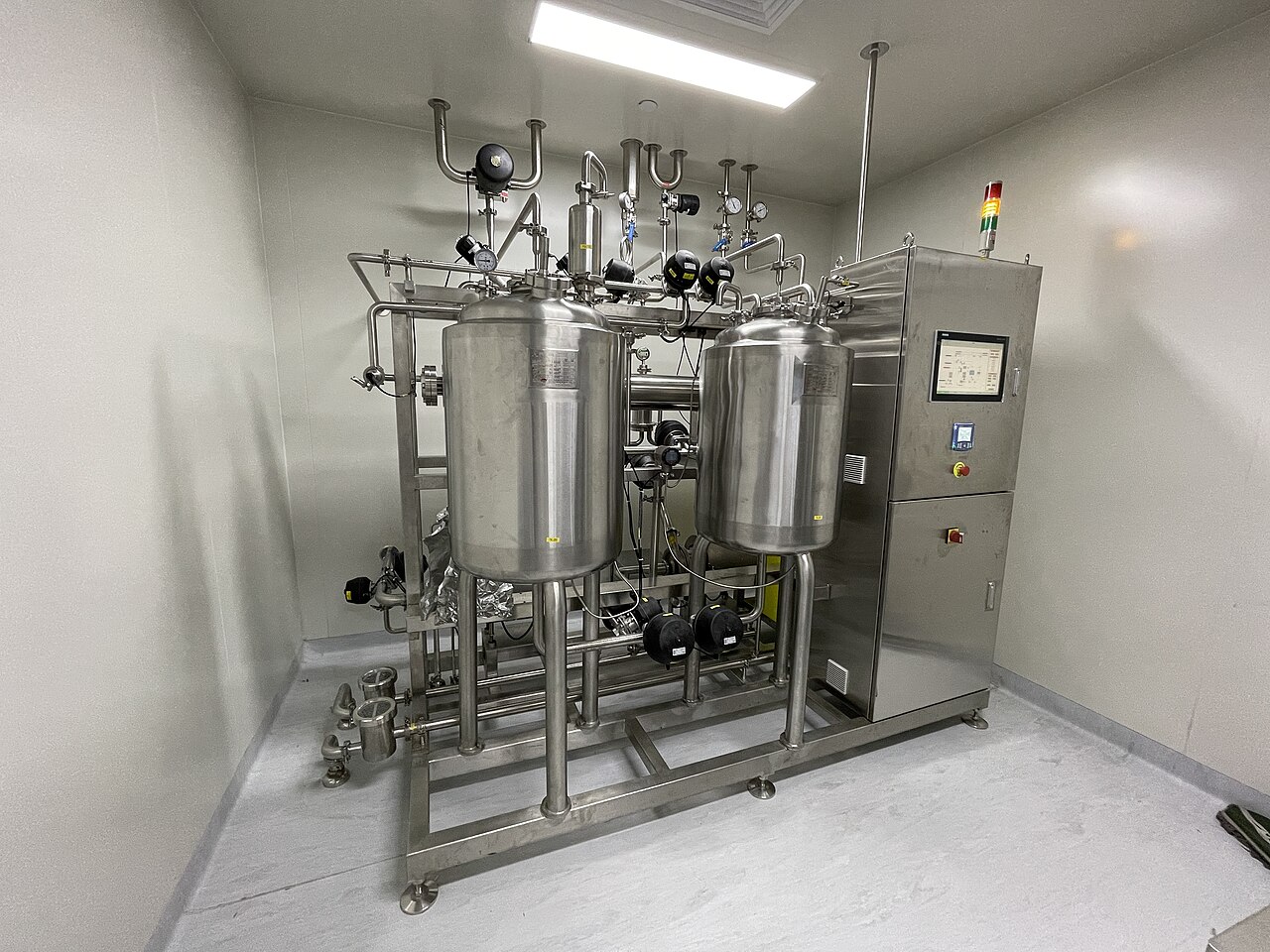
The core idea of this page: CIP cleans and SIP sterilizes — they are not the same thing, and a machine advertised as "CIP-ready" may not be sterile. Cleaning removes product residue with circulated chemicals; sterilizing kills microorganisms with steam or heat after cleaning. You clean every shift; you sterilize when the process demands an aseptic line.
For the machines that carry this requirement, see Top 10 Liquid Filling Machine Manufacturers.
CIP: clean-in-place
CIP circulates cleaning chemicals through the machine’s wetted parts without disassembly. A typical food-grade CIP cycle uses caustic (0.5–2.5% NaOH) at 60–85°C for 20–60 minutes, followed by rinse and acid phases. The cleaning works by flow velocity (the "3D rule" for tank coverage), chemical concentration, temperature and time.
Source: Caustic Soda for CIP Cleaning — IG Chemical Solutions
CIP caustic 0.5–2.5% NaOH at 60–85°C (food 60–77°C, dairy 71–82°C), 20–60 min.
SIP: sterilize-in-place
SIP uses steam (typically ≥121°C for 30 minutes) or superheated water to sterilize the already-cleaned surfaces. Sterilization only works after cleaning — steam cannot remove a biofilm it can only kill the surface organisms. SIP is required for aseptic filling where the product must be shelf-stable without refrigeration.
Source: CIP/SIP in Pharmaceutical Plants
SIP steam "typically 121°C for 30 minutes".
Failure modes and what "CIP-ready" really means
- Dead legs and shadow zones. Surfaces that the cleaning flow does not reach stay dirty; ask which wetted parts the CIP cycle actually covers.
- Residue left behind. A CIP cycle that is too short or too cold leaves residue that later contaminates the product.
- SIP without CIP. Sterilizing a dirty surface does not work — biofilm and residue protect organisms.
- Validation gap. "CIP-ready" is a design claim, not a validated result; ask for the cleaning and sterilization validation report.
How to verify CIP/SIP
- Coverage test: confirm spray coverage of all wetted surfaces (visual or with a coverage tracer).
- Residue check: ATP swab or rinse-water test after cleaning to confirm no residue.
- Microbial validation: for aseptic lines, confirm the SIP cycle reaches the required F0 or time-at-temperature.
- Cycle record: review the temperature/time curve from the machine’s historian.
Frequently asked questions
What is the difference between CIP and SIP?
CIP cleans (removes residue with circulated chemicals); SIP sterilizes (kills organisms with steam or heat after cleaning). Cleaning is routine; sterilization is for aseptic processes.
Is "CIP-ready" the same as sterile?
No — CIP-ready only means the machine is designed for cleaning-in-place. Sterility requires a validated SIP cycle on top of cleaning.
What temperature does SIP use?
Typically steam at 121°C or higher for about 30 minutes, depending on the process and the required sterility assurance.
Last verified: September 10, 2026.