A liquid filling machine is a decision made by four things before a single brand enters the room: how the product behaves, what the container demands, how clean the line must be, and what accuracy the fill must legally and commercially hold. A gravity filler for water, a net-weight filler for edible oil and an aseptic carton line for milk are three different machines that share one word — and the manufacturer you need depends on which problem you actually have.
This 2026 edition profiles the top global manufacturers across rotary, aseptic, net-weight and inline liquid filling. Note: This is an independent editorial ranking scored on four dimensions — technical capability, market coverage, equipment reliability and data verifiability. No sponsored placements are included. Every specification below is cited from a published source; where a builder does not publish a figure, it is marked "Not published" rather than estimated. For the cost side, see How Much Does a Liquid Filling Machine Cost; for the engineering behind the methods, see Gravity vs. Piston vs. Overflow.
The core idea of this page: choose the manufacturer by the filling problem you actually have — product behaviour, container, hygiene and metrology decide the machine class before the brand does — then force every shortlisted builder to prove the fill accuracy, the CIP/SIP reach and a timed changeover on your product. The ranking is the shortlist; the witnessed trial is the decision.
The ten at a glance
| Rank | Manufacturer | Machine class | Headquarters |
|---|---|---|---|
| 1 | Krones AG | Rotary & aseptic beverage fillers | Germany |
| 2 | Tetra Pak | Aseptic carton filling | Switzerland / Sweden |
| 3 | KHS Group | Volumetric rotary PET fillers | Germany |
| 4 | Serac Group | Net-weight filling | France |
| 5 | Fogg Filler (ProMach) | Rotary gravity / pressure fillers | United States |
| 6 | Ronchi Mario | Flowmeter fillers | Italy |
| 7 | Federal Mfg (ProMach) | Level / net-weight fillers | United States |
| 8 | Filsilpek | Flowmeter / servo fillers | India |
| 9 | Pack Leader Machinery | Linear / volumetric fillers | Taiwan |
| 10 | Busch Machinery | Gravity / peristaltic fillers | United States |
How we ranked them
Each manufacturer is scored on four dimensions using published specifications and verifiable company information only. Where a builder does not publish a figure, it is marked "Not published" rather than estimated. The stars below are an editorial summary, not a weighted formula — they exist so you can see the reasoning at a glance; the detail behind each score is in the profile below.
| Manufacturer | Technical capability | Market coverage | Equipment reliability | Data verifiability |
|---|---|---|---|---|
| Krones AG | ★★★★★ | ★★★★★ | ★★★★★ | ★★★★★ |
| Tetra Pak | ★★★★★ | ★★★★★ | ★★★★★ | ★★★★☆ |
| KHS Group | ★★★★★ | ★★★★★ | ★★★★★ | ★★★★★ |
| Serac Group | ★★★★★ | ★★★★☆ | ★★★★★ | ★★★★★ |
| Fogg Filler | ★★★★☆ | ★★★★☆ | ★★★★★ | ★★★★☆ |
| Ronchi Mario | ★★★★★ | ★★★★☆ | ★★★★★ | ★★★★★ |
| Federal Mfg | ★★★★★ | ★★★★☆ | ★★★★★ | ★★★★☆ |
| Filsilpek | ★★★☆☆ | ★★★☆☆ | ★★★☆☆ | ★★★☆☆ |
| Pack Leader Machinery | ★★★★☆ | ★★★★☆ | ★★★★☆ | ★★★★★ |
| Busch Machinery | ★★★☆☆ | ★★★☆☆ | ★★★☆☆ | ★★★★☆ |
1. Krones AG (Germany)
Headquarters: Neutraubling, Germany — Founded: 1951.
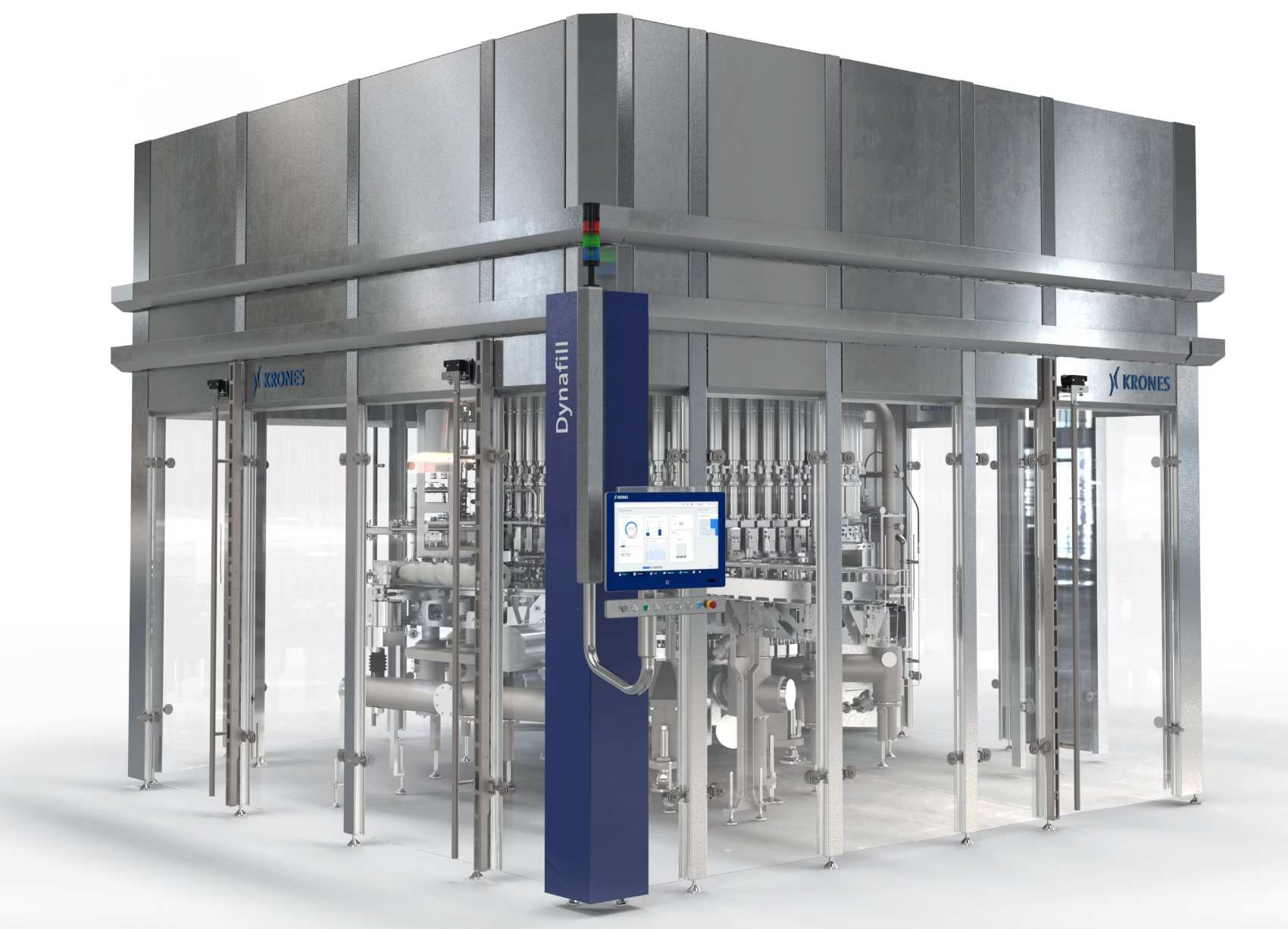
Krones is the largest beverage-filling and packaging equipment maker by installed base. If you are bottling water, soft drinks or beer at ultra-high speed, Krones is likely on your shortlist — its Modulfill rotary platform spans standard, hot-fill and aseptic processes.
- Core technology: ultra-high-speed rotary fillers, aseptic blocks and complete beverage lines.
- Flagship models: Modulfill VFS (volumetric/flowmeter), Modulfill Asept VFS (steam-sterilised) and Dynafill (warm beer filling).
- Best for: high-speed beverage lines and large multinational producers.
Sources
Title: Modulfill VFS with PFR valves — Krones · From a small Neutraubling workshop — Krones
URL: https://www.krones.com/en/products/machines/modulfill-vfs-softdrinks.php
Krones documents the Modulfill VFS at "up to 81,000 containers per hour" with an inductive flow meter monitoring fill quantity, and states that "75 years ago, in 1951, Dr Hermann Kronseder founded a small electrical engineering workshop in Neutraubling".
2. Tetra Pak (Switzerland / Sweden)
Headquarters: Lund, Sweden and Pully, Switzerland — Founded: 1951.
Tetra Pak is synonymous with aseptic carton packaging, filling milk, juice and plant-based drinks in a closed sterile environment so the product stays ambient-stable without preservatives. Its E3/Speed hyper-filling unit uses electron-beam (eBeam) sterilisation.
- Core technology: aseptic carton filling and liquid-food processing.
- Flagship models: A3/Flex and E3/Speed iLine.
- Best for: dairy, juice and plant-based beverage lines.
Sources
Title: Tetra Pak A3/Flex packaging line — Food Ingredients First · Tetra Pak E3/Speed deployment — Dairy Business MEA
Trade press documents the A3/Flex at "a capacity of 5,000 to 8,000 packages per hour" and the E3/Speed hyper-filling machine at "the capacity of producing 40,000 packages per hour" with eBeam sterilisation. Tetra Pak's official product pages are JavaScript-rendered, so corporate specs are cited from trade press.
3. KHS Group (Germany)
Headquarters: Dortmund, Germany — Founded: 1868 roots (KHS entity formed by merger in 1993).
KHS builds complete turnkey bottling lines — rinsing, filling, labelling, packing and palletising — around its Innofill PET DRV volumetric filler platform.
- Core technology: volumetric fillers in complete line solutions.
- Flagship models: Innofill PET DRV volumetric rotary filler.
- Best for: producers that want one supplier for the whole line.
Sources
Title: Innofill PET DRV PET filler — KHS · Certifications — KHS
URL: https://www.khs.com/en/products/machines-equipment/detail/innofill-pet-drv-pet-filler/
KHS documents the Innofill PET DRV: "Thanks to the volumetric filling method, you can fill your bottles to exact fill levels at up to 82,000 bottles per hour", and states "KHS has been ISO 9001 certified since 1995".
4. Serac Group (France)
Headquarters: La Ferté-Bernard, France — Founded: 1969.
Serac specialises in net-weight filling for dairy, beverages, cosmetics, home-care and industrial fluids, with rotary and linear configurations.
- Core technology: net-weight (weigh) filling, with flowmeter options.
- Flagship models: RB rotary weigh filler-capper.
- Best for: high fill accuracy across varying product density.
Sources
Title: RB rotary filler-capper — Serac · Our History — Serac
URL: https://www.serac-group.com/machine/rb/
Serac documents the RB at "Outputs: up to 42 000 containers/h (1 L)" with "Net Weight Control of the filling" and "An accuracy of approx. 1g/liter (1 sigma standard deviation)", and states "Serac was established in June 1969".
5. Fogg Filler (USA — ProMach)
Headquarters: Holland, Michigan, USA — Founded: 1956.
Fogg builds rotary filling, rinsing and capping monoblocks for the North American water, juice and dairy market.
- Core technology: rotary gravity and pressure fill-and-cap monoblocks.
- Flagship models: F12 filler and F Series gravity fillers.
- Best for: mid-to-high-output US bottlers needing local service.
Sources
Title: About Fogg — Fogg Filler · Gravity Fillers — Fogg Filler
URL: https://www.foggfiller.com/about/
Fogg states "Fogg was founded in 1956 by Clyde Fogg" and documents the F12 as "filling up to 1200 bottles per minute", with F Series gravity fillers "between 35 and 1,200 bottles per minute (bpm)".
6. Ronchi Mario (Italy)
Headquarters: Gessate (Milano), Italy — Founded: 1966.
Ronchi Mario builds linear and rotary liquid fillers with flowmeter and mass-type dosing for food, cosmetics and chemicals.
- Core technology: inductive-magnetic (volumetric) and mass-type (weight) flowmeter dosing.
- Flagship models: EXACTA rotary fillers.
- Best for: customised mid-tier filling and capping lines.
Sources
Title: Filling Machines — Ronchi Packaging · Company — Ronchi Packaging
URL: https://www.ronchipackaging.com/packaging-machinery/filling-machines/
Ronchi documents the EXACTA fillers with "High filling accuracy: σ= 0,2%" and "speeds up to 600 BPM", and states "Mario Ronchi founded the RONCHI MARIO Officine Meccaniche in 1966".
7. Federal Mfg (USA — ProMach)
Headquarters: Waukesha, Wisconsin, USA (moved from Milwaukee in 2014) — Founded: 1946 (history to 1943).
Federal Mfg builds level (gravity) and net-weight filling and capping machines for dairy, juice and water, sharing the ProMach filling portfolio with Fogg Filler.
- Core technology: level (gravity) and net-weight (XACT-FIL) filling.
- Flagship models: XACT-FIL net-weight systems and G-Series level fillers.
- Best for: North American dairy and beverage producers.
Sources
Title: About Us — Federal Mfg · XACT-FIL Net Weight Filling — Federal Mfg
URL: https://www.federalmfg.com/about/
Federal documents the XACT-FIL at "non-contact filling accuracy of ±0.1%" and its level fillers "reaching speeds of up to 185 bottles per minute", and states "In 2014, Federal moved from its downtown Milwaukee location to a new 78,000 square-foot facility in Waukesha, WI."
8. Filsilpek (India)
Headquarters: Ahmedabad, Gujarat, India — Founded: 2013 (incorporated).
Filsilpek builds flowmeter, volumetric and servo liquid fillers for water, beverage, edible-oil, pharmaceutical and chemical producers.
- Core technology: flowmeter, volumetric and servo dosing in inline and monoblock configurations.
- Flagship models: flowmeter liquid filling machine and servo lubricant filler.
- Best for: cost-sensitive, mid-output lines in South Asia and export markets.
Sources
Title: Automatic Lube Oil Filling Machine — Filsilpek · About — Filsilpek
URL: https://filsilpekgroup.com/product/automatic-lube-oil-filling-machine/
Filsilpek documents its automatic lube oil filling machine at "Output/Hour :- 700 to 1800" with "Repeat accuracy of ± 0.2 to 0.5 %", and states it has operated "since 2013".
9. Pack Leader Machinery (Taiwan)
Headquarters: Taichung, Taiwan — Founded: 1992.
Pack Leader builds FL-series linear liquid fillers, cappers and labelers for food, beverage, cosmetics and pharmaceutical products.
- Core technology: linear volumetric (servo) fill-and-cap monoblocks with peristaltic/piston pump options.
- Flagship models: FL-101 and FL-800.
- Best for: mid-output producers across Asia.
Sources
Title: Automatic Filling Machines — Pack Leader · Certification — Pack Leader
URL: https://www.packleader.com/liquid-filling-machine/automatic-filling-machines.html
Pack Leader documents the FL-101 servo filler as "Accurate to ±0.5% (with drinking water)", states "Pack Leader Machinery Inc. was established in October of 1992", and lists ISO 9001:2015 compliance with optional CE/UKCA configurations.
10. Busch Machinery (USA)
Headquarters: Tucson, Arizona, USA — Founded: 1983.
Busch Machinery supplies inline liquid fillers with gravity, peristaltic and piston dosing for food, beverage, chemical and pharma applications.
- Core technology: gravity, peristaltic and piston inline filling.
- Flagship models: automatic gravity filler and SF-PEM peristaltic filler.
- Best for: North American producers needing domestic engineering support.
Sources
Title: Filling Systems of All Types — Busch Machinery
URL: https://www.busch-machinery.com/filling-systems-of-all-types/
Busch documents its automatic gravity filler at "fill speeds between 3000-6000 bottles per hour, based on 500ml fills" with 316L contact parts, and states "Busch Machinery has been in Business Since 1983".
What these machines cost
Liquid filling spans a wide price range because the word covers a benchtop piston filler and an aseptic beverage line. Published buying-guide bands — manual/benchtop roughly $1,000–$5,000, semi-automatic $5,000–$20,000, and automatic inline/rotary $20,000–$100,000+ — are order-of-magnitude figures: manufacturers do not publish price lists, so confirm a machine-specific quote. Aseptic lines sit above these bands as a capital-grade investment, with some sources placing the aseptic premium 30–50% over a comparable hot-fill line. The full breakdown is in How Much Does a Liquid Filling Machine Cost.
Sources
Title: Liquid Filling Machine Price Guide — Oden Machinery · Hot vs Cold Filling — HZM Machinery
URL: https://odenmachinery.com/blog/liquid-filling-machine-price-guide/
Oden Machinery publishes manual $1,000–$5,000, semi-automatic $5,000–$20,000 and automatic $20,000–$100,000+ bands; HZM documents the aseptic/cold-fill premium of 30–50% over hot-fill.
5 questions to ask before you buy
Liquid filling spans several engineering problems — gravity, overflow, piston, flowmeter and net-weight dosing, plus aseptic and hot-fill hygiene — so the first filter is the product and container, not the brand. Then put the same five questions to every shortlisted builder:
- What fill accuracy do you guarantee, and how is it measured on my product? Accuracy is a vendor claim until it is demonstrated — a servo piston may be specified at ±0.5% and a net-weight filler in grams. Ask for the sampling plan, the measured deviation and the reject threshold, written into the order.
- Which part of the line does your CIP/SIP actually reach? A "CIP-ready" claim without verified spray coverage is not clean. Ask which wetted surfaces the cleaning cycle covers, the chemical concentration, and how cleanliness is verified (visual, ATP swab, or microbial for aseptic).
- How long is a full format change, demonstrated on the floor? Time a real changeover between your SKUs — an estimate is not a demonstration — and ask for the change-part cost for every container format.
- Is the fill subject to legal metrology, and who provides the documentation? Net-weight fills sold by weight can carry OIML / NIST Handbook 44 obligations in the destination market. Confirm who writes IQ/OQ/PQ and the metrology certification.
- Can you run my product, at production speed, and show me the fill-weight and hygiene data from that run? Hand over your product, container and closure and require the accuracy and cleanliness results from a witnessed trial. A supplier that can only show a brochure has not yet proven the machine fills your product.
Last verified: September 10, 2026.