
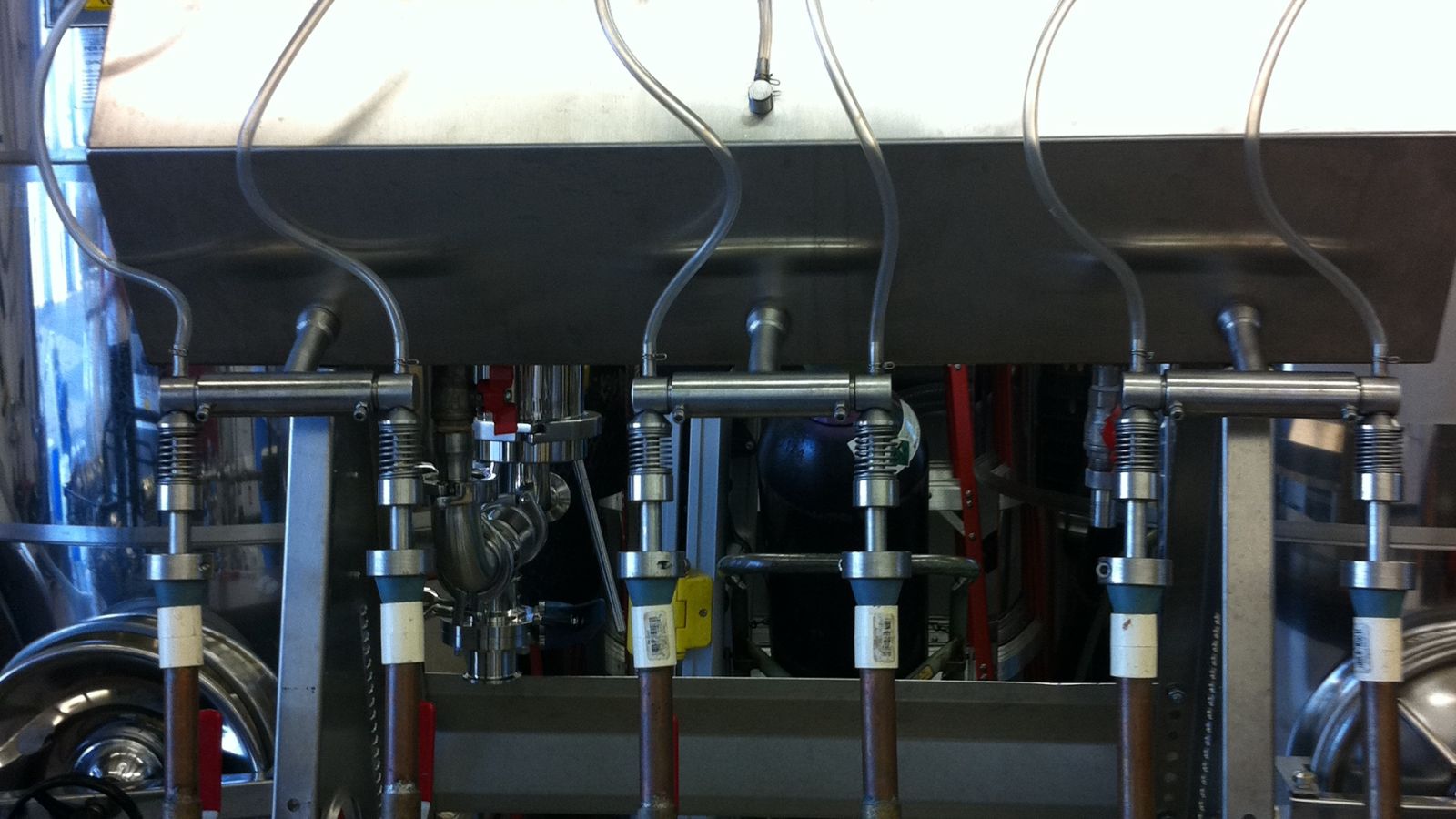
Last updated: August 27, 2026. The filler is rarely the most expensive machine on a line, but it decides fill accuracy, product waste and whether the line can be cleaned and validated. Choosing one is a sequence of eliminations — product behavior rules out methods fast, the container pins down the head design, and hygiene and metrology then decide the final build.
Step 1: Characterize the product
Five properties rule most filling methods in or out, and the answer changes with temperature:
- Viscosity: a thin, free-flowing liquid suits gravity or overflow filling; a thick sauce or cream needs piston or positive-displacement dosing. A sauce that pumps easily warm may refuse the same nozzle cold — test at the operating temperature, not room temperature.
- Particulates: chunks, seeds or fibers limit nozzle diameter and rule out tight-flowmeter or gravity methods that clog.
- Foaming: foamy products need bottom-up filling, defoaming or special nozzles; a standard top-fill head will overflow on foam.
- Shear sensitivity: shear-thinning or shear-damaged products constrain the pump type — a gentle lobe or diaphragm pump instead of a high-shear gear pump.
- Temperature: hot-fill products must hold temperature through the fill; supply physical samples, not just a spec sheet.
Step 2: Match the filling method
| Method | Best for | Limits |
|---|---|---|
| Gravity / overflow | Free-flowing, low-viscosity liquids; visual fill level | Viscosity range narrow; overflow recirculates product |
| Piston | Viscous products, creams, particulates | Wear on seals; cleaning between products |
| Flowmeter (volumetric) | Controlled volume across line speeds | Density changes shift actual weight |
| Net weight | Products sold/regulated by weight | Slower; scale settling time; legal metrology |
The engineering behind these is covered in Gravity vs. Piston vs. Overflow. A Serac net-weight filler or a Krones flowmeter rotary represent opposite ends of the accuracy-cost spectrum — match the method to the product, not the brochure.
Step 3: Fix the container, accuracy and metrology
Neck size, container stability and fill height constrain the head design; supply physical containers for testing. Then decide the controlled quantity:
- Volume (flowmeter / piston): verify with a graduated cylinder across the speed range.
- Net weight: verify on a certified scale; net-weight fills sold by weight may be subject to OIML R 51 / WELMEC guidance in the EU or NIST Handbook 44 in the US.
- Visual level (overflow): the container itself defines the fill level.
Agree how accuracy is sampled and recorded during acceptance — the number of bottles per test, the reject threshold and who signs the result.
Step 4: Define hygiene and regulatory requirements
For food, dairy, beverage and pharmaceutical fills, the cleaning claim is as important as the fill itself:
- CIP/SIP: confirm the cleaning solution actually reaches every wetted surface — a "CIP-ready" claim without verified spray coverage is not clean. See CIP vs SIP.
- Hygienic design standards: EHEDG and 3-A Sanitary Standards define the mechanical design; pharmaceutical fills add FDA GMP expectations.
- Material: 316L stainless contact parts, FDA-compliant elastomers, and documentation of every wetted material.
Step 5: Validate with a witnessed trial
Run your product on the shortlisted machine at production speed, with a real format change and fault recovery. Put the following in writing before the order:
- Fill accuracy: the sampling plan, the measured deviation and the reject threshold.
- Cleaning: the CIP cycle, chemical concentration and how cleanliness is verified (visual, ATP swab, or microbial for aseptic).
- Changeover: a timed, demonstrated format change, not an estimate.
A machine-only demonstration can conceal upstream instability that limits usable output — ask the supplier to show the whole system boundary from product supply to closure.
The RFQ pack
Send every supplier the same brief: product samples and temperature range, containers and closures, target output and shift pattern, accuracy target and reject criteria, cleaning and documentation requirements, and the upstream/downstream interface. For budget bands by machine type, see How Much Does a Liquid Filling Machine Cost; for the vendor shortlist, see Top 10 Liquid Filling Machine Manufacturers.
Frequently asked questions
Can one filler handle every liquid?
No — viscosity, particulates, foaming, shear sensitivity and temperature rule methods in or out, and the answer changes with temperature. Validate the configuration with your actual product before purchase.
What should a witnessed trial include?
Fill accuracy (the sampling plan, measured deviation and reject threshold), cleaning (the CIP cycle and how cleanliness is verified), and a timed format change — a machine-only demo can hide upstream instability.
How do I compare quotes from different suppliers?
Send every supplier the same brief — product samples and temperature range, containers and closures, target output, accuracy target, cleaning and documentation requirements, and the upstream/downstream interface — so they all quote the same scope boundary.
Last verified: August 27, 2026.