
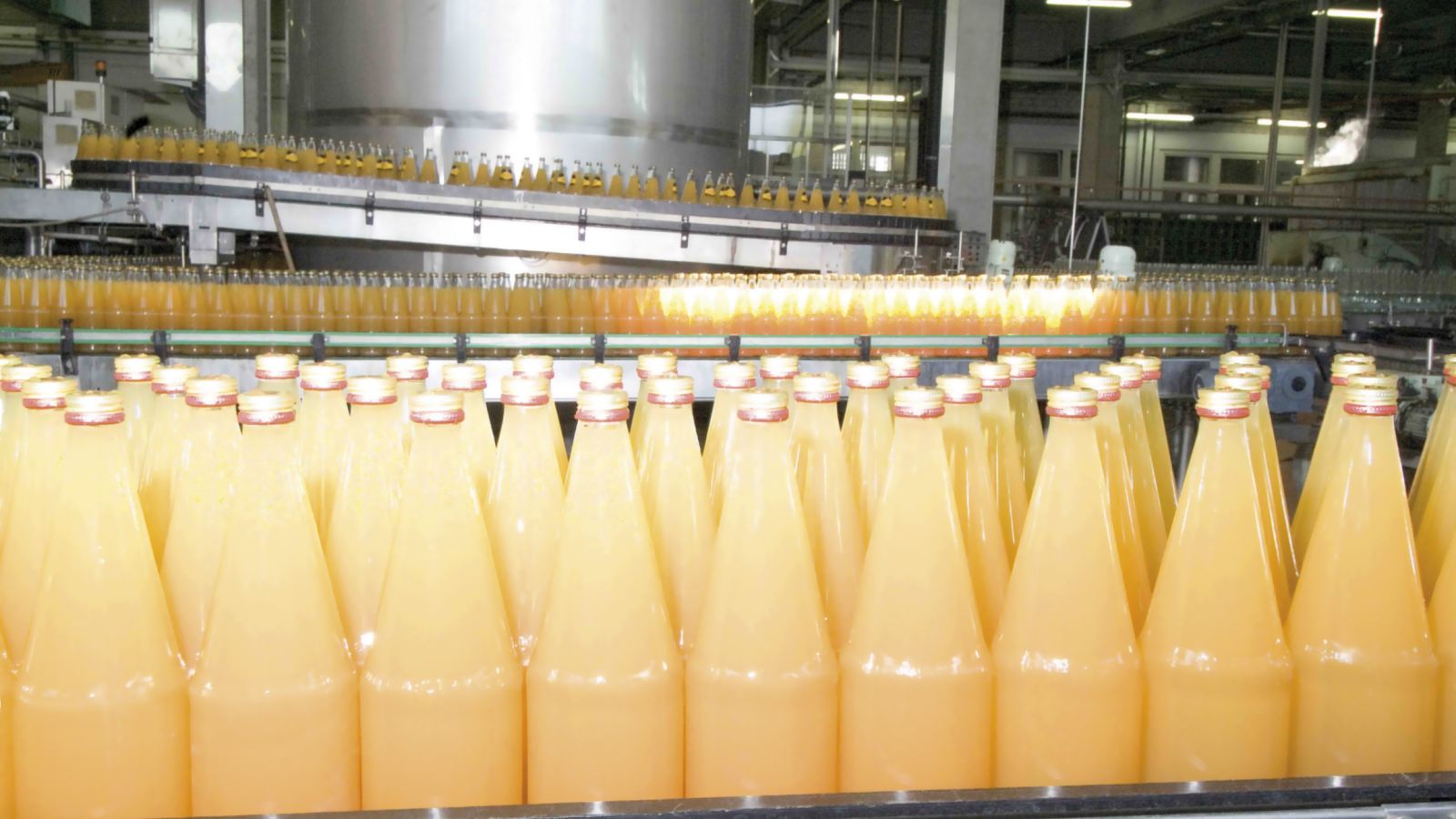
Last updated: August 27, 2026. Across the liquid filling industry, machines generally start around $1,000 and can climb past $100,000, with most businesses landing between $5,000 and $50,000 depending on the level of automation. The honest way to reach a number is to classify the machine by type, understand what drives the price, and make every supplier quote the same scope.
Price bands by machine type
| Type | Typical price range | Typical throughput |
|---|---|---|
| Manual / benchtop | $1,000–$5,000 | 20–50 bottles/hour |
| Semi-automatic | $5,000–$20,000 | 50–200 bottles/hour |
| Automatic (inline / rotary) | $20,000–$100,000+ | 200–3,000+ bottles/hour |
Aseptic filling lines sit above these bands as a capital-grade investment — the sterilizer, sterile chamber and validation add substantially, so request a project-specific quote rather than assuming a number. A rotary beverage filler from Krones (e.g. the Modulfill VFS, up to 81,000 containers per hour on PET water) or a Tetra Pak aseptic carton line is a different order of capital from a benchtop piston filler.
What actually drives the price
- Number and type of filling heads: a gravity or overflow head is simpler and cheaper than a flowmeter or net-weight station; a multi-head rotary scales cost with the station count, and each head must hold its own tolerance.
- Hygiene build: sanitary (CIP-ready) wetted parts, tri-clamp fittings, polished contact surfaces and aseptic validation add materially to the price versus a basic industrial build. See CIP vs SIP for what "CIP-ready" must actually mean.
- Container and closure: neck size, container stability and the capping or sealing station are engineered to your exact container — change parts for multiple formats add tooling cost.
- Automation and integration: a standalone filler costs less than a fill-and-cap monoblock, and a full turnkey line with rinsing, coding and downstream packing costs more again.
- Validation documentation: IQ/OQ/PQ protocols and metrology certification carry a cost that low-cost builders often do not include — clarify who writes them.
Total cost of ownership beyond the sticker price
The machine price is only the entry. The bigger number over ten years is operational:
- Fill-accuracy giveaway: if a filler runs at ±1.5% instead of a ±0.5% specification, the extra product dispensed on every bottle is pure giveaway. On a line filling 10 million bottles a year of a $0.50 product, half a percentage point of give-away is roughly $25,000 a year — a flowmeter or net-weight upgrade can pay for itself quickly.
- Consumables and spares: seals, pistons, O-rings and CIP chemicals are recurring; quote them together with the machine.
- Changeover and downtime: a filler that takes an hour to change over between SKUs costs real line time; a inline vs rotary decision is partly a changeover decision.
- Energy and water: hot-fill and aseptic lines carry higher utility cost than ambient filling; see aseptic vs hot fill.
New vs used vs Chinese-built
A new machine from a top-10 manufacturer brings current controls, warranty and factory support. A used machine costs less up front but must be verified: check the wetted parts, seal wear, control version and whether the builder still supports that model. Chinese-built fillers from vendors like Filsilpek or Pack Leader Machinery often undercut Western list prices at mid output, but confirm documentation, metrology and local service before assuming the saving is real.
Budget the machine, the cell or the line — explicitly
Write the scope boundary in one sentence before you quote. A standalone filler, a fill-and-cap work cell, and a complete line are three different budgets, and suppliers quoting different boundaries will never be comparable. Decide whether the scope includes installation, commissioning, validation and training.
Get a comparable quote
Send the same brief to every supplier: product properties and temperature, containers and closures, target output and shift pattern, fill-accuracy target and reject criteria, cleaning procedure, and the upstream/downstream interface. The full workflow is in the liquid filling machine buying guide.
Frequently asked questions
Why do liquid filler prices vary so much?
The word covers a benchtop piston and an aseptic line; price is driven by the number and type of filling heads, the hygiene build (CIP-ready wetted parts), container and closure engineering, automation, and validation documentation.
What hidden costs should I budget beyond the machine?
Fill-accuracy giveaway, consumables and spares (seals, pistons, O-rings), changeover time, energy and water for hot-fill or aseptic lines, and IQ/OQ/PQ validation documentation — quote them together with the machine.
Are cheaper lower-cost fillers worth it?
Lower-cost builders can undercut Western list prices at mid output, but confirm documentation, metrology certification and local service before assuming the saving is real.
Last verified: August 27, 2026. Price ranges are sourced from the Oden Machinery price guide (linked above); confirm a machine-specific quote for your product and container.
Source
Title: V-8-E Volumetric Piston Filler — Kaps-All
URL: https://kapsall.com/solutions/liquid-fillers/v-8-e-volumetric-piston-filler
Kaps-All specifies its servo volumetric piston filler at ±0.5% accuracy. This is a vendor specification, not an industry standard — confirm on your product.