
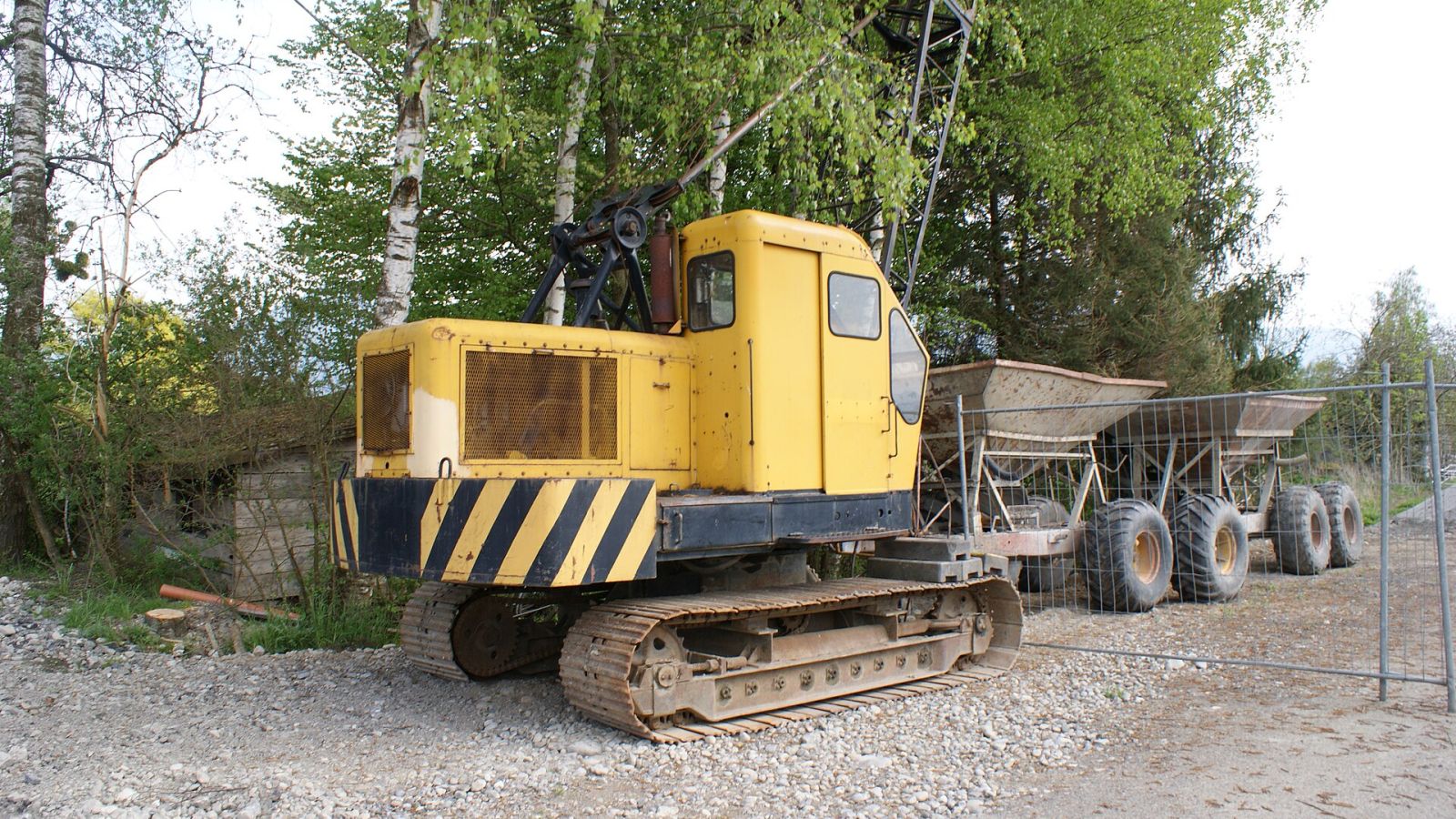
The core idea of this page: choosing an excavator means choosing a machine class first — operating weight sets dig depth, lift and ground pressure — then a bucket and attachment to hit your cycle target. Start from the job, not from the tonnage.
Start with the job, not the machine
Define the work
List what the machine will actually do: trenching, basement excavation, loading trucks, demolition, grading or material handling. Each job pushes you toward a different size and attachment.
Soil and ground conditions
Hard rock needs breakout force and weight; soft or wet ground needs low ground pressure so the machine does not sink. Match the undercarriage to the ground, not just the weight to the job.
Site access and space
Check gate widths, overhead clearance and the swing radius the site allows. A machine that fits the lot but not the gate is the wrong machine.
Excavator types
Crawler (tracked) excavators give stability and low ground pressure on soft or uneven ground. Wheeled excavators travel between sites on roads and suit hard surfaces. Mini/compact excavators (under 8 tonnes) fit tight urban and utility work. A backhoe loader is a two-in-one machine that combines a front bucket with a rear digging arm — see Excavator vs Backhoe Loader.
Size and weight class: the core decision
Size classes
Mini machines run under 6 tonnes; midi (compact) run 6–10 tonnes; standard machines run 13–20 tonnes; large machines run 20–40 tonnes and up. Operating weight is the anchor — a Cat 336 at 36,800 kg digs deeper and lifts heavier than a 20-tonne machine, but costs more to move and run.
The working envelope
Three numbers define reach: maximum dig depth, maximum reach at ground level, and dump height. Pick the envelope that covers your trench depth and your loading height, not just the biggest bucket.
Tail swing
Conventional machines have a counterweight that swings outside the track width. Zero-tail-swing or short-tail-swing machines keep the rear within the tracks, which matters when working alongside walls or in a single lane.
Key specs to compare
Bucket capacity and breakout force
Bucket capacity (m³) sets how much each cycle moves; breakout force (kN) sets whether the machine can break the material. Productivity is capacity times cycle time times fill factor — not capacity alone.
Lift capacity and stability
Read the lift chart: it shows how much the machine can lift at a given reach and height. A machine that can lift your heaviest object only when the load is close in is not enough.
Hydraulic flow and pressure for attachments
Attachments (breakers, augers, thumbs, tilt-rotators) need a minimum hydraulic flow (l/min or gpm) and pressure (bar or psi). Check auxiliary-hydraulic specs before you buy the attachment.
Engine power and emissions
Confirm the engine meets your region's emissions tier (EU Stage V, US EPA Tier 4 Final, or China Non-road Stage IV) — it affects both legality and fuel cost.
Ground pressure and undercarriage
Ground pressure (kPa or psi) comes from weight divided by track contact area. Soft ground needs wider tracks or a lighter machine; choose between rubber and steel tracks for the surface you work on.
Attachments and auxiliary hydraulics
One excavator becomes many tools with attachments: hydraulic breakers for demolition, augers for drilling, thumbs for grappling, tilt-rotators for fine grading. Each needs a matching auxiliary circuit — check flow and pressure before committing.
Transport and logistics
The machine must be moved by a trailer that can legally carry its weight, and oversized loads need permits. Wheeled machines can sometimes self-transport; crawler machines almost always need a lowboy.
New vs used
New gives warranty, the latest emissions compliance and predictable cost; used trades a lower price for hidden wear. Always check engine hours, undercarriage condition and the maintenance log — see New vs Used Excavator.
Total cost of ownership
Fuel and undercarriage wear are the two biggest running costs, followed by hydraulic maintenance and bucket/teeth replacement. The purchase price is only the entry cost — a cheaper machine with a worn undercarriage can cost more per hour.
Rent vs buy vs lease
Below a certain annual utilisation, renting is cheaper than owning; above it, buying wins. A rough anchor: if the machine runs most days, buy; if it runs occasionally, rent. Financing spreads the cost but adds interest — compare the total, not the monthly payment.
Operator comfort, safety and technology
Grade control, rear cameras, telematics (fuel, idle, location) and a comfortable cab all reduce cycle time and mistakes. For a machine your operators sit in all day, ergonomics is a productivity spec, not a luxury.
Summary checklist
- Define the work and the material.
- Pick the class by operating weight.
- Verify the working envelope (depth, reach, dump height).
- Check ground pressure and undercarriage.
- Match attachments to auxiliary flow and pressure.
- Confirm emissions compliance and dealer support.
- Run the TCO, not just the price.
How to read a spec sheet (worked example)
Take a 20-tonne-class machine. The sheet lists operating weight, maximum dig depth, maximum reach at ground level, bucket breakout force and auxiliary flow. Compare those five numbers across machines in the same class, not across classes — a 20-tonne and a 30-tonne machine are not substitutes. Then confirm the lift chart covers your heaviest lift and the ground pressure fits your site. The spec sheet tells you what the machine can do; the dig test tells you how well it does it on your material.
Frequently asked questions
What is the most common excavator size?
The 13–20 tonne standard class — it balances reach, lift and transportability for most construction work.
Does bucket capacity equal productivity?
No. Productivity is capacity times cycle time times fill factor. A faster cycle with a smaller bucket can out-produce a slow big bucket.
How important is ground pressure?
It is the difference between working and getting stuck on soft ground. Always check the machine's ground pressure against the site's bearing capacity.
See also: Excavators: Top 10 Compared and Excavator Buying Guide.
Last verified: September 10, 2026.