
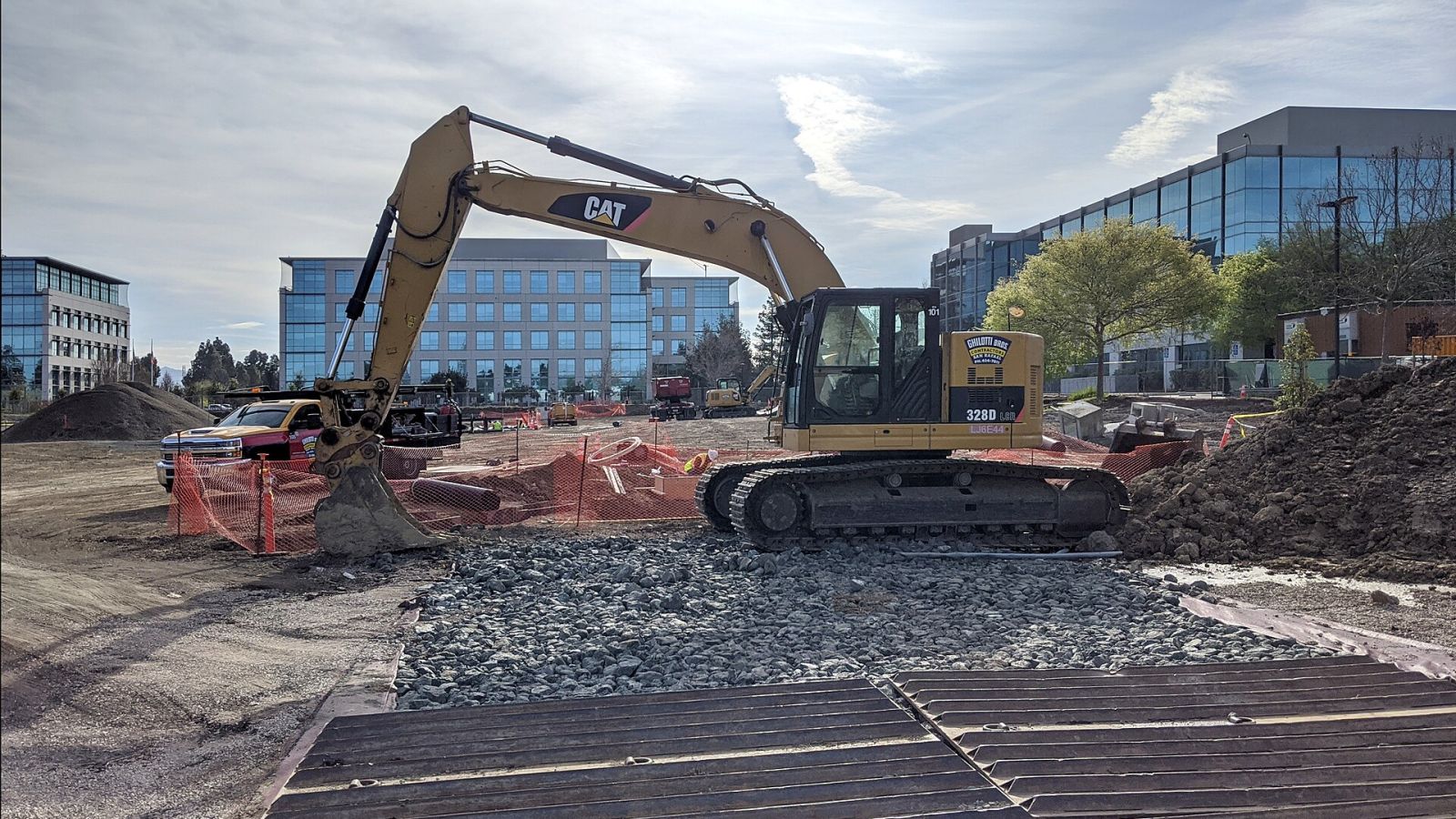
The core idea of this page: the decision is not the sticker price — it is total cost of ownership plus downtime risk. New buys predictable uptime and productivity; used buys a lower entry cost but you carry the hidden wear. High utilisation and critical deadlines favour new; tight cash flow and short projects favour used.
New excavators
New machines come with a multi-year warranty, a fixed maintenance plan, the latest emissions tier and current technology (grade control, telematics). They can be spec'd to the job, and they hold residual value. The cost is a higher purchase price, the steepest depreciation in the first two years, and a delivery wait.
Used excavators
Used machines cost less up front and have already passed the steepest depreciation, and they are available immediately. The risk is what you cannot see: engine hours, undercarriage wear, hydraulic leaks and skipped maintenance. One major failure — a final drive, hydraulic pump or swing bearing — can erase the initial saving.
New vs used at a glance
| Dimension | New | Used |
|---|---|---|
| Purchase price | Higher | Lower |
| Depreciation | Steepest in years 1–2 | Already past the steepest |
| Warranty / support | Full warranty | Little or none (unless CPO) |
| Running cost | Predictable | Unpredictable |
| Technology | Latest GPS / telematics | May need retrofit |
| Emissions compliance | Current tier | May be older tier |
| Delivery | Wait / build time | Immediate |
| Resale value | Stronger | Weaker |
Decision rule
- High utilisation, critical deadlines, need for tech and emissions compliance → new.
- Cash-flow constrained, short project, in-house maintenance team → used (after a full inspection).
- Occasional or short-term use → rent before you buy.
Used-machine inspection checklist
- Hours: under 3,000 is low; 3,000–6,000 is common; above 10,000 depends on component condition.
- Undercarriage: track wear, rollers, idlers, sprockets.
- Pins and bushings: slop in the boom, arm and bucket joints.
- Hydraulics: leaks, slow or jerky movement, drift.
- Swing and final drives: noise, play, oil condition.
- Engine: cold start, smoke, blow-by.
- Structure: cracks in the boom, arm and frame.
- Records: a full maintenance log, not a verbal promise.
Frequently asked questions
How many hours is too many on a used excavator?
There is no single number — condition matters more than hours. Above 10,000 hours, base the decision on component inspection, not the hour meter.
Does a used excavator's warranty transfer?
Sometimes, if it is a certified pre-owned (CPO) unit or a transferable extended warranty. Confirm in writing.
Last verified: September 10, 2026.