Last updated: September 8, 2026. How much does a sealing machine cost? Anywhere from under a hundred dollars for a hand impulse sealer to six figures for an automated tray-sealing line — and that spread is the honest answer, because the term covers machines that solve completely different production problems. The practical route to a real number: classify the requirement, then make every supplier quote the same scope.
The core idea of this page: sealing-machine prices span five orders of magnitude because the category spans five machine classes — so budget by machine class first, make every supplier quote the same scope, and add the hidden lines (tooling, integration, site work, wear parts) before comparing numbers.
This is a global B2B buying guide; a dedicated section below covers what importing buyers — India is the most common case among our readers — should add on top of a quoted price. For the machine-class map behind the bands, see What Is a Sealing Machine.
Choose the machine category before comparing prices
Indicative price bands are shown to frame expectations only. They are this site’s editorial order-of-magnitude estimates drawn from market observation — sealing-machine builders do not publish price lists, and no two quotes share a scope. Actual prices depend on size, speed, hygiene specification, brand and scope — treat the bands as an order-of-magnitude check on quotes, never as a negotiating target.
| Machine category | Typical use | Indicative price band (ex-works) | What to confirm in the quote |
|---|---|---|---|
| Impulse or bench sealer | Low-volume bags and occasional sealing | Tens to a few hundred USD | Compatible material, duty cycle, replacement heating parts |
| Continuous band sealer | Steady bag sealing on a production line | Roughly $500–$5,000 | Bag size range, line height, speed with your product, wear parts |
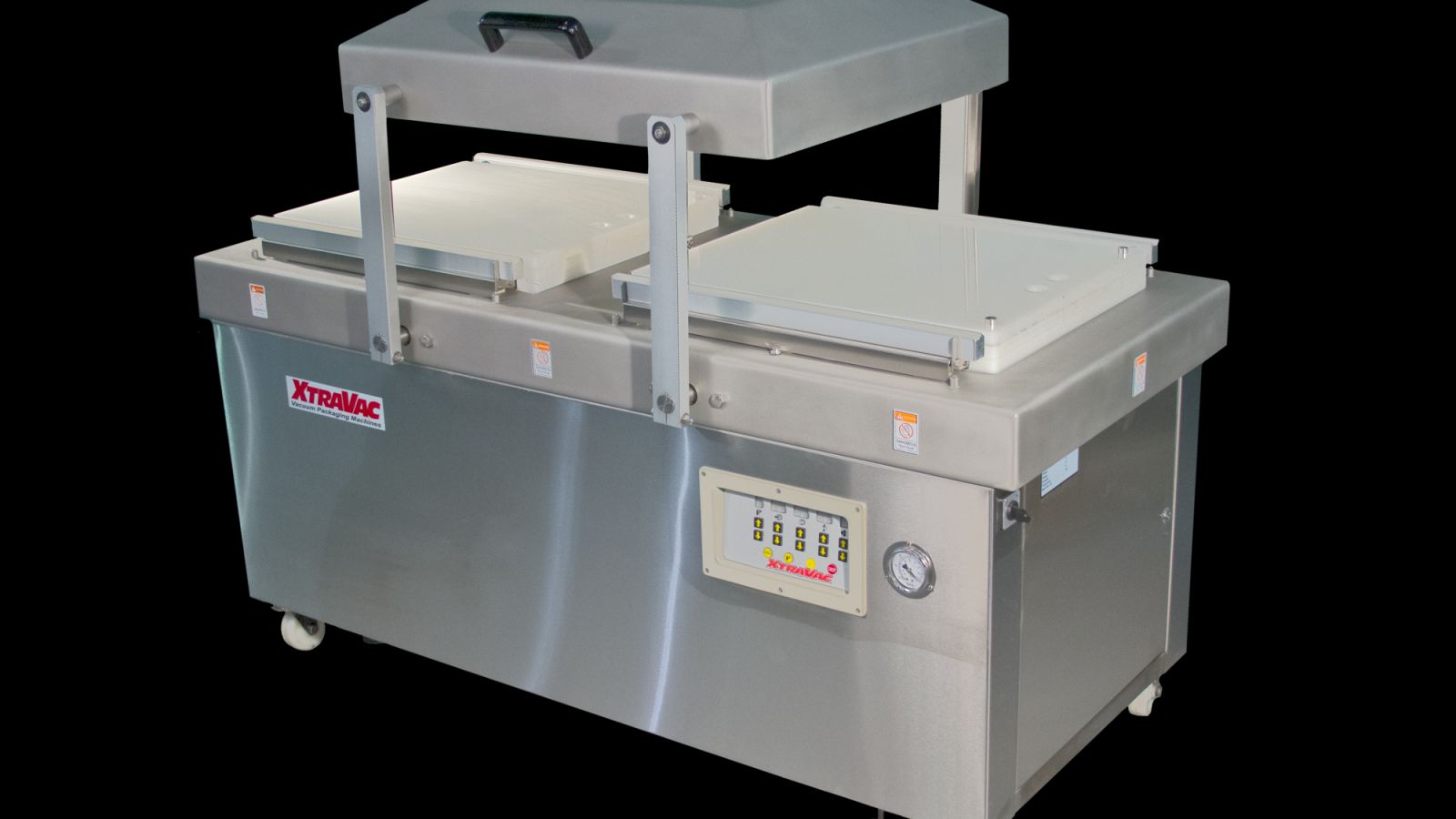
| Vacuum or gas-flush sealer | Shelf-life and product-protection applications | Roughly $1,000–$30,000+ | Residual-oxygen target where relevant, pump service, test method |
| Induction cap sealer | Tamper-evident foil seals on bottles and jars | Benchtop units roughly $2,000–$5,000; inline systems roughly $5,000–$30,000+ | Head power and cooling, cap-size range, liner compatibility, speed with your caps |
| Tray sealer | Prepared food and rigid-tray packs | Semi-automatic from a few thousand USD; automatic MAP systems far higher | Tool cost, changeover time, tray and lidding-film compatibility |
| Integrated automated line | High-throughput or end-of-line operations | Tens of thousands USD upward | System throughput, upstream/downstream responsibility, SAT criteria |
Source
Title: Sealing Machine Price List — Finetech Machinery (Wenzhou)
URL: https://pharmamachinecn.com/sealing-machine-price-list/
Published vendor bands: continuous band sealers $300–$8,500; vacuum sealers $50–$15,000; induction cap sealers $90–$5,000; tray sealers $800–$150,000+. The bands above are editorial ranges aligned with this published list — confirm a machine-specific quote for your pack and scope.
What a complete sealing-machine budget should include
- Base machine and standard configuration. Document the exact model, electrical standard, safety guards and included controls.
- Sealing and product-contact components. Jaws, belts, heaters, PTFE parts, vacuum chambers or gas components required for your pack. On band sealers, the PTFE belts and heating elements are the routine wear items — price them now.
- Tooling and format parts. Tray-sealing tools and change parts can rival the machine price on multi-format projects.
- Material handling and integration. Feeders, conveyors, printers, checkweighers and reject systems usually sit outside the base quotation.
- Site work. Freight, insurance, installation, commissioning, training and local utilities, each as its own line.
- Lifecycle support. Critical-spares kit, consumables list, preventive-maintenance plan, warranty terms and support rates.
The inputs that move the price most
Pack format and material set the machine configuration: film structure, seal layer, bag geometry, tray flange and required seal width. Send representative packaging material with the RFQ. Throughput only means something when every supplier uses your product, your pack dimensions and the same uptime assumptions — ask for a normal operating range instead of a maximum. Hygiene requirements separate a dry-goods sealer from a washdown-rated machine for oily, chilled or medical products; the same nominal function can sit in a different price class. Automation and integration often cost more than the sealing head itself, so make interface ownership explicit.
Buying in India: what to add to a quoted price
Search interest in sealing-machine prices is strong in India, and the arithmetic there illustrates every importing market. A quoted ex-works price is the start, and the landed cost adds: international freight and insurance, basic customs duty, IGST (machinery is generally taxed at 18% — confirm the current rate for your HS code), customs clearing, inland transport and any installation travel. Request every import quote on the same Incoterm so these lines stay visible.
Weigh the total against domestic suppliers, where freight and duty shrink but the machine class may differ. Whichever route wins, confirm where the nearest service technician and spare PTFE belts, heaters and seals actually come from — a two-week wait for a $20 wear part costs more than the part.
Compare supplier quotes on one brief
Send each supplier the same one-page application brief: product, packaging material, dimensions, target output, shift pattern, utilities, destination market, footprint and delivery date. Score the quotes against identical criteria — configuration and exclusions, demonstrated performance with your materials, format-change cost and time, FAT/SAT criteria, warranty and spares support, Incoterm and lead time.
For a China supplier profile focused on sealing and end-of-line equipment, see the Hualian Machinery Group company card. For a current product-launch example, see New PW5500 Heat Sealer Revolutionizes Packaging — a news item rather than a selection guide. For the vendor shortlist, see Top 10 Sealing Machine Manufacturers.
Frequently asked questions
Should I choose the lowest sealing-machine price?
Only after confirming the configurations match. A lower base price routinely excludes tooling, integration, acceptance testing, commissioning or critical spares — the difference reappears later with interest.
Can one sealer handle every packaging material?
Usually no. Sealant layer, thickness, contamination risk and pack geometry each constrain the machine; validate the combination with your material before purchase rather than after delivery.
Last verified: September 10, 2026.