
The core idea of this page: choosing a drill rig is choosing the machine that reaches your penetration rate at a cost per metre — fixed by the ground, the hole diameter, the hole depth and the advance rate you must hit, not by brand preference. The four facts decide the drilling method, and the method decides the machine.
Last updated: October 20, 2026. A drill rig is not bought for its hole diameter alone. The rock, the hole, the depth and the metres-per-shift target together set the method and the machine class. This entry walks the decision in the order that prevents the most expensive mistakes.
How to choose, step by step
1. Characterize the ground
Rock hardness and abrasiveness set the drilling method before any brand. Hard, abrasive rock favours top-hammer or DTH percussion; soft ground and large diameters favour rotary drilling. A rig that drills fast in limestone may stall in granite — the ground is the first variable.
2. Fix the hole diameter and depth
Hole diameter sets the drill string and bit size; hole depth sets the feed length and whether the rig needs a rod handling system. Small-to-medium holes in hard rock suit top-hammer; larger, deeper holes favour DTH, which keeps the hammer energy at the face as the hole deepens.
3. Set the advance rate
Metres per shift is the real target, and it sets the machine size and the number of booms. A single-boom rig suits smaller development; two or more booms raise the advance rate for production drilling. The advance rate must include move, setup and retract time, not just the drilling itself.
4. Choose the drilling method
- Top-hammer — the hammer stays on the rig and strikes the rod from above; fast penetration in small-to-medium holes in hard rock.
- Down-the-hole (DTH) — the hammer follows the bit down the hole; straighter, deeper, larger holes.
- Rotary — the bit is rotated under high down-pressure without percussion; soft ground and large-diameter piles.
5. Size the machine class
The machine class follows the hole and the duty: a surface crawler drill for quarry blast holes, an underground jumbo for tunnel or stope faces, a piling rig for foundations. Match the carrier, the feed and the automation to the duty cycle, not the peak.
Types of drill rigs
The rig type follows where and what you drill:
Surface crawler drill rig
A tracked or wheeled rig that drills vertical or angled blast holes from the surface in quarries and open-pit mines. Top-hammer or DTH, with a feed, rod handling and dust collection on a self-propelled carrier.
Underground drill jumbo
A rubber-tyred, articulated carrier with one or more booms that drills the tunnel or stope face from inside the opening. Jumbos are sized by the number of booms and the face coverage they must reach.
Rotary piling rig
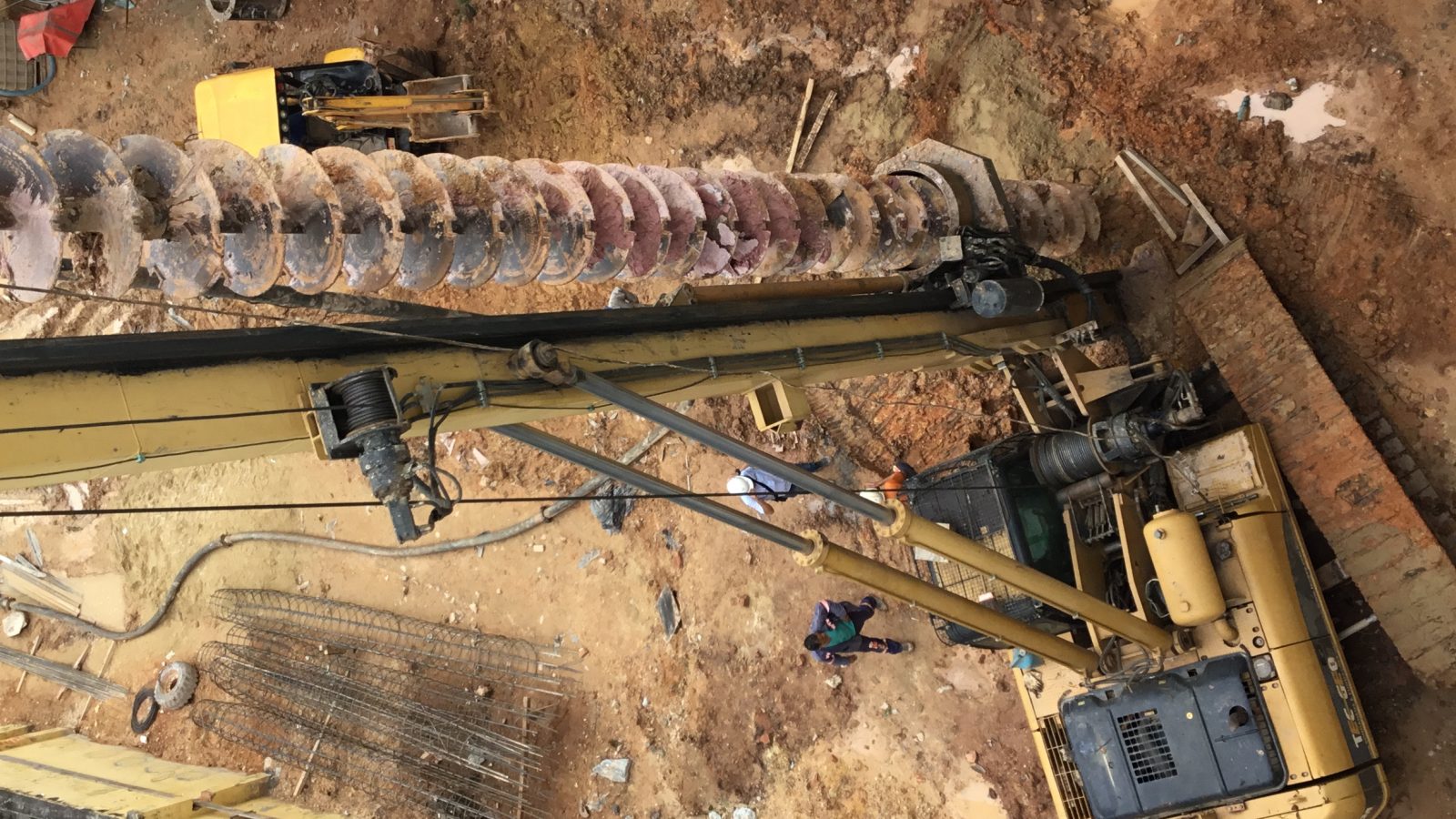
A crawler crane with a rotary drive that bores large-diameter holes for cast-in-place foundation piles. It uses a kelly bar or telescopic drive and an auger or drilling bucket in soil and soft rock.
Exploration coring drill
A compact surface rig that recovers rock core for mineral exploration and geotechnical work. It is chosen for core recovery and depth capacity rather than production blast-hole output.
Drilling methods compared
The percussion method is the second-biggest decision after the ground:
- Top-hammer. The hammer is mounted on the rig and strikes the top of the drill string. Because the energy is delivered from above, penetration is fast in small-to-medium holes, but the shock wave weakens as the hole deepens and the string lengthens. Best for smaller blast holes in hard rock.
- Down-the-hole (DTH). The hammer rides down the hole directly behind the bit, so the impact energy stays at the face regardless of depth. It drills straighter, deeper and larger holes than top-hammer, at the cost of slower penetration in small diameters. Best for deep, large-diameter holes and water-well or foundation work.
- Rotary. No percussion — the bit is rotated under high down-pressure to cut or crush the rock. It is the method for soft ground and large-diameter bored piles where percussion would damage the hole or the tooling.
The method and the hole size together set the drill string, the compressor or hydraulic power, and therefore the machine class.
Key variables and failure modes
- Oversizing. A rig too large for the job burns fuel and costs more per metre.
- Undersizing. A rig too small cannot reach the penetration target and is overloaded, accelerating wear.
- Wrong method. Top-hammer on deep holes loses energy and straightness; DTH on small holes is slower than needed.
- Ignoring consumables. Drill bits, rods and shanks are the real cost per metre; budget them as a rate on your rock.
How to verify a drill rig
- Witnessed trial. Drill in your rock and measure penetration rate and hole straightness — the brochure rate is not your rate.
- Cost per metre. Add bit, rod and shank consumption to energy and labour for a true cost per drilled metre.
- Cycle time. Time a full set-up, drill, retract and move cycle, not just the drilling seconds.
- Dust and safety. Confirm dust collection and guarding meet your site limits.
Frequently asked questions
One boom or two?
One boom suits smaller development and utility work; two or more booms raise the advance rate for production drilling where metres per shift matter.
When does DTH beat top-hammer?
Beyond that diameter and in deeper holes, DTH keeps penetration and straightness where top-hammer fades, because the hammer stays at the face.
What is the most common selection mistake?
Buying on hole diameter and headline power while ignoring rock abrasiveness and consumable cost — the two variables that decide the real cost per metre.
How important is automation on a drill rig?
Automation (auto-rod-handling, auto-positioning, telemetry) cuts cycle time and improves hole accuracy on production drilling, and removes the operator from dust and vibration — worth paying for where metres per shift and repeatability matter, less so for occasional utility work.
See also: Drilling & Tunneling Buying Guide and Drill Rigs & TBMs: Top 10 Compared.
Source: Drilling rig — Wikipedia
"A drilling rig is an integrated system that drills wells, such as oil or water wells, or holes for piling and other construction purposes, into the earth's subsurface."
Related guides
- Drill Rigs & TBMs: Top 10 Compared (2026) — Last updated: October 20, 2026. Drilling and tunneling equipment spans…
- Drilling & Tunneling Buying Guide: Rigs, Jumbos & TBMs — drilling and tunneling equipment is specified from three facts —…
- Drill and Blast vs TBM: Choosing a Tunnelling Method — drill-and-blast and TBM are two ways to drive a tunnel. Drill-and-blas…
- Top-Hammer vs DTH Drilling — top-hammer drilling keeps the hammer on the rig and strikes the rod fr…
- New vs Used Drill Rig: Which Should You Buy? — new drill rigs give warranty, current safety and automation, and a kno…
- How a Tunnel Boring Machine Works — a tunnel boring machine bores a full-face tunnel by rotating a cutterh…
- Top 10 Drill Rig & TBM Manufacturers (2026) — Last updated: October 20, 2026. Drilling and tunneling equipment bores…
- Top 10 China Drill Rig & TBM Manufacturers (2026) — Last updated: October 20, 2026. China has become the world's largest b…
Last verified: October 20, 2026.