
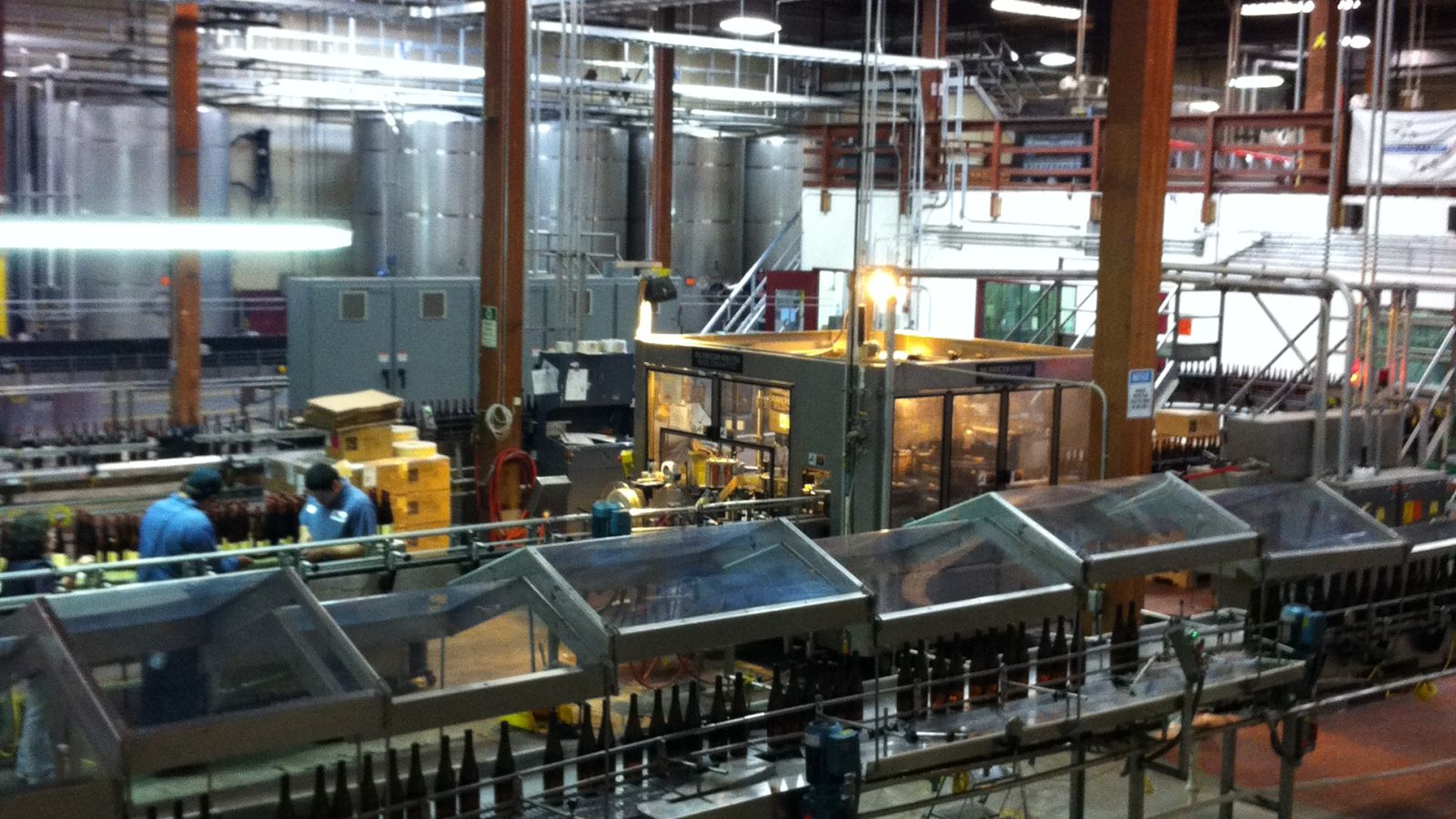
Last updated: September 9, 2026. If you are specifying a liquid filling machine, the shortlist almost always lands on five machines that span the filling spectrum — from an ultra-high-speed rotary flowmeter to an aseptic carton line, a net-weight filler, a volumetric rotary and an entry linear. This ranking compares them on what actually differs on a production line: fill accuracy, output, format reach, hygiene and how much of each machine’s specification is publicly verifiable.
The core idea of this page: the five leading liquid fillers solve the same job but win on different strengths — speed, dosing accuracy, aseptic or hygiene reach, or entry cost. Pick by the product behaviour, container and fill principle you actually run, then force a witnessed fill with the accuracy and cleaning data on your product.
How we ranked them
Each machine is scored on four dimensions — fill accuracy & output, format & process reach, hygiene & certification, and data verifiability — using published specifications and verifiable manufacturer information only. Where a figure is not published it is marked "Not published" rather than estimated. The stars are an editorial summary; the reasoning sits in each profile below.
The five at a glance
| Rank | Machine | Manufacturer | Filling principle | Headline output |
|---|---|---|---|---|
| 1 | Krones Modulfill VFS | Krones | Volumetric / flowmeter rotary | 81,000 containers/h |
| 2 | Tetra Pak A3/Flex | Tetra Pak | Aseptic carton filling | 5,000–8,000 packs/h |
| 3 | Serac RB Net-Weight | Serac | Net-weight (weigh) filling | 42,000 containers/h |
| 4 | KHS Innofill DRV | KHS | Volumetric rotary | 82,000 bottles/h |
| 5 | Pack Leader FL-800 | Pack Leader | Linear piston / peristaltic | 50 BPM |
Scoring summary
| Machine | Fill accuracy & output | Format & process reach | Hygiene & certification | Data verifiability |
|---|---|---|---|---|
| Krones Modulfill VFS | ★★★★★ | ★★★★★ | ★★★★★ | ★★★★★ |
| Tetra Pak A3/Flex | ★★★★★ | ★★★★★ | ★★★★★ | ★★★★☆ |
| Serac RB Net-Weight | ★★★★★ | ★★★★☆ | ★★★★★ | ★★★★★ |
| KHS Innofill DRV | ★★★★★ | ★★★★☆ | ★★★★★ | ★★★★★ |
| Pack Leader FL-800 | ★★★☆☆ | ★★★★☆ | ★★★★☆ | ★★★★★ |
1. Krones Modulfill VFS
Manufacturer: Krones.
Why it ranks first: the Modulfill VFS is the high-speed beverage reference — a rotary filler that holds volumetric accuracy with an inductive flow meter across soft-drink and hot-fill processes. If output per line is the deciding variable, this is the benchmark, and Krones publishes its specification directly.
Filling principle: volumetric with inductive flow meter; standard, carbonated and hot-fill processes.
Best for: high-speed water, soft-drink and beer lines.
Source
Title: Modulfill VFS with PFR valves — Krones
URL: https://www.krones.com/en/products/machines/modulfill-vfs-softdrinks.php
Krones documents the Modulfill VFS at "up to 81,000 containers per hour", with "an inductive flow meter monitors the fed filling quantity" across standard, carbonated and hot products.
2. Tetra Pak A3/Flex
Manufacturer: Tetra Pak.
Why it ranks second: the A3/Flex is the aseptic carton reference — it fills milk, juice and plant-based drinks in a closed sterile environment so the product stays ambient-stable. If your pack format is a carton, this is a different machine class from every other entry on this list, and it earns its place on packaging reach alone.
Filling principle: aseptic carton filling with variable pack volume.
Best for: dairy, juice and plant-based beverage lines.
Source
Title: Tetra Pak A3/Flex packaging line — Food Ingredients First
Trade press documents the A3/Flex at "a capacity of 5,000 to 8,000 packages per hour, depending on volume", producing TBA packages from 200 ml to 2000 ml and TPA packages from 200 ml to 1000 ml.
3. Serac RB Net-Weight
Manufacturer: Serac.
Why it ranks third: the RB is the net-weight reference — it weighs every fill rather than metering a volume, so product density shifts do not drift the fill. That matters for edible oils, dressings and products sold by weight, and Serac publishes the accuracy figure directly.
Filling principle: net-weight (weigh) control.
Best for: products sold or regulated by weight, and density-varying liquids.
Source
Title: RB rotary filler-capper — Serac
URL: https://www.serac-group.com/machine/rb/
Serac documents the RB at "Outputs: up to 42 000 containers/h (1 L)" with "Net Weight Control of the filling" and "An accuracy of approx. 1g/liter (1 sigma standard deviation)".
4. KHS Innofill DRV
Manufacturer: KHS.
Why it ranks fourth: the Innofill DRV is the volumetric rotary that slots into a complete turnkey line — rinsing, filling, labelling and packing from one supplier. It matches the Modulfill’s speed class while trading the flowmeter’s real-time feedback for a simpler, volume-based fill.
Filling principle: volumetric (volume-based) rotary filling.
Best for: producers that want one supplier for the whole bottling line.
Source
Title: Innofill PET DRV PET filler — KHS
URL: https://www.khs.com/en/products/machines-equipment/detail/innofill-pet-drv-pet-filler/
KHS documents the Innofill PET DRV: "Thanks to the volumetric filling method, you can fill your bottles to exact fill levels at up to 82,000 bottles per hour."
5. Pack Leader FL-800
Manufacturer: Pack Leader Machinery.
Why it ranks fifth: the FL-800 is the entry-and-mid linear tier — a piston or peristaltic pump monobloc that fills and caps in one station. It does not chase the rotary leaders on speed, but it wins on capital cost and changeover simplicity for producers that change formats often.
Filling principle: linear piston / peristaltic pump.
Best for: mid-output producers and frequent format changes across Asia.
Source
Title: FL-800 Filling/Inserting/Capping Monobloc — Pack Leader
URL: https://www.packleader.com/liquid-filling-machine/FL-800.html
Pack Leader documents the FL-800 with "Filling Accuracy ±1%" and "Production Speed 50 BPM maximum", with peristaltic or piston pump options.
What these machines cost
Liquid fillers span the widest price range of any packaging machine class because the word covers a benchtop piston and an aseptic carton line. Published buying-guide bands — manual/benchtop roughly $1,000–$5,000, semi-automatic $5,000–$20,000, automatic inline/rotary $20,000–$100,000+ — are order-of-magnitude figures; an aseptic line sits above them as a capital-grade investment. The full breakdown is in How Much Does a Liquid Filling Machine Cost; treat the bands as a quote-check and always confirm tooling, validation and acceptance testing in the same scope.
5 questions to ask before you buy
- What fill accuracy do you guarantee, and how is it measured on my product? Accuracy is a vendor claim until it is demonstrated — ask for the sampling plan, the measured deviation and the reject threshold, written into the order.
- Which part of the line does your CIP/SIP actually reach? A "CIP-ready" claim without verified spray coverage is not clean; ask for the cycle, the chemical concentration and how cleanliness is verified on the floor.
- How long is a full format change, demonstrated by my operators? Time a real changeover between your SKUs — the difference between minutes and an hour is a line-economics decision, not a convenience.
- Is the fill subject to legal metrology, and who provides the documentation? Net-weight fills sold by weight can carry OIML / NIST Handbook 44 obligations in the destination market.
- Can you run my product, at production speed, and show me the fill-weight and hygiene data from that run? A witnessed trial on your exact product and container is the only proof that matters.
Last verified: September 9, 2026.