
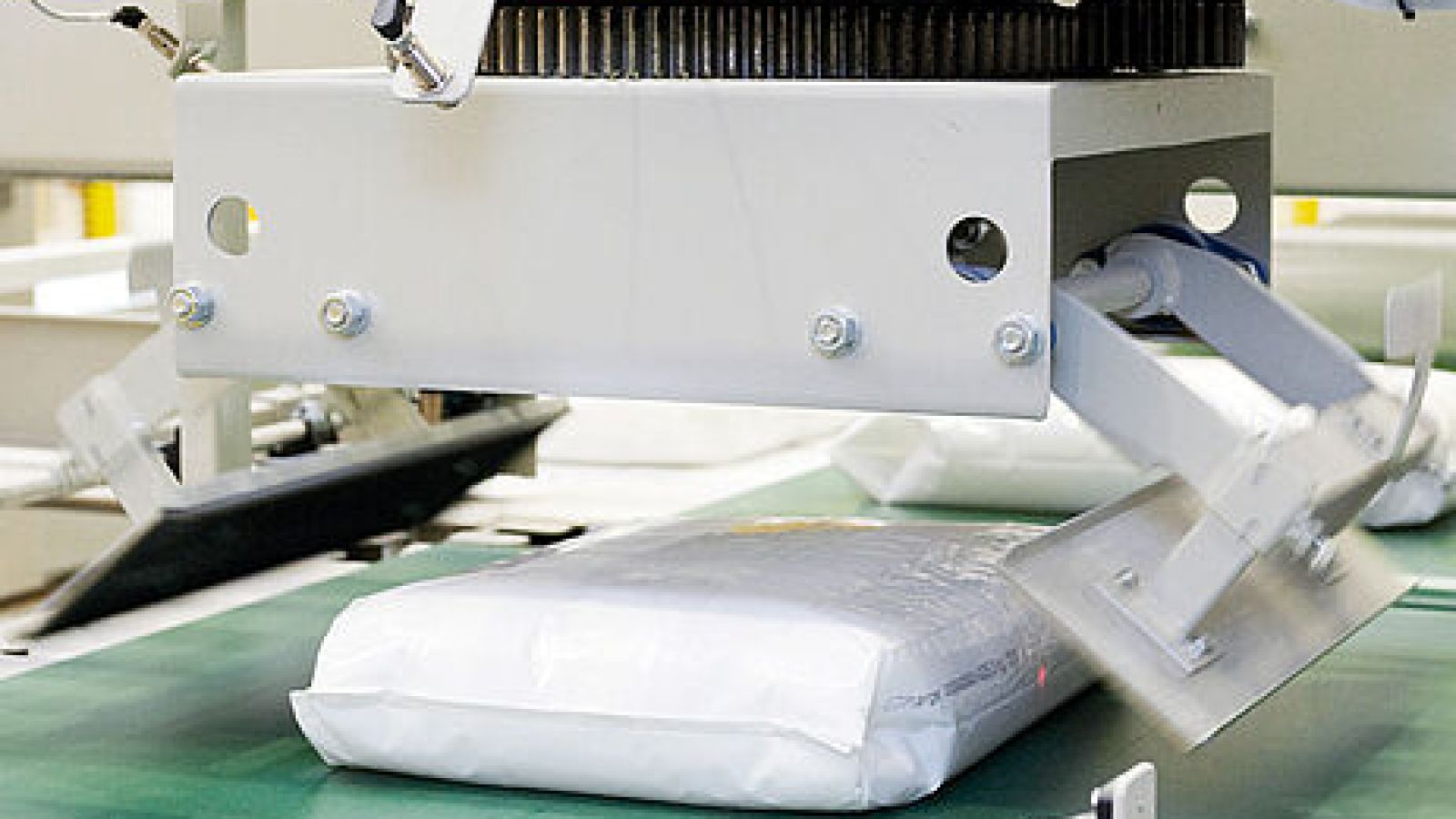
The core idea of this page: conventional (layer) palletizers build a whole layer at once and win on throughput; robotic palletizers place one case at a time and win on flexibility. Choose by volume and SKU mix — a high-volume single-SKU line favours layer, a mixed-SKU or tight-floor line favours robotic.
Conventional (layer) palletizing
A layer palletizer collates cases into a full layer, then places the layer. Moving a whole layer at once gives the highest output — the Möllers PLS-C runs 1,200–3,000 bags/hour, the Krones Modulpal Pro up to 650 layers/hour. The trade-off is mechanical changeover for each new pattern.
Robotic palletizing
A robotic palletizer uses an articulated arm to place cases one or a few at a time. It is slower per case but changes patterns with a program, handles multiple SKUs, and fits tighter floors. Choose it when flexibility and footprint matter more than peak rate.
Decision rules
- High volume + few SKUs → conventional layer palletizer.
- Many SKUs or frequent pattern changes → robotic.
- Limited floor space → robotic (smaller footprint).
- Fragile or irregular cases → robotic (gentler, case-by-case placement).
Source: Modulpal Pro Palletiser — Krones
"Maximum output: 650 layers per hour" — conventional layer-palletizing throughput reference.
Frequently asked questions
Can a robotic palletizer match a layer palletizer’s speed?
Generally not — a single arm places one case at a time. Multiple arms close the gap but raise cost and complexity.
Which handles mixed pallet patterns better?
Robotic — a pattern change is a program change, not a mechanical change.
Last verified: September 10, 2026.