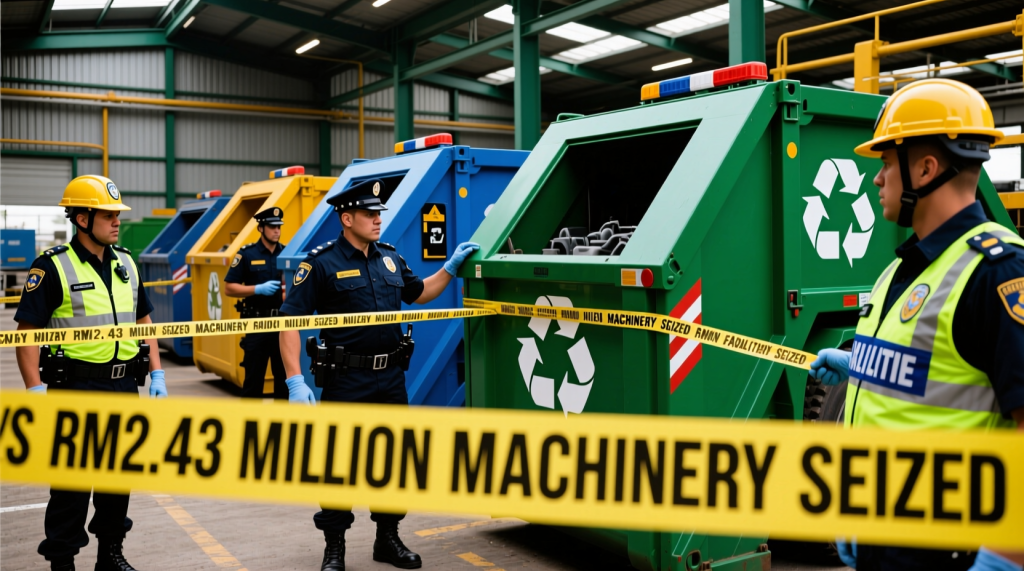
Introduction: Illegal plastic recycling in Penang and Environmental Quality Act 1974 enforcement
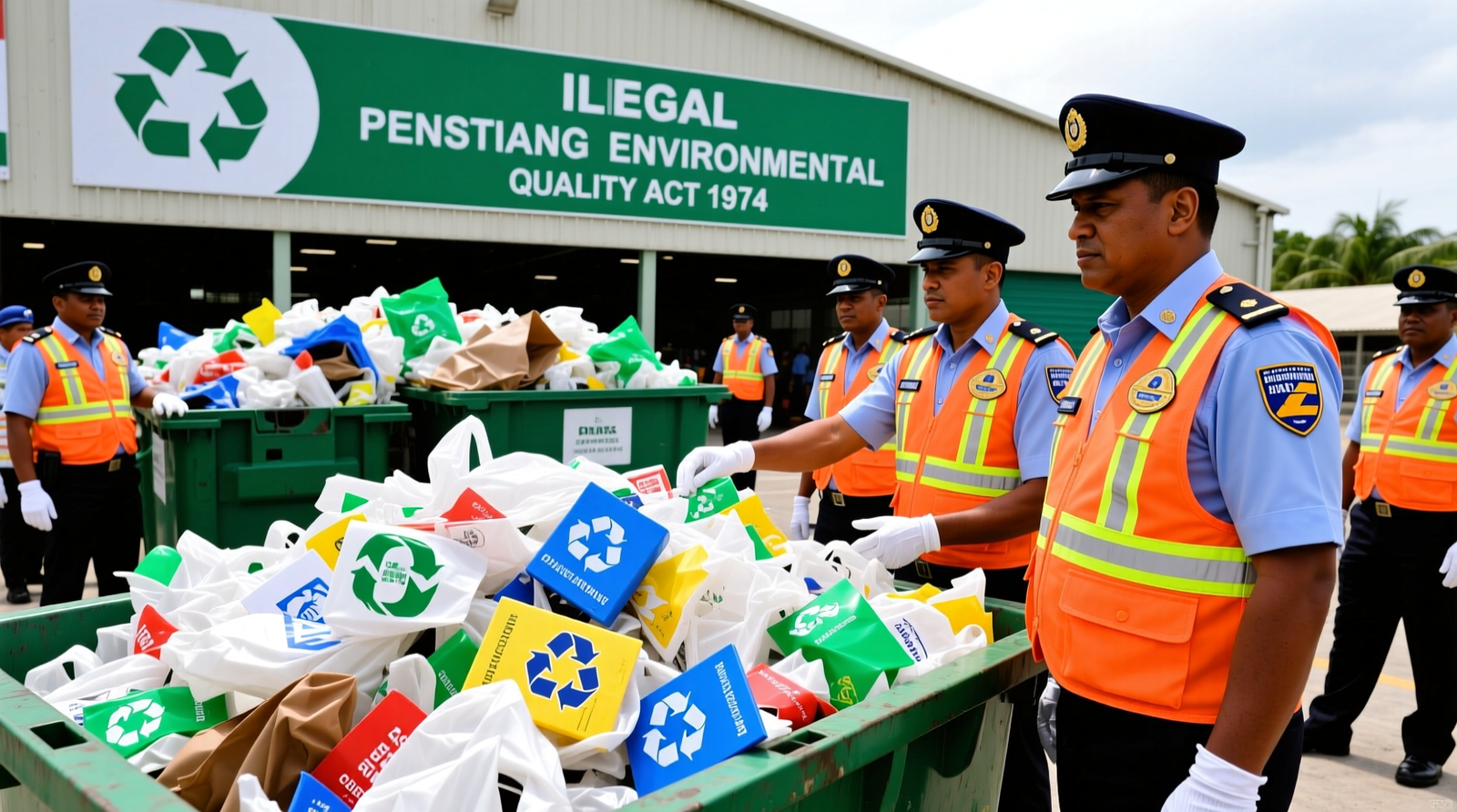
An unlicensed plastic waste processing facility in Sungai Lembu, Bukit Mertajam, Penang was raided by authorities, with seized machinery and materials estimated at RM2.432 million (i.e., an asset-value estimate, not necessarily the total value of the business). The case reinforces ongoing Environmental Quality Act 1974 enforcement against non-compliant recycling and pollution risks in industrial zones.
TL;DR: A suspected unlicensed recycling site in Penang was raided; the case is being investigated under Malaysia’s Environmental Quality Act 1974, highlighting compliance and supply-chain risks for manufacturers.
The raid took place on 24 February at an industrial premises in Sungai Lembu, Bukit Mertajam. Authorities alleged the site was operating as an unlicensed plastic recycling facility—meaning plastic sorting/washing/extrusion activities were conducted without the required Department of Environment (DOE) approvals and pollution-control conditions typically imposed on legitimate operators.
In practice, these sites commonly run a basic recycling line: receiving mixed plastic scrap, washing it, shredding/granulating, then melting and pelletising it. A small-to-mid industrial line can process several tonnes per day depending on equipment and staffing; in enforcement actions, common non-compliances include untreated wash-water discharge, open burning of rejects, and improper storage of contaminated plastics on bare ground (risking runoff into drains).
TL;DR: The premises was alleged to be operating recycling processes (washing/shredding/extrusion) without DOE approval—activities that often create wastewater and air-emission risks if controls are missing.
Likely plastic waste streams from semiconductor and industrial manufacturing—and contamination risks
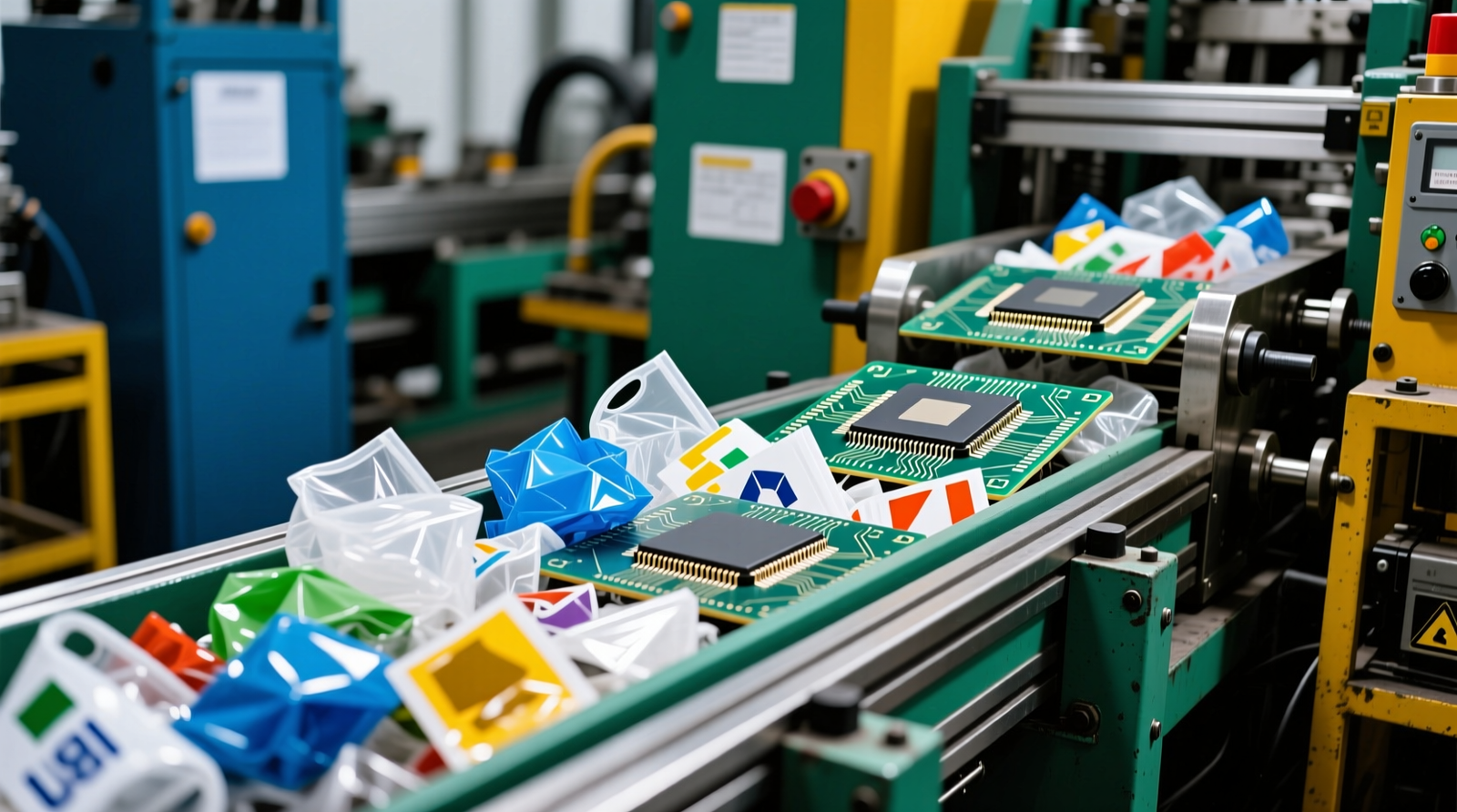
Initial reporting indicated the facility may have sourced plastics from nearby semiconductor-related operations. In semiconductor and electronics manufacturing, plastic waste can include:
- Cleanroom plastics (e.g., cleanroom bags, films, gloves, boot covers). “Cleanroom” refers to controlled environments that limit airborne particles; however, waste plastics leaving the cleanroom are not automatically “clean” for recycling due to potential contact with process chemicals or residues.
- Carrier trays, waffle packs, and protective packaging used for wafer/IC handling and component protection.
- Reels and spools used in surface-mount technology (SMT) assembly lines for tape-and-reel packaging.
- Stretch wrap, pallet straps, and logistics packaging from inbound/outbound material movement.
Contamination concerns depend on the process context and segregation quality. Potential risks include:
- Chemical residues (e.g., solvents, photoresist-related residues, cleaning agents) if plastics were used in areas handling chemicals or are mixed with contaminated wipes/containers.
- Heavy metal or ionic contamination concerns for downstream manufacturing if recycled pellets are used in sensitive applications.
- Cross-contamination from mixing polymers (e.g., PP/PE/PS/ABS) or mixing “clean” packaging with industrial scrap—leading to unstable melt flow and inconsistent pellet quality.
When such plastics are washed and pelletised without proper effluent treatment and emission controls, typical impacts include COD/BOD loading (Chemical Oxygen Demand/Biochemical Oxygen Demand) in wastewater, microplastics in wash-water, and volatile organic compounds (VOCs) or odours during extrusion if plastics contain inks, adhesives, or residues.
TL;DR: Semiconductor/industrial plastics can include cleanroom items, trays, reels, and packaging—often with contamination and quality risks if mixed, poorly segregated, or processed without controls.
Ops Taring Alpha 5: Joint enforcement by GOF and DOE Penang
The action was reportedly carried out under Ops Taring Alpha 5 involving the General Operations Force (GOF) Northern Brigade and the DOE Penang. In Malaysia, environmental raids often follow intelligence, community complaints (odour, smoke), and verification of licensing status and on-site conditions (waste storage, drainage connections, wash-water handling, and exhaust stack setups).
For reference on DOE’s regulatory role and enforcement scope, see the official DOE portal: Department of Environment (DOE) Malaysia.
Context note: Malaysia has experienced multiple enforcement “waves” tied to improper recycling and imported waste concerns in past years, especially in industrial states with dense manufacturing. Since the global waste-trade shifts after China’s restrictions, Southeast Asia—including Malaysia—has faced increased scrutiny over plastic waste movements and downstream processing capacity. For background on Malaysia’s position and actions related to plastic waste controls, see Basel Convention resources on transboundary waste movements: Basel Convention.
TL;DR: The raid reflects multi-agency enforcement; DOE is the key regulator, and Malaysia has a broader history of intensified scrutiny around waste processing capacity and controls.
Seized assets estimated at RM2.432 million: typical equipment and what it implies operationally
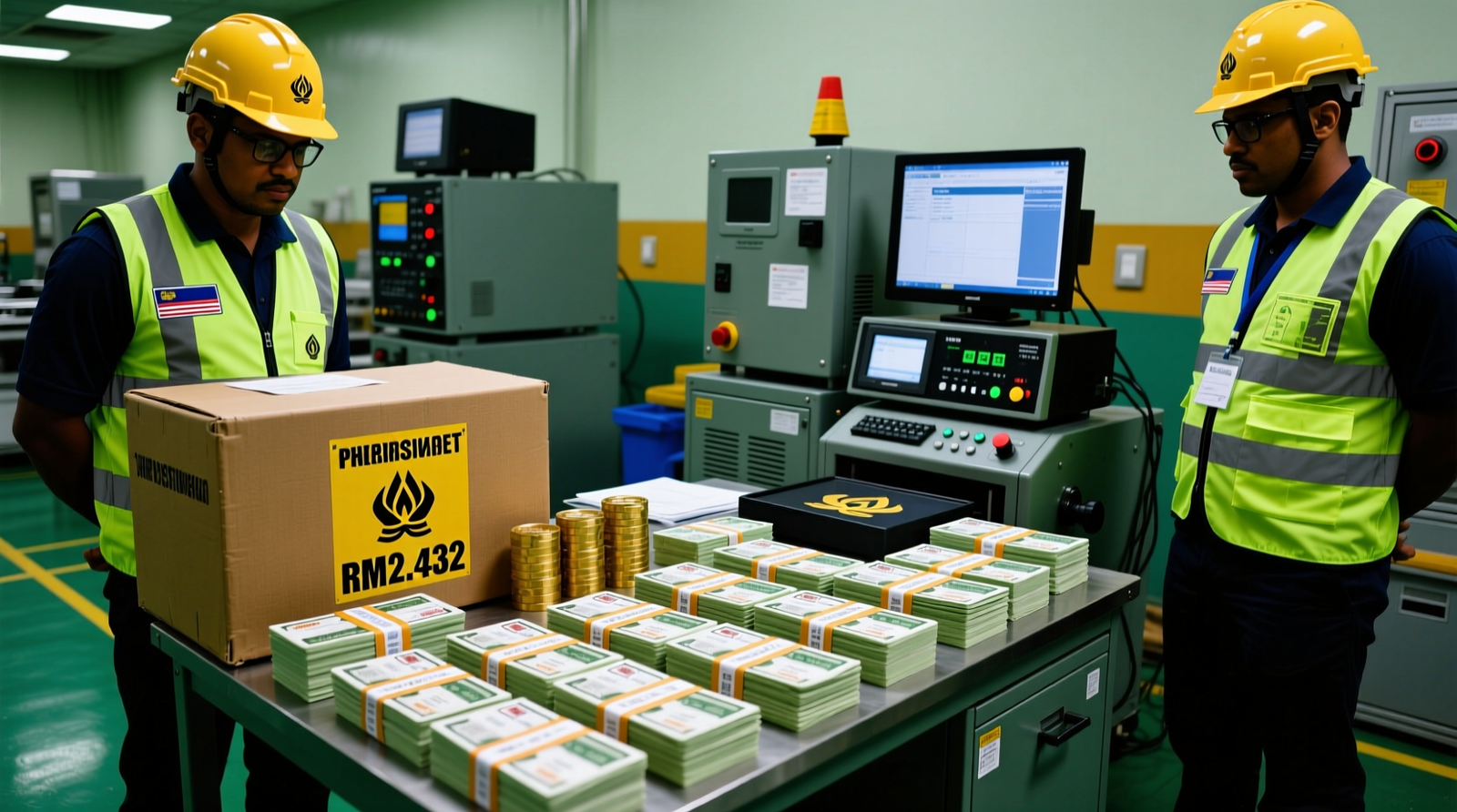
Authorities detained a local man believed to be linked to the operation. Items reportedly found included industrial washing machines, an extruder (a machine that melts plastic and forces it through a die to form strands/pellets), sacks of unprocessed plastic scrap, and sacks of plastic pellets.
The reported RM2.432 million figure should be understood as an estimated value of seized assets (machinery and materials) rather than proof of total revenue or the full scale of operations.
Operationally, a site with washing plus extrusion suggests more than simple collection: it indicates on-site conversion into recycled pellets that can enter formal supply chains. This is why authorities often focus on pelletising sites: pellets are harder to visually trace back to origin once blended into manufacturing inputs.
TL;DR: The RM2.432 million figure refers to seized machinery/material value; the presence of washing and extrusion implies the site could generate pellets that enter downstream manufacturing.
How Section 34A of the Environmental Quality Act 1974 is applied (EIA triggers, approvals, and typical enforcement outcomes)
The case was reported for action under Section 34A of the Environmental Quality Act 1974 (EQA 1974). Section 34A is Malaysia’s core provision requiring an Environmental Impact Assessment (EIA) for “prescribed activities”—specific project types and scales listed under subsidiary legislation (i.e., regulations made under the Act).
In practice, the EIA requirement is threshold-based: only projects that meet defined categories and size/capacity thresholds are “prescribed activities.” The relevant instrument is the DOE’s Laws & Regulations listing, which includes the Environmental Quality (Prescribed Activities) (Environmental Impact Assessment) Order and related guidance. Whether a particular recycling plant triggers an EIA depends on factors such as facility type, capacity, location sensitivity, and processes involved (e.g., washing lines producing industrial effluent, thermal processes, storage volume).
What enforcement commonly looks for:
- Evidence of operating a facility requiring DOE approval/EIA without having obtained it (e.g., no approval letter, no EIA approval conditions, no monitoring reports).
- Discharges to drains/waterways without proper treatment or without meeting discharge limits under applicable regulations (often linked to industrial effluent controls).
- Air emission issues (odour/smoke, lack of stacks/filters, visible emissions), depending on processes and fuels used.
- Improper storage or handling that causes pollution (e.g., runoff from scrap storage, leaking containers).
Penalties and outcomes: Penalties depend on the exact section(s) charged and evidence gathered (EQA offences can involve fines, court orders, and cessation directions). For up-to-date legal positions and enforcement communications, refer to official DOE channels: DOE Malaysia and the Federal Gazette/AGC portal for legislation access (where available): Laws of Malaysia (AGC).
TL;DR: Section 34A is about EIA for prescribed activities with threshold criteria; enforcement typically checks for missing approvals and pollution-control failures, with penalties depending on the specific charges under the EQA framework.
Other Malaysian compliance requirements that may apply (scheduled waste, licensing, and local approvals)
Beyond EIA considerations, an unlicensed recycling site can intersect with other compliance obligations:
- Scheduled wastes: If the site handles contaminated materials, residues, or certain industrial by-products that fall under Malaysia’s scheduled waste framework (regulated hazardous/controlled wastes), stricter rules apply for storage, labeling, transport, and treatment. The governing instrument is the Environmental Quality (Scheduled Wastes) Regulations 2005 (see DOE’s regulatory listings: DOE laws & regulations).
- Industrial effluent and sewage controls: Plastic washing generates wastewater containing suspended solids, detergents/surfactants, oils/adhesives, and microplastics—typically requiring an effluent treatment system and compliance monitoring (regulatory applicability depends on discharge route and facility classification under the EQA subsidiary regulations).
- Local authority licensing and planning approvals: Premises in industrial zones may still require local council permits, business licenses, and compliance with zoning/land-use approvals—important because “licensed business” is not the same as “DOE-approved environmental operation.”
- Transportation and traceability: Factories should use appropriately licensed transporters and maintain waste transfer documentation to demonstrate control of the waste stream from source to final processing.
TL;DR: EIA is only one piece—scheduled waste rules, effluent controls, local approvals, and traceability documentation can also apply depending on contamination and operations.
Best practices for licensed plastic recyclers: pollution controls, monitoring, and documentation
To demonstrate what “good” looks like, licensed recyclers commonly implement a set of engineering and management controls designed to prevent pollution and support auditability:
- Effluent treatment: Segregated drainage, oil/grease traps, dissolved air flotation (DAF) or equivalent solids removal (where relevant), controlled pH adjustment, and routine sampling to verify discharge compliance.
- Air emission and odour controls: Proper extruder ventilation, filters (as appropriate), well-designed stacks, and preventive maintenance to avoid overheating and smoke events; control of VOCs where inks/adhesives are present.
- Stormwater/runoff management: Bunded storage areas, covered scrap bays, and housekeeping to prevent pellet loss and plastic fragments entering drains.
- Material traceability: Incoming inspection (polymer type, contamination screening), batch records, weighbridge tickets, supplier declarations, and retention samples—especially when supplying pellets into manufacturing.
- Reject and residue handling: Clear segregation of rejects, responsible disposal routes, and no open burning.
This is aligned with what regulators typically expect: documented controls, monitoring, and operational discipline, not just “having machines.”
TL;DR: Legitimate recyclers invest in effluent treatment, air controls, runoff containment, and strong records—reducing pollution risk and improving pellet consistency.
Implications for manufacturers and licensed recyclers: supply chain, quality, and reputational risk
For industrial manufacturers (including electronics, packaging, and injection moulding operations), recycled pellets from an unapproved source can create serious downstream exposure:
- Product quality risk: Mixed polymers and unknown additives can cause brittleness, warpage, poor surface finish, odour, and inconsistent melt flow—leading to higher scrap rates and customer complaints.
- Compliance and audit risk: If a factory’s waste is traced to a non-compliant processor, the factory may face scrutiny over due diligence, waste handover records, and governance practices—especially for ESG (Environmental, Social and Governance) reporting.
- Brand and customer risk: Buyers increasingly require verified recycling content and lawful sourcing. Discovery that inputs are linked to an unlawful operator can trigger supplier delisting or reputational damage.
- Market distortion: Licensed recyclers face unfair pricing competition when non-compliant processors avoid costs for treatment systems, monitoring, and proper disposal.
TL;DR: Manufacturers using pellets indirectly linked to unlawful sites face quality issues, audits/investigations, and brand risk—while compliant recyclers face unfair competition.
What factories should check when selecting a recycling partner (due diligence for plastic waste management)
Factories generating plastic scrap—especially from controlled environments and high-spec production—should formalise recycler due diligence. Practical checks include:
- Verify DOE-related approvals: Ask for documentation showing the recycler’s environmental approvals relevant to their processes (collection, washing, extrusion/pelletising, effluent discharge route). Cross-check where possible via official channels (start with DOE Malaysia for guidance on regulatory requirements).
- Confirm scope matches reality: A recycler approved for “trading/collection” is not automatically approved for washing/extrusion. Match approvals to actual on-site processes.
- Audit trail and mass balance: Require weighbridge records, incoming/outgoing logs, batch numbers, and a simple mass balance (input scrap vs. output pellets vs. rejects) to spot “ghost” volumes.
- Waste transfer documentation: Keep consignment notes/invoices, transporter details, and destination details—do not rely on verbal assurances.
- Periodic compliance audits: Conduct site audits (or third-party audits) focusing on drainage, effluent treatment, odour control, scrap storage, and emergency response.
- Contamination segregation protocols: Ensure clean packaging plastics are not mixed with chemically contaminated plastics; use clear segregation at source (labelled bins, dedicated pallets).
TL;DR: Verify approvals match the recycler’s actual processes, demand traceable records, and run periodic audits—especially for washing/extrusion sites that generate wastewater and emissions.
Checklist: Good practices for legal plastic waste management (industrial sites)
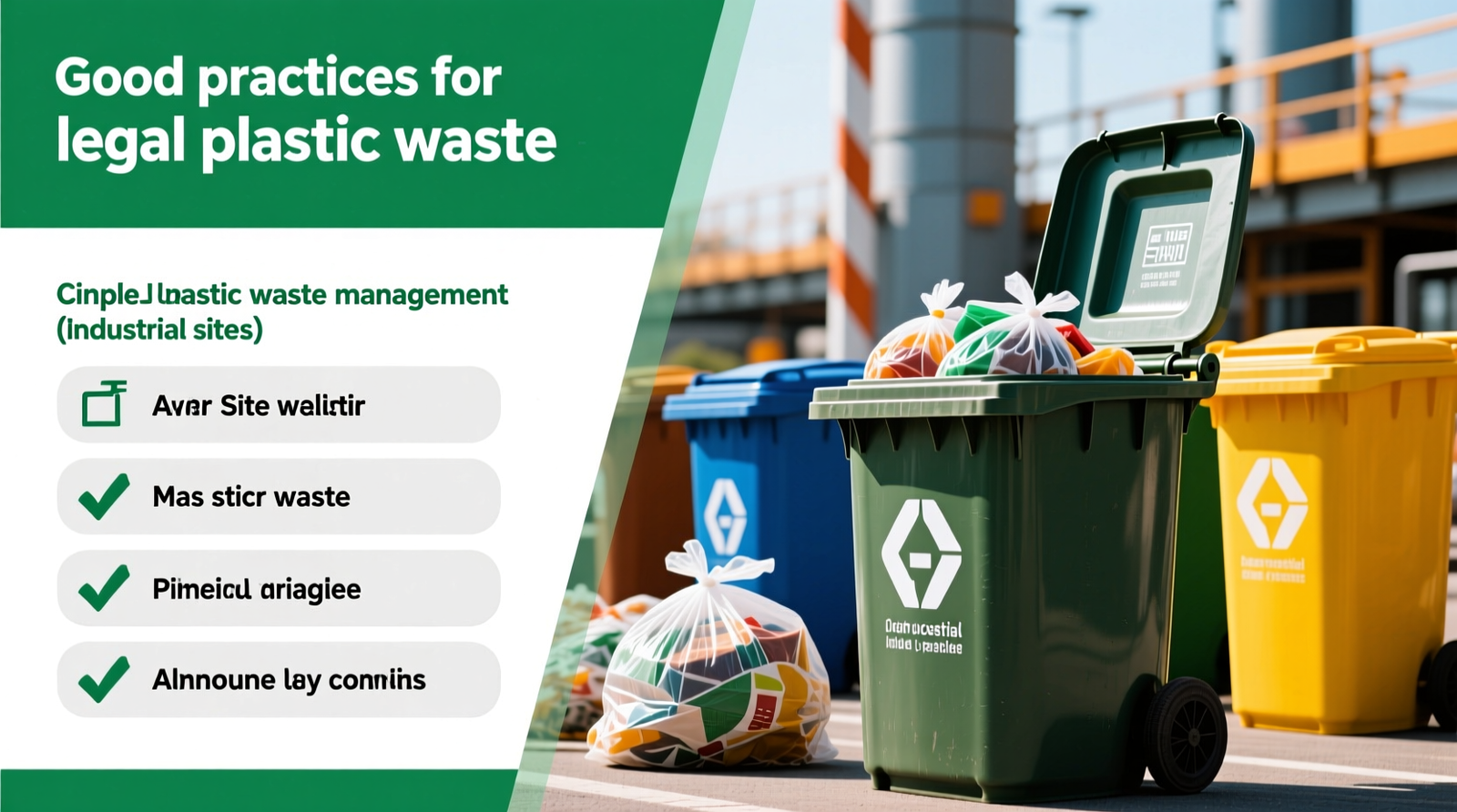
- Segregate at source by polymer and contamination level (e.g., PE film vs. PP trays vs. ABS reels; “clean packaging” vs. “process-area plastics”).
- Use licensed/approved service providers for collection/transport and ensure the final receiving facility is authorised for the intended processing step.
- Document every transfer: weights, dates, vehicle details, destination, and acceptance confirmation.
- Require downstream transparency: where the pellets go, what testing is done, and how rejects/residues are disposed.
- Conduct periodic site visits and corrective-action follow-ups; treat recycling vendors as critical suppliers.
TL;DR: Segregate plastics, use properly authorised vendors, keep a complete paper trail, and audit downstream processing to prevent leakage into unlawful channels.
Community and employee guidance: signs of unlawful processing and who to contact
Local residents and employees near industrial areas can help by reporting credible signs of suspected unapproved recycling activity, such as:
- Persistent chemical/plastic odours (especially at night), or visible haze/smoke.
- Discoloured water in drains, foaming, or oily sheen near the premises.
- Unusual truck traffic patterns: frequent late-night lorries, inconsistent manifests, or rapid unloading of bagged scrap.
- Outdoor stockpiles of mixed plastics exposed to rain, with debris migrating into roadside drains.
Reports can be channelled to relevant authorities such as the Department of Environment (DOE) (official portal: DOE Malaysia) or local enforcement bodies, providing basic details (location, times, photos/videos where safe, and observed pollution indicators). Avoid confrontation; document safely and let authorities investigate.
TL;DR: Odours, smoke, dirty drains, and unusual night trucking can be red flags—report safely to DOE/local authorities with times, location, and evidence if available.
Case timeline and current status
Authorities indicated the facility had allegedly operated since early 2025. Based on the raid date (24 February), that suggests an operating period of roughly several weeks to about two months at the time of enforcement (depending on the actual start date established during investigation).
The investigation has been handed to the DOE Penang for further action under applicable legal provisions, including Section 34A where relevant.
TL;DR: The site was alleged to have run since early 2025—likely weeks to a couple of months before the raid—and is now under DOE investigation.
Conclusion
The Sungai Lembu, Bukit Mertajam enforcement action shows how unapproved plastic processing can operate inside industrial zones and still feed pellets into legitimate manufacturing supply chains. With seized assets estimated at RM2.432 million and investigation under Malaysia’s environmental framework, the case also reinforces why manufacturers must tighten vendor due diligence and maintain traceability for plastic scrap and recycled resin inputs.
For compliance-focused readers, the key takeaway is straightforward: treat recycling partners like critical suppliers—verify approvals, audit operations, and document transfers end-to-end to reduce environmental, legal, and reputational exposure.
TL;DR: This case highlights enforcement risk and downstream supply-chain exposure—strong vendor verification and documentation are essential for compliant plastic recycling and manufacturing.
FAQ

Q: How can a company verify if a plastic recycler is licensed in Malaysia?
A: Start by requesting the recycler’s DOE-related approval documents that match their actual processes (e.g., washing, extrusion/pelletising, effluent discharge). Then cross-check requirements and guidance via DOE Malaysia and conduct an on-site audit to confirm the equipment and pollution controls (effluent treatment, drainage segregation, air/odour control) are truly in place.
Q: What plastic wastes from semiconductor factories are commonly recycled, and what are the risks?
A: Common streams include cleanroom packaging films/bags, trays/waffle packs, and reels/spools. Risks include mixed polymers, chemical residues from nearby processes, and quality variability—leading to odour, brittleness, poor moulding performance, and potential compliance issues if waste is sent to processors without proper environmental controls.
Q: What is Section 34A of the Environmental Quality Act 1974, in practical terms?
A: Section 34A requires an Environmental Impact Assessment (EIA) for “prescribed activities” that meet specific thresholds listed in subsidiary legislation (EIA Order). In practice, DOE checks whether a facility’s type/capacity/location requires EIA approval and whether it is operating without the required approvals and conditions. References: Laws of Malaysia (AGC) and DOE laws & regulations.
Q: What liabilities can a factory face if it sends plastic waste to an unlicensed recycler?
A: Even if the factory is not running the recycling site, it may face investigations into due diligence, documentation, and whether waste was transferred responsibly. Practical consequences include customer audits, ESG reporting fallout, supply disruption, and reputational damage—especially if pollution occurs (e.g., untreated wash-water discharge or smoke/odour events linked to the processor).
Q: What are common red flags that indicate an unapproved plastic recycling facility?
A: Frequent night-time lorry movements, strong plastic/chemical odours, discoloured/foamy drain water, open storage of mixed scrap exposed to rain, visible smoke from heating or burning rejects, and lack of clear signage or documented waste handling. If observed, report safely to DOE via DOE Malaysia or local authorities with time/location details.