

Introduction

Middleby Corporation has filed a Form 10 registration statement (a U.S. Securities and Exchange Commission filing used to register a new class of securities for a company being spun off) for the planned separation of its Food Processing business. The new entity, expected to be named Middleby Food Processing, is intended to trade on the Nasdaq Stock Market. Middleby has indicated a targeted completion date of July 6, 2026, but the timing is subject to change based on regulatory review, board approval, and market conditions—investors should verify the latest status via Middleby’s investor updates and filings.
In parallel with the earlier transaction to sell a 51% stake in its Residential Kitchen business, Middleby is moving toward a simpler structure: a more focused commercial kitchen equipment manufacturer at the parent, plus a standalone industrial food processing equipment company centered on automation-heavy production lines.
For primary-source details, investors can reference the SEC’s EDGAR database and Middleby’s filings: SEC EDGAR Search and Middleby’s investor relations pages (typically mirrored in its SEC filings). You can also review the general SEC background on spin-offs and registrations through SEC educational resources: Investor.gov (SEC) – IPO and registration basics.
TL;DR: Middleby is preparing a Food Processing spin-off (Form 10 filed) targeted for July 6, 2026 (timing may change), potentially creating two more “pure-play” equipment stories: commercial foodservice and industrial food processing automation.
Middleby’s Strategic Shift: From Conglomerate to Focused Platforms
Historically, Middleby operated across three segments: Commercial Foodservice, Food Processing, and Residential Kitchen. The new strategy reduces “conglomerate discount” risk (when investors apply a lower valuation due to complexity) by separating businesses with different cycles, customers, and competitive sets.
- Post-spin parent (“New Middleby”): more concentrated exposure to Commercial Foodservice (restaurant and institutional kitchen equipment).
- SpinCo (Middleby Food Processing): a pure-play on industrial food processing equipment and food processing automation (automation tools that reduce labor, improve throughput, and increase consistency and food safety).
In theory, this structure can help by (1) clarifying segment economics, (2) enabling tighter capital allocation (M&A, R&D, buybacks) by business, and (3) letting the market value each entity against the most relevant peer set rather than a blended average.
TL;DR: The strategic rationale is simplification: two focused platforms may be easier to value, manage, and benchmark versus direct peers than a three-segment conglomerate.
Capital Return Program and Balance Sheet: Quantifying Buybacks, Leverage, and Flexibility
Middleby has highlighted significant share repurchases: approximately US$1.37 billion deployed to buy back stock, retiring about 18.6% of outstanding shares (per company disclosures referenced in investor materials and filings). Mechanically, reducing share count can lift EPS (earnings per share) if net income holds steady or grows.
To make the financial impact more concrete, investors should track (from the latest 10-K/10-Q and the Form 10 exhibits as updated):
- Current share count: diluted weighted-average shares (for EPS) and period-end shares outstanding (for ownership and per-share metrics).
- Net debt (total debt minus cash) and net leverage, commonly stated as Net Debt/EBITDA (EBITDA = earnings before interest, taxes, depreciation, and amortization).
- Interest coverage (e.g., EBITDA/interest expense or EBIT/interest expense), which indicates resilience if rates stay higher or earnings soften.
- Free cash flow (FCF): operating cash flow minus capital expenditures; this is the “fuel” for buybacks and debt reduction.
Because the article’s source text did not include exact current values for net debt/EBITDA, interest coverage, revenue, or earnings, readers should pull the most recent figures directly from Middleby’s latest SEC filings and investor presentation to avoid stale numbers. The most reliable workflow is: SEC EDGAR → most recent 10-K (annual) and 10-Q (quarterly) → management discussion, debt notes, and share repurchase footnotes (SEC EDGAR).
Why it matters: aggressive buybacks can be value-accretive, but if they materially raise leverage or reduce liquidity, they can also amplify downside in a cyclical downturn (restaurant capex pullbacks, slower processing line orders, margin pressure).
TL;DR: Buybacks can boost per-share metrics, but investors should validate current share count, net debt/EBITDA, interest coverage, and FCF in the latest filings to judge whether capital returns are sustainable through a cycle.
Spin-Off Mechanics for Shareholders: Distribution, Taxes, and Debt Allocation
A spin-off is typically executed as a pro rata distribution, meaning existing Middleby shareholders receive shares of the new Middleby Food Processing entity in proportion to their current ownership (e.g., a fixed ratio such as X shares of SpinCo per Y shares of Middleby—final terms are usually specified closer to completion). The final record date, distribution date, and share ratio should be confirmed in subsequent company communications and SEC filings.
Tax treatment: Many U.S. corporate spin-offs are structured to be tax-free to shareholders under Internal Revenue Code requirements (commonly referenced as Section 355), but qualification depends on specific legal and operational tests. Investors should wait for the company’s final stated tax characterization and consult a qualified tax advisor for individual circumstances. For general IRS background, see: IRS – Distributions of stock and stock rights.
Debt allocation: In many spin-offs, debt is allocated between the RemainCo (the parent after separation) and SpinCo, sometimes with a dividend from SpinCo to RemainCo funded by new SpinCo borrowing. The Form 10 and related exhibits are typically where investors can find proposed capital structures, intercompany agreements, and any transitional services agreement (TSA). Until those details are finalized, any leverage outcomes should be treated as scenarios rather than certainties.
TL;DR: Shareholders typically receive SpinCo shares pro rata; tax treatment is often intended to be tax-free but must be confirmed; debt may be split or refinanced—watch the Form 10 exhibits for final mechanics.
Food Processing Segment Deep Dive: Industrial Food Processing Equipment, Automation, and Competitive Differentiation
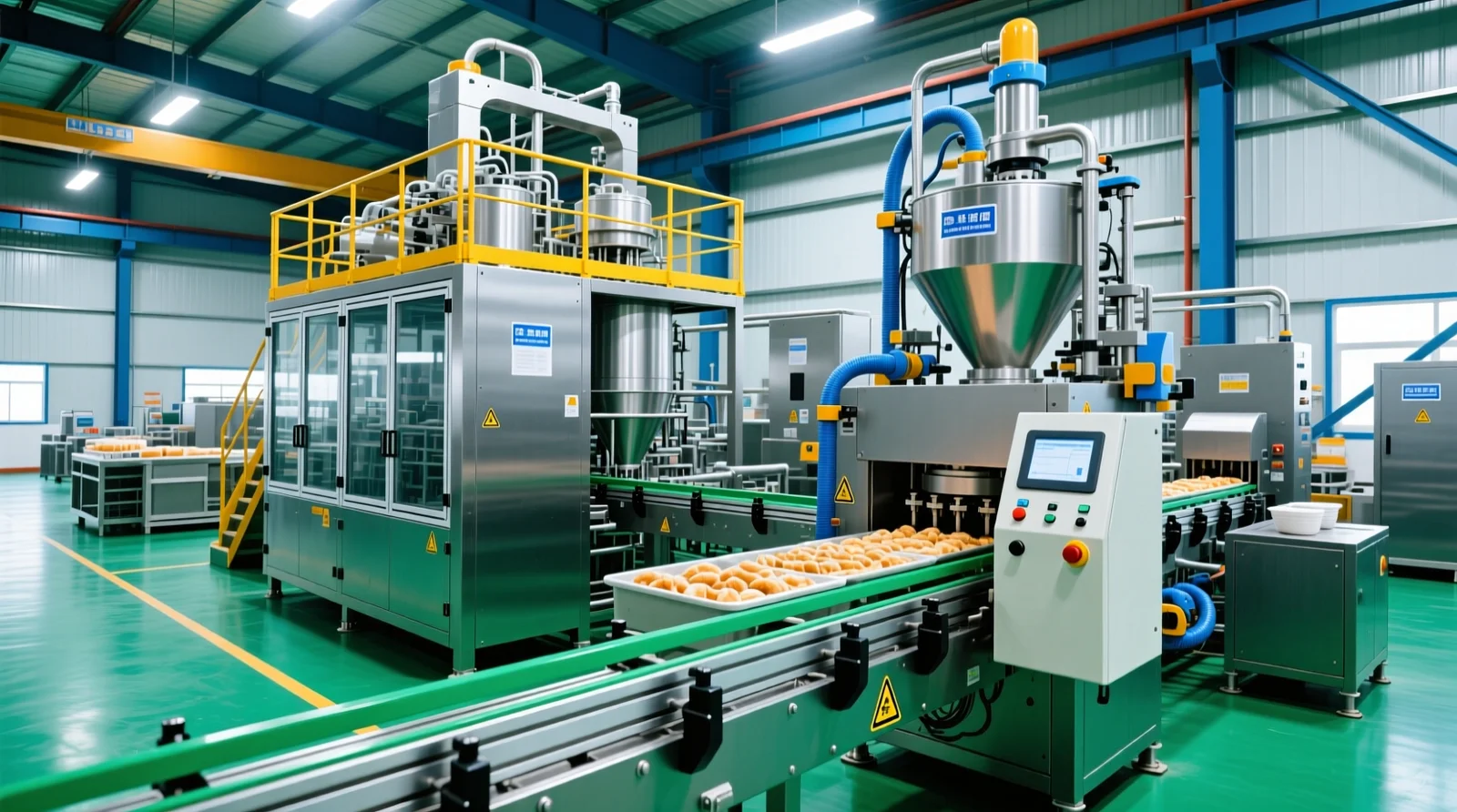
As a standalone company, Middleby Food Processing would be positioned around industrial food processing equipment and end-to-end systems—often combining processing, thermal, handling, and packaging-adjacent integration—sold to large food manufacturers in protein, bakery, prepared foods, and other categories.
What drives demand:
- Labor constraints pushing adoption of robotics and automated handling.
- Food safety and compliance requirements encouraging hygienic design and traceability-friendly systems (for context on U.S. food safety modernization, see the FDA’s overview of FSMA—the Food Safety Modernization Act: FDA – FSMA).
- Consistency and throughput: integrated lines can improve yield, reduce rework, and standardize output.
Competitive landscape: In industrial processing, competition often spans both specialized OEMs (original equipment manufacturers) and large diversified automation/platform companies. Depending on sub-vertical, buyers may evaluate Middleby against peers such as JBT Marel (protein and food processing systems), Bühler (grain and food processing technologies), GEA (process engineering and equipment), and others. Differentiation frequently comes down to application know-how, installed base/service capabilities, integration engineering, sanitation design, and line performance (yield, uptime, changeover time).
Where differentiation can show up:
- Integrated solutions: ability to provide multiple steps of the line, reducing integration risk for customers.
- Automation stack: controls, sensors, vision, and robotics partnerships that support “lights-out” or labor-light production where feasible.
- Service and lifecycle revenue: spare parts, field service, and upgrades that stabilize cyclicality.
Quantitative context to add (investor checklist): If the Form 10 provides segment revenue, EBITDA margin, backlog, and top end-market exposures, those figures become central to any spin-off investment analysis. In many cases, Food Processing can be meaningfully smaller than Commercial Foodservice in revenue but may have different margin/working-capital characteristics and a different cycle (industrial capex-driven rather than restaurant remodel-driven). Investors should pull exact segment size and margins from the Form 10 once finalized.
TL;DR: The Food Processing SpinCo is a play on automation, integrated lines, and compliance-driven upgrades; competition includes other processing-system OEMs and process-engineering players, with differentiation often tied to integration capability and service scale.
Commercial Foodservice Deep Dive: Middleby’s Position as a Commercial Kitchen Equipment Manufacturer
After the separation, the remaining Middleby would be more concentrated in Commercial Foodservice—equipment sold to restaurants, QSR (quick-service restaurant) chains, convenience retail, and institutional customers. This is a large global category with competition from both broad-line manufacturers and niche brands.
Key competitor set (illustrative, varies by product category): Ali Group, Welbilt (now part of Ali Group), ITW Food Equipment Group, Hoshizaki (ice machines and refrigeration), Electrolux Professional, and others. Competitive intensity depends on category (ovens, refrigeration, beverage, warewashing) and customer type (large chains vs. independents).
How companies differentiate in commercial kitchens:
- Menu and workflow fit: equipment tuned for speed, repeatability, and limited-labor operations.
- Energy efficiency and ventilation: ventless or high-efficiency designs can reduce installation and operating costs (for efficiency context, see the U.S. Department of Energy’s building/energy resources: U.S. DOE – Buildings Energy Data Book).
- Connected kitchens: sensors, remote monitoring, and analytics to reduce downtime and support multi-unit chain standardization.
- Global distribution and service: uptime and parts availability matter in mission-critical restaurant operations.
Market share note: Public sources often discuss Middleby as a major player in several cooking categories, but precise market share by subcategory is hard to verify without paid industry reports. Where market share is referenced, it should be attributed to a specific source (industry report, company presentation, or analyst note) and a timeframe. Absent that, it’s more accurate to describe Middleby as a “leading” or “significant” participant across multiple commercial foodservice categories rather than assigning a numeric share.
TL;DR: Commercial Foodservice is competitive and category-specific; differentiation typically depends on chain-ready product performance, efficiency/ventilation advantages, connected features, and service scale—rather than one simple market-share figure.
Financial Outlook and Projections: Adding Basis, Not Overstating Precision

The article references optimistic projections such as ~US$3.6 billion revenue and ~US$497–505 million earnings by 2029. To keep this credible and date-resilient, treat these figures as illustrative, analyst-style scenarios that resemble multi-year consensus framing often found in sell-side models—rather than guaranteed company guidance—unless you can cite a specific bank/analyst report and date.
How to ground projections properly:
- Timeframe clarity: “by 2029” should specify whether it means fiscal year 2029 results.
- Metric clarity: “earnings” should specify whether it refers to operating income, net income, or adjusted EBITDA.
- Source clarity: indicate whether it’s consensus estimates, management long-term targets, or an illustrative build based on historical margins and growth.
Readers should cross-check current revenue and profitability directly from the latest 10-K/10-Q (for example, trailing twelve-month revenue, adjusted operating margin, and net income), then assess what CAGR (compound annual growth rate) would be required to reach any 2029 scenario. CAGR is the annualized growth rate over a multi-year period and is a simple way to sanity-check long-range targets.
TL;DR: Treat 2029 revenue/earnings numbers as scenario-based unless tied to a dated, named source; verify the current baseline (revenue, net income/EBITDA) in SEC filings and compute implied CAGR to test realism.
Valuation and Scenarios: Upside, Base Case, and Downside (Stress-Testing Assumptions)
Some investor discussions frame the separation as enabling a “sum-of-the-parts” re-rating, sometimes described as ~35% upside. To strengthen E-E-A-T, it’s best to label that as an illustrative valuation outcome commonly derived from applying peer multiples (e.g., EV/EBITDA) to each segment’s earnings power, then subtracting net debt and dividing by shares outstanding.
Scenario framework (conceptual):
- Upside case: faster adoption of food processing automation; strong chain capex cycles; stable or expanding margins from mix, pricing, and productivity; SpinCo and RemainCo earn higher peer-aligned multiples. This is the environment in which a “~35%” sum-of-the-parts uplift is often argued.
- Base case: normal replacement demand and moderate automation uptake; margins steady but not expanding materially; valuation multiples remain near historical ranges. Outcome: modest total return driven more by cash flow and buybacks than multiple expansion.
- Downside case: delayed industrial capex cycles, softer restaurant traffic leading to postponed remodels, or margin compression from price competition/input costs; higher leverage magnifies equity volatility; multiples compress. Outcome: the combined valuation could de-rate meaningfully, particularly if debt metrics worsen.
What to quantify (once you pull the latest numbers): (1) net debt/EBITDA post-spin, (2) pro forma EBITDA for each entity, (3) interest expense and coverage, (4) share count, and (5) peer EV/EBITDA ranges for comparable commercial kitchen and food processing automation peers. This is the practical backbone of a credible spin-off investment analysis.
TL;DR: Don’t rely on a single upside figure; frame valuation with upside/base/downside scenarios tied to capex cycles, automation adoption, margins, leverage, and peer multiples.
How to Research Middleby’s Spin-Off Like a Practitioner

- Start with filings (primary source): Pull the latest Middleby 10-K/10-Q and the Food Processing Form 10 and exhibits from SEC EDGAR. Capture segment revenue, EBITDA/operating income, capex, working capital, and debt disclosures.
- Build a pro forma view: Estimate how RemainCo and SpinCo look standalone: revenue, margin, FCF conversion, and leverage. “Pro forma” means adjusted as if the separation already occurred.
- Check capital structure and agreements: Look for TSAs (Transitional Services Agreements), supply agreements, IP (intellectual property) arrangements, and any debt refinancing plans that can affect early-year costs.
- Benchmark to peers: Compare EV/EBITDA, FCF yield, and organic growth versus peer groups in (a) commercial kitchen equipment manufacturing and (b) industrial food processing equipment/automation.
- Watch timing risk: The stated July 6, 2026 target is not guaranteed; monitor company press releases and SEC updates for changes in timeline or terms.
TL;DR: Use SEC filings to build a pro forma model, then benchmark each entity to the right peer set; treat the announced timeline as tentative and keep checking updates.
Key Risks and What Would Change the Thesis
A balanced view should explicitly consider what can go wrong—and what evidence would confirm or refute the bull case.
- Cyclicality risk (restaurant and industrial capex): Both segments can face delayed orders during slowdowns, even if long-term replacement need is real.
- Margin risk: Competitive pricing, unfavorable mix, or higher input costs can compress margins faster than revenue declines.
- Execution risk: Spin-offs require clean separation of systems, supply chains, and commercial processes; disruptions can create temporary cost headwinds.
- Leverage risk: If buybacks or spin-related debt allocation leave either entity with high net debt/EBITDA, equity holders may see amplified volatility.
- Multiple risk: Even if earnings grow, valuation multiples can contract if rates rise or investor risk appetite falls.
What to watch: order trends, backlog commentary (if provided), margin bridge explanations, leverage targets, and any changes to repurchase pace.
TL;DR: The main risks are capex cyclicality, margin compression, separation execution, and leverage—monitor orders/backlog, margins, and debt metrics for early signals.
Conclusion: Who This Spin-Off Setup May (and May Not) Fit

The Middleby Food Processing spin-off could appeal to investors who want clearer exposure to (1) a focused commercial kitchen equipment manufacturer and (2) a standalone industrial food processing equipment/automation company—potentially enabling more precise valuation and capital allocation.
Bullish pillars: sharper strategic focus, potential sum-of-the-parts re-rating, secular tailwinds for food processing automation (labor, safety, throughput), and the possibility that disciplined buybacks enhance per-share value.
Bearish pillars: cyclical demand (restaurant and industrial capex), margin pressure risk, spin execution complexity, and the possibility that leverage/interest costs reduce flexibility—especially if macro conditions weaken.
Investor fit: This setup generally suits investors with a medium-to-long time horizon who can tolerate cyclicality and are willing to do filing-driven work to track pro forma leverage, margins, and segment fundamentals. More risk-averse or short-horizon investors may prefer to wait until final spin terms, capital structure, and initial standalone financial reporting are clearer.
TL;DR: Potentially attractive for patient investors seeking focused exposure to commercial kitchens and food processing automation, but the case hinges on execution, cycle timing, and keeping leverage within a resilient range.
Important Disclaimer
This article is for informational purposes only and is not investment, legal, or tax advice. It does not constitute a recommendation to buy or sell any security. Financial metrics, segment sizing, and spin mechanics should be verified in the most recent SEC filings and company communications, and the stated July 6, 2026 timing is subject to change. Consider consulting a licensed financial advisor and a qualified tax professional before acting on any investment decision.
TL;DR: Informational only—verify the latest filings and updates, and get professional advice for decisions involving investments or taxes.
FAQ

Q: How big is Middleby’s Food Processing segment compared with Commercial Foodservice?
A: The exact size (revenue, EBITDA, and margin profile) should be taken from the Form 10 and the latest Middleby segment reporting in SEC filings. In many diversified equipment companies, Food Processing can be smaller in revenue than Commercial Foodservice but may have different cyclicality (industrial capex vs. restaurant replacement) and different service/aftermarket characteristics. Use the Form 10 to confirm segment revenue, profitability, and major end-market exposures.
Q: Will shareholders automatically receive shares in Middleby Food Processing after the spin-off?
A: Typically, yes—spin-offs are commonly done via a pro rata distribution where shareholders of the parent receive shares of the new company based on a specified distribution ratio. The record date, distribution date, and exact ratio are usually announced closer to completion and documented in SEC materials. If you hold shares through a broker, the new shares are generally credited automatically, but you should confirm brokerage handling and any corporate action notices.
Q: Is the spin-off expected to be tax-free, and what could make it taxable?
A: Many U.S. spin-offs are structured with the intent to be tax-free to shareholders under IRS rules, but final treatment depends on meeting legal requirements and on the company’s final structure and representations. Certain events—such as a change in control or other disqualifying actions around the transaction—can affect tax outcomes. Investors should wait for the company’s final stated tax position and consult a tax advisor; for general context, see the IRS overview on stock distributions: IRS guidance.
Q: What valuation multiples are commonly used to value commercial kitchen and food processing equipment peers?
A: Analysts often use EV/EBITDA (enterprise value divided by EBITDA) for industrial equipment businesses because it normalizes for capital structure, and sometimes P/E for more stable, mature cash generators. Peer ranges vary widely with growth, margins, and cycle position—food processing automation businesses with higher growth or stronger recurring service revenue can command higher multiples than more cyclical commercial kitchen categories. The most defensible approach is to compare each new entity to its closest pure-play peers and apply a range rather than a single number.
Q: What are the most important “red flags” to monitor between now and the targeted 2026 completion?
A: Key red flags include (1) rising net debt/EBITDA without a clear path back to targets, (2) weakening interest coverage, (3) evidence of order deterioration in either restaurant capex or industrial processing capex, (4) unexpected separation costs or prolonged transitional service dependencies, and (5) changes to the timeline (the July 6, 2026 target is not guaranteed). The best source for these is updated SEC filings and company communications, which you can track via SEC EDGAR.