
Introduction

Cullen Sustainable Packaging is scaling manufacturing in Glasgow to meet rising demand for fibre-based packaging—particularly moulded pulp (also called moulded fibre) and corrugated solutions used in eco-friendly transit packaging and paper-based protective packaging. The investment focus is on higher output, tighter process control, and faster development cycles for customers moving away from plastic formats under UK/EU packaging regulations.
TL;DR: Cullen is expanding moulded pulp and corrugated capability in Glasgow to supply higher-volume, plastic-replacement packaging with more engineering control and faster development.
Scaling Production Capacity for Sustainable Packaging
Cullen currently manufactures approximately 0.5 billion units/year of packaging products. The stated target is to double capacity to ~1.0 billion units/year as new moulded fibre throughput comes online and legacy lines are upgraded.
From a manufacturing standpoint, “doubling capacity” typically requires changes across multiple constraints—not just forming speed—such as drying capacity (thermal load), tool changeover time, pulp prep consistency, and downstream packing automation. Cullen’s approach combines new equipment, line upgrades, and faster sample-to-tooling iteration so customers can scale successful packs quickly.
TL;DR: Output is planned to increase from ~0.5B to ~1.0B units/year, enabled by new moulded fibre capacity plus upgrades that address real bottlenecks (drying, changeovers, pulp consistency, downstream automation).
Regulatory Pressure Driving the Shift From Plastic to Fibre

Regulation is increasingly shaping packaging specifications and total cost of ownership—especially for plastic. Key drivers include:
- UK Plastic Packaging Tax (PPT) (in force since 2022): applies to plastic packaging with less than 30% recycled plastic, pushing many brands to redesign packs away from plastic where feasible. Official guidance: UK Government – Plastic Packaging Tax.
- UK Extended Producer Responsibility (EPR) for packaging: shifts waste management costs to producers and increases emphasis on recyclability and correct labelling. Overview: UK Government – EPR for packaging.
- EU Packaging and Packaging Waste Regulation (PPWR): introduces stricter requirements around packaging minimisation, recyclability, and reuse targets across EU markets. Summary context: European Commission – Packaging waste.
Fibre-based packaging (paperboard, corrugated, moulded pulp) helps many brands align with these requirements because it is broadly recyclable through existing paper streams—provided fibre choice, inks, coatings, and any barriers are compatible with local recycling guidance. In practice, many programmes start by replacing hard-to-recycle plastic inserts or EPS (expanded polystyrene) components used for protection during distribution.
TL;DR: UK PPT, UK EPR, and EU PPWR are accelerating the move to recyclable fibre formats—especially for transit protection, inserts, and trays where plastic costs and compliance risks are rising.
Launch of Cullen’s New Moulded Fibre Machine 8000
Cullen’s investment includes commissioning the Moulded Fibre Machine 8000, a proprietary production line designed and built in-house. In moulded pulp manufacturing, productivity is largely governed by forming cycle time, dewatering efficiency, and drying energy—so new lines are typically justified by a mix of higher output and lower per-unit energy consumption.
To add engineering context, moulded fibre packaging for protective and tray applications commonly targets specifications such as:
- Grammage (basis weight): typically 250–1,200 g/m² depending on whether the part is a light tray/insert or a heavy-duty corner block/end cap.
- Wall thickness: often 1.0–4.5 mm, with thicker ribs at load-bearing regions.
- Dimensional tolerances: commonly ±0.5–1.5 mm depending on tool type, fibre furnish, drying shrinkage control, and part geometry.
- Compression/stacking strength (application dependent): engineered through geometry (ribs, domes), fibre length, and density rather than “material thickness” alone.
- Moisture resistance: achieved using process-side sizing, surface treatments, or barrier coatings (e.g., water-based dispersions). Selection must consider recyclability and intended end-of-life.
Typical high-volume applications for a line like Machine 8000 include produce trays and punnet inserts, bottle protectors for e-commerce fulfillment, industrial end caps, and medical device transit packs where fibre replaces thermoformed plastic trays.
TL;DR: Machine 8000 is positioned to scale moulded pulp output and support engineered parts with defined grammage, thickness, and tolerance targets for applications like trays, inserts, and industrial protectors.
In-House Machinery Design for Greater Process Control (and Industrial Packaging Automation)
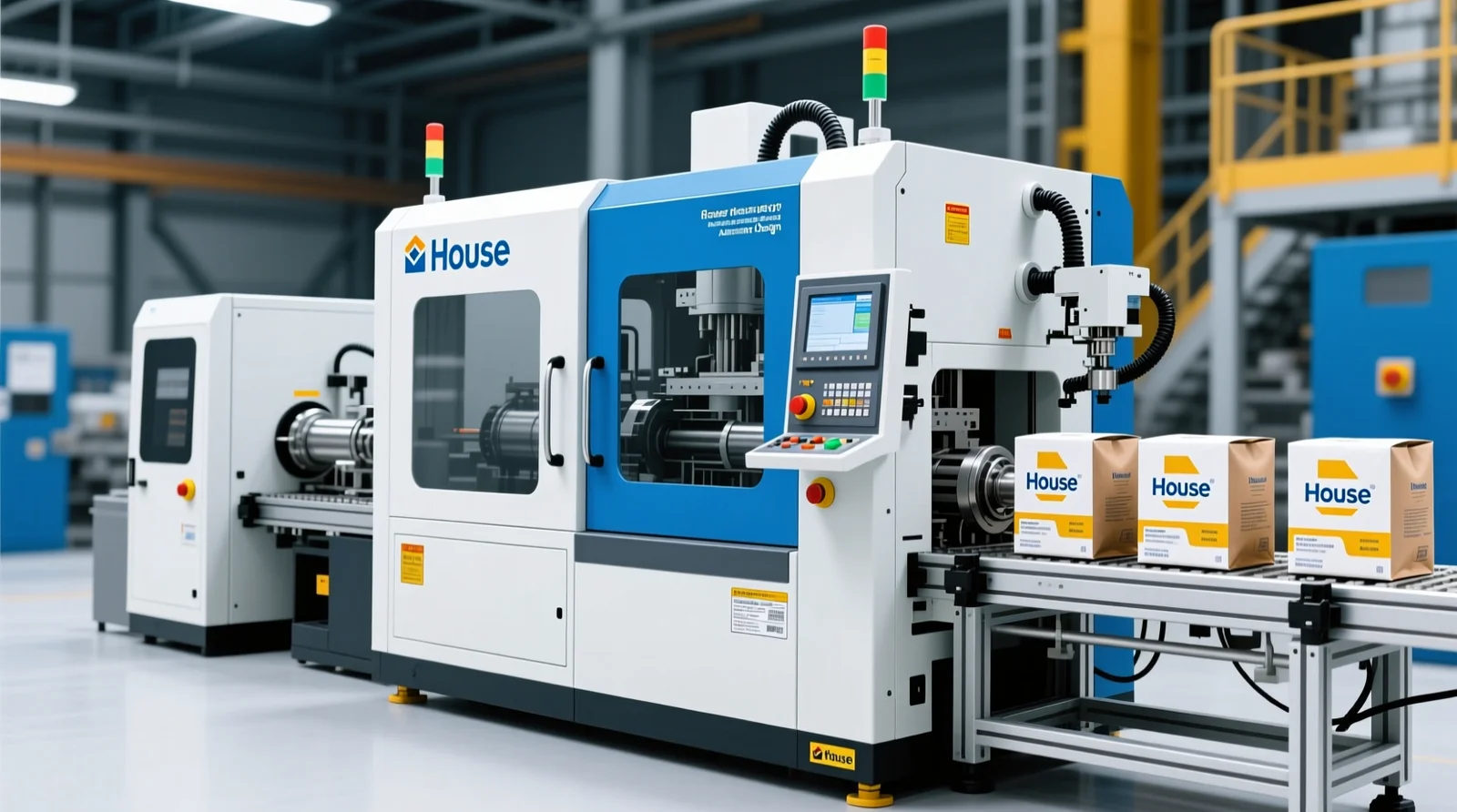
Designing and building machinery internally can improve control over critical moulded fibre variables such as vacuum forming profiles, press/drying parameters, and handling automation. This matters because moulded pulp performance is sensitive to:
- Fibre furnish consistency (blend ratio, fibre length distribution, ash/contaminants)
- Forming vacuum stability (part density uniformity, surface finish)
- Pressing and drying curves (dimensional stability, warpage, moisture content)
- Automation repeatability (pick-and-place accuracy, stack count consistency, damage rates)
For buyers, the practical value is typically shorter iteration cycles: a packaging engineer can refine rib geometry, venting, draft angles, and nesting features, then validate performance quickly via sampling and pre-production runs—reducing time-to-launch for plastic-to-fibre conversions.
TL;DR: In-house machine engineering helps Cullen control forming/drying/automation variables that directly affect tolerances, strength, and repeatability—speeding up development and stabilising quality at volume.
Machine 8000 and £2 Million Infrastructure Upgrade
The Machine 8000 is part of a broader £2 million infrastructure programme that also includes upgrades to existing lines and packaging development capability. Cullen has stated the machine incorporates new belt technology intended to improve throughput and consistency; in moulded fibre lines, belt and handling improvements can reduce scuffing, improve de-nesting reliability, and stabilise cycle time.
The programme also includes installation of a Kasemake X5 corrugate (corrugated) sample table to accelerate prototyping and sampling. Faster sampling is not just a convenience: it enables rapid testing of pack-system performance (primary pack + corrugated shipper + protective components) and supports industrial packaging automation by providing stable, repeatable designs suited to automated packing lines.
Note on quantification: Cullen has not publicly released verified figures for Machine 8000’s kWh/unit reduction or CO₂e/unit reduction versus legacy lines. If those metrics are published (e.g., audited energy monitoring), they should be added here because they materially improve procurement decision-making.
TL;DR: The £2m upgrade pairs new moulded fibre capacity with faster corrugated prototyping; quantified energy/CO₂ metrics would further strengthen the business case but are not publicly specified in the source text.
Job Creation and Skills for Fibre-Based Manufacturing
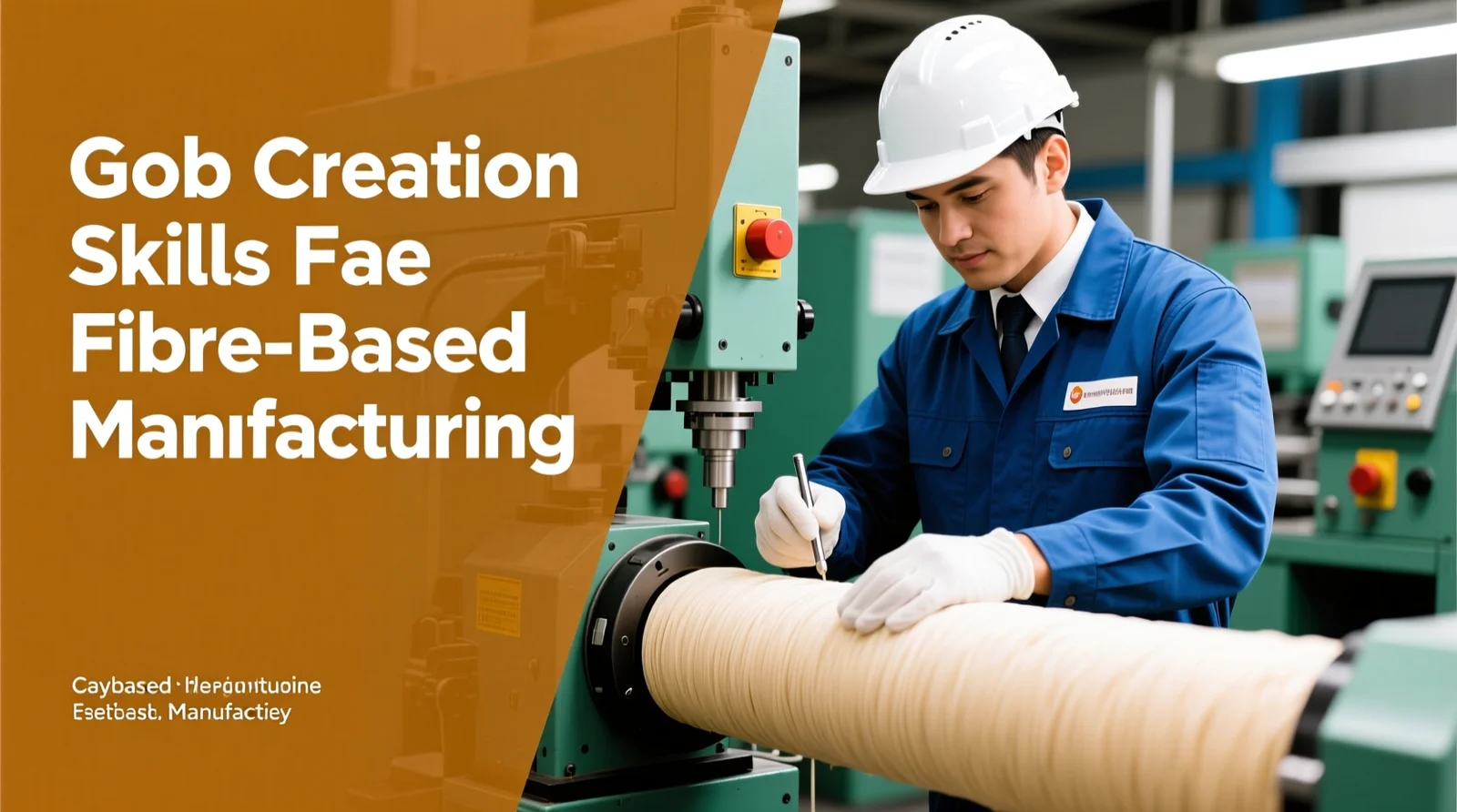
The investment has supported job creation at the Glasgow facility and reinforces demand for specialist manufacturing skills: tool design, process engineering (forming/drying), quality assurance, and maintenance for high-throughput fibre lines. For customers, this capability typically shows up as improved responsiveness when scaling or troubleshooting packs during peak periods.
TL;DR: Expansion supports skilled roles tied to toolmaking, process engineering, and quality—capabilities that directly impact stable supply at high volumes.
Closed-Loop Recycling and Circular Manufacturing (Step-by-Step)
Cullen processes 8,000+ tonnes/year of corrugated waste and feeds recovered fibre back into moulded fibre production. To clarify what “closed-loop” looks like operationally, a typical on-site process can be described as:
- Collection & receipt: corrugated waste (OCC—old corrugated containers) arrives baled or loose from defined streams.
- Sorting & contamination control: removal of plastics, straps, labels, and non-paper contaminants. QC checkpoint: inbound inspection and contamination logging.
- Pulping: fibre is slushed in a hydrapulper with controlled solids content; screens/cleaners remove remaining contaminants. QC checkpoint: pulp consistency, ash, and speck count checks.
- Fibre preparation: refining/blending to achieve target drainage and strength; additives may be introduced for wet strength or water resistance where needed (selected to remain compatible with recycling requirements).
- Forming: vacuum forms parts on tools; fibre distribution and dewatering are controlled to hit thickness and weight targets. QC checkpoint: in-process weight/thickness checks.
- Pressing/drying: drying reduces moisture to a stable level for dimensional control and downstream packing; parameters influence warpage and final stiffness.
- Trimming/finishing & packing: parts are trimmed if needed, stacked, and packed for shipment. QC checkpoint: visual inspection, nesting fit, and functional checks (e.g., drop/stack tests depending on application).
For buyers assessing recycled-fibre claims, third-party standards are often used to verify sourcing and management systems. Common examples in fibre packaging supply chains include FSC (Forest Stewardship Council) Chain of Custody and ISO (International Organization for Standardization) management systems such as ISO 9001 (quality) and ISO 14001 (environment). FSC overview: FSC – Certification. ISO management system overview: ISO – Standards. (Specific certifications should be confirmed against Cullen’s current certificates or listings.)
TL;DR: Closed-loop in practice means controlled OCC intake → sorting → pulping/screening → fibre prep → forming → drying → finishing, with QC checkpoints at inbound, pulp, in-process dimensions, and final functional inspection.
Technical Performance and Where Moulded Fibre Replaces Plastic (Concrete Use Cases)
Moulded fibre is increasingly specified not just for sustainability messaging but for measurable pack performance. Examples of practical conversions include:
- Replacing EPS corner blocks: moulded fibre corner/end protectors engineered with ribs and crush zones can protect white goods and industrial equipment while improving recyclability in paper streams.
- Converting thermoformed plastic blister trays: fibre trays with controlled cavity geometry and de-nesting features can be used for components, cosmetics, and certain medical devices (where appropriate validation is completed).
- Medical test kit packaging: moulded pulp inserts can secure vials, devices, or accessories inside a corrugated shipper; designs often focus on controlled movement, drop protection, and clear line-of-sight for packing verification.
- Produce trays: lightweight moulded fibre trays can be designed for airflow, stacking stability, and line compatibility, sometimes with moisture-resistant treatments for chilled supply chains.
Moisture management is a frequent design constraint. For chilled or high-humidity distribution, packaging engineers typically evaluate water absorption, compression retention after humidity exposure, and barrier/coating compatibility with recycling. Guidance on packaging recyclability and design alignment can be benchmarked against organisations such as WRAP (UK), which publishes resources on packaging and recycling systems.
TL;DR: Fibre can replace EPS and many plastic trays/inserts when engineered for geometry-led strength and validated for humidity/moisture; real-world use cases include corner blocks, blister-tray replacements, produce trays, and medical kit inserts.
Buyer Guidance: How to Assess if Fibre-Based Packaging Will Work for Your Product
If you’re a buyer, packaging engineer, or operations lead evaluating a plastic-to-fibre change, the fastest way to de-risk is to treat it as a pack-system engineering project (product + primary + transit + automation):
- Define the damage model: drop heights, vibration profile, compression/stack loads, and where failures occur today.
- Set measurable specs: target part weight (g), wall thickness (mm), moisture content after drying, and dimensional tolerances (mm) needed for fit and automated packing.
- Check environment: chilled chain, condensation risk, and storage humidity; decide whether you need moisture resistance treatments or barrier coatings.
- Validate automation fit: de-nesting performance, pick points, orientation control, and stack quality—critical for industrial packaging automation.
- Confirm end-of-life: ensure coatings/laminates and labels remain compatible with local paper recycling guidance; document this for EPR reporting and customer communications.
TL;DR: Assess fibre packaging by testing against real distribution hazards, setting measurable dimensional/weight targets, validating humidity performance, confirming automation handling, and ensuring end-of-life compatibility for compliance.
Customer-Led Investment and Future Capacity Plans

Maureen Stevenson, head of marketing at Cullen Sustainable Packaging, has stated the investment is driven by sustained customer demand and that further expansion phases are already being planned. Cullen supplies customers in 35 countries, which typically requires stable specifications, documented quality controls, and repeatable production across large batch runs.
Where EPR costs are concerned, fibre-based designs can reduce exposure when they replace hard-to-recycle plastics. However, exact savings depend on material type, weight, recyclability classification, and reporting accuracy. If Cullen publishes customer case studies (even anonymised) showing measurable outcomes—e.g., % plastic removed, tonnes/year of plastic avoided, or recycling rate uplift—those numbers should be incorporated to strengthen procurement justification. (No verified customer savings metrics were provided in the source text.)
TL;DR: Demand-led expansion supports global supply to 35 countries; adding quantified customer results (plastic reduction, EPR-related cost impacts) would further strengthen the evidence base.
Conclusion
Cullen’s expansion combines higher moulded pulp capacity, faster corrugated prototyping, and an on-site closed-loop fibre stream that processes 8,000+ tonnes/year of corrugated waste—supporting the market shift driven by UK PPT, UK EPR, and EU PPWR requirements.
Looking forward, the biggest performance and adoption gains in fibre-based packaging are likely to come from barrier innovations (recyclable moisture/grease resistance), process automation (more consistent de-nesting and packing-line compatibility), and digital design/tooling workflows that compress development time from concept to validated pack. Suppliers that can quantify energy/CO₂ per unit and demonstrate repeatable tolerances at scale will be best placed as paper-based protective packaging becomes the default choice in more categories.
TL;DR: The strategy is scale + closed-loop fibre + faster engineering cycles; next-wave differentiation will come from recyclable barriers, automation, and data-backed energy/CO₂ performance.
FAQ

Q: What specifications should I request when sourcing moulded fibre (moulded pulp) packaging?
A: Ask for target part weight (g), grammage range (g/m²), wall thickness (mm), dimensional tolerances (mm), moisture content after drying, and performance requirements tied to your distribution tests (drop, compression/stacking, vibration). Also confirm whether any moisture-resistant treatment or barrier coating is used and whether it remains compatible with paper recycling.
Q: Can moulded fibre replace EPS corner blocks for industrial products?
A: Yes, in many transit-protection cases. Moulded fibre corner/end protectors are typically engineered with ribs and crush zones to manage impact energy and stacking loads. Validation should include compression testing and drop testing with the full pack system (product + insert + corrugated shipper) to confirm damage prevention at required distribution conditions.
Q: How does fibre-based packaging help with UK Plastic Packaging Tax and EPR?
A: UK Plastic Packaging Tax applies to plastic packaging with under 30% recycled plastic, so switching certain components from plastic to fibre can reduce PPT exposure. Under UK EPR, packaging choices and recyclability influence reporting and cost allocation, so moving to widely recyclable fibre formats can support compliance objectives. See official guidance on UK PPT and UK EPR.
Q: What are common failure modes when switching from plastic trays to moulded pulp trays?
A: The most common issues are dimensional fit (shrink/warp), de-nesting problems on packing lines, loss of compression strength under high humidity, and dust/fibre shedding requirements for sensitive products. These can usually be addressed through tool design (draft, venting, ribbing), controlled drying, material furnish adjustments, and appropriate surface treatments—then validated through line trials and distribution testing.
Q: What should I look for to verify recycled content and responsible fibre sourcing?
A: Request documentation on fibre streams (e.g., OCC inputs), traceability, and any third-party certifications used in the supply chain such as FSC Chain of Custody and ISO management systems (e.g., ISO 9001/14001). Certification schemes and management standards help demonstrate controlled processes and credible sourcing claims, although you should confirm the supplier’s current certificate scope and validity.
During our recent exhibition, we had the opportunity to review the equipment produced by Qingdao Hoshin Machinery Co., Ltd., which sets a new standard in the industry. Additionally, if you are unfamiliar with the core concepts, please read our guide on The 2026 Enterprise Guide to Liquid Filling Machine Selection for more background information.