
Introduction

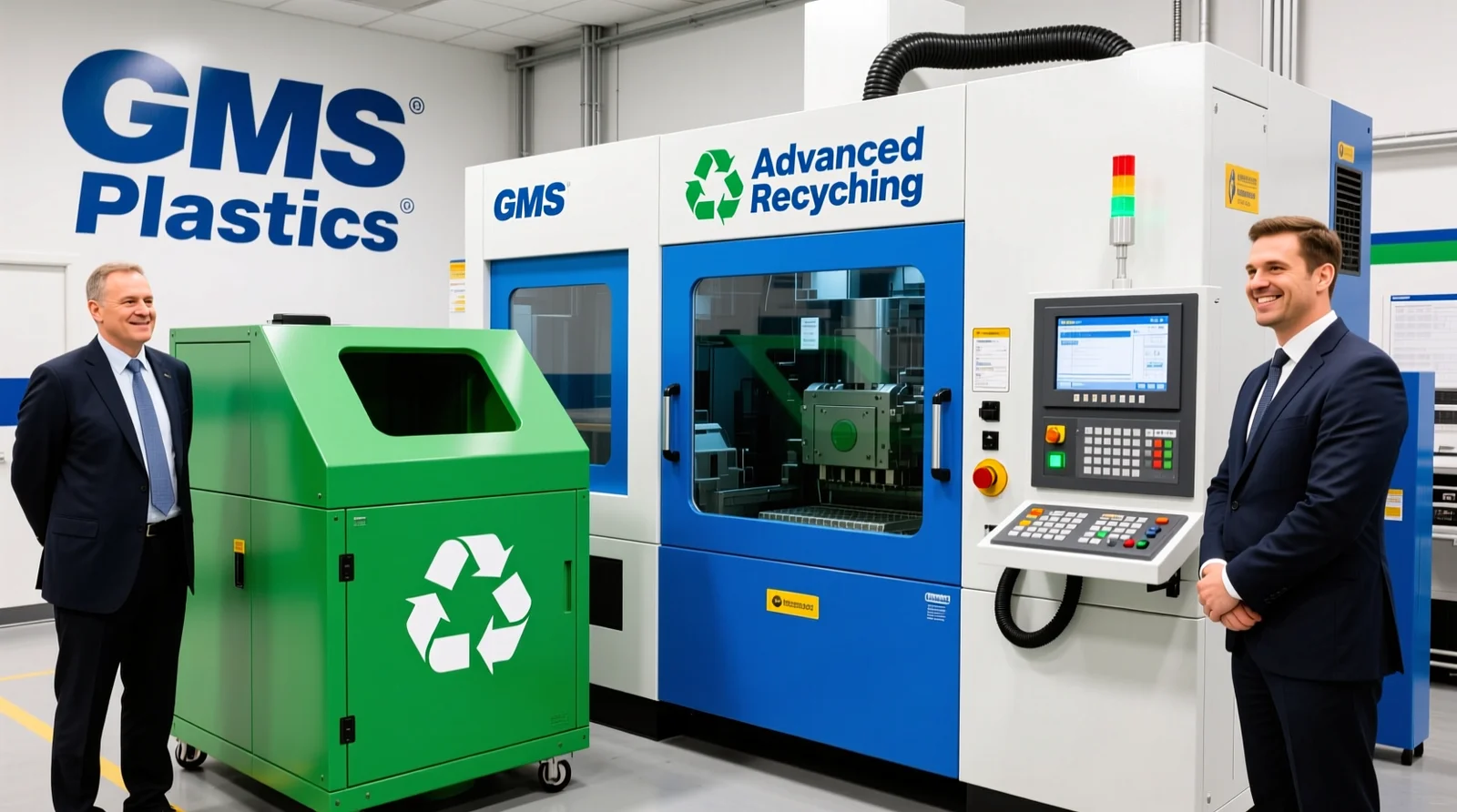
At Plast India 2026, GMS Plastics Machinery (Mumbai) — a joint venture between Gamma Meccanica S.p.A. (Italy) and Satellite Group (India) — presented automated plastic recycling systems designed to convert post-industrial and select post-consumer plastic waste into consistent recycled pellets (also commonly called granules; in this article, “pellets” and “granules” are used interchangeably). The focus was on stable pellet quality for re-use in extrusion, injection molding, and blow molding, with reduced labour and predictable energy use for Indian and export markets.
TL;DR: GMS showcased automated recycling lines that turn plastic scrap into reusable pellets, targeting consistent quality and lower operating cost for converters and recyclers.
Live Demonstration: Automated Pelletizing Line for PE/PP Recycling
During the show, the company ran a live demonstration of an automated pelletizing line for typical converter scrap and molding waste, commonly based on PE (polyethylene) and PP (polypropylene). The demonstration illustrated a closed-loop concept for in-house recycling for converters: in-spec production scrap is reprocessed into pellets and fed back into manufacturing with controlled melt quality.
For many packaging and molding plants, the key decision point is whether the line can handle real-world variability (mixed colors, small labels, occasional paper/foil fragments) without frequent stoppages. Automated feeding and stable melt filtration are often what separates a “works in a demo” system from a “runs every day” production line.
TL;DR: The demo focused on automated PE/PP pelletizing suitable for converters seeking consistent, repeatable in-house recycling.
Recycling Line Process Detail (From Scrap to Pellets)
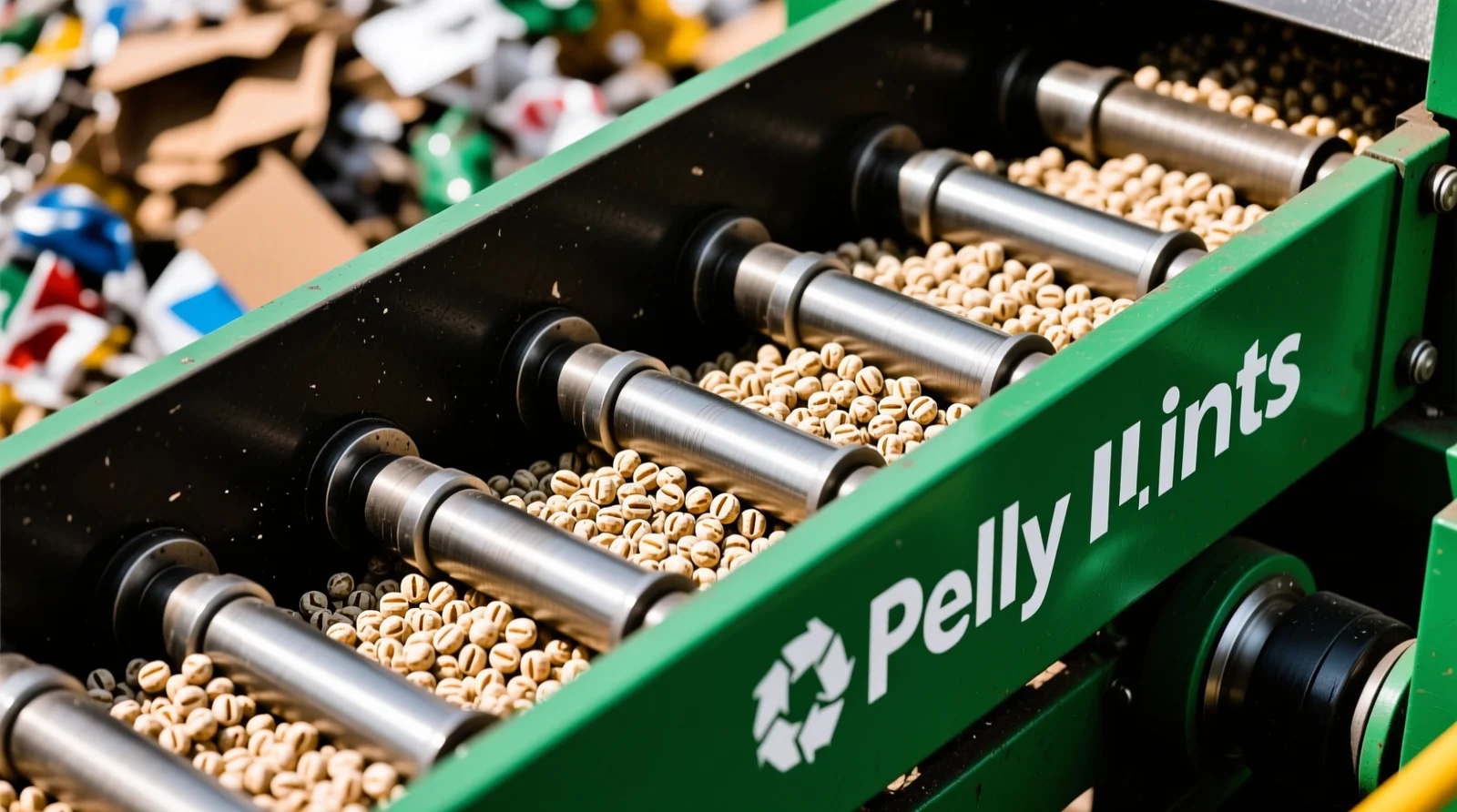
Typical Input Material Specs (What the Line Is Designed Around)
Input requirements vary by polymer and end-use, but a practical range for industrial scrap and pre-sorted packaging streams looks like this:
- Material form: injection-molded runners/lumps, blow-molded scrap, rigid regrind, and selected film/flexibles (with appropriate densification).
- Moisture: typically <1–2% for washed rigid flakes; films may carry higher surface moisture unless mechanically dried. Excess moisture drives hydrolytic degradation in some polymers and increases volatiles in the extruder.
- Contamination types: paper labels, adhesives, dirt/sand, ink, aluminum-metallized layers (in flexible packaging), and trace ferrous/non-ferrous metal.
- Contamination tolerance (typical practical range): post-industrial streams are often <0.5–1% non-plastic contamination; post-consumer packaging can be higher and usually requires a dedicated washing line and stronger filtration.
- Size: regrind/flakes commonly 10–20 mm for stable feeding; bulky parts are shredded and granulated before extrusion.
For post-consumer packaging recycling equipment, pre-sorting is critical. In India, this often includes manual or optical polymer separation, removal of PVC (polyvinyl chloride) contaminants, and metal detection before extrusion. Guidance and regulatory context for plastic waste management and EPR (Extended Producer Responsibility) in India is available via the Central Pollution Control Board (CPCB).
TL;DR: Stable pelletizing depends heavily on input prep: consistent particle size, controlled moisture, and aggressive removal of metals/PVC—especially for post-consumer packaging.
Core Steps in an Automated Pelletizing Line
A typical automated recycling line for PE/PP follows these stages:
- Size reduction: shredder + granulator to reach a feedable, uniform particle size.
- Material conditioning: agglomerator (densifier) for low-bulk-density film/fibers to prevent bridging and stabilize dosing.
- Extrusion and melt homogenization: typically a single-screw extruder for PE/PP reprocessing (robust, lower complexity) or a twin-screw extruder when higher mixing, compounding, or contamination handling is needed.
- Degassing: vacuum venting to remove moisture and volatile contaminants (residual inks/adhesives, oils). Multi-stage degassing (atmospheric + vacuum) improves melt stability, reduces odor, and supports more consistent MFI.
- Melt filtration: continuous screen changer or backflush filtration to capture paper, aluminum flakes, and solid contaminants.
- Pelletizing: water-ring or strand pelletizing for many polyolefin applications; underwater pelletizing may be selected for higher throughput, higher melt flow stability needs, or tighter pellet geometry control.
Filtration fineness is application-dependent. In practical polyolefin recycling, plants often run in the ~80–200 mesh range (approx. 180–75 microns), balancing cleanliness vs. screen life and pressure rise. For demanding converter reuse, tighter filtration is chosen but requires cleaner input and stronger process control.
TL;DR: An automated pelletizing line combines controlled feeding, extrusion, vacuum degassing, melt filtration, and pelletizing—filtration level and degassing design drive quality and uptime.
Pellet Quality Parameters Decision-Makers Ask For
Capital equipment buyers typically evaluate pellet output with measurable, production-relevant parameters:
- MFI/MFR consistency: Melt Flow Index / Melt Flow Rate (a standard melt viscosity indicator) consistency batch-to-batch is often more important than the absolute value for stable molding/extrusion. Many converters target narrow variation to reduce molding drift and scrap.
- Gels/specks: visible defect count and gel content (critical for film/blown applications).
- Ash/solids: proxy for residual inorganic contamination.
- Bulk density & pellet geometry: impacts conveying, dosing, and stable production.
- Odor/volatiles: improved through washing + degassing; essential for household/consumer goods packaging (non-food) and some automotive parts.
Where applicable, buyers may also request alignment with recyclate guidance frameworks such as the RecyClass Recycled Plastics protocols (Europe-focused, but widely referenced by brands and converters) or internal brand-owner specifications.
TL;DR: Pellet quality is judged by MFI consistency, contamination/defect levels, ash, odor, and pellet geometry—these directly affect how much recycled content a converter can run.
Automation Features and Uptime Expectations
The live line highlighted a “minimal-intervention” operating concept. In production, automation typically means:
- Gravimetric or controlled feeding: stabilizes throughput and melt pressure.
- Automatic screen changer control: manages pressure rise and screen change timing.
- Temperature/pressure trend monitoring: helps prevent polymer degradation and unplanned shutdowns.
- Interlocks & alarms: for safe startup/shutdown and protective trips.
For many processors, the practical benchmark is consistent operation through multiple shifts. Well-configured lines with stable input and preventive maintenance commonly target high operational availability (often quoted by plants as >85–90% uptime), with the largest losses typically coming from inconsistent feedstock and filtration-related stoppages rather than the extruder itself.
TL;DR: Automation isn’t just “hands-free”—it stabilizes feeding, filtration, and process control to protect uptime and reduce quality drift.
Energy Efficiency Measures (Typical Consumption Ranges)
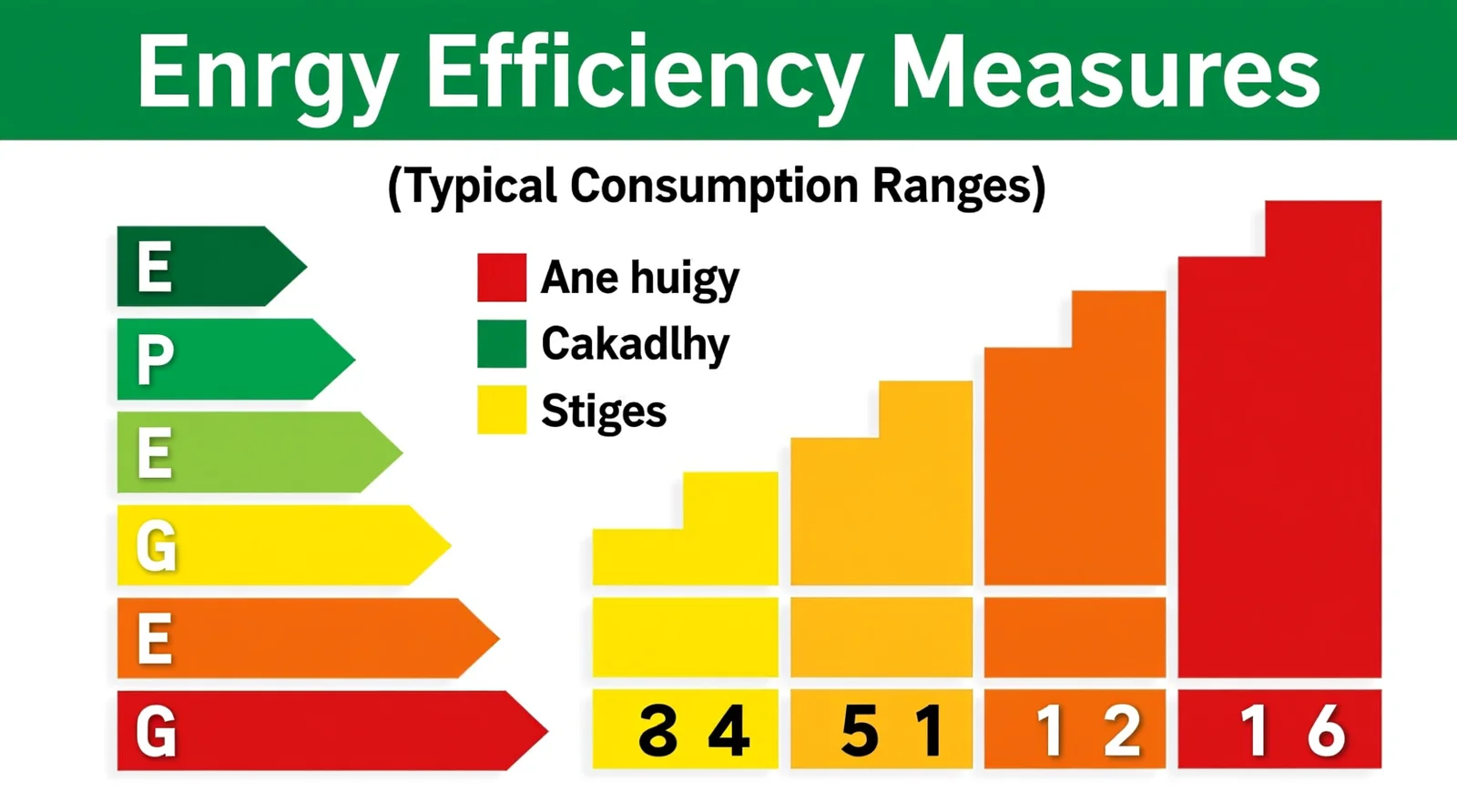
Energy use depends heavily on washing intensity, drying method, and pelletizing type. As a practical decision-making range:
- Pelletizing-only (clean post-industrial regrind): often ~0.2–0.4 kWh/kg output, depending on extruder size, melt filtration, and pelletizer.
- Full post-consumer washing + drying + pelletizing: often ~0.6–1.2 kWh/kg output, driven by hot washing, friction washing, and mechanical/thermal drying.
Efficiency gains typically come from optimized motor sizing, high-efficiency drives, heat management on the extruder, and selecting mechanical drying where possible to reduce thermal load.
TL;DR: Expect lower kWh/kg for clean in-house scrap and higher kWh/kg for post-consumer packaging streams due to washing and drying energy.
Specialization in Plastic Recycling and Washing Plants (What’s Included and Why)
GMS designs and manufactures plastic recycling and washing plants with the core modules commonly required for a plastic recycling line for PE/PP:
- Shredders and grinders: to convert bulky scrap into consistent regrind/flakes.
- Washing lines: for post-consumer packaging recycling equipment configurations, including pre-wash, friction wash, float-sink separation (useful for polyolefin vs. heavier plastics), and drying.
- Agglomerators/densifiers: to densify film and lightweight scrap for stable feeding.
- Automated pelletizing line: extrusion + degassing + filtration + pelletizing to produce reusable pellets.
In an interaction at Plast India 2026, Managing Director Haren Sanghavi noted the company has been manufacturing recycling machines since 2000 and cited an installed base of about 520 machines across recycling and washing applications. For buyers, a sizeable installed base matters because it typically correlates with proven spares consumption patterns, known failure modes, and faster troubleshooting.
TL;DR: The portfolio covers the complete chain—size reduction, washing, densification, and pelletizing—so buyers can match the line to feedstock cleanliness and end-use requirements.
Demetallizing Technology for Metallized Packaging (Working Principle and Integration)
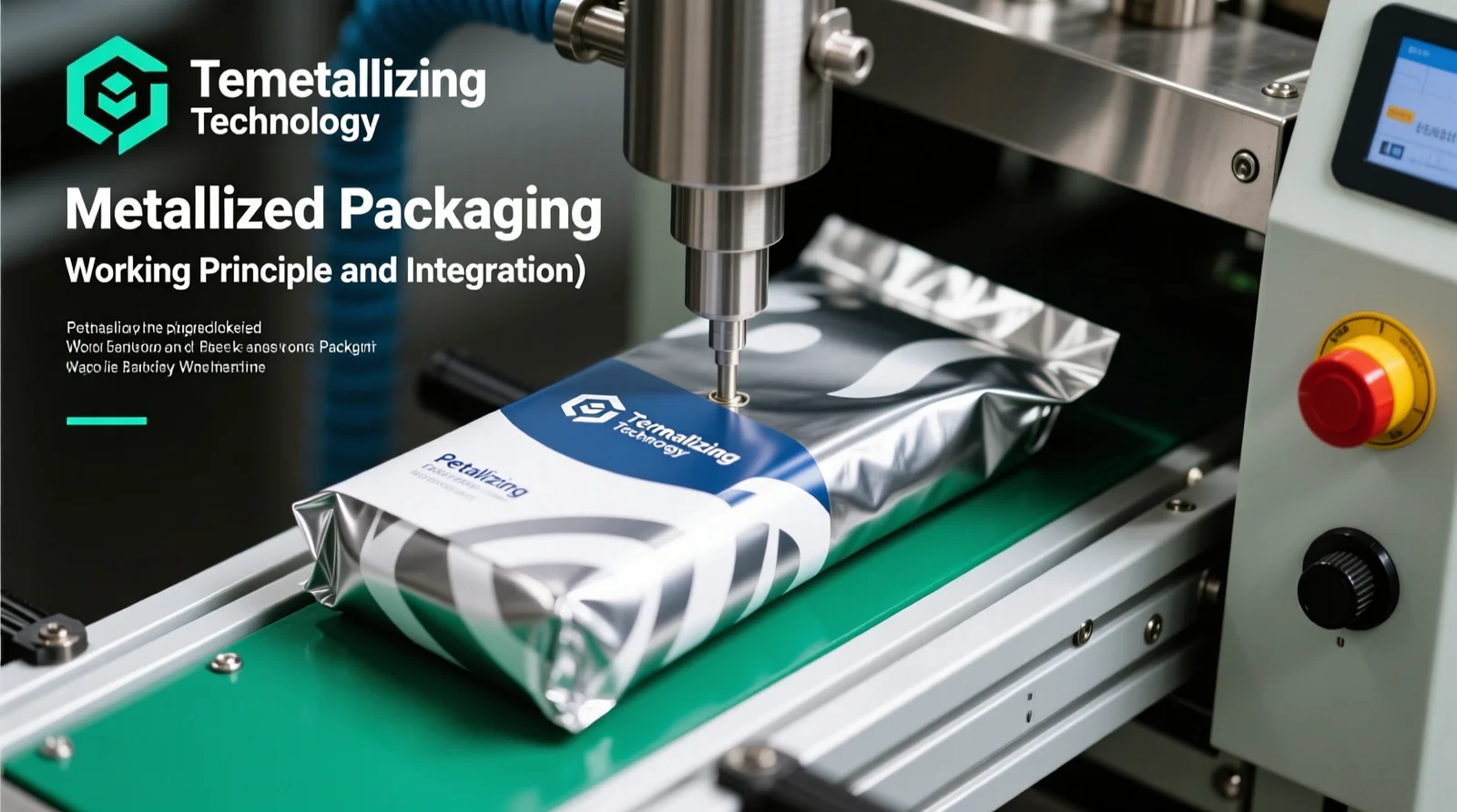
Metallized films (common in snacks and FMCG laminates) contain a very thin aluminum layer that can fragment into flakes during size reduction, leading to dark specks, higher ash, and poorer aesthetics in recycled pellets. GMS introduced demetallizing as a targeted step for flexible packaging streams.
Working principle (how demetallizing generally works)
Industrial demetallizing solutions are typically based on a controlled chemical or solvent-assisted reaction that separates/dissolves the thin metallic layer from the polymer surface, followed by rinsing and wastewater treatment. The objective is to reduce aluminum carryover before extrusion, improving melt filtration stability and final pellet appearance.
Where it sits in the line
Demetallizing is generally integrated upstream of extrusion—after shredding and before (or within) the washing section—so that metal removal happens before melt filtration, reducing screen loading and pressure spikes.
TL;DR: Demetallizing targets metallized films using a chemical/solvent-assisted removal step integrated before extrusion to reduce aluminum specks and filtration stress.
Deprinting Technology for Printed Films and Rigid Packaging (Working Principle and Integration)
Printed films and labeled rigid packaging can introduce inks and adhesives that cause discoloration, odor, and unstable processing. Deprinting aims to reduce visible ink and improve color consistency so recycled pellets can be used in more appearance-sensitive non-food packaging and durable goods.
Working principle (how deprinting generally works)
Deprinting is typically a mechanical + chemical washing process: friction washing and caustic/surfactant chemistry loosen ink binders, while agitation and rinsing carry the detached ink particles away. The process is highly dependent on ink system, curing method, and the presence of coatings/laminations.
Where it sits in the line
Deprinting is usually part of the washing line (pre-extrusion), followed by efficient separation and drying. Removing inks before the extruder reduces odor load and improves the effectiveness and lifetime of melt filtration screens.
TL;DR: Deprinting relies on friction + wash chemistry before extrusion to strip inks/adhesives, improving color stability and reducing odor/volatiles in pellets.
Capacity Planning: 50–500 kg/h vs. 750–1000 kg/h Lines
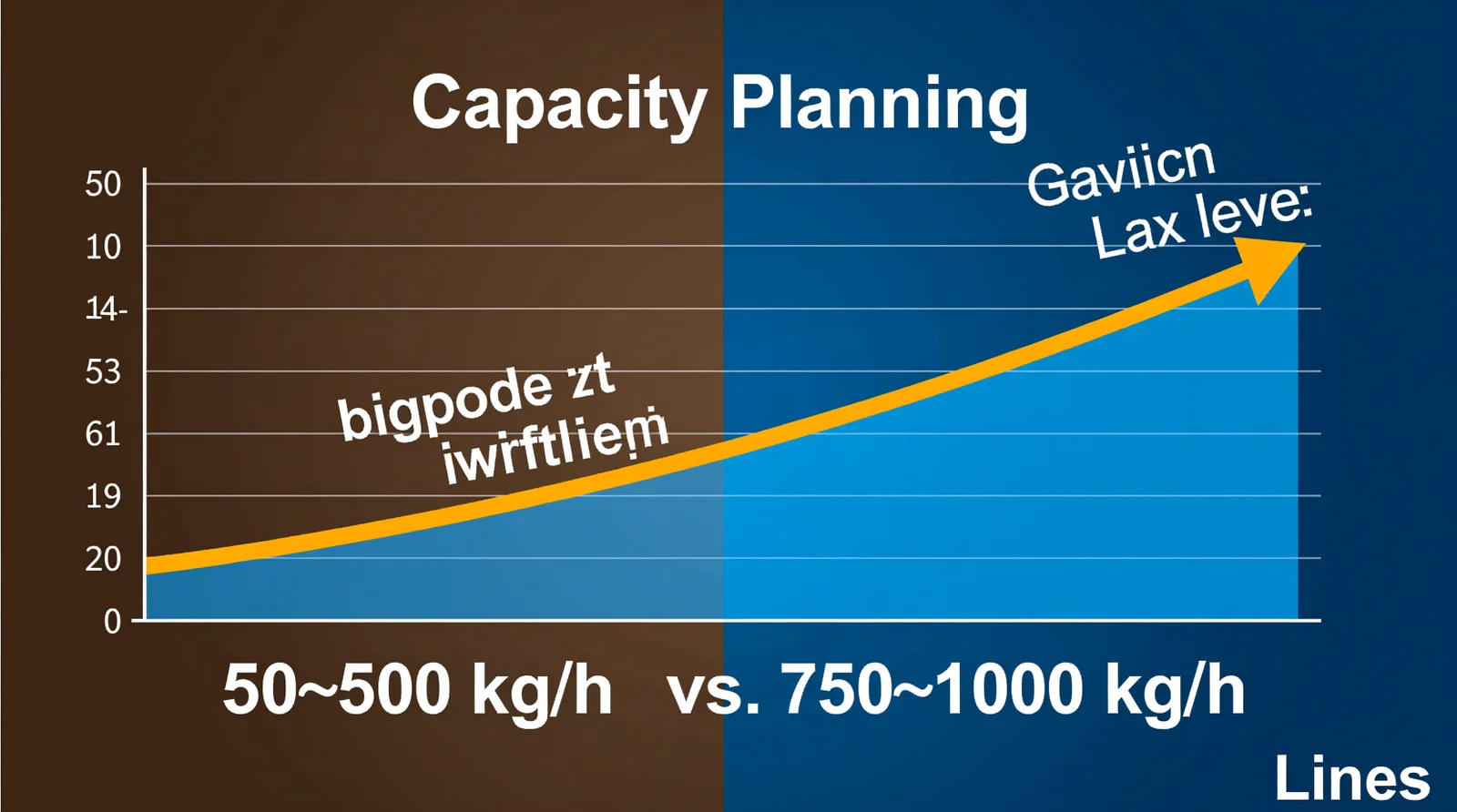
GMS currently manufactures recycling systems in the 50–500 kg/h range and is preparing higher-capacity systems in the 750–1000 kg/h class. Choosing the correct size is less about “bigger is better” and more about feedstock security, staffing, and downstream demand.
When 50–500 kg/h is the better fit
- In-house recycling for converters with predictable post-industrial scrap volumes.
- Plants optimizing regrind reuse to cut virgin resin consumption without building a full-scale recycling business.
- Operations with limited space, power allocation, or variable scrap generation.
When 750–1000 kg/h makes commercial sense
- Independent recyclers aggregating post-consumer packaging at scale.
- Large processors aiming for continuous runs, lower cost/kg via scale, and centralized recycling hubs.
- Businesses that can secure consistent bales/flakes supply and maintain washing and filtration discipline.
TL;DR: 50–500 kg/h suits converter in-house loops and variable volumes; 750–1000 kg/h fits recyclers with stable feedstock supply and a need for scale economics.
Buyer Selection Criteria: How to Specify the Right Recycling System
For decision-makers evaluating a plastic recycling line for PE/PP or post-consumer packaging streams, the purchase specification is usually won or lost on these points:
- Feedstock reality check: define polymer mix, contamination load, moisture, and expected variability. A “clean scrap” line will struggle on post-consumer film without washing + stronger filtration.
- Washing requirement: add a washing line if the stream includes dirt, food residue, heavy printing, or adhesives. For many post-consumer streams, washing is not optional if you want stable MFI and fewer gels/specks.
- Degassing design: vacuum degassing is important when odor/volatiles are present (inks, adhesives, oils, moisture). Multi-vent designs often reduce pellet odor and improve surface finish in molded parts.
- Filtration strategy: choose continuous/backflush filtration if contamination is variable; specify filtration fineness based on end-use (molded items vs. film).
- Pelletizing method: water-ring/strand is commonly chosen for robustness; underwater pelletizing can offer tighter pellet uniformity at higher throughputs.
- Automation level: higher automation typically reduces operator dependence and improves repeatability, but requires better instrumentation and training.
TL;DR: Match the line to your actual waste stream—washing, degassing, and filtration choices should be driven by contamination, moisture, and pellet end-use requirements.
ROI Drivers for Converters and Recyclers (Payback Logic)
Return on investment (ROI) for recycling equipment usually comes from a small number of measurable drivers:
- Virgin resin offset: increasing recycled content in-house can reduce purchased resin cost, especially for non-food packaging, caps/closures (where allowed by specs), household items, and industrial components.
- Labour reduction: automation reduces headcount per shift and stabilizes output during long runs.
- Lower scrap disposal cost: instead of selling scrap at a discount, converters convert scrap into higher-value pellets for internal reuse.
- Quality uplift: better filtration/degassing can reduce rejects in downstream molding/extrusion.
- EPR compliance support: for brand owners and supply chains in India, aligning with EPR documentation and responsible processing is increasingly important; see CPCB resources on Plastic Waste Management.
Payback time varies widely with resin spread, scrap rate, and utilization. In practice, well-utilized in-house lines can target payback in months rather than years, while post-consumer projects are more sensitive to feedstock cost, wash yield, and plant uptime.
TL;DR: Payback is driven by virgin resin savings, labour reduction, and higher usable yield; utilization rate and feedstock quality determine how fast the project pays back.
Compliance, Safety, and Quality Expectations
For capital equipment, buyers typically request compliance and documentation aligned with export and plant safety requirements:
- CE marking: “CE” indicates conformity with applicable EU safety, health, and environmental protection requirements when supplied into CE-regulated markets. (Exact conformity depends on machine configuration and supplied documentation.)
- Recyclate quality requirements: many converter and brand-owner specifications reference standardized test methods for MFR/MFI, ash, and mechanical properties. ASTM and ISO test methods are commonly used; for example, ASTM provides standardized plastics testing frameworks via ASTM International.
- Indian regulatory alignment: for packaging waste management and EPR, CPCB guidance is a key reference point in India.
TL;DR: Buyers typically look for strong safety documentation (often CE-related where applicable) and standardized test methods for recyclate consistency, plus alignment with CPCB/EPR expectations in India.
After-Sales Service, Local Support, and Training (Critical for Uptime)

For recycling lines, the real cost is often downtime rather than electricity. Decision-makers commonly evaluate suppliers on commissioning depth and service readiness as much as on machine specifications. For installations in India, buyers typically expect:
- Commissioning & process tuning: ramp-up support to stabilize feeding, melt pressure, filtration cycles, and pelletizer settings on the customer’s actual waste stream.
- Operator and maintenance training: standard operating procedures (SOPs), safe screen-change practices, and troubleshooting guidance.
- Spare parts availability: critical consumables include screens, heaters, thermocouples, seals, cutter blades, and vacuum system wear parts.
- Remote diagnostics (where implemented): support for parameter review (temperatures, pressures, motor loads) to reduce time-to-fix.
TL;DR: Strong commissioning, training, and local spares support are often what protects uptime and total cost/kg over the life of the recycling line.
Illustrative Use Case: Packaging Converter Running In-House Recycling
Customer type: flexible packaging converter producing PE/PP-based laminations and pouches (non-food applications).
Waste stream: edge trim + start-up scrap + rejected rolls (primarily PE/PP, with some printed material).
Installed setup: 300–400 kg/h automated pelletizing line with densification for film, vacuum degassing, and continuous melt filtration.
Measured outcomes (illustrative):
- Reduced purchased virgin resin consumption by using recycled pellets in secondary layers and non-critical SKUs (e.g., 10–25% recycled content depending on product spec).
- Lower internal scrap handling and fewer production interruptions due to automated feeding and stable filtration cycles.
- Improved batch-to-batch processing consistency, enabling more predictable extrusion output and fewer quality rejections linked to contamination spikes.
TL;DR: A mid-capacity in-house line can convert film scrap into pellets for secondary layers, reducing virgin resin use and stabilizing production when degassing and filtration are specified correctly.
Conclusion

GMS Plastics Machinery used Plast India 2026 to demonstrate an automated recycling line that converts plastic waste into reusable pellets with low operator dependence. Beyond the live run, the decision-making factors for buyers remain technical: input preparation, degassing design, filtration fineness, pelletizing method, and the service model that keeps the line running.
With capacity offerings spanning 50–500 kg/h and upcoming 750–1000 kg/h systems, plus add-on technologies such as deprinting and demetallizing for packaging waste, the company is positioning its equipment for both converter in-house recycling and higher-volume post-consumer processing where consistent pellet quality and uptime determine profitability.
TL;DR: Recycling line performance is won on process design (prep, degassing, filtration) and service support—not just nameplate kg/h—and GMS is expanding capacity plus packaging-focused quality steps.
FAQ
Q: What plastics can a plastic recycling line for PE/PP typically process, and what pre-sorting is required?
A: Most PE (polyethylene) and PP (polypropylene) recycling lines can process post-industrial scrap (runners, lumps, trim) with minimal sorting, plus pre-sorted post-consumer packaging. Post-consumer input usually needs removal of PVC, metals, excessive paper, and non-target polymers, often supported by manual sorting, metal detection, and a washing line.
Q: What footprint and utilities should I plan for (power, water, and layout) for an automated pelletizing line?
A: Space depends on whether washing is included. Pelletizing-only lines are more compact, while post-consumer lines require additional length for washing, separation, and drying. Utility planning typically includes three-phase industrial power, compressed air for pneumatics (if used), and water supply/recirculation for washing and pelletizing cooling; post-consumer setups also require effluent management consistent with local rules.
Q: How do demetallizing and deprinting integrate into post-consumer packaging recycling equipment?
A: Both are usually placed before extrusion within the washing section. Deprinting uses friction plus wash chemistry to detach inks/adhesives, while demetallizing targets metallized layers so aluminum fragments don’t overload melt filtration or show up as specks in pellets.
Q: What maintenance intervals are typical, and how do plants reduce downtime?
A: Preventive routines usually include daily checks on temperatures/pressures and cutting systems, scheduled screen changes based on melt pressure rise, and periodic inspection of vacuum pumps, seals, and wear parts. Downtime is reduced with stable feedstock preparation, continuous/backflush filtration, stocked consumables (screens, blades, heaters), and remote diagnostics where available.
Q: How do I choose between 50–500 kg/h and 750–1000 kg/h capacity for in-house recycling for converters?
A: Choose 50–500 kg/h if your scrap generation is steady but limited, you want simpler operations, or you have space/power constraints. Consider 750–1000 kg/h when you have secured feedstock supply at scale, can run multiple shifts reliably, and your downstream demand can absorb continuous pellet output without storage or quality risks.