What Is Fan-Out Wafer-Level Packaging (FOWLP)?
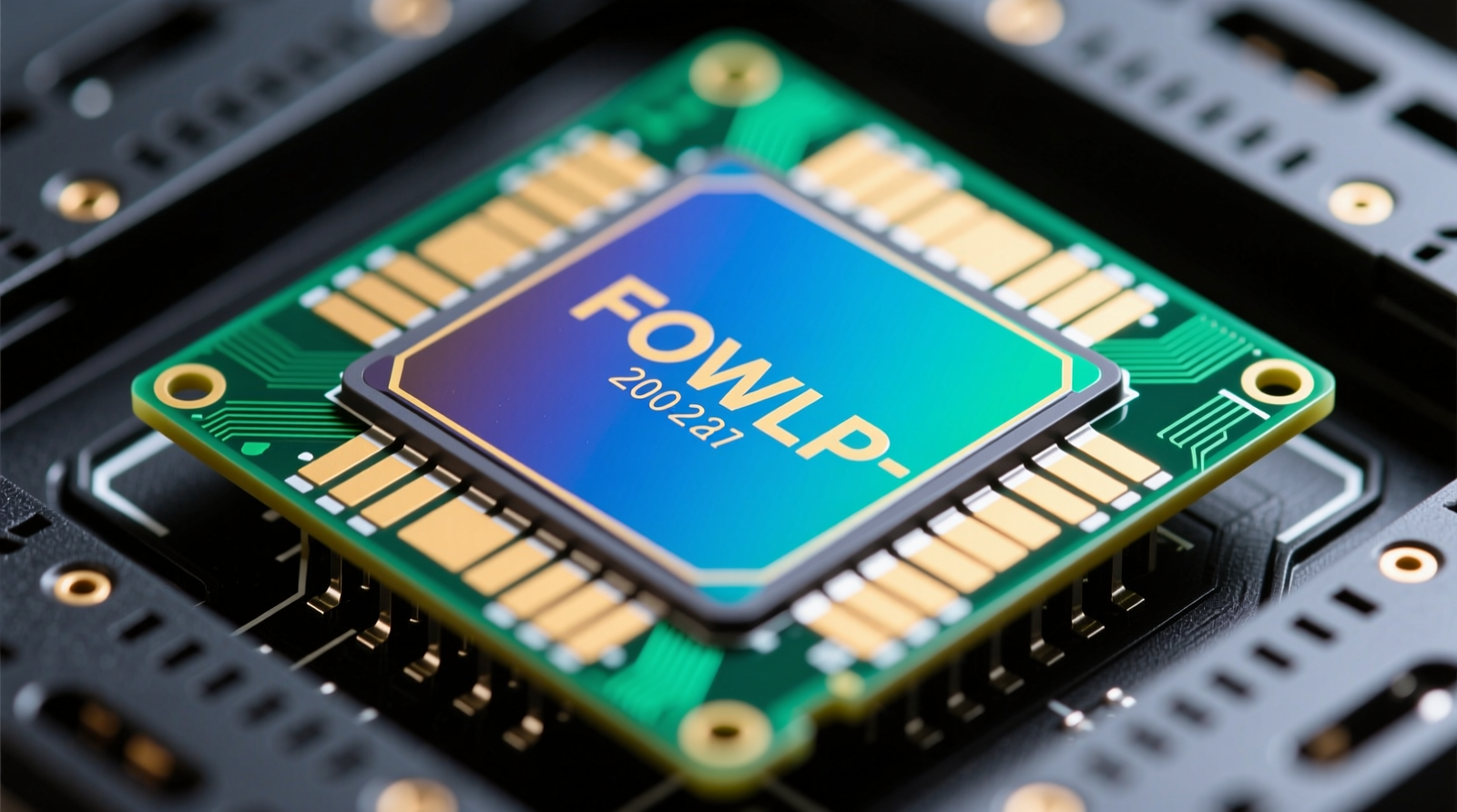
Fan-Out Wafer-Level Packaging (FOWLP) is an advanced semiconductor packaging technology that enables higher integration density and superior electrical performance compared to traditional methods. Unlike legacy packaging techniques, FOWLP eliminates the need for a substrate, providing a thinner form factor with improved thermal and electrical characteristics.
More specifically, FOWLP involves redistributing the I/O (input/output) of a die across a reconstituted wafer, typically using an epoxy molding compound. This approach allows chip designers to “fan out” the connections, hence the name. FOWLP supports complex System-in-Package (SiP) configurations, making it ideal for mobile devices, automotive applications, and high-performance computing.
According to a market analysis by Precedence Research, the global FOWLP market is projected to grow from $13.97 billion in 2023 to over $41.26 billion by 2032, reflecting increased adoption across multiple industries.
TL;DR: FOWLP is a cutting-edge semiconductor packaging technology offering compactness, performance, and integration capabilities, fueling rapid adoption in sectors like mobile and automotive.
FOWLP vs. Traditional Packaging Methods
In traditional semiconductor packages, dies are mounted onto a substrate or printed circuit board (PCB), often resulting in bulkier configurations with limited thermal management and slower signals. Fan-Out Wafer-Level Packaging sidesteps these issues by removing the substrate and embedding the die(s) directly in mold compounds, with interconnects routed via redistribution layers (RDLs).
According to Dr. Beth Keser, an IEEE Fellow and packaging expert at Qualcomm, “The move toward fan-out technologies is critical in meeting the performance demands of today’s SoCs (System-on-Chips). FOWLP not only reduces Z-height, but also supports better thermal management, which is essential for AI and 5G applications.”
- FOWLP: Thinner, better thermal/electrical performance, ideal for small or high-power devices.
- Traditional Packages: Thicker, uses interposers/substrates, limited signal speed and integration capability.
TL;DR: Unlike traditional packages, FOWLP delivers smaller, more efficient designs without interposers—crucial for mobile, IoT, and AI-enabled devices.
Key Applications of Fan-Out Wafer-Level Packaging
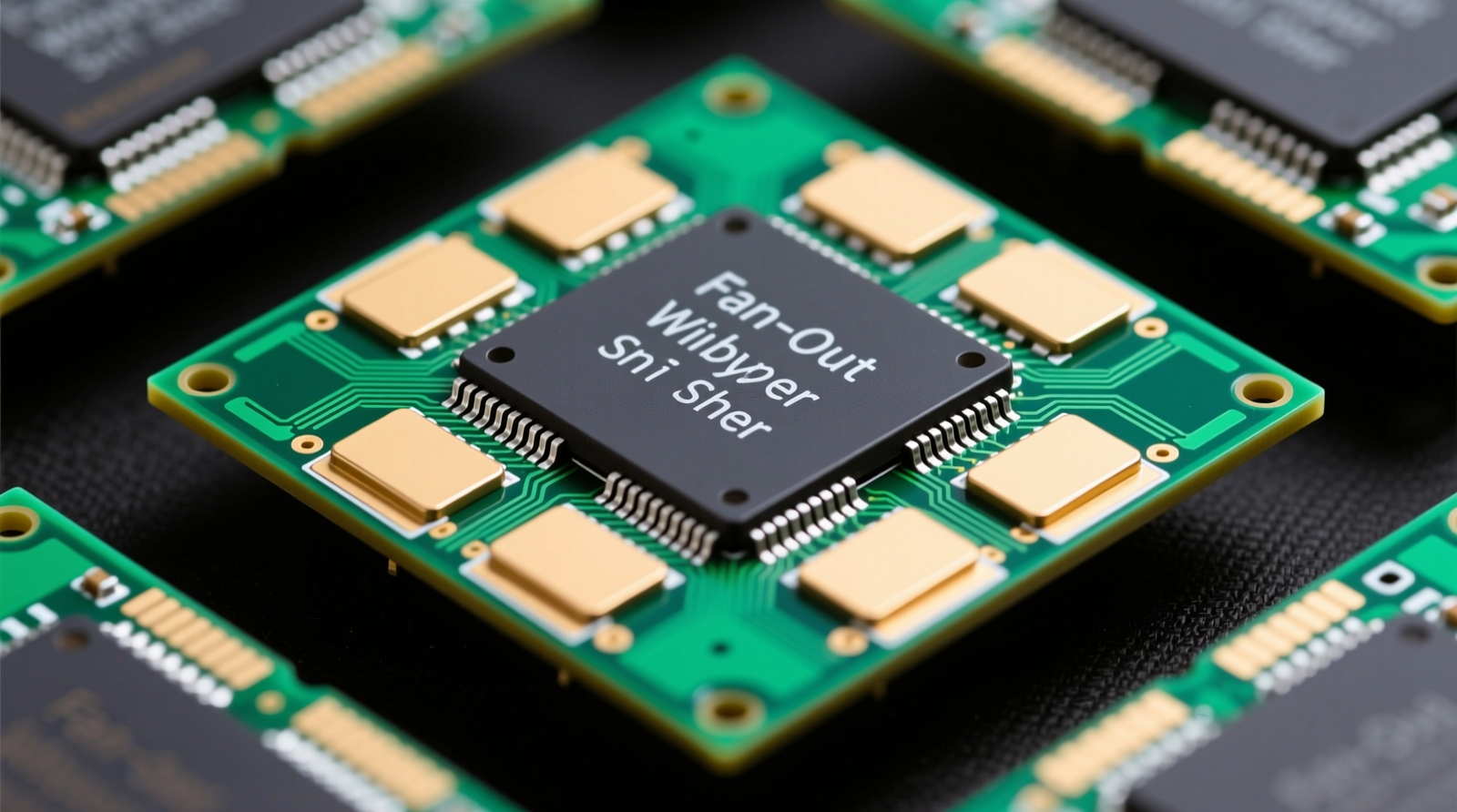
FOWLP is transforming multiple high-tech industries:
- Mobile Devices: Enables ultra-thin designs in smartphones and wearables thanks to lower Z-height and improved power efficiency.
- Automotive Electronics: Used in LiDAR, radar systems, and autonomous vehicle controllers requiring reliability and thermal stability.
- Data Centers & AI: Supports high-bandwidth memory (HBM) and GPU integration for compute-intensive workloads.
Market leaders like TSMC, ASE Group, and STATS ChipPAC (now part of JCET Group) have been pivotal in scaling FOWLP innovations in these sectors. As stated by ASE Technology Holding, “Fan-Out packaging bridges the gap between performance and miniaturization, two critical vectors in next-generation chip design.”
3D InCites also highlights how FOWLP is becoming central to chiplet-based architectures, where different functional blocks are packaged together with shorter and faster interconnects.
TL;DR: FOWLP excels in smartphones, cars, and AI hardware by offering size reduction, speed, and thermal reliability—all vital for next-gen electronics.
Benefits and Limitations of FOWLP
FOWLP provides a compelling set of advantages:
| Advantages | Limitations |
|---|---|
| High performance due to short interconnects | Complex manufacturing processes |
| Improved thermal behavior | Lower yield rates for large die sizes |
| Compact form factor and lower Z-height | Packaging cost can be higher for low volumes |
| Supports multi-die & heterogeneous integration | Advanced design tools and simulation required |
Dr. Subu Iyer, former IBM Fellow and professor of Electrical Engineering at UCLA, mentions: “Fan-Out technology meets critical integration needs for applications requiring tight power and signal integrity, but scalability is still a challenge due to die shift and warpage.”
TL;DR: While FOWLP offers size, speed, and energy benefits, it entails complex manufacturing and might be costlier for small-scale production.
Market Trends and Future Outlook for FOWLP
The future of FOWLP is closely aligned with broader semiconductor trends such as heterogeneous integration, 3D packaging, and edge computing. Analysts from Yole Intelligence project continued double-digit growth, especially in automotive and AI-driven domains. As chiplets and SiPs gain traction, FOWLP is becoming a go-to choice for design flexibility and performance scaling.
Intel’s Embedded Multi-die Interconnect Bridge (EMIB) and TSMC’s InFO-PoP (Integrated Fan-Out Package-on-Package) illustrate how industry leaders are building upon fan-out concepts for advanced packaging roadmaps. These solutions are also key enablers for chip disaggregation, addressing limitations of conventional monolithic SoCs under Moore’s Law deceleration.
Additionally, Fan-Out Panel-Level Packaging (FO-PLP)—a variant of FOWLP using rectangular panels instead of wafers—is emerging to further reduce cost per unit and increase throughput.
TL;DR: FOWLP is poised for strong growth thanks to its role in enabling AI, chiplet integration, and advanced packaging innovation.
FAQ
Q: What does FOWLP stand for in semiconductor technology?
A: FOWLP stands for Fan-Out Wafer-Level Packaging, a technique that re-distributes I/O beyond the die edge without using a traditional substrate, improving performance and compactness.
Q: How is FOWLP different from wafer-level chip scale packaging (WLCSP)?
A: While both are wafer-level techniques, FOWLP allows for expanded I/O distribution outside the die footprint and supports complex SiP integration, unlike WLCSP, which is limited to the die’s original size.
Q: Is FOWLP suitable for high-power applications?
A: Yes, FOWLP offers improved thermal conductivity and electrical efficiency, making it well-suited for high-power and high-performance computing applications, such as data centers and AI accelerators.
Q: What are the challenges in implementing FOWLP in manufacturing?
A: Key challenges include die shift during molding, warpage in reconstituted wafers, and maintaining yield when scaling up to large or multi-die configurations.
Q: Who are the leading OSAT companies leveraging FOWLP?
A: Leading Outsourced Semiconductor Assembly and Test (OSAT) companies embracing FOWLP include ASE Technology Holding, JCET Group, Amkor Technology, and TSMC, all of which have dedicated R&D into fan-out technologies.