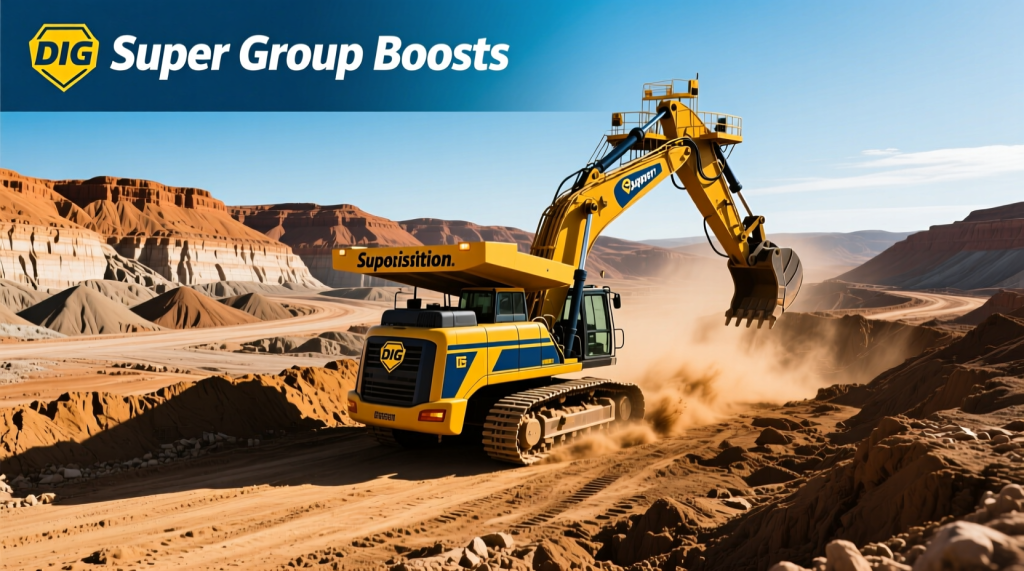
Super Group’s acquisition of a controlling stake in DIG Group is a notable mining services acquisition by Super Group, adding heavy equipment hire and mining equipment rental in South Africa to its broader logistics and fleet management portfolio. Below is a practical breakdown of what the deal includes, how DIG operates on the ground, and what the acquisition could mean for customers, suppliers and shareholders in a South African mining environment shaped by cost pressure, safety regulation and rising ESG (Environmental, Social and Governance) expectations.
- What the deal is: Super Group is buying 70% of DIG Group for R448 million cash, plus an earn-out (deferred payments linked to profit).
- Why it matters: It accelerates Super Group’s move into outsourced mining fleet management and on-site equipment solutions.
- Expected impact: Adds an earnings-generating operating business with tangible assets and expands Super Group’s addressable market beyond transport and traditional fleet admin.
TL;DR: Super Group is moving deeper into mining by buying into DIG’s equipment-rental platform, aiming to pair logistics + fleet data capabilities with on-site mining equipment hire.
How DIG Group Strengthens Super Group’s Mining Equipment Hire Capabilities
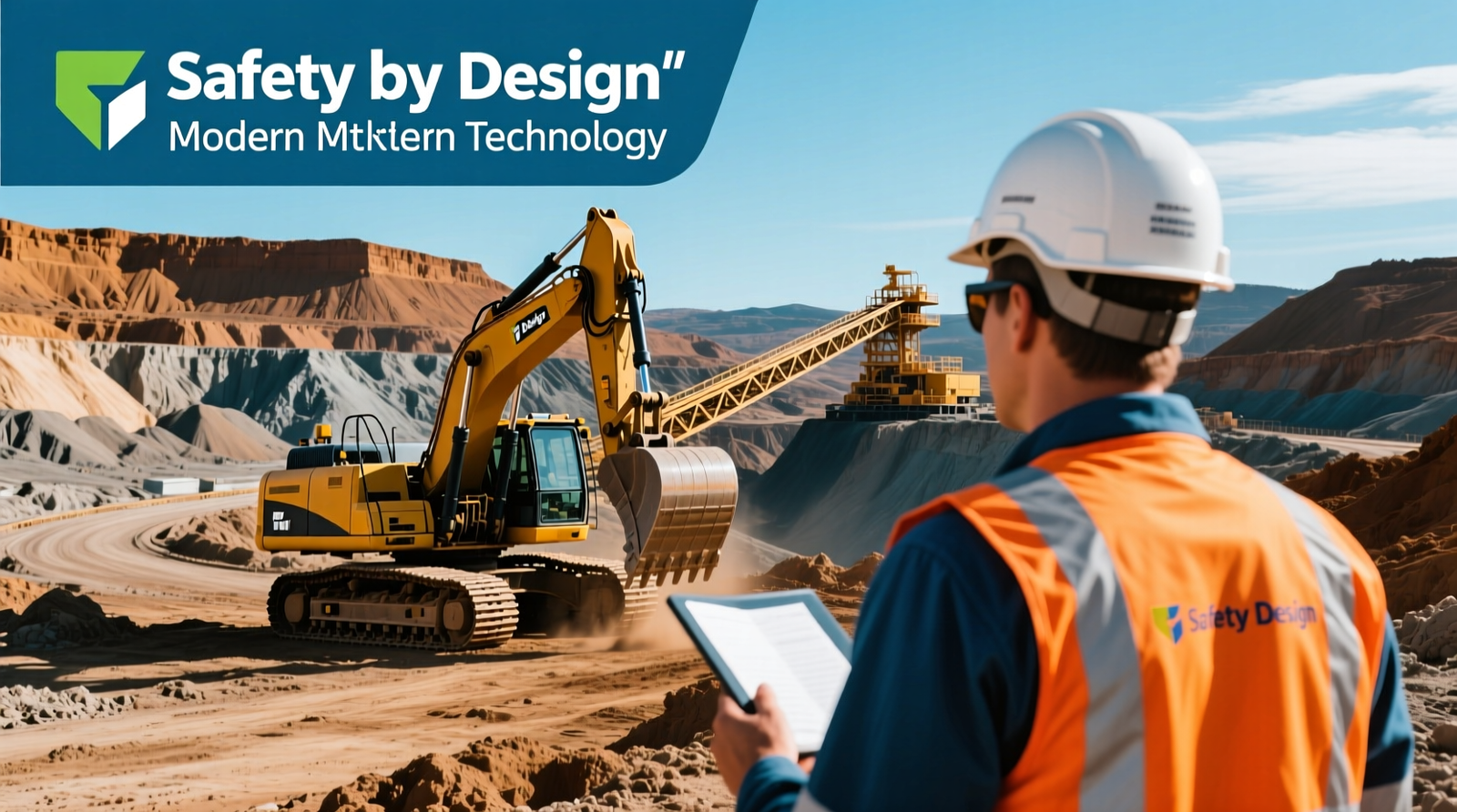
The acquisition expands Super Group’s fleet solutions into mining equipment rental in South Africa, specifically plant and heavy equipment hire used in production-critical mining activities. In practice, this positions Super Group closer to the “working face” of mining operations—where equipment uptime, maintenance discipline and safety compliance directly influence tonnes moved and cost per tonne.
Mining houses increasingly use contractors for equipment provision and maintenance to reduce upfront capital spend and improve flexibility. This is part of a broader shift toward outsourced mining fleet management, where the contractor is responsible not only for supplying equipment, but also for keeping it available, compliant and productive.
Typical mining services contracts for equipment hire and fleet support are often structured as:
- Fixed-term contracts (commonly multi-year, frequently in the 2–5 year range in many mining-services arrangements), with renewal options tied to performance and mine plan continuity.
- Framework or call-off agreements, especially where the mine wants flexibility by project phase (development, peak production, rehabilitation).
- Availability- and utilisation-linked pricing, where penalties/bonuses may apply based on uptime and output.
Peer context (fleet model): In South Africa, mining services providers typically compete on (1) fleet availability and maintenance depth, (2) safety performance, (3) access to OEM parts and technical support, and (4) ability to mobilise quickly to remote sites. DIG’s footprint across multiple mine sites suggests it is competing in the “reliability + execution” tier rather than pure spot-rental commodity hire.
TL;DR: DIG adds operational mining equipment hire and on-site execution capability to Super Group’s existing fleet/logistics strengths, matching a wider mining trend toward outsourcing equipment and maintenance.
South African Mining Services Market Conditions: Demand, Regulation and ESG Pressure
Demand for mining services in South Africa is shaped by commodity cycles (coal, chrome, gold and PGMs), infrastructure constraints (notably logistics and power), and operational pressures on mines to control costs while improving safety and environmental outcomes.
Key macro factors influencing mining services in South Africa include:
- Commodity volatility: When prices soften, mines push harder on contractor rates, uptime guarantees, and variable pricing structures.
- Regulatory and safety scrutiny: Contractors must operate in alignment with the Mine Health and Safety Act (MHSA) framework and mine-specific standards. You can review the MHSA overview via South African government resources (for example, the Department of Mineral Resources and Energy site: https://www.dmre.gov.za/).
- ESG requirements: Mines and their contractors face rising expectations around diesel use, emissions reporting, water stewardship, community impact and ethical procurement. For background on ESG and responsible mining practices, see the International Council on Mining and Metals (ICMM).
These pressures tend to favour contractors that can prove compliance, measure safety performance, and manage fleets with data—making Super Group’s technology-led fleet approach strategically relevant.
TL;DR: South African mining services demand is steady but performance-driven—contractors win by controlling cost, meeting strict safety rules, and supporting ESG expectations.
Regulatory Approval and Transaction Structure (Price, Earn-out and Timing)

The final step was Competition Tribunal approval, which cleared the acquisition unconditionally. (For general information on South Africa’s competition authorities, see the Competition Tribunal.) This allows Super Group to acquire 70% of DIG Group.
Super Group will pay R448 million in cash for the 70% interest, plus deferred, performance-linked consideration (commonly called an earn-out) based on DIG’s future profits. Earn-outs are frequently used in asset-heavy contracting businesses because they:
- reduce the buyer’s risk if the cycle turns,
- keep management incentivised post-deal, and
- help bridge valuation gaps when growth assumptions differ.
Valuation context (what can be inferred): DIG reported normalised profit after tax of R191.5 million (year end-February 2025). While purchase price multiples depend on whether you compare to EBITDA (earnings before interest, tax, depreciation and amortisation), EBIT (earnings before interest and tax), or post-tax profit—and on net debt and fleet capex needs—the cash price plus earn-out structure is consistent with how mining services transactions often price risk around utilisation, renewal and capex cycles.
TL;DR: The deal is approved; the price is R448m for 70% plus an earn-out, a common way to manage cyclicality and performance risk in mining services.
DIG Group Operating Profile: Footprint, Fleet Types and Project Mix
DIG operates in heavy equipment hire for mining, supporting 19 mining sites across commodities including coal, chrome and gold. These environments require high mechanical availability and strict adherence to site operating rules.
The operating mix typically includes workhorse categories such as:
- Excavators (production and loading support)
- Dump trucks (haulage in open-pit/surface operations)
- Dozers and earthmovers (stripping, road maintenance, stockpile management)
- Specialist support equipment used across surface and (where applicable) underground support activities
Fleet detail (what matters operationally): Super Group has referenced DIG having a “modern fleet”. In mining equipment rental, “modern” generally implies a fleet with:
- higher reliability and better fuel efficiency than older units,
- OEM-supported diagnostics, and
- lower unplanned downtime when maintenance is executed to schedule.
Owned vs leased: Many mining hire operators use a blended model—core units owned to protect availability and margin, with selective leasing or rental arbitrage during ramp-ups. The acquisition thesis usually improves if the fleet is predominantly owned (stronger asset base and collateral) but it must be balanced against maintenance capex and replacement cycles.
Peer comparison (composition): Compared with general construction rental fleets, mining-focused fleets often skew toward heavier duty cycles, more robust maintenance planning, and site-embedded service teams. This increases barriers to entry because it requires spares planning, technician capability and on-site governance—not just asset ownership.
TL;DR: DIG supports 19 mine sites with production-critical equipment types; success hinges on availability, maintenance execution and a fleet strategy suited to harsh duty cycles.
Fleet Maintenance Philosophy and “Strong OEM Relationships” (What It Means in Practice)
In mining equipment hire, maintenance is not a back-office function—it is the commercial product. Strong OEM (Original Equipment Manufacturer) relationships typically translate into practical advantages such as:
- Parts availability and prioritisation: faster access to critical components (reducing mean time to repair).
- Technical support: OEM field technicians and on-site support during commissioning or complex failures.
- Warranty and rebuild programmes: structured rebuild cycles that extend asset life and improve cost predictability.
- Preferential commercial terms: better pricing on parts/service, or more favourable lead times.
- Joint maintenance planning: alignment on service intervals and condition monitoring (often through OEM telematics).
DIG’s OEM ties, combined with Super Group’s technology orientation, create a plausible pathway to improve:
- availability (percentage of time equipment is ready for work),
- utilisation (percentage of time equipment is actually working), and
- lifecycle cost (maintenance + fuel + rebuild vs output delivered).
TL;DR: OEM relationships matter because they reduce downtime through faster parts, stronger technical support and structured rebuild/maintenance programmes—directly improving mining fleet uptime.
Safety, Compliance and Operational Governance in Mining Services
Safety performance is a core selection criterion for mining contractors. DIG’s stated focus on safety compliance should be understood in the context of South Africa’s mining safety regime and common international management systems.
Operational best practice in mining services often includes alignment to:
- Mine Health and Safety Act (MHSA) requirements and mine-specific rules and permit systems.
- ISO standards, commonly:
- ISO 45001 (occupational health and safety management systems), see the ISO overview: https://www.iso.org/iso-45001-occupational-health-and-safety.html
- ISO 14001 (environmental management systems), see: https://www.iso.org/iso-14001-environmental-management.html
Common safety and reliability KPIs (Key Performance Indicators) used in mining contracting include:
- TRIFR (Total Recordable Injury Frequency Rate)
- LTIFR (Lost Time Injury Frequency Rate)
- near-miss reporting rates and close-out times
- planned vs unplanned maintenance ratio
- mechanical availability and downtime categorisation
For Super Group, acquiring a mining contractor with credible safety governance reduces integration risk and supports entry into sites where contractor onboarding is stringent.
TL;DR: Mining services contracts are “won and kept” through safety and compliance; alignment with MHSA expectations and ISO-style systems supports credibility and access to top-tier mine sites.
Financial Impact of the DIG Mining Services Acquisition on Super Group
DIG’s reported normalised profit after tax of R191.5 million indicates the acquisition can be earnings-accretive, subject to fleet capex needs, contract renewal dynamics and commodity-linked utilisation.
Segment mix and margin implications (qualitative):
- Revenue mix: Super Group increases exposure to on-site, asset-led mining services alongside its logistics and fleet management activities.
- Margins: Well-run equipment hire can deliver attractive operating margins when utilisation is high and maintenance is controlled, but margins can compress quickly if downtime rises or parts inflation accelerates.
- ROCE (Return on Capital Employed): Mining equipment hire is capital-heavy; ROCE improves when fleets are optimally sized, replacement cycles are disciplined, and contract pricing reflects full lifecycle cost (including rebuilds and major component changes).
How earn-outs protect returns: If utilisation or contract volumes soften, earn-outs reduce upfront overpayment and help preserve Super Group’s return profile. If performance exceeds base assumptions, the earn-out shares upside while still leaving Super Group with control and consolidation benefits.
TL;DR: DIG can lift Super Group’s mining exposure and earnings, but returns depend on fleet utilisation, maintenance discipline and capex/replacement planning—earn-outs help balance this risk.
Key Risks: Commodity Cycles, Contract Concentration and Operational Execution
No mining services expansion is risk-free. Key risks investors and industry stakeholders typically watch include:
- Commodity price volatility: Lower commodity prices can reduce production, delay expansions and pressure contractor rates.
- Contract concentration risk: If a meaningful share of revenue depends on a small number of mines, renewal outcomes and client relationships become critical.
- Operational risk in heavy equipment hire: major component failures, parts lead times, tyre availability, fuel theft risk, and site access constraints can disrupt performance.
- Regulatory and stoppage risk: safety incidents can lead to work stoppages and contract penalties.
Why Super Group’s broader portfolio matters: Super Group’s diversification across logistics and fleet services can soften the impact of mining-cycle volatility, while group-level procurement, funding capacity and fleet analytics may strengthen DIG’s operating resilience over time.
TL;DR: The main risks are cycle-driven demand swings, dependence on key contracts and execution risk on uptime/safety—Super Group’s diversification helps buffer (but not eliminate) these risks.
Integration and Strategic Fit: What This Deal Says About Super Group’s Acquisition Pattern
The DIG acquisition is consistent with Super Group’s pattern of adding platforms that expand capability and market reach. For example, the earlier SG Fleet deal strengthened traditional fleet management and expanded international scale; DIG similarly extends the model but into a more operational, site-embedded environment where maintenance and uptime are core value drivers.
Strategic benefits that Super Group can realistically pursue include:
- Cross-selling: combining mining transport/logistics with on-site equipment hire.
- Technology leverage: telematics (vehicle/equipment data) to improve maintenance scheduling, fuel controls and operator behaviour.
- Procurement scale: better purchasing power on parts, tyres, lubricants and services.
- Stronger counterparty profile: larger balance sheet can reassure mining clients on long projects.
TL;DR: Like SG Fleet, DIG looks like a capability-building acquisition—this time adding operational mining equipment hire that can be improved through scale, technology and procurement.
Outlook for Mining Equipment Rental in South Africa: What Could Drive the Next Phase
Near-to-medium term demand for mining equipment rental and outsourced mining fleet management is likely to be influenced by:
- Export demand and global industrial cycles affecting coal, chrome and gold volumes.
- Infrastructure and logistics constraints that can shift how mines plan production and stockpiling.
- Decarbonisation and efficiency programmes, including pressure to reduce diesel intensity and improve reporting (potentially accelerating newer fleet adoption and technology-enabled operations).
For contractors, competitive advantage increasingly comes from measurable performance: documented safety outcomes, transparent maintenance KPIs, and the ability to mobilise and sustain equipment on remote sites with minimal downtime.
TL;DR: The outlook favours mining contractors that can prove uptime, safety and efficiency—especially as mines push for cost control and ESG-aligned operations.
Who Benefits (and What Changes) for Investors, Mining Clients and Suppliers
Mining customers: may benefit from a broader solution set—equipment hire plus integrated logistics and data-driven fleet management—potentially improving uptime and simplifying contractor management.
Suppliers and OEMs: could see more structured, scalable procurement and a larger counterparty with predictable order flow, especially if Super Group standardises parts planning and rebuild cycles.
Shareholders: gain exposure to a mining services earnings stream, with risk moderated by earn-out structuring and Super Group’s portfolio diversification. The trade-off is higher exposure to mining-cycle variability and capital intensity through fleet replacement requirements.
TL;DR: Customers may get a more complete mining fleet solution, suppliers may see stronger buying scale, and shareholders gain mining exposure with earn-out risk-sharing.
Conclusion
Super Group’s purchase of 70% of DIG Group is a strategic entry into mining services and heavy equipment hire, strengthening its position in mining equipment rental in South Africa. Beyond the headline price of R448 million, the earn-out structure reflects the operational reality of mining services: returns are made (or lost) through uptime, safety performance, contract continuity and disciplined fleet replacement.
If Super Group can integrate DIG without disrupting on-site execution—and apply its technology and fleet governance capabilities to improve availability and lifecycle cost—this deal could become a meaningful platform for growth in outsourced mining fleet management.
TL;DR: The acquisition is a credible platform move into mining equipment hire; success will hinge on execution—maintenance, safety, utilisation and smart capex—more than deal optics.
FAQ

Q: Is Super Group expanding into the mining sector in South Africa?
A: Yes. By acquiring 70% of DIG Group, Super Group is expanding into mining services—specifically heavy equipment hire and mining equipment rental in South Africa—alongside its existing logistics and fleet management operations.
Q: What services does DIG Group provide to mining companies?
A: DIG provides plant and heavy equipment hire to mining operations, including equipment such as excavators, dump trucks and earthmoving machinery, supporting operations across multiple mine sites (19 sites noted) in commodities like coal, chrome and gold.
Q: What is the purchase price and how does the earn-out work in the Super Group–DIG deal?
A: Super Group is paying R448 million in cash for a 70% stake, plus deferred payments linked to future profit performance (an earn-out). The earn-out structure helps align incentives and shares performance risk between buyer and seller.
Q: When will DIG be integrated, and will DIG keep operating as the same business?
A: The transaction is effective from March (subject to remaining administrative steps), and acquisitions like this typically integrate in phases to avoid disrupting site operations. Branding and operating-model decisions are usually confirmed post-close; the intent in many mining-services deals is to keep operational continuity while adding group-level procurement, governance and technology support.
A: Shareholders may benefit from an additional earnings stream and diversification into outsourced mining fleet management. Key watch-outs include mining-cycle exposure, customer/contract concentration risk, and fleet replacement (capex) requirements that can influence margins and ROCE over time.