Introduction: “Safety by Design” in Modern Mining Technology
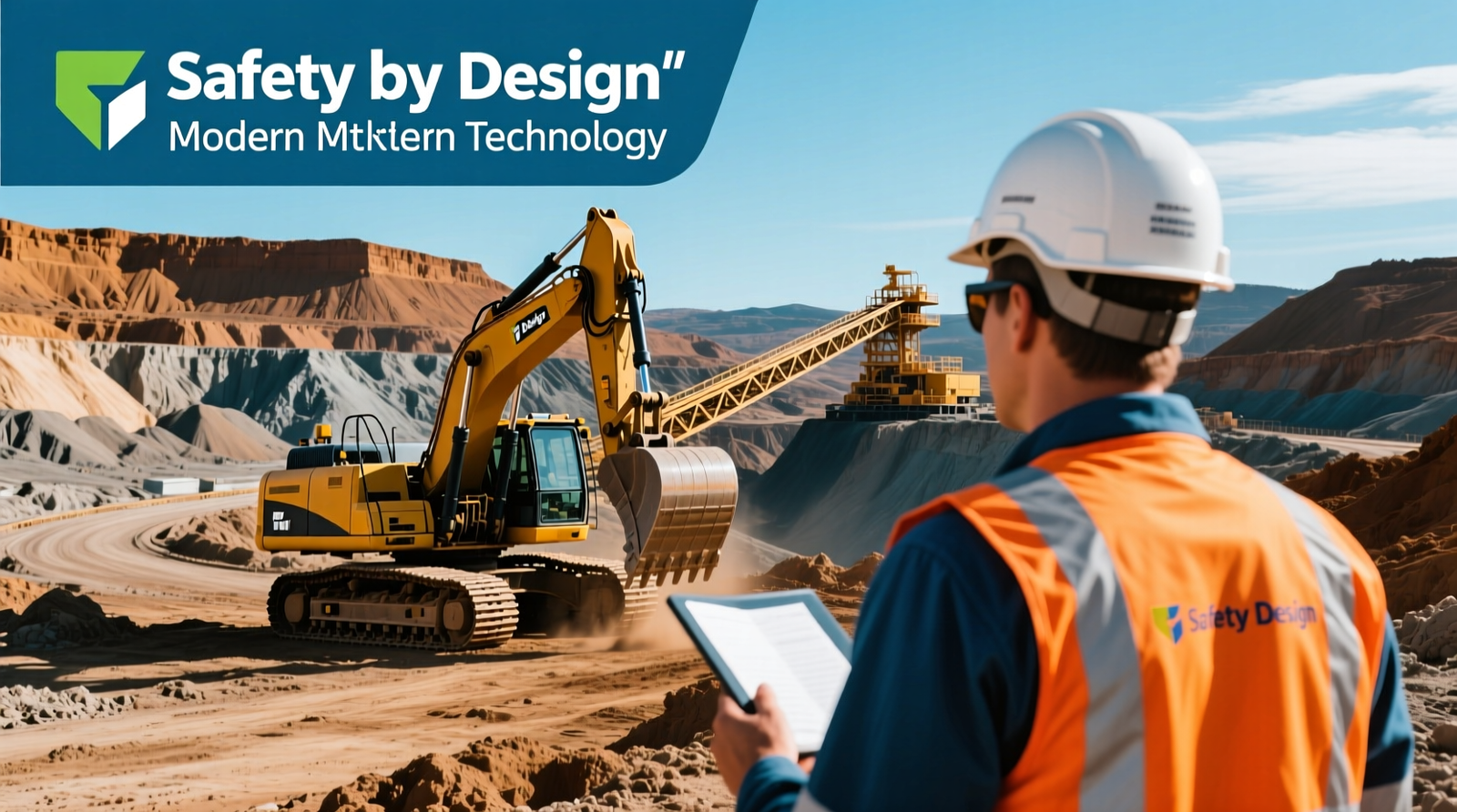
Mining has always involved inherent hazards—heavy mobile equipment, explosives, high-energy processes, and unstable ground. What’s changing is the approach: more operators are adopting safety by design, where risks are engineered out of the workflow rather than managed only through personal protective equipment (PPE) and procedures.
The Mining Equipment, Technology, and Services (METS) sector is central to this shift, delivering tools that reduce toxic exposures, improve blast-area assurance, and strengthen emergency preparedness. This article reviews three safety-focused innovations with practical mining and humanitarian relevance:
- Non-toxic gold assay technology (Chrysos’ PhotonAssay) for mining laboratory safety
- Molecular explosive detection for mines and humanitarian demining technology (MagnaTerra’s MRead)
- Directional drilling for mine rescue (IMDEX’s DeviDrill directional core drilling)
TL;DR: METS innovation is increasingly about removing hazards at the source—replacing lead-based lab methods, improving confidence in explosive clearance, and enabling precision drilling that can be repurposed for rescue.
Chrysos PhotonAssay: Non-Toxic Gold Assay Technology for Mining Laboratory Safety
For decades, fire assay has been the benchmark method for gold analysis in exploration and production labs. It’s accurate, but it can involve lead-based fluxes, aggressive acids (in some workflows), and high-temperature furnaces—creating exposure pathways for lead dust/fumes and heat stress.
Lead is a well-established occupational hazard. Many jurisdictions regulate exposure tightly, and authoritative health guidance emphasizes that no level of lead exposure is completely risk-free. For background on lead health impacts and risk management, see the World Health Organization (WHO): Lead poisoning and health and the U.S. NIOSH guidance on occupational lead exposure.
TL;DR: Traditional gold assaying can carry lead and heat-related hazards—improving mining laboratory safety often means reducing or eliminating these exposure sources, not just adding controls.
How PhotonAssay Works (Physical Principle) and Why It Changes Lab Risk

Chrysos’ PhotonAssay replaces combustion chemistry with high-energy photon physics. In simplified terms, the system exposes a prepared sample to high-energy X-rays that induce atomic activation in target elements (e.g., gold). As excited nuclei return to a stable state, they emit gamma rays with characteristic energies. The detector measures these emissions, and the signal correlates to element concentration.
Operational implications vs fire assay:
- Throughput & turnaround: PhotonAssay is marketed as enabling faster results than classical fire assay in many lab workflows (vendor materials commonly cite “hours” rather than “days,” depending on logistics and batch scheduling). Faster assays can reduce stockpiling of pulps/samples and cut re-handling.
- Sample size & representativity: Photon-based methods can analyze larger sample masses than a typical fire assay aliquot in some configurations, which can improve representativity for coarse-gold or nuggety ores (though the sampling protocol still matters).
- Accuracy & QA/QC: Fire assay remains a reference method for many jurisdictions and contracts; PhotonAssay performance depends on ore type, matrix effects, and calibration. Labs often run parallel verification and ongoing quality assurance/quality control (QA/QC)—i.e., standards, blanks, duplicates—to validate equivalence for their deposit.
- Safety controls: Removing lead flux and furnaces can reduce hazardous waste and heat load, but PhotonAssay introduces radiation safety requirements (shielding, interlocks, licensing, and trained operators). These are typically well-understood industrial controls, but they are still non-trivial.
For Chrysos’ own overview of safety and workflow positioning, see: Chrysos Corporation – PhotonAssay.
TL;DR: PhotonAssay uses X-ray–induced activation and gamma measurement to quantify gold—often improving speed and reducing lead/heat exposure, but it still requires strong radiation governance and deposit-specific validation.
PhotonAssay vs Traditional Alternatives (Fire Assay and Cyanide Leach) — Benefits and Limitations
To avoid overly promotional framing, it’s important to position PhotonAssay against common alternatives:
- Fire assay: Often treated as the industry reference for gold. Strengths include broad acceptance and well-understood QA/QC. Constraints include lead management (where used), furnace energy, slower batch cycles, and ergonomic/heat exposure burdens.
- Cyanide leach / bottle roll (for gold recovery testwork): This is not the same as fire assay, but cyanide leach methods are common in metallurgical testwork and some analytical contexts. They can provide insight into recoverable gold but introduce chemical handling complexity and waste considerations. (PhotonAssay is an analytical technique, not a recovery process.)
Adoption barriers & practical constraints:
- Capital cost & footprint: PhotonAssay requires specialized equipment and installation. It can be easier for larger mine-site labs, regional hubs, or commercial labs with high sample volumes to justify.
- Training & licensing: Radiation-based systems require operator training, documented procedures, and regulatory compliance (requirements vary by country/state).
- Integration effort: Labs may need to redesign sample flow, information management (e.g., laboratory information management system—LIMS), and QA/QC acceptance criteria.
ESG link (measurable levers): Replacing lead flux can reduce hazardous material procurement and hazardous waste streams; removing furnaces can reduce thermal energy demand and associated emissions (site-specific, depending on power source). These map to environmental metrics (hazardous waste reduction, energy intensity) and social metrics (reduced exposure risk, improved retention).
TL;DR: PhotonAssay can materially improve mining laboratory safety and speed, but adoption depends on volume, regulatory readiness, and the mine’s ability to implement radiation controls and method validation.
MagnaTerra MRead: Molecular Explosive Detection for Mines and Humanitarian Demining Technology
Explosives underpin modern blasting, but misfires and unexploded charges remain serious risks in both surface and underground mines. Separately, landmines and explosive remnants of war continue to harm civilians and impede land rehabilitation in post-conflict areas—an issue documented by organizations such as the United Nations Mine Action Service (UNMAS).
MagnaTerra’s MRead is positioned as a handheld Magnetic Resonance (MR)-based detection technology. Magnetic resonance refers to the interaction of atomic nuclei with an applied magnetic field and radiofrequency energy; certain compounds can produce detectable resonance signatures under controlled conditions.
For vendor background, see: MagnaTerra – Technology (MRead).
TL;DR: MRead targets explosive compounds using MR principles, aiming to improve confidence in blast-area clearance and reduce risk in humanitarian demining environments.
MR-Based Detection vs Metal Detectors and Ground-Penetrating Radar (GPR): What’s Different?
Mines and demining teams traditionally rely on:
- Advanced metal detection: Effective for metal-cased items, but can generate high false positives where there is scrap metal, shrapnel, or mineralized ground.
- Ground-penetrating radar (GPR): Uses electromagnetic waves to image subsurface interfaces; performance can degrade in conductive soils (e.g., high clay content, saline moisture). GPR is powerful for locating shapes/voids but typically does not “chemically identify” explosives.
MRead’s differentiation is that it aims to detect nitrogen-bearing explosive compounds based on a molecular-level signature rather than simply detecting metal or subsurface shapes. In theory, this can reduce time lost to digging up harmless metallic clutter—one of the biggest safety and productivity drains in clearance operations.
Critical perspective: MR-based systems can face practical constraints such as sensor standoff distance, scan time per target, and environmental sensitivity. In real operations, most teams use layered detection (e.g., metal detection + GPR + targeted confirmation), so the key question is whether MR adds enough confirmation value to reduce false positives without slowing throughput.
TL;DR: Compared with metal detectors and GPR, MR-based detection aims to add chemical specificity—potentially reducing false alarms, but field performance depends on environment, workflow design, and scan-time practicality.
MRead Operational Detail: Depth, Thresholds, and Environmental Factors That Affect Performance
In field detection, three realities usually determine whether a technology changes outcomes: depth penetration, detection thresholds, and environmental robustness. Publicly available vendor information on exact thresholds and depths can be limited and may change as the product matures, so the points below should be treated as evaluation prompts rather than universal specifications.
- Depth penetration limits: Handheld systems typically operate best at shallow depths. Soil conditions, target orientation, and sensor-to-ground coupling can materially affect detection depth. In practice, teams should validate performance across the site’s expected burial depths before relying on it for clearance decisions.
- Minimum detectable explosive mass (detection threshold): Molecular detection generally requires enough target signal relative to background noise. Detection of small quantities (e.g., trace residues) is a different problem than detection of bulk explosive fill. Mines should request third-party or field trial data relevant to their explosive types and packaging.
- Moisture and soil type: High moisture, clays, and conductive mineralization can affect many subsurface sensing methods. Even if MR is less sensitive to metallic clutter, water content and soil chemistry can influence signal stability and scanning repeatability.
- Mineralization and electromagnetic noise: Mining environments often include electromagnetic interference (vehicles, power infrastructure) and highly variable geology; any handheld sensor needs operating procedures to control for this (scan spacing, calibration checks, exclusion zones).
Compliance context: Explosives management and blast safety expectations are often shaped by national mine regulations and international guidance. For a global reference point on occupational safety systems, ISO 45001 (Occupational health and safety management systems) is widely used: ISO 45001 overview. While ISO 45001 doesn’t prescribe a specific detector, technologies that reduce re-entry risk and improve hazard verification can support the “hierarchy of controls” approach embedded in many safety systems.
TL;DR: The promise of molecular explosive detection is higher specificity; the practical reality depends on depth, explosive mass, soil/moisture, and on-site procedures—so controlled trials and clear acceptance criteria are essential.
IMDEX DeviDrill: Directional Drilling for Mine Rescue and Emergency Preparedness
Directional drilling refers to steering a borehole along a planned path rather than drilling straight. IMDEX’s DeviDrill is a wireline directional core drilling system designed to create controlled deviations (including branch holes) from a main hole—useful in exploration, geotechnical programs, and potentially in emergency response.
IMDEX’s case study referencing the Chilean rescue is here: IMDEX – Chilean Mine Rescue case study.
Important clarity: The 2010 San José (Copiapó) rescue involved multiple rigs, contractors, and drilling approaches under extreme time pressure. Vendor case studies often highlight directional drilling concepts and tooling contributions; readers should treat “role in rescue” claims as illustrative of directional drilling capability unless independently corroborated by official technical reports.
TL;DR: DeviDrill represents modern directional core drilling capability that can support both routine programs and emergency drilling scenarios, but rescue narratives should be interpreted carefully and sourced.
How DeviDrill-Style Directional Control Works (Sensors, Surveys, Steering) and Typical Accuracy
Directional core drilling systems generally rely on three building blocks:
- Downhole sensors & survey tools: Instruments measure borehole inclination and azimuth (direction) at intervals. Surveys are used to calculate the current trajectory and compare it to plan.
- Steering mechanism: Systems may use a wedge, deflection tool, or controllable assembly that biases the bit to build angle or turn. Adjustments are made iteratively based on survey results.
- Operational control loop: Drill parameters (weight on bit, rotation, fluid, penetration rate) are tuned to maintain predictable dogleg severity (rate of directional change) and avoid overshoot.
Accuracy (what decision-makers should look for): “Typical” deviation tolerance depends on hole depth, geology, drilling diameter, and survey frequency. Over several hundred meters, directional control aims to keep the borehole within a defined corridor—often on the order of meters rather than tens of meters—provided the program is engineered and executed appropriately. Buyers should request demonstrated deviation statistics (e.g., end-of-hole positional error distributions) for comparable depths and rock conditions, not just best-case examples.
Why it matters in rescue: In an emergency drill-to-intersect scenario (for communications, supply delivery, or ventilation), the cost of missing the target can be measured in days and lives. Directional capability can reduce uncertainty and enable multiple branch attempts from a single collar location—useful when surface access is constrained.
TL;DR: Directional drilling control is a feedback system—survey, steer, verify. For credibility, focus on demonstrated positional accuracy over comparable depths, not marketing claims.
Practical Considerations for Implementing METS Safety Technologies
Whether you’re evaluating mining laboratory safety upgrades, molecular explosive detection for mines, or directional drilling for mine rescue, implementation success depends on disciplined operational planning.
- Define the hazard and the metric: e.g., lead exposure reduction (air monitoring and biological monitoring), blast re-entry time reduction, false-positive rate reduction, or rescue drill intersection probability.
- Run site trials with acceptance criteria: Include representative ore types/soil types, typical operators, and realistic time pressure. Lock in QA/QC protocols and decision thresholds before scaling.
- Plan competency and training: New tech often fails due to underinvestment in training (operators, supervisors, maintainers) and unclear “who signs off” rules.
- Integrate into systems of work: Update standard operating procedures (SOPs), permit-to-work steps, and incident investigation triggers; align with ISO 45001-style management systems.
- Check infrastructure readiness: Power quality, shielding/licensing (for radiation systems), data connectivity (for reporting), and spares/service support—especially for remote sites.
For broader site architecture, many operators also link these initiatives to adjacent programs such as remote operations centers, autonomous equipment, and mine ventilation safety (mentioned here as related topics for planning, not as internal links).
TL;DR: The technology matters, but implementation determines outcomes—set measurable success criteria, validate in trials, train operators, and integrate into your safety management system.
Quick Comparison: Key Risk Addressed, Operating Context, Benefits, and Constraints
| Technology | Key risk addressed | Operating context | Core benefits | Potential constraints / trade-offs |
|---|---|---|---|---|
| Chrysos PhotonAssay | Lead/chemical exposure, furnace heat, hazardous waste | Mine-site labs, commercial labs | Lower lead-related risk, high automation potential, faster turnaround in many workflows | Capital cost, radiation governance, deposit-specific calibration/validation; fire assay may remain reference in some contracts |
| MagnaTerra MRead (MR-based) | Misfires/unexploded charges; minefield/ERW exposure | Field (blast clearance), humanitarian demining | Molecular specificity; potentially fewer false positives than metal-only approaches | Depth/threshold sensitivity; moisture/soil effects; may need layered workflow with metal detection/GPR |
| IMDEX DeviDrill | Inability to accurately intersect targets at depth (including emergency targets) | Exploration, geotech; emergency drilling scenarios | Steerable drilling, branch holes, reduced “miss” risk vs straight drilling in complex ground | Requires skilled crews, survey discipline, and cost justification; performance depends on geology and execution |
TL;DR: Each solution targets a different risk domain—lab toxins, explosive hazards, or subsurface intersection accuracy—and each has real adoption constraints that should be evaluated in trials and cost-benefit terms.
ESG and Compliance: Linking Innovation to Measurable Outcomes
Safety technologies increasingly sit inside ESG (environmental, social, governance) reporting and assurance—especially where they demonstrably reduce exposure, emissions, or community harm.
- PhotonAssay (Environmental + Social): Reduced lead usage and hazardous waste can support environmental metrics; reduced exposure potential supports health metrics and workforce retention. For broader occupational lead context, refer to NIOSH.
- MRead (Social + Community safety): Better discrimination of explosive threats can support community safety indicators in post-conflict rehabilitation and reduce time spent by crews in exposure zones; aligns with mine action outcomes referenced by UNMAS.
- Directional drilling (Governance + Emergency preparedness): Improved ability to execute contingency drilling supports emergency response readiness. Many operators structure this within an ISO-aligned safety management system (see ISO 45001).
TL;DR: The strongest ESG story is measurable: fewer hazardous inputs, reduced exposure time, improved emergency readiness, and documented performance under an auditable safety management system.
References and Further Reading

Stockhead (2026): Mining METS leaders add golden touch to clean tech and life-saving innovations
Chrysos Corporation (accessed 2026): PhotonAssay
MagnaTerra (accessed 2026): Technology (MRead)
IMDEX Limited (accessed 2026): Chilean mine rescue case study
ISO: ISO 45001 Occupational health and safety management systems (overview)
NIOSH: Lead (occupational exposure topic)
WHO: Lead poisoning and health
United Nations Mine Action Service (UNMAS)
Note on robustness: Capabilities, deployments, and performance figures can change as products evolve. External links and vendor claims should be reviewed periodically for updates, independent validation, and regulatory changes.
TL;DR: Use primary sources and standards to validate safety claims, and review references regularly because technology performance and deployments evolve over time.
FAQ
Q: What does “mining laboratory safety” mean in practice, beyond PPE?
A: It means reducing hazards at the source—substituting or eliminating toxic reagents (like lead flux), minimizing manual handling and heat exposure, improving ventilation where needed, and embedding monitoring and competency in an ISO 45001-style safety management system.
Q: Is PhotonAssay accepted as a replacement for fire assay for gold?
A: It can be accepted in many workflows, but acceptance is usually deposit- and stakeholder-specific. Labs typically validate PhotonAssay against reference methods (often fire assay) using QA/QC programs and may still run confirmatory testing for certain ore types, contracts, or dispute resolution.
Q: How does molecular explosive detection for mines compare to GPR or advanced metal detectors?
A: Metal detectors respond to metal and can produce many false positives in cluttered ground; GPR images subsurface features but doesn’t inherently identify explosive chemistry. MR-based approaches like MRead aim to add chemical specificity for certain explosive compounds, potentially reducing false alarms—though depth and environmental conditions still need site validation.
Q: What should an HSE manager ask during a field trial of an explosive detection device?
A: Ask for measured false-positive/false-negative rates in representative ground, maximum reliable detection depth, minimum detectable explosive mass for relevant products, scan time per target, operator training needs, and clear “go/no-go” criteria tied to your blast clearance procedure.
Q: What’s the ROI case for directional drilling for mine rescue preparedness?
A: The business case is usually framed as dual-use: productivity and improved targeting in exploration/geotechnical drilling plus a risk-reduction value for emergency response (higher probability of intersecting a target at depth, potential for branch holes, and reduced time lost in a crisis). Quantifying ROI often requires scenario modeling rather than relying on a single historical rescue example.