
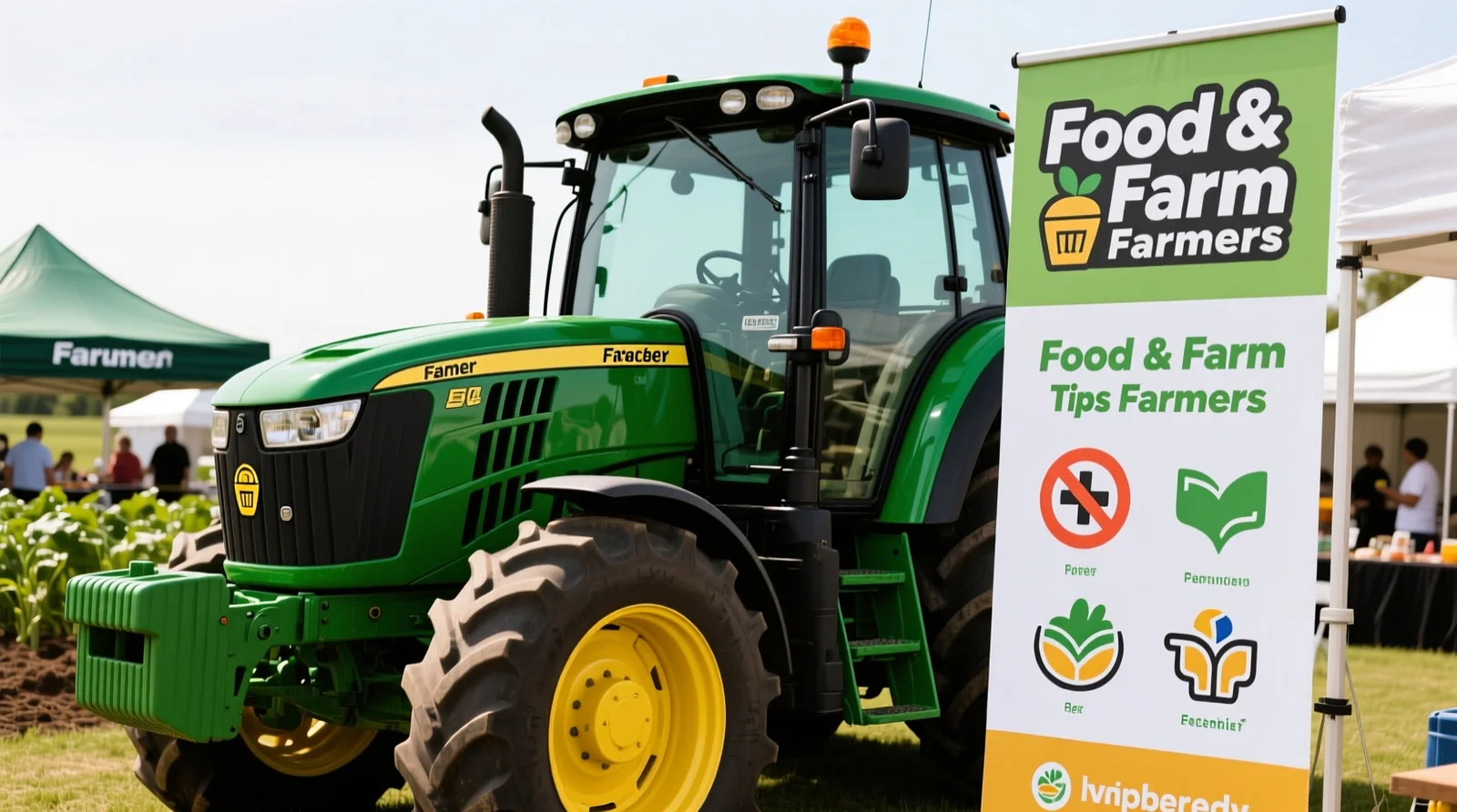
Meta summary: This youth tractor certification Wisconsin program is for ages 12–17 and takes place at the Food + Farm Exploration Center (3400 Innovation Drive, Plover, WI). In five days, participants complete classroom plus hands-on training designed to meet Wisconsin Act 455 and the U.S. Department of Labor (DOL) Agricultural Hazardous Occupations Order (AgHOs) requirements for operating tractors and certain farm equipment in agricultural employment.
Why Youth Tractor Safety Training Matters

Agriculture remains one of the most hazardous industries for young people, especially when tractors and machinery are involved. National surveillance and safety organizations continue to document that youth experience thousands of farm-related injuries each year, with tractors and equipment among the most common sources of severe incidents. For context and ongoing data, see the NIOSH Agriculture, Forestry & Fishing Program (NIOSH = National Institute for Occupational Safety and Health) and the National Children’s Center for Rural and Agricultural Health and Safety.
One reason formal farm safety training for teens matters is that many close calls happen during everyday tasks—not “extreme” situations. Example: a teen backing a tractor to a wagon while a sibling stands nearby can create a blind-spot runover risk in seconds. In this course, participants practice safe start-up, scanning patterns, and communication rules (no riders, clear zones, agreed hand signals) so “helping out” doesn’t turn into an emergency.
TL;DR: Youth are frequently exposed to tractor and machinery hazards; structured training reduces risk by turning common farm tasks into repeatable, safer routines.
What This Youth Tractor Certification Covers (Wisconsin Act 455 + DOL AgHOs)
This tractor safety course Plover WI blends classroom instruction with supervised operation to help participants meet the requirements of Wisconsin Act 455 and the DOL Agricultural Hazardous Occupations Order (AgHOs) (the federal rules that restrict certain hazardous farm tasks for minors in agricultural employment). You can review the federal framework directly through the U.S. Department of Labor: Child Labor in Agriculture (Fact Sheet #12).
The program emphasizes practical safety concepts that show up on real farms, including:
- ROPS (Roll-Over Protective Structure) and seat belt use—why the belt matters when a tractor has ROPS
- PTO (Power Take-Off) hazard awareness—guarding, safe shut-down, and avoiding entanglement points
- SMV emblem (Slow-Moving Vehicle emblem) visibility basics for roadway and driveway crossings
- Safe hitching and towing fundamentals (pinch points, drawbar height basics, staying out of “crush zones”)
- “No extra riders” rules, bystander control, and operator responsibility
Implements and equipment concepts commonly addressed in youth certification training typically include items like wagons, mowers, and equipment that changes stability or visibility (for example, a front-end loader). The course focuses on the safety principles and supervised operating habits needed to work around these machines without treating them casually.
TL;DR: The course aligns with Wisconsin and federal youth-employment safety requirements and includes real tractor safety topics like ROPS/seat belts, PTO safety, and SMV visibility.
How the Training Works (Classroom + Hands-On)
Participants learn the “why” in the classroom and then apply it during supervised practice. Hands-on time focuses on controlled, repeatable skills—start-up checks, safe mounting/dismounting, low-speed maneuvering, backing fundamentals, and safe procedures around attached equipment.
Another common real-world scenario addressed: a PTO-driven implement that seems “off” and a teen reaches in to clear debris while it’s still moving. Training reinforces a consistent shut-down routine (disengage PTO, throttle down, neutral, set brake, shut off, remove key, wait for motion to stop) and explains why “it looked stopped” is not the same as “it is safe.”
TL;DR: Instruction is built around practicing the same safety steps repeatedly so participants can use them under pressure in real farm conditions.
Instructors, Oversight, and Partnerships (E-E-A-T)
Training is delivered by instructors experienced in youth agricultural safety education—typically including certified trainers, farm safety specialists, and/or Extension educators (educators connected to university outreach programs that provide research-based agricultural education). The curriculum framework aligns with widely recognized youth tractor certification models used nationally and in Wisconsin.
If you’d like to compare program structure and safety focus to established standards, the OSHA Agricultural Operations page (OSHA = Occupational Safety and Health Administration) offers additional context on agricultural hazards and prevention concepts.
Note: If the Food + Farm Exploration Center publishes instructor bios, partner organizations, or “graduates to date,” those details can be added here to further strengthen trust signals.
TL;DR: The course is taught by professionals familiar with youth ag safety education, using recognized safety frameworks and practices consistent with major safety organizations.
Schedule, Daily Hours, and What to Bring

Each session runs 5 days in March 2026. Families should plan for an approximate training day of 8:30 a.m.–3:30 p.m. (final daily start/end times will be confirmed after registration). This time window supports both classroom instruction and hands-on operation without rushing safety checklists or skills assessments.
- Lunch/snacks: Please plan to send a lunch and water bottle unless you receive written confirmation that food is provided.
- Clothing: Closed-toe shoes (preferably sturdy), long pants, and weather-appropriate layers for outdoor time.
- PPE (Personal Protective Equipment): Hearing/eye protection may be used depending on the activity. Families will be told what is provided on-site vs. what participants must bring.
TL;DR: Plan for full training days (roughly 8:30–3:30), bring practical farm-ready clothing, and expect outdoor hands-on time.
Assessment Requirements to Earn Certification
To earn youth tractor certification, participants should expect three core requirements:
- Attendance: Full participation across all training days (partial attendance may not qualify for certification).
- Written assessment: A knowledge check covering key safety concepts and rules (e.g., ROPS/seat belt logic, PTO hazards, bystander control, roadway visibility).
- Skills evaluation: A supervised driving/operation assessment to confirm safe habits (start-up checks, controlled maneuvering, safe procedures around equipment).
Parents/guardians should encourage participants to take the testing seriously—certification is not just “showing up,” it’s demonstrating safe decision-making and consistent procedures.
TL;DR: Certification generally requires attendance, a written test, and a hands-on skills evaluation.
Course Dates, Cost, and Capacity (Plover, WI)

- Session 1: March 16–20, 2026 (registration deadline: March 1, 2026)
- Session 2: March 23–27, 2026 (registration deadline: March 8, 2026)
- Cost: $75 per participant
- Capacity: 25 participants per session
Both sessions cover the same curriculum and are capped to keep hands-on supervision tight and feedback specific.
TL;DR: Choose one of two March 2026 sessions; cost is $75; enrollment is limited to 25.
How to Know if This Course Is Right for Your Child
This training tends to be a strong fit when a teen:
- Regularly helps on a farm (or will soon) and needs structured rules—not just “watch and copy” learning
- Can follow multi-step instructions and stay focused during hands-on activities
- Shows maturity about safety boundaries (no showing off, no shortcuts, willing to correct mistakes)
- Is comfortable working outdoors and around loud, moving equipment (with proper PPE)
If your child is easily distracted around peers or struggles to follow safety rules consistently, consider waiting a season and building readiness with supervised, non-driving chores first.
TL;DR: The best candidates are focused, coachable teens who can follow rules and treat equipment operation as a serious responsibility.
Optional Safety Awareness Day (Emergency Preparedness Add-On)

The optional Safety Awareness Day expands beyond equipment operation into emergency response and hazard recognition—useful on any farm, even for youth who don’t drive daily.
- Date: April 3, 2026
- Highlights:
- Guided farm tour focused on real hazard-spotting
- Stop the Bleed training (bleeding control basics)
- Hands-only CPR instruction
TL;DR: Not required for certification, but valuable for building “what to do next” skills when an incident happens.
Registration, Refunds/Waitlist, and Accessibility
Registration: Register directly through the Food + Farm Exploration Center’s official channels. If an online registration page is available, it should be listed on the Center’s website; otherwise, contact the Center by phone or email to enroll and confirm remaining seats.
Refunds/waitlist: Ask at registration about the current refund policy and whether a waitlist is offered if the session fills (caps are small by design).
Accessibility and accommodations: Hands-on tractor training may require the ability to safely climb steps/handholds, maintain balance, and follow spoken instructions in a group setting. If your child needs accommodations (mobility support, learning support, or language support), contact the Center ahead of time so staff can discuss what’s possible.
TL;DR: Register through the Center, confirm refund/waitlist details, and request accommodations early if needed.
FAQ

Q: Is this course the same as youth tractor certification in Wisconsin for farm employment?
A: Yes. The course is designed to meet requirements tied to Wisconsin Act 455 and the U.S. Department of Labor’s Agricultural Hazardous Occupations Order (AgHOs) for certain tractor and equipment operation tasks in agricultural employment (when applicable to the youth’s age and job duties).
Q: What tractor safety topics are covered besides basic driving?
A: Participants cover practical, high-impact concepts such as ROPS (Roll-Over Protective Structures) and seat belt use, PTO (power take-off) safety and guarding, SMV (slow-moving vehicle) emblem visibility, safe hitching/towing, and bystander/no-rider rules—plus emergency procedures.
Q: What should my teen bring to the tractor safety course in Plover, WI?
A: Bring closed-toe shoes, long pants, weather-appropriate layers, and a water bottle. Plan to pack lunch unless you’re told food is provided. PPE (personal protective equipment) expectations—such as eye or hearing protection—will be confirmed by the organizers.
Q: How does my child earn the completion certificate—just by attending?
A: Certification typically requires meeting attendance expectations plus passing both a written knowledge test and a supervised hands-on driving/skills evaluation. The goal is to confirm safe decision-making, not just participation.
Q: Can a beginner with no tractor experience take this farm safety training for teens?
A: Yes. Beginners are welcome. The course starts with fundamentals—controls, safety checks, and hazard awareness—then builds toward supervised operation with coaching and structured practice.