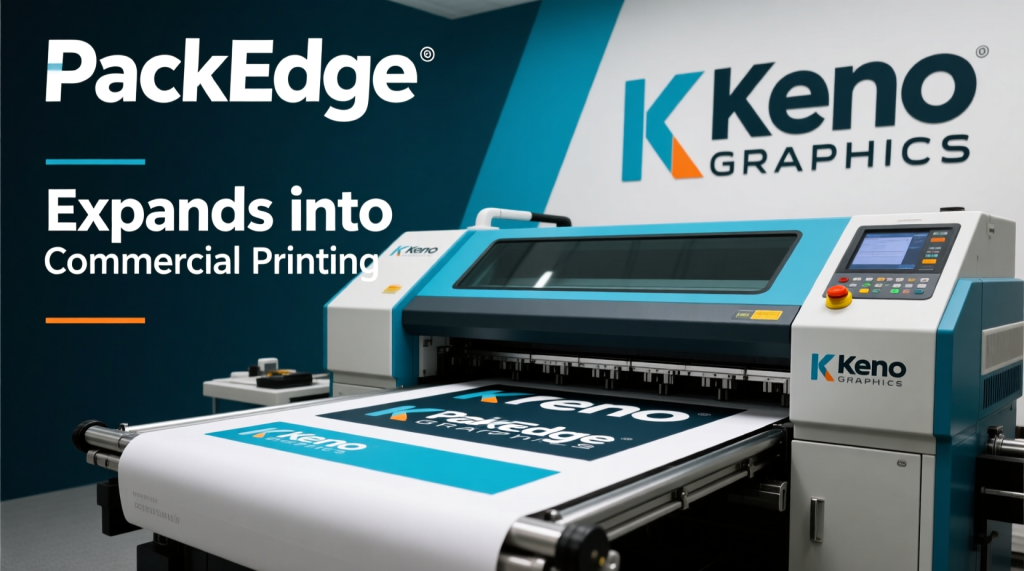
The companies stated that all operations will remain in Connecticut. Credit: Oselote / Shutterstock.com.
Introduction

PackEdge, a custom folding carton manufacturer in New England and a growing Connecticut packaging converter, has expanded its custom packaging and integrated packaging and commercial printing services through the acquisition of Keno Graphics, a Shelton-based commercial printer. The acquisition keeps production and customer support in Connecticut while helping regional brands simplify sourcing, accelerate timelines, and improve consistency across cartons, inserts, and marketing collateral.
The move aligns with ongoing consolidation across packaging and print supply chains, as brand owners seek fewer suppliers, clearer accountability, and tighter control of brand color and quality across channels. (For broader context on print and packaging trends, see the Printing United Alliance and the Printing Impressions industry news resource.)
TL;DR: PackEdge’s acquisition of Keno Graphics creates a more integrated Connecticut-based partner for folding cartons plus commercial print—supporting faster, more consistent packaging and marketing execution across New England.
PackEdge’s core custom packaging capabilities (before the acquisition)
Before acquiring Keno Graphics, PackEdge built a reputation in the Northeast for converting-focused packaging, especially for brands that need structural creativity and reliable repeatability. Typical projects include retail-ready cartons and die-cut components used in markets such as pharmaceuticals (cartons and patient inserts), nutraceuticals (subscription-ready cartons and shippers), specialty food (premium paperboard packaging and sleeves), and cosmetics (decorative cartons and gift sets).
- Custom folding cartons (paperboard cartons that fold into a finished package) for consumer and specialty products
- Specialty die-cutting (a steel-rule die process used to cut and crease custom shapes) for windows, hang tabs, and unique structures
- Paper-to-board lamination (bonding a printed sheet to a thicker board) to increase stiffness and support premium, high-impact presentation
In practical terms, these capabilities often serve a mix of short-to-mid runs (for example, seasonal promotions or SKU expansions) and longer repeat runs for core items. Many folding-carton programs in the region commonly fall in the low-thousands to six-figure carton quantities depending on product category and distribution footprint, and PackEdge’s converting strengths are designed to support both repeatability and variation (e.g., multiple SKUs with consistent structure).
TL;DR: PackEdge’s base strength is converting—folding cartons, die-cut components, and laminated board—used by regulated and brand-driven markets like pharma, nutraceuticals, specialty food, and cosmetics.
Keno Graphics: commercial printing, finishing, and fulfillment expertise
Keno Graphics, based in Shelton, Connecticut, adds commercial print depth—especially valuable for brands that need packaging-supported materials like instructions, direct mail, and point-of-purchase (POP) signage. Commercial printing typically spans both offset printing (high-quality plate-based printing suited to longer runs) and digital printing (file-to-print workflows suited to short runs, personalization, and fast changeovers).
- Offset and digital printing for packaging support materials (sell sheets, inserts, booklets, and launch kits)
- Finishing and bindery (folding, trimming, stitching, perfect binding, etc.) for brochures, catalogs, booklets, and manuals
- Variable data printing (VDP) (personalized text/graphics on each piece) for targeted direct mail and versioned campaigns
- Mailing and fulfillment to move completed pieces into postal streams or kitting workflows
- Large-format printing for signage, POP displays, and retail promotions
These capabilities tend to cover a wide range of run lengths: from hundreds to a few thousand pieces for quick-turn digital campaigns, to tens of thousands+ for longer-run offset work where unit costs drop as volume increases.
TL;DR: Keno Graphics expands the combined business into offset/digital commercial print, finishing, large-format, and mailing—supporting everything around the carton (inserts, POP, and campaigns).
Typical packaging and print applications (Industries served)
The combined offering is especially relevant to brand owners and manufacturers who need packaging plus marketing execution without managing multiple suppliers. Common applications include:
- Pharmaceuticals and OTC: folding cartons, patient information inserts, IFUs (instructions for use), product folders, compliance mailers
- Nutraceuticals and supplements: folding cartons, subscription programs, versioned inserts, promotional direct mail, influencer kits
- Specialty food and beverage: sleeves, paperboard cartons, gift packs, shelf-talkers, retail signage, seasonal promotions
- Cosmetics and personal care: premium cartons, sample cards, launch collateral, counter displays, brand lookbooks
- Industrial and B2B manufacturing: branded literature, product sheets, trade-show graphics, direct mail, and packaging components for kits
For readers evaluating partners, this is the practical difference between a vendor that can only produce the carton and a consolidated partner that can also manage the materials that ship inside the box (instructions, inserts, coupons) and support the product launch (POP and direct mail).
TL;DR: Industries like pharma, nutraceuticals, specialty food, cosmetics, and B2B manufacturing benefit most when cartons, inserts, POP, and campaigns can be coordinated together.
Combined offering: integrated packaging + commercial print under one Connecticut footprint
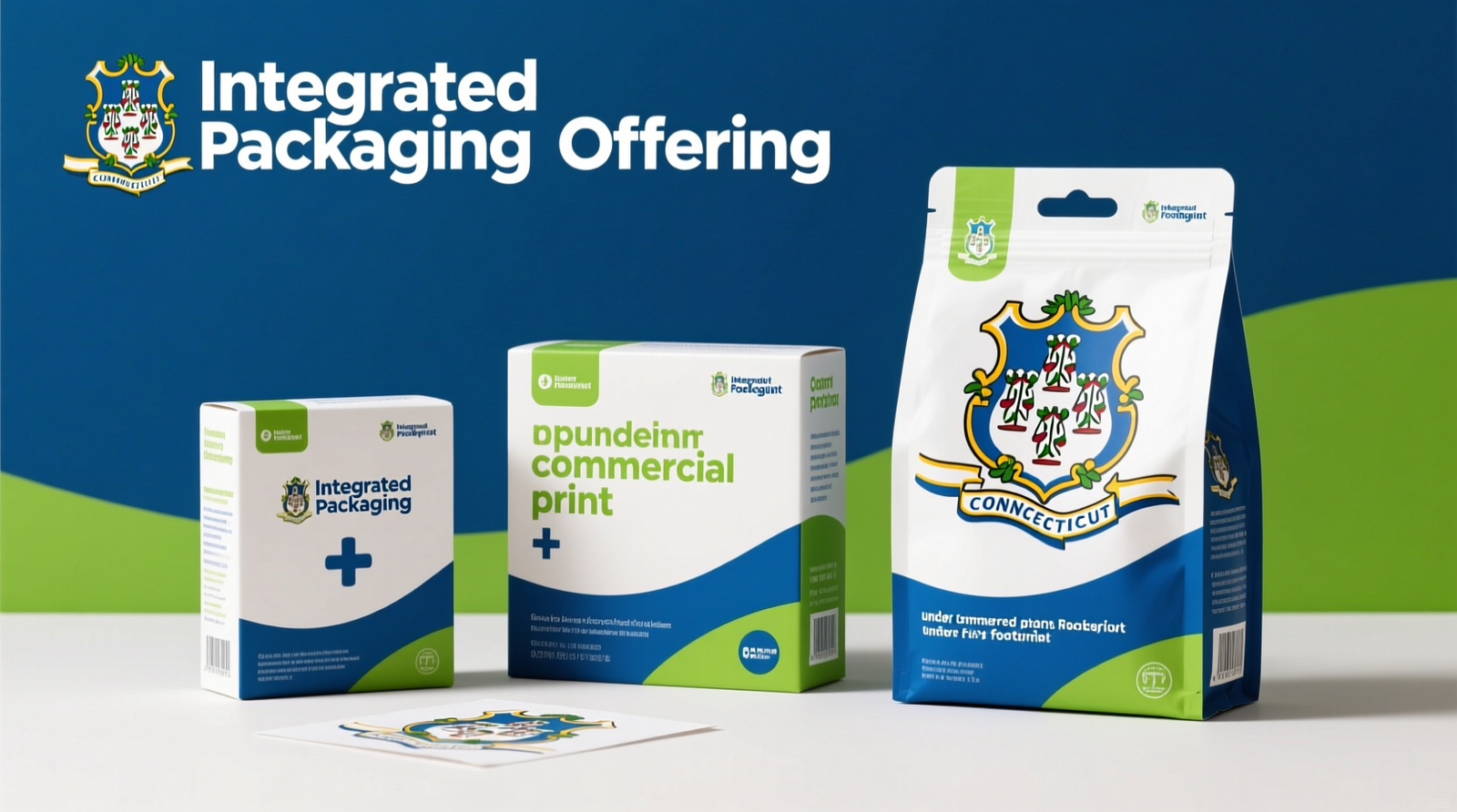
With Keno Graphics added, PackEdge can more credibly position itself as a fully integrated partner for brands seeking integrated packaging and commercial printing services across New England and the broader Northeast. Instead of splitting work among a folding carton supplier, a commercial printer, and a fulfillment house, brands can consolidate more of the workflow—especially when timelines are compressed or brand standards are strict.
The combined portfolio now spans:
- Structural packaging development and die lines (files defining cut/crease geometry)
- Custom folding cartons and specialty die-cut components
- Paper-to-board lamination for premium rigidity and presentation
- Offset and digital printing for packaging-related collateral and campaigns
- Large-format graphics for retail signage and POP displays
- Bindery/finishing and mailing/fulfillment
For companies searching online for a custom folding carton manufacturer in New England or a Connecticut packaging converter that can also handle offset and digital printing for packaging support materials, this integration is designed to reduce handoffs that commonly create delays, rework, or color mismatch.
TL;DR: The acquisition builds a broader Connecticut-based platform that can handle cartons plus the print, finishing, and fulfillment around them—reducing vendor handoffs.
Practical scenarios: how brands can consolidate vendors (and what changes operationally)
For procurement, marketing ops, and packaging engineering teams, vendor consolidation is most valuable when it reduces friction—not just invoices. Here are a few real-world scenarios where integrated production helps:
- Product launch kit: folding cartons + printed inserts + presentation folders + large-format retail signage produced and scheduled together, reducing version confusion during launch windows.
- Retail promotion: cartons + shelf-talkers + POP displays + direct mail coordinated from the same prepress files, lowering the risk of mismatched colors and inconsistent messaging.
- Regulated documentation: patient inserts/IFUs and carton artwork managed with aligned revision control, helping teams maintain compliance and reduce costly obsolescence.
Operationally, consolidation typically means fewer purchase orders, fewer production meetings across vendors, and more unified artwork management (shared master files, fewer “which PDF is current?” issues). It can also reduce freight complexity when kitting or fulfillment is involved.
TL;DR: Consolidation helps most in launches, promotions, and regulated programs—cutting POs, reducing file-version errors, and simplifying scheduling and logistics.
Color management, prepress workflow, and consistency across channels
One of the biggest hidden costs in managing separate packaging and commercial print vendors is inconsistency in how files are prepared and how color is controlled. Prepress (the production steps that prepare digital artwork for printing) and color management (methods to achieve consistent color across devices and substrates) are critical when the same brand colors must appear on cartons, inserts, brochures, and POP displays.
With packaging and commercial print capabilities coordinated more tightly, brands can benefit from:
- Aligned proofing targets and standardized approval workflows (reducing “surprise” results on press)
- More consistent spot color handling (e.g., consistent brand colors across coated/uncoated stocks)
- Better control of revisions—especially when cartons and inserts must update together
For a general reference on the importance of process control and quality management in manufacturing operations, readers may also explore ISO 9001 quality management principles.
TL;DR: Integrated prepress and color management reduce brand-color drift and revision errors across cartons, inserts, and marketing materials.
Expected service-level improvements: lead times, rush capacity, and responsiveness
While exact lead times vary by specification, approvals, and seasonality, a common pain point in multi-vendor programs is the “dead time” between suppliers—artwork handoffs, scheduling gaps, and re-proofing cycles. With integrated packaging and print planning, brands can often expect:
- More predictable scheduling when cartons and collateral need to hit the same ship date
- Improved rush handling for short-run digital needs (e.g., updated inserts, versioned sales sheets, quick-turn mailers)
- Reduced rework due to fewer file conversions and fewer interpretations of specs
In many commercial print workflows, digital components can move in days (after approval), while longer-run offset work and folding-carton production often run in weeks depending on complexity and finishing. The practical improvement comes from coordinating these timelines in one plan rather than negotiating between separate production calendars.
TL;DR: Integration mainly improves predictability and rush response by reducing handoff delays—especially when cartons and collateral must launch together.
E-E-A-T: company background, quality standards, and sustainability practices
PackEdge and Keno Graphics both operate in Connecticut, serving New England and Northeast brand owners who value regional responsiveness and manufacturing continuity. PackEdge’s expansion strategy signals an emphasis on building a stronger local platform for packaging plus print execution.
For customers evaluating trust and governance, it’s common in packaging and commercial print to align with recognized frameworks and material standards. Examples include ISO (International Organization for Standardization) quality systems and FSC (Forest Stewardship Council) sourcing for responsibly managed forests. Readers can learn more about FSC certification and EPA Safer Choice concepts that may relate to lower-impact chemistries (where applicable) in broader supply chains.
Across many modern packaging programs, sustainability and ESG (environmental, social, and governance) priorities often include:
- Using recycled-content paperboard or responsibly sourced fiber where performance allows
- Exploring low-VOC (low volatile organic compound) inks/coatings options when suitable for the application
- Implementing waste reduction initiatives (make-ready optimization, trim reduction, recycling streams)
Note: If you need confirmation of specific certifications (e.g., ISO 9001, FSC Chain of Custody, GMI/PRINTING United Alliance G7 Master Qualification), request the latest documentation directly from PackEdge during onboarding or supplier qualification.
TL;DR: Trust signals for packaging/print partners often include ISO/FSC alignment and measurable sustainability practices like recycled substrates, low-VOC options, and waste reduction—confirm specifics during qualification.
Leadership perspectives on the acquisition
Keno Graphics vice-president Bill Kennedy emphasized the strategic fit and continuity for customers, stating:
“Joining the PackEdge family is the right next chapter for Keno Graphics. We’ve always prided ourselves on exceptional print quality, personalized service, and on-time delivery. Now, backed by PackEdge’s expertise in custom packaging, we can offer our clients even greater value while continuing to deliver the same level of service they expect.”
PackEdge president Adam Aron highlighted the long-standing relationship between the two businesses and the value of an integrated model. He commented:
“Keno Graphics has long been more than a vendor to us—they are a trusted partner whose commitment to quality and customer service mirrors our own. Bringing them into the PackEdge family allows us to offer clients a truly end-to-end solution, from custom package design and die-cutting through commercial printing, mailing, and bindery services.”
TL;DR: Leadership positions the acquisition as a continuity move for Keno clients and an expansion move for PackEdge—building a more integrated packaging + print platform.
Operations remain in Connecticut (regional advantage in New England)
Both companies have confirmed operations will remain in Connecticut, with Keno Graphics continuing from its Shelton facility and existing team. For New England brands, local production often supports faster collaboration (press checks, prototypes, stakeholder reviews) and more responsive logistics for the Northeast corridor.
This also reinforces PackEdge’s position for searchers looking specifically for a custom folding carton manufacturer in New England or a Connecticut packaging converter that can coordinate packaging and commercial print without moving production out of state.
TL;DR: Keeping operations in Connecticut supports regional responsiveness, easier collaboration, and streamlined Northeast distribution.
Conclusion
The acquisition of Keno Graphics strengthens PackEdge’s role as a consolidated supply-chain solution for brands that need custom packaging plus offset and digital printing for packaging support materials—delivered through a Connecticut footprint serving New England and the broader Northeast. By combining folding cartons, die-cutting, lamination, commercial print, finishing, large-format, and mailing, the company can reduce handoffs and improve brand consistency across both packaging and marketing.
If your team is evaluating vendor consolidation, consider reaching out to PackEdge to request a packaging and print supply-chain audit (SKU count, versioning needs, run-length patterns, and service-level requirements) to identify where integration could reduce cost, lead time, and rework. For follow-up, visit PackEdge’s website: https://packedge.com/.
TL;DR: PackEdge + Keno Graphics offers a broader Connecticut-based packaging and commercial print platform; contact PackEdge to assess consolidation opportunities and service-level goals.
FAQ

Q: How will artwork and prepress be managed across packaging and commercial print?
A: Most integrated programs use a shared prepress workflow with standardized file specs (fonts, bleeds, color profiles) and a single revision-control path so carton artwork, inserts, and collateral update together. During onboarding, expect a file intake review, proofing/approval alignment, and a defined “source of truth” for final PDFs and dielines.
Q: Can PackEdge handle color matching across cartons, inserts, and marketing collateral?
A: Yes—this is a common driver for integration. Color consistency typically depends on aligning proofing targets, managing spot colors (e.g., brand Pantone equivalents where used), and accounting for substrate differences (coated vs. uncoated stocks, paperboard vs. text). Ask about their color management approach, proofing options, and how they validate matches across processes (offset vs. digital).
Q: What are typical minimum order quantities (MOQs) for folding cartons and print runs?
A: MOQs vary by carton style, board, coatings, and finishing. In practice, folding cartons often start in the low-thousands for many offset-produced programs, while digital print collateral can start in the hundreds for short runs and versioning. The best approach is to share your SKU count, annual volume, and launch cadence so the team can recommend economical breakpoints.
Q: Will existing Keno Graphics contracts, pricing, or service contacts change?
A: The companies have indicated continuity of service, with Keno Graphics continuing to operate with its existing team. For contract specifics—pricing tables, terms, or SLAs (service-level agreements)—customers should review renewal dates and confirm any updates directly during the transition planning process.
Q: How does vendor consolidation reduce operational workload for packaging and marketing teams?
A: Consolidation can reduce the number of purchase orders, approvals, and production status meetings by coordinating cartons, inserts, POP, and mail in one schedule. It also simplifies troubleshooting (one escalation path) and helps standardize file handling, which reduces rework from mismatched versions or inconsistent specifications.