Introduction

Epiroc (OM:EPI A) is drawing renewed attention after signaling it will showcase autonomous, connected, and electric equipment at CONEXPO-CON/AGG 2026. While the show is best known as North America’s largest construction equipment event, it is also a high-signal venue for mining and quarry buyers who track where OEM (original equipment manufacturer) R&D is heading—especially around autonomy, electrification, and digital fleet management.
For Epiroc specifically, the story is not just “mining tech in general.” It is about the company’s ability to sell a tightly integrated stack of (1) underground drilling and loading-haulage-dumping (LHD) machines, (2) automation and tele-remote control, (3) mine connectivity and data platforms, and (4) high-margin mining equipment aftermarket services that keep uptime high over multi-year mine lives.
TL;DR: Epiroc’s 2026 trade-show focus reinforces its strategy: combine underground equipment + autonomous/tele-remote capability + digital mine solutions + service to drive productivity and decarbonization outcomes for miners.
What Epiroc Sells: Segment Mix and Why It Matters for Automation/Electrification
Epiroc’s business is commonly understood through two main segment lenses:
- Equipment & Service (often the larger segment): new rigs, loaders, trucks, and related service contracts. This is where demand for autonomous drilling rigs, tele-remote operation, and battery-electric underground loaders most directly shows up in orders, backlog, and pricing.
- Tools & Attachments: consumables and wear parts (for example rock drilling tools), plus attachments used in mining and construction applications. This side tends to be more volume/usage driven, but still benefits from digital monitoring and productivity improvements that increase tool pull-through and service frequency.
In downcycles, the critical difference versus more “pure equipment” peers is that a relatively high service/aftermarket component (maintenance, rebuilds, parts, digital subscriptions) can cushion revenue and margins because installed base activity does not fall as fast as new machine orders.
TL;DR: Equipment & Service captures the headline automation/electrification capex, while Tools & Attachments and aftermarket/service can soften cyclicality and improve earnings quality.
Epiroc Technology Stack: From Tele-Remote to Autonomous Production
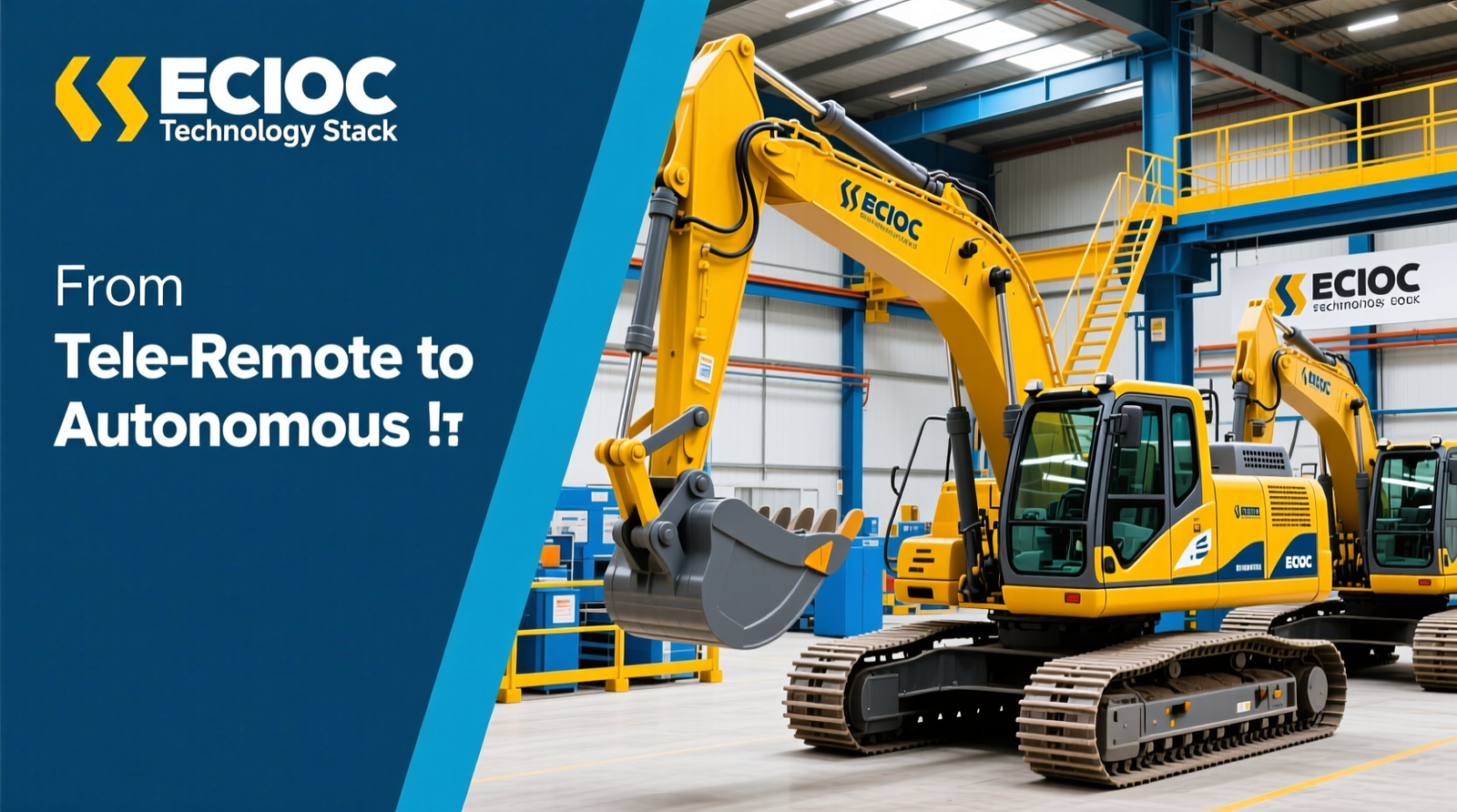
Mining automation is not a single feature; it is a system. Epiroc’s approach typically combines machine automation, underground connectivity, and software workflows so mines can move from “operator in-cab” to tele-remote and, in suitable applications, to higher autonomy levels.
- Tele-remote operation: enables an operator to control equipment from a safe location (often a surface control room), improving safety and reducing exposure at the face.
- Autonomous/automated drilling: includes drill plan execution, repeatable hole accuracy, and data capture that supports better blast outcomes and downstream productivity.
- Connectivity infrastructure: underground networks (commonly LTE/4G/5G and/or Wi‑Fi in parts of the mine) are essential for low-latency control and reliable telemetry. (LTE = Long-Term Evolution; 5G = fifth-generation mobile network.) For reference, mining network design and use cases are widely discussed by industry bodies such as GSMA (mobile ecosystem) and major mining automation suppliers.
- Digital mine solutions: machine data flows into fleet dashboards, maintenance planning, and interoperability with mine planning/scheduling tools so decisions can be made on utilization, cycle time, and bottlenecks.
Where industrial readers often see the value is not in “autonomy” as a buzzword, but in measurable KPIs (key performance indicators): higher fleet utilization, fewer rework events (e.g., poor drilling accuracy), reduced unplanned downtime, and better cost-per-tonne outcomes.
TL;DR: Epiroc’s automation value proposition depends on the full stack—tele-remote/autonomy + underground connectivity + digital workflows—because that is what moves operational KPIs, not a single hardware feature.
Concrete Product Examples: Boomer Rigs, Scooptram Loaders, and Battery-Electric Models
To keep this Epiroc-specific, it helps to anchor the discussion in recognizable product families that mine operators actually spec and benchmark:
- Boomer face drilling rigs: used for development headings where drill accuracy and repeatability influence blast quality, advance rates, and downstream loading efficiency.
- Scooptram loaders (LHD): core underground production equipment where tele-remote operation and battery-electric drivetrains can reduce heat, fumes, and ventilation load while improving operator safety.
- Battery-electric underground loaders and trucks: electrified fleets aim to reduce diesel particulate matter and CO2 (carbon dioxide) emissions, and can deliver ventilation cost savings—often a major operating expense in deep underground mines.
Epiroc’s commercial edge is often strongest when it can sell the machine plus automation options plus a service agreement (and increasingly, software). That bundle raises switching costs and increases lifecycle revenue per unit.
TL;DR: The “real” Epiroc automation/electrification story shows up in specific underground platforms (Boomer, Scooptram, battery-electric fleets) paired with automation options and service.
Implementation Reality: What Makes Automation and Electrification Hard (and How Epiroc Typically Helps)
Adoption is rarely plug-and-play. Mines evaluating mining automation systems and electrification programs generally face:
- Infrastructure readiness: power distribution, chargers, workshops, spares strategy, and network coverage underground.
- Change management and training: tele-remote/autonomous operations require new roles, SOPs (standard operating procedures), and maintenance skills.
- Interoperability: aligning machine data, dispatch, and planning tools so that automation improves the whole system rather than optimizing one island.
- Ventilation and heat planning: electrification can reduce diesel heat and fumes, but it changes load profiles and may require updated ventilation modeling and operational planning.
OEMs like Epiroc typically support these transitions through phased deployments (pilot → ramp → scale), operator training, remote monitoring, and service packages aimed at availability targets.
TL;DR: Mines adopt automation/electric fleets in phases because success depends on networks, power/charging, training, and workflow integration—not just buying new equipment.
KPIs Industrial Teams Track (and Where Epiroc’s Solutions Can Move the Needle)
If you are assessing Epiroc equipment or comparing it with alternatives, the evaluation usually comes back to operational and cost KPIs such as:
- Cost per tonne: influenced by energy consumption, maintenance cost, and productivity (tonnes moved per shift).
- Fleet utilization: tele-remote and automation can increase effective operating hours and reduce changeover/shift losses.
- Downtime and MTBF/MTTR: MTBF = mean time between failures; MTTR = mean time to repair. Predictive maintenance and condition monitoring can reduce unplanned stops.
- Energy and ventilation savings: battery-electric equipment can cut diesel use and lower ventilation demand, depending on mine design and depth.
- Safety metrics: fewer people in high-risk zones and lower exposure at the face are often decisive, particularly where regulators and corporate policies tighten.
TL;DR: The business case is typically validated through cost-per-tonne, utilization, downtime, energy/ventilation impacts, and safety—areas where automation and battery-electric fleets can provide measurable gains.
Epiroc vs. Sandvik in Underground Automation
Sandvik is one of the most direct peers in underground hard-rock mining equipment and automation. In practice, buyers often compare:
- Automation maturity and installed base: both companies have meaningful deployments in underground automation, but site-specific performance depends on network design, mine geometry, and how dispatch/planning systems are integrated.
- Software + hardware integration: both push toward integrated “digital mine solutions,” though mines frequently run mixed fleets, making openness/interoperability and service capability critical decision factors.
- Support model: local service footprint, parts availability, and remote support responsiveness can outweigh small differences in spec sheets—especially for production-critical LHDs and drills.
For a neutral baseline on automation in mining (benefits, barriers, and maturity considerations), see guidance and case studies from organizations such as the International Council on Mining and Metals (ICMM), which frequently covers safety, productivity, and technology adoption themes in a mining context.
TL;DR: Against Sandvik, Epiroc competes on automation performance, integration into broader digital workflows, and (often decisively) service execution and installed-base support.
Epiroc vs. Caterpillar and Komatsu: Autonomy at Scale vs. Underground Specialization
Caterpillar and Komatsu are dominant in large surface mining fleets and are widely associated with autonomy programs at scale (especially in haulage). Epiroc’s differentiation is more concentrated in underground and specialty applications:
- Surface vs. underground focus: Caterpillar and Komatsu have deep scale in ultra-class trucks and surface systems; Epiroc is often more tightly associated with underground production and development equipment where drilling and LHD performance are central.
- Autonomy use case differences: surface haulage autonomy and underground drilling/LHD automation have different constraints (GPS availability, communications, traffic management, and geotechnical conditions).
- Electrification emphasis: underground electrification can create immediate ventilation and heat benefits; this is one reason battery-electric underground loaders and trucks are a focal point for underground specialists.
TL;DR: Versus Caterpillar and Komatsu (surface autonomy leaders), Epiroc is more “underground-first,” where battery-electric fleets and automated drilling/LHD workflows can deliver high ROI through ventilation, safety, and utilization improvements.
Epiroc’s Battery-Electric Fleet vs. Diesel Alternatives
Battery-electric underground machines are not simply “diesel replacements.” They change mine design trade-offs:
- Ventilation impact: less diesel particulate matter and heat can reduce ventilation requirements, potentially freeing capacity for deeper or expanded operations.
- Energy strategy: mines need charging plans (fast charge vs. battery swap, where applicable), peak load management, and reliable power distribution underground.
- Maintenance profile: fewer moving parts in electric drivetrains can reduce some maintenance categories, but battery systems introduce new monitoring, safety, and lifecycle management needs.
Because emissions accounting is increasingly central to mine planning, many operators align purchasing decisions with Scope 1 and 2 targets (Scope 1 = direct emissions from owned sources; Scope 2 = indirect emissions from purchased electricity). For background on how Scope 1/2 are defined and commonly reported, see the Greenhouse Gas Protocol.
TL;DR: Battery-electric underground equipment can improve ventilation, safety, and operating cost structure, but it requires charging/power planning and new maintenance competencies versus diesel.
Financial Snapshot: Growth, Margins, Order Intake, and Aftermarket Cushion (Ranges)
Without reproducing a full financial model, the most decision-useful lens for Epiroc is the combination of growth quality and cyclicality control:
- Revenue growth: in recent years, Epiroc has generally delivered mid-single-digit to low-double-digit growth depending on mining capex cycles and service activity (with year-to-year variability).
- Margin trend: operating margins have typically been in the mid-to-high teens range over the cycle, with mix (service/software vs. equipment), pricing, and input costs driving swings.
- Order intake and backlog: orders can lead revenue in both directions; rising automation/electrification penetration can lift order quality (higher content per unit, more software/service attach), but commodity-driven pauses can compress intake quickly.
- Aftermarket share: a meaningfully higher service/aftermarket component than “pure-play equipment” OEMs can help stabilize cash flow during downturns because mines still need parts, rebuilds, and maintenance to keep production running.
For investors who want primary-source confirmation of segment reporting, orders, and margin drivers, start with Epiroc’s IR materials and annual report: Epiroc Investor Relations.
TL;DR: Epiroc’s equity story is strengthened by service/aftermarket and margin resilience, but order intake remains cyclical and sensitive to mining capex and commodity expectations.
Valuation Snapshot (Contextualized): Price, “Narrative Fair Value,” and What Model That Implies
Share price referenced: SEK 271.90 (as stated in the source article; treat as the “last close” at the time of that snapshot).
Fair value referenced: SEK 232.95. To avoid ambiguity, “narrative fair value” here means a base-case intrinsic value estimate derived from a simplified valuation framework—typically either a discounted cash flow (DCF) model or a multiple-based approach anchored to forward earnings/cash flow—using explicit assumptions for growth, margins, and risk (discount rate).
To make that estimate more decision-usable, here is what a reasonable DCF-style base case often looks like for an industrial OEM with meaningful aftermarket:
- Time horizon: 5–10 years explicit forecast, then terminal value
- Revenue CAGR (compound annual growth rate): ~6–8% (mid- to high-single-digit) driven by automation attach rate, electrification penetration, and service growth
- Operating margin: ~16–19% (mid-to-high teens), assuming mix improves but competition and costs prevent runaway expansion
- WACC (weighted average cost of capital): ~8–10% typical range for a high-quality industrial in a cyclical end market
- Terminal growth: ~2–3% (long-run GDP-like growth)
On the numbers provided, SEK 271.90 vs. SEK 232.95 implies ~16.7% upside already priced in relative to that base-case intrinsic value estimate (i.e., “overvaluation” is versus the base case, not a bull case).
TL;DR: The ~16–17% “overvaluation” is best interpreted as “priced above a base-case DCF-style estimate” that assumes mid/high single-digit growth and mid/high-teen margins—not as proof the stock must fall.
Scenario Analysis: Base, Bull, and Bear (Sensitivity to Commodity and Capex Cycles)
Because Epiroc is exposed to mining investment cycles, scenario thinking is more realistic than a single-point estimate:
- Base case (similar to SEK 232.95): 6–8% revenue CAGR, 16–19% operating margin, WACC 8–10%, steady service growth and moderate equipment cycles.
- Bull case: faster electrification adoption (higher battery-electric fleet penetration), stronger automation/software attach, and sustained mining capex—e.g., 8–10% revenue CAGR with margins toward the upper end of the range. In this case, a price around SEK 271.90 can look more reasonable, especially if the market applies a premium multiple for recurring revenue.
- Bear case: commodity price downdraft leads to delayed development, weaker order intake, and pricing pressure—e.g., 2–4% revenue CAGR with margin compression toward the mid-teens (or lower temporarily). Here, the same SEK 271.90 could prove materially ahead of intrinsic value.
The practical takeaway: the “overvalued by ~16–17%” label is highly sensitive to (1) order intake momentum, (2) margin durability through the next downturn, and (3) how quickly automation/electrification converts from pilots into fleet-wide rollouts.
TL;DR: The valuation conclusion is base-case dependent; bull-case adoption rates can justify today’s price, while a capex downturn can make it look expensive quickly.
Regulatory and ESG Drivers: Why Diesel Displacement and Safety Rules Matter

Mining electrification and automation are increasingly pulled by regulation and corporate ESG (environmental, social, and governance) commitments:
- Emissions targets: many miners are tightening Scope 1/2 targets, which increases urgency to reduce diesel use underground and electrify stationary and mobile equipment where feasible.
- Worker health and safety: stricter expectations around diesel particulate exposure and risk reduction encourage tele-remote operation and automation that keeps workers away from the face.
For a broader view on mining safety and sustainability expectations that influence technology adoption, the ICMM provides useful industry frameworks and principles.
TL;DR: ESG and safety are not “soft” factors in mining—they increasingly shape capex decisions, accelerating demand for battery-electric fleets and remote/autonomous capabilities.
What to Monitor Next (Investors and Industrial Buyers)
If you are tracking Epiroc as an investor—or benchmarking it as a buyer—the most informative forward indicators tend to be:
- Order intake and backlog specifically tied to automation and electrification options (not just unit volumes)
- Service/aftermarket mix and renewal/attach rates (a key signal of resilience)
- Operating margin stability through input-cost swings and cycle turns
- Major contract wins for autonomous drilling rigs, tele-remote LHD fleets, or battery-electric underground loaders at scale
- Evidence of repeatable deployments (pilot-to-fleet conversions) and uptime improvements at customer sites
TL;DR: Watch orders/backlog quality (automation & electrification content), service mix, margin durability, and pilot-to-scale conversions—these determine whether the premium valuation is sustainable.
Conclusion: Actionable Takeaways
- Growth pillars: Epiroc is positioned around autonomous drilling rigs, battery-electric underground loaders, and digital mine solutions—supported by a service-heavy lifecycle model.
- Valuation stance (as of the SEK 271.90 snapshot): ~16–17% above a base-case fair value estimate of SEK 232.95; upside requires bull-case adoption and/or stronger-than-assumed margins.
- Cycle resilience: mining equipment aftermarket services can cushion downturns, but order intake is still commodity/capex sensitive.
- Main risks: capex pauses, competitive pressure (notably from Sandvik underground and Caterpillar/Komatsu at scale), and execution risk in electrification infrastructure and automation rollouts.
TL;DR: Epiroc’s technology + service model is compelling, but the stock’s attractiveness depends on whether automation/electrification scaling offsets mining-cycle volatility at today’s valuation.
Important Disclaimer
This article is based on historical data, publicly available information, and general valuation concepts. It is general in nature and is not intended to be financial advice.
It does not take into account your specific objectives, financial situation, or needs, and it does not constitute a recommendation to buy or sell Epiroc or any other security. Always do your own research or consult a licensed financial adviser before making investment decisions.
TL;DR: Educational content only; not investment advice.
FAQ

Q: What Epiroc products are most relevant to mining automation systems?
A: Epiroc’s underground drilling and loading platforms are commonly discussed in automation contexts—particularly Boomer face drilling rigs (where drill plan execution and data capture matter) and Scooptram LHD loaders (where tele-remote operation and repeatable cycles can improve utilization and safety). The broader value comes when hardware is integrated with connectivity, fleet monitoring, and service support.
Q: How do battery-electric underground loaders change mine operating costs versus diesel?
A: Battery-electric underground loaders can reduce diesel fuel use, lower heat and fumes, and potentially cut ventilation energy requirements—often a major underground cost center. However, mines must invest in charging/power infrastructure, update maintenance practices for battery systems, and manage peak electrical loads to capture the full benefit.
Q: Epiroc vs. Sandvik in underground automation—what should buyers compare?
A: Buyers typically compare automation functionality (tele-remote and automated drilling/loading features), software/workflow integration, and—often most importantly—service capability (parts availability, rebuild support, and response times). In mixed-fleet mines, interoperability and the vendor’s ability to support phased rollouts can be decisive.
Q: What key metrics should investors monitor to judge Epiroc’s automation and electrification progress?
A: Monitor order intake and backlog quality (automation/electrification content), the share of service/aftermarket revenue, operating margin stability, and evidence of pilot-to-fleet conversions at major mines. These indicators show whether technology themes are translating into durable, higher-quality earnings.
Q: Why is CONEXPO-CON/AGG relevant if Epiroc is primarily mining-focused?
A: CONEXPO-CON/AGG is a major equipment platform where OEMs showcase next-generation connectivity, autonomy, powertrains, and digital workflows that often cross over between construction, quarry, and mining applications. Epiroc’s presence can signal commercial emphasis on scaling connected and electric offerings to a broader equipment-buyer audience.