

Introduction (Case Study: Optical Carrot Sorting Line & Onion Grading Automation Retrofit)
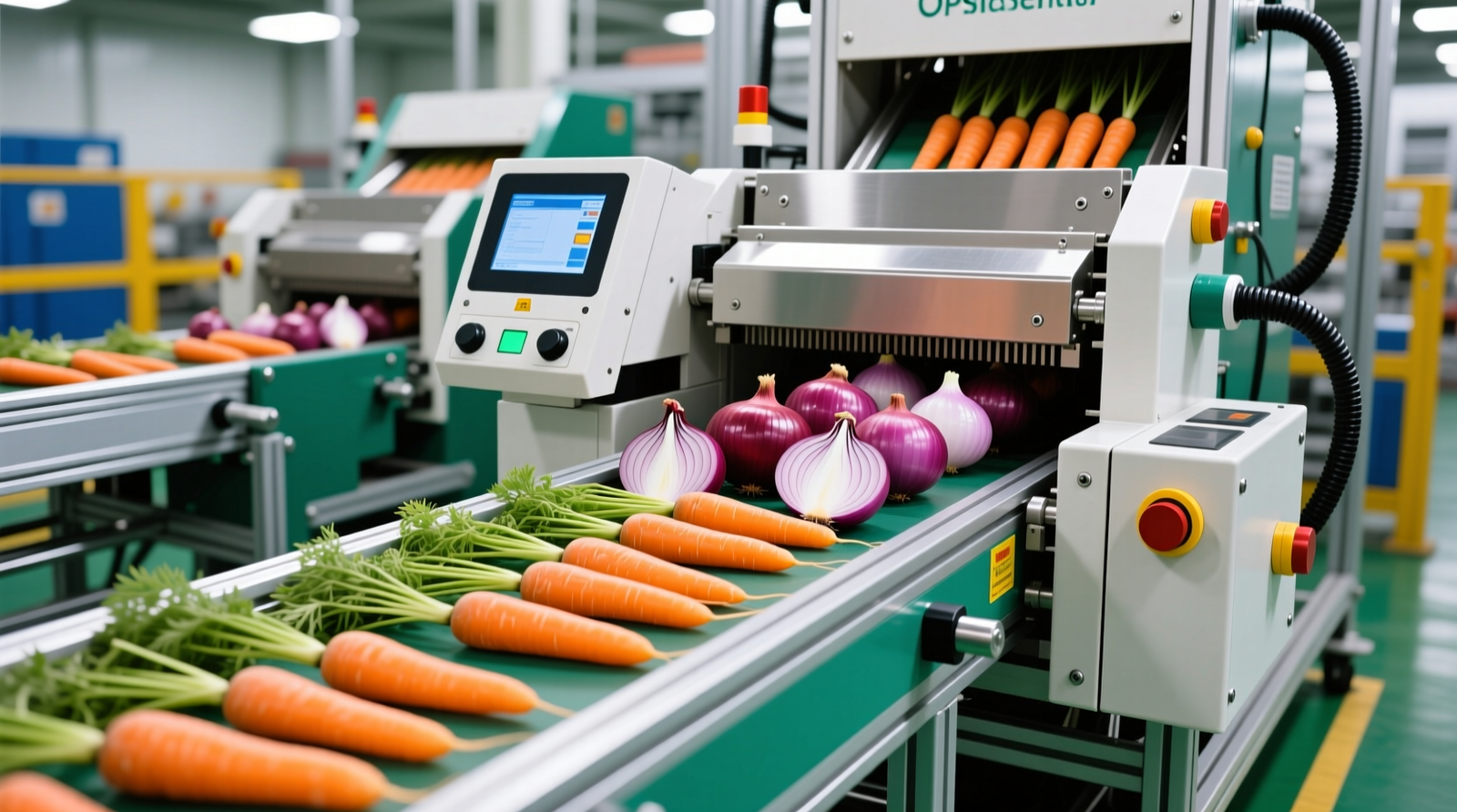
In late 2024, Belgian carrot and onion specialist Kimco upgraded its existing facility with an optical carrot sorting line and onion grading automation, installing six optical sorters as a retrofit optical sorters project engineered and delivered by Murre Technologies (Netherlands). The goal was clear: increase grading consistency, reduce manual inspection pressure, and raise throughput—without production downtime and without constructing a new building.
The project is a practical example of how industrial vegetable sorting equipment can be integrated into legacy infrastructure when layout, utilities, hygiene zoning, and line control are engineered as a single system rather than as isolated machines.
TL;DR: Kimco retrofitted six optical sorters into an existing carrot/onion facility to boost throughput and grading consistency with a no-downtime installation approach.
From Modernization Challenge to a Feasible Retrofit Plan
Kimco’s last major process change dated back to around 2010. Since then, customer tolerances tightened (retail and foodservice specs), labor availability became less predictable, and raw material variability increased—factors that typically expose the limitations of manual or semi-automatic grading.
Kimco manager Kris De Kimpe described the core barrier as “not the will to invest, but the practicality of doing it in our building.” The constraints were typical of mature sites:
- Ceiling height limits that restricted conveyor elevations and hopper placement.
- Fixed column grid and narrow aisles that complicated machine footprint and maintenance access.
- Legacy conveyors and discharge points that didn’t align with modern sorter infeed/outfeed heights.
- Hygiene zoning between wet (washing) and dry (packing) areas, requiring careful separation of wash water aerosols from electronics.
Several advisors suggested a new build. Instead, Kimco restarted discussions with Murre Technologies, already a known partner from a prior water purification project. Murre Technologies’ approach was to validate whether the retrofit could meet performance needs and maintain safe, serviceable access—before committing to equipment orders.
For broader context on labor pressure in Belgium and across the EU, Kimco’s experience aligns with the sustained tightness in labor markets reported by official statistics bodies such as Eurostat and Belgium’s Statbel (employment and labor market indicators).
TL;DR: Space, height, and legacy layout constraints made a new building seem unavoidable—until a retrofit feasibility approach proved the optical sorting upgrade could work inside the existing footprint.
How the Optical Sorting Process Works at Kimco

The six optical sorters were positioned between the washing area and the packaging line to create a stable “inspect-and-grade” buffer after cleaning and before final packing. In a typical carrot/onion flow, optical sorting performance depends heavily on presenting a single layer to the inspection zone at a consistent speed and with controlled rotation/spacing.
Optical sorting (definition): an automated inspection method that uses imaging and sensors (cameras, lasers, and/or spectroscopy) combined with software algorithms to classify product and remove defects via high-speed ejectors.
In Kimco’s configuration, the optical sorting process can be summarized as:
- Post-wash singulation: washed product is elevated and spread into a controlled monolayer using metering hoppers, vibratory feeders, and/or belt spreaders.
- Multi-sensor inspection: cameras and sensors capture surface and shape information in real time.
- Classification & grading: software applies rule sets (size/shape/defect class thresholds) to assign each item to a grade stream.
- Targeted removal: defective items are removed using timed air-jet ejection or mechanical diverters into reject chutes.
- Downstream balancing: accepted grades are buffered and distributed to packaging lanes to prevent starvation or overflow.
Because Kimco processes both carrots and onions, the line logic emphasizes fast recipe switching (product type, grade tolerances, defect rules) while keeping mechanical changeover minimal.
TL;DR: After washing, Kimco singulates product into a single layer, inspects it with multi-sensor optical sorters, ejects defects, and balances graded flows into packaging without bottlenecks.
Technical Specifications of the Optical Sorting Line (Technologies, Sensors, Algorithms, Parameters)
Kimco’s upgraded system is built around modern optical sorter capabilities commonly used in industrial vegetable sorting equipment. While exact OEM model configurations can vary by application, the installation was engineered around the following technology building blocks to support both carrot grading and onion defect removal:
Sensor and camera technologies used
- RGB cameras (Red-Green-Blue color imaging) for surface color, discoloration, greening, sunburn, staining, and visual defect detection.
- High-speed line-scan imaging (a camera method that builds an image line-by-line as product moves) to maintain resolution at high belt speeds.
- NIR (Near-Infrared) sensing for material and defect contrast beyond visible light—useful in many vegetable applications for distinguishing certain defect types or foreign material. NIR typically refers to wavelengths roughly in the 780–2500 nm range, depending on sensor design.
- LED strobe lighting with controlled intensity and angle to reduce shadows and improve repeatability across seasonal variations.
For a practical overview of optical sorting sensor principles (including visible and infrared approaches), see the U.S. FDA’s food defect and quality context in processing environments (FDA Food) and general post-harvest handling considerations from FAO resources.
Algorithmic capabilities (what the software is doing)
- Color segmentation: classifies pixels to detect discoloration, bruising appearance, mold-like surface signals, and peel issues.
- Shape analysis: evaluates curvature, diameter profile, taper, and length-to-thickness ratio (useful for carrot grading tolerances).
- Defect classification: rule-based and/or machine-learning-supported models that separate “cosmetic defect” vs. “reject” classes based on configurable thresholds.
- Grading tolerances: configurable bands for size categories (e.g., length and diameter ranges). In practice, many processors run tolerance windows such as ±2–5 mm on diameter classes depending on customer specification and pack style.
Indicative process parameters (typical industrial ranges)
Actual performance depends on product size distribution, cleanliness, singulation quality, and defect prevalence. In comparable carrot and onion optical grading applications, industrial optical sorters are commonly engineered around:
- Throughput per sorter: often in the range of 5–20 tons/hour per machine for vegetables, depending on belt width, product type, and defect targets.
- Sorting accuracy: many projects target >90–98% correct classification on defined defect/grade categories when feed presentation is stable and algorithms are tuned.
- Defect removal efficiency: frequently specified as high double-digit removal of targeted rejects (e.g., damaged/discolored items), balanced against acceptable “good product” loss (giveaway).
During commissioning, Murre Technologies validated performance by running controlled test lots and comparing results against manual reference grading (golden samples) to tune thresholds and confirm repeatability shift-to-shift.
TL;DR: The line combines RGB imaging, high-speed line-scan cameras, and NIR sensing with defect/shape algorithms; performance is engineered around industrial throughput and high classification accuracy, validated with test lots during commissioning.
Engineering the Retrofit Layout: Interfaces, Product Flow Balancing, and Line Control
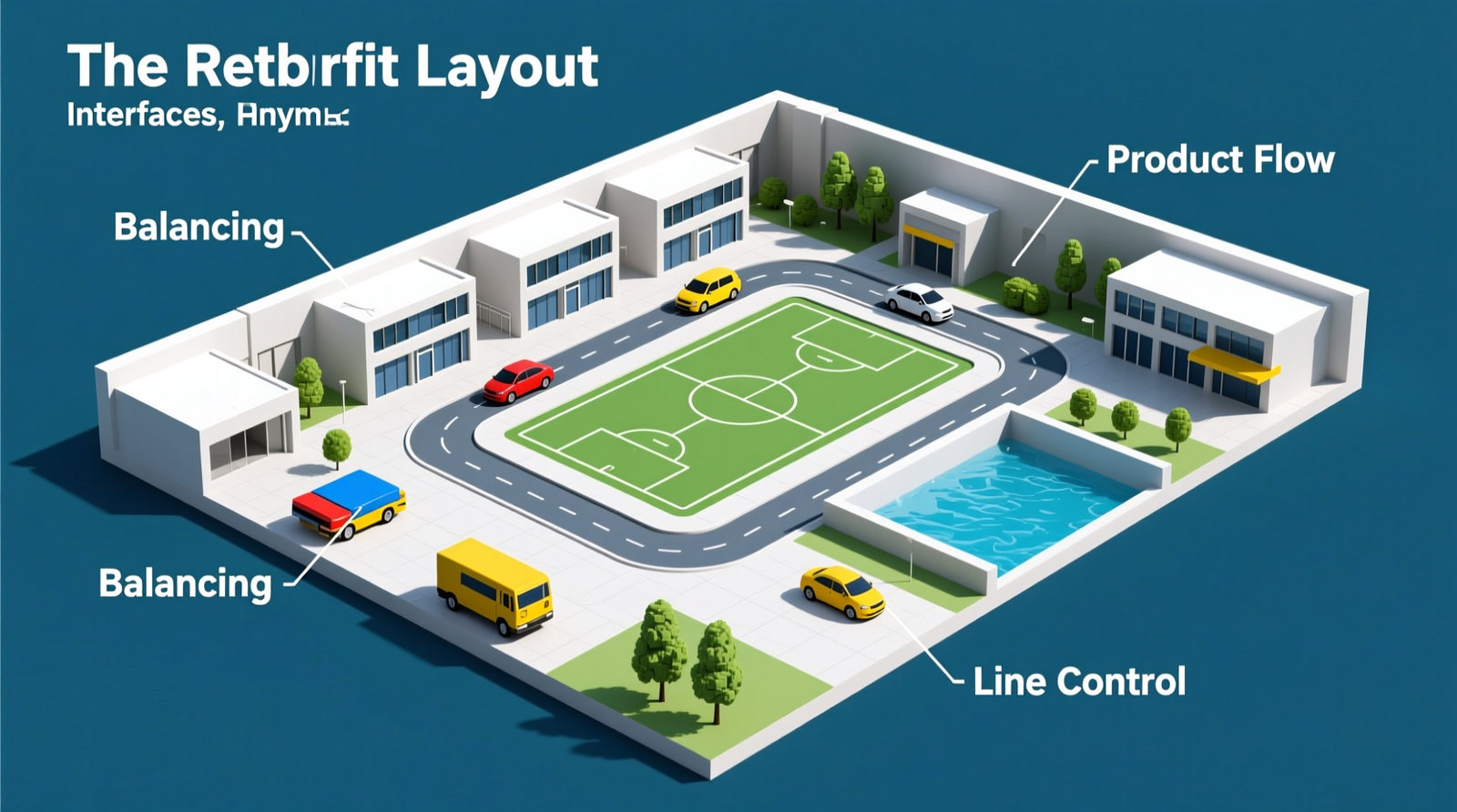
Integrating optical sorters successfully is less about “placing machines” and more about managing interfaces—mechanical, electrical, software, and hygienic. Murre Technologies engineered the retrofit so that upstream variability (wash loads, clumps, water carryover) wouldn’t collapse sorter accuracy or downstream packaging efficiency.
Upstream interfaces (washers, dewatering, conveyors)
- Washer discharge control: stabilized infeed using metering conveyors to avoid surges that create double layers on inspection belts.
- Dewatering and drip control: managed to reduce water on belts and optics (water films can change reflectance and degrade detection).
- Foreign material strategy: improved presentation so that stones, clods, and peel fragments are easier to detect and eject.
Downstream interfaces (packaging lines, buffers, and lane distribution)
- Buffer conveyors/bins: used to absorb short-term fluctuations so packaging is not starved when raw material changes.
- Grade stream balancing: designed so “Grade A” doesn’t overload one pack lane while other lanes idle—particularly important when seasonal size distribution shifts.
- Reject handling: dedicated reject chutes/bins sized for peak defect loads to prevent back-ups that can force the sorter to slow down.
Controls integration (PLC/HMI and recipe management)
PLC (Programmable Logic Controller) integration and HMI (Human-Machine Interface) screens were configured to coordinate line start/stop logic, interlocks, and recipe selection across washing, sorting, and packing. This reduces “micro-stops” (small interruptions) that often erode real-world throughput more than the sorter’s nominal capacity.
Engineer commentary (Murre Technologies): “On retrofit projects, the optical sorter is rarely the limiting factor. Feed stability, access for cleaning, and safe maintenance clearances determine whether you can hold accuracy at speed. We model the flow and then validate it with test runs before final tuning.”
TL;DR: The retrofit focused on stable infeed from washing, buffering and lane balancing to packaging, and PLC/HMI recipe control so the optical sorters can maintain accuracy at industrial speeds.
Installation Without Production Downtime: Planning, Safety, and Validation
Kimco required continuous weekday production, so the installation was planned around weekend tie-ins and staged cutovers. The most disruptive tasks—structural supports, conveyor reroutes, and utility drops—were scheduled when product risk and staffing were manageable.
- Work-at-height safety: controlled through defined access routes, lifting plans, and segregated work zones to protect both installers and production staff.
- Food safety controls: physical separation and cleaning protocols limited dust/metal/foreign body risks during mechanical works near open product zones.
- Commissioning validation: the team used structured checks: sensor calibration, lighting uniformity verification, ejector timing tests, and performance trials against reference samples.
Engineer commentary (Murre Technologies): “No-downtime installation is possible, but only if you treat commissioning as a validation step—not a switch you flip at the end. We pre-test I/O (inputs/outputs), confirm hygienic design constraints, and run acceptance trials with real product under production-like loads.”
TL;DR: Weekend cutovers, strict safety/food-safety zoning, and validation-based commissioning enabled a true no-downtime installation.
Before vs. After: Operational Comparison (Manual/Semi-Automatic vs. Optical Sorting)

Prior to the upgrade, grading relied more heavily on human inspection and simpler mechanical sizing—methods that can struggle with high variability and fatigue-sensitive defect detection. After installation, the optical sorting line shifted quality control upstream into a repeatable, measurable process.
- Staffing impact (indicative): optical sorting projects commonly reduce manual inspection positions per shift by reallocating labor from “continuous visual picking” to monitoring, rework management, and packaging tasks.
- Speed consistency: optical sorters hold grading rules constant at high belt speeds; manual sorting quality can drift with fatigue and changing light conditions.
- Rework reduction: better first-pass grading typically reduces downstream re-checking and repacking caused by out-of-tolerance product.
Kimco reports the most noticeable day-to-day effect as improved consistency: fewer borderline items entering retail-grade packs and smoother packaging flow due to more stable grade distribution.
TL;DR: The optical sorting line reduces dependence on continuous manual inspection and stabilizes grading accuracy and packaging flow at higher, more consistent speeds.
Performance Results and Quality Standards Supported (BRCGS/IFS Readiness)
Post-installation, Kimco observed operational improvements that are typical of well-tuned optical grading automation:
- More consistent grading against customer tolerances for size and visual defects.
- Lower risk of quality complaints due to improved defect capture and tighter grade segregation (reported qualitatively in the first months after start-up).
- Reduced “giveaway” potential by tightening grade definitions (keeping good product out of reject streams) while still meeting specs.
The system design also supports audit expectations commonly associated with BRCGS (Brand Reputation through Compliance Global Standards) and IFS (International Featured Standards) environments—particularly around traceability, consistent process control, and documented settings. For reference on these frameworks, see BRCGS and IFS.
TL;DR: Kimco achieved more consistent grade-outs and stronger control over defect segregation, supporting audit-friendly process documentation aligned with BRCGS/IFS expectations.
Project Phases (Feasibility to Optimization)

This retrofit optical sorters project followed a phased approach suited to industrial facilities where production continuity and layout constraints dominate decisions:
- 1) Feasibility study
- Measured available footprint/clearances and mapped product flows from wash to pack.
- Identified bottlenecks (singulation, reject handling, pack-lane distribution).
- 2) Engineering & design
- Developed conveyor elevations and maintenance access routes within ceiling-height limits.
- Defined hygiene zoning and utilities (power, compressed air for ejectors, network/controls).
- 3) Installation
- Staged mechanical installation with weekend tie-ins to avoid weekday downtime.
- Managed safety and product protection in a live production environment.
- 4) Commissioning
- Calibrated cameras/lighting and validated ejector timing at line speed.
- Ran acceptance tests using reference samples and tuned defect thresholds.
- 5) Optimization
- Adjusted recipes for seasonal variation and customer-specific grading tolerances.
- Balanced grade streams to reduce packaging micro-stops and maximize throughput.
TL;DR: A phased retrofit method—feasibility, engineering, staged installation, validation commissioning, and optimization—reduced risk and preserved production continuity.
Lessons Learned and Pitfalls to Avoid When Retrofitting Optical Sorters
Kimco’s project highlights a few practical pitfalls that often determine whether an optical sorting retrofit reaches its promised performance:
- Don’t underestimate infeed presentation: A sorter can only classify what it can “see.” Poor singulation (double layers, clumps) is a top cause of missed defects and false rejects.
- Plan reject logistics for worst-case loads: If reject bins/chutes overflow during a bad batch, the whole line slows or stops—erasing throughput gains.
- Protect optics from water and dust: In mixed wet/dry environments, shielding, air-knife strategies, and disciplined cleaning routines keep detection stable.
- Design for maintenance access on day one: Retrofitted lines can become “too tight to service,” increasing downtime later. Access panels, walkways, and safe lockout points matter.
TL;DR: Retrofit success hinges on stable singulation, reject handling capacity, environmental protection for sensors, and maintainable access—not just the sorter’s nominal specs.
Maintenance, Reliability, and Uptime Strategy

To sustain performance, Kimco’s optical sorting line is supported by routines typical for high-uptime industrial vegetable sorting equipment:
- Daily cleaning: cleaning lenses/windows, checking lighting covers, and removing debris from infeed zones to prevent image noise.
- Calibration checks: verifying camera alignment and lighting uniformity; confirming ejector timing after belt or air-system maintenance.
- Compressed air quality: monitoring filtration and pressure stability (air jets require consistent pressure for repeatable ejection).
- Spare parts strategy: keeping critical wear parts (belts, valves/ejector components, sensors, lighting modules) to reduce mean time to repair.
- Software/recipe governance: controlled access to parameter changes helps maintain consistent grading and supports audit documentation.
TL;DR: Uptime depends on disciplined cleaning, calibration, stable compressed air, critical spares, and controlled recipe management.
Commercial Rationale: ROI, Payback, and Total Cost of Ownership
Kimco’s decision reflects a broader economic reality: optical sorting investments are often justified by a combination of labor efficiency, yield protection (less giveaway), and complaint reduction. While results vary by product mix and seasonality, optical sorting projects in vegetables commonly target payback in ~1–3 years when volumes and labor displacement are significant.
Main cost drivers typically include:
- Capital equipment (sorters, conveyors, controls, guarding)
- Utilities (compressed air, power, network infrastructure)
- Maintenance (consumables, wear parts, service contracts)
- Operational tuning (time spent building recipes and validating defect rules per customer spec)
TL;DR: Optical sorting retrofits are often justified by labor savings, better yield control, and fewer complaints, with typical industrial payback targets around 1–3 years depending on throughput and defect rates.
Key Results at a Glance

- Six optical sorters integrated as a retrofit into an existing facility (no new building required).
- No-downtime installation approach using staged weekend tie-ins and validation commissioning.
- Improved grading consistency for carrots and onions via multi-sensor inspection and configurable tolerances.
- Higher effective capacity through reduced micro-stops and better flow balancing (qualitative early results).
- Audit-friendly process control with recipe governance supporting BRCGS/IFS-style documentation needs.
TL;DR: The project delivered a no-new-building, no-downtime optical sorting retrofit with more consistent grading and improved line stability.
Contact Information
Murre Technologies B.V.
Zuidweg 20-22
4413 NM Krabbendijke, The Netherlands
Tel. +31 (0) 113 – 50 30 80
Email: info@murre.nl
Website: https://www.murre.nl/
KIMCO N.V.
Hofstraat 176
9200 Dendermonde, Belgium
Tel. +32 (0) 52 250 270
Email: info@kimco.be
Website: https://www.kimco.be/
TL;DR: Contact Murre Technologies for engineered optical sorting retrofits and Kimco for project reference context.
Conclusion

Kimco’s upgrade demonstrates what a well-executed optical carrot sorting line and onion grading automation retrofit can achieve in a constrained facility: higher grading consistency, improved operational stability, and a pathway to measurable quality control—without pausing production or rebuilding the plant.
By focusing on interfaces (wash-to-sort-to-pack), validation commissioning, and maintainable layout design, Murre Technologies delivered a system that fits real industrial requirements: throughput, repeatability, service access, and audit-ready process control.
TL;DR: The retrofit optical sorting solution improved consistency and capacity while preserving production continuity—proving advanced sorting can be integrated into legacy facilities when engineered end-to-end.
FAQ
Q: What is an optical carrot sorting line, and what defects can it remove?
A: An optical carrot sorting line uses high-speed cameras (often line-scan RGB) and sometimes NIR (Near-Infrared) sensors plus software algorithms to grade carrots by length, diameter, curvature, and visible defects such as discoloration, damage, or surface blemishes. Defective product is removed via timed air jets or diverters into reject streams.
Q: How does onion grading automation differ from traditional mechanical sizing?
A: Mechanical sizing mainly separates onions by diameter using rollers or screens, but it doesn’t reliably detect visual defects. Onion grading automation adds camera-based inspection to classify skin condition, discoloration, and quality defects, creating more consistent grade streams and reducing manual re-checking.
Q: What throughput and accuracy can industrial vegetable sorting equipment typically achieve?
A: Depending on belt width, product type, and defect targets, a single optical sorter is often engineered around roughly 5–20 tons/hour. Many installations target >90–98% correct classification on defined defect/grade categories, but real results depend heavily on singulation quality, cleanliness, lighting stability, and recipe tuning.
Q: What are the most common pitfalls when adding retrofit optical sorters to an existing plant?
A: Common pitfalls include insufficient space for maintenance access, unstable infeed (double layers that reduce detection accuracy), undersized reject handling that causes blockages, and poor environmental protection (water/dust) around optics. A feasibility study should address these before equipment is ordered.
A: Optical sorters typically interface with PLC line controls via industrial I/O and fieldbus/Ethernet communications. They can export production and grading data (throughput, reject rates, recipe IDs, alarms) to site systems for reporting and traceability. This supports audit documentation (e.g., BRCGS/IFS expectations) by linking lot/recipe settings to production outcomes.