Introduction

This article covers the heavy duty construction equipment market size, forecast, segmentation, competitive landscape, market opportunities, regional outlook, and the technology/regulatory trends shaping OEM and contractor decisions through 2033.
Demand is being pulled by three practical forces that distinguish this market from adjacent equipment sectors: (1) public infrastructure backlogs (roads, bridges, rail, utilities) that require high-hour utilization fleets, (2) tightening off-road emissions rules that push accelerated replacement/retrofit cycles, and (3) digitization of jobsite productivity via connected equipment (telematics) and automation (machine control) rather than purely mechanical performance gains.
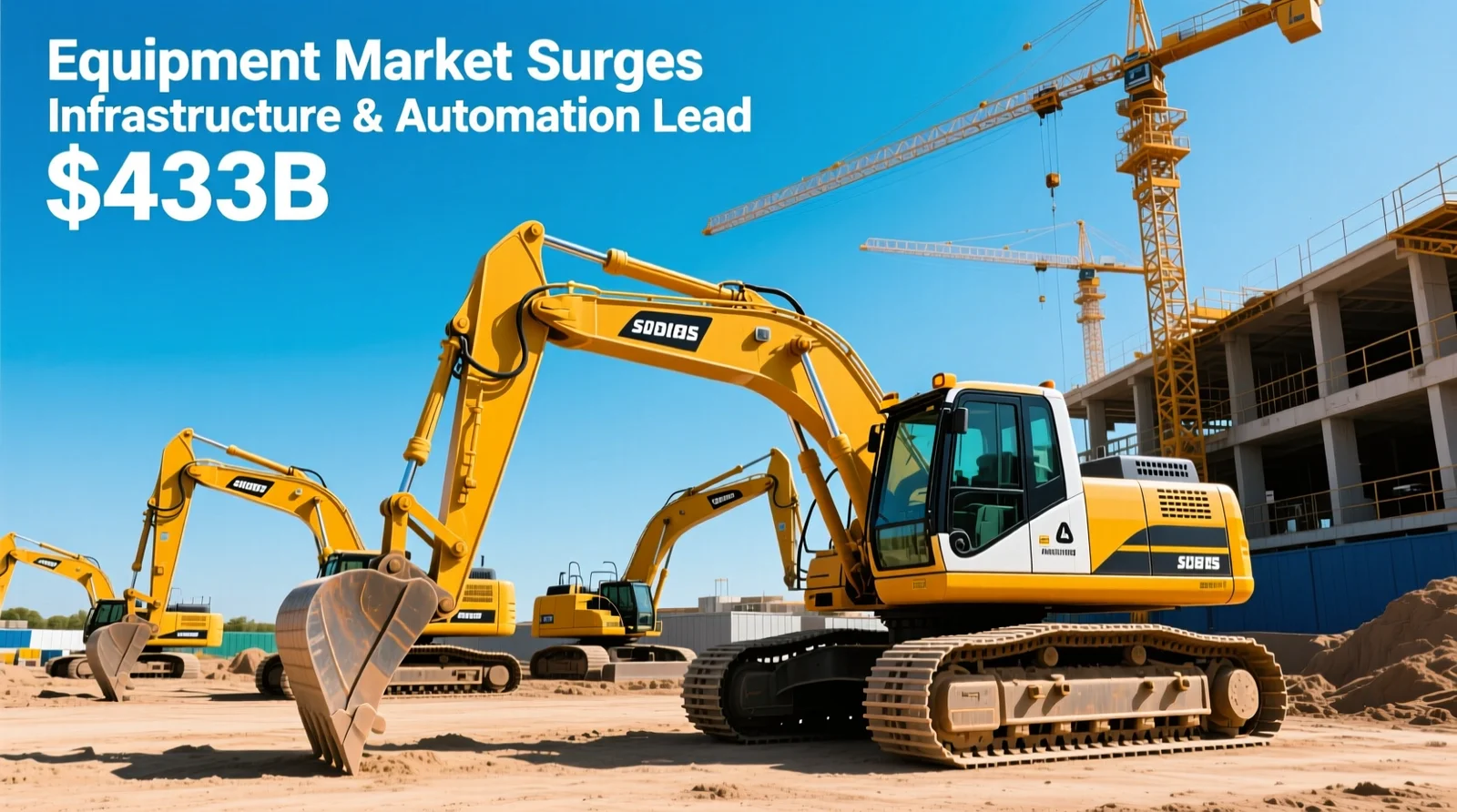
According to DataM Intelligence, the market reached US$ 213.49 billion in 2023, rose to US$ 226.45 billion in 2024, and is projected to reach about US$ 433.43 billion by 2033, implying a ~7.48% CAGR (compound annual growth rate) over the stated forecast window. Earthmoving equipment remains the largest equipment group (~54% share). Europe leads share (~34% in 2024), while Asia-Pacific is the fastest-growing region (~29% share in 2024).
Regulation and policy are central to this outlook. For example, Europe’s EU Stage V emissions standard for non-road mobile machinery (NRMM) and the U.S. EPA Tier 4 Final rules have already reshaped diesel engine and aftertreatment design, influencing both pricing and aftermarket behavior. Reference: European Commission – Non-road mobile machinery (NRMM); U.S. EPA – Nonroad engines and equipment.
TL;DR: The market’s growth is driven less by “more construction” in general and more by infrastructure-led equipment hours, emissions-driven fleet renewal, and productivity gains from connected and partially automated machines.
Market Size & Forecast (2024–2033)
The heavy duty construction equipment market was US$ 226.45 billion in 2024 and is forecast to reach ~US$ 433.43 billion by 2033 (~7.48% CAGR per the source). For decision-makers, the key implication is not only top-line expansion but also a gradual shift in where value is captured: software-enabled uptime, aftermarket service contracts, and rental fleet refresh cycles increasingly influence OEM mix and margins.
To keep the CAGR discussion consistent, note that CAGR depends on the exact base/forecast years used. This article references the stated DataM period while discussing market dynamics through 2033. When building financial models, align assumptions to a single window (e.g., 2024–2033) and reconcile with procurement cycles (typically 3–7 years for many fleets).
TL;DR: The headline forecast is strong, but the strategic story is margin mix shifting toward connected services, rentals, and compliance-driven upgrades.
Market Segmentation (What matters most by growth and technology intensity)

Segmentation by Equipment Type
- Earthmoving equipment (largest category): Excavators, dozers, wheel loaders, graders, compactors/rollers—core to roads, utilities, housing, and bulk earthworks. This segment tends to be the first adopter of machine control and grade automation because small accuracy gains translate into measurable fuel and rework reduction.
- Material handling equipment: Cranes (tower/crawler/mobile), telehandlers, forklifts, hoists—often tied to commercial/infrastructure timelines and safety requirements. Technology intensity is high in load monitoring and anti-collision systems.
- Heavy construction vehicles: Dump trucks, concrete mixers, asphalt pavers—sensitive to diesel price, duty cycles, and jobsite logistics. Automation is emerging fastest in controlled environments (large quarries/mines, dedicated haul roads).
- Specialty equipment: Tunneling, piling, drilling, demolition—smaller volume but often higher value per unit and more project-specific specs.
TL;DR: Earthmoving leads volume and early adoption of productivity tech; specialty equipment is smaller but can be higher-value and specification-driven.
Segmentation by Application

- Infrastructure: Typically the most equipment-intensive (earthworks, paving, lifting) and the segment most exposed to government budgets and permitting cycles.
- Industrial: Warehouses, plants, logistics hubs—often favors fast-cycle material handling and compact equipment for indoor/low-emission zones.
- Commercial & residential: More fragmented buyers; rental and compact equipment penetration is often higher due to shorter project durations and smaller contractors.
TL;DR: Infrastructure drives the heaviest equipment hours; commercial/residential is more fragmented and rental-heavy.
Segmentation by Propulsion Type (with clear definitions)
- Diesel: Dominant today due to energy density and established refueling. Compliance is shaped by frameworks such as EU Stage V (NRMM) and U.S. EPA Tier 4 Final, which require advanced aftertreatment on many power classes.
- CNG/LNG: CNG = compressed natural gas; LNG = liquefied natural gas. More common where fueling infrastructure exists and duty cycles are predictable (some fleets and specific vehicle-like applications).
- Electric & hybrid-electric: Best economics today in compact equipment, urban jobsites, indoor work, and noise-restricted areas. Hybrid systems often target fuel savings without requiring full charging infrastructure.
TL;DR: Diesel remains essential for high-duty cycles, while electrification is most commercially practical first in compact/urban use cases.
Segmentation by Sales Channel (how buying behavior is changing)
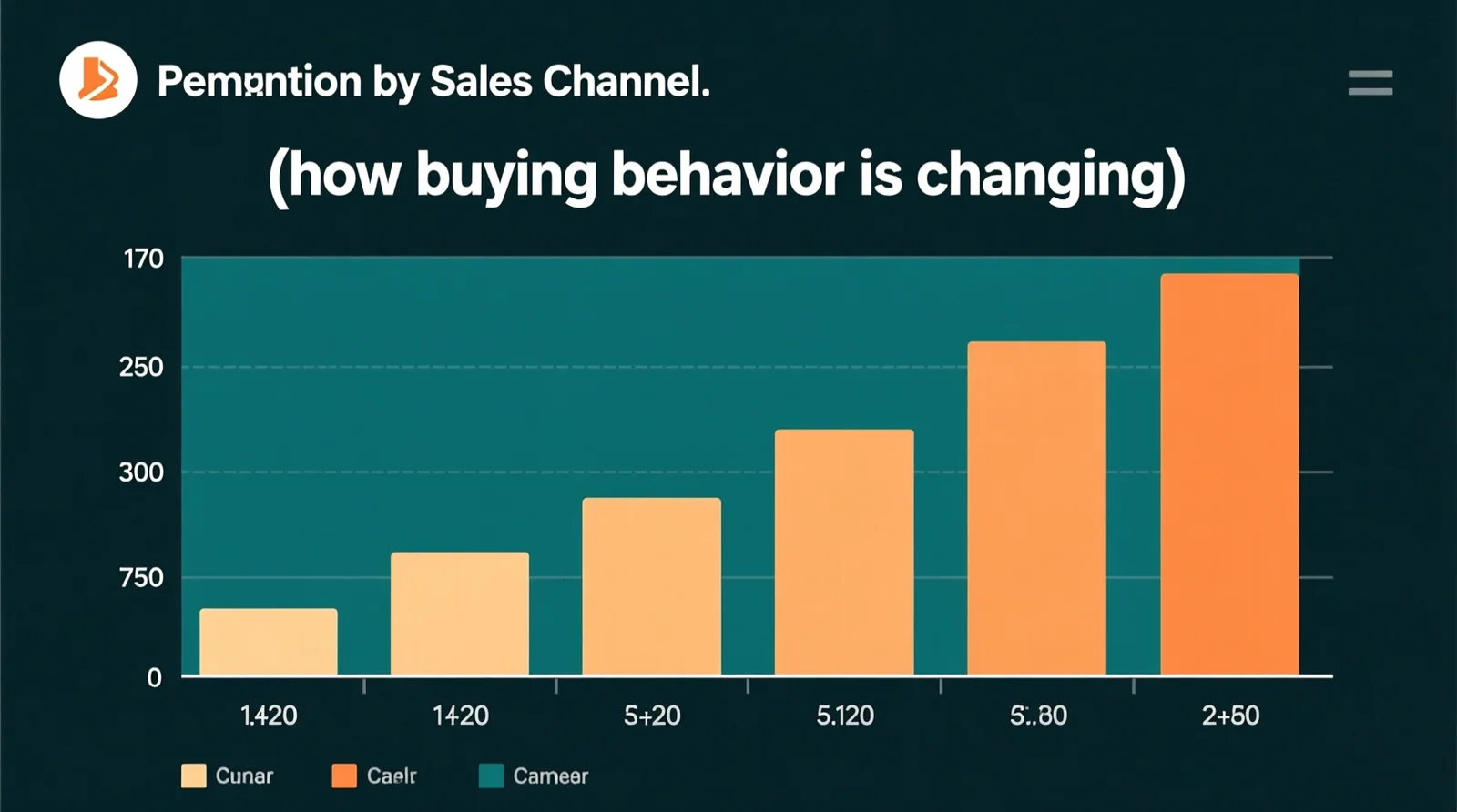
- OEM/direct & dealer sales: Still central for large fleets; increasingly bundled with service and digital subscriptions.
- Aftermarket: Parts, maintenance, rebuilds, retrofits (including telematics). This is where OEMs and dealers defend lifetime value.
- Rental: A major route to market for compact and mid-range equipment in many mature regions. In the U.S. and parts of Western Europe, rental penetration in construction equipment is often cited at 40%+ in industry discussions, while many emerging markets remain materially lower due to financing structures and fleet availability. For an industry benchmark perspective, see: American Rental Association (ARA).
TL;DR: Rental and aftermarket increasingly shape OEM strategy, especially for compact-to-mid equipment where utilization variability is high.
Regional Outlook: Europe, Asia-Pacific, North America (plus RoW)
Rather than repeating similar narratives, the regional outlook can be summarized as a “four-factor” comparison: relative scale, growth pace, regulatory stringency, and technology adoption (telematics, electrification, automation).
Europe (largest share) typically ranks high on regulatory stringency and early adoption of low-emission equipment, anchored by EU Stage V and city-level noise/emission constraints. Policy direction is also influenced by broader EU climate/energy frameworks (e.g., “Fit for 55” package). Source: European Commission – Fit for 55.
Asia-Pacific (fastest-growing) is defined by project volume and speed: metro expansions, expressways, ports, and industrial corridors. Technology adoption is uneven—top-tier contractors and mega projects deploy advanced machine control and fleet systems, while long-tail adoption remains price-sensitive. National programs help anchor demand, such as India’s National Infrastructure Pipeline (NIP) and related capital plans. Source: National Infrastructure Pipeline (India).
North America combines infrastructure renewal with high telematics usage and strong rental ecosystems. U.S. federal funding is shaped by the Infrastructure Investment and Jobs Act (IIJA), supporting multi-year road, bridge, broadband, and water investments. Source: White House – Bipartisan Infrastructure Law (IIJA).
South America often tracks commodities (mining) plus logistics corridors; Middle East & Africa can see large project spikes (new cities, energy, ports) but higher exposure to geopolitical and commodity cycles.
TL;DR: Europe leads on regulation-driven upgrades, Asia-Pacific leads on project volume growth, and North America leads on rental/connected fleet maturity.
Key Market Drivers (with measurable operational impact)
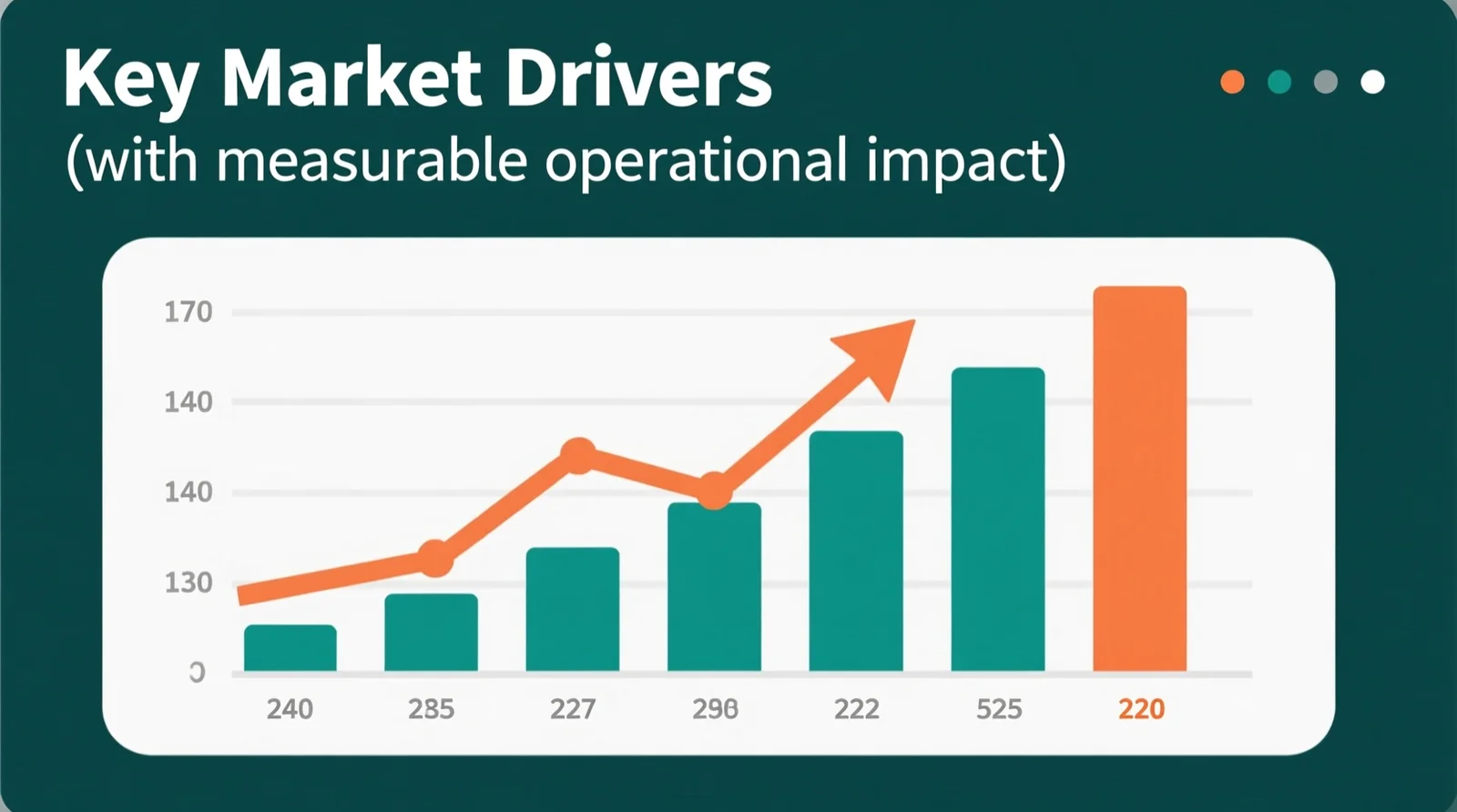
Urbanization and infrastructure build/renewal sustain equipment hours over long periods, especially for earthmoving and paving. The UN projects that urban population share could reach ~68% by 2050, which translates into sustained demand for transport, utilities, and housing enabling works. Source: UN DESA – World Urbanization Prospects.
Digitization of fleet operations is a practical driver because it changes contractor economics. Telematics (connected equipment systems that transmit location/health/utilization data) can reduce idle time, tighten preventive maintenance, and improve theft recovery. Adoption rates vary by fleet sophistication and region; in North America and Western Europe, telematics is increasingly common on newer machines (often factory-fitted), while retrofit adoption is a major lever in emerging markets.
Rental expansion changes procurement patterns. Where rental is mature, contractors can shift capex (capital expenditure) to opex (operating expense) and “right-size” fleets per project phase. OEMs respond by designing rental-friendly configurations (durability, simplified options) and by building certified used channels.
TL;DR: The biggest drivers are infrastructure-led utilization, fleet digitization that improves uptime, and rental models that shift how machines are purchased and refreshed.
Emerging Technologies: Electrification, Hydrogen, Automation & AI (what’s real vs. experimental)
Electrification is commercially real today for compact loaders, mini excavators, and some mid-size machines in urban/indoor settings. Typical buyer motivations are noise limits, indoor air requirements, and predictable daily duty cycles. Key limitations remain battery energy density (how much energy per kg), charging access, and productivity impact on multi-shift operations. As a rule of thumb, the strongest near-term fit is equipment that returns to a depot nightly and runs 4–8 hours/day with planned breaks.
Hydrogen (fuel cells or hydrogen combustion) is earlier-stage for most construction use cases. Its potential advantage is faster refueling and higher energy storage for heavy duty cycles, but it depends on hydrogen supply, on-site storage, and refueling infrastructure. Broad deployment is more plausible first in controlled hubs (large projects, ports, or mining sites) rather than dispersed small jobsites. For hydrogen fundamentals and infrastructure considerations, see: International Energy Agency (IEA) – The Future of Hydrogen.
Automation and AI should be separated into three maturity levels:
- Commercial today: 2D/3D machine control (GNSS/GPS-guided grading), payload weighing, operator assistance, remote diagnostics.
- Scaling now: Remote operation and semi-autonomous features in repetitive tasks (grading, dozing) on controlled sites.
- Pilot/limited deployments: Fully autonomous earthmoving fleets, especially outside mining. These require site mapping, connectivity, safety cases, and specialized workflows.
TL;DR: Electric compact equipment and machine control are “here now,” while hydrogen and full autonomy are promising but constrained by infrastructure, safety validation, and economics.
Mini Use Cases (how trends play out in real procurement decisions)

Use case 1: Mid-sized European contractor electrifies part of its compact fleet. A contractor operating in low-emission urban zones replaces 2 diesel mini excavators with electric models and installs depot charging. The business case is typically built on fewer engine-related maintenance events, potential lower energy cost per hour, and improved access to city-center jobs with strict noise/emission requirements. Many fleets target payback in roughly 3–6 years depending on utilization hours, electricity vs diesel price, incentive availability, and residual value assumptions. The contractor also benefits from a marketing edge in tender scoring where “low-emission jobsite” criteria matter.
Use case 2: Asia-Pacific mega-infrastructure project uses machine control to reduce rework. A highway/rail corridor contractor deploys 3D machine control on dozers and graders. Even a small reduction in over-excavation and rework can translate into meaningful fuel and schedule savings at scale. The value is highest where material volumes are large and survey models are well-managed. The key success factor is not the sensors alone, but disciplined digital workflows (updated designs, calibration, operator training).
Use case 3: Large quarry or mining-adjacent earthworks deploys semi-autonomous haulage in controlled zones. In controlled haul roads, autonomy features can improve safety and increase utilization by reducing variability. However, most construction sites remain too dynamic for “full autonomy” without substantial process redesign. This is why the earliest and most repeatable deployments are often in mining or quarry-like environments, with construction following selectively.
TL;DR: Electrification wins first in compact urban fleets, machine control scales on high-volume civil projects, and autonomy is most practical in controlled environments.
Market Restraints & Risks (uncertainty that can move forecasts)
- Construction cycle and interest-rate sensitivity: Higher rates increase financing costs for contractors and developers, which can delay starts and reduce equipment orders—especially for discretionary commercial projects.
- Commodity price exposure: Steel, copper, and battery material volatility affects OEM input costs and can pressure margins or raise equipment prices.
- Technology adoption barriers: Electrification requires charging access and clear total cost of ownership (TCO) models; many contractors still lack standardized methods to compare diesel vs electric across duty cycles.
- Infrastructure and grid constraints: Depot power upgrades and permitting can be a gating item for electric fleets, particularly for high-power fast charging.
- Supply chain and components: Lead times for semiconductors, hydraulics, and power electronics can still affect delivery schedules and rental fleet refresh timing.
TL;DR: The biggest forecast swing factors are construction/credit cycles, commodity inputs, and practical barriers to adopting electric/connected technologies at scale.
Market Opportunities (where budgets are shifting)

Low-emission fleets for urban and regulated worksites are a near-term opportunity, especially in compact and mid-range equipment where the duty cycle fits batteries. Another near-term lever is retrofit telematics and service contracts to improve utilization and reduce downtime on existing fleets.
Aftermarket growth is reinforced by longer asset life and high utilization. OEMs and dealers that can provide guaranteed uptime packages (planned maintenance + parts availability + remote diagnostics) can capture recurring revenue, particularly in rental-heavy markets.
TL;DR: The most bankable opportunities are compact electrification, service/uptime contracts, and telematics-driven lifecycle optimization.
Competitive Landscape (who wins and why)
The market is moderately consolidated, and differentiation is increasingly about ecosystems—equipment + digital platform + dealer service + financing/rental integration—rather than iron alone.
- Caterpillar: Strength in large equipment, dealer network scale, and autonomy leadership in mining-adjacent applications; expanding digital fleet and services.
- Volvo Construction Equipment: Strong positioning in electric compact equipment and sustainability-led offerings, with a clear brand narrative around low-emission sites.
- Komatsu / Hitachi / HD Hyundai Construction Equipment: Broad earthmoving portfolios and technology investments (machine control, connected fleet tools), often competitive on productivity and lifecycle support.
- JCB: Strong in backhoe loaders and compact equipment; actively innovating in alternative power concepts and jobsite practicality.
- Liebherr: Deep expertise in cranes and specialized equipment; engineering-led differentiation in lifting and high-capacity segments.
- John Deere: Expanding construction footprint with an emphasis on smart/connected machine capabilities and dealer support.
M&A and partnerships increasingly focus on battery supply, power electronics, charging, and telematics/software platforms. Joint development agreements help OEMs shorten time-to-market for electrification and advanced operator-assist functions while spreading R&D risk.
TL;DR: Competitive advantage is shifting toward integrated offerings (connected equipment + service + financing/rental) and credible electrification/automation roadmaps.
Recent Developments (credibility-safe framing)

Instead of citing future-dated “confirmed” events, it’s more credible to track established industry directions visible in recent product launches and trade shows: OEMs are expanding electric compact lines, rolling out factory-fit telematics, and increasing machine control compatibility. Major industry exhibitions such as bauma and CONEXPO-CON/AGG continue to highlight practical advances in electrification, safety systems, and semi-autonomous features.
TL;DR: The verified trend is steady commercialization of electric compact machines and connected/assisted operation features, not sudden full autonomy across general construction sites.
Strategic Recommendations (by stakeholder)
- OEMs: Prioritize electric compact and mid-range machines for urban/regulatory zones, and monetize telematics via tiered subscriptions (basic tracking → predictive maintenance → productivity optimization). Build partnerships for charging and battery lifecycle support.
- Rental companies: Bundle telematics + damage/usage analytics into rental contracts to reduce losses and improve utilization. Pilot electric fleets in metro areas where utilization is predictable and charging can be centralized.
- Contractors: Segment fleets by duty cycle. Electrify where daily hours and return-to-base patterns fit; use machine control where volume and rework risk are high. Standardize TCO models and train operators to capture productivity gains.
- Investors: Look beyond unit sales to recurring revenue: dealer service capacity, parts logistics, connected-fleet platforms, and rental exposure in mature regions can be leading indicators of resilience in down-cycles.
TL;DR: Winning strategies focus on duty-cycle-based electrification, monetizing connectivity, and service/rental models that stabilize revenue across construction cycles.
Heavy Duty Construction Equipment vs. Adjacent Sectors (context for trends)
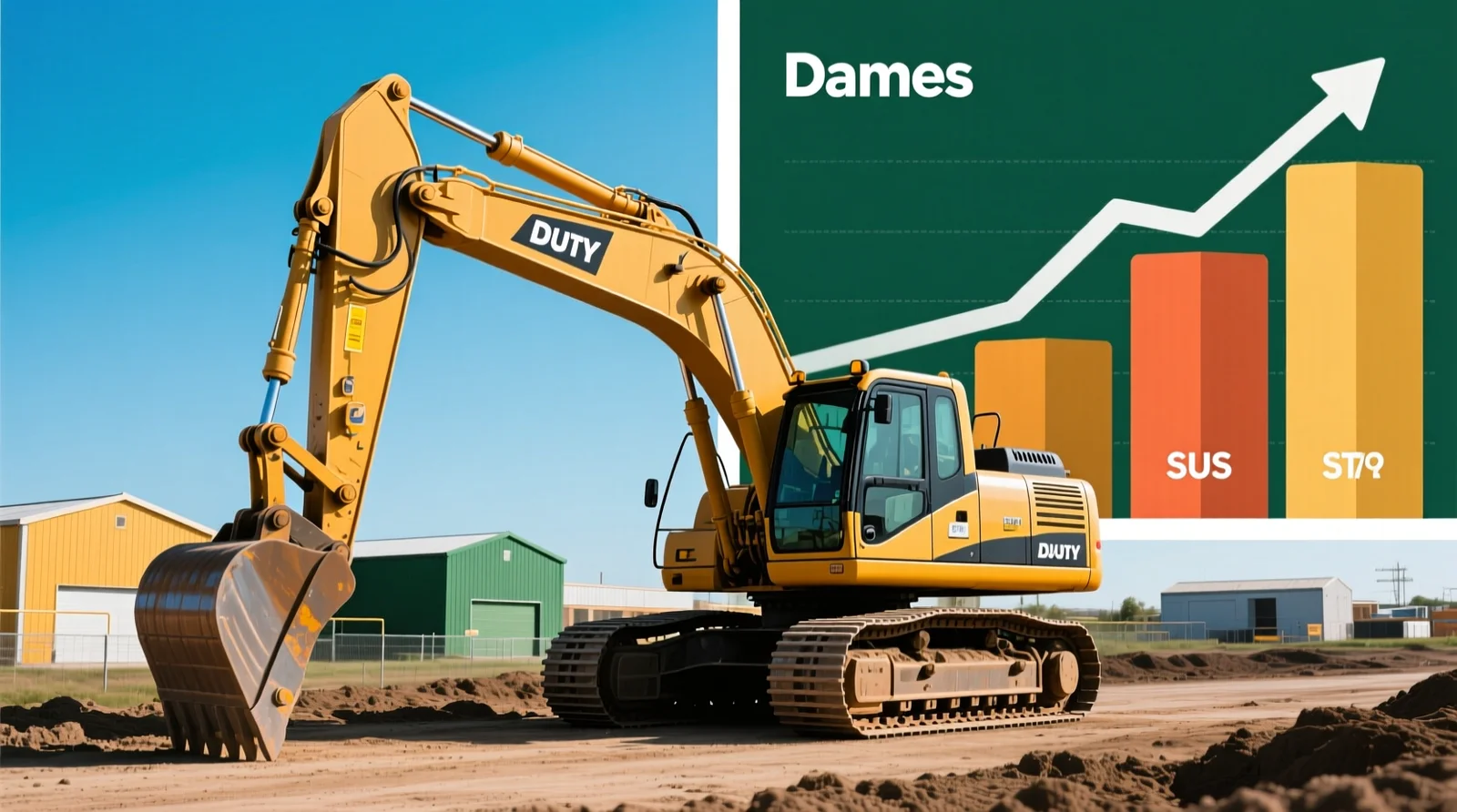
Compared with agricultural machinery, construction equipment demand is typically more exposed to public budgets, permitting, and non-residential building cycles, while agriculture tracks farm income and crop prices. Compared with mining equipment, construction sees faster fragmentation (many small contractors) and more dynamic jobsites, which slows full autonomy adoption outside controlled environments. Mining, however, often leads autonomy due to repeatable haul routes and centralized site control—technology then migrates into large-scale earthworks selectively.
TL;DR: Construction sits between agriculture (income-driven cycles) and mining (controlled-site autonomy), adopting technology fastest where workflows are repeatable and regulation is strict.
Conclusion
Through 2033, the heavy duty construction equipment market is shaped by infrastructure-led utilization, emissions compliance, and the monetization of connected operations. Earthmoving remains the backbone by volume, while regional differences are best understood through regulation intensity (Europe), project velocity (Asia-Pacific), and rental/connected-fleet maturity (North America).
For professionals making fleet and product decisions, the practical near-term edge comes from electric compact deployment where duty cycles fit, machine control to reduce rework, and service + telematics packages that measurably improve uptime and cost per hour.
TL;DR: Growth is real, but the winners will be those who turn regulation and digitization into lower cost-per-hour, higher uptime, and repeatable deployment playbooks.
FAQ

Q: What is the heavy duty construction equipment market forecast through 2033?
A: The cited market estimate places 2024 at about US$ 226.45 billion with a projection near US$ 433.43 billion by 2033 (around a 7.48% CAGR per the source). For planning, align CAGR windows to your budgeting period and consider construction-cycle sensitivity (rates, starts, and public funding timing).
Q: Which equipment types are most likely to electrify first, and why?
A: Electric adoption is typically fastest in compact equipment (mini excavators, compact loaders) used in urban/indoor or noise-restricted sites. These machines often have predictable daily duty cycles and can return to a depot for charging, making the operational change manageable.
Q: How is equipment rental affecting OEM sales strategies?
A: Rental pushes OEMs toward rental-optimized configurations, faster parts/service response, and fleet-focused pricing. It also increases the importance of certified used programs and telematics, since rental companies want utilization visibility and lower downtime across large, standardized fleets.
Q: What impact do EU Stage V and U.S. EPA Tier 4 Final regulations have on total cost of ownership (TCO)?
A: These standards increase engineering complexity and often raise upfront prices due to advanced aftertreatment and controls. In exchange, newer machines can deliver better fuel efficiency and uptime when maintained correctly. The net TCO impact depends on annual hours, maintenance discipline, and whether projects require compliant equipment to bid.
Q: What are the main barriers to adopting autonomous construction equipment today?
A: The biggest barriers are dynamic jobsites (changing layouts and mixed traffic), safety validation, connectivity needs, and process redesign. Most commercial deployments today are semi-autonomous (machine control, operator assist) or autonomy in controlled environments (quarry/mining-like haul routes) rather than fully autonomous general construction sites.