Introduction: Automatic HDPE Plastic Pipe Welding Machines with CNC and GPS at Canton Fair
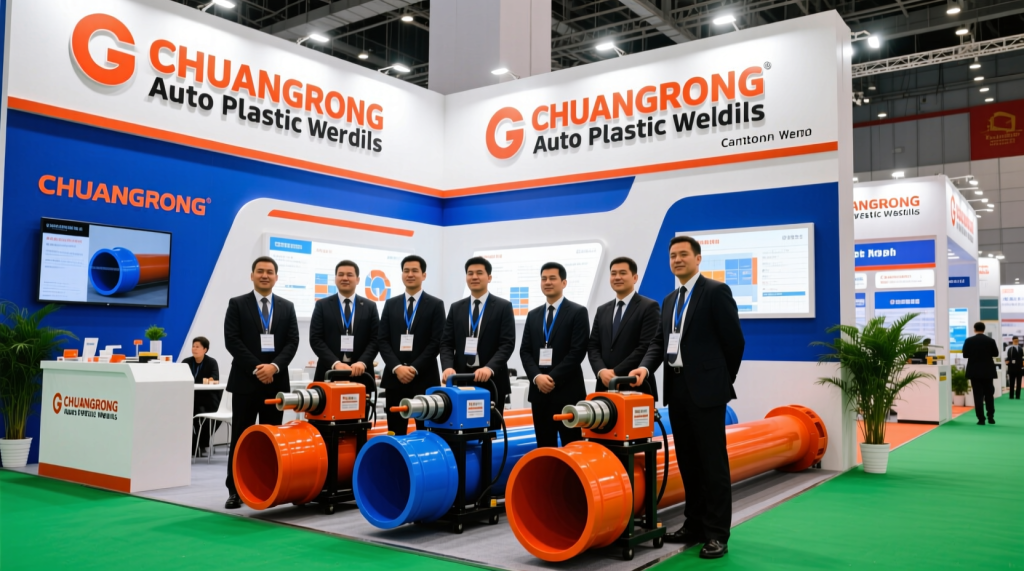
The Canton Fair in Guangzhou continues to be a place where contractors, utilities, and industrial buyers compare practical solutions for building and maintaining pipelines. At the event, CHUANGRONG presented automatic plastic pipe welding machines focused on repeatability, traceability, and standard-aligned procedures for thermoplastic pipelines used in water, gas, mining, dredging, irrigation, and energy projects.
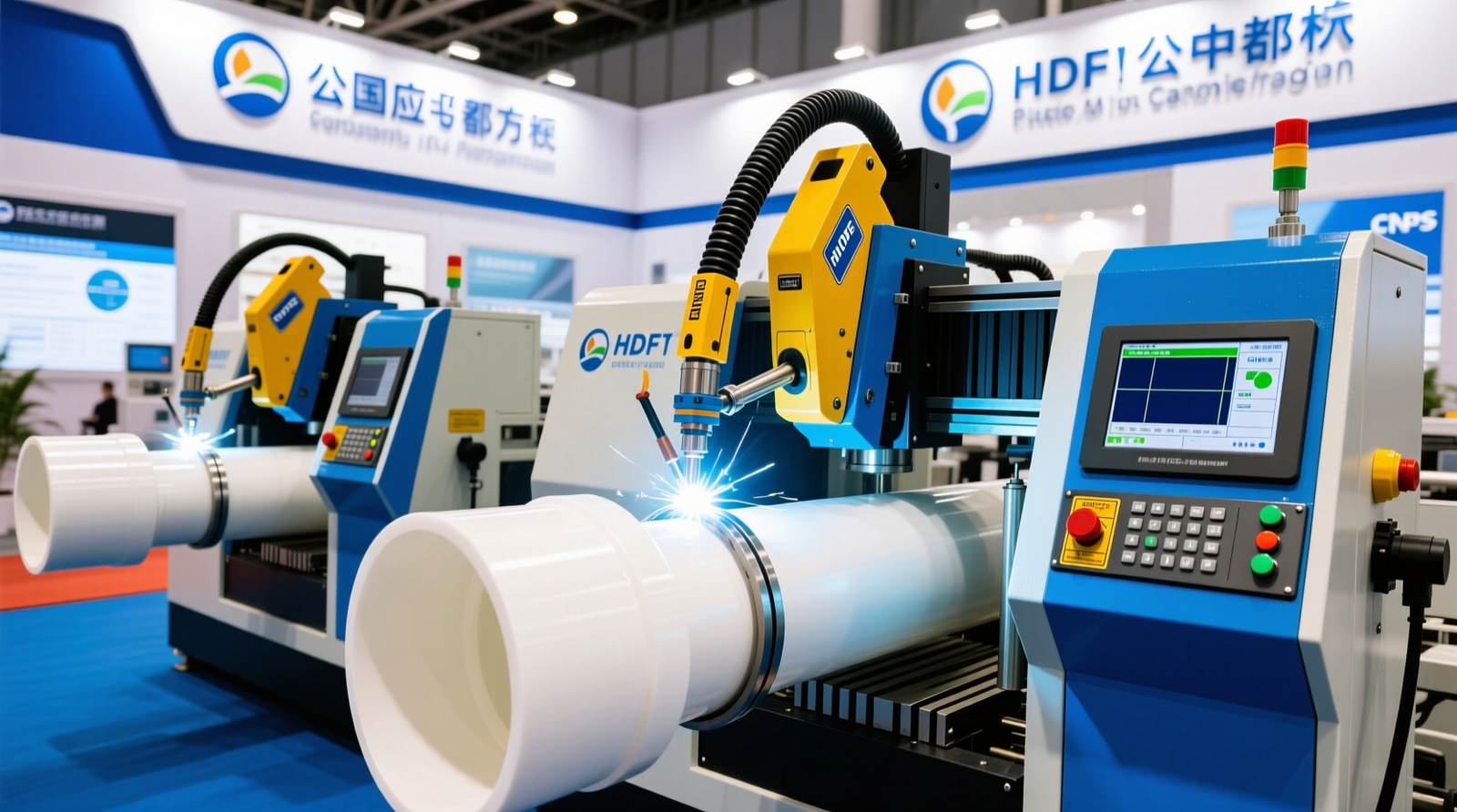
The core products shown were CNC (Computer Numerical Control) hydraulic butt fusion machines for thermoplastic pipe systems such as HDPE (High-Density Polyethylene). The design intent is to help crews follow recognized butt fusion procedures—especially ISO 21307:2017, which defines single-pressure and dual-pressure fusion methods (and associated steps such as heating/soak, changeover, fusion pressure, and cooling under pressure). Reference: ISO 21307:2017 overview (ISO).
For readers who want deeper background, these internal-link-friendly anchor phrases can be used for future supporting pages: HDPE butt fusion welding process and electrofusion vs butt fusion comparison.
- Control: CNC-guided butt fusion cycle with parameter confirmation before the weld starts
- Traceability: data logging (joint parameters + operator/time) with optional GPS (Global Positioning System) geotagging
- Size coverage: typical portfolio spans 20 mm to 1600 mm OD (outside diameter), depending on model
- Materials: HDPE, PP (Polypropylene), PB‑1 (Polybutene‑1), PVDF (Polyvinylidene Fluoride)
- Use cases: municipal trunk mains, industrial process lines, slurry/mining pipelines, dredging and irrigation
TL;DR: The exhibit centered on CNC hydraulic butt fusion machines for HDPE and other thermoplastics, with ISO 21307 method support, OD 20–1600 mm coverage, and optional GPS + data logging for traceable installation.
CNC Automation, Closed-Loop Heating, and Operator Parameter Confirmation
Fusion joint quality depends on controlling a small set of variables very consistently: heater plate temperature, interface pressure, changeover time, and cooling time under pressure. In an automatic butt fusion system, the CNC controller guides the sequence and prompts the operator to confirm key inputs such as pipe OD, SDR (Standard Dimension Ratio), and material grade before the cycle begins.
In typical modern architectures, heater plates use closed-loop temperature control (sensor feedback + controller) to maintain a stable setpoint across ambient conditions. Field-relevant heater plate operating ranges for polyethylene butt fusion are commonly in the 200–230 °C band depending on the applicable procedure; the controller holds the chosen setpoint while the machine enforces the time/pressure steps. (Always follow the project’s qualified welding procedure specification.)
For standard context, butt fusion practices are discussed in documents such as ASTM F2620 (Standard Practice for Heat Fusion Joining of Polyethylene Pipe and Fittings). See: ASTM F2620 (ASTM International).
Material compatibility displayed at the fair included:
- HDPE (High-Density Polyethylene)
- PP (Polypropylene)
- PB‑1 (Polybutene‑1)
- PVDF (Polyvinylidene Fluoride)
TL;DR: CNC automation standardizes the weld sequence; closed-loop heater control stabilizes temperature; operators typically confirm OD/SDR/material inputs so the machine can apply the selected procedure steps consistently.
HDPE Butt Fusion Mechanical Design for Alignment, Clamping, and OD 20–1600 mm Coverage
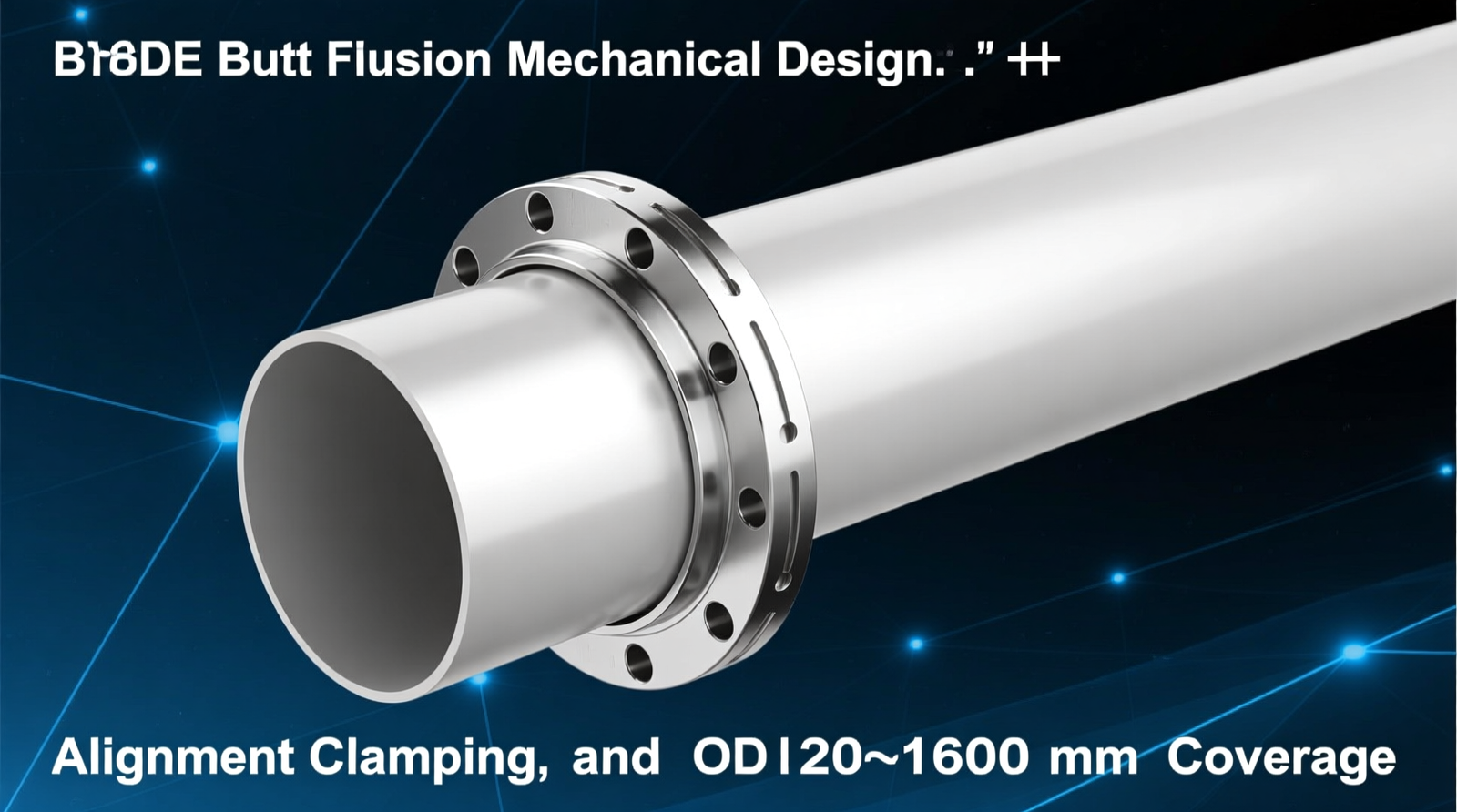
Mechanical alignment and clamp rigidity matter as much as controls, especially on larger OD pipe where wall thickness and mass increase. Typical hydraulic butt fusion machine designs use reinforced frames and multi-jaw clamps to keep pipe ends concentric during facing, heating, and fusion pressure phases.
The showcased range included compact field units for small service lines and large hydraulic units for trunk mains—commonly described as covering 20 mm to 1600 mm OD across different models and configurations. In practice, contractors select by OD range, SDR capability (wall thickness), and the logistics of the jobsite (lifting, trench width, generator capacity, weather exposure).
TL;DR: Rigid frames + stable clamping reduce misalignment risk, and machine families are typically selected by OD range (often up to 1600 mm OD) plus SDR and site logistics.
HDPE Butt Fusion Precision Through Integrated Hydraulic Control, Data Logging, and GPS Geotagging
For regulated or high-consequence lines (gas distribution, potable water, critical industrial services), it’s increasingly common to require objective records of each joint. In this setup, data logging means the machine stores time-stamped weld cycle parameters (e.g., temperature, pressure, time segments) and job metadata (operator ID, pipe OD/SDR, material). With GPS (Global Positioning System) enabled, joints can also be geotagged to simplify as-built documentation and later maintenance.
Typical logged items include:
- Pipe OD and SDR (Standard Dimension Ratio)
- Material selection (e.g., HDPE) and fitting/pipe notes
- Heating plate temperature setpoint and actual curve (where supported)
- Soak/heating times, changeover time, fusion pressure, and cooling time
- Operator ID, date/time, job number, and GPS coordinates (if enabled)
On the control side, hydraulic pressure application can be configured to align with ISO 21307:2017 single-pressure or dual-pressure methods (project dependent). In dual-pressure, for example, the system distinguishes between lower pressure stages during heating/soak and higher pressure during fusion, while ensuring the changeover time remains within the selected procedure window.
Practical performance metrics to look for during procurement:
- Pressure control accuracy: ask for stated control tolerance (commonly expressed as ±% of setpoint) and whether the unit compensates for drag pressure
- Temperature stability: ask for heater plate stability spec (often ± a few °C) and sensor placement method
- Logging capacity: confirm how many joints can be stored internally before export (and export format/medium)
- Ingress protection: if used outdoors, confirm IP (Ingress Protection) ratings for the control unit and connectors
TL;DR: Integrated hydraulics + data logging turn each joint into a documented process record; GPS geotagging supports as-builts; verify pressure/temperature tolerances, log capacity, and environmental/IP ratings during selection.
Practical Field Examples (Mini Case Studies)

Example 1 — Municipal water trunk main (traceability driven): A contractor installing an HDPE trunk main for a municipal water upgrade may need weld records for commissioning and future asset management. A CNC butt fusion machine with logging + optional GPS can help standardize cycle steps across crews and generate a joint-by-joint record that the owner can archive alongside pressure test results and as-built drawings.
Example 2 — Mining slurry line (environment and alignment driven): In mining and tailings transport, pipe strings are often assembled in harsh, dusty conditions with heavy-wall SDR pipe and frequent equipment movement. A rigid-frame hydraulic butt fusion unit with strong clamping/alignment support can reduce the probability of angular misalignment and inconsistent interface pressure—two factors commonly associated with avoidable joint defects when field conditions are difficult.
TL;DR: Municipal projects often prioritize documentation and audit-ready records, while mining/slurry applications tend to prioritize mechanical alignment, stable hydraulics, and reliable performance in tough environments.
Selection Guide: Matching Project Type to Welding Method and Typical OD Range
Choosing the “right” machine is usually about procedure requirements, diameter range, site constraints, and documentation needs—not just automation level.
| Project / scenario | Recommended method / machine type | Typical OD range | Why it fits |
|---|---|---|---|
| Municipal water trunk mains | Automatic CNC hydraulic butt fusion + data logging | 110–1600 mm OD | Repeatability + traceable records for commissioning |
| Gas distribution (regulated) | Automatic butt fusion (where permitted) and/or electrofusion control unit | 63–630 mm OD (common), varies by network | Procedure compliance + traceability; electrofusion often used for tie-ins/repairs |
| Mining / tailings / slurry | Heavy-duty hydraulic butt fusion (CNC optional) + alignment tooling | 160–1200 mm OD | Strong clamping for heavy-wall pipe and site handling demands |
| Dredging / temporary floating lines | Hydraulic butt fusion + rugged field tooling | 160–1000+ mm OD | Fast assembly and consistent joints in wet/variable environments |
| Irrigation networks / agricultural | Hydraulic butt fusion (manual or CNC) and socket fusion for small lines | 20–315 mm OD | Cost-effective installation across mixed diameters |
| Workshop prefabrication / spooling | Automatic CNC butt fusion + fixed benches and facing tools | 90–1200 mm OD | Controlled environment improves throughput and consistency |
TL;DR: Municipal/gas work often benefits most from CNC + logging; mining/dredging needs rigid hydraulics and alignment; irrigation and mixed networks may use a combination of butt, socket, and electrofusion methods.
Best-Practice Tips for Automatic Butt Fusion in the Field

- Control wind and contamination: use wind shields where possible; keep heater plate surfaces clean to avoid inclusions in the melt.
- Confirm alignment before heating: poor concentricity can undermine bead symmetry and pressure distribution, especially on larger OD.
- Manage cold-weather work: follow procedure guidance for pre-heating the pipe ends or extending stabilization time where qualified; protect the fusion area from rapid heat loss.
- Track drag pressure: ensure the machine/operator accounts for carriage drag so the effective interface pressure matches the procedure.
- Document consistently: assign operator IDs, joint numbers, and job codes; export logs daily and back them up with pressure test records and material certificates.
TL;DR: Weather control, alignment discipline, correct pressure (including drag), and consistent documentation are the quickest ways to improve repeatability and reduce avoidable joint defects.
Maintenance and Calibration: What to Check to Keep Weld Quality Stable
Even highly automated machines need routine checks to keep the control loop and hydraulics aligned with the qualified procedure.
- Daily/shift checks: inspect clamps for wear, verify facer condition, check hydraulic hoses/couplings for leaks, and clean heater plate surfaces with approved materials.
- Heater plate care: avoid scraping that damages coatings; if resurfacing is required, follow manufacturer instructions to maintain flatness and heat distribution.
- Pressure verification: calibrate pressure sensors/gauges at a defined interval (commonly quarterly or per project QA plan), and document calibration certificates.
- Temperature verification: periodically validate heater plate temperature with a calibrated reference thermometer/IR method appropriate to the surface type.
- Software/firmware: keep controller firmware current where updates address logging reliability, parameter libraries, or procedure compliance; record version changes in QA documentation.
TL;DR: Clean heater plates, healthy facing tools, leak-free hydraulics, and scheduled calibration (pressure + temperature) are essential to keep automated fusion results consistent over time.
Quality Management and Factory Testing (E‑E‑A‑T Support)

For buyers evaluating welding machines and thermoplastic piping together, it helps to confirm how the supplier controls quality across manufacturing and final inspection. When reviewing CHUANGRONG (or any supplier), request evidence such as:
- Quality management certification: ISO 9001 (Quality Management System) certificates from an accredited certification body
- Environmental/occupational safety programs: if applicable, ISO 14001 (Environmental Management) and ISO 45001 (Occupational Health & Safety)
- Machine testing records: factory functional testing for hydraulic pressure stability, heater temperature performance, and data logging/export functionality
- Traceability controls: serial number tracking for machines, and batch/lot traceability for pipes and fittings
- CE compliance clarity: verify whether the complete machine is CE-compliant (where sold into CE-mark markets) versus only select components being CE-marked
For general background on ISO management system standards, see: ISO 9001 overview (ISO).
TL;DR: Ask for third-party certificates and test records—especially ISO 9001 and documented functional testing—plus clear statements on whether the full machine is CE-compliant or only individual components are CE-marked.
Integrated Materials + Machinery Approach (Pipes, Fittings, and Welding Equipment)
CHUANGRONG positions itself as a supplier that covers both thermoplastic piping components and the welding equipment used to assemble them. The company states it operates large-scale pipe production and fitting equipment capacity, with a portfolio covering multiple SDR classes and application segments (water, gas, slurry/dredging, mining, irrigation, and conduit protection).
From a practical engineering perspective, this integrated model can be useful when it results in better alignment between:
- Material behavior (e.g., HDPE melt characteristics by grade and SDR)
- Qualified or recommended fusion parameters by standard/procedure
- Machine control libraries and documentation outputs used in the field
For product catalogs and manufacturer-provided specifications, visit: https://www.cdchuangrong.com/
TL;DR: When one supplier provides pipes, fittings, and fusion equipment, it can simplify parameter alignment and documentation—provided certifications, specs, and testing records are available and consistent.
FAQ
Q: What is an automatic HDPE butt fusion welding machine, and what does “CNC” mean in this context?
A: An automatic HDPE butt fusion welding machine aligns and clamps pipe ends, faces them, heats them on a temperature-controlled plate, and then fuses them under controlled pressure and time. “CNC” (Computer Numerical Control) typically means the controller guides or executes the sequence and helps enforce procedure steps (times, pressures, and temperature setpoints), reducing variability between operators.
Q: Can these machines follow ISO 21307:2017 single-pressure and dual-pressure butt fusion procedures?
A: Many CNC butt fusion systems are designed to implement procedure steps aligned with ISO 21307:2017, including single-pressure and dual-pressure methods. In procurement, confirm the controller supports the specific method required by your project, how it manages changeover time, and whether it stores the procedure used in the weld log for audit purposes.
Q: What pipe OD range is typical for automatic plastic pipe welding machines used on municipal and industrial projects?
A: Typical machine families span from small sizes (around 20 mm OD) up to large trunk-main sizes (up to 1600 mm OD), depending on model. Selection should be based on your most common OD/SDR range, required documentation level, and site handling constraints.
Q: How do I decide between butt fusion and electrofusion for an HDPE pipeline?
A: Butt fusion is commonly used for straight pipe runs and larger diameters because it can be efficient and creates a joint with similar performance to the parent pipe when done correctly. Electrofusion uses coil-heated fittings and is often chosen for tie-ins, repairs, constrained spaces, or where the design specifies electrofusion fittings. Many contractors use both methods on the same project depending on joint location and constructability.
Q: What are common causes of fusion joint failure, and how can automatic machines help prevent them?
A: Common causes include poor facing/alignment, contaminated heater plate or pipe ends, incorrect interface pressure (including unaccounted drag pressure), excessive changeover time, and insufficient cooling under pressure. Automatic CNC machines help by guiding the sequence, maintaining temperature control, applying repeatable hydraulic pressure, and recording key parameters so out-of-range conditions can be detected and corrected before they become systemic.