Introduction
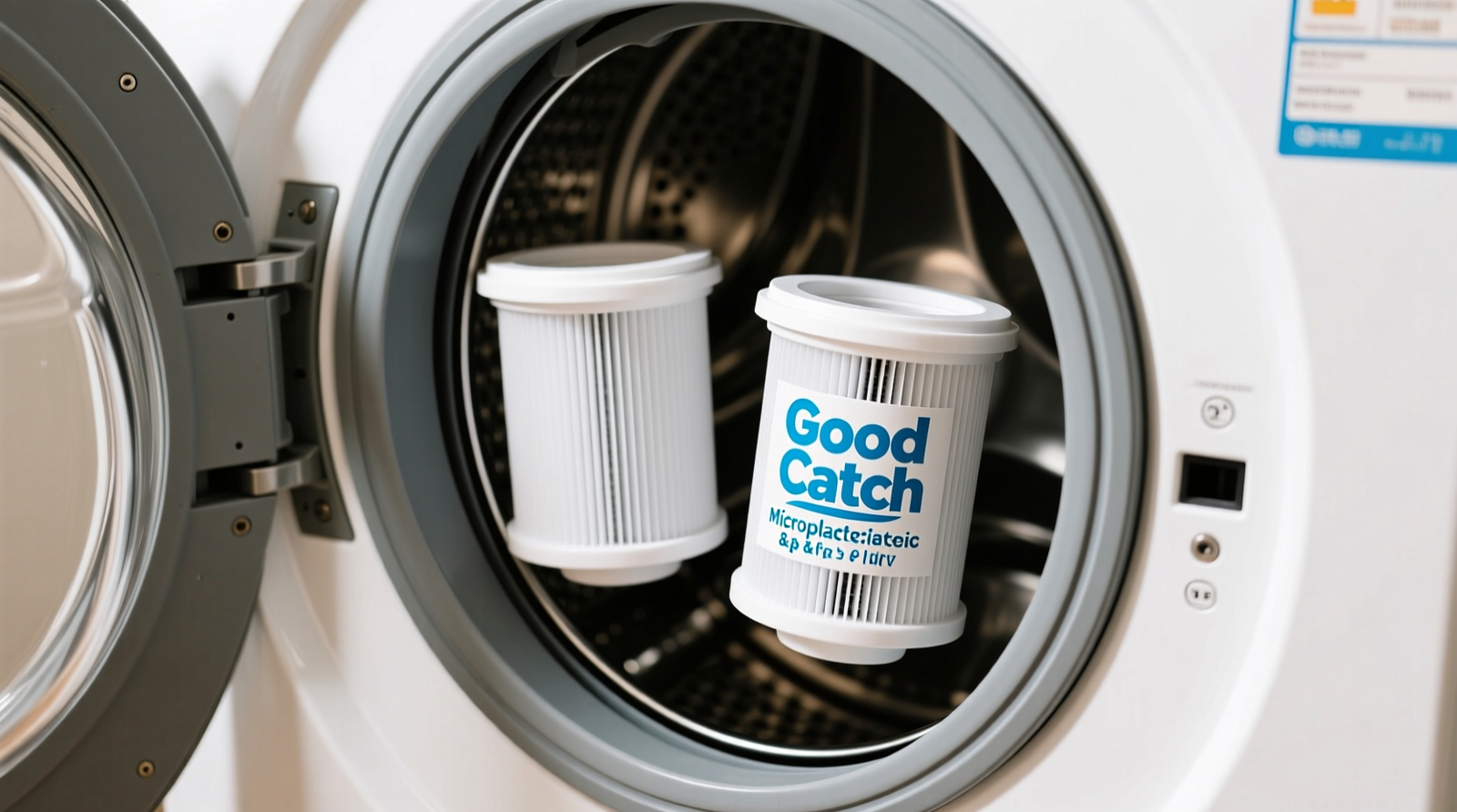
Shanghai Zhanshi Mechanical Equipment Co., Ltd. has introduced a fully automatic positive and negative pressure thermoforming machine designed for industrial packaging automation across food, medical, electronics, and general manufacturing. The system targets higher definition forming, tighter dimensional repeatability, and stable high-speed output on a modern roll-fed thermoforming machine platform.
With more than 20 years of manufacturing experience and global deliveries, the company positions this model family for plants upgrading from vacuum-only thermoformers or older pneumatic/hydraulic legacy equipment to achieve better deep-draw plastic trays, lower scrap, and more predictable process capability (Cp/Cpk) on critical dimensions.
TL;DR: This machine is aimed at high-output tray and blister production where dual-pressure forming and tighter control reduce defects, stabilize wall thickness, and support food/medical compliance needs.
What Is a Positive and Negative Pressure Thermoforming Machine?
A positive and negative pressure thermoforming machine uses both vacuum (negative pressure) and compressed air (positive pressure) to form a heated plastic sheet into a mold. In practice, vacuum pulls the sheet into the tool while positive air pressure pushes the sheet into fine details—helping replicate ribs, corners, texture, and sharp radii that vacuum alone may not fill consistently.
This dual-pressure approach is typically used for:
- Deep-draw forming (higher draw ratios and deeper cavities)
- Thin-gauge packaging where thinning control is critical
- High-cavity tooling where uniformity from cavity to cavity matters
For reference, many vacuum-only systems start to show higher defect risk as draw depth increases and corner radii shrink; dual-pressure forming is often chosen to extend the stable operating window for complex packaging geometries.
TL;DR: Dual-pressure thermoforming combines vacuum + compressed air to form sharper details and more consistent parts—especially on deep, complex trays.
Process Flow: How the Line Runs (Operational Picture)

For engineers and plant managers evaluating an inline thermoforming platform, the process flow typically follows these steps:
- Sheet/web feeding: Roll-fed sheet (or pre-cut sheet, depending on configuration) indexes into the forming station under servo control for repeatable pitch accuracy.
- Heating: Multi-zone infrared (IR) heaters bring the plastic to forming temperature. Zone control is used to manage temperature gradients (e.g., more heat in corners, less on flange areas).
- Forming (vacuum + pressure): Vacuum evacuates air between sheet and mold; positive pressure applies air from the opposite side to press material into detail features.
- Cooling/setting: Tool temperature control (water circuits) and dwell time stabilize dimensions and reduce warpage. This step is critical for thin-wall trays and tight stack tolerances.
- Cutting: Inline steel-rule, matched metal, or punch cutting separates parts. For some SKUs, in-mold cutting can reduce handling and improve edge repeatability.
- Stacking/counting: Automatic stacking systems count parts and deliver consistent stacks for downstream packing or sealing.
Depending on product design and material, a typical high-speed packaging thermoformer will optimize the cycle by balancing heating time, forming dwell, cooling, and cutting speed.
TL;DR: The line runs as feed → heat → dual-pressure form → cool → cut → stack, with cycle-time optimization across stations.
Why Dual Pressure Thermoforming Matters (with Practical Numbers)
Dual-pressure thermoforming is often selected to improve part definition and reduce defects that drive scrap and rework. In many packaging applications, typical performance differences vs. vacuum-only forming show up in:
- Forming depth capability: For tray-like parts, vacuum-only processes commonly become less stable as depths approach roughly 60–100 mm (depending on polymer, gauge, tool venting, and geometry). Dual-pressure forming often enables deeper draws with fewer webbing/bridging issues, particularly when combined with plug-assist tooling.
- Wall-thickness distribution: With better material distribution control, plants often target more uniform thickness. A practical expectation for many tray geometries is to reduce extreme thinning in corners and deep walls; for thin-gauge packaging, even a ~5–15% improvement in minimum thickness can translate into better drop performance and fewer cracked corners.
- Scrap and reject rate: Many plants upgrading from older vacuum-only machines report measurable scrap reductions once heating and forming are stabilized. As an illustrative range (application-dependent), scrap reductions of 10–30% are commonly targeted by combining dual-pressure forming, better zone heating, and automated setpoint control.
- Detail replication: Logos, micro-texture, ribs, and snap features are typically more consistent when positive pressure helps push material into fine tool features.
Note: Actual depth limits, thickness variation, and scrap improvements depend heavily on material type (e.g., PP vs. PET), sheet thickness, plug design, venting, tool temperature, and line speed. Where possible, request a forming trial with your CAD and target material.
TL;DR: Dual pressure usually improves deep-draw stability, thickness consistency, and defect rates—often translating into double-digit scrap reduction on demanding trays.
Closed-Loop Control in Practice (What’s Monitored and How It Adjusts)

Closed-loop control means the machine continuously measures process variables and automatically corrects outputs in real time to hold stable forming conditions. On a modern thermoformer, closed-loop control commonly applies to:
- Temperature: Multi-zone heaters use feedback from temperature sensors (and sometimes additional sheet surface measurement tools) to maintain zone setpoints. If a zone drifts (e.g., due to ambient airflow changes or heater aging), the controller adjusts heater power to recover.
- Vacuum level: Sensors monitor vacuum pressure in the forming circuit. The system can adjust valve timing, evacuation sequencing, or trigger alarms when vacuum cannot reach setpoint (e.g., clogged filters, leaks, or tool vent blockage).
- Positive air pressure: Pressure transducers monitor forming air pressure; the controller modulates regulators/valves to hit a target pressure-time curve rather than a single static pressure.
- Cycle timing: Servo indexing and station dwell times are controlled to keep the web pitch repeatable and reduce cut-position drift.
- Sheet sag control: “Sag” refers to how much the heated sheet droops before forming. Sag can be influenced by heater intensity and dwell time; controlling it helps prevent webbing and uneven distribution. Some systems use indirect sag estimation via temperature profiles and timing; others can be configured with measurement devices depending on the build.
In practical terms, operators run “recipes” (saved parameter sets) by material and product. The controller then holds heater zones, pressure curves, and timing within defined tolerances—reducing dependence on operator “feel” and helping stabilize OEE (Overall Equipment Effectiveness) across shifts.
TL;DR: The machine monitors temperature, vacuum, pressure, timing (and sag behavior) and auto-adjusts outputs to keep forming stable and repeatable.
How This Machine Differentiates from Other Dual-Pressure Thermoformers
Many vendors offer dual-pressure forming, but real differentiation usually comes from the control strategy, tooling concept, and changeover/automation design. Shanghai Zhanshi highlights several differentiators buyers should verify during technical evaluation:
- Recipe-based control with multi-zone heating + pressure curves: Instead of “set-and-guess” pressure, the system is designed to run programmable vacuum/pressure timing windows to better match material behavior across complex geometries.
- Modular tooling and fast changeover: Quick mold/cutting tool swaps reduce downtime for multi-SKU operations, improving line utilization for contract packagers.
- Patented/utility model design elements: The company states it holds multiple invention and utility model patents related to thermoforming. For procurement teams, it is recommended to request patent numbers and review scope to confirm what is proprietary in the forming station, tooling interface, or control approach.
- Industrial build for continuous production: In-house CNC machining capability supports tighter mechanical tolerances in critical alignment areas (forming/cutting registration), which influences cut accuracy and stack consistency at higher cycles per minute.
If you are comparing multiple high-speed packaging thermoformer options, request a side-by-side list of: maximum sustained cycles/min on your target part, pressure curve capability, heater zone count, tool-change time, and expected scrap at your target depth/gauge.
TL;DR: Differentiation is less about “dual pressure exists” and more about pressure-curve control, tooling modularity, and proven sustained output on your specific part.
Multi-Industry Applications (with First-Use Term Definitions)
The platform is designed for diverse packaging and dunnage applications where precision forming and repeatable stacking matter.
Food Packaging
- Meat and poultry trays
- Dairy cups and lids
- Bakery packs and dessert trays
- Ready-meal containers
For food contact packaging, many producers align with good manufacturing practice requirements and food contact regulations depending on market. For general guidance on GMP (Good Manufacturing Practice) expectations, see the World Health Organization overview: https://www.who.int/teams/health-product-policy-and-standards/standards-and-specifications/gmp.
Medical and Pharmaceutical Packaging
- Blister packs
- Sterile device trays
- Surgical instrument trays
- Diagnostic kit inserts
Many medical device manufacturers operate under ISO 13485 (Medical devices — Quality management systems). While the thermoformer itself is not “ISO 13485 certified” as a product, suppliers often support customer validation packages and documentation aligned with regulated environments. For ISO 13485 background, see ISO’s official page: https://www.iso.org/standard/59752.html.
Consumer Electronics and Industrial Components
- ESD (Electrostatic Discharge) component trays
- Clamshell packaging
- Custom insert trays for assembly and logistics
- Automotive part handling trays
Precision-formed nests protect parts during transport and support automated pick-and-place. ESD trays often require material control and surface resistivity targets; dual-pressure forming helps maintain feature definition on thin walls.
Cosmetics and Premium Consumer Goods
- Display trays and inserts
- Transparent blisters
- Gift set packaging
Dual-pressure forming can improve optical appearance and edge definition on clear PET/rPET parts, especially where fine branding detail is molded into the cavity.
TL;DR: The machine targets food, medical, electronics (including ESD trays), and premium goods where repeatable detail and stack quality matter.
Technical Specifications at a Glance
Exact specifications vary by model size and configuration (product family concept). For quick pre-screening, typical industrial roll-fed thermoforming machine ranges often fall within:
- Web width / sheet width: commonly ~500–900+ mm (model-dependent)
- Sheet thickness range: often ~0.2–2.0 mm for packaging; thicker gauges may be possible for industrial dunnage
- Max forming depth: frequently up to ~120–200 mm depending on tooling and material (deep-draw parts may require plug-assist and optimized heating)
- Speed: up to ~45 cycles/min (as stated), subject to part depth, cooling demand, and cutting method
- Utilities (typical categories): electrical power for heaters/servos, compressed air supply for positive pressure and actuators, vacuum system capacity, and cooling water/chiller for mold temperature control
For authoritative background on thermoforming process fundamentals and variables (heating, forming methods, materials), the SPE (Society of Plastics Engineers) thermoforming division is a useful reference: https://4spe.org/.
TL;DR: Expect a configurable model range; key screening parameters are web width, sheet thickness, forming depth, sustained cycles/min, and required utilities.
Energy, Sustainability, and Materials (Capabilities vs. Proven Outcomes)
Capabilities: The machine is designed to run common packaging polymers such as PET, rPET (recycled PET), PP (polypropylene), PS (polystyrene), PLA (polylactic acid), and multilayer barrier structures. Multi-zone heating and programmable forming curves help manage narrower forming windows typical of recycled or biopolymer materials.
Proven outcomes (examples from customer-type results): Actual sustainability impact is best measured at plant level. In typical upgrade projects, plants often report savings from:
- Scrap reduction: e.g., reducing trim/reject waste by improving forming stability (often targeted at 10–30% improvement depending on baseline)
- Energy optimization: multi-zone IR heater control and standby logic can reduce wasted heating during pauses; many modern IR heater retrofits/controls in packaging lines target double-digit percentage savings compared with older constant-output heater banks (actual results depend on runtime profile and setpoints)
- Material downgauging: if thickness distribution improves, some trays can be downgauged while meeting performance requirements—this must be validated via drop/compression tests and sealing trials
For context on rPET use and recycling infrastructure considerations, see the PlasticsEurope overview (industry reference): https://plasticseurope.org/knowledge-hub/.
TL;DR: The machine can run rPET/PLA and uses control features to reduce waste and energy, but verify sustainability ROI with trials and baseline data from your current line.
Anonymized Mini Case Examples (What Upgrades Can Look Like)
Case 1 (food trays, thin-gauge PET/rPET blend): A mid-to-large food packaging plant upgraded from a vacuum-only forming line experiencing webbing and corner thinning on a deep-draw tray. After moving to dual-pressure forming with optimized heating recipes, the plant reported:
- Scrap reduction: ~18% lower reject/scrap rate (measured over the first stable production month)
- Output increase: +10–15% net good parts/hour due to fewer stoppages and reduced rework
Case 2 (medical device trays, PP): A medical packaging converter focused on cavity repeatability and stack quality for automated downstream loading. With recipe control, tool temperature stabilization, and improved cut registration, the plant achieved:
- Changeover time reduction: from ~60 minutes to ~20–30 minutes (tooling + recipe recall), improving availability for multi-SKU production
- Dimensional stability improvement: fewer out-of-tolerance cavities during startup, reducing validation-related rechecks
Note: These examples are anonymized and results depend on baseline condition, tooling design, material, and operator practices. Use them as directional benchmarks, not guarantees.
TL;DR: Real-world upgrades often pay back through scrap reduction, fewer stops, and faster changeovers—especially on deep-draw trays and multi-SKU lines.
Compliance, Validation, and Clean Production Options (E-E-A-T)

For regulated markets, buyers often need more than throughput—they need documentation and support for audits and qualification.
- GMP-oriented configurations: Options commonly requested include improved cleanability, covered cable routing, stainless or corrosion-resistant surfaces in product-adjacent areas, and controlled access panels to support hygienic production expectations.
- Medical device QMS alignment: Customers manufacturing under ISO 13485 typically require traceability of critical components, change control records, and supplier documentation packages.
- Validation support: Pharmaceutical and medical tray programs may require IQ/OQ/PQ (Installation Qualification/Operational Qualification/Performance Qualification) documentation support. Confirm scope during the project stage.
- Cleanroom suitability: If you operate ISO-classified cleanrooms, verify particle control strategy, lubrication approach, and airflow compatibility for the machine layout.
For buyers needing a reference framework on quality management principles, ISO 9001 is a common baseline. ISO’s overview: https://www.iso.org/iso-9001-quality-management.html.
TL;DR: For food/medical programs, confirm GMP-friendly design options, validation documentation (IQ/OQ/PQ), and suitability for your clean production environment.
Technology Comparison: When Thermoforming Is (and Isn’t) the Best Choice
When selecting equipment, compare positive/negative pressure thermoforming to adjacent technologies:
- Positive/negative pressure thermoforming: Strong fit for deep-draw plastic trays, blisters, inserts, and high-cavity packaging where tooling cost is moderate and cycle time is fast. Excellent for roll-fed thermoforming machine configurations with stacking and downstream automation.
- Vacuum-only thermoforming: Lower equipment complexity and often lower cost; suitable for simpler geometries and shallower draws where detail and minimum thickness are less demanding.
- Form-fill-seal (FFS): Roll-fed FFS lines integrate forming and sealing/filling for certain food applications. Best when the process requires inline filling and sealing; may be less flexible for thick, rigid trays or complex insert geometry depending on format.
- Inline thermoforming with in-mold cutting: Can improve edge accuracy and reduce handling, but tooling complexity is higher and setup must be tightly managed.
- Injection molding: Often chosen for very high precision, thick-wall parts, or complex functional features. Tooling and part cost can be higher; cycle times may be slower for large thin-wall trays versus thermoforming, and material use can be higher for some packaging formats.
TL;DR: Choose dual-pressure thermoforming for fast, detailed, deep-draw trays; consider FFS for integrated fill/seal lines and injection molding for thick, highly functional parts.
Who Is This Machine For?

This platform is generally best suited for:
- Medium-to-large food processors producing trays/containers at sustained high volume
- Contract packagers and converters running many SKUs needing fast changeovers and recipe control
- Medical device OEMs and medical packaging specialists needing repeatability, documentation support, and clean production compatibility
- Electronics and industrial manufacturers producing ESD (Electrostatic Discharge) trays and protective inserts for automated handling
As a practical guideline, dual-pressure investment is often justified when annual volume is high enough that scrap and downtime dominate total cost (frequently millions of parts/year), or when the part geometry is deep/complex enough that vacuum-only systems struggle with stability.
TL;DR: Ideal for higher-volume operations or challenging geometries where scrap, detail, and repeatability drive ROI.
Selection Criteria: When to Choose Dual-Pressure vs. Vacuum-Only
Use these engineering-oriented criteria to decide:
- Geometry: deep draws, sharp corners, ribs, embossed logos, and high aspect ratio features favor dual-pressure.
- Material: thin PET/rPET and some PP structures benefit from tighter heat/pressure control to prevent thinning and warpage.
- Quality targets: tight stack tolerance, automation-ready nesting, and low cosmetic defects favor dual-pressure with closed-loop control.
- Output & OEE goals: if downtime and scrap materially affect cost per part, a higher-control system tends to pay back faster.
- Automation needs: if you need counting, stacking, vision inspection, or robot pick-and-place integration, select a platform designed for those add-ons.
If your products are shallow, low-detail, and tolerance-insensitive, a simpler vacuum forming machine may provide better cost efficiency.
TL;DR: Dual-pressure is worth it for deep/complex parts, tighter tolerances, tougher materials, and high-volume automation-driven ROI.
Maintenance, Wear Parts, and Service Life (Lifecycle Cost)

For lifecycle evaluation, plant teams typically consider planned maintenance intervals and the availability of wear parts. Common maintenance items on an automatic thermoformer include:
- Daily/shift checks: filter cleaning/inspection, tool vent inspection, heater zone status, vacuum line leaks, and lubrication points per manual.
- Weekly/monthly tasks: chain/rail alignment checks, sensor verification, pneumatic regulator checks, and cooling circuit inspection for mold temperature stability.
- Common wear parts: seals and gaskets in vacuum/pressure circuits, valve components, cutting dies/steel rule knives, belts/chains, bearings, and vacuum filters.
- Expected service life: with proper preventive maintenance and timely wear-part replacement, industrial thermoforming lines are commonly operated for 10–15+ years in many plants; controls and heaters may see upgrades over time as part of modernization.
Ask suppliers for a recommended spare parts list (one-year and two-year kits), preventive maintenance checklists, and response-time commitments for critical failures.
TL;DR: Budget for routine PM, seals/valves/cutting tools as wear parts, and plan on a decade-plus service life with proper maintenance.
Training, Documentation, and Global Support
Shanghai Zhanshi provides commissioning and operator training options (on-site and/or remote), along with multilingual HMI (Human–Machine Interface) support. For international buyers, request:
- Training plan: typical operator training is often completed in 3–7 days depending on line complexity and automation; maintenance training may require additional time.
- Documentation pack: manuals, electrical/pneumatic diagrams, preventive maintenance checklists, recommended spares list, and parameter guides by material/product.
- Remote diagnostics: support for troubleshooting alarms, sensor readings, and recipe parameters to reduce downtime.
TL;DR: Confirm training duration, language options, and the exact documentation pack—these directly affect ramp-up speed and long-term uptime.
Product Family and Configurations (Not a One-Size Machine)
Most plants require different forming areas, web widths, and automation levels. This system is typically configurable across a product family, for example:
- Different forming area sizes to match cavity count and annual volume targets
- Cutting options (inline cutting vs. alternative configurations depending on SKU)
- Automation add-ons such as automatic stacking, counting, conveyors, and optional inspection integration
For best results, specify your part drawing, target output, material type (including recyclate percentage if applicable), and downstream requirements (e.g., sealing machine interface).
TL;DR: Treat it as a configurable family—match the model size and automation to your part, volume, and downstream line.
Next Steps: How to Get a Customized Solution
To shorten evaluation time and improve forming trial accuracy, prepare the following before requesting a quotation or sample run:
- Part CAD/2D drawing with key tolerances and stack requirements
- Target material specification (polymer, thickness, sheet supplier, % recycled content, barrier layers if any)
- Annual volume and takt time targets (parts/hour or trays/min)
- Downstream/upstream integration needs (extrusion line, printing, sealing, vision inspection, robot pick-and-place, case packing)
- Quality requirements (food contact, cleanroom, validation documentation, traceability expectations)
If your live website has relevant pages, it is also helpful to connect this topic to your broader solution set (e.g., extrusion lines, vacuum forming machines, and high-frequency welding pages) to guide buyers through adjacent equipment selections—avoid adding links here unless those pages are confirmed live.
TL;DR: Send CAD + material + volume + integration requirements to get an accurate configuration, trial plan, and ROI estimate.
Contact Information
Company Name: Shanghai Zhanshi Mechanical Equipment Co., Ltd.
Contact Person: Lewis
Phone: +86 13916846091
Address: No. 26 Kangyuan Road, Zhujiajiao Industrial Zone, Qingpu District, Shanghai, China
Email: Daisy@smktek.com
Website: https://www.vacuumac.com/
Product Page (Positive and Negative Pressure Thermoforming Machine): View details here
TL;DR: Use the product page and direct contact to confirm model size, tooling concept, utilities, automation options, and trial availability.
Conclusion
Shanghai Zhanshi’s positive and negative pressure thermoforming machine targets measurable production gains for deep-draw plastic trays and high-cavity packaging: better detail definition, improved thickness distribution, and a wider stable process window than vacuum-only approaches. With recipe-driven control, multi-zone heating, and configurable automation, it is positioned as an inline thermoforming solution for higher-volume plants that must control scrap, downtime, and consistency across shifts.
For regulated markets, buyers should also evaluate GMP-friendly design options, validation documentation support, and clean production compatibility—then confirm performance through a forming trial using the actual material and part geometry.
TL;DR: A strong fit when geometry complexity, volume, and quality requirements justify dual-pressure control and automation—validate with trials and utility/maintenance planning.
FAQ
Q: What is the difference between positive/negative pressure thermoforming and vacuum-only thermoforming?
A: Vacuum-only thermoforming relies on negative pressure to pull the heated sheet into the mold. Positive/negative pressure thermoforming adds controlled compressed air to push the sheet into fine tool details. This typically improves detail replication, reduces corner thinning, and stabilizes forming on deep-draw plastic trays and complex geometries.
Q: What product types justify a dual-pressure high-speed packaging thermoformer instead of a simpler vacuum forming machine?
A: Dual-pressure is usually justified for deeper trays (often >60–100 mm depending on design), sharp corner/rib detail, tight stack tolerances, and high annual volumes where scrap and downtime heavily affect cost per part. If your parts are shallow and low-detail, vacuum-only equipment may be more cost-effective.
Q: What factory utilities are typically required for a roll-fed thermoforming machine like this?
A: Most installations require stable electrical power for heaters and servo drives, compressed air for positive forming pressure and pneumatics, adequate vacuum capacity (pump/system sized to cycle demands), and cooling water or a chiller for mold temperature control. Exact consumption depends on forming area, cycle rate, tooling, and material, so utilities should be confirmed during the quotation stage.
Q: What are typical lead times, customization options, and add-ons (vision, robots, stacking)?
A: Lead times vary by model size, tooling complexity, and automation scope. Customization commonly includes forming area/web width selection, tooling design support, cutting method choice, and integration with upstream extrusion or downstream packing/sealing. Common add-ons include automatic stacking/counting, conveyors, vision inspection for defect detection, and robot pick-and-place for downstream automation—confirm compatibility during line layout planning.
Q: How long does training take, and what documentation is provided for international teams?
A: Many projects complete operator training in roughly 3–7 days depending on complexity, with additional maintenance training as needed. Buyers should request manuals, electrical/pneumatic schematics, preventive maintenance checklists, recommended spare parts lists, and parameter/recipe guides. Multilingual HMI support and remote diagnostics can speed ramp-up for international teams.