
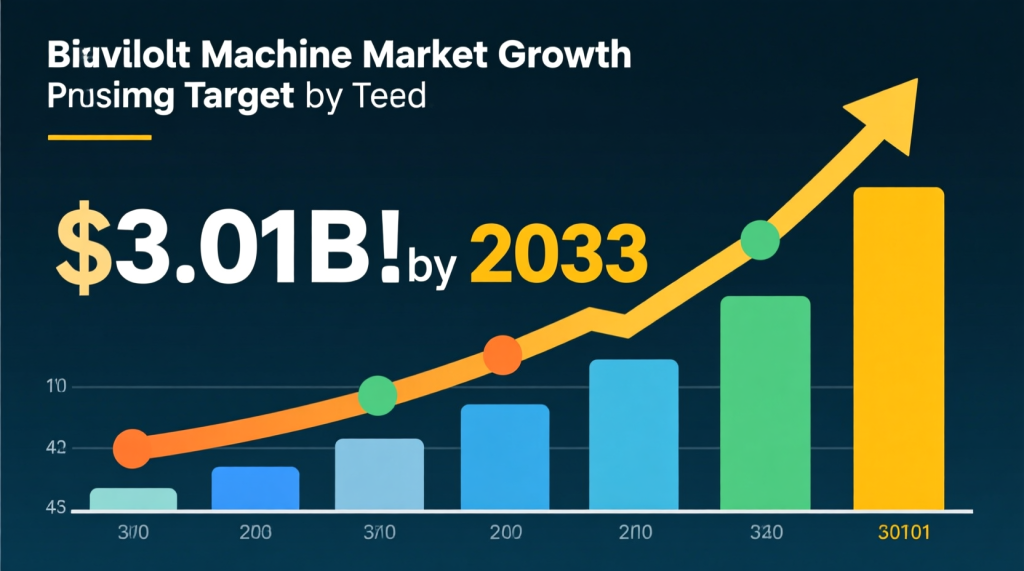
Lead summary: The retort machine market covers retort autoclaves (pressure vessels used for thermal processing) and related thermal processing equipment used as industrial sterilization systems for foods, beverages, and select pharma/medical products. This article explains market sizing through 2033, plus practical guidance on how to choose a retort machine, batch vs continuous retort cost comparison, validation requirements, and energy-saving technologies.
Introduction

Retort machines (also called retorts or retort autoclaves) use controlled heat and pressure to make packaged products ambient-stable, meaning they can be stored safely at room temperature for months or years without refrigeration when processed and packaged correctly.
In this market outlook, the global retort machine market is projected to reach USD 3,011.0 million by 2033, expanding at a 5.3% CAGR from 2026 to 2033. The base-year reference used in the original segmentation is 2025 (Grand View Research). To keep the timeline consistent: the 2025 market size is the baseline for “share” statements, while the 2026–2033 CAGR is applied to project the 2033 value.
Retorts support two different outcomes that are often mixed up:
- Sterilization: a high-lethality process intended to inactivate spores (e.g., Clostridium botulinum) for shelf-stable foods.
- Pasteurization: a lower-lethality process aimed at reducing vegetative pathogens and spoilage organisms, usually paired with refrigeration or other hurdles.
TL;DR: Retort autoclaves are industrial sterilization systems that enable ambient-stable packaged foods; the article uses 2025 as the share baseline and forecasts 2026–2033 to a 2033 value of USD 3.01B.
Retort Machine Market Growth & Trends
Demand is rising because manufacturers want longer shelf life, simpler distribution, and fewer cold-chain constraints. Retort adoption is particularly strong where logistics are costly or unreliable (long-haul export, e-commerce fulfillment, remote regions, and institutional feeding).
However, buying a retort is rarely just a “capacity add.” Most projects are driven by a combination of line efficiency (higher OEE—Overall Equipment Effectiveness), packaging changes (cans to pouches), and compliance upgrades (digital records, tighter controls).
Shift Toward Convenience and Shelf-Stable Foods (and Emerging Niches)
Conventional growth continues in soups, sauces, ready meals, baby food, pet food, and functional beverages. Newer, higher-margin niches are also influencing equipment specs:
- Plant-based shelf-stable meals (high particulates, sensitive textures): often require gentler agitation or optimized come-up/cool profiles to avoid mushy texture.
- Military rations (e.g., retort pouches): prioritize low weight, rugged packaging, and validated long shelf life under temperature abuse.
- Humanitarian and disaster-relief foods: value ambient stability, rapid scale-up, and multi-format capability (pouches, trays, cans).
- Premium wet pet food in pouches and trays: needs tight control to reduce pack deformation and sauce separation.
Practical barrier: many brands underestimate the work required to convert a chilled product to ambient-stable. Reformulation (pH, water activity), packaging trials, and heat penetration studies can add 8–20+ weeks before the first commercial run, depending on product complexity.
TL;DR: Beyond mainstream canned/RTE foods, plant-based meals, military rations, and humanitarian supplies are pushing demand for better texture control, faster changeovers, and robust validation.
Regulatory Requirements for Retort Sterilization (Food Safety vs. ESG)
Food-safety-driven requirements are about proving microbial lethality and maintaining records:
- HACCP (Hazard Analysis and Critical Control Points): retort time/temperature/pressure are typical CCPs (Critical Control Points), requiring monitoring and corrective actions. Overview: FDA HACCP resources.
- FSMA (Food Safety Modernization Act): emphasizes preventive controls and verification/records. Reference: FDA FSMA.
- ISO 22000 (food safety management systems): requires documented controls, validation, verification, and traceability. Standard body info: ISO 22000 overview.
At the plant level, compliance usually connects to retort operations through:
- Process authority review (a qualified expert establishes safe scheduled processes).
- Heat distribution studies (temperature uniformity in the retort).
- Heat penetration studies (cold-spot determination inside the product/container).
- F0 value targets (equivalent lethality at 121.1°C): the required F0 depends on product and risk; it’s documented as part of the scheduled process.
- Electronic batch records and audit-ready data logging (especially when exporting or supplying large retailers).
ESG/energy-driven requirements are different: they focus on energy, water, and emissions reporting and reduction. Typical project triggers include corporate carbon accounting, local energy-cost spikes, or incentive programs for waste-heat recovery and insulation upgrades.
TL;DR: Food regulations demand validated lethality and traceable records (F0, distribution/penetration studies); ESG drivers push energy and water reductions via heat recovery and efficiency upgrades.
Technological Advancements and Energy Efficiency
Energy Optimization Features (retort machine energy-saving technologies)
Modern retorts increasingly compete on operating cost, not just throughput. Common energy-saving approaches include:
- Heat recovery (recovering heat from hot effluent/cooling water to preheat incoming water): plants often report 10–30% net energy reduction depending on baseline utilities and duty cycle.
- Improved insulation and reduced shell losses: particularly helpful for high-cycle batch rooms; typical savings are often 5–15% when upgrading older vessels and steam piping insulation.
- Optimized come-up and venting control: reduces steam waste and stabilizes lethality delivery.
- Variable frequency drives (VFDs) for pumps/fans: reduce electricity use in water spray/cascade systems.
- Thermal energy storage: storing heat (e.g., hot water tanks) to shift demand; useful where peak tariffs apply.
Clarification: district heating in industrial settings refers to using centralized hot water/steam networks (sometimes municipal, sometimes campus-based) as a heat source or sink; it can lower onsite boiler load where available.
Digital Controls, Traceability, and Uptime
“IoT-enabled” retorts typically mean networked PLC/SCADA controls (PLC = Programmable Logic Controller; SCADA = Supervisory Control and Data Acquisition) with audit-ready batch records. Predictive maintenance is most useful on valves, pumps, heat exchangers, door seals, and rotating mechanisms—components that drive unplanned downtime and rework.
TL;DR: The biggest technology gains are practical—heat recovery and better insulation for 10–30% energy cuts, plus PLC/SCADA records and predictive maintenance for compliance and uptime.
Industry Consolidation and Strategic Alliances
OEM consolidation is driven by two buyer expectations: (1) turnkey line integration (retort + handling + controls + inspection), and (2) lifecycle support (spares, calibration, validation assistance). The December 2025 acquisition of DFT Technology GmbH by ProMach is an example of this “platform + specialist capability” model.
In addition to North American consolidators, buyers also source retorts from European and Asian OEMs with deep specialization in continuous/hydrostatic systems, rotary agitation, and high-care automation. When benchmarking suppliers, procurement teams typically compare: validation support depth, lead times, installed base, spare parts availability, and controls/recipe management maturity.
TL;DR: Consolidation is less about branding and more about turnkey integration and lifecycle support; global sourcing is common, with supplier differentiation in automation and continuous/rotary know-how.
Retort Machine Market Segmentation
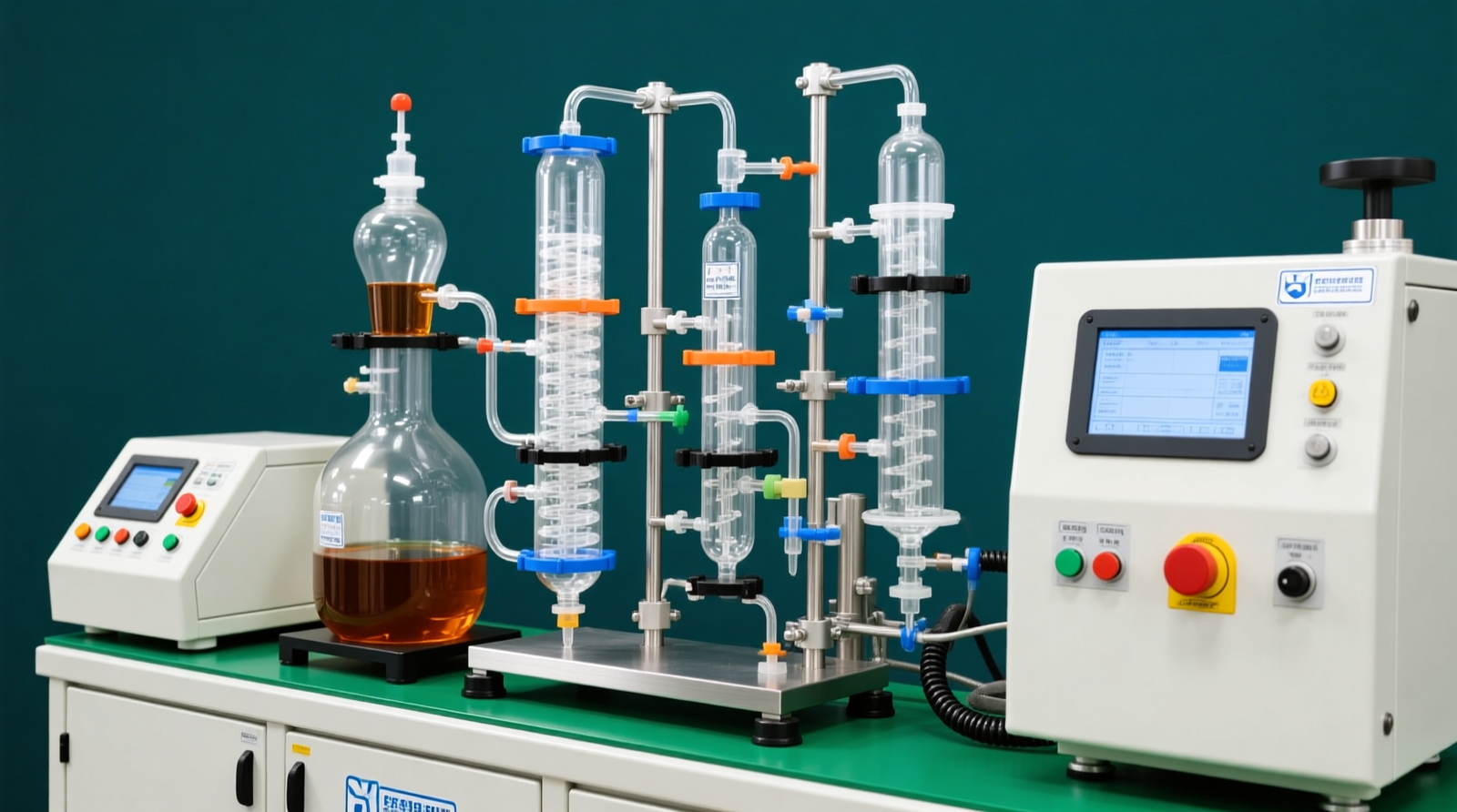
By Type (Batch vs. Continuous)
Grand View Research, Inc. segments the market by type into batch and continuous retort systems. Batch retorts held the largest share in 2025 (share leadership statement per the original source reference).
Batch Retort (flexibility-first)
Batch retorts process a fixed “basket” or “rack” load per cycle. They are favored where SKUs change often or packaging formats vary (cans, glass, trays, pouches).
Indicative capacity ranges (highly dependent on container size, recipe, and cycle time):
- Small to mid batch retorts: often sized for 1–6 baskets per vessel, with cycle times frequently in the 45–120 minute range including heating/holding/cooling.
- Throughput reality check: two plants with identical vessels can differ by 2× throughput based on automation (automatic loading/unloading), cooling limits, and changeover discipline.
Typical adoption barriers for batch:
- Labor and handling intensity without automation.
- More variability risk if loading patterns are inconsistent (affects cold-spot behavior).
- Utility peaks (steam and cooling water) concentrated during come-up and cooldown.
Continuous Retort (volume-first)
Continuous systems move product through heating/holding/cooling zones with steady-state operation. They are typically justified when demand is predictable and high, and when packaging is standardized.
Clarifications of common continuous designs:
- Hydrostatic retort: a continuous system using tall water columns to create pressure, allowing high-temperature processing without pressurizing the entire chamber the same way as a batch vessel. It’s commonly used for high-volume canning.
- Rotary retort: rotates containers (batch or continuous variants exist) to agitate contents. This improves heat transfer, often shortening process time for viscous or particulate products (e.g., sauces with chunks).
Batch vs continuous retort cost comparison (directional): continuous lines usually have higher capital cost and larger footprints, but can reduce unit labor and improve consistency at scale. Buyers most often justify continuous systems when they can run near steady-state for long windows (multiple shifts, limited SKU changes).
TL;DR: Batch retorts win on SKU flexibility; continuous (hydrostatic/rotary) wins on high-volume consistency and labor efficiency, but demands standardized packaging and steadier production schedules.
By End Use
Food and Beverage (largest installed base)
Food and beverage dominated in 2025 because retorts are the backbone of shelf-stable foods. Packaging format heavily influences retort selection and recipes:
- Cans: robust, high stacking strength; good for aggressive cycles; common in hydrostatic continuous systems.
- Glass jars: require gentler pressure control to reduce breakage; often benefit from water spray/cascade for controlled heating/cooling.
- Retort pouches/trays: fast heat penetration (thin profile) but sensitive to overpressure control and racking to prevent seal stress and deformation.
Mini case example (anonymized): A regional soup-and-sauce co-packer replaced legacy steam batch retorts with water-spray retorts featuring heat recovery and automated recipe control. After commissioning and operator training, they reported approximately 15–25% lower steam use and a ~8–12% cycle-time reduction on their top two SKUs due to tighter come-up control and fewer hold-time extensions from temperature overshoot/undershoot. Results vary by product and utilities, but this is consistent with typical “old-to-modern” upgrades.
Pharmaceuticals (precision and documentation)
In pharma and medical applications, retort-like moist heat sterilizers may be used for specific liquids, medical nutrition, or sealed items compatible with moist heat. The purchasing criteria are different: calibration discipline, data integrity, and validation documentation often outweigh pure throughput.
In regulated environments, buyers scrutinize audit trails and electronic records practices aligned with quality systems (e.g., controlled recipes, user access levels, and deviation handling).
Other Applications (tightened to avoid overlap)
This segment typically includes pet food (especially wet formats), clinical and sports nutrition, and niche industrial uses that require pasteurization/sterilization in-package. Pet food overlaps with food, but it is often tracked separately due to different product viscosities, packaging, and brand economics.
TL;DR: Food dominates due to format diversity (cans/glass/pouches); pharma prioritizes documentation and validation; “other” is led by wet pet food and specialized nutrition formats.
By Region
Asia Pacific
Asia Pacific led in 2025, supported by expanding processing capacity and export manufacturing. In practice, growth clusters around:
- High-volume canning hubs (seafood, fruits/vegetables).
- Rapid growth in pouch-based meals and sauces (space-saving packaging, e-commerce friendly).
- Modernization projects adding digital records to meet multinational and export requirements.
Adoption barrier: smaller processors can struggle with process authority access, validation expertise, and consistent utilities (steam quality, cooling water temperature), all of which affect process repeatability.
North America
North America is upgrade-heavy rather than greenfield-heavy. Projects commonly target labor reduction (automation), improved documentation for customer audits, and energy cost control. Retort replacement is often triggered by end-of-life vessels, safety upgrades, or the need to run pouches/trays that older systems can’t handle reliably.
Europe
Europe’s demand is shaped by strict quality expectations and sustainability programs. Energy efficiency and water stewardship are frequent RFQ requirements, alongside noise and footprint constraints in older facilities.
Latin America
Latin America sees investment tied to modern retail expansion and export ambitions. Practical challenges include spare parts lead times and the need for local service coverage—factors that can outweigh small capex differences.
Middle East and Africa
Food security initiatives and import substitution drive interest, particularly for shelf-stable staples and institutional feeding. Ambient-stable foods reduce cold-chain dependence, which can be a decisive advantage in hot climates and remote distribution routes.
TL;DR: Asia Pacific leads on capacity expansion and exports; North America/Europe focus on upgrades (automation, records, energy); Latin America and MEA grow with retail expansion and food security needs, but service/utility constraints matter.
Key Factors to Consider When Selecting a Retort Machine (Buyer/Plant Manager Checklist)
Procurement teams evaluating how to choose a retort machine typically build the business case around throughput, compliance risk, and total cost of ownership.
1) Product and packaging mix
- Viscosity and particulates (affects heat penetration and need for agitation/rotation).
- Packaging (can/glass/pouch/tray) and sensitivity to pressure changes (drives overpressure control requirements).
- Target shelf life and distribution conditions (ambient vs chilled).
2) Throughput and line balance (batch vs continuous decision)
- Batch fits variable schedules and many SKUs; continuous fits steady high volume.
- Check upstream/downstream constraints: filler speed, basket loading rate, cooling capacity, and post-retort drying/labeling.
3) Utilities and footprint constraints
- Steam availability/quality, compressed air, cooling water temperature, and drain capacity.
- Space for staging baskets, racks, and buffer conveyors (often underestimated).
4) Automation, integration, and OEE
Retorts interface with upstream fillers/seamers and downstream drying, case packing, checkweighing, and inspection (e.g., container integrity checks). Integration decisions affect:
- Line OEE via fewer stoppages (automatic loading/unloading, recipe management, interlocks).
- Traceability (batch/lot mapping from filler to retort to case/pallet).
- Changeover time (racks, guides, handling recipes).
5) Service life, maintenance, and spares
Industrial retorts are long-life assets; many plants plan around 15–25+ years with proper maintenance. Typical practices include routine gasket/door seal checks, valve maintenance, and scheduled calibration of temperature/pressure instruments. The best outcome comes from pairing preventive maintenance with verified calibration and periodic re-validation after major changes.
6) ROI benchmarks and payback expectations
Payback depends on the “why”:
- Energy retrofit/upgrade (heat recovery, insulation, controls): often modeled for ~2–5 year payback when energy costs are high and utilization is steady.
- Automation (labor reduction): can be ~1.5–4 years depending on shift patterns and labor rates.
- Capacity expansion: payback is tied to sales volume and margin; equipment ROI may be fast if it eliminates outsourcing/co-packing.
TL;DR: Choose retorts based on product/packaging needs, utilities, and integration; continuous systems need steady volume; modern energy/automation upgrades often pencil out in ~2–5 years depending on utilization and energy/labor costs.
Market Data Notes and Source Transparency
The segmentation framework (type, end use, region) in this article follows the structure attributed to Grand View Research, Inc. in the original text. For readers cross-checking terminology and regulatory context, authoritative references include FDA guidance on preventive controls and HACCP programs (FDA Food) and ISO’s overview of ISO 22000 (ISO).
If you need exact figures such as 2025 market size, regional shares, or batch vs continuous revenue split, they should be pulled directly from the licensed report dataset (or another named dataset) and inserted with citation. This version prioritizes operationally actionable guidance while keeping the stated 2033 projection and 2026–2033 CAGR consistent with the provided text.
TL;DR: Segmentation is aligned to Grand View Research’s structure; regulatory references are linked to FDA and ISO; exact share numbers should be inserted from the licensed dataset for full quantitative precision.
Conclusion
Retort machines remain a core investment for shelf-stable foods because they reduce cold-chain dependence and enable global distribution. Batch retorts are still the default choice for mixed-SKU plants, while continuous and rotary/hydrostatic systems make sense where high volume and standardized packaging justify higher capex.
The most meaningful differentiation over the next decade is likely to be practical: tighter validation and recordkeeping, smarter integration to raise OEE, and lower utility cost via heat recovery and optimized control. Emerging niches—plant-based ambient meals, military rations, and humanitarian supply chains—will further reward retort designs that protect texture and packaging integrity while maintaining validated lethality.
TL;DR: Market growth is anchored in ambient-stable foods; winners will be systems that cut utilities, improve OEE, and simplify validation—especially for newer pouch/tray and niche applications.
FAQ

Q: What are the main types of retort processes (steam, water spray, rotary) and when should each be used?
A: Steam retorts are common for robust packages (often cans) and can be simple and effective. Water spray/cascade retorts provide tighter temperature control and are frequently chosen for pouches, trays, and glass where controlled heating/cooling and overpressure matter. Rotary retorts (agitation) improve heat transfer for viscous or particulate products, often reducing process time and helping texture outcomes, but they add mechanical complexity and maintenance considerations.
Q: How is process validation performed for a new product in a retort?
A: Validation typically includes (1) a process authority establishing the scheduled process, (2) temperature distribution testing to confirm the retort heats uniformly, (3) heat penetration testing to find the product’s cold spot, and (4) confirming the required F0 (lethality equivalent at 121.1°C) is achieved with documented records. Plants also verify instruments (calibration) and maintain batch logs for audits and traceability.
Q: What are common operational challenges (overheating, under-processing, packaging deformation) and how can they be mitigated?
A: Under-processing is often linked to poor venting, uneven loading, or incorrect cold-spot assumptions—mitigated by validated loading patterns, distribution/penetration studies, and strict recipe control. Overheating can come from conservative holds or control overshoot—mitigated by tuned control loops and verified sensors. Packaging deformation (pouches/trays) is usually an overpressure management issue—mitigated with appropriate overpressure recipes, correct racking, and controlled cooling rates.
Q: Batch vs. continuous retort—how do I decide which is better for my plant?
A: Choose batch if you run many SKUs, frequent changeovers, multiple package types, or variable demand. Choose continuous if you have stable, high-volume production with standardized packaging and you want lower unit labor and consistent steady-state processing. Many plants also use a hybrid approach (batch for innovation/seasonal SKUs, continuous for core high runners).
Q: What is the total cost of ownership (TCO) and typical payback for a retort machine upgrade?
A: TCO includes capex, installation, utilities (steam/electricity/water), labor/handling, maintenance/spares, downtime risk, and validation/documentation effort. Payback commonly comes from (1) utility reductions via heat recovery/insulation, (2) labor savings via automation, and/or (3) higher throughput and less rework. Many plants model ~2–5 years for energy/controls upgrades and ~1.5–4 years for automation, but the true number depends on utilization, local energy/labor costs, and how well the retort is integrated into the line.