Introduction

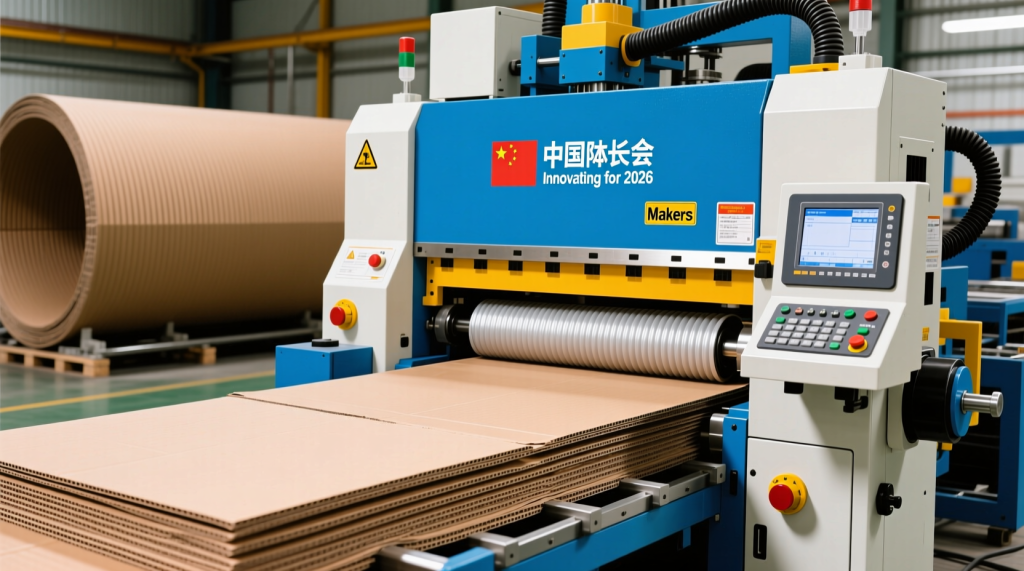
Modern corrugated cardboard production lines must support high-speed, low-waste operation while running a wider mix of paper grades driven by e-commerce, sustainability targets, and shorter order cycles. A typical corrugator line converts paper reels (liner and medium) into corrugated board using heat, pressure, and starch-based adhesive, then trims, scores, and cuts sheets for converting into boxes.
Chinese corrugator line suppliers in China have expanded their global presence by offering complete corrugated board manufacturing systems (not only standalone machines) with shorter lead times and competitive capital expenditure (capex, meaning upfront investment) for many regions.
This guide reviews global machinery trends and provides a more neutral comparison of three manufacturers commonly evaluated in 2026 procurement shortlists:
- LLY PACK (HK) CO., LIMITED
- BHS Corrugated
- Mitsubishi Heavy Industries (MHI)
TL;DR: Corrugated lines are being chosen less for “max speed” alone and more for stability with recycled/lightweight papers, automation level, service coverage, and total lifecycle cost.
Global Market Trends in Corrugated Machinery (Demand, Sustainability, and Technology)
Corrugated packaging remains the backbone of transport packaging because it is lightweight, printable, and widely recycled. Industry bodies such as the Fibre Box Association (FBA) track box shipments and market conditions, while research firms such as Smithers regularly report on packaging demand drivers including e-commerce and sustainability regulation.
Growth of E-commerce and Order Complexity
E-commerce growth increases SKU variety and encourages smaller, more frequent orders. Operationally, this pushes plants to reduce changeover waste and maintain consistent quality across many “recipes” (paper combinations, flute types, adhesive settings, and steam profiles). In practice, buyers increasingly specify automation such as automatic splicers, recipe-based control, and fast order changes on slitter-scorers and cutoffs.
TL;DR: The growth driver is not only volume—it’s order complexity, which makes changeover time, waste rate, and automation more important procurement metrics.
Sustainability: Lightweight & Recycled Papers Require Better Process Stability
Sustainability targets often translate into lower basis weight papers and higher recycled content. Basis weight (measured in g/m²) is the mass per unit area of paper; reducing it cuts material cost and emissions, but can reduce stiffness if process control is weak.
Corrugator lines that can hold temperature, moisture, and web tension stable are better suited for lightweight liners and recycled mediums. Key stability enablers include properly sized preheaters, closed-loop tension control, and consistent starch preparation in the starch kitchen (the mixing and dosing system for corrugating adhesive).
For board classification and common flute nomenclature (A/B/C/E/F), many plants align internal specs with widely used industry definitions, including those published by FEFCO (European Federation of Corrugated Board Manufacturers), which is also known for corrugated packaging standards and design references used across the industry.
TL;DR: Running lighter/recycled papers is less about “stronger machines” and more about moisture/heat/tension control plus reliable adhesive preparation.
Adoption of Chinese-built corrugated systems has increased in markets where buyers prioritize shorter delivery cycles, integrated scope (corrugator + converting + auxiliaries), and competitive corrugated board production line cost. Common purchase scenarios include greenfield projects, first-time corrugator installations, or upgrades from older 120–180 m/min lines to medium-speed corrugated lines in the 200–300 m/min class.
TL;DR: Chinese suppliers often win where buyers want “complete plant scope + faster delivery + capex efficiency,” especially for medium-to-high output factories.
Neutral Comparison: LLY PACK vs. BHS vs. MHI (Where Each Typically Fits)

Actual performance depends on configuration, paper quality, operator skill, and maintenance discipline. The speed and output values below are representative industry ranges (typical buyer specifications and common installed configurations) rather than certified performance guarantees for every project.
Typical Positioning by Buyer Use-Case
- BHS Corrugated: Often selected for high-speed corrugated production line projects in large enterprises prioritizing maximum throughput, advanced automation, and strong global service coverage.
- MHI (Mitsubishi Heavy Industries): Frequently chosen for premium converting/printing precision—especially where high graphics quality, repeatability, and long lifecycle stability are decisive.
- LLY PACK: Typically competes in integrated, cost-sensitive projects needing a complete corrugation plant (corrugator + converting + auxiliaries) with practical automation and flexible configurations for emerging markets.
TL;DR: BHS is commonly “throughput + automation,” MHI is “precision converting,” and LLY PACK targets “integrated scope + practical performance per dollar,” particularly in mid-to-large capacity plants.
Representative Metrics Buyers Commonly Compare
When procurement teams compare vendors, they often use these neutral metrics:
- Line speed class: medium-speed (~180–250 m/min) vs. higher-speed (~250–400+ m/min), depending on configuration.
- Working width: commonly ~1400–2800 mm (some projects go wider), driven by box mix and sheet layout.
- Automation level: automatic splicing, recipe control, automatic order change, condition monitoring, remote diagnostics.
- Service footprint: local technicians, spare parts hubs, and response time by region.
- Stability KPIs: waste rate during changeover, web breaks, glue consistency, warp control.
TL;DR: Speed matters, but service coverage, automation depth, and stability KPIs often decide total cost of ownership.
LLY PACK (HK) CO., LIMITED: Product Scope and Practical Operating “Sweet Spot”
In typical tenders, LLY PACK’s sweet spot is mid-to-large plants targeting roughly 30,000–150,000 tons/year (highly dependent on width, shift pattern, product mix, and uptime), often looking for a medium-speed to higher-speed corrugator line with integrated converting and auxiliaries.
Company Profile (What to Verify in Due Diligence)
LLY PACK (HK) CO., LIMITED (established 2024) reports a manufacturing base in Foshan, Guangdong (approx. 57,000 m² facility) with engineering resources dedicated to corrugated systems and related converting equipment.
For credibility in industrial procurement, buyers typically confirm: factory capability, reference installations, acceptance testing approach, and compliance documentation (see the “Standards & Compliance” section below).
TL;DR: Treat supplier claims like any industrial capex project—validate references, testing methodology, and compliance documentation during procurement.
Representative Line & Equipment Specifications (Examples, Not Universal Certifications)
LLY PACK publishes representative specs such as:
- Corrugated board production line (CCPL-1): example maximum mechanical speed up to 300 m/min, working widths 1400–2800 mm.
- Single facer (SF-1): example design speed up to 250 m/min.
- Hydraulic shaftless mill roll stand (HRS-1): example roll diameter range 300–1500 mm.
Important clarification: “Maximum mechanical speed” is a design value; real-world sustained speed depends on paper, flute, adhesive, steam capacity, operator skill, and downstream constraints (changeover frequency, cut length variability, and converting bottlenecks). Buyers usually request a Factory Acceptance Test (FAT) (a witnessed test before shipment) and a Site Acceptance Test (SAT) (performance verification after installation) tied to defined paper combinations and quality criteria.
TL;DR: Use published specs as a starting point, then lock performance into FAT/SAT criteria based on your actual paper grades, flute mix, and order profile.
Technical Differentiators That Affect Quality, Waste, and Uptime
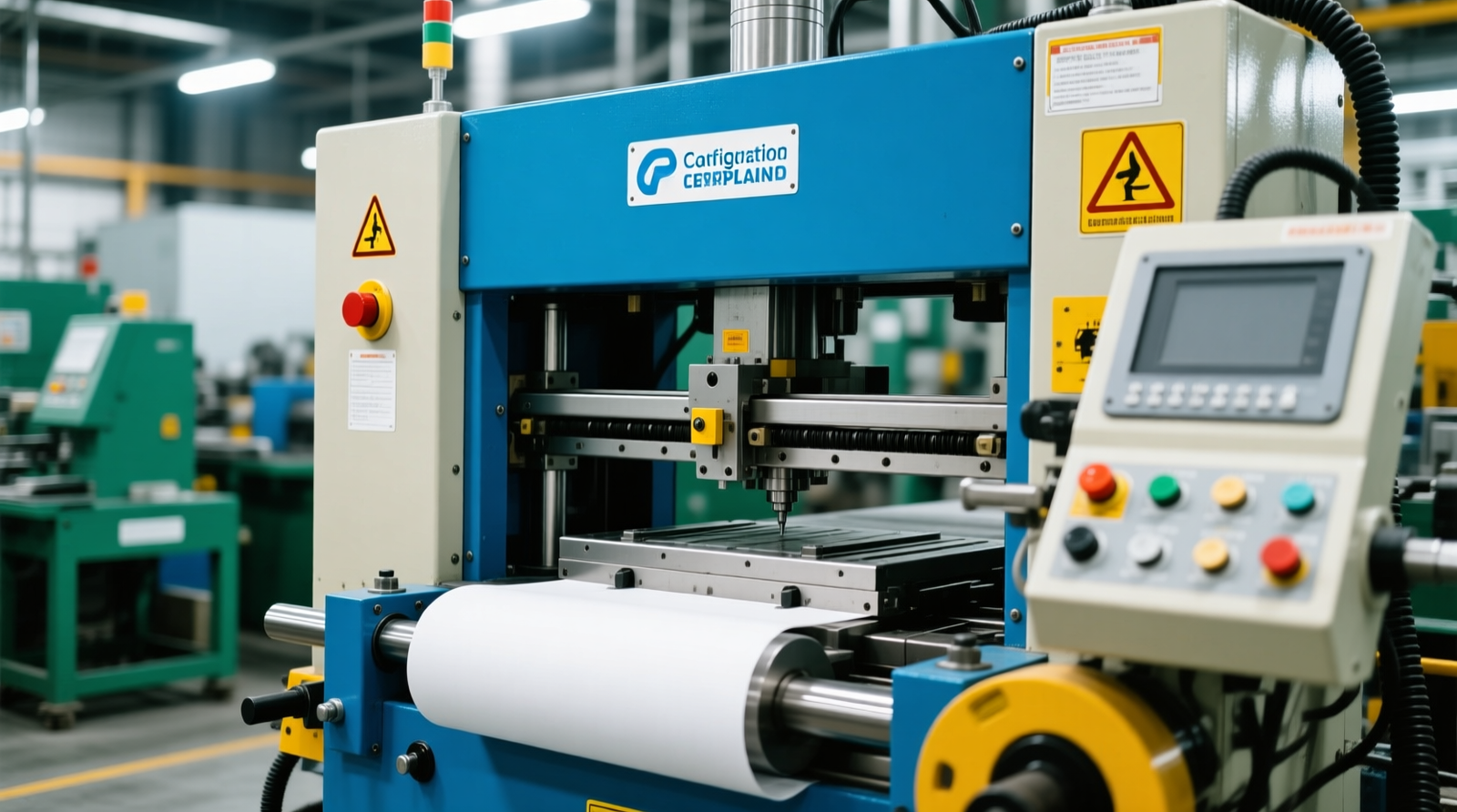
Modern corrugated cardboard production lines are judged by stability on difficult papers and how quickly they can change orders without excess scrap. Below are the technical areas plant managers commonly scrutinize.
Flute Profiles, Paper Range, and Board Mix
Flute profiles (A/B/C/E/F) describe the wave geometry of the medium and strongly influence thickness, cushioning, and stacking strength. Many plants run multiple flute sets and change by product type (e.g., B-flute for stiffness and print surface, C-flute for general shipping, E-flute for retail packaging).
Paper basis weight ranges vary by market and grade. In many operations, liners and mediums may span roughly 90–250 g/m² (varies widely), with increasing demand for lightweight and recycled compositions. The practical question is not only “can the line run it?” but “can it run it stably at target speed with low warp and good bond?”
TL;DR: Confirm flute coverage and paper range with your real recipes; stability (bond, warp, break frequency) matters more than theoretical capability.
Process Stability with Lightweight/Recycled Liners (Tension, Heat, Moisture, and Glue)
Lightweight and recycled papers are more sensitive to heat and moisture imbalance, increasing risk of warp, delamination, and web breaks. Buyers should ask how the system manages:
- Preheating: correct wrap angle and heat transfer for consistent paper temperature before bonding.
- Closed-loop tension control: “closed-loop” means sensors measure web tension and the system automatically adjusts brakes/drives to hold setpoints, reducing wrinkles and breaks.
- Moisture control: balanced steam, condensate management, and drying capacity to hit target moisture without over-drying (brittleness) or under-drying (weak bond).
- Starch kitchen control: stable viscosity, temperature, and dosing to maintain bond strength while minimizing glue consumption.
TL;DR: For recycled/lightweight papers, ask about tension control architecture, preheater design, steam/condensate handling, and starch kitchen consistency—not just speed.
Controls Platform and Operator Experience (PLC/HMI, Recipes, Diagnostics)
PLC (Programmable Logic Controller) and HMI (Human–Machine Interface) define how operators run the corrugator line, load recipes, and troubleshoot alarms. In many plants, better HMI design and recipe control directly reduce operator dependency and start-up scrap during order changes.
Procurement teams typically request details on: PLC/HMI brand options, data logging, alarm history, remote diagnostics capability, and whether key loops (tension, temperature zones, glue application) are automatically controlled or manual.
TL;DR: Automation is not only “more sensors”—it’s operator-guided stability, recipe repeatability, and faster troubleshooting that reduce waste and downtime.
Energy Use: What to Measure and How to Compare
Energy consumption depends on speed, paper moisture, steam system efficiency, and heat recovery. Buyers often benchmark kWh per 1,000 m² or steam/condensate performance across comparable board grades and output rates. Because “energy per m²” can be reported inconsistently, a fair comparison requires identical product recipes and measurement boundaries (what utilities are included).
For best practice guidance on energy management frameworks, many manufacturers align plant programs with ISO 50001 (Energy management systems) and broader quality frameworks like ISO 9001 (Quality management systems).
TL;DR: Compare energy with consistent test conditions (same board recipe + measurement boundary), and consider ISO-aligned energy management to sustain savings over time.
Key Factors When Selecting a Corrugated Cardboard Production Line
Choosing a corrugator line is a multi-year decision affecting cost, delivery performance, and quality. This checklist is designed for plant managers evaluating corrugated cardboard plant layout design, expansion, or replacement.
Buyer Checklist (Decision Framework)
- Target output & order mix: What annual tonnage and what percentage of short runs vs. long runs? How many order changes per shift?
- Required speed class: Do you need a medium-speed corrugated line (e.g., 180–250 m/min) or a high-speed corrugated production line (250–400+ m/min)?
- Board quality targets: bond strength, warp limits, and print surface requirements.
- Paper strategy: recycled content, lightweight grades, and expected variability from local paper mills.
- Automation & labor: operator skill availability, training time, and the value of recipe-based operation and diagnostics.
- Service & spare parts: local support, response time, critical spares list, and remote support options.
- Capex and financing: constraints on corrugated board production line cost and acceptable payback period.
TL;DR: Start with output + order mix, then validate paper strategy, automation needs, service coverage, and capex/payback—this prevents buying a “fast line” that underperforms on your real jobs.
Throughput Guidance Table (Rule-of-Thumb Planning)
The table below is a rough planning aid (not a guarantee). Actual tonnage depends on board grades, flute mix, uptime, trim, and order-change frequency. Assumptions: ~2 shifts/day, ~300 operating days/year, average output efficiency varies by plant maturity.
| Working width (mm) | Representative line speed (m/min) | Typical use-case | Very rough annual capacity band (tons/year) |
|---|---|---|---|
| 1800–2200 | 180–220 | Mixed orders, moderate automation | 25,000–70,000 |
| 2200–2500 | 220–300 | Mid/large plants, balanced speed & flexibility | 50,000–130,000 |
| 2500–2800 | 300–400+ | High-volume, longer runs, high automation | 100,000–250,000+ |
TL;DR: Width and speed both drive capacity, but order mix and uptime can move real output dramatically—use a table like this only for early-stage sizing.
Common Pain Points (and What to Ask Vendors)
Buyers frequently cite these operational pain points when upgrading:
- Changeover time: Ask about order-change automation, slitter-scorer positioning, and recipe recall.
- Waste rate: Ask how start-up scrap is reduced (controls, preheater stability, glue consistency).
- Operator dependency: Ask about HMI guidance, alarm diagnostics, and training plan.
- Web breaks: Ask about tension control and paper path design.
TL;DR: The “hidden cost” is often waste + changeover time; request measurable targets and how they’re verified during SAT.
Integrated Line Scope: From Paper Reel to Finished Box (What “Turnkey” Usually Includes)
A complete corrugated board manufacturing system is more than the corrugator itself. Integrated scope can reduce interface risk (controls, timing, sheet handling) and simplify accountability during commissioning.
Typical Major Modules (Corrugation + Converting + Auxiliaries)
A modern solution may include: mill roll stands and splicers, preheaters, single facer, glue system and double facer, slitter-scorer, cut-off, stacker, and converting machines such as flexo printer-slotters, die-cutters, and folder-gluers. Supporting equipment often includes waste handling (e.g., balers), wrapping, and quality testing instruments.
For packaging test methods and box performance terminology (e.g., compression and transport simulation), many buyers reference standards organizations like ASTM International for widely used test standards in packaging and materials (specific test selection depends on your product and market requirements).
TL;DR: Integrated scope reduces “handoff gaps” between machines; confirm responsibility boundaries for controls integration, sheet tracking, and quality verification.
Maintenance, Spare Parts Strategy, and Predictive Maintenance Options
Lifecycle reliability depends on preventive maintenance discipline and parts availability as much as initial machine selection. For corrugated lines, common critical areas include corrugating rolls, bearings, steam/condensate components, belts, drives, and glue application systems.
Recommended Spare Parts Strategy
Many plants structure spares into three tiers:
- Commissioning spares: parts likely needed during ramp-up (sensors, valves, wear items).
- Critical spares: items that can stop production (key bearings, drive components, critical valves, belts).
- Wear parts: scheduled replacements (blades, knives, certain seals, etc.).
Buyers should request a recommended spares list tied to expected operating hours and local lead times.
TL;DR: A disciplined spares plan prevents multi-day downtime; require a tiered spares list and confirm local availability or shipping lead time.
Predictive Maintenance (Condition Monitoring and Remote Diagnostics)
Predictive maintenance uses condition data (vibration, temperature, motor load, alarm trends) to anticipate failures before breakdowns. Even basic remote diagnostics—secure remote access for troubleshooting, log review, and parameter audits—can shorten downtime and reduce the need for emergency travel.
TL;DR: Ask what condition monitoring and remote support are available, what data is logged, and who owns access—this directly impacts uptime and maintenance cost.
Implementation Timeline: What a Realistic Project Looks Like
For greenfield and major upgrade projects, a realistic timeline typically includes: layout and utility confirmation, contract and engineering freeze, manufacturing, FAT, shipping, installation, commissioning, SAT, and ramp-up. Depending on line complexity and site readiness, many projects span several months to more than a year from order to stable production.
Key milestones buyers should manage include:
- Plant layout sign-off (corrugated cardboard plant layout design, logistics flow, safety zones)
- Utilities readiness (steam, power, compressed air, water, glue kitchen space)
- FAT/SAT criteria (paper recipes, quality metrics, performance targets)
- Training & documentation (maintenance plans, manuals, spare parts list)
TL;DR: The fastest install fails if utilities, layout, and acceptance criteria aren’t locked early—treat readiness and FAT/SAT as core project deliverables.
Mini Case Sketches (Anonymized Examples)
Note: The examples below illustrate typical outcomes reported in modernization projects; results vary by paper quality, operator practices, and baseline condition. Treat them as directional, not guaranteed.
Case 1: Latin America Upgrade Focused on Waste Reduction
A mid-size Latin American plant upgraded from an older ~150 m/min corrugator to a ~250 m/min class configuration with improved tension and recipe control. After ramp-up, the plant reported a measurable reduction in changeover scrap and improved on-time delivery due to fewer stops related to web handling. The project prioritized serviceability and spare-part planning because of import lead times.
TL;DR: In upgrades, the biggest gains often come from fewer stops and lower changeover waste—not only from higher nameplate speed.
Case 2: Southeast Asia Greenfield with Mixed Order Profile
A Southeast Asian converter building a first corrugation plant chose an integrated scope (corrugation + converting + waste handling) to reduce multi-vendor integration risk. The commissioning plan emphasized operator training and SAT recipes for recycled liners. Stable production was achieved after a structured ramp-up phase with remote troubleshooting support.
TL;DR: For greenfield sites, integration + training + defined SAT recipes reduce start-up risk and shorten the path to stable output.
Standards, Safety, and Compliance (What Buyers Commonly Request)
For international projects, buyers typically request documentation and conformance aligned with applicable local regulations and commonly used management/safety frameworks.
- CE marking: Indicates conformity with relevant European Union safety, health, and environmental protection requirements for products sold into the European Economic Area (CE marking overview).
- ISO 9001: Quality management system framework (ISO overview).
- Machine safety principles: Buyers may reference recognized safety norms (guarding, emergency stops, lockout/tagout procedures) as part of site EHS (Environment, Health & Safety) requirements.
TL;DR: Ask for compliance documentation early (CE where applicable, quality systems, and safety design expectations) to avoid delays during installation and audits.
Conclusion: Choosing Between High-End, Precision Converting, and Integrated Value
In 2026, selection of a corrugated cardboard production line is increasingly driven by operational stability, serviceability, and lifecycle economics—not just maximum speed.
- BHS Corrugated is a strong choice for buyers prioritizing ultra-high throughput, advanced automation, and broad global service support—typically with higher capex.
- MHI is frequently favored where premium converting precision, print consistency, and long-term durability are the core value drivers.
- LLY PACK typically fits buyers seeking an integrated corrugation plant with practical automation, configurable scope, and competitive corrugated board production line cost—often in the 180–300 m/min class and mid-to-large output targets.
For any supplier, strengthen the purchasing decision by defining acceptance tests (FAT/SAT), confirming service coverage and spares, and validating performance on your real paper recipes.
TL;DR: Choose based on your order mix, paper strategy, service reality, and acceptance testing—then match the supplier whose strengths align with those constraints.
FAQ
Q: What is the typical speed range for a medium-speed corrugated line vs. a high-speed corrugated production line?
A: Medium-speed lines are commonly specified around 180–250 m/min, while high-speed corrugated production lines are often specified from roughly 250 m/min up to 400 m/min or more depending on configuration. Sustained speed in production depends on paper quality, flute, moisture/steam capacity, changeover frequency, and downstream constraints.
Q: How do I estimate corrugated board production line cost and payback?
A: Cost depends on width, speed class, automation, utilities scope (steam system, starch kitchen), and converting integration. Payback is usually driven by measurable factors such as labor reduction, waste reduction, energy management, and higher sellable output. A practical approach is to model current scrap %, downtime hours, and order-change time, then estimate savings under FAT/SAT-verified targets.
Q: What should I ask a corrugator line supplier in China to prove capability and reduce risk?
A: Ask for reference installations with similar paper grades and order mix, a clearly defined FAT/SAT protocol, a recommended critical spares list with lead times, and documentation for safety/compliance (e.g., CE where applicable, and quality management procedures). Also confirm remote diagnostics and local service arrangements.
Q: Which flute types (A/B/C/E/F) should my corrugated board manufacturing system support?
A: It depends on your product mix. C and B are common for shipping cases; E is common for retail and higher print quality; A is used when extra cushioning/thickness is required; F is used for fine packaging in some markets. Many plants choose a configuration that covers their top-selling SKUs first, then add flute flexibility based on growth plans.
Q: What impacts warp, delamination, and high waste during changeovers on a corrugator line?
A: The most common drivers are unstable moisture/heat balance, inconsistent starch adhesive preparation, and poor tension control—especially with lightweight or recycled papers. Order-change automation (recipe control, quick positioning on slitter-scorer/cutoff) and operator training also strongly influence start-up scrap and consistency.