Singapore’s Beverage Container Return Scheme Singapore (BCRS) introduces a 10-cent deposit refund for eligible drink bottles and cans, redeemed via Return Right machines (reverse vending machines in Singapore). This guide is for residents, businesses, and micro-producers who want to understand how to claim BCRS refunds, where to return containers, and what to do during the transition period.
The information below aligns with official updates by the National Environment Agency (NEA) and scheme operator BCRS Ltd. For the latest locations and machine status, use the official Return Right locator: https://returnright.sg.
Introduction: What Return Right Is and How the 10-Cent Deposit Refund Works
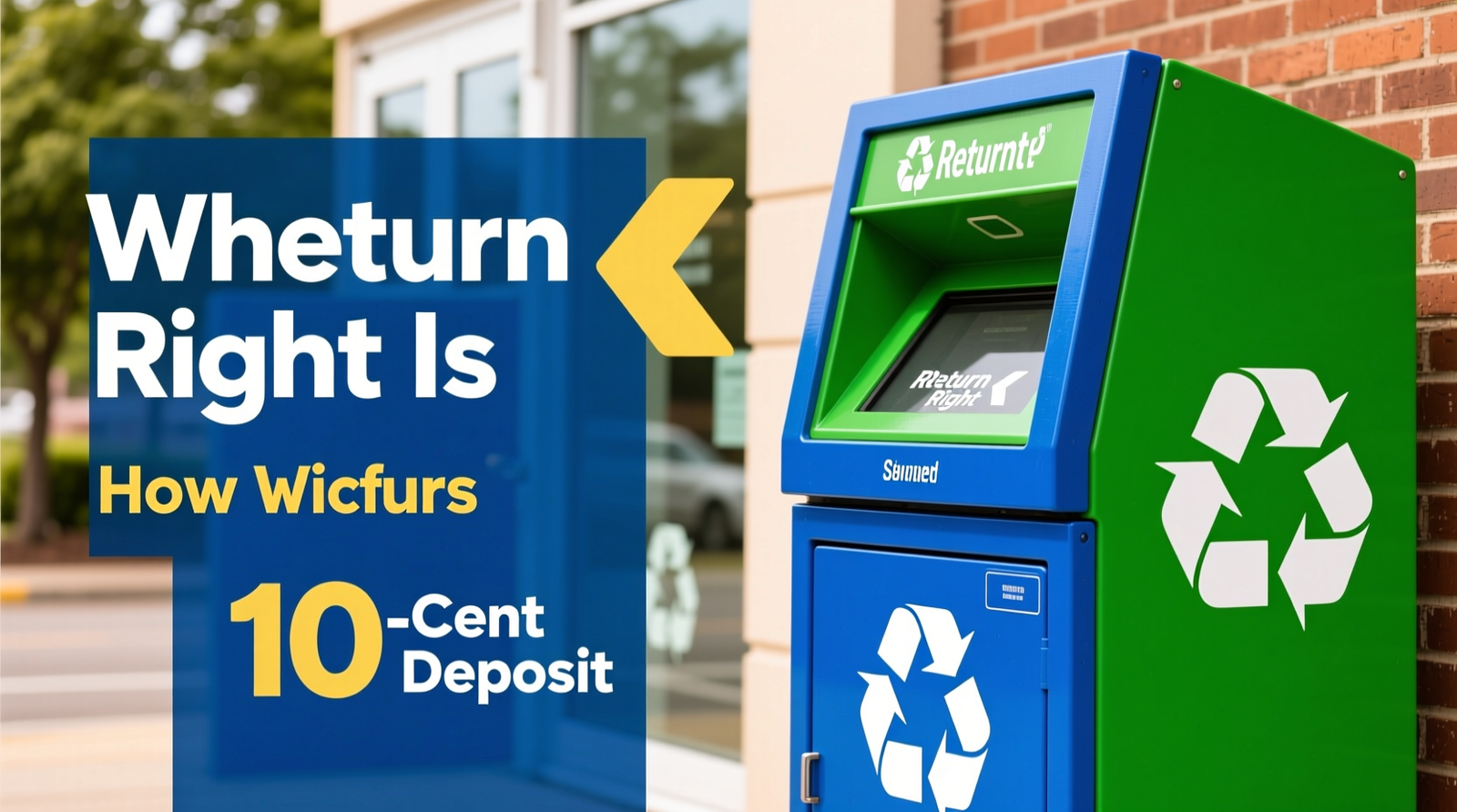
Under the BCRS, eligible beverage containers sold in Singapore carry a refundable deposit (S$0.10). After you finish the drink, you return the empty container at a Return Right machine and receive the 10-cent deposit refund digitally.
The goal is to capture more high-quality recyclables, reduce litter, and cut the amount of waste sent to Semakau Landfill. (If you’re unfamiliar: a “container deposit system” is a policy that adds a small refundable fee to encourage returns.)
Best for: anyone searching for “how to claim BCRS refunds”, “reverse vending machines in Singapore”, or “Singapore container deposit system”.
TL;DR: Pay a 10-cent deposit on eligible drinks, return empties at Return Right machines, and get 10 cents back per container via PayLah! or EZ-Link.
What Is the Beverage Container Return Scheme (BCRS)?
The Beverage Container Return Scheme (BCRS) is led by the NEA and operated by BCRS Ltd. It applies a refundable deposit to encourage the return of used beverage containers for recycling.
- Eligible materials: plastic and metal beverage containers
- Eligible sizes: 150 ml to 3 litres
- Eligibility check: the container must carry the official BCRS deposit mark (the visible scheme marking on-pack)
- Refund value: S$0.10 per accepted container
Singapore uses a very large volume of beverage containers annually (commonly cited at about 1.2 billion containers per year in public briefings). These figures are typically referenced in NEA/BCRS communications around scheme planning and scale; where you see such numbers, treat them as planning-scale estimates rather than household purchase counts.
For background on Singapore’s broader waste strategy and landfill constraints, see NEA’s official pages on waste management and Semakau Landfill: https://www.nea.gov.sg/our-services/waste-management/3r-programmes-and-resources.
TL;DR: BCRS is Singapore’s nationwide deposit-return programme for marked plastic/metal drink containers (150 ml–3 L), paying back 10 cents per returned container.
Who Benefits: Residents, Businesses, Micro-Producers, and F&B Operators
The scheme is designed to be practical across daily life and the supply chain:
- Residents: an easy way to reclaim deposits and build a habit of returning bottles/cans after grocery runs.
- Businesses (retailers/distributors): clearer BCRS compliance for businesses expectations for deposit-marked products and consumer returns.
- Micro-producers/importers: lower-friction options such as pre-serialised stickers (where permitted) to meet marking/identification needs.
- F&B operators: the Return Right F&B pathway can keep dine-in experience simple while still recovering containers.
TL;DR: Consumers get convenient refunds; businesses get a standardised system; micro-producers get compliance support; F&B can reduce customer friction while improving recovery.
Key BCRS Dates and Transition Period (At-a-Glance)
To reduce confusion during the rollout, keep these dates in mind:
- 1 Apr (scheme start): BCRS begins; deposit-marked containers become returnable for refunds via Return Right machines.
- 1 Apr to 30 Sep (mixed-stock transition): beverages in containers with and without the deposit mark may still be sold while supply chains clear older stock.
- From 1 Oct: only regulated beverages in containers that carry the deposit mark can be sold.
- Micro-producer sticker transition (notably later): the article’s micro-producer sticker example references an extended phase (e.g., Oct 2026 to Mar 2027 pro-rating). Treat micro-producer timelines as compliance-specific and confirm against the latest NEA/BCRS guidance issued to affected producers.
If you want the freshest operational updates, refer to official scheme communications and the Return Right site for live rollout changes: https://returnright.sg.
TL;DR: Scheme starts 1 Apr, mixed stock allowed until 30 Sep, deposit-mark-only sales from 1 Oct; micro-producer sticker timelines may extend later depending on compliance guidance.
How to Find Return Right Machines (Reverse Vending Machines in Singapore)
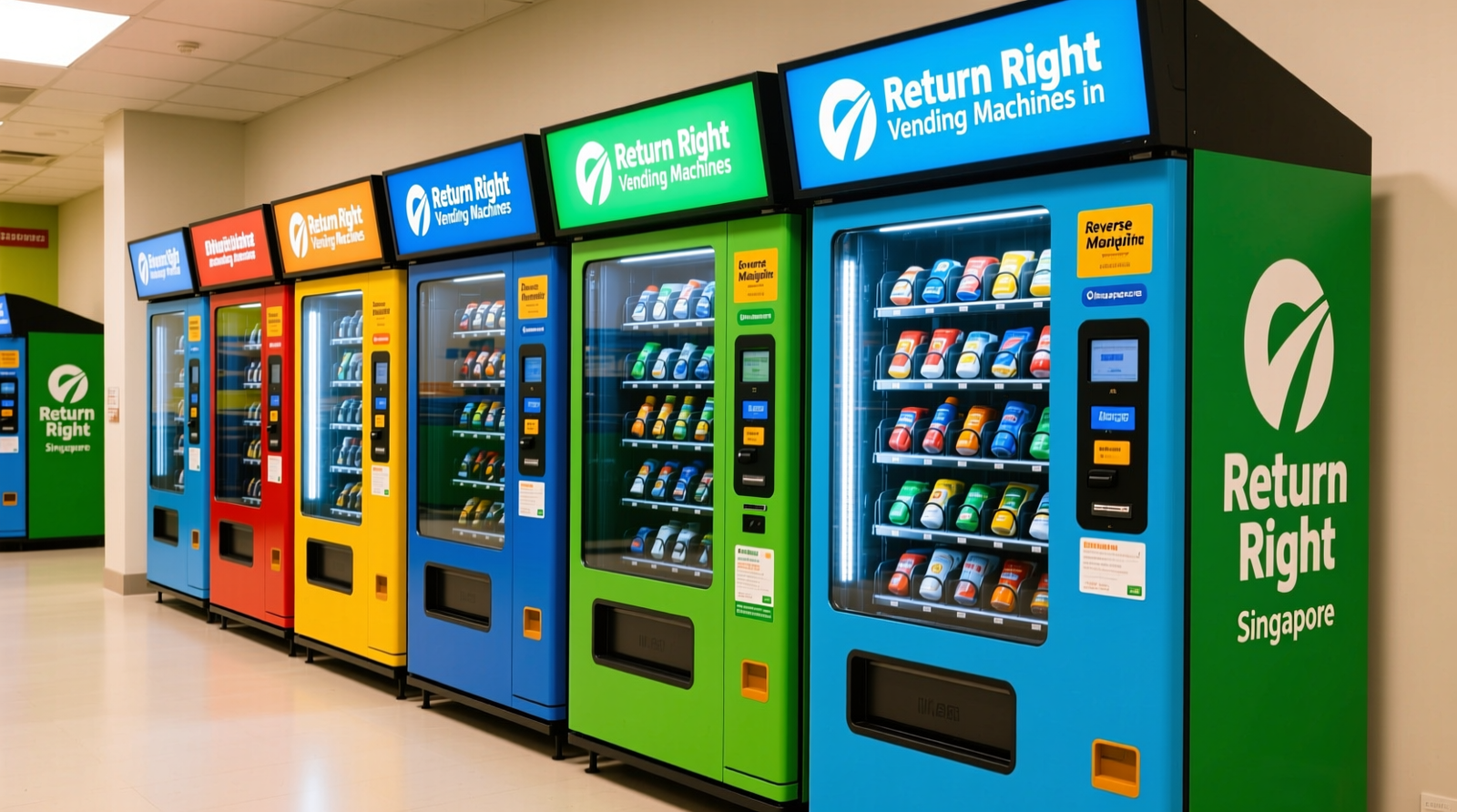
The official locator is the fastest way to find a nearby return point and avoid wasted trips: ReturnRight.sg. It typically shows operating hours and capacity status (how full a machine is) so you can choose the best time and location.
In public rollout plans, Return Right machines are placed where people already go—such as supermarkets, town council areas (including many HDB estates), hawker centres, institutes of higher learning, and selected industrial estates—to make returns convenient.
TL;DR: Use ReturnRight.sg to find machines, check hours, and confirm capacity before you head down.
How Return Right Machines Work (Step-by-Step Guide to Claim BCRS Refunds)
Reverse vending machine (RVM) means a machine that accepts used containers, verifies they are eligible, and issues a refund—essentially a “return-and-reward” system. Return Right machines are designed to recognise eligible containers via markings/codes and reject ineligible ones.
Step 1: Check if Your Container Is Eligible (Fast Visual Checks)
- Look for the BCRS deposit mark on the label/can.
- Material & size: plastic or metal, 150 ml to 3 L.
- Keep identifiers readable: don’t tear off the label or damage the barcode/printed code area.
What to do with ineligible containers: if there’s no deposit mark (or it’s outside the size/material rules), place it in an appropriate recycling bin rather than general waste. That supports recycling even without a deposit refund.
TL;DR: Deposit mark + correct size/material = eligible; no mark = no refund (recycle it via regular recycling instead).
Step 2: Prepare the Container Properly
- Empty it: drain liquids to reduce mess and machine jams.
- Don’t crush it: the machine may need the container’s shape to verify it.
- Insert one at a time: follow on-screen prompts for best acceptance rate.
TL;DR: Empty, uncrushed, intact label/code, and feed one-by-one.
Step 3: Return Containers and Choose Your Refund Method
Return Right refunds are typically digital. Common options include:
- DBS PayLah! (a mobile wallet app by DBS Bank): generate your personal QR code and scan it at the machine.
- EZ-Link (Singapore’s stored-value contactless payment card): tap your card to receive the credited refund.
Refund timing: in most RVM deposit schemes, refunds are posted immediately or shortly after acceptance. If there’s a delay, keep your transaction confirmation (if shown) and follow official support steps (see “Common issues” below).
TL;DR: Insert eligible containers, then scan PayLah! QR or tap EZ-Link to get 10 cents per accepted container.
Step 4: Typical Consumer Journey Example (After a Supermarket Trip)
Example scenario: You buy drinks during a weekly grocery run—say 6 canned teas and 4 bottled waters, all with the deposit mark. After consuming them at home, you rinse and keep them uncrushed in a bag. On your next grocery trip, you check ReturnRight.sg, see a nearby machine has capacity, return all 10 containers, and get S$1.00 credited to PayLah! or EZ-Link. Over a month, that can add up—especially for families or shared flats.
TL;DR: Pair returns with existing errands (supermarket/HDB route) to make refunds effortless and consistent.
Common Issues and What to Do (Full Machines, Queues, Failed Refunds)
Real-world use can involve hiccups. Here’s how to handle the most common ones:
- Machine shows “full”: check ReturnRight.sg for another nearby location or revisit later. If there’s an on-site recycling point nearby, avoid leaving containers on the floor (it creates litter and contamination).
- Long queues: consider off-peak returns (mid-morning on weekdays) or split returns across trips. If you have many containers, smaller but more frequent returns reduce waiting time for everyone.
- Container rejected: re-check deposit mark, ensure it’s not crushed, and that the label/code area is readable. If it’s still rejected, recycle it via normal recycling.
- Refund didn’t credit: confirm you used the correct PayLah! QR / tapped the correct EZ-Link card. If the issue persists, use official support channels listed on ReturnRight.sg (and keep any on-screen confirmation details if available).
No stated cap (at time of writing): public-facing guidance commonly emphasises “one at a time” insertion; if daily or per-transaction limits are introduced later, they will typically be announced on official channels.
TL;DR: If a machine is full or crowded, use the locator to reroute; for rejections, check markings/condition; for refund issues, verify the payment method and contact official support.
Machine Operations, Data Monitoring, and Accessibility
Return Right machines are installed/managed by technology and operations providers (as publicly reported), including RVM Systems, SG Recycle, and TOMRA (a global reverse vending technology company: https://www.tomra.com).
Maintenance and servicing: machines are typically emptied and maintained regularly to reduce downtime and keep acceptance accurate.
How monitoring helps the scheme: machine-level data (e.g., return volumes by location/time, rejection reasons, fullness rates) can be used by operators and NEA/BCRS Ltd to:
- optimise placement in high-demand areas,
- schedule collections more efficiently,
- identify recurring rejection problems (e.g., crushed containers), and
- plan additions where return rates justify more capacity.
Accessibility and usability: machines are designed for fast self-service, and the interface is commonly standardised across locations. Multilingual on-screen instructions (English, Mandarin, Malay, Tamil) help reduce friction for diverse users; physical accessibility can vary by site, so locations with better clearance and approach space may be easier for wheelchair users or seniors.
TL;DR: Operators maintain machines and use return data to improve uptime, placement, and convenience; multilingual screens support broad public use.
Support and Concessions for Micro-Producers (BCRS Compliance for Businesses)
The BCRS includes measures intended to reduce compliance burden for micro-producers (smaller beverage importers/producers). NEA has communicated support such as grants (e.g., up to S$2,500 in referenced announcements) to offset scheme-related costs like registration and deposit-marking.
Practical Example: How a Micro-Producer Uses Pre-Serialised Stickers
Scenario: A small craft beverage brand imports limited runs of canned drinks and sells primarily through cafés and weekend markets. Instead of redesigning and reprinting packaging for every SKU immediately, the business applies pre-serialised stickers (unique labels carrying the deposit mark and a scannable code) to each can. When customers return those cans at Return Right machines, the machine can identify them as eligible and trigger the 10-cent deposit refund.
Important: sticker eligibility, quotas, and timelines are compliance-specific and should be confirmed against the latest NEA/BCRS Ltd guidance issued to producers (for example, any circulars or onboarding documentation provided to registered suppliers).
TL;DR: Micro-producers may use supported pathways (grants/stickers) to meet deposit-marking needs while ensuring customers can still claim refunds.
Impact on F&B Outlets and Dine-In Customers (Return Right F&B)
Some dine-in venues may participate in a Return Right F&B arrangement to keep the customer experience simple while ensuring containers still enter the deposit-return loop.
Responsibilities and Benefits (Scannable)
- For outlets:
- May not charge the 10-cent deposit to dine-in customers for eligible containers consumed on-premise (where the arrangement applies).
- Take responsibility for collecting and returning eligible empties into the system.
- Use visible signs/decals so customers know how the outlet handles deposit containers.
- For dine-in customers:
- No extra “deposit step” at the point of purchase (for participating outlets and qualifying drinks).
- Still supports recycling outcomes because the outlet channels containers back into the scheme.
TL;DR: Participating dine-in outlets can handle the deposit-return process on customers’ behalf while keeping recovery high.
Why the BCRS Matters: Recycling Performance and Overseas Comparisons
Singapore’s recycling performance—especially for household recycling—has been a public concern. The article’s earlier figures (e.g., “11% household recycling rate”) should be read alongside the specific year and NEA’s published recycling statistics release for that period. For the latest official figures and methodology, refer to NEA’s published waste and recycling statistics: https://www.nea.gov.sg/our-services/waste-management/waste-statistics-and-overall-recycling.
Overseas context (why deposit systems are used): Many mature deposit-return systems achieve high return rates because the deposit creates a consistent incentive and the system is convenient. For example:
- Germany: deposit systems for one-way beverage packaging have been widely reported to achieve very high return rates (often cited around the high-90% range for covered containers).
- Norway: a long-running deposit system is also frequently cited for high collection performance, supported by dense networks of return points.
These international outcomes show what a well-run container deposit system can deliver: less litter, cleaner recyclables (better for closed-loop recycling), and more predictable material supply for the recycling industry. For an accessible overview of deposit systems globally, see the Ellen MacArthur Foundation resources on circular economy and packaging.
TL;DR: BCRS targets a proven lever—deposit incentives—used overseas to drive very high container return rates and cleaner recycling streams.
Public Feedback and Scheme Improvements (How the System Will Be Refined)
NEA and BCRS Ltd have described the rollout as adaptive—meaning operations can change based on actual return behaviour and public input.
They will typically focus on three improvement loops:
- Monitoring:
- track returns by region and site type (e.g., supermarkets vs HDB areas),
- watch machine fullness/downtime patterns,
- analyse rejection reasons to improve user guidance and machine settings.
- Feedback collection:
- gather resident and business feedback (including via ReturnRight.sg),
- use on-ground ambassadors at selected sites during early phases to identify friction points.
- Adjustments:
- redeploy/add machines where demand is highest,
- refine servicing schedules to prevent “full machine” experiences,
- update public instructions to reduce rejections and queue times.
TL;DR: The scheme is intended to evolve using real machine data plus public feedback—especially to reduce full machines, queues, and confusion about eligibility.
Conclusion: Quick Action Steps to Get Your Deposit Back
The BCRS and Return Right machines make it straightforward to turn empty drink containers into a 10-cent deposit refund while improving recycling outcomes across Singapore.
- Check for the BCRS deposit mark before you buy/return.
- Locate a nearby Return Right point and confirm capacity via ReturnRight.sg.
- Return containers empty and uncrushed, one at a time.
- Redeem via DBS PayLah! or EZ-Link.
If you’re building a broader sustainability content hub, logical next topics to cover (and internally link to) include home recycling best practices, Singapore’s e-waste recycling (regulated e-waste management), and other NEA-led waste reduction initiatives.
TL;DR: Look for the deposit mark, use the locator, return correctly, and redeem digitally—repeat weekly for the easiest results.
FAQ
Q: How do I claim BCRS refunds at Return Right machines in Singapore?
A: Check that the container has the BCRS deposit mark, return it uncrushed at a Return Right machine, then scan your DBS PayLah! QR code or tap your EZ-Link card to receive the 10-cent deposit refund per accepted container.
Q: What should I do if the reverse vending machine is full or there’s a long queue?
A: Use ReturnRight.sg to find another nearby machine or return at off-peak times. Avoid leaving containers beside the machine—bring them back later or reroute to another return point.
Q: Are there limits on how many containers I can return per transaction or per day?
A: Public guidance typically focuses on returning containers one at a time and following on-screen prompts. If any per-transaction or daily caps are introduced, they are usually stated on official scheme channels or at the machine interface—check ReturnRight.sg for updates.
Q: My container was rejected—what are the most common reasons?
A: Common causes include missing deposit mark, crushed containers, or damaged/obscured barcode/code areas. If it’s ineligible for the deposit refund, place it in a recycling bin rather than general waste.
Q: How do micro-producers comply if they can’t immediately reprint packaging with the deposit mark?
A: NEA/BCRS guidance may allow certain micro-producers to use pre-serialised deposit-mark stickers (subject to eligibility, quotas, and timelines). Micro-producers should verify the latest requirements directly with scheme onboarding materials or official advisories.