Introduction

The global mono-material packaging market is shifting as brand owners, retailers, and converters redesign packs away from difficult-to-recycle multi-layer laminates toward simpler, mostly single-polymer structures that are easier to sort and process in established recycling streams.
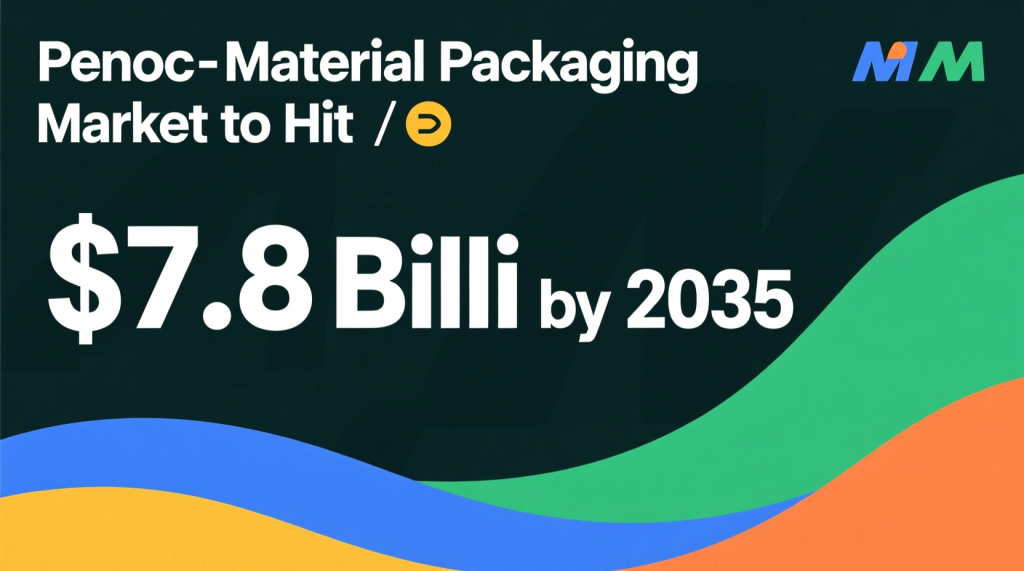
Based on industry estimates and internal modeling, the market is valued at around USD 4.9 billion in 2025 and is projected to reach nearly USD 7.8 billion by 2035, representing a CAGR (compound annual growth rate) of ~4.8% from 2025 to 2035. Growth is linked to tighter regulation, EPR (Extended Producer Responsibility) fee modulation, retailer requirements, and corporate commitments to increase the share of packaging that is recyclable in real-world systems.
Mono-material packaging is often positioned as a practical enabler of a “circular economy,” but outcomes depend on whether designs are not only technically recyclable (compatible with a process) but also recycled in practice (actually collected, sorted, and converted into usable recyclate). For circular economy context and packaging design direction, see the Ellen MacArthur Foundation’s guidance: https://ellenmacarthurfoundation.org/topics/plastics/overview.
TL;DR: Market growth expectations are positive (industry estimates: $4.9B in 2025 to ~$7.8B by 2035), but “recyclable” performance is increasingly judged by real collection/sorting/end-market realities, not just material choice.
Mono-Material Packaging Market Snapshot
- Market size (2025): ~USD 4.9 billion (industry estimates)
- Forecast value (2035): ~USD 7.8 billion (industry estimates)
- CAGR (2025–2035): ~4.8% (modeled from the above estimates)
- Leading material: PE (polyethylene) at ~62% share (industry estimates)
- Top format: Flexible packaging (films, pouches) at 40%+ share (industry estimates)
- Leading region: Europe at ~50–55% share (industry estimates)
Policy pressure is one of the clearer tailwinds, especially in Europe, where packaging rules continue to evolve under EU-level frameworks. For a primary reference point on EU packaging policy direction, see the European Commission packaging waste page: https://environment.ec.europa.eu/topics/waste-and-recycling/packaging-waste_en.
TL;DR: The market snapshot numbers are best treated as modeled industry ranges; regulatory policy (especially EU packaging waste policy) is a major adoption catalyst.
What Is Mono-Material Packaging and Why It Matters
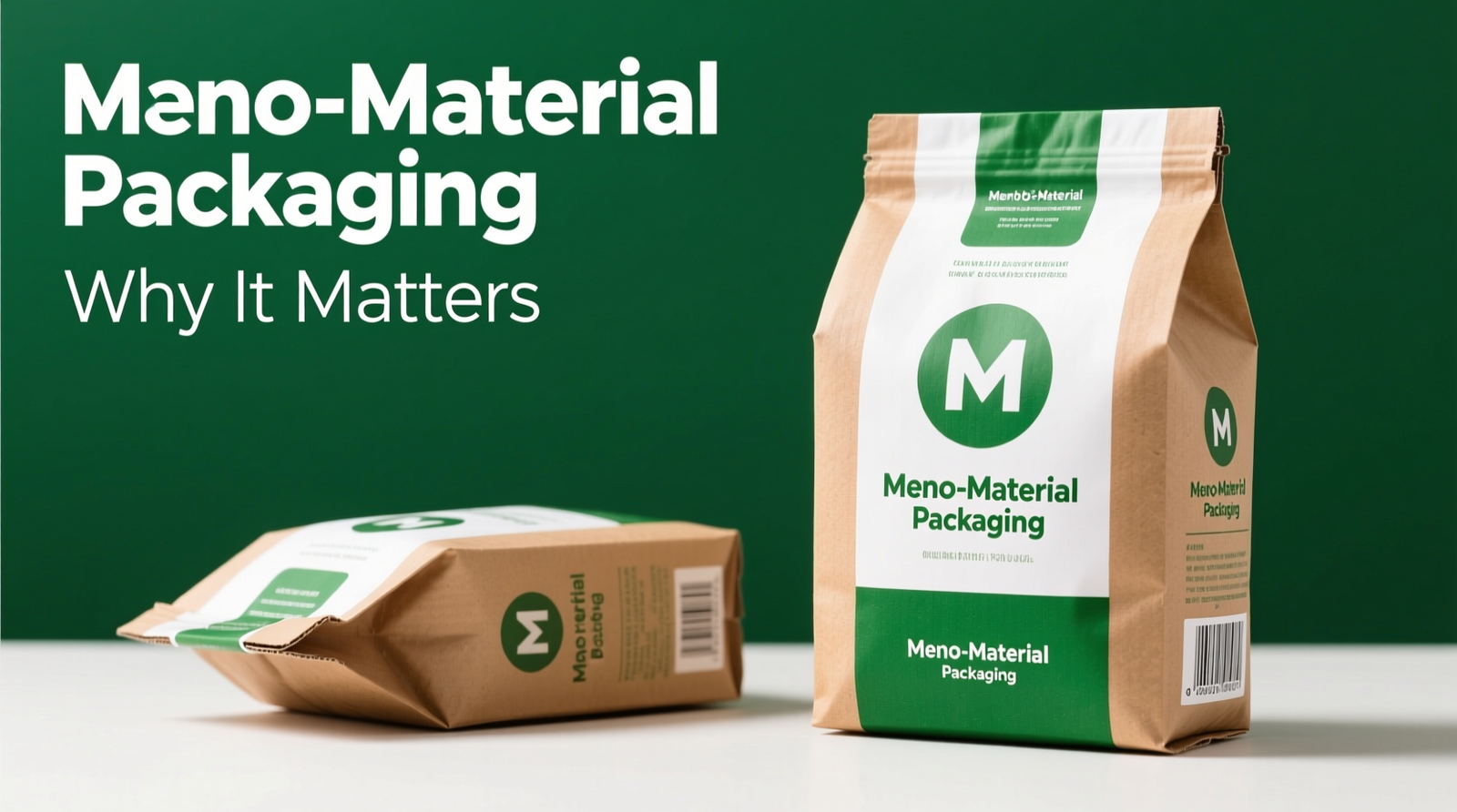
Mono-material packaging is packaging made primarily from a single polymer family—most commonly PE (polyethylene) or PP (polypropylene)—instead of a laminate combining incompatible materials (e.g., PET/Alu/PE). Reducing material incompatibility improves compatibility with mechanical recycling (physical reprocessing via sorting, washing, shredding, and re-melting into pellets).
Why it matters in day-to-day operations and compliance:
- Sorting and recycling compatibility: Single-polymer structures can better match existing sortation and reprocessing streams (especially where film collection exists).
- Lower risk of “recyclability downgrades”: Designs that avoid problematic layers/inks/adhesives are more likely to meet label-program thresholds.
- EPR economics: Under EPR (Extended Producer Responsibility), packaging design can influence producer fees where modulation exists (country- and scheme-dependent).
- Manufacturing simplification: Fewer material types can reduce procurement complexity and some changeover burden—though barrier and sealing requirements often add technical nuance.
Recyclability is increasingly assessed against specific criteria rather than general claims. In Europe, technical design guidance frequently references frameworks such as RecyClass and CEFLEX (Circular Economy for Flexible Packaging). In North America, labels and criteria commonly reference programs such as How2Recycle. Useful starting points:
TL;DR: Mono-material packaging improves mechanical recycling compatibility, but passing real label-program criteria (RecyClass/CEFLEX/How2Recycle) depends on the full structure—not just the headline polymer.
Design-for-Recycling Guidelines for Flexible Mono-Material Packaging
Design for recycling means engineering packaging so it can be effectively collected, sorted, and reprocessed into valuable recyclate—considering inks, adhesives, coatings, barrier layers, and fitments.
Key practical design points used by many guidelines and recyclability assessments:
- Keep structures within the dominant stream: “Mono-PE” should remain PE-dominant; “mono-PP” should remain PP-dominant.
- Barrier layers must stay below threshold levels: For example, EVOH (ethylene vinyl alcohol) is often allowed only as a thin barrier layer. A commonly referenced threshold in many European recyclability guidelines is <10% EVOH by weight of the overall structure; thresholds can vary by program and region (and may differ between PE and PP streams).
- Prefer recyclable inks/adhesives and avoid disruptive components: Certain carbon-black pigments, heavy metallization, or incompatible tie-layers can reduce yield or recyclate quality.
- Consider closures and spouts: Fitments that are a different polymer or too large can lower recyclability scoring; tethering, material matching, and easy separation can help.
A critical nuance: “technically recyclable” films can still end up landfilled if the region lacks film collection, adequate sorting (e.g., optical sorters for films), or local end-markets for PCR (post-consumer recycled) resin. That is why many brands pair design changes with on-pack guidance and clearer disposal instructions; labeling consistency can measurably influence consumer sorting behavior and reduce contamination.
TL;DR: Design-for-recycling is a system concept: maintain stream dominance (PE or PP), manage EVOH and other layers to program thresholds, and remember that collection and end-markets determine whether recycling happens in practice.
Material Insights: Polyethylene (PE) Leads the Market

PE (polyethylene) remains the most widely used base material for mono-material packaging due to its broad heat-seal window, toughness, and wide availability across resin grades (e.g., LDPE, LLDPE, HDPE—low/linear-low/high-density polyethylene).
- Sealing reliability: PE structures typically provide robust sealing across many form-fill-seal (FFS) conditions.
- Durability: High elongation and puncture resistance support demanding distribution conditions.
- Supply chain maturity: PE resin and film-making capacity is widely distributed globally.
Mini case example (commercial conversion pattern): In snack and bakery segments, a common redesign is moving from PET/metalized-OPP/PE laminates to PE-dominant barrier films (e.g., MDO-PE: machine-direction oriented PE plus thin barrier coating/EVOH). In converter trials reported across the industry, this type of change can shift a pack from “not compatible” toward “store drop-off/film recyclable where available,” with incremental material simplification as the main recyclability lever. The exact recyclability outcome still depends on local program rules and collection coverage.
TL;DR: PE leads because it seals and runs well on existing lines; recyclability gains usually come from removing incompatible layers (foil, PET) while keeping the structure PE-dominant.
Mono-PE vs Mono-PP: Performance Comparison
Mono-PE and mono-PP structures can both be “mono-material,” but they behave differently in barrier design, stiffness, heat resistance, and processing windows.
- Mono-PE (polyethylene): Typically better sealability and low-temperature seal initiation; often favored for pouches, lidding, and flow-wrap where sealing robustness is critical.
- Mono-PP (polypropylene): Generally higher stiffness and higher temperature resistance than PE; often attractive for certain retort-adjacent or hot-fill applications, depending on structure and thickness. Oriented PP (OPP/BOPP—biaxially oriented polypropylene) can improve stiffness and optics.
Barrier strategy differences:
- Orientation: MDO-PE and BOPP can improve mechanical properties and sometimes barrier, but typically not enough alone for high oxygen barrier needs.
- Coatings: Aluminum oxide (AlOx) or silicon oxide (SiOx) coatings can improve gas barrier while keeping the base polymer stream dominant, though crack resistance and converting robustness must be validated.
- EVOH (ethylene vinyl alcohol): Used as an oxygen barrier layer; many European recyclability guidelines commonly reference keeping EVOH below ~10% of the structure (thresholds differ by region and program).
TL;DR: Mono-PE often wins on sealing; mono-PP often wins on stiffness/heat resistance. Both rely on orientation/coatings/thin EVOH to reach higher barrier performance—within local recyclability thresholds.
End-Use Industry Analysis: Food & Beverage at the Forefront
Food and beverage is estimated (industry demand modeling) to represent ~46% of mono-material packaging usage, largely because volumes are high and retailers increasingly specify recyclability criteria.
Common technical drivers include:
- MAP (Modified Atmosphere Packaging): A packaging approach that alters internal gases (often reducing oxygen) to slow spoilage.
- Line performance: High-speed packaging requires predictable seal windows and COF (coefficient of friction) control.
- Shelf-life targets: The pack must protect against oxygen, moisture, and aroma scalping—especially for coffee, snacks, and high-fat foods.
Mini case example (category-typical outcome): For dry snacks, brands converting from foil-based laminates to PE-dominant high-barrier films sometimes observe shelf-life pressure if oxygen barrier is not matched. Industry case reports commonly cite up to ~27% shelf-life reduction in certain products when barrier is downgraded (basis: published converter/brand case studies and technical presentations, category dependent). In practice, teams often recover performance through a mix of EVOH tuning, sealant selection, and pack geometry adjustments—validated by OTR/WVTR testing and real-time aging.
TL;DR: Food drives demand, but shelf-life validation is the gating item; MAP compatibility and consistent line performance matter as much as recyclability claims.
Format Trends: Pouches and Flexible Packaging Dominance
Flexible packaging (including pouches and films) holds 40%+ share (industry estimates) because it can cut material use and shipping weight versus rigid formats—though results vary widely by product and pack size.
- Material savings vs rigid: A typical flexible pouch can use ~60–70% less material than some comparable rigid packs (best-fit comparisons vary by product, barrier needs, and headspace; basis: industry life-cycle screening studies and packaging weight benchmarks).
- Throughput: Many pouch and flow-wrap lines run at high speeds, but mono-material barrier films may require retuning sealing dwell, temperature, and web handling.
Comparative perspective vs other sustainable formats:
- Paper-based flexible: Can reduce plastic content, but often needs coatings or barriers that complicate recycling; grease resistance and moisture barrier can be limiting for many food uses.
- Compostable films: Useful where certified industrial composting infrastructure exists and contamination risk is managed; however, compostable packaging is frequently not accepted in plastic recycling streams and may not be “recycled in practice” due to limited composting access.
- Refill/reuse systems: Can cut single-use packaging significantly, but require reverse logistics, consumer participation, cleaning validation, and standardized pack formats—often more feasible in closed environments or specific categories (e.g., household concentrates).
TL;DR: Flexible mono-material packaging is popular for weight reduction, but paper/compostable/refill alternatives can outperform it in specific use cases—at the cost of infrastructure and performance constraints.
High-Barrier Flexible Packaging: What Mono-Material Can (and Can’t) Replace
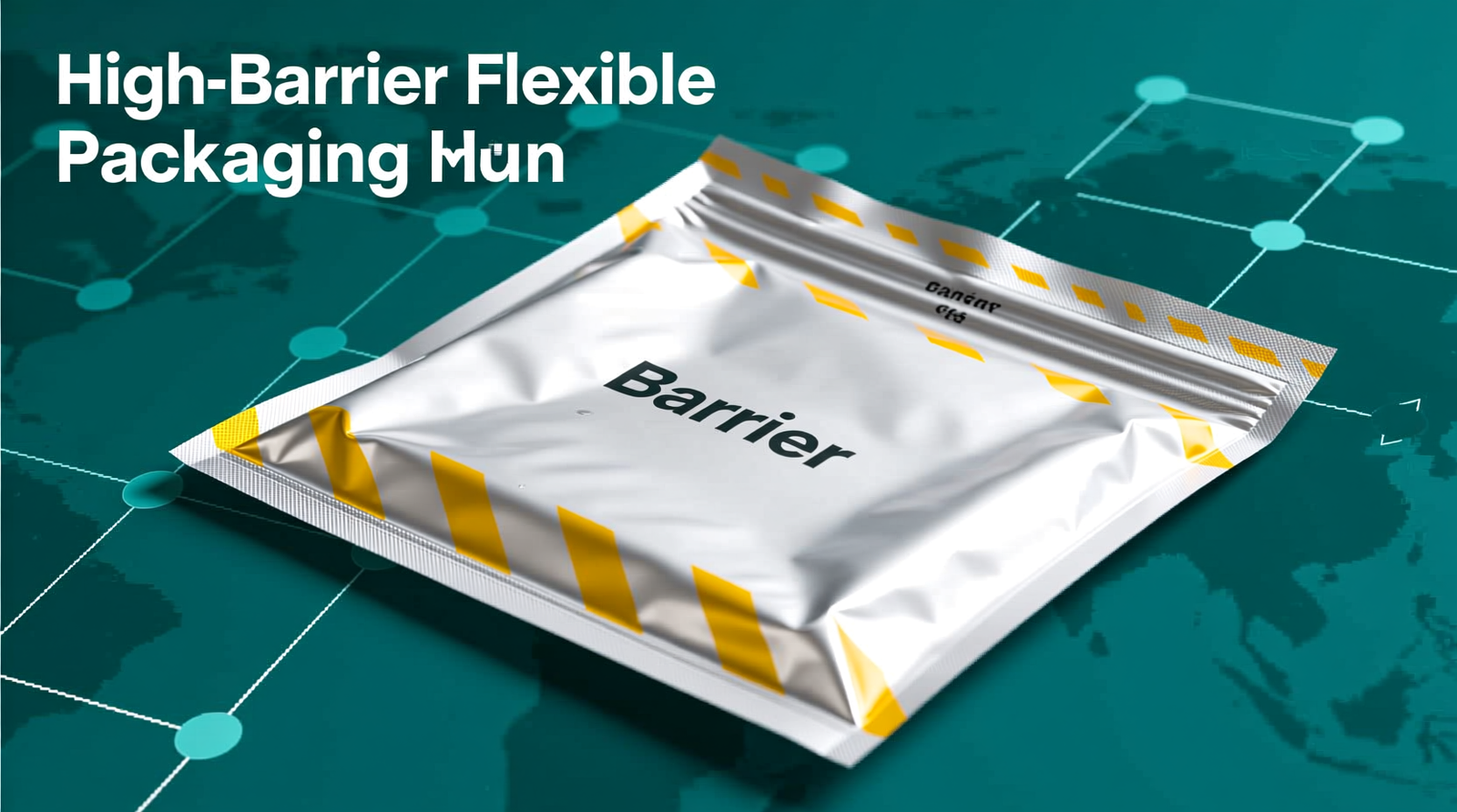
High-barrier flexible packaging is one of the biggest technical battlegrounds for mono-material design. Around ~35% of mono-material demand is estimated (industry modeling) to involve higher-barrier films, where oxygen and moisture protection are central to product quality.
Barrier performance basics:
- OTR (oxygen transmission rate): Oxygen permeation through a film, typically reported as cc/m²/day (conditions vary by test method).
- WVTR (water vapor transmission rate): Moisture permeation, often reported as g/m²/day.
At a high level, many mono-material high-barrier structures can compete well in moderate-barrier needs, but may struggle to match foil laminates in extreme requirements. As a directional rule-of-thumb (not universal), foil laminates can reach near-zero OTR performance, while mono-material barrier films may be more commonly engineered into ranges such as:
- OTR: from single digits up to tens of cc/m²/day depending on thickness, coating, EVOH content, humidity sensitivity, and converting integrity
- WVTR: similarly dependent on structure; moisture barrier is often more achievable than oxygen barrier, but sealing/defect control becomes decisive
These are broad engineering ranges; actual performance depends on test conditions, humidity, film damage, seal area, and package geometry.
TL;DR: Mono-material high-barrier films are expanding into tougher applications, but foil laminates still dominate where “near-zero oxygen” protection is mandatory.
High-Barrier Mono-Material Films: PE vs PP Structures and EVOH Thresholds
High-barrier mono-material designs typically use one or more of the following approaches:
- PE-based (mono-PE) high barrier: Often uses MDO-PE for stiffness plus a barrier layer (e.g., EVOH) and/or barrier coating (AlOx/SiOx or proprietary coatings). Sealing layers remain PE to preserve stream compatibility.
- PP-based (mono-PP) high barrier: Often uses BOPP/OPP for stiffness and optics, with barrier coatings and PP sealants. PP can be attractive where higher heat resistance and stiffness are important.
EVOH guidance nuance: Converters often keep EVOH (ethylene vinyl alcohol) as a thin layer—commonly referenced as <10% of the structure—to align with many European design-for-recycling guidelines (e.g., commonly referenced thresholds within RecyClass/CEFLEX-aligned guidance). However, thresholds vary by region and by label program; what qualifies as “recyclable” in one market may be “check locally” in another.
TL;DR: PE and PP mono-structures use different toolkits (orientation/coatings/EVOH). Keeping EVOH low (often <10% in EU guidance) helps recyclability scoring, but rules differ across regions and label programs.
Key Market Drivers: Regulation, EPR Economics, and Retail Specifications
- Regulation and compliance: EU packaging waste policy and national implementations increasingly reward recyclable designs and discourage hard-to-recycle composites.
- EPR (Extended Producer Responsibility) fee modulation: In markets where EPR fees vary by recyclability, moving to mono-material can reduce producer fees (scheme-dependent) and lower long-term compliance risk.
- Retailer packaging standards: Retailers often set packaging scorecards or accepted-material lists; non-compliant formats can trigger delisting risk or redesign timelines.
- Operational performance targets: Reduced scrap and improved seal consistency can produce measurable cost savings—provided the mono-material structure is tuned to the equipment.
TL;DR: Adoption is pushed by a mix of compliance (EU rules), economics (EPR fees), and retailer requirements, with manufacturing KPIs (scrap, downtime) increasingly part of the business case.
Implementation Considerations for Converters and Brand Owners
Moving from multi-material laminates to mono-material structures is rarely a “drop-in” change. Common production and performance considerations include:
- Sealing system adjustments: New films may require changes in sealing jaw profiles, temperatures, dwell time, and pressure to avoid burn-through or cold seals.
- Film stiffness and forming behavior: Oriented mono-material webs can change forming depth, wrinkle behavior, and gusset formation; this matters for VFFS (vertical form-fill-seal) and HFFS (horizontal form-fill-seal).
- COF (coefficient of friction) tuning: Web handling and stacking can shift; slip/anti-block packages may need optimization to maintain speed without jamming.
- Printing and lamination compatibility: Ink systems, primers, and adhesives must be compatible with recycling guidance and also meet bond strength and migration requirements for food contact (where applicable).
- Machine speed implications: Some mono-material barrier films run at comparable speeds; others require slower start-up ramps or tighter process windows until sealing and web handling are stabilized.
Mini case example (converter operations): In a typical flow-wrap upgrade from a PET/PE laminate to a PE-dominant oriented structure, converters often report that line throughput can be maintained after re-optimizing jaw temperature and dwell, but initial scrap can rise during commissioning. Teams that stage trials (pilot → limited run → full conversion) frequently reduce start-up waste by standardizing setpoints and training operators on the narrower seal window of the new structure.
TL;DR: Mono-material conversion is an engineering change: expect sealing, COF, stiffness/forming, and ink/adhesive compatibility work—plan trials to control scrap and protect throughput.
Decision Framework: Is Mono-Material Packaging Suitable for Your Product?
Use this checklist to quickly screen mono-material suitability before deep testing:
- Product sensitivity: Is the product highly oxygen-sensitive (e.g., coffee), moisture-sensitive (powders), or aroma-sensitive (spices)?
- Fat content: High-fat products often need stronger oxygen and aroma barrier to avoid rancidity.
- Target shelf life: What is the required shelf life and safety margin, and how will it be validated (OTR/WVTR testing + aging studies)?
- Distribution conditions: Ambient vs chilled vs frozen; any hot-fill/retort exposure; expected abuse and puncture risk.
- Pack format constraints: Zippers, spouts, and fitments—can they be designed to be stream-compatible?
- Regional recyclability requirements: Which label programs or retailer scorecards must be met (e.g., RecyClass/CEFLEX guidance in EU, How2Recycle in the US)?
- Recycled content roadmap: Will the structure need PCR (post-consumer recycled) content later, and can performance tolerate it?
TL;DR: Start with sensitivity, shelf-life, distribution temperature, and required recyclability labels—these four factors usually determine whether mono-material is feasible without compromising product performance.
Challenges: Balancing Performance, Cost, and “Recycled in Practice” Outcomes
- Barrier performance gaps vs foil laminates: Foil and some metallized structures still outperform many mono-material designs for extreme oxygen barrier needs, especially for long shelf life and aroma protection.
- Shelf-life risk: Industry case studies report shelf-life reductions up to ~27% in certain conversions where barrier was not fully matched (category dependent; basis: published case examples and technical conference data). This risk can often be mitigated—but not always eliminated—through barrier redesign and better seal integrity.
- Infrastructure variability: A “recyclable” mono-material film may not be recycled if local collection doesn’t accept films, sorting can’t separate them, or end-markets for film PCR are weak.
- Cost and resin volatility: PE and PP price swings can shift total pack cost; additional orientation/coating steps can increase conversion cost even if the base resin is similar.
TL;DR: The main blockers are (1) matching foil-level barrier for some products and (2) ensuring recycling exists in practice, not just on paper—cost and resin volatility add uncertainty.
Mechanical Recycling vs Chemical Recycling: Design Implications
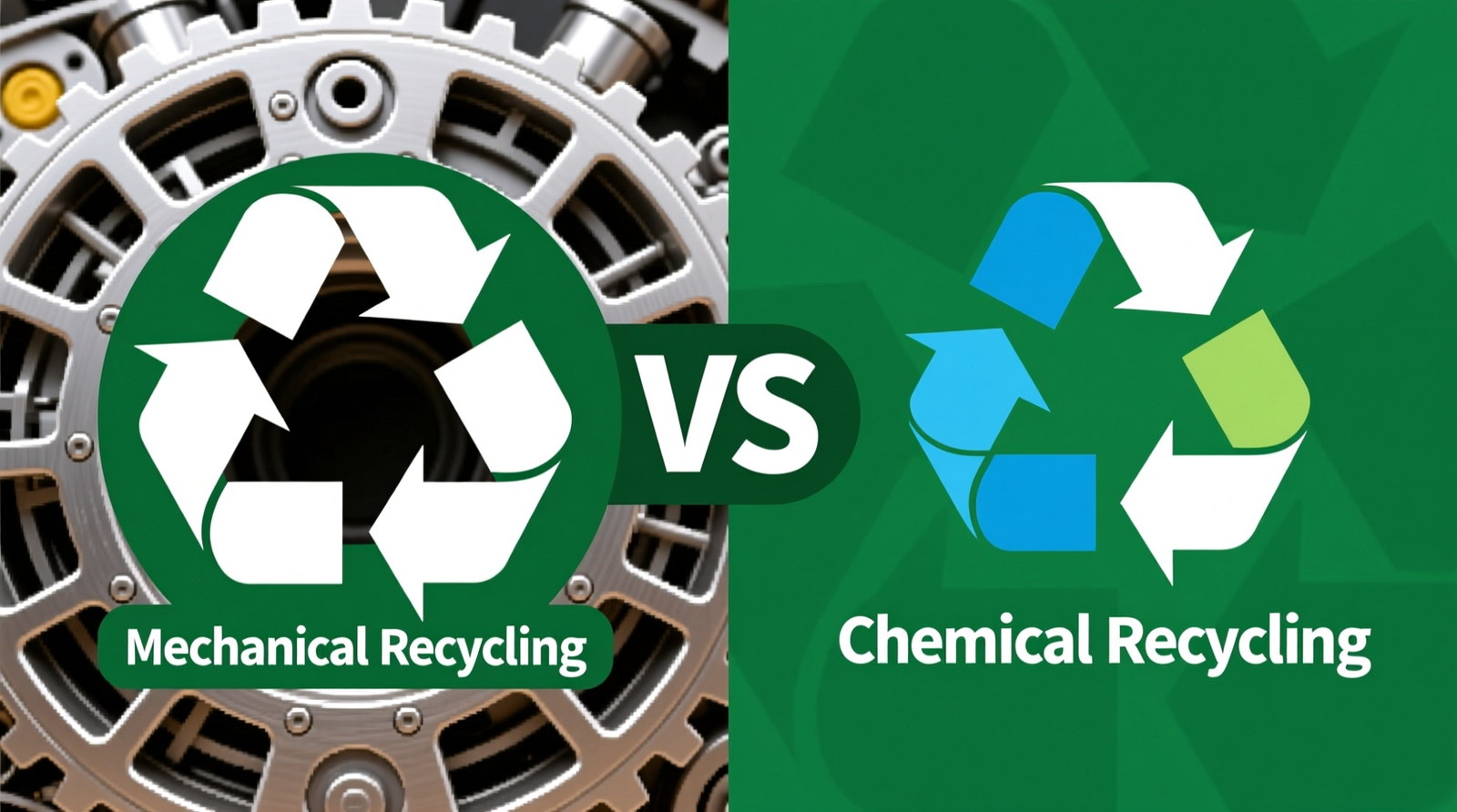
Mechanical recycling generally benefits from simpler, mono-material structures because they reduce sorting complexity and improve melt consistency.
Chemical recycling (also called advanced recycling; processes such as pyrolysis or depolymerization depending on polymer) may, in the future, handle a wider range of mixed or contaminated plastics. However, capacity, economics, policy recognition, and mass-balance accounting vary by region and are still developing.
Design implication for today: Most brands still prioritize mechanical recyclability because it is more established and often favored in design-for-recycling guidelines. Chemical recycling may influence future design choices (e.g., tolerating certain additives), but relying on it can be risky if local access, certification, or offtake is not secured.
TL;DR: Design primarily for mechanical recycling now (simpler structures, stream dominance); treat chemical recycling as a potential supplement where credible capacity and verified offtake exist.
Regional Insights (Consolidated): Europe Leads, North America Builds Film Recovery, Asia-Pacific Scales Unevenly
Europe (estimated ~50–55% share): Strong policy frameworks, established packaging EPR schemes, and more mature recyclability guidance accelerate mono-material adoption. The limiting factor is often technical (high-barrier needs) rather than awareness.
North America (estimated ~35–40% share): Momentum comes from retailer packaging requirements, evolving state/provincial policies, and investment in film recycling. Recyclability definitions frequently track label-program criteria (e.g., How2Recycle) and local acceptance lists.
Asia-Pacific (estimated ~20–25% share and rising): Adoption is increasing, but outcomes vary substantially by country and city due to uneven collection, sorting, and domestic end-market capacity for recycled film.
TL;DR: Europe is policy-and-guidance led, North America is building film recovery and standardizing claims, and Asia-Pacific growth depends heavily on local infrastructure and cost sensitivity.
Country-Level Nuances: Regulations, Pilots, and Infrastructure Signals

- United States: Recyclability claims are often shaped by local acceptance and labeling rules; brand teams frequently design toward How2Recycle eligibility while monitoring state-level EPR developments.
- Germany: Strong EPR enforcement and sorting infrastructure makes “design for recycling” more measurable; brands focus on meeting recyclability assessments and reducing EPR costs where modulation applies.
- United Kingdom: Packaging policy continues to evolve with stronger scrutiny on recyclability claims and reporting; brands often prioritize clear on-pack guidance to reduce consumer confusion and contamination.
- India: Plastic waste management rules and implementation pressure are increasing, but collection and sorting performance can be highly localized; scalable mono-material adoption often follows where aggregator networks and end-markets are strongest.
- China: Waste reduction policy and domestic recycling market development influence design choices; some applications move to mono-material, while others adopt transitional structures depending on performance needs and local recyclate demand.
TL;DR: Country differences are less about intent and more about enforcement, collection coverage, and whether end-markets can absorb recycled flexible materials.
Competitive Landscape: Commercialization Pathways and Where Innovation Is Concentrated
The competitive set includes large integrated packaging producers and specialist film/technology suppliers. Key players frequently cited in the mono-material space include Amcor, Berry Global, Huhtamaki, Constantia Flexibles, TOPPAN, and regional flexible packaging converters.
Where innovation is most visible today:
- Commercial-scale mono-material pouch lines: Increasing numbers of pouches running PE- or PP-dominant structures for dry foods, home care, and selected pet food applications.
- High-barrier mono-PP pipeline: A growing set of solutions targeting more demanding applications (including higher-temperature processing windows), often relying on coatings and carefully controlled barrier-layer content.
- Recyclability verification: More projects include formal recyclability assessments aligned to regional guidelines (e.g., RecyClass/CEFLEX methodologies in Europe), rather than relying on generic “recyclable” claims.
TL;DR: Differentiation is shifting from “we launched a mono-material film” to “we can prove barrier + machinability + recyclability scoring in the target region at scale.”
Strategic Outlook: What Industrial Teams Should Prioritize Through 2035

For converters, brand owners, and equipment partners, the most practical roadmap usually includes:
- Barrier-by-need engineering: Apply high barrier only where the product truly requires it; avoid over-specifying structures that raise cost and complicate recycling.
- Regional compliance design: Engineer to the specific recyclability guideline and labeling environment where the pack will be sold (not a generic global claim).
- Line validation discipline: Invest in structured trials, DOE (design of experiments) on sealing, and defined acceptance criteria (scrap %, seal strength, leak rate, OTR/WVTR).
- “Recycled in practice” partnerships: Where flexible collection is weak, consider supporting collection pilots, offtake agreements, or participation in industry coalitions to improve actual recycling rates.
TL;DR: Winning strategies prioritize fit-for-purpose barrier, region-specific recyclability compliance, disciplined line trials, and partnerships that improve recycling outcomes beyond technical design.
FAQ
Q: What is mono-material flexible packaging, and how is it different from multi-layer laminates?
A: Mono-material flexible packaging is primarily made from one polymer family (usually PE or PP), while multi-layer laminates combine incompatible layers such as PET, aluminum foil, and PE. Mono-material designs generally sort and recycle more easily in mechanical recycling systems, depending on local collection and sorting capability.
Q: What does “design for recycling” mean for mono-material pouches and films?
A: Design for recycling means keeping the structure compatible with a dominant recycling stream (mono-PE or mono-PP), controlling barrier layers (e.g., keeping EVOH thin and within local guideline thresholds), and selecting inks/adhesives/fitments that do not disrupt sorting or reprocessing. It also includes designing to meet specific regional guidance such as RecyClass/CEFLEX in Europe or How2Recycle in the US.
Q: How do mono-PE and mono-PP compare for high-barrier flexible packaging?
A: Mono-PE typically offers easier sealing and toughness, while mono-PP often provides higher stiffness and better heat resistance. Both can be engineered to higher barrier levels using orientation, coatings (like AlOx/SiOx), and thin EVOH layers, but they may still fall short of foil laminates for extremely low oxygen transmission requirements.
Q: Why can a package be “technically recyclable” but not “recycled in practice”?
A: A package may be compatible with recycling technology, but still not get recycled if local collection doesn’t accept films, sorting facilities can’t separate the material effectively, or end-markets for recycled flexible plastics are limited. Clear on-pack recycling labels can help consumer sorting, but infrastructure and end-market demand ultimately determine recycling rates.
Q: What equipment changes are most common when converting to mono-material films?
A: Common changes include adjusting sealing jaw temperature/dwell/pressure, retuning COF for web handling, validating forming behavior (especially on VFFS/HFFS), and ensuring inks/adhesives meet both performance needs and recyclability guidance. Many teams manage risk through staged trials to control start-up scrap and maintain line speed.