Doğa PET’s expansion is a practical, industrial case study in scaling a high-capacity PET bottle-to-flake recycling line in Turkey: a second, near-identical Herbold Meckesheim washing line is being added to double output to ~200 metric tons/day of recycled PET (rPET) flakes while tightening contamination control and improving uptime.
Strengthening rPET Flake Production Capacity for Industrial Demand
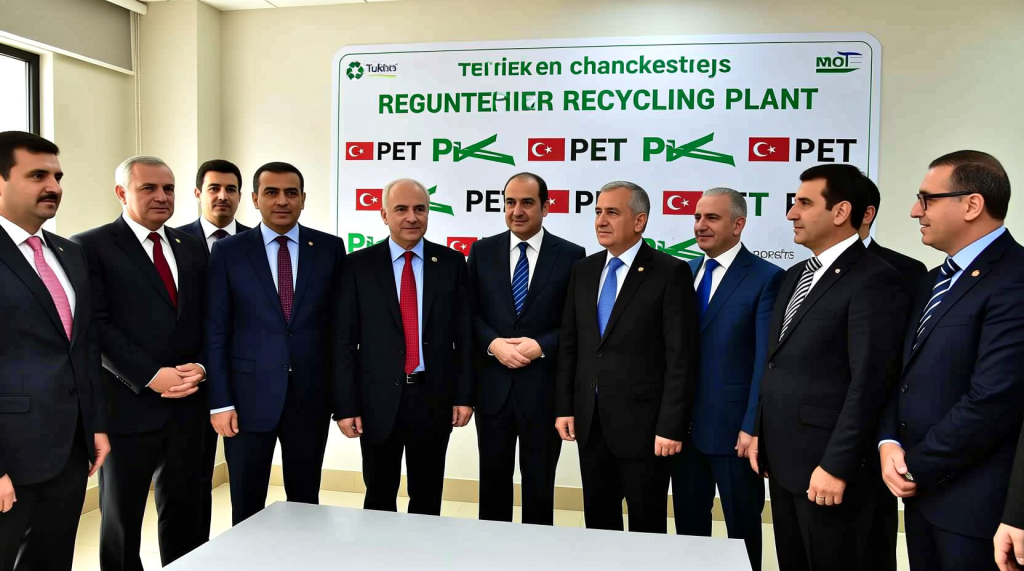
Doğa PET has placed an official order for a second PET (polyethylene terephthalate) washing line at its PET-flake recycling and processing facility in Turkey. Implemented with Herbold Meckesheim (plastic recycling machinery and system solutions), the project is designed to double washing capacity and reach a total daily output of around 200 metric tons/day of rPET flakes for packaging, fiber, and thermoforming markets—especially customers sourcing food-grade rPET flakes and consistent non-food-grade feedstock.
In practical purchasing terms, doubling capacity is not just “more tons”: it increases supply continuity for converters running 24/7 extrusion and SSP (solid-state polycondensation) operations that rely on steady flake quality and predictable deliveries. In Europe, recycled-content targets are also becoming more explicit—e.g., the EU Single-Use Plastics Directive sets 25% rPET in PET beverage bottles by 2025 and 30% by 2030 (see the European Commission’s overview: https://environment.ec.europa.eu/topics/plastics/single-use-plastics_en). Turkey-based supply can be strategically relevant for regional packaging value chains that sell into EU markets.
Downstream applications for Doğa PET’s flakes typically include sheet/thermoforming, strapping, fiber, and (depending on the customer’s decontamination/qualification route) bottle applications. For bottle-grade pathways, customers often evaluate metrics such as intrinsic viscosity (IV) of flakes (a proxy for PET molecular weight), color (e.g., b*), black specks, PVC (polyvinyl chloride) content, and moisture after drying. Typical commercial flake targets used by many buyers are in the range of IV ~0.72–0.84 dL/g (application-dependent) and moisture ≤0.3–0.5% leaving the wash/dry section, with further drying needed before extrusion; exact specs depend on the downstream process window.
TL;DR: The expansion supports industrial customers that need dependable, high-volume rPET flakes and aligns supply planning with EU recycled-content requirements for beverage packaging.
Input Material Specs for Post-Consumer PET Bottle Recycling in Turkey
For post-consumer PET bottle recycling in Turkey, bale quality can vary significantly by season and collection channel. Typical bale sources include municipal collection, mixed packaging streams, deposit-style returns (where available), and traded bales that may contain a wider range of packaging formats. The line is engineered to tolerate variability without pushing contamination into the final flake.
Common contaminants in post-consumer PET bottle bales include:
- Polyolefins (PP/PE—polypropylene/polyethylene) from caps and rings
- Labels (OPP, PETG, paper) and adhesives
- PVC (e.g., stray blister packs or label materials), a critical risk for PET processing
- Metals (ferrous/non-ferrous), glass fines, stones/sand
- Organics (sugars, oils), especially in hot months
From an acceptance/quality standpoint, many industrial buyers define targets for residuals such as PVC/other chlorine-containing polymers (often in the low tens of ppm at the flake stage, depending on downstream filtration and customer risk tolerance), polyolefin carryover, and residual label/adhesive. The equipment and process controls on a high-capacity PET washing plant are therefore set up to reduce contaminant load early and keep it from recirculating in the system.
TL;DR: The line is designed around real-world bale variability—caps/labels/adhesives, PVC risk, and seasonal organics—so contamination is removed early and consistently.
Proven First PET Washing Line: What the Plant Learned in Two Years
The first Herbold Meckesheim PET washing line has been running for two years at Doğa PET. During this time, Doğa PET reports consistent production of rPET flakes with mechanical and optical properties suitable for demanding downstream processes.
Two operator-level insights from the first line influenced the expansion design:
- Handling variable bale quality: When incoming bales showed higher label load (a common shift during seasonal beverage peaks), the first line maintained output by keeping separation steps stable rather than “over-washing”—reducing the risk of unnecessary energy and water use.
- Managing moisture and carryover: Operators observed that tighter control of pre-wash discharge and float/sink settings reduced cap/label carryover into the hot wash, improving cleaning efficiency and reducing unplanned stops for screen cleaning.
Doğa PET cites two drivers for ordering a second, identical line:
- Reliable performance in continuous industrial operation (supporting higher planned uptime)
- Repeatable flake quality across fluctuating bale compositions (supporting more predictable customer qualification)
TL;DR: The first line served as a full-scale testbed; the second line replicates what worked and formalizes operator learnings into hardware and settings.
Key Process Stages in the New PET Washing Line
This industrial PET bottle-to-flake recycling line follows a proven, high-throughput configuration designed to remove contaminants step-by-step rather than relying on one “aggressive” wash stage:
- Debaling and controlled dosing to avoid surge feeding and maintain stable material load
- Pre-sorting to remove macro-contaminants before size reduction
- Forced feeding granulation (granulators with controlled infeed) to produce uniform regrind and reduce fines variability
- Pre-wash / washing drum to remove loose dirt, organics, and label fragments early
- Hot washing to target adhesives, oils, and persistent label glue
- Density separation via hydrocyclone (liquid cyclone using density differences) to separate PET from lighter polyolefins (PP/PE)
- Mechanical drying to reduce moisture before storage/packing or downstream extrusion
For technical readers, the goal is measurable: stabilize flake cleanliness so downstream filtration load drops, extrusion screens last longer, and IV loss is minimized through controlled thermal exposure. Typical buyer KPIs (key performance indicators) include residual PVC/labels, polyolefin carryover, fines percentage, moisture, and color stability.
TL;DR: The line is a staged removal system—debalers, granulation, pre-wash, hot wash, hydrocyclones, and drying—built to protect flake quality and downstream processing.
Why Batch Hot Washing Was Selected (vs. Continuous Hot Washing)
The hot wash is specified as a batch design rather than a continuous hot wash. In PET washing, batch hot washing can offer more repeatable cleaning when feedstock quality fluctuates—because operators can control residence time, temperature, chemical concentration (e.g., caustic dosing), and mechanical agitation intensity for each batch.
In contrast, continuous hot washing can be advantageous for steady, uniform feedstock at very high and constant mass flow, but it may be more sensitive to sudden changes in label/adhesive load. For Doğa PET’s real-world bale mix, batch control helps avoid under-washing (adhesive carryover) or over-washing (unnecessary energy/chemical use), while keeping traceability by batch for quality investigations.
TL;DR: Batch hot washing was chosen to maximize process control and cleaning repeatability under variable post-consumer bale conditions.
Second Line Layout: “Copy and Scale” with Maintenance and Uptime Advantages
The new washing line is designed with the same core process layout and throughput parameters as the existing installation. This “copy and scale” approach is a practical uptime strategy: two identical lines simplify spare parts stocking, operator training, and maintenance routines.
From an operations perspective, having two comparable lines can reduce business risk and downtime impact. If one line requires planned maintenance (e.g., granulator knife service, screen changes, pump inspection), the second line can keep production running, improving throughput stability at the site level rather than only at a single-line level.
TL;DR: Two identical lines improve maintainability and production continuity through shared spares, shared know-how, and easier scheduling of downtime.
Process Optimization Based on First-Line Operating Data (Quantified Targets)
While the second line mirrors the proven configuration, Doğa PET and Herbold Meckesheim integrated targeted optimizations based on two years of production data and observed bale variability. The intent is to reduce contamination peaks and make output more predictable for customers, especially those qualifying food-grade rPET flakes via additional decontamination steps.
Typical measurable improvement targets for this type of “second line with upgrades” project include:
- Lower residual label/adhesive carryover: reducing label fragments and glue-related stickies that can raise melt filter pressure in extrusion
- Lower polyolefin carryover: tighter float/sink and cyclone performance to reduce PP/PE contamination
- Higher yield from difficult bales: less PET loss to reject streams via better early separation and washing control
- Higher throughput consistency: fewer micro-stoppages from screen/blower loading and reduced manual intervention
In practice, plants implementing stronger pre-wash and sorting often see double-digit reductions in nuisance contamination (labels/fines) and more stable extrusion behavior downstream; the exact percentage depends on the incoming bale mix and QA limits defined by the customer.
TL;DR: The second line keeps the proven recipe but tightens contamination/yield control using first-line data, aiming for fewer contamination spikes and more predictable output.
Higher Pre-Sorting Capacity (8.0 t/h) and Integrated Washing Drum
A key upgrade is increased pre-sorting capacity to 8.0 t/h. Raising capacity in pre-sorting helps prevent bottlenecks and reduces the risk that contaminants “slip through” during peak intake. The system includes:
- Debaler for efficient bale opening and controlled material dosing
- Integrated washing drum combining wet and dry zones in one unit for intensive pre-cleaning
The integrated washing drum targets loose contamination (sand, fines, organic residues, label pieces) immediately after debaling. Removing this mass early typically reduces downstream wash bath loading and can lower:
- Water recirculation burden (less suspended solids accumulation)
- Energy demand per ton in later stages (less “dirt heating” and fewer rework loops)
- Wear on pumps and separation equipment (less abrasive carryover)
Compared with the first line configuration, this upgrade is aimed at more stable operation under variable bale quality—particularly when seasonal contamination rises (more dirt/organics). As a result, plants often achieve fewer unplanned stops and improved throughput regularity; Doğa PET’s choice to standardize on two parallel lines also supports rapid recovery when the input stream quality shifts.
TL;DR: 8.0 t/h pre-sorting plus an integrated wet/dry washing drum removes dirt and loose label fragments earlier, helping reduce downstream load and improve operational regularity.
Automation, Monitoring, and Quality Assurance Concept
For a high-capacity PET washing plant, repeatability depends as much on control strategy as on mechanics. The two-line concept supports a unified approach to:
- Automation level: consistent recipe control for critical parameters (e.g., wash temperatures, chemical dosing, pump speeds, and separation settings)
- Process data logging: recording batch/shift parameters to connect deviations (e.g., higher label load) with corrective actions
- Inline/at-line checks: routine monitoring of moisture, bulk density, visual contamination, and simple float/sink verification to detect polyolefin carryover early
- Traceability: linking bale lots to production batches to support customer claims and complaint resolution
For food-contact routes, customers typically require documentation and consistent QA practices. Regulatory and guidance frameworks relevant to food-contact recycled plastics include the European Food Safety Authority (EFSA) approach to evaluating recycling processes (https://www.efsa.europa.eu/en/topics/topic/food-contact-materials) and the U.S. FDA perspective on recycled plastics in food packaging, including Letters of No Objection (LNOs) (https://www.fda.gov/food/packaging-food-contact-substances-food-additives/recycled-plastics-food-packaging). Note: food-contact compliance is typically achieved at the process + quality system + downstream decontamination level; “clean flakes” alone are not automatically food-grade without the appropriate validated process chain.
TL;DR: The project emphasizes recipe control, data logging, and traceability—foundational elements for stable industrial output and for customers pursuing EFSA/FDA-aligned food-contact pathways.
Regional and Plant-Integration Aspects: What’s Distinct About This Installation
Rather than installing a different technology package, Doğa PET is implementing a twin-line strategy—two comparable industrial PET bottle-to-flake recycling lines operating in parallel. This is distinct from many expansions that add a single “bigger” line, because parallelization can improve:
- Operational flexibility: one line can run while the other is cleaned, serviced, or optimized
- Changeover speed: trials on one line without risking full-site output
- Utility integration: better balancing of water loops, wastewater load, and electrical peaks across two lines
In a practical example from the first line’s operation, the plant managed periods of mixed bale composition (higher colored bottles, more sleeves, higher organic residues) by adjusting front-end removal and hot-wash recipes rather than accepting higher reject rates. The second line’s upgraded pre-sorting and pre-wash design formalizes this approach so the plant is less dependent on manual “heroic” interventions during difficult feedstock periods.
TL;DR: The site is scaling via two parallel, standardized lines—improving flexibility, maintenance planning, and utility balancing while embedding first-line operational lessons.
Industry-Oriented Takeaway and Collaboration Path
For converters, brand owners, and waste management companies, Doğa PET’s expansion demonstrates how a high-capacity PET washing plant can be scaled using a repeatable process design while improving contamination control at the front end. Customers seeking more predictable rPET supply—especially for sheet, thermoforming, fiber, and bottle-grade pathways—typically benefit when flake producers can show:
- Documented QA targets (moisture, PVC risk control, polyolefin/label carryover)
- Stable production planning (parallel lines enabling higher effective uptime)
- Traceability and data transparency (to support qualification and audits)
If your organization is evaluating rPET sourcing or partnerships in Turkey and nearby markets, this type of two-line expansion can enable more reliable long-term supply agreements and technical trials under realistic industrial conditions.
TL;DR: The expansion is a capacity and quality-risk management play—useful for buyers who need documented, stable rPET flake supply and want partners capable of qualification-grade transparency.
FAQ
Q: What specs define “food-grade rPET flakes,” and can a washing line produce them directly?
A: “Food-grade rPET flakes” generally refers to flakes produced under controlled conditions and intended for a validated food-contact recycling pathway. A washing line can produce very clean flakes (low labels, low polyolefins, controlled moisture), but food-contact compliance typically requires a validated decontamination step and quality system aligned with EFSA/FDA expectations. Buyers usually assess PVC risk, polyolefin carryover, moisture, color, and traceability documentation before qualification.
Q: What typical quality targets do industrial buyers ask for in PET bottle-to-flake recycling lines?
A: Common targets include low PVC/other chlorine-containing polymers (often in low tens of ppm depending on buyer requirements), minimal label/adhesive residue, low polyolefin carryover (PP/PE from caps), controlled moisture after drying (commonly ≤0.3–0.5% at the flake stage), and consistent IV (intrinsic viscosity) suitable for the downstream extrusion/SSP process.
Q: Why does increasing pre-sorting capacity to 8.0 t/h matter in a high-capacity PET washing plant?
A: Higher pre-sorting capacity reduces bottlenecks and helps remove macro-contaminants and loose dirt earlier, which lowers the contamination load on shredding/granulation, hot washing, and separation equipment. This typically improves operational regularity (fewer nuisance stops), reduces wear, and supports more stable flake cleanliness when bale quality fluctuates.
Q: Batch vs continuous hot washing—what’s better for post-consumer PET bottle recycling in Turkey?
A: It depends on feedstock consistency. Batch hot washing is often preferred when bale composition changes frequently because residence time, temperature, and chemical dosing can be adjusted per batch for repeatable cleaning. Continuous hot washing can be efficient for very consistent input streams but may be more sensitive to sudden shifts in labels/adhesives and organics typical of mixed post-consumer bales.
Q: How does running two identical PET washing lines help maintenance and uptime?
A: Two standardized lines simplify spare-part inventories, operator training, and maintenance procedures. They also allow planned maintenance on one line while the other continues running, improving site-level production continuity and reducing the risk that a single equipment issue stops all output.