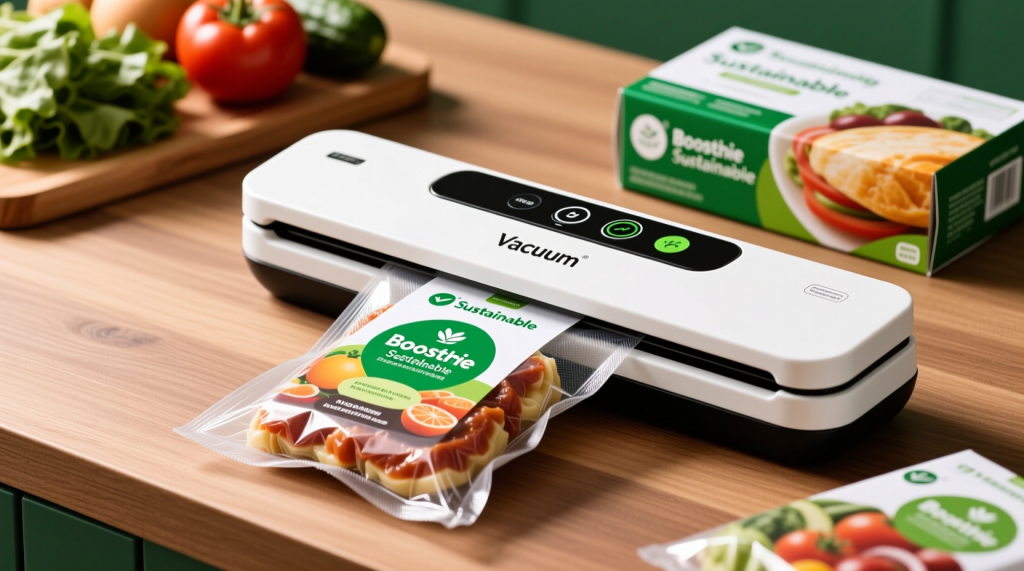
The Sustainability Case for Vacuum Sealing in Food Packaging
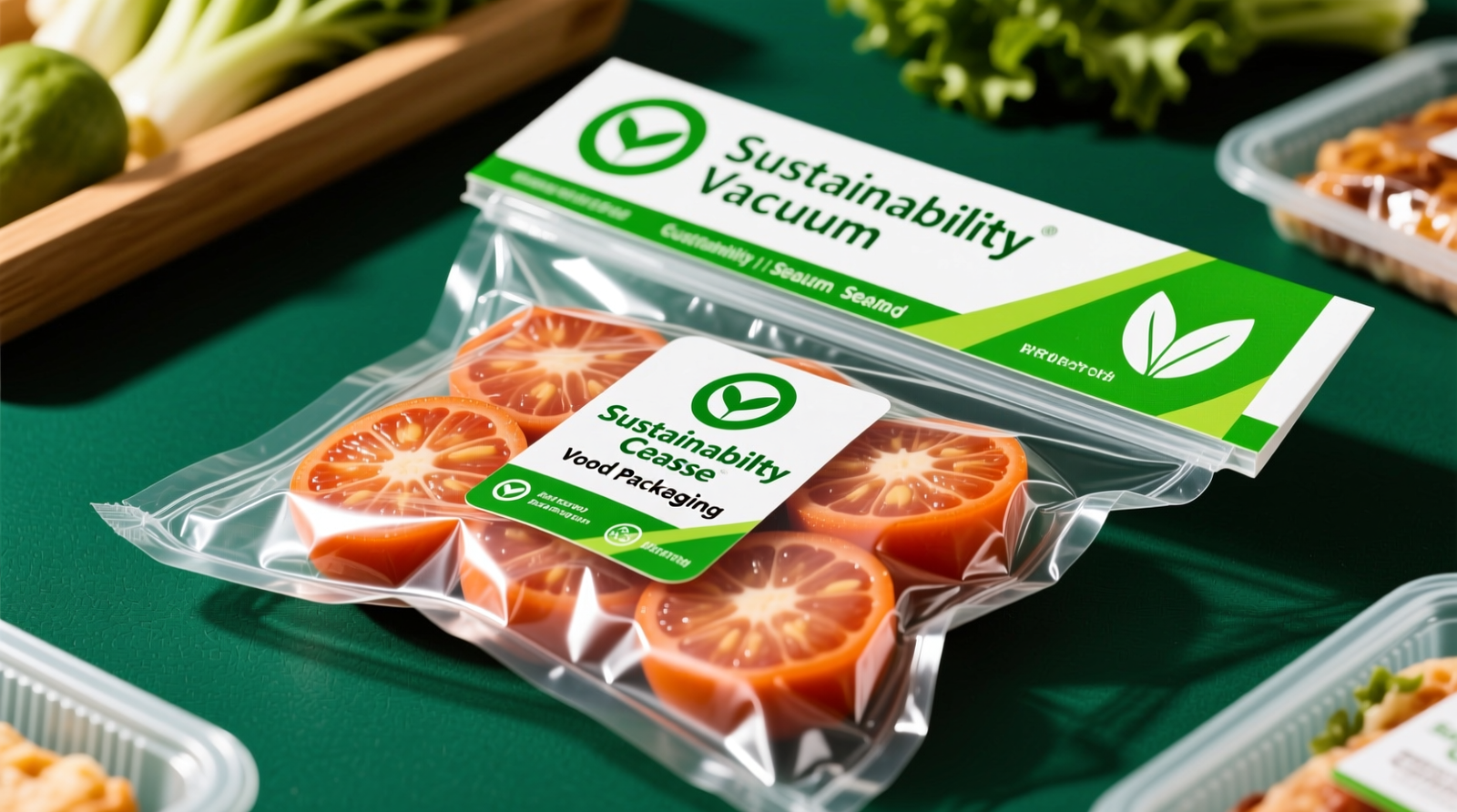
Key takeaway: Vacuum sealing supports sustainable food packaging primarily by cutting food waste (spoilage, returns, and freezer burn) and secondarily by reducing packaging materials through tighter, right-sized packs.
As global food production and distribution scale up, food manufacturers, seafood processors, and commercial kitchens are under pressure to reduce waste, extend shelf life, and maintain product quality—while meeting stricter environmental and regulatory expectations.
Vacuum sealing technology removes air (especially oxygen) from a package before sealing. Lower oxygen slows oxidation and limits the growth of aerobic spoilage organisms (microbes that need oxygen), helping foods stay fresher longer and reducing waste across the cold chain.
Mini case example (waste reduction): A mid-size seafood processor shipping fresh salmon portions (regional distribution, 2–5 day transit) reported a ~25% reduction in retail returns after moving from overwrapped foam trays to chamber vacuum packaging plus stricter time/temperature controls. The main gains came from reduced drip loss, better odor control, and fewer leakers in transit (seal integrity improvements).
What credible guidance says: Food safety regulators stress that vacuum packaging must be paired with validated process controls and refrigeration to manage anaerobic pathogen risks (covered later). See the U.S. FDA’s Food Code and FSMA resources for baseline expectations around refrigerated foods and preventive controls: FDA Food Code (2022) and FDA FSMA overview.
TL;DR: Vacuum sealing is a high-impact sustainability lever because it reduces spoilage and returns; however, it must be implemented with food safety controls (HACCP/FSMA) and cold-chain discipline.
The Role of Vacuum Sealing in Sustainable Packaging (Shelf Life, Quality, and Waste)
Key takeaway: Vacuum packaging improves shelf life by reducing oxidation and aerobic spoilage; the biggest sustainability win is often food waste reduction, not just “less plastic.”
Vacuum packaging reduces oxygen exposure, which can slow rancidity, discoloration, and moisture loss. In many food categories, this extends usable life and improves sale-through.
- Meat and poultry: Vacuum packaging for meat and poultry typically improves color and oxidative stability versus oxygen-permeable wrap, while reducing purge-related quality complaints (product-specific results vary by cut, temperature, and distribution time).
- Cheese and deli: Vacuum reduces mold growth risk driven by oxygen exposure and helps maintain aroma compounds.
- Frozen foods/seafood: Vacuum helps reduce freezer burn (surface dehydration and oxidation) by minimizing trapped air and moisture migration.
Mini case example (shelf-life extension): A prepared-meals commissary packaging chilled, cooked proteins (sliced roast beef and cooked chicken) reported extending internal “use-by” guidance by ~30–50% after switching from lidded deli containers to HACCP-compliant vacuum sealing equipment with validated chill times, tighter vacuum setpoints, and routine seal checks. The practical outcome was fewer end-of-week markdowns and less product disposal.
Research and standards anchors: For a science-based foundation on packaging’s role in food loss/waste, see the UN FAO resources on food loss and waste. For hygienic design principles relevant to packaging equipment, the 3-A Sanitary Standards program is a commonly referenced benchmark (especially in dairy and hygienic processing environments).
TL;DR: Vacuum sealing’s sustainability impact is driven by longer shelf life and fewer quality defects—often translating into measurable reductions in spoilage, returns, and markdowns.
How Industrial Vacuum Packaging Machines Work (and Why Process Settings Matter)
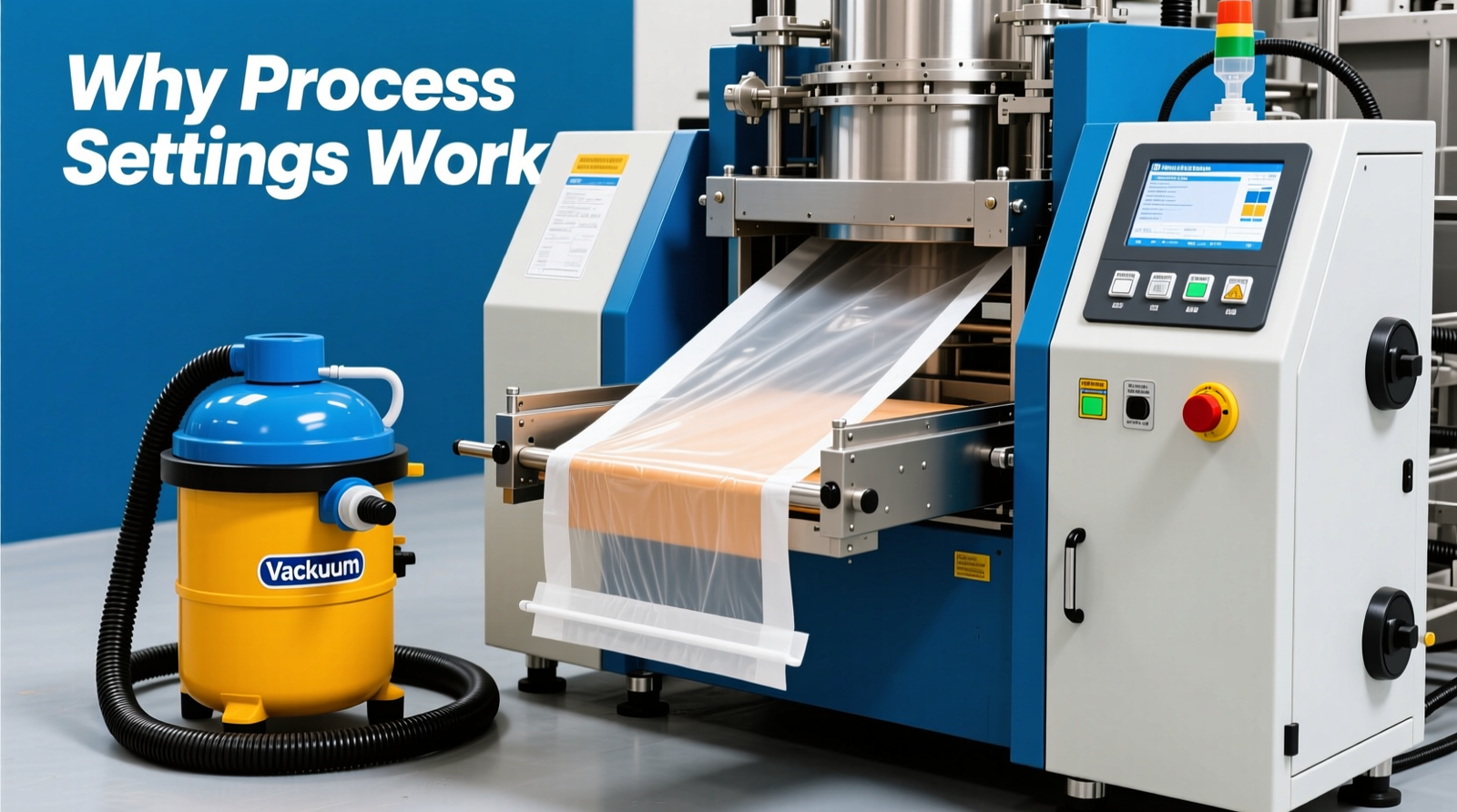
Key takeaway: Vacuum level (mbar), seal temperature/time, and film selection are the “big three” that determine leak rates, shelf life, and line efficiency.
Industrial vacuum packaging machines typically remove air using a vacuum pump, then seal the pouch using a heated seal bar. Performance depends on tightly controlled parameters:
- Vacuum level (absolute pressure): Common setpoints range from roughly 1–50 mbar depending on product sensitivity and pouch structure. Lower mbar (stronger vacuum) generally reduces residual oxygen but can increase product deformation and purge in delicate items.
- Seal temperature profile: Seal bars must match film chemistry. For example, many PA/PE films (polyamide/polyethylene) seal through the PE layer; too low a temperature causes weak seals, too high can thin or burn the seal area.
- Dwell time and cooling time: Thicker or high-barrier films often need longer dwell and adequate cooling to prevent “peel-back” failures after chamber repressurization.
Technical note on vacuum pumps: Many chamber machines use oil-lubricated rotary vane pumps for speed and stable vacuum levels. Oil quality, filters, and maintenance intervals directly influence cycle time consistency and final vacuum (and therefore shelf-life outcomes).
Practical verification example: Plants commonly validate seal robustness with burst testing (pressurizing a sealed pouch until failure), and verify routine performance with dye penetration or vacuum decay leak testing (methods vary by product risk and customer requirements).
TL;DR: Strong results come from controlling vacuum setpoints, seal temperature/time, and verification tests—not just buying a machine.
Chamber Vacuum Sealing Innovations (and When to Add MAP)
Key takeaway: Chamber systems deliver the most consistent seals for industrial use; adding MAP (Modified Atmosphere Packaging) can further improve color, texture, and microbial control for specific foods.
A chamber vacuum sealer places the entire pouch inside a sealed chamber. Air is evacuated from both pouch and chamber, the seal is made under vacuum, and then the chamber returns to atmospheric pressure—compressing the pouch tightly around the product and helping stabilize the seal.
Why industrial users often prefer chamber designs:
- Higher seal consistency and fewer leakers vs. many external suction machines
- Better handling of liquids (marinades, brines, sauces) because the pressure environment is controlled
- Programmable recipes for multiple SKUs (vacuum, gas, seal, cool)
MAP defined: Modified Atmosphere Packaging (MAP) replaces air with a controlled gas mix—commonly CO2 (carbon dioxide) and N2 (nitrogen). CO2 inhibits many microbes; N2 is inert and helps prevent package collapse.
Typical MAP starting points (must be validated per product):
- Red meat (case-ready trays more common than pouches): often higher O2 mixes in tray-sealed MAP to maintain bright red color; vacuum pouches typically trade bloom color for longer oxidative stability.
- Cooked proteins and ready-to-eat items: pouch MAP often uses 20–40% CO2 / balance N2 to suppress spoilage flora and reduce pack collapse.
- Seafood: CO2/N2 mixes can help, but must be balanced against drip loss and sensory impacts; temperature control is critical.
TL;DR: Chamber systems are a go-to for reliable industrial sealing; MAP can add shelf-life benefits, but gas ratios and product behavior must be validated.
Vacuum Packaging for Meat, Poultry, and Ready-to-Eat Foods: Safety, Limits, and Controls
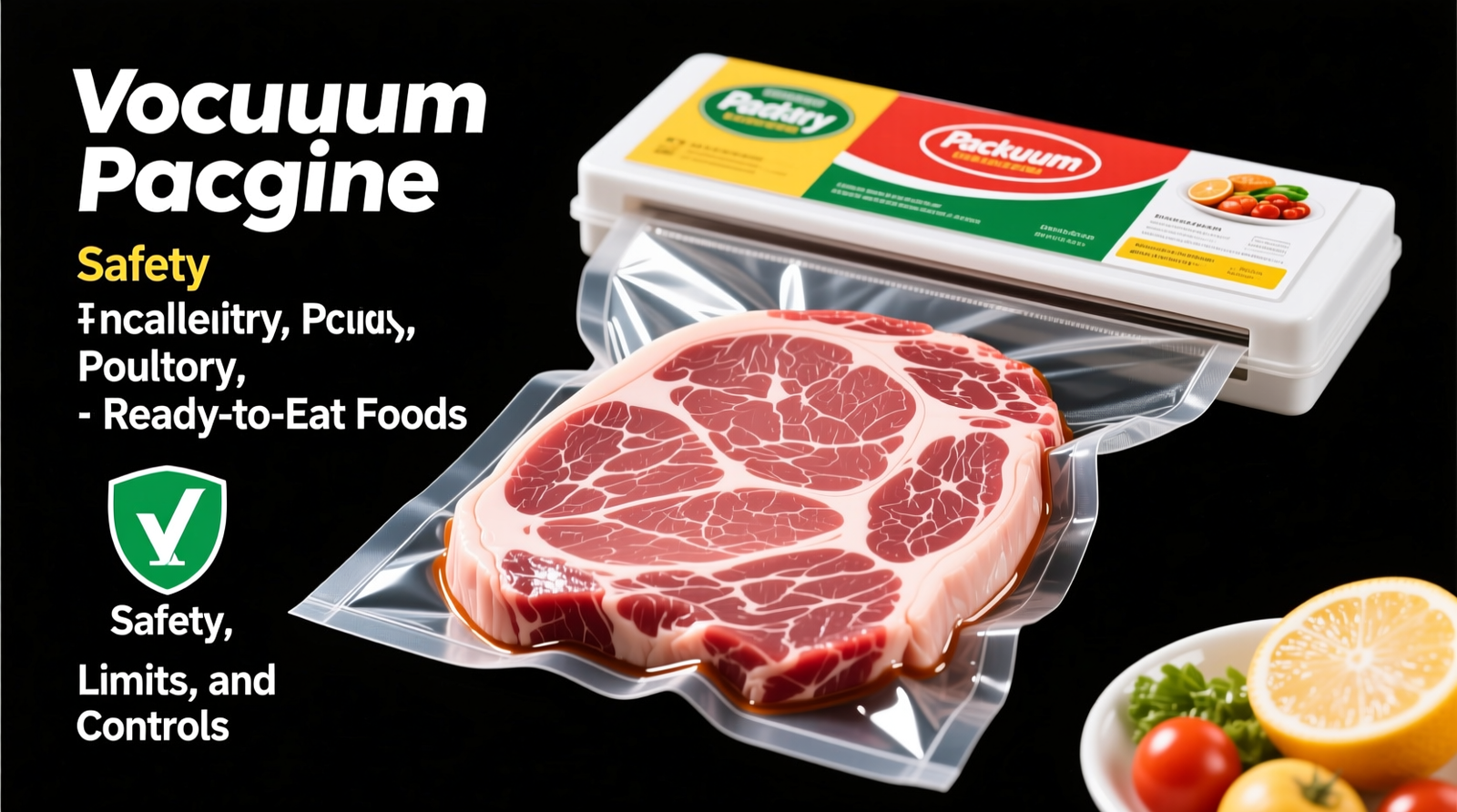
Key takeaway: Vacuum packaging improves quality and shelf life, but it also changes microbial risk—so refrigeration, sanitation, and HACCP validation are non-negotiable.
Vacuum packaging reduces oxygen, which slows aerobic spoilage—but some pathogens tolerate low-oxygen conditions. A key example is Clostridium botulinum, an anaerobic (low-oxygen tolerant) bacterium that can produce a dangerous toxin under certain conditions if time/temperature controls fail.
Risk controls commonly used in vacuum-packed refrigerated foods:
- Strict cold chain: validated chilling and storage temperatures, plus monitoring and corrective actions
- Shelf-life validation: microbiological and sensory testing to justify labeled life
- Formulation hurdles (when applicable): salt, pH control, water activity (aw) adjustments
- Sanitation and environmental monitoring: especially for ready-to-eat areas
Regulatory anchor points: In the U.S., vacuum-sealed products generally fall under HACCP (Hazard Analysis and Critical Control Points) and FSMA Preventive Controls expectations depending on facility and product category. See FDA Preventive Controls resources: FSMA Preventive Controls for Human Food. For meat and poultry operations under USDA-FSIS oversight, consult: USDA FSIS HACCP.
TL;DR: Vacuum packaging can be safely deployed at scale, but only with validated shelf life, rigorous refrigeration, and HACCP/FSMA controls to manage anaerobic risks.
Specialized Vacuum Sealing Solutions for Seafood Packaging (Cold Chain and Freezer Burn Control)
Key takeaway: Seafood gains are often largest in drip control, odor containment, and freezer-burn reduction—provided sealing and temperature control are consistent.
Seafood is highly perishable and sensitive to oxidation, dehydration, and temperature abuse. Vacuum sealing reduces oxygen exposure and helps protect delicate surface fats and pigments.
Operational benefits in seafood plants include:
- Lower freezer burn risk in frozen storage
- Less dehydration and better texture retention
- Improved pack integrity for export and long-distance shipping
Mini case example (material + quality): A shrimp packer moving from rigid lidded tubs to vacuum pouches for IQF (individually quick frozen) shrimp reported a ~15% reduction in secondary packaging (less corrugate void fill and fewer overpacks) plus fewer customer complaints about ice crystals/freezer burn after 3 months frozen storage. The improvement was tied to tighter film fit and better moisture protection, not just “more plastic.”
Implementation detail that matters: Wet products challenge seals. Plants often improve outcomes by adding a short vacuum delay (to let liquids settle), optimizing seal bar pressure, and selecting films with appropriate sealant layers and thickness.
TL;DR: Seafood vacuum sealing works best when tuned for wet-product sealing and backed by tight cold-chain control to preserve texture and prevent freezer burn.
Choosing the Right HACCP-Compliant Vacuum Sealing Equipment (Single-Chamber vs. Double-Chamber vs. Rotary/Belt)
Key takeaway: Match equipment architecture to throughput, product moisture, and labor model—this is where ROI is usually won or lost.
Selection guidance for industrial vacuum packaging machines:
- Single-chamber: Best for lower-to-mid throughput, frequent SKU changeovers, R&D kitchens, or smaller processors. Pros: flexibility, lower capital cost. Cons: one chamber means load/unload time reduces output.
- Double-chamber: A strong fit for meat shops, co-packers, and mid-size plants needing continuous operation. While one chamber vacuums, the other can be loaded—often improving throughput substantially without full automation.
- Rotary chamber / chamber belt systems: Designed for high-volume lines and labor efficiency. Often used for standardized SKUs (ground meat chubs, cheese blocks, bulk proteins). Pros: high throughput, consistent cycle times. Cons: higher capex, more integration and maintenance planning.
Hygienic design considerations: Look for stainless construction, accessible surfaces for sanitation, robust drainability where applicable, and documentation to support sanitation SSOPs (Sanitation Standard Operating Procedures). In audits, “HACCP-compliant vacuum sealing equipment” typically means the equipment and process can be validated, monitored, and maintained to control hazards—not that the machine alone “is HACCP.”
TL;DR: Single-chamber for flexibility, double-chamber for higher manual throughput, and rotary/belt systems for high-volume standardized production with stronger labor efficiency.
Key Considerations When Implementing Vacuum Sealing in Food Plants
Key takeaway: Implementation success depends on validation, routine verification, and maintenance—especially seal integrity and vacuum performance.
When rolling out vacuum sealing at plant scale, treat it as a controlled process, not just a packaging step.
- HACCP validation & verification: Validate shelf life and safety assumptions (product, temperature, distribution). Verify with routine checks (seal inspections, leak testing, vacuum level confirmation).
- Seal integrity program: Define test frequency by risk (e.g., start-up checks, hourly checks, changeover checks). Common tools include visual seal assessment, burst testing, and vacuum decay methods.
- Calibration and preventive maintenance: Maintain vacuum sensors, seal bar tapes, and cutting wires (if present). Vacuum pump oil/filter intervals should follow OEM guidance and be recorded for audits.
- Film-fit and operator training: Many leak issues come from wrinkles, contamination in the seal area, or overfilled pouches. Standard work and training often reduce leakers quickly.
- Data logging for traceability: Increasingly used for compliance and customer requirements (cycle parameters, alarms, and lot-level records).
TL;DR: Treat vacuum sealing like a validated process: verify seals, maintain pumps and seal bars, train operators, and document controls for audits and traceability.
Total Cost of Ownership (TCO) and Payback: What Industrial Buyers Should Model
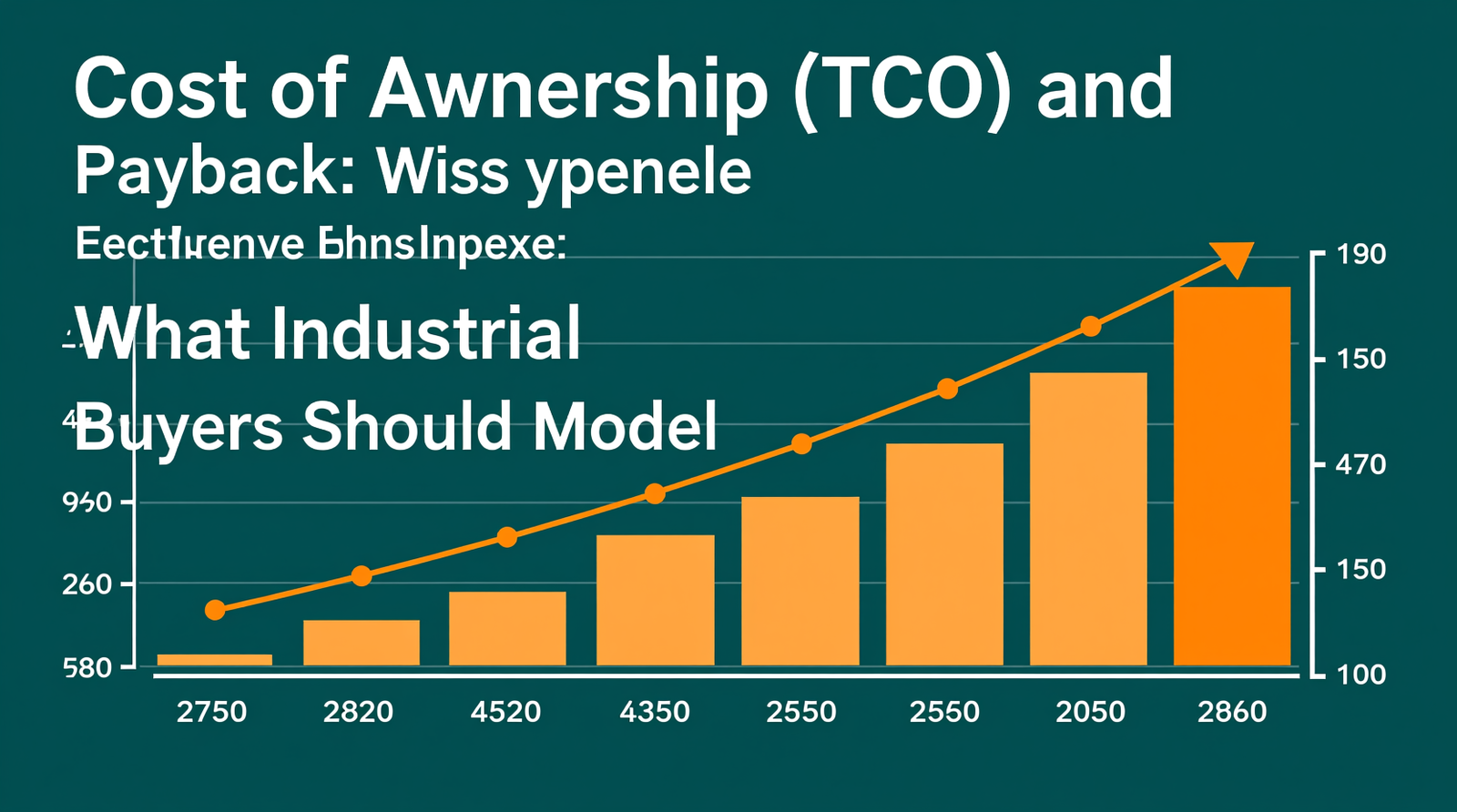
Key takeaway: The real economics come from reduced waste/returns and labor efficiency—then energy and consumables.
For industrial buyers, the purchase price is only part of the decision. A simple TCO model should include:
- Energy use: Pump size, cycle frequency, and shift pattern drive consumption. Faster cycles can reduce run time per pack but may increase peak load.
- Maintenance intervals: Vacuum pump oil and filters (if oil-lubricated), seal bar consumables (PTFE tape, wires), lid gaskets, and wear parts.
- Consumables: Pouch cost (including barrier level), labels, and any MAP gases (CO2/N2) where used.
- Downtime cost: Leaker rework, sanitation time, and unplanned maintenance.
Typical payback ranges (rule-of-thumb): Many processors target 6–24 months depending on baseline spoilage, returns, labor, and line utilization. High-return categories (fresh proteins and seafood) often see faster payback when leak rates and markdowns drop measurably.
TL;DR: Model payback using waste/returns reduction and labor productivity first, then layer in energy, consumables, and maintenance-driven downtime.
Vacuum Packaging vs. Skin Packaging, Thermoforming, and Tray Sealing with MAP (Performance + Sustainability)
Key takeaway: Vacuum pouches excel at shelf life and material efficiency in many use cases, but alternatives can win on merchandising, automation, or recyclability pathways depending on film and format.
Choosing a format is a balance between performance, sustainability, and line realities:
- Vacuum pouches (chamber): Often strong on shelf life, freezer burn reduction, and compact cube efficiency. Can reduce secondary packaging and improve pallet density.
- Vacuum skin packaging (VSP): Tightly conforms film over a tray; strong retail presentation and drip management, often used for fresh proteins. Typically requires trays (material trade-off) but can reduce purge/odor issues.
- Thermoforming: High-speed forming of bottom webs and top webs; efficient for high throughput and automation. Film structures may be complex (barrier vs. recyclability trade-offs).
- Tray sealing with MAP: Excellent retail presentation and can be optimized for specific color/shelf-life needs; usually higher package volume and potentially more material due to trays and headspace.
Sustainability lens: If vacuum reduces spoilage, it can cut associated Scope 3 emissions (value-chain emissions) tied to wasted product, returns, and disposal. Many companies track these metrics under ESG programs; reducing food waste is often a larger carbon lever than small film reductions—especially for animal proteins with higher embedded emissions. For background on corporate climate accounting, see the GHG Protocol.
TL;DR: Vacuum pouches often win on shelf life and cube efficiency; VSP, thermoforming, and tray/MAP can win on retail presentation or automation—choose based on product, throughput, and sustainability KPIs.
Sustainable Flexible Packaging Films: Quantifying Gains and Acknowledging Trade-Offs
Key takeaway: Sustainability improvements come from (1) less food waste and (2) less material—but barrier requirements can limit recyclability, so film choice is a practical compromise.
Vacuum packaging sustainability has two different “math problems,” and it helps to separate them:
- Food waste reduction: Extending shelf life and reducing leakers/returns can drive double-digit reductions in discard rates in some operations (often the largest sustainability impact).
- Material reduction (lightweighting): Many processors reduce packaging mass by switching from rigid formats to pouches or by downgauging (reducing film thickness). Example: moving to a thinner PA/PE structure can reduce film usage per pack while maintaining seal strength—if validated.
Trade-offs to plan for:
- Barrier vs. recyclability: High barrier often uses multi-layer structures (e.g., PA/PE, EVOH layers). These can be harder to recycle in many regions due to sorting and reprocessing limitations.
- Mono-material options: Emerging “recycle-ready” polyethylene (PE) mono-material structures may improve recyclability but can require changes in seal temperatures, cycle times, and may provide different barrier performance than PA-based films.
- Infrastructure reality: Even “recyclable” films may not be accepted in local systems. Claims should align with regional collection streams and certifications where applicable.
For broader context on sustainable materials and recycling system constraints, see the Ellen MacArthur Foundation plastics overview.
TL;DR: Vacuum packaging can be sustainable by reducing both waste and materials, but high-barrier films may be harder to recycle—select films based on validated performance and realistic end-of-life pathways.
Conclusion
Key takeaway: The best vacuum sealing programs combine technical optimization (vacuum, seal, film, MAP) with food safety controls and measurable sustainability KPIs.
Vacuum sealing has become a core component of modern, sustainable food packaging—especially for seafood, vacuum packaging for meat and poultry, cheese, and prepared foods. When implemented with validated HACCP plans, proper refrigeration, and robust seal integrity verification, industrial vacuum packaging machines can reduce spoilage, returns, and freezer burn while improving packaging efficiency.
As packaging regulations tighten and ESG reporting becomes more metrics-driven, vacuum sealing can support both food waste reduction goals and packaging footprint initiatives—provided film choices and recycling realities are addressed honestly.
TL;DR: Vacuum sealing delivers sustainability and performance gains when treated as a controlled, validated process—not just a packaging upgrade.
FAQ

Q: What regulatory standards apply to vacuum-sealed food products?
A: In the U.S., requirements typically involve HACCP (Hazard Analysis and Critical Control Points) and/or FSMA Preventive Controls depending on the product and facility type. Meat and poultry operations often follow USDA-FSIS HACCP expectations, while many other foods fall under FDA FSMA Preventive Controls. You may also need to validate shelf life, control refrigeration, and ensure labeling (e.g., keep refrigerated, use-by) matches your safety and quality validation.
Q: What vacuum level (mbar) should I use for different foods?
A: Many processors run in a broad range of ~1–50 mbar depending on product and pouch. Lower mbar (stronger vacuum) typically reduces residual oxygen but can increase deformation, purge, or edge damage on delicate products. The right setpoint should be validated with seal integrity testing, sensory checks, and shelf-life data for each SKU.
Q: How do I choose between single-chamber, double-chamber, and rotary/belt chamber vacuum systems?
A: Single-chamber machines are best for flexibility and lower throughput; double-chamber machines improve throughput by allowing load/unload while the other chamber cycles; rotary or chamber belt systems fit high-volume, standardized SKUs where automation and labor efficiency are priorities. Your decision should be based on packs/hour targets, bag size range, liquid content, and sanitation/changeover needs.
Q: How often should industrial vacuum sealers be serviced to ensure hygiene and performance?
A: Service frequency depends on run hours, product type, and pump design, but most plants follow a preventive maintenance schedule that includes regular seal bar inspection/replacement of consumables (e.g., PTFE tape), gasket checks, and vacuum pump oil/filter changes per OEM guidance. Many operations also add routine verification like daily seal checks and scheduled leak testing to catch drift before it becomes a returns problem.
Q: What are eco-friendly options for vacuum pouches, and are they compatible with chamber machines?
A: Common options include downgauged PA/PE films (less material with similar performance), PE-based mono-material “recycle-ready” structures, and certified recyclable vacuum pouches where available. Compatibility depends on sealant layer chemistry and required seal temperature/dwell time; switching films should include seal validation (burst/leak tests), line trials for cycle time impact, and a reality check on whether local recycling infrastructure accepts the material.