Selective Laser Melting (SLM) in Mining: Market Context and Why It’s Growing
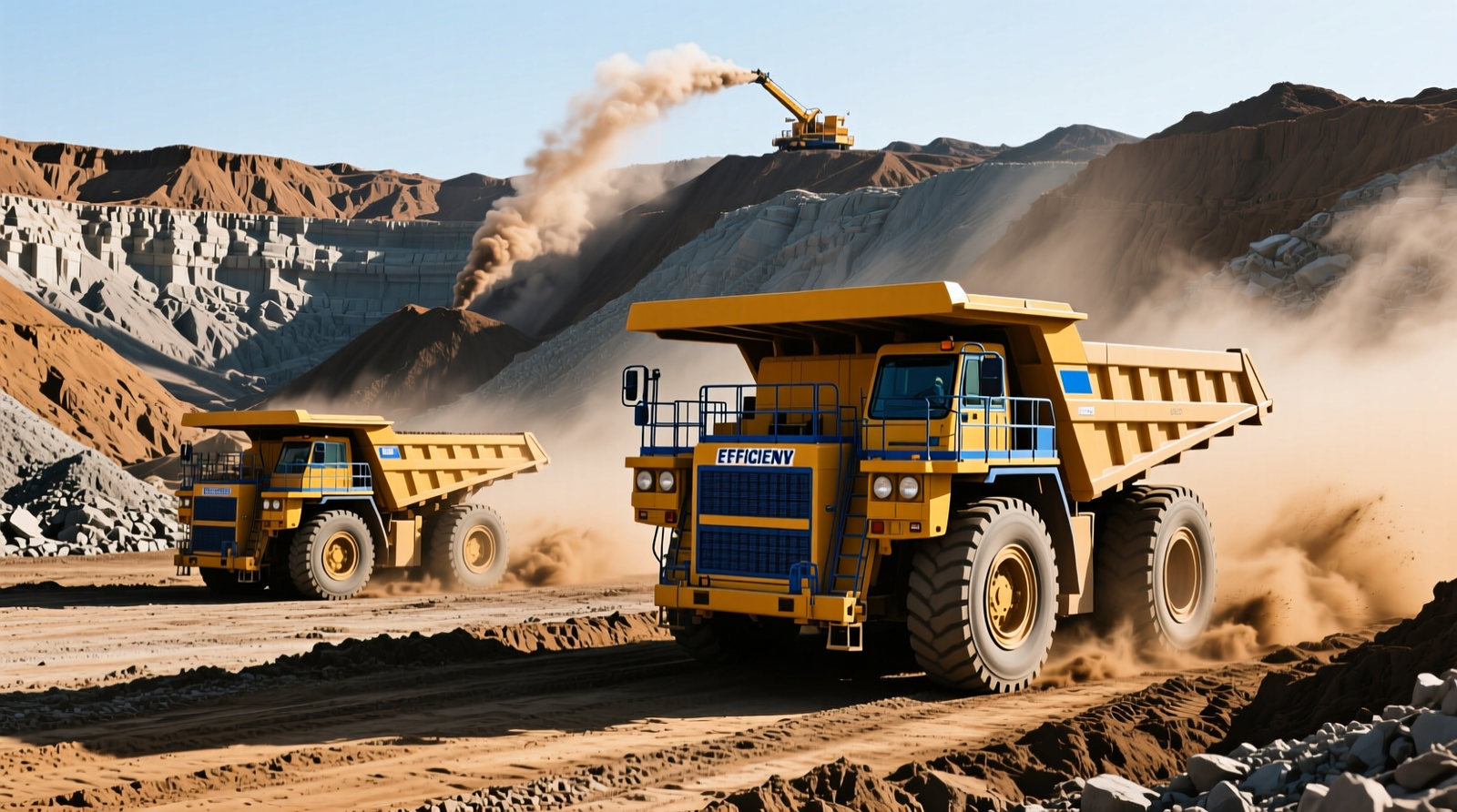
Selective laser melting (SLM)—also called laser powder bed fusion (LPBF), a type of metal additive manufacturing (metal AM)—is gaining traction in mining because it can manufacture complex metal parts directly from powder, on demand. For mines where a single disabled pump, crusher, or haul-truck subsystem can cascade into production losses, on-site metal 3D printing for mining equipment is increasingly viewed as a pragmatic maintenance and supply strategy rather than an R&D experiment.
The global selective laser melting in mining market was valued at USD 84.5 million in 2024 and is projected to reach USD 235.8 million by 2033 (CAGR 12.3% from 2025–2033). While forecasts vary by methodology, the direction aligns with broader industrial metal AM growth trends discussed by industry analysts such as SmarTech Analysis and consulting firms including McKinsey (additive manufacturing insights).
TL;DR: SLM adoption in mining is accelerating because it supports faster spare-part availability and design upgrades, and the growth narrative is consistent with major industrial AM market research and consulting viewpoints.
Market Overview: What SLM Is (and What It Solves in Mining Operations)
SLM uses a high-power laser to melt and fuse fine metal powder in thin layers to create near fully dense parts. Unlike “3D printing” stereotypes, industrial LPBF parts can reach high mechanical performance when correctly designed, processed, and qualified.
In mining, SLM is most relevant when conventional supply chains create measurable pain:
- Long lead times for OEM spares (weeks to months for low-volume legacy parts)
- High working capital tied up in storerooms (slow-moving insurance inventory)
- Downtime risk from abrasive slurry handling, impact wear, and corrosion
- Frequent revisions needed to suit local ore body conditions (e.g., different abrasion profile in a copper concentrator vs. a coal handling plant)
Mining-specific context matters. For example, an open-pit copper mine with long trucking distances and large rotating assets often prioritizes availability of pump and crusher components. An underground hard-rock mine may care more about compact, high-strength components, faster maintenance cycles, and minimizing underground logistics constraints.
TL;DR: SLM is best positioned where spare parts are slow/expensive to source, failures are frequent or costly, and iterative design improvements can deliver measurable reliability gains.
Data-Backed Proof Points: What Mining-Adjacent Implementations Have Quantified

Because many mine-site programs are not fully public, the most credible quantified examples often come from mining OEMs, industrial service providers, and standards/industry bodies operating in mining and heavy industry.
- Rio Tinto (Australia) + metal AM spare parts: Rio Tinto has publicly described using metal additive manufacturing to produce replacement parts and reduce dependency on distant supply. In published communications, Rio Tinto has highlighted the ability to manufacture parts on demand and reduce delays associated with traditional procurement. Source: Rio Tinto (company site and releases).
- Oerlikon AM (industrial MRO applications): Oerlikon and other industrial AM leaders have published case examples showing lead-time compression from weeks/months to days for low-volume metal spares when shifting from conventional procurement to qualified AM workflows. Source: Oerlikon Additive Manufacturing.
- Global mining OEM adoption signals (service parts + redesign): Major mining OEMs (e.g., Caterpillar (additive manufacturing), Sandvik, GE’s AM leadership discussed in industry press) have invested heavily in metal AM for service parts, tooling, and component redesign—important because mining fleets depend on OEM ecosystems for qualified parts and support.
How to interpret “quantified benefits” responsibly: In mining maintenance, the biggest measurable impacts typically show up as (1) lead time reductions for non-stocked spares, (2) inventory value reductions through “digital inventory,” and (3) availability improvements when redesigned parts (e.g., improved flow paths in impellers) reduce repeat failures. Many programs report improvements in ranges (e.g., 30–90% lead-time reduction for specific low-volume spares) depending on part size, alloy, qualification steps, and post-processing capacity.
TL;DR: Public proof points in mining often come through OEMs and industrial AM leaders; the most repeatable quantified win is typically lead-time reduction for low-volume spares, with inventory and downtime benefits following when qualification and workflows are mature.
Key Drivers for “Additive Manufacturing for Spare Parts in Remote Mines” (with More Specific Scenarios)
SLM creates the most value where supply friction is structural—not just inconvenient.
- Brownfield sites with aging fleets: Legacy assets often have parts with low annual demand, OEM obsolescence, or long backorders. SLM can replicate or redesign components while keeping fit/function, provided qualification and IP permissions are addressed.
- Underground hard-rock mines: Space constraints and maintenance windows make rapid part availability critical. Near-site production (regional hub) can be more practical than placing a full powder facility underground.
- Open-pit operations far from ports/air freight hubs: Emergency shipments for critical spares are costly; printing “just-in-time” parts can reduce the frequency of expedited logistics.
TL;DR: The strongest drivers appear in brownfield mines with legacy parts risk, underground operations with tight maintenance windows, and open-pit sites where expedited logistics repeatedly inflate costs.
Selective Technical Detail: SLM Parameters and Constraints for Mining Parts
Mining readers don’t need a full metallurgical treatise, but decision-makers do need to understand why “print it” still requires engineering discipline.
- Build volume limits: Many LPBF systems are optimized for small-to-medium parts; large wear plates or long structural members may exceed practical build envelopes and are better suited to alternative processes (see comparison section below).
- Typical layer thickness: LPBF often uses thin layers (commonly ~20–60 microns, depending on material and machine) to achieve detail and density—good for complex geometries, slower for bulky parts.
- Post-processing is non-optional: Many mining parts require heat treatment (to relieve residual stress and tune properties), support removal, and machining (for sealing faces, bearing fits, bores, and threads). Surface finishing may be required for flow efficiency in slurry pumps.
- Qualification challenges: For mission-critical components, you’ll need a process qualification approach: material certs, parameter lock-down, in-process monitoring, and inspection (CT scanning, dye penetrant, hardness, tensile coupons, etc.). Standards from bodies such as ISO/ASTM additive manufacturing committees and guidance from organizations like ASTM F42 are commonly referenced in industrial qualification roadmaps.
TL;DR: SLM can produce high-performance parts, but build size limits, thin-layer build rates, mandatory post-processing, and formal qualification requirements must be planned from day one.
Where SLM Fits Best: “SLM for Wear Parts in Mining” and High-Value Spares
Not every mining component is a good LPBF candidate. The strongest fits typically share at least two traits: high downtime cost, complex geometry, and/or chronic failure modes.
- Fluid handling: slurry pump impellers, pump throats, wear rings, and specialized manifolds—especially where internal passages or erosion patterns justify redesign.
- Maintenance-critical hardware: specialized brackets, sensor mounts, cable protection components, and housings that frequently break or change with site modifications.
- Low-volume, high-impact spares: obsolete or long-lead components for crushers, drills, and ancillary systems (where printing + machining beats waiting on a casting pattern or minimum order quantity).
Conversely, large high-throughput wear surfaces (big liners, plates, long beams) are often better served by casting, forging, or directed energy deposition (DED) repairs.
TL;DR: SLM is usually most compelling for complex, low-volume spares and select wear/flow components where redesign or rapid availability offsets printing and post-processing effort.
Economic Trade-Offs: TCO of On-Site SLM vs. Traditional Supply (Capex, Opex, Utilization, Payback)
A clear total cost of ownership (TCO) view prevents disappointment and helps align stakeholders (maintenance, supply chain, finance, and HSE).
- Capex (capital expenditure): industrial LPBF equipment, powder handling infrastructure, inert gas systems, sieving/recycling, metrology, and often a machining cell for final tolerances.
- Opex (operating expenditure): powders, consumables, maintenance contracts, shielding gas, power, QA labor, and post-processing (heat treatment + machining).
- Utilization thresholds: on-site SLM economics improve when the machine is kept busy with a steady portfolio (spares + tooling + redesign programs). Low utilization often makes external service bureaus cheaper and less risky.
- Payback period ranges: in heavy industry, payback is commonly achieved when avoided downtime and expedited logistics are large and frequent; many programs target ~12–36 months for well-scoped deployments, though results vary widely by part mix, qualification scope, and site constraints.
A practical approach is to start by calculating: (1) downtime cost per hour for critical assets, (2) annual spend on expedited freight, (3) value of slow-moving inventory, and (4) the number of candidate parts that fit LPBF constraints. This creates an evidence-based business case rather than a “technology-first” purchase.
TL;DR: On-site SLM can pay back when utilization is sufficient and it meaningfully reduces downtime and expedited logistics; otherwise, outsourced printing often wins on risk and cost.
Operational and Safety Challenges: Skills, QA, Powder Handling, and Certification
Mining sites are demanding environments for any precision manufacturing cell. Key operational barriers include:
- Skilled operators and engineers: you need design-for-additive manufacturing (DfAM) capability, parameter discipline, and technicians trained on powder systems.
- Quality assurance (QA) and traceability: mine maintenance teams need clear acceptance criteria, inspection plans, and documentation to avoid “mystery metal” parts. Many organizations align with ISO/ASTM AM frameworks and internal engineering authorities.
- Powder handling safety: fine metal powders can present combustible dust and inhalation hazards; controls include inerting, housekeeping, PPE (personal protective equipment), and procedures aligned with industrial safety guidance (e.g., NFPA codes and standards are commonly referenced for combustible dust risk management, where applicable).
- Harsh-environment reliability: stable power, controlled humidity, and a clean-room-like mindset are needed for repeatability—often easier in a surface workshop than in ad-hoc site containers.
TL;DR: The main non-technical blockers are people, QA rigor, and powder safety systems—SLM is a manufacturing process that must be operated like one, even on a mine site.
Competitive Context: SLM vs. DED vs. Binder Jetting vs. Conventional Manufacturing
SLM isn’t the only option for mining components. Selecting the right process improves ROI and reduces qualification risk.
- SLM/LPBF: strongest for complex geometries, internal channels, and high-density parts; slower for bulky components and constrained by build volume. Often requires more post-processing.
- DED (Directed Energy Deposition): uses a focused energy source to deposit metal (wire or powder). DED is often better for repair and cladding (e.g., rebuilding worn surfaces) and larger parts, with typically lower resolution than LPBF.
- Binder jetting: prints a “green” part with binder then sinters; can be faster and cost-effective for higher volumes, but achieving full density and consistent properties can be more challenging depending on alloy and geometry—often less common for highly loaded mining parts unless well-qualified.
- Conventional (casting/forging/machining): usually cheapest per part at scale and for large, simple shapes; best when lead times are acceptable and patterns/tooling already exist.
TL;DR: Use SLM for high-complexity, high-value spares; use DED for repair/large builds; consider binder jetting for higher-volume sinterable parts; keep conventional processes for large, simple, scale-efficient components.
Digital Integration: From CAD to PLM to EAM for a “Digital Inventory”
To make additive manufacturing for spare parts in remote mines operationally repeatable, SLM should connect with existing systems:
- CAD (computer-aided design) for controlled design revision
- PLM (product lifecycle management) for approvals, version control, and configuration management
- EAM (enterprise asset management) for maintenance history, failure codes, and part criticality
In practice, the “digital inventory” concept only works if file governance is strict: correct version, correct material and parameter set, and a defined inspection plan.
TL;DR: Digital inventory is not just storing CAD files—it’s integrating controlled designs, approvals, and maintenance data so printed parts are repeatable and auditable.
Buyer Journey Roadmap: How to Implement SLM in Mining (Assessment → Pilot → Qualification → Scale)
A practical implementation roadmap reduces risk and helps decide between in-house printing and external partners.
- Assessment (4–8 weeks): identify top downtime drivers, map long-lead spares, rank parts by criticality, and screen for LPBF feasibility (size, alloy, tolerances, post-processing). Output: a prioritized candidate list and a business case.
- Pilot (8–16 weeks): print a small set of non-safety-critical parts via a qualified service bureau; validate fit, basic performance, and inspection methods. Output: initial cost/lead-time proof.
- Qualification (3–9 months, part-dependent): lock process parameters, establish inspection and test plans, build traceability, and run field trials. Use relevant ISO/ASTM guidance and internal engineering sign-off.
- Scale-up (ongoing): expand the digital library, negotiate powder and post-processing capacity, train multiple shifts, and integrate into MRO planning.
In-house SLM vs. service bureau—decision criteria:
- Choose service bureaus if utilization is uncertain, qualification scope is heavy, or you lack powder safety infrastructure.
- Choose in-house/on-site if you have frequent high-value demand, repeated expedited freight, and the organizational capability to run QA and post-processing reliably.
TL;DR: Start with a targeted pilot through a service bureau, qualify repeatable workflows, then scale—buy on-site machines only when utilization and QA readiness justify it.
Regional Outlook (More Specific to Mining Footprints)
- Australia (iron ore, gold, coal): long-distance logistics and high labor costs favor near-site hubs; OEM and research ecosystems support qualification faster than many regions.
- Chile/Peru (copper): concentrator uptime drives interest in pump and slurry system parts; altitude and remote access make expedited logistics costly.
- South Africa (PGMs, gold) and West Africa (gold): supply variability and import lead times push “critical spares” strategies; qualification and skills development become decisive factors.
- North America: strong industrial AM base and service bureaus make outsourcing a common entry point; on-site adoption often follows once a part portfolio is proven.
TL;DR: Adoption patterns track mine type and logistics: copper concentrators and remote bulk commodity sites prioritize spares availability; regions with mature AM ecosystems move from pilot to qualified production faster.
Conclusion
The selective laser melting in mining market is forecast to grow from USD 84.5 million (2024) to USD 235.8 million (2033) at a 12.3% CAGR. The most credible value proposition is not “printing everything,” but using SLM selectively for high-impact, long-lead, complex spares—especially when paired with robust QA, post-processing, and digital inventory governance.
Mining leaders who treat SLM as a disciplined manufacturing and qualification program—supported by ISO/ASTM-aligned practices and pragmatic make-vs-buy decisions—are best positioned to convert metal AM from promising demos into sustained reductions in lead time, inventory exposure, and downtime risk.
TL;DR: SLM growth in mining is real, but ROI depends on choosing the right parts, running strict QA and safety practices, and scaling only after pilots prove repeatable value.
FAQ
Q: What types of mining parts are best suited to on-site metal 3D printing (SLM/LPBF)?
A: The best candidates are usually low-volume, high-impact spares with complex geometry or chronic lead-time problems—such as slurry-handling components (impellers, wear rings), specialized brackets/housings, manifolds with internal passages, and legacy parts where OEM lead times are long. Very large wear plates, big liners, and simple high-volume parts often remain better suited to casting/forging or alternative AM processes like DED for repair.
Q: How long does it take to print a metal spare part with SLM for mining equipment?
A: Build time varies widely by size, layer thickness, and machine, but many small-to-medium LPBF parts can take anywhere from several hours to 1–3 days to print. Total turnaround also includes post-processing (stress relief heat treatment, support removal, machining, and inspection), which can add 1–7+ days depending on site capability and qualification requirements.
Q: What quality standards and testing methods are used to qualify SLM parts for mining?
A: Qualification typically references ISO/ASTM additive manufacturing guidance (via ISO and ASTM F42) plus internal engineering standards. Common methods include dimensional inspection (CMM), non-destructive testing (dye penetrant, ultrasonic, CT scanning where available), mechanical testing using witness coupons (tensile, hardness), and traceability controls for powder lots, build parameters, and heat treatment records.
Q: Is SLM for wear parts in mining always cost-effective compared with traditional supply?
A: Not always. SLM tends to be cost-effective when it reduces expensive downtime or repeated expedited freight, or when it avoids tooling/pattern costs for low-volume cast parts. For larger/simple parts, conventional supply can be cheaper. Many mines begin with a service bureau to validate economics, then consider on-site SLM when utilization is steady enough to justify capex and QA overhead.
Q: What are the biggest safety and operational risks of running an SLM cell at a mine site?
A: The main risks are powder handling hazards (fine metal powders, housekeeping, PPE, and combustible dust controls), inconsistent quality due to insufficient training or weak procedures, and inadequate post-processing/inspection capacity. Mines typically mitigate these through formal operator training, strict QA documentation, controlled powder workflows, and alignment with recognized safety guidance (e.g., NFPA standards resources where relevant) and ISO/ASTM AM frameworks.