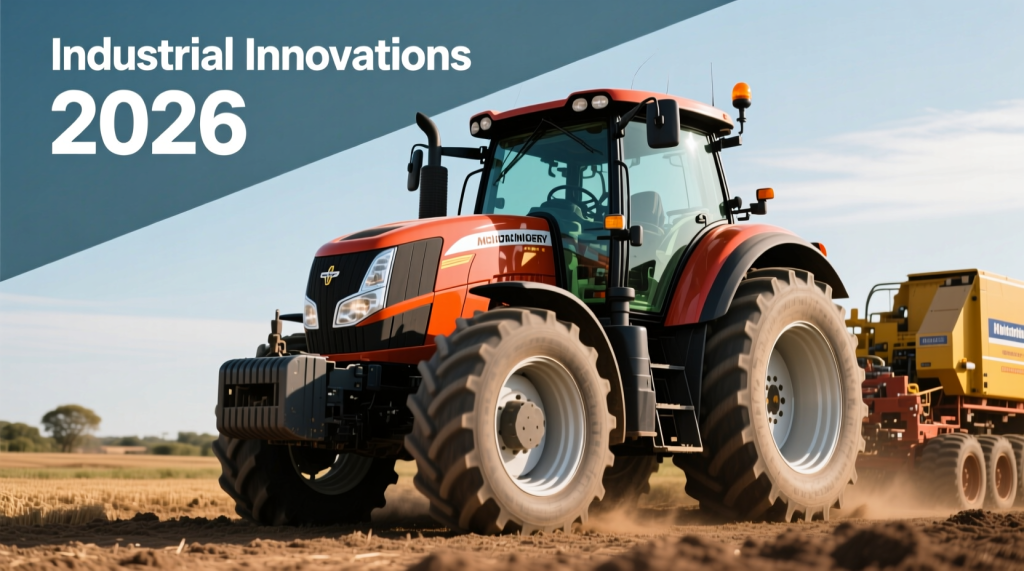
Tractors and industrial machinery are evolving quickly for 2026—especially in autonomous equipment, precision agriculture, mining automation, and forestry machinery. For fleet managers, operations leaders, CTOs, and sustainability officers, the practical questions are no longer “what’s coming?” but “what can we pilot, integrate, and scale without disrupting uptime, safety, and total cost of ownership (TCO)?”
Where helpful, this article references external, authoritative sources such as the Food and Agriculture Organization of the United Nations (FAO), the International Energy Agency (IEA), and the International Council on Mining and Metals (ICMM).
TL;DR: This guide focuses on real operational improvements in tractors and industrial machinery—autonomy, electrification, telematics/IoT, precision implements, and off-highway automation—plus what it takes to deploy them.
Key Takeaways for 2026 (Quick Scan)
- Autonomous tractors: Most ROI comes from repeatable operations (tillage, seeding, mowing) where guidance accuracy and uptime matter.
- Electrification & hybrids: Best fit is duty cycles with predictable breaks and access to power—otherwise plan for hybridization, fast DC charging, or battery swapping.
- Telematics + IoT: The fastest “first win” for mixed fleets—idle reduction, preventive maintenance, and better dispatch.
- Precision spraying/planting: Savings hinge on good prescriptions (NDVI, soil tests, yield maps) and implement control standards (e.g., ISOBUS).
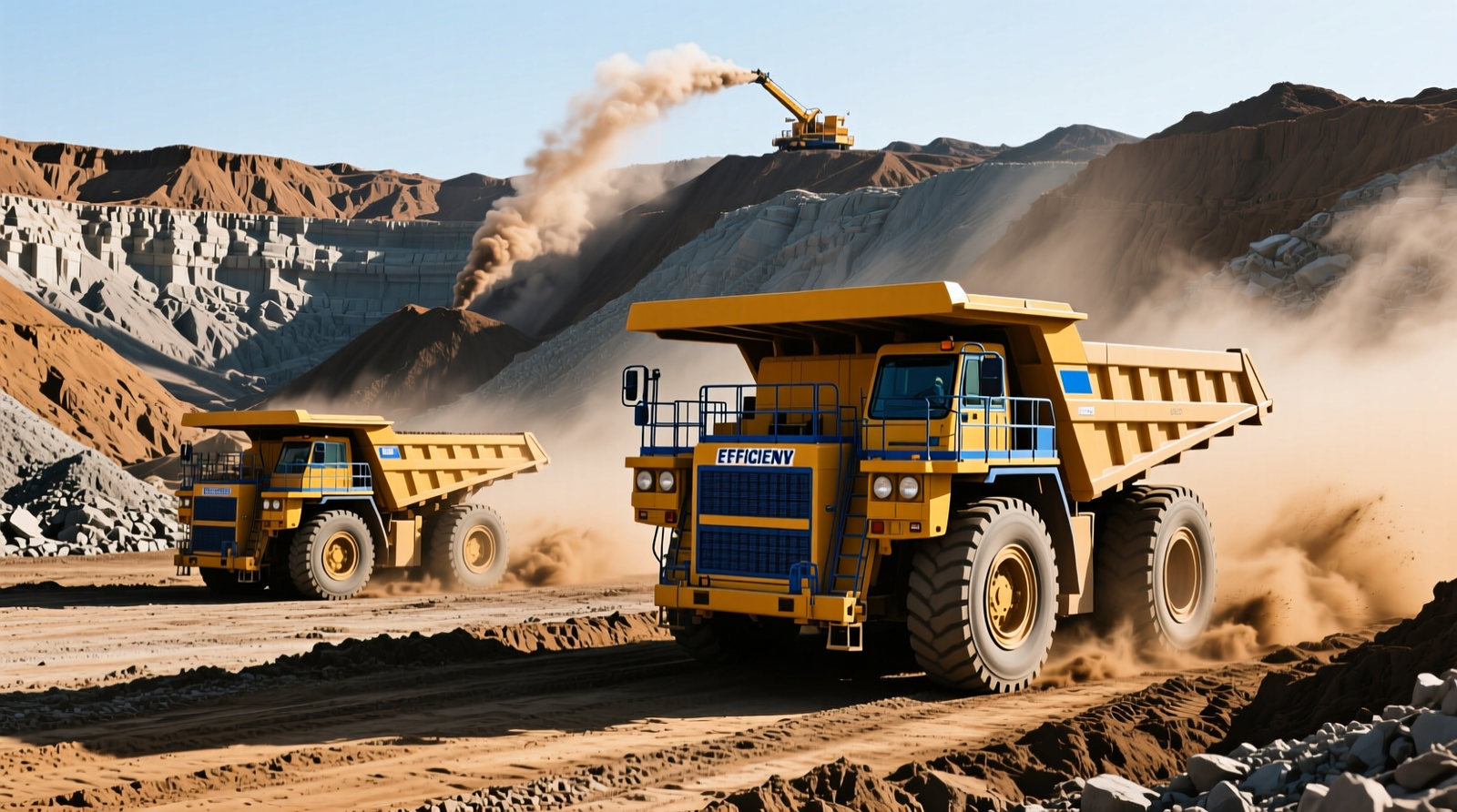
- Mining & forestry automation: Strongest drivers are safety and utilization, but connectivity, change management, and regulatory approvals can gate timelines.
TL;DR: Start with telematics and a targeted pilot; layer in autonomy and electrification where your duty cycle and safety case are strongest.
Why Tractors & Industrial Machinery Matter (Productivity, Uptime, Compliance)
Across agriculture, construction, mining, forestry, and defence logistics, tractors and industrial machinery translate capital investment into output. Their performance is typically measured in uptime, cycle time, fuel/energy cost, operator safety, and compliance reporting (maintenance records, emissions, land-use constraints).
- Operational throughput: More hours worked per day with fewer stoppages and fewer rework passes.
- Safety exposure reduction: Removing people from high-risk tasks and zones (steep terrain, blasting areas, night operations).
- Audit-ready data: Better proof of work completed, inputs applied, and maintenance performed—useful for insurers, lenders, and regulators.
On the macro side, food and resource demand remain structural pressures; FAO routinely analyzes the need to increase agricultural productivity amid climate volatility (FAO). Meanwhile, the IEA tracks energy efficiency and electrification trends that directly affect off-highway equipment strategies (IEA).
TL;DR: For most operators, modernization is about measurable KPIs—hours, cost per tonne/hectare, safety incidents, and auditability—not novelty.
Reality Check: Forecasts, Claims, and What “Typical” Means

You’ll often see aggressive claims such as “30% productivity gains” or “40% CO2 reduction.” In practice, these outcomes depend on baseline maturity (manual vs assisted vs automated), field/mine conditions, operator behavior, equipment mix, and how well data workflows are implemented.
In this guide, any percentages shown are best read as indicative ranges from pilots, modeled scenarios, or typical deployments—not guaranteed outcomes. For example, fuel and emission reductions can be diluted by poor routing, high idle time, or limited charging access; likewise, yield improvements vary by crop type, soil variability, and the quality of agronomic prescriptions.
TL;DR: Treat percentages as scenario-based guidance; validate with your own baseline telemetry and a controlled pilot.
Innovation #1: AI-Powered Autonomous Tractors for Precision Agriculture
Autonomy means the machine can execute tasks with limited human input. Most modern autonomous tractor stacks follow a layered control architecture:
- Perception: Cameras (often stereo vision), radar, and sometimes LiDAR (Light Detection and Ranging) to detect obstacles and boundaries.
- Localization: RTK GNSS (Real-Time Kinematic Global Navigation Satellite System) for centimeter-level positioning, often fused with inertial sensors (IMU).
- Path planning & control: Algorithms compute routes, headland turns, and implement engagement; controllers execute steering, throttle, and hydraulic actions.
- Safety redundancies: E-stops, geofencing, obstacle stop logic, and health monitoring to fail safely.
Where autonomy typically performs best is on repetitive, well-bounded operations—cover-cropping, mowing, tillage, and row-crop seeding—especially on large, regular-shaped fields. The economic case often comes from (1) longer operating windows, (2) fewer overlaps, and (3) more consistent implement control.
Mini case example (modeled): A 2,000-hectare row-crop operation in Saskatchewan runs spring seeding across a tight weather window. By switching one tractor to supervised autonomy with RTK guidance and implement section control, the operation modeled a reduction in overlap and rework passes on irregular headlands. The result was not “instant 30% more yield,” but a more believable mix: fewer operator hours, tighter seeding completion times, and measurable fuel savings—provided RTK coverage was reliable and operators were trained on intervention procedures.
Limitations to plan for: liability and local regulations, edge cases (people/animals/vehicles entering the work area), dust/fog impairing vision sensors, and the need for consistent connectivity for fleet oversight (even if the tractor can run offline).
TL;DR: Autonomous tractors can pay off fastest in repeatable tasks with good RTK coverage, strong safety processes, and trained supervisors.
Innovation #2: Electrification & Hybrid Powertrains in Off-Highway Equipment
Electrification replaces diesel drivetrains with battery-electric systems; hybrids combine an internal combustion engine with electric drive or assist. The business case is highly duty-cycle dependent:
- Battery-electric sweet spots: Yard/utility tractors, loader work, municipal operations, and predictable farm tasks near charging.
- Hybrid sweet spots: Remote sites or long-haul duty cycles where full charging is constrained but fuel savings from regenerative braking and optimized engine loading are meaningful.
Operational considerations: expected operating hours per charge, cold-weather performance, peak power needs (e.g., PTO loads), and charging strategy—overnight AC charging, DC fast charging (direct current fast charging), or battery swapping. Remote mines and forestry operations may need on-site generation, microgrids, or staged charging bays; the IEA’s work on electrification and energy systems is a useful reference point for broader infrastructure planning (IEA).
Mini case example (practical): A Scandinavian contractor running forestry-adjacent road maintenance evaluated an electric compact wheel loader for depot-based work (snow, gravel, material handling). The operational win came from quieter operation and simpler maintenance scheduling, not a sweeping “emissions cut” claim. The main constraint was winter range—solved with indoor storage and scheduled opportunity charging between shifts.
Limitations to plan for: higher upfront CAPEX (capital expenditure), battery end-of-life planning, charging downtime, and site power constraints.
TL;DR: Electrification works best when your duty cycle and charging access are predictable; hybrids often bridge the gap for remote or high-utilization operations.
Innovation #3: Telematics and IoT Fleet Management in Mining, Construction, and Agriculture
Telematics combines on-machine sensors and communications to transmit equipment health and utilization data. IoT (Internet of Things) refers to connected devices and sensors that collect and share data. For heavy equipment, telematics commonly includes:
- Data sources: engine and drivetrain signals via CAN bus (Controller Area Network), fault codes, hours, fuel burn, payload estimates, GPS location, and idle time.
- Connectivity: cellular (4G/5G/LTE), Wi‑Fi at depots, and satellite where terrestrial networks don’t reach.
- Refresh intervals: near-real-time for safety/dispatch use cases, and periodic uploads for maintenance analytics—depending on bandwidth and cost.
What operators usually buy first is visibility: utilization by asset class, idle hotspots, maintenance compliance, and job-cost allocation. The next step is predictive maintenance—using trends (temperature, vibration proxies, fault code frequency) to plan service windows rather than reacting to breakdowns.
Mini case example (common “quick win”): A mixed fleet quarry identified chronic idle time on two loaders through telematics reports. By changing shift handover and truck spotting procedures, the site reduced non-productive hours—improving throughput without buying new equipment. This type of improvement is often more realistic than headline “double-digit productivity” claims.
Limitations to plan for: data ownership clauses, cybersecurity (especially for remote operation), interoperability between OEM portals and third-party systems, and “alert fatigue” if thresholds aren’t tuned.
TL;DR: Telematics is usually the fastest path to ROI—cut idle time, prevent avoidable failures, and improve dispatch with minimal workflow disruption.
Innovation #4: Smart Precision Spraying & Planting (Variable Rate + Vision)
Precision systems reduce wasted inputs by adjusting application rates to field variability. Key terms:
- NDVI (Normalized Difference Vegetation Index): a satellite/imagery-derived indicator of plant vigor.
- Variable-rate application (VRA): applying seed, fertilizer, or chemicals at different rates across zones.
- ISOBUS: an ISO standard (ISO 11783) enabling tractor-implement communication and control.
How prescriptions are generated: NDVI imagery, soil sampling, electrical conductivity scans, and yield maps are combined into management zones. Those zones become a prescription file that the implement controller uses to adjust flow, section control, or nozzle timing.
Where machine vision helps: camera-based sprayers can target weeds rather than blanket-spraying—most effective in fallow, early growth stages, or patchy infestations where contrast is high.
Mini case example (practical): A midwestern U.S. corn-and-soy operation built nitrogen side-dress prescriptions by combining prior-year yield maps with in-season NDVI variability. The first season didn’t “transform yields,” but it did reduce over-application on strong zones and improved documentation for nutrient management audits. Results improved in year two after recalibrating zones and validating with tissue tests.
Limitations to plan for: poor calibration, bad zone definitions, nozzle/controller compatibility issues, and the need for agronomic validation (ground-truthing) so you’re not automating the wrong decision.
TL;DR: Precision spraying/planting succeeds when prescriptions are credible and controllers are integrated (often via ISOBUS), with ground-truth checks to confirm the model matches the field.
Innovation #5: Autonomous Equipment in Mining and Forestry (Haulage, Harvesting, Remote Ops)
Mining and forestry are adopting autonomy for different reasons—but both emphasize risk reduction and asset utilization.
Mining challenge → technology → benefits: Open-pit mines have high energy use, long haul cycles, and safety exposure. Autonomous or semi-autonomous haul trucks and drills can improve cycle consistency and reduce worker presence in high-risk zones. ICMM provides a useful perspective on responsible mining and the governance expectations that shape technology adoption (ICMM).
Forestry challenge → technology → benefits: Forestry machinery works on steep slopes, soft soils, and limited visibility. Remote operation and advanced assist features help manage rollover risk and operator fatigue. Sensor fusion (cameras + LiDAR/radar + GNSS) supports safer navigation and more repeatable extraction routes.
Mini case example (illustrative): A remote mine in Western Australia (a region known for early autonomy adoption) can justify autonomy because haul roads are controlled environments and utilization is high enough to recover systems and connectivity costs. By contrast, a small, fragmented forestry operator may start with operator-assist, winch-assist, and telematics before full autonomy—because terrain and worksite variability create more edge cases.
Limitations to plan for: reliable site connectivity, disciplined traffic management, workforce upskilling (controllers, technicians, data analysts), and regulatory approvals for remote and autonomous operation.
TL;DR: Mining and forestry autonomy is strongest where the worksite is controlled, connectivity is robust, and the safety case is clear—otherwise plan staged automation.
Comparison Table: Typical Ranges (Not Guarantees)
Note: The productivity and CO2 reduction figures below are typical ranges or modeled scenarios reported in pilots and deployment case studies. Actual outcomes vary with baseline performance, duty cycle, operator practices, terrain, crop type, and energy mix.
| Innovation | Primary Use | Key Technology | Indicative Productivity Change | Typical Adoption Stage (2025–2027) | Indicative CO2 Impact |
|---|---|---|---|---|---|
| AI-powered autonomous tractors | Precision agriculture | RTK GNSS, sensors, autonomy stack | ~+5% to +20% (through uptime/overlap reduction) | Pilots to scaled deployments on large farms | Context-dependent (fuel savings from fewer passes) |
| Electrification & hybrids | Farm/yard, construction, some mining | Battery-electric, hybrid drivetrains | ~0% to +15% (lower downtime, better torque control) | Growing commercialization in compact/mid class; pilots in heavy class | Highly dependent on duty cycle and electricity mix |
| Telematics & IoT fleet management | Agriculture, mining, construction | CAN bus, GPS, analytics | ~+3% to +12% (idle and scheduling improvements) | Broad adoption; deeper analytics expanding | Indirect via reduced idle/fuel burn |
| Precision spraying/planting | Agriculture, land management | VRA, NDVI, ISOBUS, vision | Yield-dependent; input savings often most visible first | Scaled where agronomy + data are mature | Indirect via input optimization |
| Autonomous mining & forestry equipment | Haulage, harvesting, remote ops | Robotics, remote control, sensor fusion | ~+5% to +25% (cycle consistency/utilization) | Scaled in select mines; staged adoption in forestry | Indirect via optimized routing/less rework |
TL;DR: Use the table for direction—not promises. Your baseline and site constraints will decide the real range.
Solution Ecosystem: OEM Platforms vs Independent Analytics vs Integrators (Where Farmonaut Fits)
Most deployments combine multiple vendors. Understanding categories helps procurement and integration planning:
- OEM platforms: Equipment manufacturers’ ecosystems (machine controls, telematics portals, firmware updates). Strength: tight machine integration. Trade-off: cross-brand interoperability can be limited.
- Independent analytics providers: Satellite/agronomy analytics, optimization tools, and reporting layers. Strength: cross-fleet views and specialized modeling. Trade-off: needs robust data pipelines and API access.
- System integrators: Firms that connect OEM data, enterprise resource planning (ERP), and operational dashboards. Strength: end-to-end implementation. Trade-off: integration cost and vendor dependency.
Integration concerns to put in the contract: data ownership, exportability, API rate limits, identity/access control, and cybersecurity requirements (especially for remote operation). If your organization is looking at “precision agriculture software” or “mining fleet management systems,” confirm whether the tools support open standards (where available), and how they handle mixed fleets.
Farmonaut as an example: Farmonaut is often positioned as a satellite-driven analytics and advisory layer for monitoring and decision support. Its “Jeevn AI” is described as an AI-based advisory capability; when assessing any platform like this, ask for evidence of model validation methods (ground-truthing approach, agronomist oversight), data sources (satellite providers, refresh rates), and integrations (APIs, export formats). For blockchain features, clarify the permission model, auditability, and how off-chain data (sensor readings, lab results) is verified before being recorded.
TL;DR: Most real-world stacks are multi-vendor; prioritize interoperability, data ownership, and security before feature lists.
Agriculture Deployment Pattern (Challenge → Tech → Benefits → Example)
Challenge: Tight field windows, rising input costs, labor constraints, and the need to document nutrient/pesticide practices.
Technology: RTK guidance and supervised autonomy, telematics, and precision implements (VRA via ISOBUS), supported by satellite imagery (e.g., NDVI) for variability mapping.
Benefits (most common first): fewer overlaps, faster completion, lower input waste, better records for audits and buyer requirements.
Example rollout: Start by instrumenting the fleet (telematics + implement data logging), then pilot variable-rate on one crop and one field block, and only then consider autonomy where safety procedures and RTK reliability are proven.
- Checklist: Confirm RTK coverage and correction source reliability on all fields.
- Checklist: Standardize data capture (field boundaries, operator IDs, job codes).
- Checklist: Validate prescriptions with soil/tissue tests (don’t rely on imagery alone).
- Checklist: Train operators on calibration, section control, and intervention protocols.
- Checklist: Track ROI by field block (input savings + timeliness + rework reduction).
TL;DR: Agriculture wins start with guidance + data discipline; autonomy and advanced VRA perform best after you’ve stabilized prescriptions and workflows.
Forestry Deployment Pattern (Challenge → Tech → Benefits → Example)
Challenge: Rugged terrain, variable stand conditions, high safety exposure, and strict environmental constraints (buffers, protected zones, reforestation obligations).
Technology: telematics for utilization and maintenance; remote-assist features; terrain-aware routing; and satellite monitoring for vegetation change detection and compliance mapping.
Benefits: fewer incidents, better machine utilization, reduced unplanned downtime, and improved documentation for certification and audits.
Example rollout: A contractor operating on steep slopes begins with winch-assist and operator-assist features plus telematics to reduce incidents and improve maintenance timing. Satellite-based change monitoring is then used to validate boundary adherence and to prioritize replanting areas after harvest.
- Checklist: Map no-go zones and buffers; load them as geofences where supported.
- Checklist: Standardize maintenance triggers using fault codes + hour intervals.
- Checklist: Ensure connectivity plan (cellular/satellite) for remote blocks.
- Checklist: Update safety SOPs (standard operating procedures) for remote/assisted operation.
TL;DR: Forestry adoption is often staged—start with safety and uptime tooling, then expand to remote ops and deeper automation as terrain and connectivity allow.
Mining Deployment Pattern (Challenge → Tech → Benefits → Example)
Challenge: Safety risk in active pits, high cost of downtime, and complex asset coordination (haulage, drilling, loading, maintenance).
Technology: autonomous/semi-autonomous haulage and drilling (where appropriate), telematics with near-real-time dispatch, and predictive maintenance using condition signals and fault trends. ICMM’s work on responsible mining helps frame stakeholder expectations around safety and environmental governance (ICMM).
Benefits: more consistent cycle times, reduced worker exposure, and better maintenance planning.
Example rollout: A mine pilots autonomy on a dedicated haul route with strict traffic separation and upgraded network coverage. Early success is measured in reduced variability (cycle-time standard deviation) and fewer safety interactions—not just “more tonnes moved.”
- Checklist: Assess site connectivity and latency for dispatch/remote oversight.
- Checklist: Define traffic management rules and segregation zones for autonomous equipment.
- Checklist: Build a technician training path (sensors, compute modules, software updates).
- Checklist: Implement cybersecurity controls for remote operation systems.
- Checklist: Set success metrics: cycle consistency, incidents, maintenance compliance, cost per tonne.
TL;DR: Mining automation succeeds when the site is engineered for it—connectivity, traffic rules, training, and measurable KPIs.
Implementation Roadmap (Practical Phasing for Operators)
- Fleet & workflow audit: asset list, age profile, major failure modes, idle time, and job types.
- Connectivity assessment: cellular coverage, satellite needs, depot Wi‑Fi, and cybersecurity posture.
- Pilot design: pick one site, one use case, one season/quarter; define baseline metrics and a safety case.
- Integration plan: decide how telematics, imagery, and ERP/work orders connect; define data ownership and access.
- Scale with change management: operator training, maintenance SOP updates, and spare parts strategy; expand only after KPI verification.
TL;DR: Audit → connect → pilot → prove ROI → scale with training and integration discipline.
Industry Outlook to 2026: How the Pieces Work Together (and Realistic Timelines)
By 2026, the most practical “smart machinery” advantage comes from an integrated decision loop:
- Telematics explains what the machine did (hours, idle, faults).
- Satellite/field data explains what the site/field looks like (variability, change detection).
- AI analytics recommends what to do next (maintenance timing, routing, prescriptions).
- Automation executes consistently—when the safety case and site conditions permit.
Likely adoption pacing: telematics and precision implements are already mainstream in many regions; autonomy is scaling fastest where operations are controlled and repetitive (select large farms, some mines); full electrification of high-power equipment is advancing but remains constrained by duty cycle and infrastructure—so hybrids and phased electrification will be common.
For decision-makers, the near-term priority is to assess whether your equipment and data infrastructure can support these workflows: reliable positioning, clean field/site maps, standardized job codes, and secure integrations.
TL;DR: The “2026 stack” is less about one breakthrough and more about connecting telematics + site data + analytics + staged automation with realistic constraints.
FAQ
Q: What’s the most cost-effective first step toward smarter tractors and industrial machinery?
A: Telematics and basic fleet analytics are usually the fastest ROI: you can reduce idle time, improve preventive maintenance compliance, and tighten dispatch without changing core operations. Start by capturing CAN bus fault codes, hours, and location consistently.
Q: How accurate do autonomous tractors need to be for precision agriculture?
A: Many precision operations rely on RTK GNSS (Real-Time Kinematic satellite positioning) to achieve centimeter-level repeatability—especially for row crops, controlled traffic, and implement alignment. The practical requirement depends on the operation (tillage vs planting) and the field layout.
Q: Are electric tractors viable for full-day fieldwork in 2026?
A: It depends on duty cycle and access to charging. Electric tractors can be viable for predictable tasks near charging infrastructure, but long field days with high PTO loads may still favor hybrids or staged electrification (opportunity charging, battery swapping, or mixed fleets).
Q: What data should a mining fleet management system capture to enable predictive maintenance?
A: At minimum: hours, idle time, load/cycle indicators, temperatures/pressures where available, and fault codes from the CAN bus. Predictive maintenance works best when you combine these with maintenance history, parts replacements, and consistent operating context (route, payload, operator/shift).
Q: How do precision spraying systems decide where to apply more or less chemical?
A: They use variable-rate prescriptions derived from NDVI imagery, yield maps, soil sampling, or scouting data. The implement controller (often via ISOBUS) adjusts sections/nozzles or flow rates in real time based on GPS position and the prescription map. Ground-truthing is important to confirm the prescription matches actual field conditions.