Mining operations managers, maintenance leaders, and dispatch supervisors all face the same reality: fleets run 24/7, and small inefficiencies (idle, congestion, poor payload control) can quickly turn into major fuel cost and emissions exposure. The good news is that many improvements are achievable with today’s diesel fleets—well before full electrification becomes widespread.
Improving Mining Fleet Efficiency While Reducing Emissions
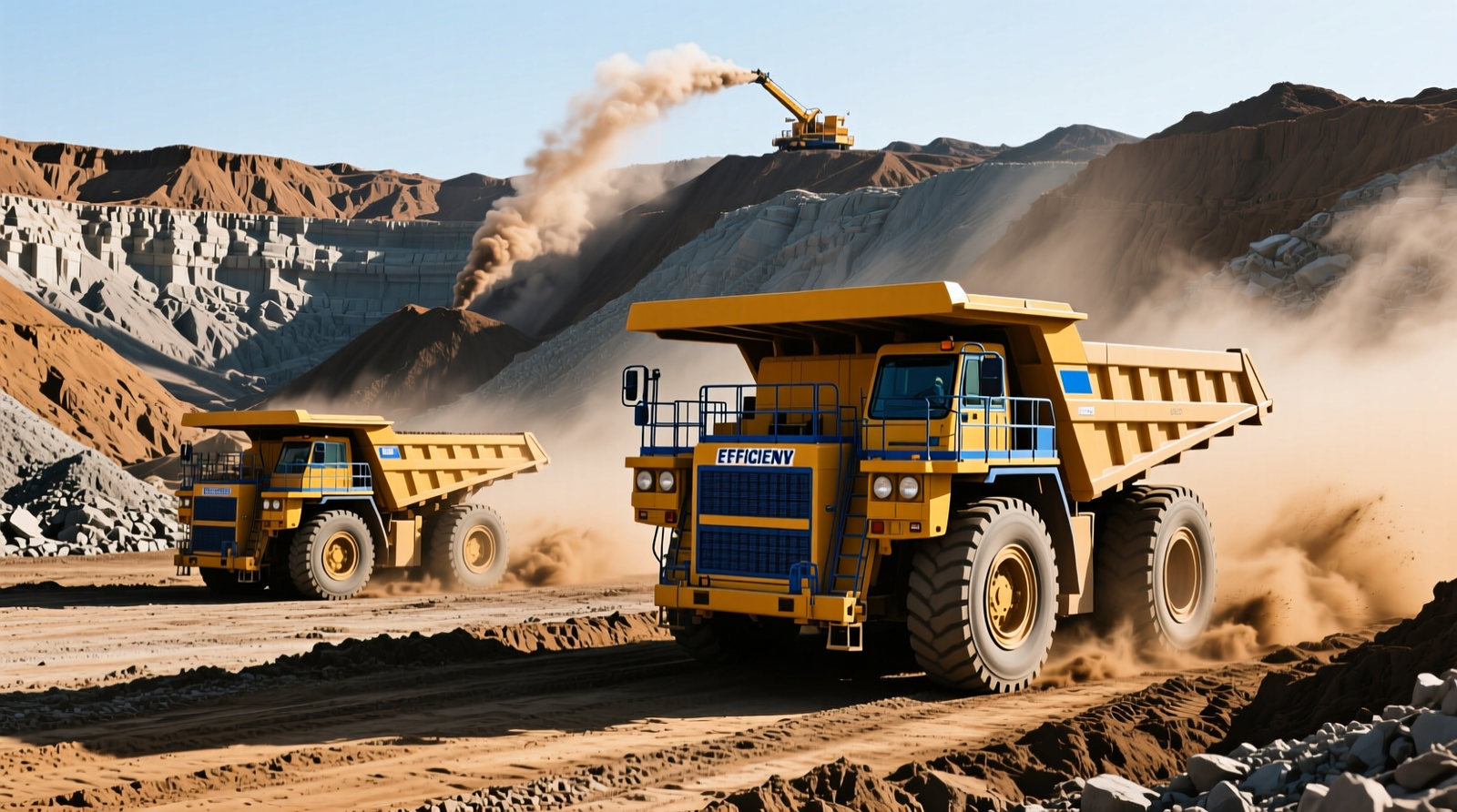
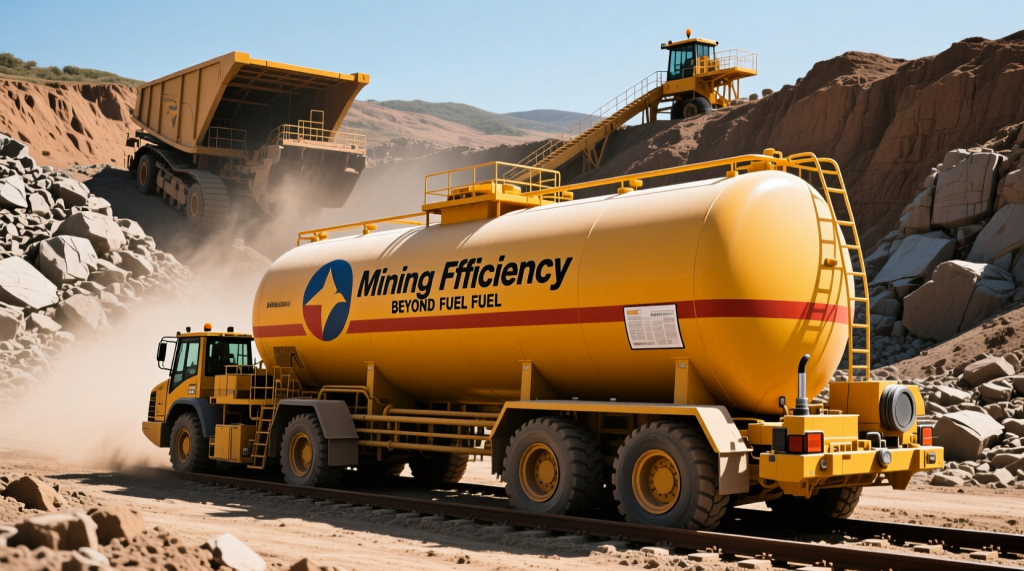
Across most mine sites, heavy mobile equipment still runs on diesel. A single ultra-class haul truck can burn up to 900,000 litres of diesel per year (based on external industry research and published benchmarks; see reference note at the end of this article). That figure does not include the loaders, excavators, dozers, and service vehicles needed to keep an operation moving day and night.
This diesel dependence is expected to persist. Industry outlooks consistently show internal combustion engines remaining a large share of haulage through 2040, even as lower-carbon fuels grow in the mix. For example, the International Energy Agency (IEA) notes that liquid fuels remain important in hard-to-electrify sectors while the transition scales (IEA World Energy Outlook).
Electrification will play a bigger role in mining decarbonization, but adoption is still early in many segments. Timelines like 2031–2035 for broader electrification waves are best interpreted as industry-wide expectations that vary by region and application (e.g., underground vs. surface, existing power infrastructure, and regulatory drivers), rather than a universal schedule for every mine. In the near term, improving haul truck fuel efficiency and tightening haulage execution can reduce fuel burn and associated greenhouse gas (GHG) emissions (GHG = gases such as CO2 and methane that trap heat in the atmosphere).
As lower lifecycle GHG biofuels (i.e., fuels that can reduce “well-to-wheel” emissions across production + use phases) and improved diesel formulations expand, most operations will manage an “and/both” reality: progress mine electrification strategies while continuing to extract more productive work from diesel fleets for the next 10–15 years.
That requires treating efficiency as a system: planning, maintenance, operator behavior, and dispatch all need to reinforce each other to improve mine haulage productivity and reduce avoidable fuel use.
TL;DR: Diesel will remain central for many mining fleets for years, so near-term gains come from tightening operations and maintenance while electrification and alternative fuels scale.
Key Levers to Improve Mining Fleet Efficiency
1. Planning, Connectivity, and Digital Tools
Better planning software, reliable connectivity, and clearer operational visibility are often the quickest path to improved cycle time consistency. In practice, that means fewer trucks stacked at a shovel, fewer “empty miles,” and fewer ad-hoc reroutes that spike fuel burn.
Global surveys (including GlobalData coverage referenced in the original draft) report strong ongoing investment in planning, scheduling, and mine-site communications—particularly in mature mining regions with high technology adoption. While the specific GlobalData dataset isn’t reproduced in this excerpt, these findings align with broader industry digitization trends discussed by organizations such as Caterpillar and Komatsu in their fleet management and digital mine materials (Caterpillar mining insights).
Planning-driven improvements commonly include:
- Haul route optimization to reduce steep gradients and unnecessary distance
- Shift handover planning to prevent congestion spikes at changeover
- Real-time constraint management to address bottlenecks as they emerge
Operational vignette (hypothetical): At a mid-sized open-pit site, dispatch noticed recurring queue build-up at one shovel after blast clearance. By changing the post-blast traffic plan (staggering releases and reassigning two trucks to a nearby face for 45 minutes), the pit reduced queuing and “creeping idle” without adding equipment. The biggest improvement wasn’t top speed—it was smoother flow.
TL;DR: Better planning and connectivity reduce congestion and unnecessary travel, improving fuel productivity without major capital spend.
2. Predictive Maintenance and Asset Health
Maintenance affects both availability and fuel use. When engines, drivetrains, and hydraulics run outside their intended operating window—because of wear, poor filtration, incorrect lubrication, or unresolved fault codes—sites often see higher fuel burn per unit of production.
Predictive maintenance (using sensor/condition data to anticipate failures) and condition-based maintenance (CBM) (servicing based on measured condition rather than fixed intervals) can reduce unplanned downtime and keep equipment operating closer to design efficiency. Standards-based maintenance thinking can also help structure programs; for example, ISO 55000 provides widely used guidance on asset management systems (ISO 55000/55001 overview).
Common enablers include:
- Oil analysis (laboratory testing of used lubricant for wear metals, viscosity change, contamination)
- Telematics (connected machine data such as engine load, idle time, fault events)
- Targeted inspections using drones/remote tools for roads, berms, and infrastructure (where site rules allow)
Where possible, maintenance teams should also align practices with original equipment manufacturer (OEM) guidance (OEM = the machine’s manufacturer) and emissions requirements. Emissions frameworks vary by region; in the U.S., for example, the EPA’s nonroad diesel regulations define Tier standards for off-highway equipment (U.S. EPA nonroad diesel rules).
TL;DR: Predictive/condition-based maintenance and oil analysis help prevent inefficient operation and downtime, supporting both fuel savings and availability.
3. Operator Practices and Driving Behaviour
Operator technique directly influences fuel burn, particularly in long shifts with repetitive cycles. Instead of treating performance variation as “just how people drive,” many sites now use coaching programs guided by telematics (telematics = machine + location data transmitted for analysis).
Coaching commonly targets:
- Idle management during queuing, shift changes, and breaks
- Payload discipline (avoiding chronic underloads/overloads that destabilize cycle time)
- Smoother throttle and braking to avoid high fuel transients and heat stress
- Route adherence to prevent unnecessary distance and grade penalties
Indicative KPIs (site-specific and equipment-specific): many operations aim to keep idle time in a controlled band (often tracked as a percentage of engine hours), minimize payload variance, and reduce high-severity events (overspeed, harsh braking). Exact targets depend on duty cycle, climate, and OEM recommendations, so they should be set from a baseline and validated in pilot periods.
Operational vignette (hypothetical): One site found two day-shift trucks had consistently higher fuel burn. Telematics showed longer warm-idle at start-up and repeated short stops near the shovel. After a supervisor-led coaching session plus a change to the queuing protocol, fuel consumption normalized over the next month—without changing the route or the maintenance plan.
TL;DR: Practical coaching on idle, payload, and smooth driving can deliver measurable fuel savings—especially when reinforced by consistent dispatch practices.
4. Smarter Dispatch and Autonomous Haulage
Modern dispatch and fleet management systems (FMS) can reduce wasted time by dynamically matching trucks to shovels, balancing queues, and limiting empty travel. Even before autonomy, better dispatch logic often improves flow consistency—the “hidden” driver of fuel efficiency.
Autonomous haulage systems (AHS) (trucks operating with automated control and supervision) are growing from a relatively small base globally, with adoption concentrated in specific regions and large surface operations. This uneven adoption matters: the business case depends on mine design, communications infrastructure, workforce readiness, and capital availability.
Typical dispatch/FMS benefits include:
- Lower queue time through better shovel-truck matching
- Reduced empty distance with smarter allocation and routing
- More consistent cycle times, supporting predictable production and maintenance planning
Trade-offs to plan for: autonomy and advanced dispatch can require capital investment, change management, network reliability, and strong governance for exceptions (weather, road closures, mixed traffic). Those constraints don’t negate the value—they simply shape the rollout strategy.
As a bridge to deeper decarbonization, improved dispatch and (where applicable) autonomy help reduce avoidable diesel use while sites evaluate electrification options.
TL;DR: Dispatch optimization improves cycle consistency and reduces empty travel; autonomy can amplify that effect but requires capital, infrastructure, and strong change management.
Transition: Each lever above can help on its own, but the biggest gains in mining fleet optimization typically come when planning, maintenance, operators, and dispatch are managed as one system with shared KPIs and disciplined follow-through.
Working With an Expert Partner to Maximise Fleet Performance

Coordinating planning, maintenance, coaching, and dispatch improvements is hard when sites are already pushing production targets. Partner support can help mines move from scattered initiatives to a structured program with clear baselines, trials, and scale-up.
Fuel and lubricant providers, OEMs, and specialist engineering firms can all play a role. ExxonMobil is one example of a supplier offering performance diesel products (e.g., Mobil Diesel Efficient™ in some markets), synthetic lubricants, and field support that can be integrated with condition monitoring and operational coaching.
To keep programs technically credible, performance outcomes should be validated via site-specific trials (controlled comparisons across routes, trucks, shifts, and duty cycles). Results vary depending on road conditions, maintenance maturity, payload control, altitude, and ambient temperature.
When a partner-led program is executed well, the integration usually focuses on:
- Alignment with OEM operating windows (engine, transmission, hydraulic requirements)
- Maintenance actions triggered by condition (oil analysis + telematics insights)
- Operator coaching tied to the biggest loss modes (idle, harsh events, route drift)
- KPIs connected to both production and emissions (e.g., fuel per tonne, availability, idle %)
TL;DR: A qualified partner can help unify fuels, lubricants, maintenance, and coaching into one measurable improvement program—validated through controlled, site-specific trials.
Proven Experience in Harsh Mining Conditions
Mine managers tend to trust field evidence over brochure claims—especially in high-altitude, dusty, or temperature-extreme operations where margins are unforgiving. In those settings, fuels and lubricants need to support reliable starts, stable combustion, and wear protection under high load.
It also helps to anchor decisions in OEM and standards-based practices (for example, OEM lubrication specifications and structured asset management principles). Where lubricants are part of the plan, used oil analysis and wear trending are often the “truth meter” for whether extended drains or product changes are actually protecting equipment.
What to watch for in trials: fuel consumption normalized for tonnes and haul profile, component temperatures, fault rates, oil condition trends, and any shift in maintenance interventions.
TL;DR: In harsh conditions, credibility comes from controlled field validation—tracking fuel performance alongside wear, temperatures, and reliability indicators.
A Practical Roadmap to Lower Emissions and Improve Haulage Efficiency
The strongest improvement programs typically follow a roadmap rather than a one-off initiative. A practical sequence looks like this:
- Baseline (2–4 weeks): establish current performance by fleet/route/shift (fuel burn, tonnes, idle %, queue time, availability).
- Diagnose loss modes: identify top drivers (congestion, road condition, payload variance, maintenance-related inefficiency).
- Pilot (4–12 weeks): run controlled changes (dispatch rules, coaching, maintenance triggers, fuel/lube trial where relevant).
- Verify: confirm results with normalized metrics and repeatability across conditions.
- Scale: expand what works, document standards, and embed governance (training, audits, KPI reviews).
3–6 month checklist for operations managers:
- Stand up a weekly review of fuel per tonne, idle %, and top delay codes by pit/shift.
- Fix one high-impact congestion point (shovel queue, dump access, or shift handover).
- Launch a targeted idle-and-payload coaching loop for the bottom quartile of trucks/operators.
- Implement or tighten used oil analysis sampling discipline and close the loop with maintenance actions.
- Confirm whether renewable diesel/biodiesel options are compatible with your OEM guidance and local fuel quality requirements before trialing (renewable diesel and biodiesel are different fuels with different properties; compatibility should be verified).
For readers who want broader context on decarbonization pathways, the IEA’s mining-related analysis and global energy transition reporting is a useful starting point (IEA industry decarbonization topic).
Reference note on citations: The original draft used superscript-style markers (i, ii, iii, etc.) without a visible bibliography in this excerpt. The quantitative statements and adoption trends referenced here are based on external industry research (including widely cited technology adoption surveys and public decarbonization outlooks). If publishing, add a formal reference list with author, year, title, and link/DOI for each claim that requires substantiation.
TL;DR: Baseline → diagnose → pilot → verify → scale. Focus first on congestion, idle, payload variance, and maintenance discipline to improve productivity and support diesel fleet decarbonization.
FAQ
Q: What are the fastest ways to improve haul truck fuel efficiency without buying new trucks?
A: The quickest gains usually come from operational control: reduce queue-related idle, tighten dispatch matching (truck-to-shovel and route), keep payload variance under control, and address road conditions that force unnecessary braking/acceleration. Pair that with condition-based maintenance and consistent oil analysis to keep engines and drivetrains operating efficiently.
Q: How do I choose KPIs for mining fleet optimization that operators and maintenance teams both trust?
A: Use a small set of shared, auditable metrics: fuel per tonne (or fuel per payload-distance where appropriate), idle %, queue time, cycle time distribution (not just average), availability, and key delay codes. Baseline them by route and shift, then review weekly so teams can see cause-and-effect from changes in dispatch, roadwork, and maintenance actions.
Q: What should a 90-day plan look like for diesel fleet decarbonization at a mine site?
A: Start with measurement and controllable loss modes: establish a baseline, fix one recurring congestion constraint, run an idle-and-payload coaching loop, tighten maintenance triggers using telematics and used oil analysis, then pilot any fuel/lubricant changes with a controlled trial. Validate results before scaling site-wide.
Q: Will autonomous haulage systems automatically reduce emissions and fuel use?
A: Not automatically. Autonomy can improve consistency (speed control, fewer harsh events, stable cycle times), which often helps fuel performance, but outcomes depend on site design, traffic management, and how exceptions are handled. Capital cost, network reliability, and change management are common constraints that need to be planned early.
Q: How can renewable diesel or biodiesel fit into a mine’s fuel strategy while electrification is still limited?
A: Low-carbon liquid fuels can be a transitional option, especially where electrification infrastructure is constrained. However, compatibility with OEM recommendations, local fuel quality, cold-flow performance, storage stability, and site logistics should be assessed before deployment. The best approach is a site-specific trial with clear KPIs and verification methods.