
Key Takeaways

- Most food manufacturers don’t need to replace older systems to modernize. Phased legacy OT integration (operational technology integration) with newer tools is usually faster, less disruptive, and more cost-effective than a complete overhaul.
- The biggest barriers to connectivity are complexity and the lack of a clear roadmap—not the age of equipment.
- Starting small with one data-rich process or a single production line creates a proof of value before scaling to broader food plant MES and ERP integration.
TL;DR: Integration-first modernization is typically the lowest-risk path to food manufacturing digital transformation—and a roadmap matters more than machine age.
Introduction: The Legacy System Challenge in Food Manufacturing
Most food plants have at least one reliable machine that’s been running for a decade or more. It still does what it was designed to do—but it doesn’t share data with anything else. The problem usually isn’t “old equipment”; it’s the complexity of connecting it without disrupting production, plus uncertainty about where to start.
In practice, data from packaging lines, process skids, and quality checkpoints often lives in paper logs, spreadsheets, local historian screens, or tribal knowledge. That creates a gap between OT (operational technology)—plant-floor control and automation—and IT (information technology) systems like ERP (enterprise resource planning), MES (manufacturing execution systems), and QMS (quality management systems).
For food and beverage manufacturers, that gap is now strategic. It impacts food safety, FSMA traceability compliance, audit readiness, quality consistency, and the ability to respond quickly to disruptions.
TraceGains’ 2024 Digital Drag report (surveying 165 senior leaders in food safety, quality, and innovation) found:
- 69% of food and beverage companies still rely on manual systems to manage critical processes.
- 82% say new technology implementation is a priority.
The gap between these numbers is “digital drag”—and complexity is the most frequently cited reason it persists. The good news: connecting legacy systems rarely requires a total reset. Many plants modernize successfully using phased integration while keeping production running.
External references: For regulatory context, see the FDA’s FSMA traceability rule overview.
TL;DR: Equipment age is rarely the blocker; unclear integration strategy and system complexity are. Phased integration closes the OT/IT gap without major disruption.
Why System Integration Is a Priority Now
System integration is accelerating in food manufacturing due to three forces that are hitting at the same time: regulatory requirements, operational performance needs, and customer expectations. Together, they’re pushing food manufacturing digital transformation from “nice-to-have” to “must-have.”
TL;DR: Integration is now a business requirement—driven by compliance, uptime/efficiency, and external data demands.
Regulatory Pressure: FSMA and Traceability
The U.S. Food Safety Modernization Act (FSMA) traceability rule raises the bar on end-to-end data visibility. Regulators expect manufacturers to trace ingredients and finished goods quickly and accurately across the supply chain—especially for foods on the Food Traceability List (FTL).
When production, receiving, and quality records are scattered across paper, spreadsheets, and disconnected applications, audit and recall response becomes slow and error-prone. Integrated systems make it faster to answer questions like:
- Where did this lot come from (supplier, COA, inbound lot)?
- Which batches used this ingredient (work orders, rework loops)?
- Which customers received this shipment (finished goods lots, pallet IDs)?
For authoritative guidance, see the FDA FSMA traceability rule page.
TL;DR: FSMA traceability compliance becomes dramatically easier when lot, batch, and quality data flows automatically across systems.
Operational Pressure: Efficiency, Quality, and Uptime
Disconnected OT/IT data reduces day-to-day performance. Without integrated production, quality, and maintenance information, teams struggle to:
- Detect quality drift early and trace root causes (ingredients, settings, operators, environmental conditions).
- Identify bottlenecks or recurring downtime patterns by line, SKU, or shift.
- Move from reactive maintenance to predictive or condition-based maintenance.
- Compare performance consistently across lines and plants.
When floor-level signals feed a unified view—whether through MES, ERP, or a manufacturing data platform—teams can reschedule production, adjust process parameters, or quarantine inventory based on near-real-time data instead of rekeyed reports.
TL;DR: Integration turns scattered signals into decision-grade data that improves uptime, reduces quality losses, and speeds response.
Competitive Pressure: Customer and Partner Expectations
Retailers, foodservice operators, and brand owners increasingly expect proof—not promises. They ask for timely documentation on:
- Ingredient sourcing, supplier approvals, and compliance status
- Allergen controls and cross-contact prevention
- Environmental and processing conditions
- Sustainability and traceability claims
Meeting these requirements with paperwork and ad hoc spreadsheets is possible, but expensive and risky. As competitors digitize, companies that remain heavily manual face longer lead times, higher compliance exposure, and weaker leverage with large buyers.
TL;DR: Buyer expectations are increasingly data-driven; integrated systems reduce errors and make compliance documentation easier to deliver.
Why Integration Often Beats Rip-and-Replace

When older systems become bottlenecks, the instinct is often to “rip and replace.” Sometimes full replacement is right—especially for end-of-life platforms or safety-critical modernization. But in many food plants, integration is the better first move because it avoids downtime, reduces validation risk, and supports a more controlled food manufacturing digital transformation.
TL;DR: Integration is typically the fastest path to results—replacement can come later, based on evidence.
A Scenario: Failed Rip-and-Replace vs. Successful Phased Integration
Rip-and-replace failure scenario (common pattern): A multi-line plant attempts a full MES replacement plus controls upgrades across packaging, batching, and warehousing in one go. The project scope expands to include label printing, QA workflows, downtime capture, and ERP interfaces. Commissioning delays push go-live into peak season. Operators revert to “shadow spreadsheets,” and the plant ends up running parallel processes for months—raising audit risk and exhausting the team.
Phased integration success scenario (common pattern): The same plant instead starts with one packaging line and one quality workflow. They integrate downtime states and quality checks into a single reporting layer, validate data accuracy for 6–8 weeks, then replicate the approach to other lines. ERP and MES integrations are added after the plant has stable, trusted data.
TL;DR: Big-bang replacement often fails on scope and disruption; phased integration proves value early and scales with lower risk.
The Drawbacks of Rip-and-Replace

Replacing core production or quality systems often introduces:
- High capital expense for new equipment, controls, and software licenses
- Long implementation timelines (plus validation and re-qualification where required)
- Extensive retraining for operators, QA, and maintenance
- Higher downtime risk during commissioning and cutover
For plants operating near capacity, extended shutdowns are rarely acceptable. For multi-plant companies, synchronized replacements can become a multi-year program with uneven adoption.
TL;DR: Rip-and-replace can be necessary, but it’s usually the highest-disruption and highest-risk modernization method.
The Integration Alternative (Vendor-Neutral)
Integration connects legacy systems instead of discarding them. The goal is straightforward:
- Let existing machines and software keep doing what they do well.
- Add a “data bridge” that captures and shares the information they generate.
Typical legacy control environments in food plants include PLCs (programmable logic controllers) and control systems from major ecosystems such as Allen-Bradley/Rockwell Automation and Siemens, along with distributed control system (DCS) and SCADA (supervisory control and data acquisition) layers depending on the process. Integration is commonly achieved using:
- OPC UA (Open Platform Communications Unified Architecture) for standardized, secure industrial data exchange
- Gateway modules or protocol converters for EtherNet/IP, PROFINET, Modbus TCP, and legacy serial protocols
- APIs (application programming interfaces) for ERP/MES/QMS data exchange
- Middleware for orchestration, transformation, and event routing across systems
This approach supports phased modernization: connect one process, learn, then scale to additional lines or plants—and only replace systems when the data proves it’s necessary.
TL;DR: Integration adds a data layer across PLC/SCADA and business systems (MES/ERP/QMS) using standards like OPC UA and APIs—without forcing immediate replacements.
High-Value Starting Points for Food Manufacturers
A practical question for leadership teams is: “Where is disconnected data creating the most friction right now?” In food manufacturing, the answer usually points to a handful of high-value integration entry points.
TL;DR: Start where the pain is measurable—audits, downtime, quality losses, or supplier documentation.
1. Quality Data Collection (Audit Readiness + Faster Root Cause)
Manual quality checks on paper or isolated spreadsheets are still common. These checks often include:
- Metal detector or X-ray verification checks
- Weight/fill checks and statistical sampling
- Label verification (including allergen statements and date codes)
- Temperature/time checks for CCPs (critical control points)
Integration typically doesn’t require replacing devices. It more often means capturing measurements digitally (e.g., from checkweighers, sensors, or operator entries on a validated interface) and routing them into a QMS or compliance repository tied to lot/batch context.
Mini case example (anonymized): A ready-to-eat plant integrated in-line checkweigher results and CCP temperature checks on a single packaging line into a centralized digital record. Before: QA spent ~10 hours/week assembling audit packets from binders and spreadsheets. After: audit prep time dropped by ~60% (to ~4 hours/week) because records were searchable by lot and automatically time-stamped.
Post-integration KPIs to track:
- % reduction in audit prep hours (e.g., hours per audit packet)
- % reduction in missing/late quality checks
- Time-to-root-cause for top defects (hours/days)
TL;DR: Quality data integration is a fast win—improving audit speed, traceability, and defect investigation without changing core equipment.
2. Supplier and Ingredient Data (FSMA Traceability Compliance + Faster Document Control)
Supplier/ingredient information is a common early target because it’s compliance-critical and frequently changing: specs, allergens, COAs (certificates of analysis), and supplier approvals often live across email threads and shared drives.
Centralizing and integrating supplier data supports:
- Faster supplier onboarding and re-approval
- Consistent specifications across plants and co-manufacturers
- More responsive recall readiness and lot genealogy
Post-integration KPIs to track:
- Cycle time to approve a new supplier or ingredient (days)
- % reduction in time spent chasing COAs/spec updates
- Recall mock execution time (hours) and completeness rate
TL;DR: Supplier data integration reduces document chaos and strengthens FSMA traceability compliance with measurable time savings.
3. Predictive Maintenance on High-Value Equipment (Reduced Downtime)
High-impact assets—cookers, ovens, fillers, mixers, conveyors, compressors, and packaging lines—can cause disproportionate disruption when they fail. Predictive maintenance relies on integrating condition and runtime data into maintenance workflows.
Common condition inputs include vibration, motor temperature, run hours, starts/stops, air pressure, and fault codes. This data can flow into a CMMS (computerized maintenance management system) or reliability platform for alerts and work order triggers.
Mini case example (anonymized): A beverage bottling facility integrated filler fault codes and conveyor motor temperature trends into maintenance dashboards using an OT gateway and event rules. Before: the line experienced 2–3 unplanned stoppages per week. After: unplanned stoppages dropped ~20–30% over one quarter by addressing recurring overheating and misalignment issues earlier.
Post-integration KPIs to track:
- MTBF (mean time between failures) increase
- MTTR (mean time to repair) reduction
- % reduction in unplanned downtime minutes
TL;DR: Maintenance integration turns equipment signals into earlier interventions—often reducing unplanned downtime without replacing assets.
4. Production Reporting and OEE (Line Performance Visibility)

Many plants still compile shift totals manually or reconcile multiple sources to produce daily reports. Integrating line data enables consistent, timely production visibility and a foundation for OEE (overall equipment effectiveness).
Typical data types captured for OEE/production reporting include:
- Good count vs. reject/scrap count (quality component)
- Cycle time and actual throughput rate (performance component)
- Changeover duration and start-up losses
- Downtime categorization: minor stops (brief stoppages) vs. major stops (longer events), planned vs. unplanned
- Reason codes tied to PLC states, alarms, or operator selections
When automated capture feeds MES/ERP reporting, supervisors spend less time reconciling and more time acting on issues.
Post-integration KPIs to track:
- % reduction in manual reporting time per shift
- OEE improvement by line/SKU (percentage points)
- Changeover time reduction (minutes) and minor stop frequency
TL;DR: OEE and production reporting integration standardizes downtime and performance data—reducing reporting labor and improving line optimization.
Technology Trend Context (and Why Integration Enables It)
The Institute of Food Technologists (IFT) 2024 Technology Trends Survey indicates continued investment interest in AI and supply chain tracking, along with real-time analytics and cloud computing. These initiatives only work when underlying plant and supplier data is connected and governed.
For context on IFT’s role and resources, see IFT.org.
Also trending: Integrated data increasingly supports ESG (environmental, social, and governance) and sustainability reporting—especially when plants need consistent energy, water, waste, yield, and rework metrics across multiple facilities.
TL;DR: AI, analytics, traceability, and ESG reporting all depend on the same prerequisite: integrated, trustworthy data.
A Practical Phased Integration Plan
There’s no one-size-fits-all roadmap, but successful programs usually follow a repeatable pattern: start small, prove value, then scale deliberately. This reduces disruption while building the foundation for broader food plant MES and ERP integration.
Roadmap overview (5 phases): (1) Identify data gaps → (2) Pick a pilot → (3) Choose integration-friendly tools → (4) Validate results → (5) Scale into a unified data environment.
TL;DR: Use a five-phase roadmap to move from pilot to enterprise integration without overwhelming the plant.
Phase 1: Identify the Data Gaps (and Prioritize with a Heat Map)
Before connecting anything, map what data you have, where it lives, and where it’s missing. This can be done through a structured walk-through with operations, quality, maintenance, IT, and (when applicable) food safety.
Key questions include:
- Which processes still rely on paper or repeated re-keying?
- Where do repeat issues occur that are hard to trace (quality holds, downtime, changeovers)?
- Which reports are most painful to prepare (audits, daily OEE, yield loss, supplier compliance)?
Practical prioritization tip: Build a simple effort vs. impact matrix (or heat map). Plot each potential integration opportunity by estimated implementation effort (low/medium/high) and business impact (low/medium/high).
Common “quick wins” in food plants:
- Digitizing and time-stamping CCP checks tied to lot/batch
- Automating downtime events from PLC states (with minimal operator input)
- Centralizing COAs/spec documents and linking to receiving lots
TL;DR: Don’t start with the biggest project—use an effort/impact matrix to pick quick wins that prove value fast.
Phase 2: Select One Process or Line as a Pilot
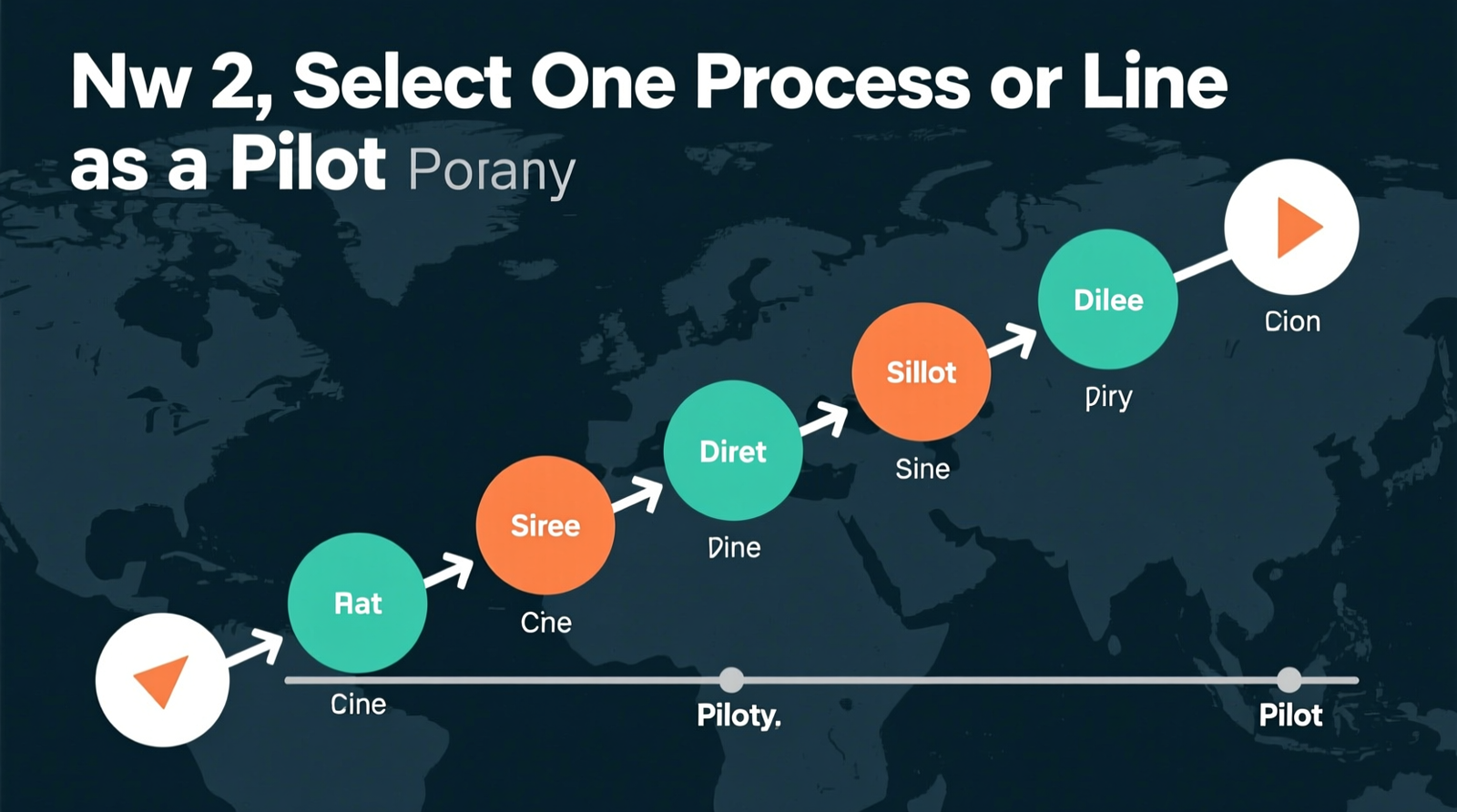
Pick a narrowly scoped pilot such as one line, one quality workflow, or one supplier data process. A tight scope keeps risk low, accelerates learning, and creates a repeatable template.
Indicative timeline/cost framing (qualitative):
- Pilot (single line / single workflow): typically low-to-medium cost and weeks to a few months, depending on connectivity, validation needs, and reporting requirements.
- Multi-line / multi-system plant rollout: typically medium-to-high cost and several months.
- Multi-plant program: typically high cost and multiple quarters to multi-year, often staged by site readiness and standardization.
TL;DR: A focused pilot is the fastest, safest way to start—and it sets cost/time expectations for scaling.
Phase 3: Use Integration-Friendly Tools (Connecting PLCs to MES/ERP)
Modern integration platforms can bridge older OT and newer IT systems without heavy modifications to existing equipment. Common approaches include:
- OPC UA servers/clients to normalize plant-floor data access across equipment
- Industrial IoT gateways to collect PLC tags, sensor signals, and machine states and forward them securely
- Middleware to transform data models, orchestrate workflows, and handle retries/queueing
- ERP/MES connectors that support standard interfaces and reduce custom development
In many cases, you can read data non-invasively (e.g., via existing network access, historian interfaces, or mirrored tags) rather than reprogram PLC logic. This is especially helpful in regulated environments where minimizing changes reduces revalidation burden.
TL;DR: Use standards (OPC UA, APIs) and gateways/middleware to connect Allen-Bradley/Siemens-type PLC environments to MES/ERP without major control changes.
Phase 4: Validate Before Scaling
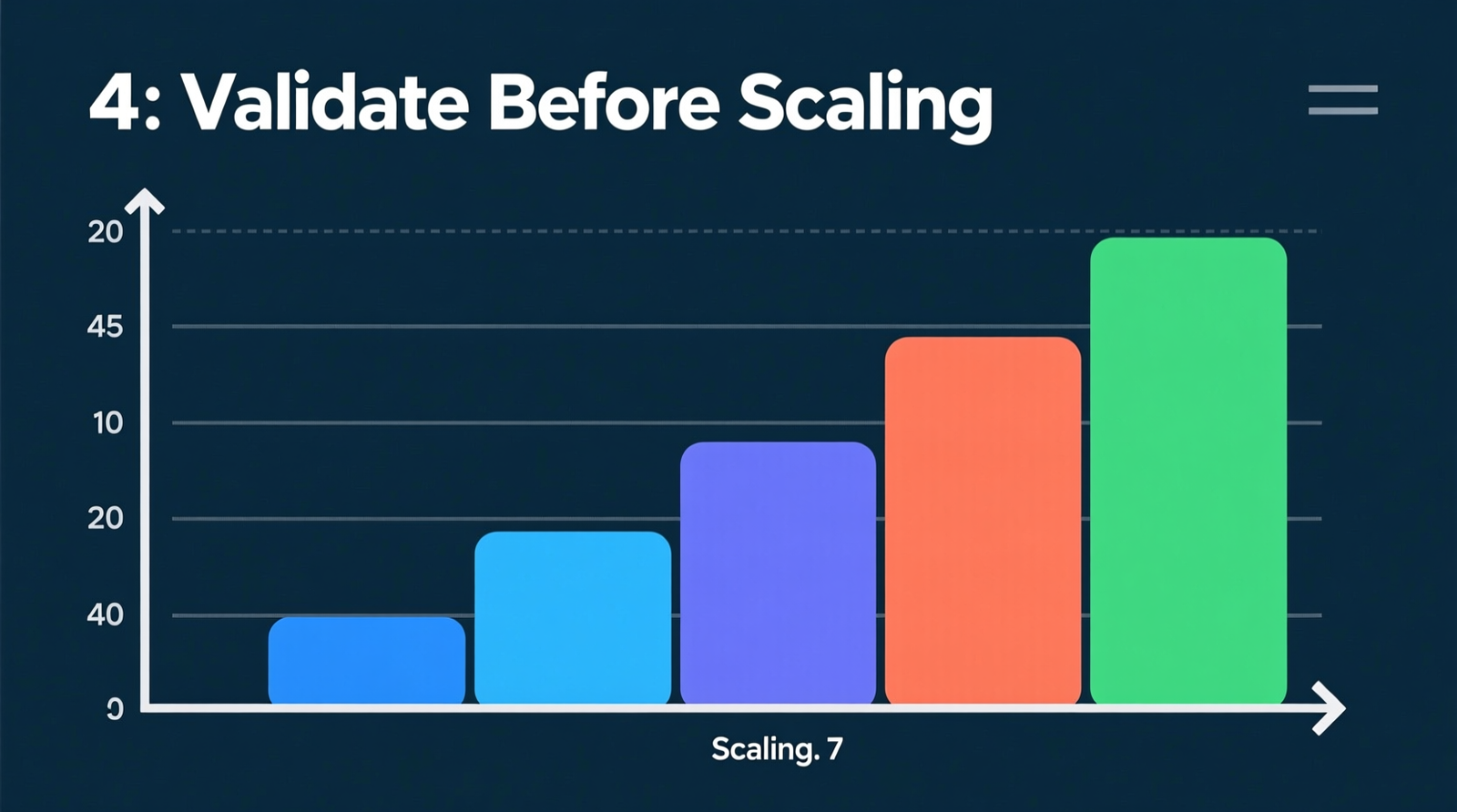
Once the first integration is live, run it long enough to prove stability and accuracy:
- Data is correct, complete, and time-aligned
- Connections remain reliable across shifts and sanitation cycles
- Operators and managers trust and use the outputs
Use this period to refine dashboards, downtime taxonomies, quality exception workflows, and alert thresholds so data drives action—not just reporting.
TL;DR: Validation is where integration becomes operationally useful—prove trustworthiness before expanding scope.
Phase 5: Build Toward a Unified Data Environment
As more processes connect, the goal becomes a shared, governed data environment—often spanning:
- ERP (enterprise resource planning) for orders, inventory, and finance
- MES (manufacturing execution system) for work execution, genealogy, and production tracking
- QMS for quality events, checks, and CAPA (corrective and preventive actions)
- Data warehouse/lake for analytics, benchmarking, and AI use cases
This is the foundation for end-to-end traceability, cross-plant performance comparisons, and advanced analytics.
TL;DR: Scale pilots into a governed data environment that supports traceability, benchmarking, and analytics across plants.
Key Risks and How to Manage Them

Integration is achievable, but not friction-free. The best projects treat risks as design inputs—not surprises.
TL;DR: The main risks are protocol mismatch, messy master data, adoption hurdles, and cybersecurity—each manageable with upfront planning.
Protocol Mismatches (Legacy OT Integration Reality)
Older equipment often speaks protocols that modern systems don’t natively understand, including older fieldbus standards or proprietary PLC communications. Even within common ecosystems, plants may run mixed generations of controllers and network topologies.
Mitigation steps:
- Document protocols and access methods per asset/line (EtherNet/IP, PROFINET, Modbus TCP, serial, etc.).
- Confirm your gateway/middleware supports required drivers and data rates.
- Test with real data and production conditions before go-live.
TL;DR: Protocol mismatch is common and solvable—inventory protocols early and test under real operating conditions.
Data Quality Problems (Master Data and Units)
Integration exposes data quality issues such as inconsistent material codes, duplicate supplier records, and mismatched units of measure. These problems can undermine trust if not addressed.
Best practice: include data cleanup and governance in scope (naming standards, reason code libraries, unit normalization, and ownership).
TL;DR: Clean, standardized master data is what makes integrated systems reliable and scalable.
Change Management and Workforce Adoption
Technology is only half the project. Operators and supervisors may be skeptical if integrations add steps or feel like surveillance. Adoption improves when teams see reduced workload, faster troubleshooting, and fewer “end of shift paperwork” tasks.
Effective adoption tactics include:
- Involving floor personnel in downtime categories, screens, and workflows
- Explaining how changes support food safety, quality, and faster problem resolution
- Training plus a feedback loop to refine what’s captured and how it’s used
TL;DR: Adoption improves when integrations remove friction and produce benefits operators can feel on the floor.
Cybersecurity for Connected OT Systems (IEC 62443 + NIST Guidance)
Connecting previously isolated OT systems to broader networks increases cyber exposure. This risk is manageable when addressed from the start using recognized standards and sound architecture.
Practical controls commonly aligned to IEC 62443 (industrial automation and control system security) and NIST guidance for ICS (industrial control systems) include:
- Network segmentation between OT and IT (zones and conduits)
- Least-privilege access, role-based controls, and MFA (multi-factor authentication) where feasible
- Secure remote access, logging, and continuous monitoring
- Patch and vulnerability management tailored to uptime constraints
Authoritative resources: NIST SP 800-82 Rev. 3 (ICS Security) and ISA/IEC 62443 overview.
TL;DR: Use IEC 62443-aligned segmentation and NIST ICS guidance to integrate OT securely without opening unnecessary risk.
Conclusion: Modernization Through Integration, Not Disruption
Food manufacturers don’t have to choose between “do nothing” and “tear everything out.” In most plants, the real barrier isn’t equipment age—it’s complexity and the absence of a clear, phased roadmap.
A phased integration strategy:
- Respects the reliability of existing equipment
- Targets the highest-friction data gaps first (quality, downtime, supplier docs)
- Builds toward a connected environment that supports FSMA traceability compliance, performance improvement, and food plant MES and ERP integration
Financially, even modest improvements can matter. For example, cutting unplanned downtime by 20% on a constrained line can translate to significant recovered capacity, while reducing audit prep time by 50–60% can return dozens (or hundreds) of labor hours annually—without overhauling the plant. Similarly, improving traceability completeness and speed can reduce the scope and cost of a recall event by enabling faster, more precise lot isolation.
Finally, the same integrated data foundation increasingly supports ESG and sustainability reporting (energy, waste, yield loss, and water metrics), which many buyers and corporate teams now expect.
TL;DR: You don’t need to restart your operation to modernize it—you need a phased integration plan that reduces complexity, proves ROI, and scales.
FAQ

Q: What’s the best first step for legacy OT integration in a food plant?
A: Start by mapping where your most valuable data is created (quality checks, downtime states, lot/batch events, COAs) and where it’s manually rekeyed or hard to retrieve. Then prioritize opportunities with an effort-vs-impact matrix to select a pilot that is small, measurable, and low-risk.
Q: How do food plants typically connect Allen-Bradley or Siemens PLC data to MES or ERP systems?
A: Common vendor-neutral approaches include using OPC UA (to standardize access to PLC tags and events), industrial gateways/protocol converters (EtherNet/IP, PROFINET, Modbus TCP), and middleware to transform and route data into MES/ERP via APIs. Many implementations start read-only to minimize control changes.
Q: What OEE data should we capture first to make reporting reliable?
A: Most plants start with good count vs. scrap, runtime vs. downtime, and a basic downtime reason code structure (planned/unplanned, minor/major stops). Adding cycle time, changeover duration, and alarm-derived reason codes typically comes next once the core data is stable and trusted.
Q: How does integration help with FSMA traceability compliance in practical terms?
A: Integration links receiving lots and COAs to production batches, then to finished goods lots and shipments. That makes it faster to answer “one up/one back” trace questions, execute mock recalls, and produce audit-ready records without pulling data from multiple disconnected sources.
Q: What cybersecurity standard should food manufacturers reference when connecting OT systems?
A: IEC 62443 is widely referenced for industrial automation security architectures (zones/conduits), and NIST SP 800-82 provides practical guidance for securing industrial control systems. Using these as a baseline helps structure segmentation, access control, monitoring, and patch strategies for connected plant environments.