Introduction: Fortescue’s Pilbara Mine Fleet Electrification With Battery Electric Wheel Loaders and Dozers
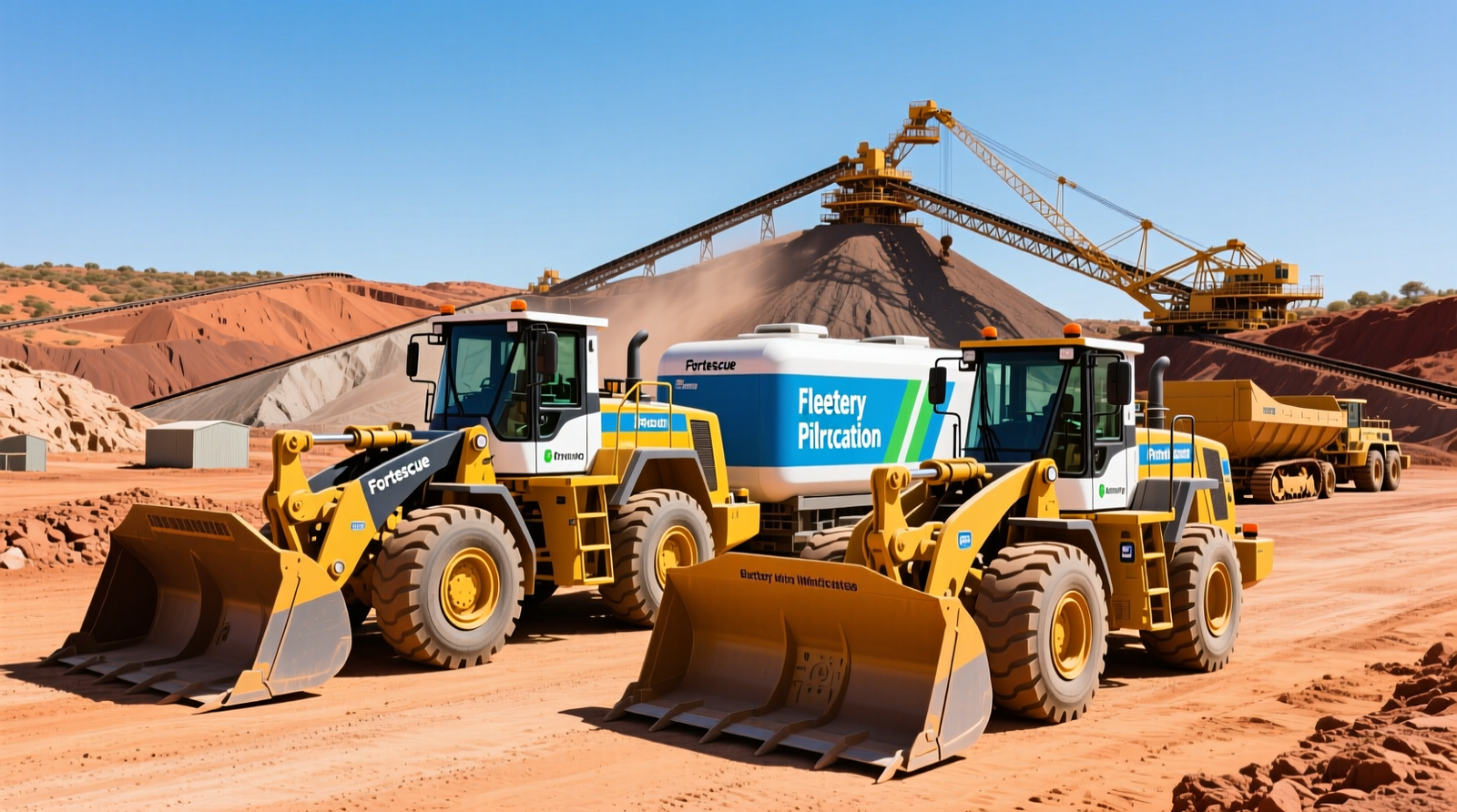
Fortescue is progressing its Pilbara mine fleet electrification program by trialling two XCMG prototypes: a battery electric wheel loader and a battery electric wheel dozer (not haul trucks). The trials will take place at Fortescue’s iron ore operations in Western Australia and are intended to generate the operational data needed to scale zero-emission heavy mobile equipment (HME) across mine production and support fleets by 2030.
In this context, “battery electric” refers to machines propelled by electric traction motors powered by onboard battery packs, rather than diesel engines. The prototypes will be evaluated for productivity, reliability, maintainability, and the practicalities of charging logistics in remote, high-temperature, dust-intensive mine environments.
TL;DR: Fortescue is testing XCMG’s battery electric wheel loader and wheel dozer in the Pilbara to validate performance, charging logistics, and scale-up readiness for a 2030 operational decarbonisation target.
XCMG Prototype Machines Delivered for Iron Ore Mining: XC9260BEWL Wheel Loader and XC9260BEWD Wheel Dozer
XCMG has presented two prototype battery electric mining machines for Fortescue at its Xuzhou manufacturing base in China:
- XC9260BEWL – battery electric wheel loader (dig-and-load and stockpile applications)
- XC9260BEWD – battery electric wheel dozer (push dozing, clean-up, and pad/stockpile management)
These units should be read as mine production support equipment that works alongside (and loads) haul trucks rather than replacing them. In a typical iron ore system, the wheel loader supports ROM (run-of-mine) pad management, rehandle, face clean-up, and auxiliary loading, while the wheel dozer supports push, spread, cleanup, and maintaining trafficable surfaces and stockpiles.
TL;DR: The XC9260BEWL and XC9260BEWD are a battery electric wheel loader and wheel dozer designed to complement haul trucks in iron ore operations, not “battery electric trucks.”
Technical Specifications and What’s Still Unknown (Battery, Voltage Class, Charging Strategy)
XCMG has released limited headline data for the XC9260BEWL battery electric wheel loader, including:
- Rated power: 783 kW
- Nominal load: 127,000 kg (127 t)
- Bucket capacity: 11.5–14.5 m³
For industrial readers, the missing parameters are the ones that determine shift-level feasibility in the Pilbara: battery energy capacity (kWh/MWh), usable depth of discharge, peak vs continuous power, DC fast-charging power (kW), and the voltage class of the traction/battery system.
Many modern off-highway battery-electric platforms are trending toward high-voltage (HV) architectures (often ~800 V class, and in some heavy-duty applications moving toward ~1,000 V+), because higher voltage can reduce current for the same power and help manage cable sizes and losses. XCMG has not publicly confirmed the XC9260 prototypes’ voltage class, whether the packs are swappable or fixed with fast-charging, or the charging interface standard. Those details typically emerge during field trial reporting and OEM/customer technical disclosures.
TL;DR: Power and size data are available, but the key mining-relevant details—battery kWh, HV voltage class (e.g., ~800 V or 1,000 V+), and whether it’s fast-charged or swap-pack—have not been fully disclosed publicly.
Expected Duty Cycles and Typical Applications in Pilbara Iron Ore Operations
In Pilbara iron ore operations, a battery electric wheel loader for iron ore mining like the XC9260BEWL is most likely to be trialled in duty cycles where loader mobility and high breakout force matter, and where charging can be planned:
- ROM pad and stockpile management: shaping, rehandle, blending support, and reclaim assistance
- Dig-and-load into haul trucks: intermittent face support or where excavators are constrained
- Ancillary loading: loadout support, oversize handling, and cleanup loading
The XC9260BEWD battery electric wheel dozer is likely to be evaluated on:
- Push dozing and spread: short push distances where high tractive effort and controllability matter
- Clean-up duties: maintaining pads, clearing spillage, and spot remediation
- Road and pad maintenance support: smoothing, windrowing, and maintaining working surfaces
These roles fit naturally within an integrated electric fleet because they tend to be clustered near fixed infrastructure (pads, stockpiles, workshops) where high-power charging can be installed sooner than in fully distributed pit locations. In early phases, loaders/dozers can also be scheduled with predictable breaks for opportunity charging.
TL;DR: Expect trials to focus on ROM/stockpile work, dig-and-load support, and push dozing/cleanup—applications where predictable routes and proximity to charging make battery-electric HME deployment practical.
Performance vs Diesel: Torque Delivery, Tractive Effort, Regenerative Braking, and Productivity Parity
Battery electric drivetrains typically deliver high torque at low speed from the traction motors, which can benefit ramp starts, push cycles, and fine control during loading. For wheel loaders and dozers, “feel” and controllability under high load are often as important as nameplate kW.
Key performance metrics Fortescue and XCMG will likely track against diesel baselines include:
- Cycle time and tonnes moved per hour (productivity parity)
- Rimpull/tractive effort at low speeds (especially for dozing and stockpile pushing)
- Thermal stability (power derating frequency in high ambient temperatures)
- Energy consumption per tonne (kWh/t) versus diesel litres per tonne (L/t)
Regenerative braking (capturing kinetic energy during deceleration and returning it to the battery) can improve cycle efficiency in stop-start loader work and on downhill segments, but gains depend on duty cycle, traction limits, and how aggressively the machine can regen without compromising stability or braking feel.
TL;DR: Electric torque can improve low-speed control and pushing performance, while regen may reduce net energy use—if thermal limits and charging logistics don’t force productivity compromises.
Operational Challenges for Battery Electric Equipment in the Pilbara: Heat, Dust, Cooling, and Remote Charging Logistics
The Pilbara is a demanding proving ground for BEV (battery electric vehicle) mining equipment due to:
- Heat derating: high ambient temperatures increase cooling load and can force power limits to protect batteries, inverters, and motors.
- Dust ingress: fine red dust challenges seals, filtration, and cooling system cleanliness; maintaining IP (Ingress Protection) ratings in harsh vibration is non-trivial.
- Cooling requirements: electric power electronics (inverters/rectifiers), battery thermal management systems, and motors require robust cooling. Radiator/heat exchanger packaging and cleaning access become critical maintainability topics.
- Charging in remote pits: long cable runs, mobile charging needs, and the operational cost of downtime for charging all affect dispatch and shift planning.
- Grid connection constraints: many mine sites face limits on instantaneous load and power quality; large DC fast chargers can create high peak demand unless managed with buffers (stationary batteries) and smart control.
These are solvable engineering problems, but they must be validated with mine-site data: thermal profiles per shift, dust loading rates, charger utilization, and real-world availability (A) and mean time to repair (MTTR).
TL;DR: The toughest Pilbara issues are heat management, dust-proofing, and building charging systems that don’t create unacceptable peak loads or operational downtime.
Strategic Importance of XCMG Battery Electric Mining Equipment for Fortescue’s Pilbara Operations
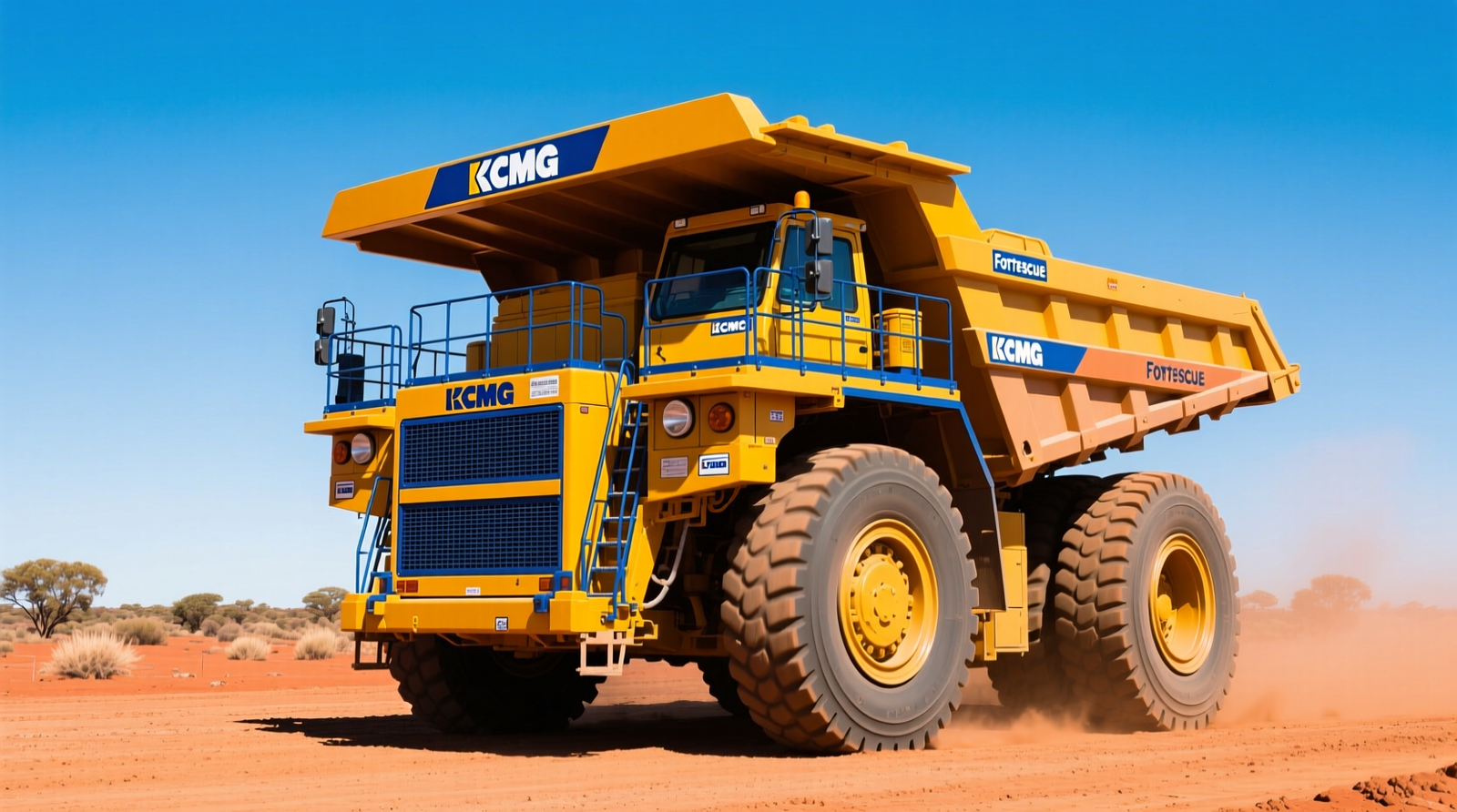
The significance of these XCMG prototypes is less about a single machine and more about system integration: proving that battery electric wheel loaders and wheel dozers can be dispatched, charged, maintained, and kept productive inside an iron ore production system that is aiming to remove diesel.
Fortescue leadership statements about the trials have been communicated via company announcements and project updates; the practical milestone is that prototypes are moving from factory validation into site-based trials where measured productivity, energy use, and availability can be compared against diesel units under matched conditions.
TL;DR: The strategic value is generating real mine-site data—productivity, energy use, and maintainability—to support scalable deployment, not just showcasing prototypes.
Testing Program Structure: Phases and Performance Metrics Under Evaluation
Testing Phases
A robust validation pathway for battery-electric HME generally follows three phases:
- Factory and proving-ground validation (China): functional safety checks, thermal calibration, driveline tuning, and early reliability growth.
- Pilbara commissioning: charging interface validation, site electrical integration, operator familiarisation, and baseline performance mapping.
- Operational trial: multi-shift work under real dispatch conditions to capture energy/tonne, availability, failure modes, and maintenance burden.
Performance Metrics Under Evaluation
Fortescue will likely prioritise measurable, comparable metrics:
- Tonnes moved per shift and cycle-time distributions
- kWh per operating hour and kWh per tonne
- Peak demand profile created by charging and its mitigations (buffer storage, scheduled charging)
- Thermal events (derating frequency/duration) and dust-related service intervals
- High-voltage uptime drivers: contactor wear, insulation monitoring trips, coolant leaks, connector damage
TL;DR: Expect a phased program that moves from factory validation to Pilbara commissioning to multi-shift trials, focused on productivity, energy/tonne, reliability, and charging peak-demand impacts.
Decarbonisation Impact: Diesel Displacement and Approximate CO2e Reductions
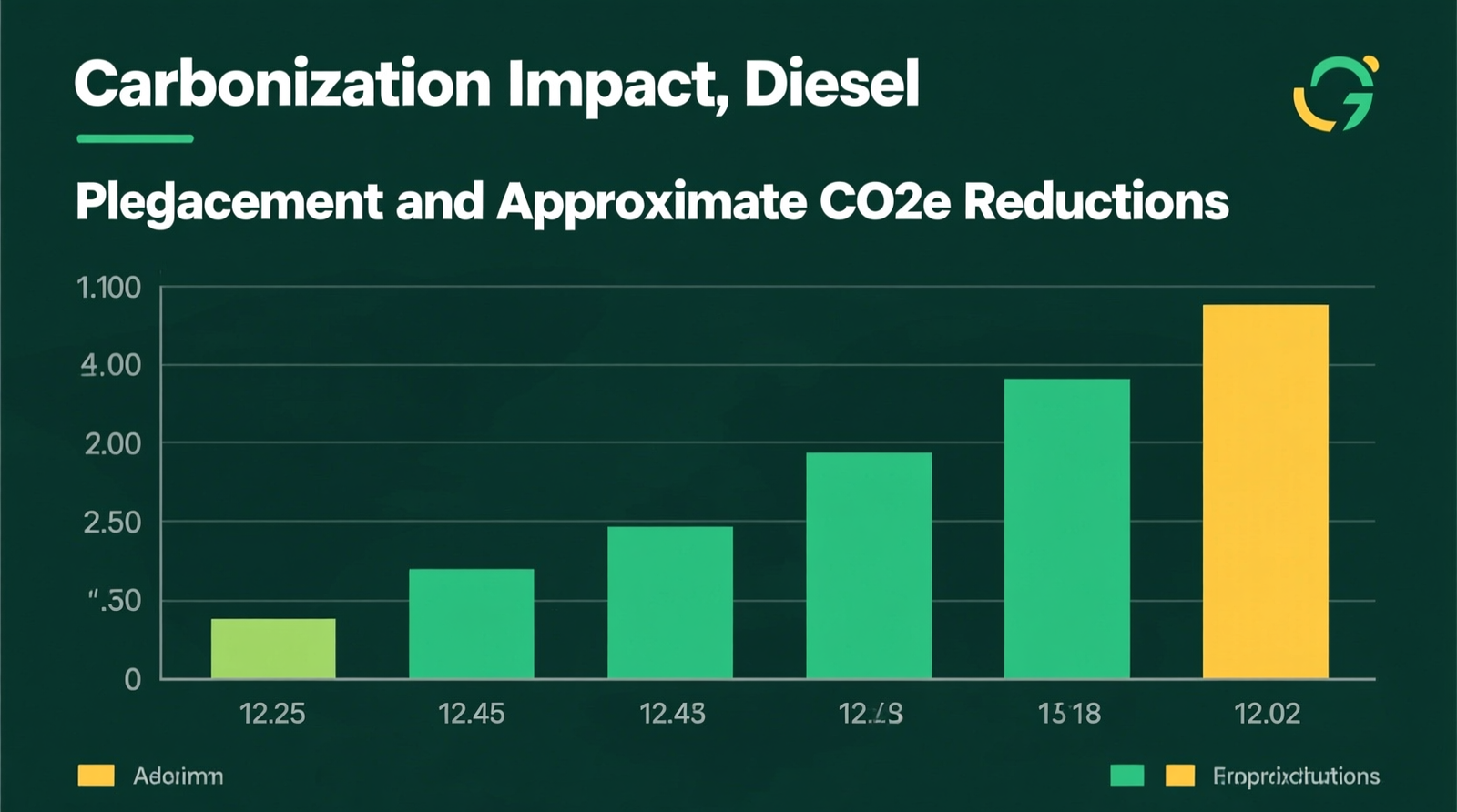
Actual emissions reduction depends on duty cycle and the carbon intensity of electricity, but diesel displacement can be approximated. Large wheel loaders and dozers in heavy mining duty can consume on the order of ~50–150+ litres of diesel per operating hour depending on application intensity and machine class. If a comparable diesel machine averaged ~80 L/h over ~5,000 operating hours/year, that is roughly 400,000 L/year of diesel avoided per unit if electrified.
Using a widely referenced emissions factor of about 2.68 kg CO₂ per litre of diesel (combustion-only; exact factors vary by jurisdiction and accounting boundary), that equates to approximately:
- ~1,070 t CO₂/year per machine (400,000 L × 2.68 kg/L ÷ 1,000)
For readers who want an authoritative reference point on diesel CO₂ factors, see the US EPA’s emissions information (note: factor context differs by application; mine accounting should use the site’s chosen standard and boundary).
Fortescue’s “real zero” framing implies the electricity that replaces diesel should be increasingly supplied by renewables plus storage, otherwise emissions are shifted rather than eliminated.
TL;DR: A single large loader/dozer can plausibly avoid ~0.5–1.5 kt CO₂/year depending on hours and diesel burn; the true benefit depends on renewable electricity supply and accounting boundaries.
Energy System Requirements to Support 400+ Electric Units: MW, MWh, Microgrids, and In-Pit Distribution
Electrifying “400+” pieces of HME is fundamentally a power system project as much as a mobile equipment project. The total demand depends on duty cycle overlap and charging strategy, but an order-of-magnitude view is useful:
- If 400 units averaged just 100 kW of electrical input across a day (some will be far higher during work/charge peaks), that is ~40 MW average load.
- At 40 MW average, daily energy is ~960 MWh/day (40 MW × 24 h).
- Peak charging loads can be far higher than average unless smoothed with scheduling and buffer batteries.
In practice, Fortescue’s approach is likely to involve a mix of:
- Behind-the-meter renewables: utility-scale solar PV and wind generation near load centres
- BESS (battery energy storage system) to manage peaks, firm renewables, and reduce curtailment
- Microgrids: locally managed generation + storage + load controls for remote mine sites
- High-voltage distribution and step-down substations to charger yards and workshop precincts, with careful power-quality control
For general background on integrating renewables and storage at scale, see the International Energy Agency (IEA) work on electricity grids.
TL;DR: Supporting 400+ electric units implies tens of MW average load and potentially very high peaks—driving the need for renewables, large BESS, microgrids, and upgraded HV distribution to charging hubs.
Why Battery-Electric (BEV) vs Trolley-Assist vs Hydrogen/Dual-Fuel in Pilbara Mining
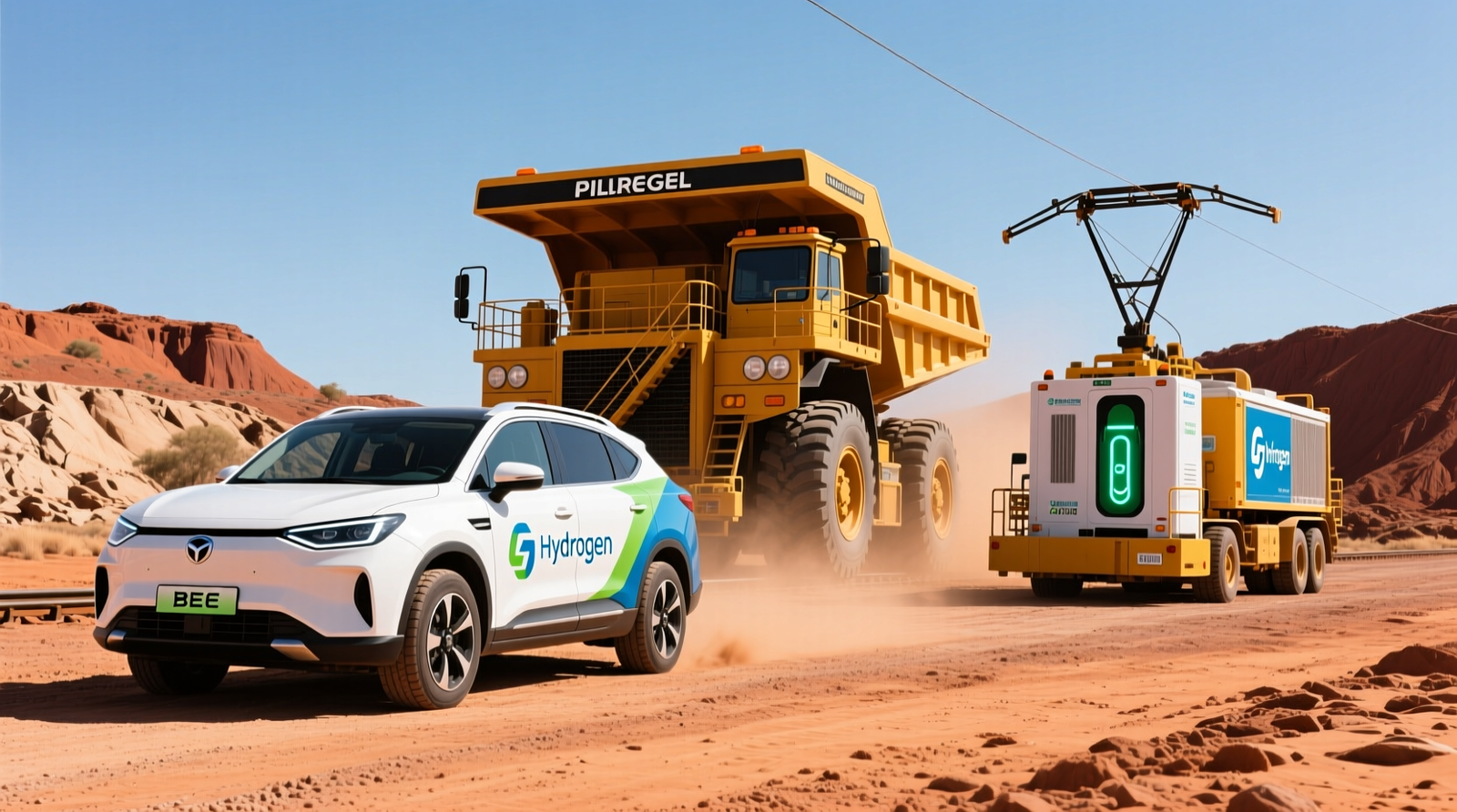
Fortescue’s prioritisation of BEVs reflects trade-offs common in heavy mining:
- Pure battery-electric (BEV): high drivetrain efficiency, strong low-speed torque, fewer mechanical wear components; main constraints are charging infrastructure, peak power, and battery thermal management.
- Trolley-assist: can reduce onboard energy storage needs and deliver continuous power on ramps, but requires overhead line infrastructure and is best suited to fixed haul routes (more applicable to haul trucks than loaders/dozers).
- Hydrogen / dual-fuel: can extend range and reduce charging dependence, but introduces hydrogen production, compression/liquefaction, storage, and refuelling complexity; overall efficiency is typically lower than direct electrification, and safety/handling adds new operational layers.
In loader/dozer applications—often near pads, stockpiles, and workshops—BEV logistics can be simpler than hydrogen, and trolley-assist is generally not applicable. For an overview of hydrogen’s system challenges and opportunities, the IEA’s “The Future of Hydrogen” provides a useful high-level reference.
TL;DR: BEVs are often the most direct path for loaders/dozers because they can charge near established infrastructure; trolley-assist targets haul routes, while hydrogen adds supply-chain and efficiency complexity.
XCMG vs Other OEM Approaches: Integration Philosophy and Differentiators to Watch
Competing pathways from major mining OEMs typically differ on the balance between onboard energy storage, charging rate, and site power integration. What may differentiate XCMG’s prototypes in Fortescue’s program is the ability to align machine design with the mine’s evolving energy system (chargers, buffers, renewable supply) and to iterate quickly from prototype to production configuration based on measured Pilbara duty cycles.
For context, Liebherr is a Swiss-headquartered group (with major operations in Germany and globally), not US-based. The broader competitive set (including Liebherr, Komatsu, Caterpillar, and others) is moving through different combinations of battery-electric, trolley, and hybridisation strategies depending on machine class and mine constraints.
In practical terms, industrial buyers should watch for:
- Powertrain layout: e-axles vs central motors, driveline simplicity, and serviceability
- Charging architecture: fixed fast-charging vs swap packs; connector robustness in dust and vibration
- Controls and telemetry: energy-per-tonne analytics, thermal management logic, and dispatch integration
TL;DR: The real differentiators won’t be marketing claims—they’ll be powertrain serviceability, charging architecture robustness, and how well the machine integrates with Fortescue’s site energy system and dispatch.
Practical Comparison: XC9260BEWL Prototype vs Comparable Diesel Wheel Loader (Indicative)
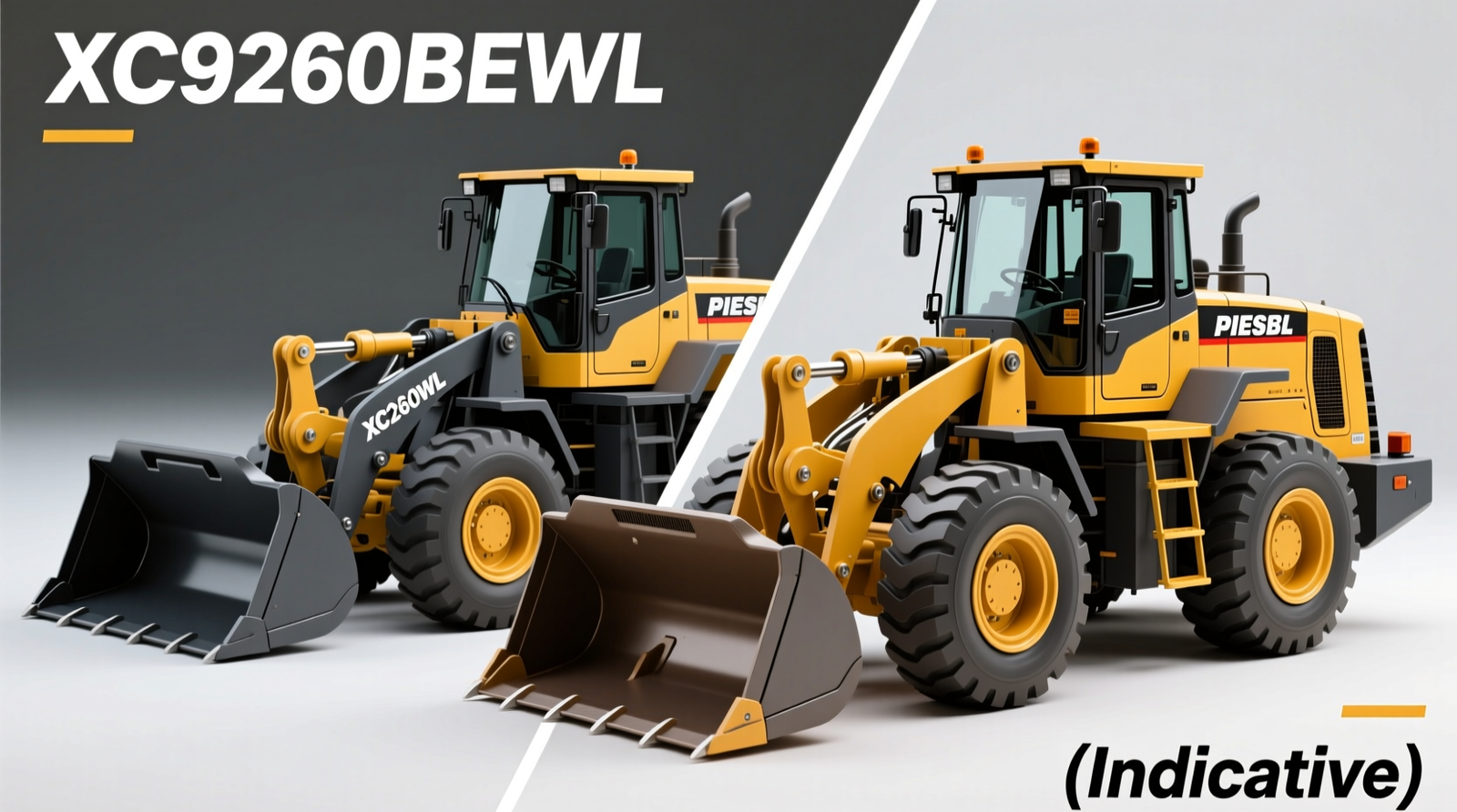
Because XCMG has not published a complete specification set (battery size, charging time, operating weight, etc.), the comparison below is intentionally indicative and framed around decision variables operators care about. Site trials should replace these ranges with measured data.
- Class / bucket: XC9260BEWL 11.5–14.5 m³ vs similar diesel loader in the same bucket class
- Power: XC9260BEWL 783 kW (published) vs diesel equivalent often in a similar kW band depending on model and rating standard
- Energy / fuel use (typical heavy duty): BEV measured in kWh/h (site-specific) vs diesel often ~50–150+ L/h depending on task
- Shift strategy: BEV requires planned charging (opportunity or scheduled) vs diesel uses rapid refuelling
- Maintenance profile: BEV reduces engine-related maintenance (oil, filters, aftertreatment) but adds HV electrical inspections, coolant loops for power electronics, and battery health monitoring
OPEX outcomes often depend on electricity cost (and demand charges), charger utilisation, and avoided diesel logistics. BEVs can reduce some routine maintenance hours due to fewer moving parts, but mines should plan for high-voltage safety procedures and technician upskilling.
TL;DR: Early decision-making should focus on cycle productivity, kWh/tonne, charging downtime, and maintenance trade-offs—not just headline kW and bucket size.
Charging Infrastructure Implications: Charger Types, Ratings, Utilisation, and Shift Planning
For large battery-electric loaders and dozers, the likely pathway is DC fast charging (direct current) with managed charging schedules. The exact charger rating (e.g., 0.5–2+ MW per dispenser in some heavy-duty use cases) will depend on battery size and acceptable downtime; XCMG/Fortescue have not publicly confirmed the charger specification for the XC9260 prototypes.
In Pilbara conditions, practical infrastructure considerations include:
- Stationary chargers at pads/workshops vs mobile chargers for temporary trial locations
- Opportunity charging during operational pauses to avoid mid-shift deep charging events
- Peak load management: pairing chargers with a site BESS to reduce grid peaks and smooth renewable variability
- Redundancy: charger availability becomes a production constraint; mines typically need spare capacity and robust maintenance support
A simple utilisation example: if one machine needs ~1–2 hours of fast charging per shift (highly dependent on battery size and duty), charger-to-machine ratios and queuing must be designed so that charging does not become a bottleneck.
TL;DR: DC fast charging is the likely solution; the design problem is minimising production impact through opportunity charging, peak shaving with BESS, and building redundancy into charger capacity.
Safety and Risk Management for High-Voltage Battery Systems in Mining
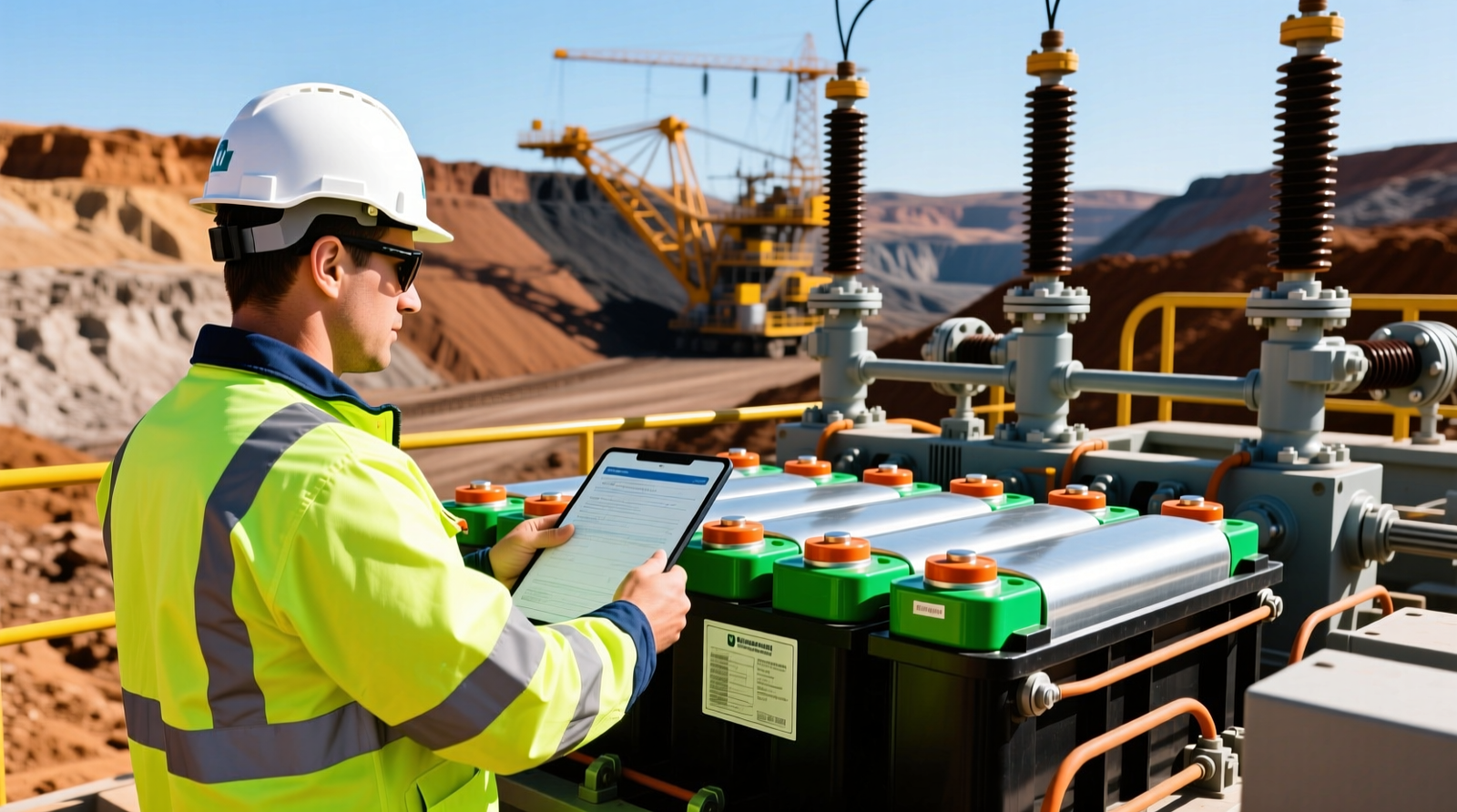
Battery-electric mining equipment introduces new safety requirements around high-voltage isolation, arc flash risk, and thermal runaway (uncontrolled battery overheating). Controls and procedures typically include:
- Isolation and lockout/tagout (LOTO) for HV systems, plus verification of zero-energy state
- Insulation monitoring and HV interlocks to prevent unsafe access
- Thermal management and detection (temperature sensing, alarms, automated derating)
- Fire detection/suppression appropriate to battery and electrical fires, plus emergency response planning
Relevant functional safety and machinery safety frameworks include ISO 13849-1 (safety-related control systems) and ISO 17757 (autonomous and semi-autonomous machine system safety, widely referenced in mining automation contexts). Mines will also apply site and jurisdictional electrical safety rules and OEM-specific HV procedures.
TL;DR: BEV mining equipment reduces diesel hazards but adds HV isolation, arc-flash, and thermal-runaway risks—managed through LOTO, interlocks, monitoring, and fit-for-purpose fire response systems.
Conclusion: What the XC9260BEWL/XC9260BEWD Trials Need to Prove for Scaled Deployment
The XC9260BEWL battery electric wheel loader and XC9260BEWD battery electric wheel dozer trials are best understood as an engineering validation step toward scalable zero-emission HME in the Pilbara. The “pass/fail” criteria are likely to be operational: sustained tonnes per hour, predictable energy consumption per tonne, minimal thermal derating in heat, dust-tolerant cooling and connectors, and charging systems that don’t constrain dispatch.
If the prototypes achieve productivity parity with diesel equivalents while enabling measurable diesel displacement—and if the supporting power system (renewables + BESS + HV distribution + chargers) can be expanded economically—Fortescue will have a replicable template for broader fleet electrification across loaders, dozers, and eventually larger mobile fleets.
TL;DR: The trials must demonstrate productivity parity, heat/dust resilience, and workable charging/power integration—because those are the gating factors for scaling to hundreds of electric machines.
FAQ

Q: What’s the difference between Fortescue’s XCMG battery electric wheel loader/dozer and a battery electric haul truck?
A: The XC9260BEWL (wheel loader) and XC9260BEWD (wheel dozer) are production support machines used for dig-and-load, stockpile/ROM pad management, push dozing, and cleanup. A battery electric haul truck is designed primarily to move ore or waste over haul roads between the pit and dump/plant. Loaders and dozers often operate closer to fixed infrastructure, which can make charging easier in early electrification phases.
Q: What type of charging infrastructure will Fortescue use for XCMG’s electric mining equipment in the Pilbara?
A: While Fortescue and XCMG have not publicly confirmed charger ratings for the XC9260 prototypes, large battery-electric mining equipment typically relies on DC fast charging, with stationary chargers at pads/workshops and potentially mobile chargers for trial locations. To avoid production losses and grid peaks, mines often use opportunity charging and may buffer chargers with on-site battery energy storage (BESS) to smooth demand and integrate renewables.
Q: How much CO2e can a battery electric wheel loader or dozer save compared with diesel in iron ore mining?
A: It depends on duty cycle, hours worked, and the electricity supply mix. As a rough example, if a comparable diesel machine burns ~80 L/h over ~5,000 hours/year, that’s ~400,000 L/year displaced. Using ~2.68 kg CO2 per litre of diesel (combustion-only) gives roughly ~1,070 t CO2/year avoided per machine. Actual mine reporting should use the site’s chosen emissions factors and boundaries and account for how the electricity is generated.
Q: What is the expected battery lifespan in heavy mining duty, and what happens at end of life?
A: Battery life is typically governed by temperature exposure, charge/discharge rates, and total energy throughput. In mining, thermal management and conservative operating windows can materially affect life. End-of-life strategies usually include refurbishing modules, second-life use for stationary storage (where appropriate), and recycling to recover valuable materials. Mines increasingly require OEM-backed battery stewardship programs as part of lifecycle sustainability and risk management.
Q: What new skills will operators and maintenance teams need for high-voltage electric mining equipment?
A: Operators will need training on energy-aware operation (regen behavior, avoiding unnecessary peak loads, and charging workflows). Maintenance teams typically require high-voltage (HV) competencies such as isolation/LOTO, safe testing practices, connector inspection, insulation monitoring diagnostics, and thermal management system maintenance. Sites also need updated emergency response procedures for battery and electrical fire scenarios.