Market Snapshot (Size, Growth, and What the Numbers Mean)

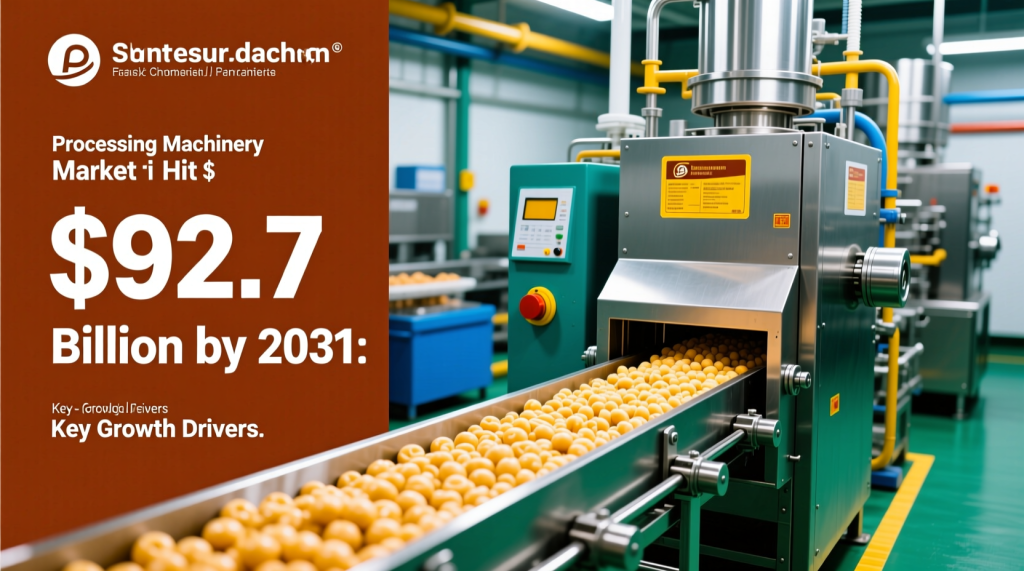
The global food processing machinery market was valued at $61,249 million in 2020 and is projected to reach $93,737.1 million by 2031, registering a 3.9% CAGR (compound annual growth rate) from 2022 to 2031. These headline figures are commonly cited from an Allied Market Research market study on food processing machinery (reported in the early 2020s; always validate latest editions and updates when building investment cases).
For industrial buyers, the most important implication is that growth is steady—not “hyper-growth”—so competitive advantage often comes from OEE (Overall Equipment Effectiveness) improvements, hygiene compliance, energy efficiency, and flexible changeovers rather than just adding capacity.
External reference: For population-driven long-term demand context, see the UN’s population projections: UN World Population Prospects.
TL;DR: The market is expanding at a moderate pace; winning projects typically hinge on uptime, compliance, automation ROI, and lifecycle cost—not just output volume.
Market Overview and Consolidated Growth Drivers
Demand for industrial food processing equipment is primarily supported by three consolidated, durable drivers:
- Packaged and value-added foods as the “new baseline”: Higher penetration of packaged foods (including frozen, shelf-stable, and chilled ready-to-eat) increases demand for forming, thermal processing, freezing, and filling/packaging lines.
- Scale + consistency requirements: Retail and foodservice buyers require tighter weight control, traceability, and consistent texture/appearance, pushing processors toward automated portioning, inline inspection, and closed-loop control.
- Safety and compliance pressure: Stricter food hygiene regulations and third-party audit requirements reinforce investment in hygienic design, cleanability, and validated kill steps (e.g., pasteurization, cooking, high-pressure processing where applicable).
Population growth and urbanization remain the macro backdrop, but for most CAPEX (capital expenditure) decisions, the nearer-term driver is the economics of labor, yield, and downtime—especially as plants struggle with labor availability and skill gaps.
TL;DR: The strongest machinery demand comes from packaged-food baseline demand plus tighter quality/safety requirements and the operational need to reduce labor dependency.
Market Trends (What’s Changing on Real Factory Floors)

- Food production line automation: More end-to-end automation (from raw handling to case packing) to stabilize throughput and reduce operator touchpoints.
- Sanitary design standards becoming a purchasing “gate”: Hygienic design, drainage, cleanability, and documentation increasingly decide vendor shortlists for HACCP-compliant machinery.
- Shift to data-driven operations: Broader adoption of IIoT (Industrial Internet of Things) sensors and software for line monitoring and predictive maintenance.
- Energy-efficient thermal and freezing systems: Heat recovery, better insulation, variable-speed drives, and optimized refrigeration cycles to cut kWh/kg.
- Flexible lines for SKU proliferation: Quick-change tooling, recipe management, and modular equipment layouts to handle more variants with less downtime.
TL;DR: Buyers are prioritizing automation, hygienic design, connected machinery, and energy efficiency—especially where SKU complexity is rising.
Technology Advancements and Efficiency Improvements (Industry 4.0 in Food Processing)
Digitalization: IoT/OEE Monitoring, MES, and Traceability
Modern food plants increasingly layer digital tools on top of mechanical capability. Common upgrades include:
- IoT-based OEE monitoring: Machine-state data (run/stop/fault), cycle counts, waste, and changeover time streamed to dashboards. OEE is defined as Availability × Performance × Quality.
- MES (Manufacturing Execution System): Software that coordinates production orders, recipes, quality checks, and material genealogy in real time.
- Digital traceability: Integration between line controls and ERP (enterprise resource planning) to support lot tracking, recall readiness, and audit evidence.
Concrete example: Many processors deploy line monitoring on packaging and filling assets first because these stations often define bottlenecks and micro-stops. Solutions commonly integrate PLC (programmable logic controller) fault codes with OEE analytics to target top downtime causes (e.g., jam rates, seal failures, film splices).
External reference: For context on manufacturing KPI frameworks and OEE concepts, see NIST’s Manufacturing resources: NIST Manufacturing.
TL;DR: “Smart” machinery value is increasingly realized through OEE visibility, traceability integration, and faster root-cause analysis—not just faster mechanical speed.
Automation: Robotics, Vision Inspection, and Closed-Loop Control
Automation in food processing increasingly combines mechanical equipment with robotics and machine vision:
- Robotics for pick-and-place: Delta robots and collaborative robots (cobots) used for high-speed placement of bakery items, confectionery, or portioned proteins into trays, improving throughput and reducing repetitive-motion labor.
- AI-enabled vision inspection: Computer vision models detect defects (shape, color, burn marks), verify label presence, read 2D codes, and support inline weight/portion verification.
- Closed-loop portion control: Deposit/portion systems linked to inline scales adjust in real time to reduce giveaway and improve yield—high ROI in meat, cheese, and ready meals.
Mini case-style example (named technology supplier): JBT (John Bean Technologies) FoodTech supplies automated solutions across chilling/freezing, portioning, coating, and in some cases turnkey lines; many deployments focus on improving yield and reducing manual handling in protein and prepared-food plants. (Project outcomes vary by product, baseline performance, and line constraints.)
TL;DR: Robotics + vision + feedback control reduce labor touchpoints, improve consistency, and cut product giveaway—often delivering ROI faster than “speed-only” upgrades.
Digital Twins and Virtual Commissioning (Faster, Safer Startups)
Digital twin refers to a virtual representation of a physical asset or process used to simulate performance, validate control logic, and troubleshoot changes before implementing them on the factory floor. In food processing, digital twins are increasingly used to:
- Test line balancing and buffer sizing to reduce starvation/blocking.
- Validate recipe changes (temperatures, dwell times, mixer shear profiles) with less production risk.
- Support virtual commissioning—testing PLC logic and HMI (human-machine interface) sequences before equipment arrives onsite.
External reference: For an overview of digital twin concepts in industrial settings, see IBM’s primer: What is a digital twin? (IBM).
TL;DR: Digital twins reduce startup risk and accelerate changeovers by validating process and control decisions virtually before real production time is at stake.
Energy-Efficient Food Freezing Systems and Thermal Processing
Energy efficiency is becoming a competitive differentiator in refrigeration and thermal processing:
- Freezing: Improvements include optimized airflow, better insulation, variable-speed fans, heat recovery, and tighter evaporator control to cut energy per kg frozen.
- Thermal systems: Heat recovery on ovens, pasteurizers, and cookers; improved burner/steam control; and reduced warm-up and idle losses.
External reference: For practical energy management guidance applicable to industrial facilities (including food plants), see ISO’s overview of ISO 50001 Energy Management.
TL;DR: Energy optimization in freezing and thermal processing increasingly influences equipment selection, especially where utilities are a major cost driver.
Regulatory and Hygiene Requirements Shaping Machine Design (Sanitary Design Standards)
Food Hygiene Regulations and HACCP-Compliant Machinery
HACCP (Hazard Analysis and Critical Control Points) is a systematic preventive approach to food safety that identifies hazards and controls them at critical points. In practice, HACCP programs heavily influence machinery specifications—especially cleanability, material selection, and the ability to validate critical parameters (time/temperature, metal detection sensitivity, seal integrity).
In the EU, food hygiene requirements are shaped by Regulation (EC) No 852/2004 on the hygiene of foodstuffs, which underpins hygienic facility and equipment expectations for food business operators. Read the regulation here: EU Regulation (EC) No 852/2004 (EUR-Lex).
In the U.S., the FSMA (Food Safety Modernization Act) shifts focus toward prevention, affecting sanitation controls, supplier verification, and documentation—often increasing demand for equipment that supports validated cleaning and traceability. See FDA’s FSMA overview: FDA: FSMA.
TL;DR: Hygiene law and HACCP expectations directly drive machinery features such as cleanability, documentation, and verifiable control of critical parameters.
Food Machinery Hygiene Regulations vs. Operator Safety: EU Machinery Directive
Beyond food hygiene, equipment must also meet operator safety requirements. In Europe, machine safety requirements have historically been framed by the Machinery Directive 2006/42/EC (with ongoing evolution in EU machinery regulation). This impacts guarding, interlocks, emergency stops, and safety-related control systems. Official text: Machinery Directive 2006/42/EC (EUR-Lex).
For U.S. buyers, sanitary equipment is commonly evaluated against 3-A Sanitary Standards (especially in dairy) and other recognized hygienic design approaches. See: 3-A Sanitary Standards.
TL;DR: Food machinery must satisfy both hygiene and machine-safety regimes; compliant design is a prerequisite, not an optional upgrade.
Growth Restraints and Key Constraints (Including Risks)
- High CAPEX and project risk: Turnkey line upgrades can require major downtime windows, facility modifications, and long commissioning cycles.
- Integration challenges with legacy systems: Older PLC platforms, undocumented wiring, and incompatible data models can delay “Industry 4.0 in food processing” initiatives.
- Cybersecurity risks with connected machinery: Remote access and IIoT gateways expand the attack surface; plants need network segmentation, patch management, and secure vendor access practices.
- Skills gap: Advanced automation requires controls technicians, reliability engineers, and data literacy; shortages can reduce realized ROI.
- Regulatory validation burden: Documented cleaning validation, traceability, and change control can add time and cost—especially in high-risk categories.
External reference: For industrial cybersecurity guidance relevant to OT (operational technology) environments, see CISA resources: CISA: Industrial Control Systems.
TL;DR: The biggest brakes on adoption are CAPEX, integration complexity, cybersecurity, and the talent needed to operate/maintain advanced automated lines.
Food Processing Machinery Market Segmentation (Type, Application, and What’s Growing Fastest)
By Type (Where Spend Concentrates)
Common equipment types in the food processing machinery market include:
- Depositors: Portioning/filling for bakery, confectionery, sauces, and ready meals; often paired with inline checkweighers to reduce giveaway.
- Extruding machines (Extruders): Used for snacks, pasta, cereal, and increasingly plant-based proteins (e.g., high-moisture texturized products) where precise temperature/shear control is critical.
- Mixers (including high-shear mixers): Standard mixers plus high-shear mixing for emulsions and functional beverages to improve stability and dispersion.
- Refrigeration equipment: Chillers, freezers, and cold chain equipment; strong demand where frozen and chilled categories expand and energy efficiency mandates tighten.
- Slicers & dicers: Yield and presentation are key; also used for fresh-cut produce where throughput plus sanitation is critical.
- Others: Ovens, fryers, cookers, forming systems, coating/breading, conveyors, and specialty machines.
Fast-growth note (directional): In many plants, extruders (for plant-based and snack innovation), aseptic/extended-shelf-life processing modules (often counted within broader processing systems), and automation add-ons (vision, robotics, connected sensors) are outpacing “like-for-like replacement” machinery spend because they directly enable new SKUs and margin protection.
TL;DR: Growth is increasingly concentrated in extruders for new product formats, advanced mixing, energy-smart refrigeration, and automation layers that reduce waste and labor dependence.
By Application (Where Specifications Differ the Most)
- Bakery & confectionery: High changeover frequency; demand for depositing accuracy, gentle handling, and robotics for tray loading and packaging.
- Meat, poultry & seafood: Strong focus on yield, hygiene, and automation in deboning/cutting/portioning; frequent adoption of vision inspection and portion control.
- Dairy: Heavy emphasis on sanitary design standards, validated cleaning, and (often) 3-A aligned components; pasteurization/homogenization reliability is key.
- Beverages: High-speed filling, hygienic design, and line efficiency; rapid adoption of inline inspection and remote diagnostics to reduce downtime.
- Fruits, vegetables, grains, nuts, and plant-based: Growth tied to “better-for-you” products and fresh-cut; sanitation and gentle handling are critical.
Automation in meat processing (example focus): Many protein plants prioritize automated portioning, inline fat/lean detection (technology varies), and robotic end-of-line case packing to stabilize output despite labor constraints.
TL;DR: Application needs drive machinery specs—protein emphasizes yield/hygiene, bakery emphasizes changeover and gentle handling, and beverages emphasize uptime and high-speed filling.
By Mode of Operation: Semi-Automatic vs. Fully Automatic (CAPEX/OPEX/Throughput)
Mode of operation typically falls into two categories:
- Semi-automatic machinery: Lower CAPEX, higher operator involvement, and often faster to retrofit into constrained spaces. Suitable for small/medium plants, seasonal production, and high-mix/low-volume SKUs.
- Fully automatic machinery: Higher CAPEX, lower labor per unit output, higher throughput, and more consistent quality. Best fit for large plants, stable demand, and products with tight tolerances.
Practical comparison:
- CAPEX: Semi-auto usually lower upfront; full-auto requires higher investment plus integration/controls engineering.
- OPEX: Full-auto can reduce labor and waste, but may require higher-skilled maintenance and spares strategy.
- Throughput: Full-auto typically higher and more stable; semi-auto may be limited by manual steps and variability.
- Suitability: Semi-auto fits flexibility and constrained budgets; full-auto fits sustained volume and tight quality specs.
TL;DR: Semi-automatic systems optimize flexibility and lower CAPEX; fully automatic lines maximize throughput, consistency, and labor efficiency when volume justifies the investment.
Regional Analysis (Demand Drivers, Regulations, and Local Ecosystems)
The market is commonly analyzed across North America, Europe, Asia-Pacific, and LAMEA (Latin America, Middle East, and Africa). Regional shares vary by report methodology; however, most industry analyses consistently position Europe and North America as large installed-base markets and Asia-Pacific as the fastest-growing by new capacity additions.
Europe
- Regulatory intensity: Strong enforcement expectations around EU food hygiene (EC 852/2004) and machine safety (Machinery Directive 2006/42/EC) shape equipment design, documentation, and risk assessments.
- Product drivers: Bakery, dairy, confectionery, and premium ready meals drive demand for high-precision, hygienic equipment.
- Equipment ecosystem: Dense network of OEMs and integrators, with specialization in thermal processing, bakery systems, and packaging automation.
TL;DR: Europe is a regulation-led, technology-forward market with strong demand in bakery/dairy and a deep OEM base.
North America
- Regulatory framework: FSMA-driven preventive controls and audit readiness increase interest in traceability, validated sanitation, and consistent process control.
- Product drivers: Protein processing, snacks, and beverages are major investment areas; labor constraints accelerate automation and robotics adoption.
- Operational focus: High emphasis on uptime, service responsiveness, and retrofits to modernize existing plants rather than only greenfield builds.
TL;DR: North America’s mature installed base drives upgrades—especially automation and compliance features that support FSMA-era operations.
Asia-Pacific (APAC)
- Growth engine: New plant builds and capacity expansion are major demand sources, especially in China, India, and Southeast Asia.
- Product drivers: Strong growth in frozen foods, seafood processing in coastal economies, noodles/snacks, and ready-to-drink beverages.
- Localization: Buyers often balance global hygienic standards with local cost constraints, increasing demand for modular lines and scalable automation.
TL;DR: APAC is typically the fastest-growing region, driven by new capacity, rising packaged-food consumption, and expanding cold-chain infrastructure.
LAMEA (Latin America, Middle East, and Africa)
- Cold chain and localization: Investments often focus on freezing, cold storage, and local processing to reduce import dependency.
- Product drivers: Poultry, bakery staples, dairy, and beverage lines are common growth areas depending on country.
- Constraints: Financing, energy cost volatility, and service coverage can heavily influence vendor selection.
TL;DR: LAMEA growth is tied to supply-chain localization and cold-chain buildout, with vendor service capability a major differentiator.
Aftermarket, Service, and Lifecycle Cost (Why Vendor Support Decides Deals)

For many processors, total lifecycle cost outweighs purchase price. Aftermarket and service considerations include:
- Spare parts strategy: Critical spares lists, lead-time commitments, and interchangeability across installed base.
- Retrofits and controls upgrades: Adding safety upgrades, new PLC/HMI platforms, vision systems, or energy-saving components to extend asset life.
- Remote diagnostics: Secure remote support can reduce MTTR (mean time to repair) by speeding troubleshooting—provided cybersecurity controls are in place.
- Service models: Annual service contracts, performance-based agreements, and training packages to address skills gaps and stabilize OEE.
Buyer tip: Ask OEMs to quote not only the line, but also a 3–5 year parts-and-service plan and expected wear components by operating hour.
TL;DR: Service coverage, spares availability, and retrofit paths are often decisive because they control downtime risk and true cost of ownership.
Key Players and Competitive Dynamics (Who Does What)
The global market is moderately consolidated, with large OEMs plus strong regional specialists. Companies frequently cited in Allied Market Research coverage include:
- Anko Food Machine Co., Ltd.: Known for equipment supporting formed foods and prepared-food production (e.g., dumpling/portioning-style machinery categories depending on configuration).
- Atlas Pacific Engineering Co. Inc.: Associated with processing solutions used in high-volume food manufacturing niches (specific offerings vary by entity and regional presence).
- Bucher Industries: Active in industrial processing technology; in food contexts, Bucher-related divisions are widely recognized in beverage and processing equipment categories.
- SPX Corporation: Provides processing solutions across multiple industrial sectors; SPX FLOW has been known for mixing, pumping, and separation technologies used in food/beverage applications (confirm current corporate structure and brand ownership during sourcing).
- Ziemann International GmbH: Known for brewery and beverage plant engineering, including turnkey solutions in relevant segments.
- JBT Corporation: Strong presence in food processing and freezing/chilling/automation solutions across multiple food categories.
- Heat and Control, Inc.: Well-known in snack processing, frying, seasoning, conveying, and packaging integration.
- Hosokawa Micron Corp.: Specializes in powder and particle processing technologies relevant to ingredients and certain food applications.
Competitive trends: Consolidation and platform expansion (OEMs adding adjacent capabilities such as inspection, controls, and packaging), plus specialization in niches (snacks, confectionery, protein portioning, aseptic, or powder handling). Regional manufacturing hubs and local service networks increasingly influence awards—especially when lead times and uptime guarantees are critical.
TL;DR: Beyond brand names, buyers should evaluate each player’s segment strength (protein, snacks, beverage, powders, turnkey lines) and—crucially—their service footprint.
COVID-19 Impact and What Persisted into the Current Outlook

COVID-19 created short-term shocks—component shortages, delayed FAT/SAT (factory/site acceptance testing), and stalled installations—then triggered longer-term structural changes that still affect the food processing machinery market:
- Higher baseline for packaged foods: Many categories retained elevated packaged and frozen demand compared with pre-2020 patterns.
- E-commerce grocery and distribution shifts: More complex channel requirements increased packaging variety and throughput needs.
- Resilience and regionalization: Supply-chain risk has encouraged dual sourcing and, in some cases, regional capacity expansion and greenfield investments.
The earlier supply-chain disruption narrative was closely tied to China’s role in components and subassemblies. For broader context on global investment impacts during the pandemic period, UNCTAD’s investment reporting remains a useful reference point: UNCTAD World Investment Report.
Directional recovery view: In many segments, capital spending normalized as restrictions eased, with a clear preference shift toward automation, hygienic design, and remote supportability. The most visible ongoing effect is that buyers now more frequently specify lead-time guarantees, parts availability, and cybersecurity requirements for remote access.
TL;DR: The pandemic’s lasting impact is structural: more automation, more packaged-food capacity, more resilience planning, and tighter expectations on service, lead times, and remote support.
Outlook and Growth Opportunities to 2031
Through 2031, growth opportunities in food processing machinery and food production line automation are most compelling where equipment directly improves margin and risk control:
- Automation + robotics: Targeting labor substitution, reduced handling, and stabilized throughput.
- Inline quality control: Vision inspection, checkweighing, metal detection/X-ray integration, and code verification to cut rework and recalls.
- Plant-based and functional products: Extruders, high-shear mixing, and precise thermal processing supporting new textures and formulations.
- Energy and water efficiency: Especially in freezing and thermal systems, where utilities drive OPEX.
- HACCP-compliant machinery and sanitary design upgrades: Retrofitting hygienic features and improving cleanability to reduce contamination risk and cleaning downtime.
TL;DR: The best opportunities are in automation, inspection, energy efficiency, and specialized processing (plant-based/functional)—all tied to ROI via labor, yield, and risk reduction.
Key Takeaways for Manufacturers (Processors and OEMs)

- Select equipment by lifecycle economics: Evaluate yield, cleaning downtime, spares, service response, and energy use—not only purchase price.
- Prioritize hygienic design early: Sanitary design standards and documentation requirements should be embedded in URS (user requirement specifications) to avoid late redesigns.
- Build automation ROI around “hard” levers: Typical ROI comes from labor reduction, giveaway reduction, and downtime elimination—often more than from nameplate speed increases.
- Plan integration and cybersecurity: Treat connectivity as an engineering scope item (network segmentation, access control, patching) rather than an afterthought.
- Invest in maintainability: Standardize on platforms where feasible, train technicians, and use condition monitoring/predictive maintenance on high-impact assets.
TL;DR: The highest-value projects combine sanitary design, measurable ROI levers (labor/yield/downtime), strong integration planning, and a serviceable, maintainable installed base.
FAQ
Q: What’s the difference between food processing machinery and food packaging machinery?
A: Food processing machinery transforms raw materials (mixing, cutting, cooking, chilling, freezing, extruding), while packaging machinery focuses on filling, sealing, labeling, and case packing. Many industrial projects integrate both to optimize line OEE and hygiene, but they are often sourced as separate equipment scopes.
Q: How do sanitary design standards affect industrial food processing equipment selection?
A: Sanitary design standards influence material selection (often stainless steel), surface finishes, drainage, accessibility for cleaning, and avoidance of harborage points. Compliance expectations are shaped by frameworks such as EU Regulation (EC) No 852/2004 and plant HACCP programs, and they can determine whether a machine is even eligible for high-risk production environments.
Q: Semi-automatic vs. fully automatic food processing systems—which is better for small plants?
A: Small plants often prefer semi-automatic systems due to lower CAPEX and flexibility for high-mix production. Fully automatic systems become more attractive when volume is stable, labor is constrained, and consistent quality/portion control materially improves margins.
Q: What are common Industry 4.0 upgrades in food processing plants?
A: Common upgrades include IoT-based OEE monitoring, recipe and batch traceability via MES, AI-enabled vision inspection for defects and label verification, and predictive maintenance using vibration/temperature sensors. These upgrades are typically layered onto existing PLC-controlled equipment.
Q: What risks should processors consider when connecting food machinery to remote diagnostics?
A: The key risks include cybersecurity exposure, unauthorized access, and downtime caused by poor network segmentation or unpatched systems. Processors should implement OT security controls (segmented networks, strong authentication, monitored vendor access) and define support workflows that don’t compromise food safety or uptime.