Introduction

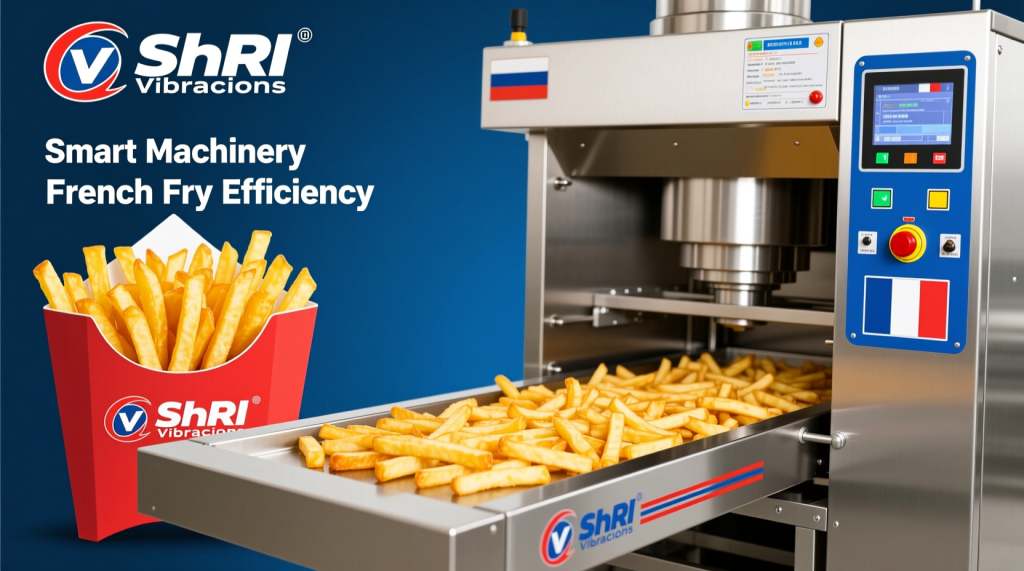
Smart machinery has transformed the industrial French fries production line by combining hygienic mechanical design with automated control. In this high-volume, low-margin category, consistent cut quality, controlled moisture and oil pickup, and reliable sanitation are essential to protect yield, meet customer specifications, and pass food-safety audits.
Smart machinery in this context means equipment designed with sensors (e.g., temperature, vibration, motor load), PLCs (Programmable Logic Controllers), VFDs (Variable Frequency Drives), data acquisition, and control logic that stabilizes product flow and supports traceability and performance monitoring. It is more than “modern stainless steel”—it’s measurable, controllable, and verifiable performance.
Typical frozen potato processing equipment lines run anywhere from 2–20 t/h (metric tons per hour) depending on product type, fry size, and downstream freezer/fryer capacity, with some large plants exceeding these ranges. Across these throughputs, the biggest losses usually come from uncontrolled distribution, excessive breakage and fines, oil carryover, and sanitation downtime.
TL;DR: Smart machinery = hygienic equipment plus sensors/PLC/VFD control and data, enabling stable throughput (often multiple t/h), better yield, and audit-ready operation.
Process Overview: From Raw Potatoes to Packed Frozen Fries
Anchoring equipment selection in a clear flow helps plant teams troubleshoot bottlenecks and define control points. A typical modern process looks like this:
- Reception & storage: raw potato receiving, destoning, buffer bins/silos, controlled feed to line.
- Washing & peeling: drum washing, abrasive or steam peeling; peel waste removal.
- Trimming & inspection: removal of defects (manual or optical sorting).
- Cutting: water-knife or mechanical cutting to target size (e.g., 7–12 mm).
- Starch removal & rinsing: reduces surface starch to improve blanch/fry performance.
- Length grading / nubbin removal: separates short pieces and fines to meet spec.
- Blanching: enzyme control and texture setup (time/temperature tuned to variety and cut).
- Drying: surface moisture reduction (often targeting ~8–12% surface moisture before pre-fry; targets vary by recipe).
- Pre-fry / fry: sets crust and color; oil management and filtration are critical.
- De-oiling & fines management: surface oil removal; fines separation to protect oil quality.
- Freezing: IQF (Individually Quick Frozen) or block; product temperature typically reduced to ≤ -18°C for storage (commonly referenced frozen storage condition).
- Weighing, packing & palletizing: checkweighing, metal detection/X-ray, bagging/cartoning, pallet wrap.
This structure clarifies where hygienic vibratory conveyors, spreaders, length graders, and de-oiling shakers contribute most: stabilizing flow, protecting product integrity, and reducing sanitation and downtime risks.
TL;DR: A fries line is a controlled sequence (receive → wash/peel → cut → blanch → dry → fry → de-oil → freeze → pack); distribution and separation steps are key yield and quality control points.
Precision Handling for Product Integrity (Reducing Breakage, Fines, and Yield Loss)
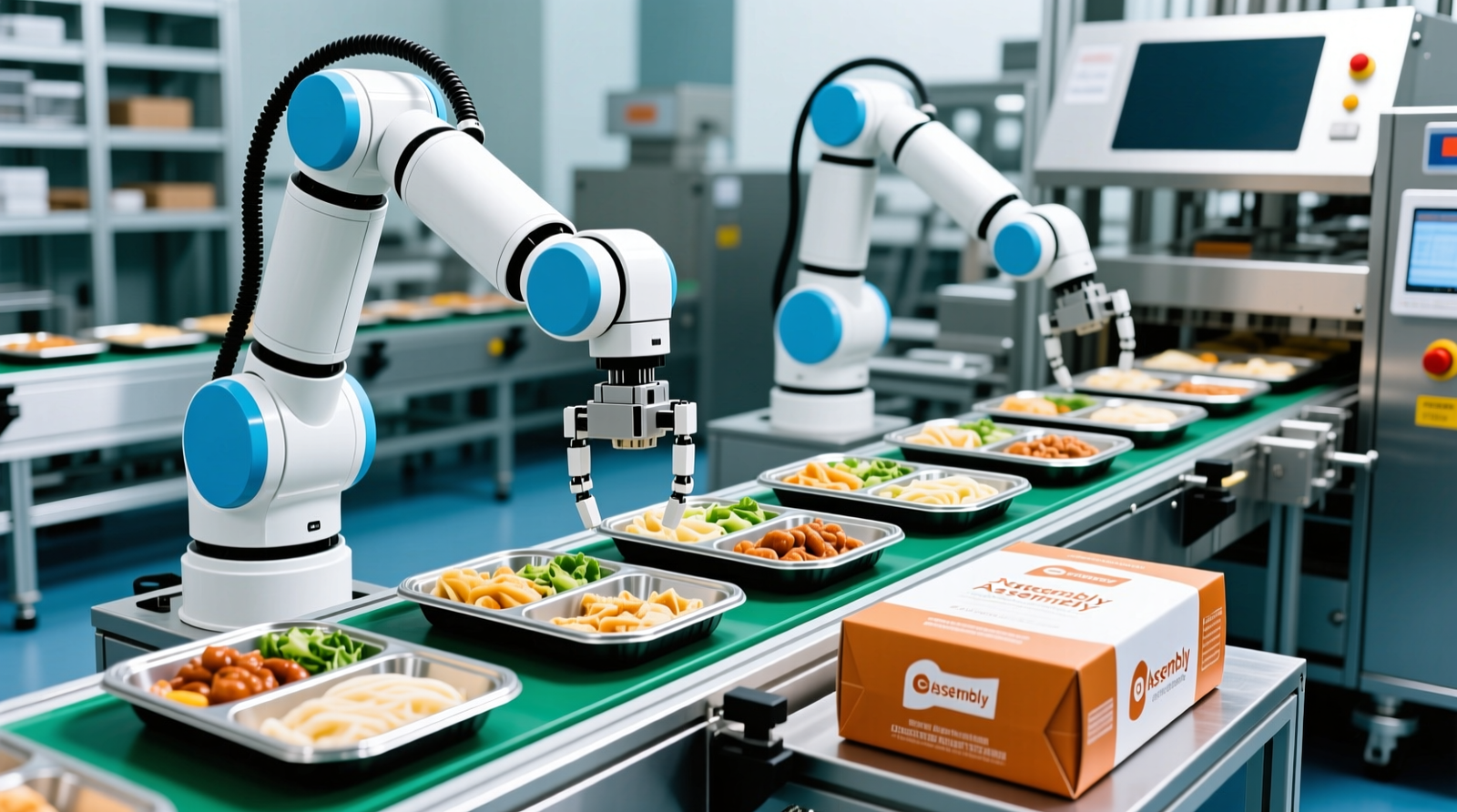
Mechanical damage increases fines (small fragments) and nubbins (short fries), which can drive yield loss, oil degradation, and pack out-of-spec. Precision handling focuses on controlled acceleration, minimal drop heights, and even bed depth.
In practice, hygienic vibratory conveyors and distribution systems are often tuned in a band such as 10–60 Hz vibration frequency (application-dependent) with adjustable amplitude to balance gentle transport and throughput. Where belt systems are used, typical belt speeds may range roughly 5–30 m/min, again depending on cut size, bed depth, and upstream/downstream capacity.
Key design choices that protect product integrity:
- Low-impact transfers: short drops and controlled chute angles to reduce edge chipping.
- Stable bed depth: reduces rubbing and breakage, improves fryer/freezer loading uniformity.
- Surface finish & weld quality: smooth food-contact surfaces reduce sticking and product shredding.
- Gentle metering: consistent feed rates (kg/h or t/h) to avoid surging that overloads fryers/freezers.
Supplier examples (including Shri Vibracion Technologies’ IQF handling systems) illustrate one approach, but plants often compare multiple technologies: vibratory conveying (excellent for distribution and gentle separation), belt conveyors (simple transport over distance), and modular plastic belts (common in packaging areas but requiring careful sanitation design).
TL;DR: Controlled vibration/belt speed and low-impact transfers reduce fines and breakage, supporting higher yield and more consistent frying/freezing.
Efficiency Across the Industrial French Fries Production Line (Throughput, Oil, Moisture, Energy)
Line efficiency is not just “running fast”—it is running stable. Surges and uneven distribution cause under/over-frying, freezer belt icing, and packaging weight variability. Smart machinery helps maintain steady mass flow (kg/h or t/h) across critical steps: drying, frying, de-oiling, and freezing.
Typical process targets and control ranges used by process teams include:
- Dryer outlet condition: reduce surface water to a controlled level (often ~8–12% surface moisture before frying, recipe-dependent) to limit oil uptake and reduce fryer load volatility.
- Frying oil temperature: commonly controlled in a band such as 165–190°C depending on product and fryer design; tighter control improves color consistency and reduces defects.
- Freezing: IQF tunnels commonly run air temperatures well below 0°C; product is typically brought to ≤ -18°C for frozen distribution stability.
When distribution and separation are optimized, plants often report potential improvements such as 2–3% yield uplift (less breakage/off-spec) and up to 10–15% reduction in unplanned downtime (fewer blockages, more predictable cleaning), depending on the baseline condition and maintenance practices. These are typical outcome ranges seen in continuous improvement programs—not guarantees.
TL;DR: Stable flow plus tight control of drying, oil temperature, and freezing conditions drives consistent quality and can reduce downtime and yield loss in typical ranges.
Hygiene-Focused Engineering (EHEDG, 3-A Principles, and Audit Expectations)
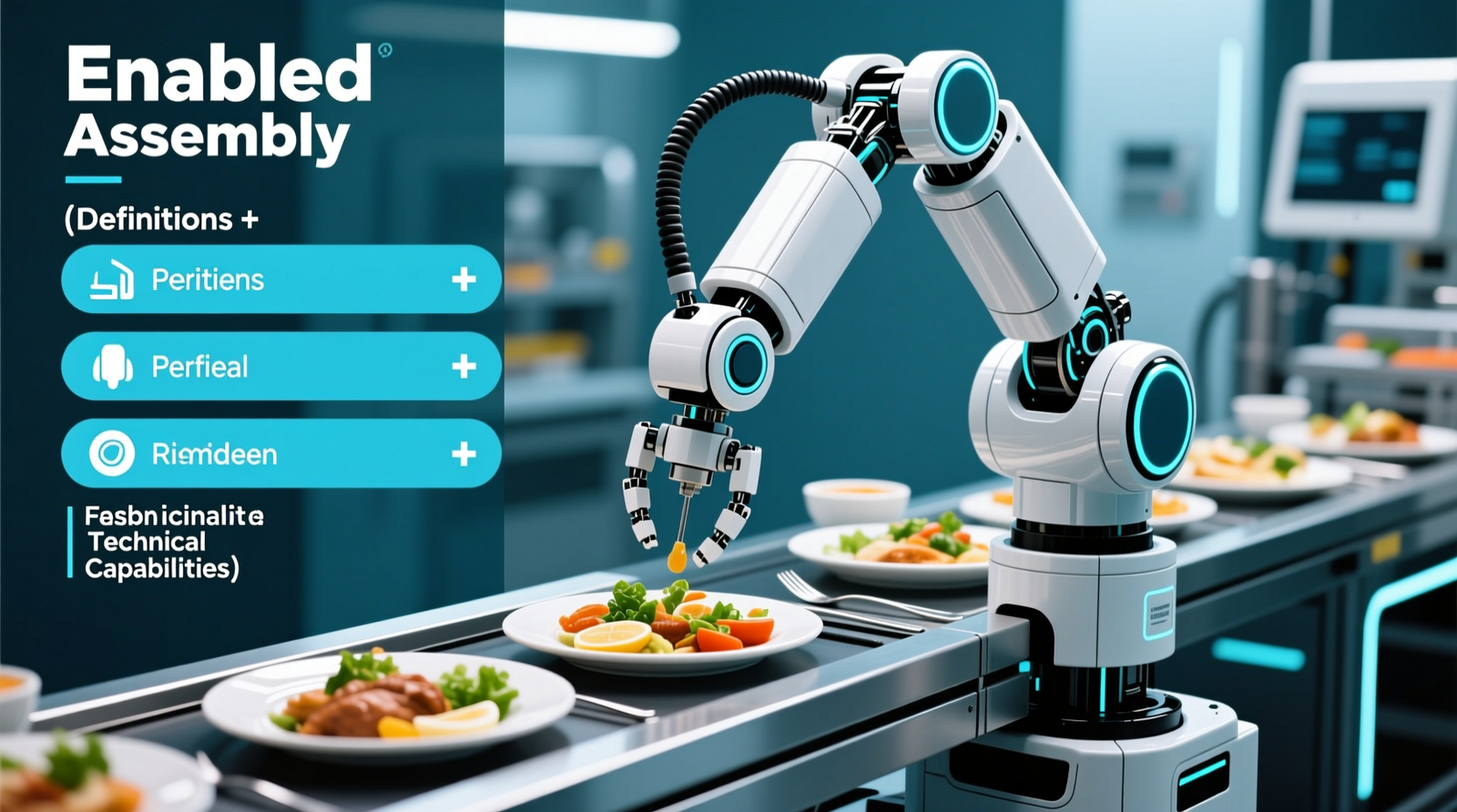
Frozen potato processing equipment must be designed for sanitation under wet, starchy conditions. Two widely referenced hygienic design frameworks are:
- EHEDG (European Hygienic Engineering & Design Group) hygienic design principles for cleanability and risk reduction. See: https://www.ehedg.org/
- 3-A Sanitary Standards (commonly associated with dairy, but the underlying hygienic design concepts are often referenced across food equipment). See: https://www.3-a.org/
For certification and customer audits, plants often align programs to BRCGS (Brand Reputation through Compliance Global Standards) and/or IFS (International Featured Standards), alongside HACCP-based systems. Audit focus commonly includes: hygienic equipment design, allergen controls, sanitation verification, maintenance hygiene, foreign body control, and traceability. Reference: https://www.brcgs.com/ and https://www.ifs-certification.com/
Practical hygiene features for conveyors, shakers, and graders:
- Open-frame construction and sloped surfaces to prevent standing water.
- Crevice-free welds and minimized hollow sections to reduce microbial harborage.
- Tool-less access for belts/screens/pans to shorten cleaning windows.
- Ingress-protected electrics suitable for washdown zones.
To strengthen validation, many plants use a combination of:
- ATP testing (Adenosine Triphosphate) as a rapid hygiene indicator after cleaning.
- Swab tests (microbiological) on defined food-contact and non-contact points.
- CIP (Clean-In-Place) routines where applicable (e.g., oil filtration loops, some piping), plus scheduled teardown cleaning for conveyors and shakers; SIP (Sterilize-In-Place) is less common in fries lines but may apply to certain closed systems depending on design.
TL;DR: EHEDG/3-A-aligned design plus audit-ready programs (BRCGS/IFS) and verified cleaning (ATP/swabs, scheduled CIP/teardown) reduces contamination risk and sanitation downtime.
Key Smart Machinery in Frozen Potato Processing Equipment (What It Does and Why It Matters)
Below are core equipment classes used in an industrial French fries production line, with practical parameters and selection considerations. Brand-specific equipment (including Shri Vibracion Technologies) can be evaluated against these functional requirements.
TL;DR: Focus on equipment function (distribution, grading, spreading, de-oiling, conveying) and verify it with measurable parameters and hygienic design.
Vibratory Distribution Systems (Uniform Loading for Fryers and Freezers)
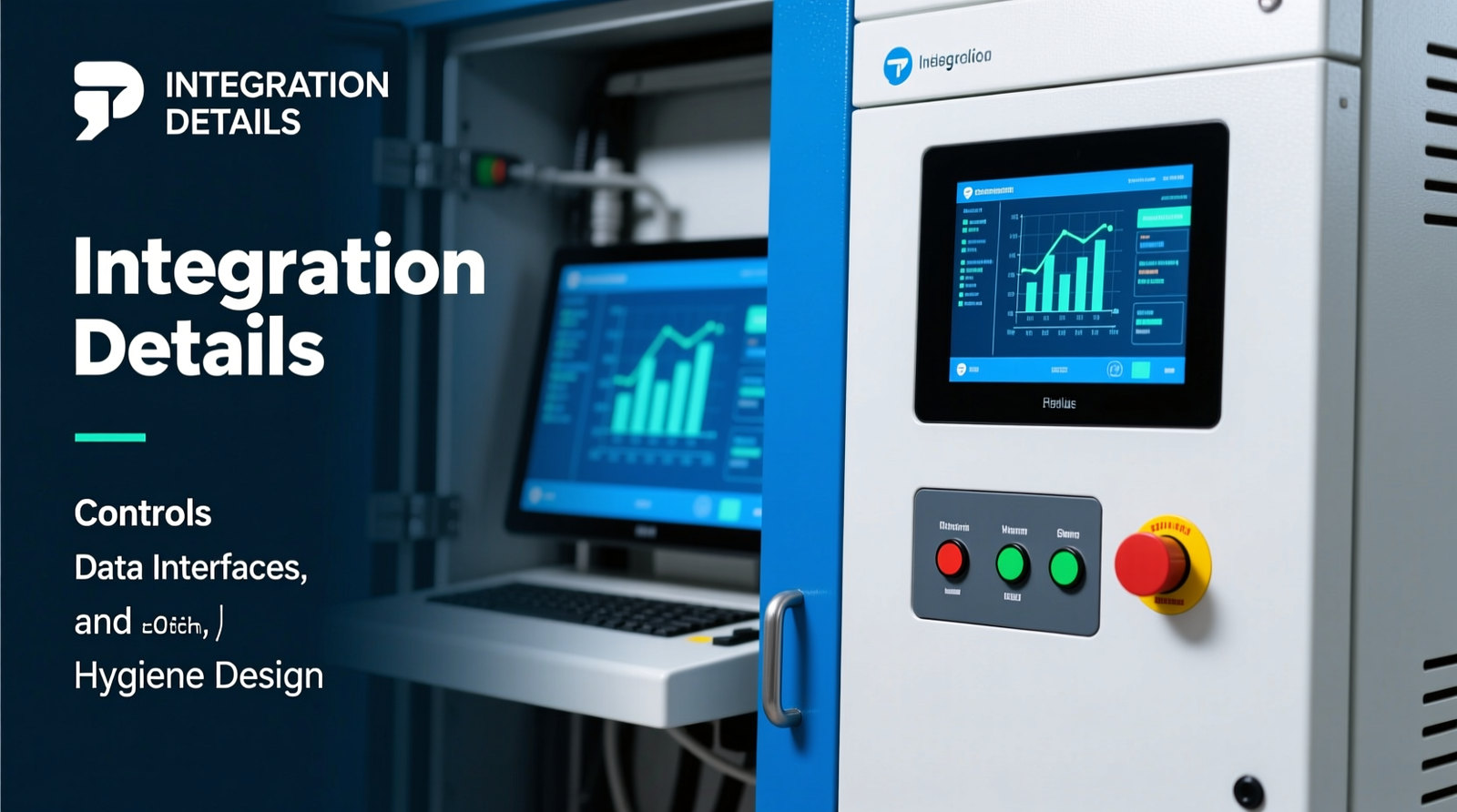
Vibratory distribution systems meter and spread product to keep fryer and freezer loading uniform across the full width. Uniform loading reduces local overfry/underfry, improves color consistency, and helps avoid freezer belt icing from wet clumps.
Typical engineering considerations:
- Capacity: systems are commonly specified in kg/h or t/h, with multi-drop arrangements feeding multiple lanes.
- Control: VFD-controlled drives or electromagnetic controls allow fine adjustment of throughput and bed depth.
- Operating window: vibration frequency often tuned within 10–60 Hz with amplitude matched to cut size and fragility.
- Distribution quality: aim for consistent lateral spread to avoid “center-loading” of fryers/freezers.
Alternative technologies: belt spreaders and rotating distributors can also be used. Vibratory systems are often preferred where gentle handling and separation are critical, while belts may suit longer-distance transport.
TL;DR: Uniform, controllable distribution stabilizes frying/freezing, reduces clumping/icing risk, and protects quality at high throughputs.
Length Graders (Nubbin Removal and Spec Control)
Length graders (often called nubbin graders) separate short pieces to improve pack appearance and cooking uniformity. They also help manage fines before the fryer, which can otherwise accelerate oil degradation and increase filtration load.
Key parameters and selection checklist:
- Adjustability: quick changeovers for different cut sizes (e.g., 7 mm vs 10 mm) and different customer length specs.
- Screen/aperture design: matched to product geometry; too aggressive increases good-product loss, too lenient increases off-spec packs.
- Gentleness: control vibration to avoid additional breakage—especially critical after freezing, when fries are brittle.
- Reject handling: defined routes for nubbins/fines (rework, animal feed, by-product) to keep line hygienic and organized.
Shri Vibracion Technologies’ Length Grader is one example; processors should benchmark any supplier’s solution against measurable separation efficiency, product damage rate, and cleanability.
TL;DR: Effective length grading improves spec compliance and reduces fryer fines load, but must be adjustable and gentle to avoid yield loss.
Vibrating Spreaders and Feeders (Preventing Clumps Before Frying and IQF)
Spreaders are used before critical thermal steps—especially the fryer and IQF freezer—to maintain a single-piece layer and avoid overlapping. Overlaps can cause uneven dehydration/frying and lead to “clusters” entering the freezer, increasing belt icing and creating downstream breakage in packaging.
Engineering tips:
- Residence time control: ensure enough time to separate pieces without excessive agitation.
- Bed depth monitoring: use load cells or belt scales (where applicable) to avoid overfeeding.
- Surface selection: low-adhesion, hygienic surfaces reduce sticking, especially with coated or seasoned products.
TL;DR: Proper spreading prevents clumps, improves uniform frying/freezing, and reduces icing and breakage downstream.
De-Oiling Shakers (Reducing Oil Carryover and Protecting Freezer Hygiene)
De-oiling shakers remove surface oil after frying. This helps hit fat targets, improves eating quality, and reduces oil carryover into freezers and packaging—where it can attract fines and complicate sanitation.
Typical parameters and options to evaluate:
- Residence time: commonly tuned in seconds (application-specific) to balance oil removal with minimal agitation.
- Screen design: hole size and open area determine oil drainage and fines separation efficiency.
- Oil recovery: drip trays and return piping can route recovered oil back to filtration/conditioning loops (with proper filtration and quality monitoring).
- Temperature robustness: components must handle hot oil exposure and frequent washdown without warping or trapping residues.
Pain point addressed: oil degradation accelerates when fines accumulate and burn. Separating fines and controlling oil carryover can reduce oil stress and may lower the frequency of oil change/refresh decisions (always guided by your quality program and testing).
TL;DR: De-oiling reduces surface oil and downstream mess; good screen design and oil recovery can also reduce fryer oil stress from fines and carryover.
Electromagnetic, Vibratory, and Belt Conveyors (Choosing the Right Transport Technology)
Conveying in a fries plant is not one-size-fits-all. Common options include:
- Hygienic vibratory conveyors: strong for gentle handling, short transfers, distribution, and separation; typically easy to clean due to open designs.
- Belt conveyors: useful for longer distances and incline/decline transport; belt selection and tracking are critical for hygiene and uptime.
- Electromagnetic conveyors: offer precise, repeatable motion control and fast response, often used for metering and controlled feed applications.
Selection checklist (practical, plant-focused):
- Allowable noise level: confirm dB(A) levels in the operating environment and provide hearing protection/controls if needed.
- Hygienic weld quality: continuous welds, ground and polished where required, minimal crevices.
- Access for sanitation: tool-less covers, pull-out pans/screens, and full access to underside surfaces.
- Ingress protection: motors/sensors suited to washdown zones.
- Product fragility point: after freezing, fries are brittle—optimize transfers to minimize breakage.
TL;DR: Match conveyor type to function (distribution vs long transport), and prioritize hygiene access, noise, and gentle transfers—especially post-freeze.
Automation, Data, and Long-Term Reliability (SCADA/MES, OEE, Predictive Maintenance)
Durability in frozen potato processing equipment is no longer only about stainless steel thickness—it’s also about visibility into performance and early warning of failures. Smart machinery typically integrates with:
- SCADA (Supervisory Control and Data Acquisition) for real-time monitoring and alarms.
- MES (Manufacturing Execution System) for batch/lot tracking, recipe management, and production reporting.
- OEE (Overall Equipment Effectiveness) tracking to quantify Availability, Performance, and Quality losses.
Common data points used to reduce waste and downtime:
- Motor load/amp draw: indicates overload, belt tracking issues, or product buildup.
- Vibration and bearing temperature sensors: support predictive maintenance (e.g., identifying imbalance, wear, misalignment before failure).
- Line flow rate: belt scales or inferred flow from feeder settings; helps prevent surging into fryers/freezers.
- Inline quality measurement: optical sorting for defects and color; NIR (Near-Infrared) systems can be used in some applications to estimate moisture/oil trends inline (technology choice depends on product, coating, and line design).
With good instrumentation and disciplined maintenance, plants often target up to ~10–15% reduction in unplanned downtime through earlier detection and fewer catastrophic failures, plus improved changeover and cleaning scheduling.
TL;DR: Connect equipment to SCADA/MES, track OEE, and use vibration/temperature/motor-load sensing to predict failures—often cutting unplanned downtime in typical improvement ranges.
Common Pain Points in French Fries Plants (and How Smart Design Helps)

- Oil degradation and darkening: often driven by fines, high moisture loading, and temperature swings. Mitigation: fines separation, stable feed, oil filtration/monitoring, controlled dryer outlet condition.
- Fines management in fryers: fines burn and create off-flavors. Mitigation: upstream grading, de-oiling screens, dedicated fines removal points, disciplined filtration.
- Freezer belt icing: worsened by wet clumps and uneven loading. Mitigation: effective spreading, controlled bed depth, avoiding product overlap, stable upstream drying and frying conditions.
- Product sticking and buildup: increases contamination risk and downtime. Mitigation: hygienic design (open frames, sloped surfaces), correct finishes, and validated sanitation routines (ATP/swabs).
- Excessive breakage after freezing: frozen fries are brittle. Mitigation: minimize drops, cushion transfers, reduce agitation intensity, and ensure correct distribution to avoid pile-ups.
TL;DR: Most chronic issues (oil, fines, icing, sticking, breakage) trace back to unstable flow and poor separation/transfer design—smart machinery targets these root causes.
Two Real-World Style Use Cases (What Optimization Looks Like)
Scenario 1: Throughput recovery via better distribution and de-oiling
A plant running near capacity at ~8 t/h struggled with fryer surges and freezer clumping. By tuning vibratory distribution (more even lateral loading), adding a defined spreading step before IQF, and optimizing de-oiling residence time, the line reduced unplanned stops from product pile-ups and improved pack consistency. The plant reported a single-digit percent throughput increase and fewer sanitation interventions due to reduced oil carryover (outcomes vary by baseline conditions and maintenance discipline).
Scenario 2: Lower cleaning downtime through hygienic access improvements
A processor experienced frequent sanitation overruns due to hard-to-access conveyor undersides and trapped starch residues. After switching to open-frame, tool-less access sections and implementing a verified sanitation program (ATP checks on defined points + scheduled teardown), the plant shortened routine cleans and improved audit readiness, with measurable reductions in cleaning-related downtime.
TL;DR: Practical gains often come from tuning distribution/spreading/de-oiling and redesigning for clean access—improving throughput stability and reducing cleaning downtime.
Safety and Regulatory Considerations (Risk Management Beyond Food Safety)

Beyond hygiene, equipment must support worker safety and compliance. Processors commonly evaluate:
- CE marking considerations for applicable markets (and local regulatory equivalents elsewhere).
- Guarding and interlocks: around moving parts, pinch points, and access doors.
- Lockout/Tagout (LOTO): safe isolation points for maintenance and cleaning.
- Ergonomics: safe access for screen/belt removal to reduce injuries and speed maintenance.
Designing for safe, fast access often improves both safety and OEE by reducing maintenance time and human error during reassembly.
TL;DR: Good fries equipment design supports CE/guarding/LOTO and ergonomic maintenance—reducing risk while improving uptime.
Conclusion
Smart machinery in an industrial French fries production line is best understood as hygienic, controllable, data-enabled equipment that stabilizes flow and makes performance measurable. When distribution, grading, spreading, de-oiling, conveying, and sanitation validation are engineered together, processors can reduce fines and oil carryover, minimize freezer icing and breakage, and improve audit outcomes.
Whether evaluating Shri Vibracion Technologies or alternative solutions, prioritize: measurable capacity (kg/h or t/h), gentle handling settings (frequency/amplitude or belt speed), hygienic design aligned with EHEDG/3-A principles, validated sanitation (ATP/swabs), and automation readiness for SCADA/MES and OEE tracking.
TL;DR: The best frozen potato processing equipment combines hygienic design with sensors/controls and data—improving stability, safety, and audit readiness while reducing waste and downtime.
FAQ

Q: What does “smart machinery” mean in a frozen French fries production line?
A: It refers to equipment that combines hygienic mechanical design with PLC-controlled automation, VFD-adjustable drives, sensors (e.g., motor load, temperature, vibration), and data collection so the line can be monitored, controlled, and optimized through SCADA/MES and OEE reporting.
Q: What typical operating parameters should I specify for hygienic vibratory conveyors in fries plants?
A: Specify required capacity (kg/h or t/h), acceptable vibration frequency/amplitude operating window (often tuned within roughly 10–60 Hz depending on product), sanitation requirements (open-frame, crevice-free welds, washdown suitability), and product handling limits (maximum drop heights and acceptable breakage/fines rates).
Q: How do de-oiling shakers reduce oil carryover and help with freezer hygiene?
A: They remove surface oil after frying using controlled vibration and screen design, allowing oil to drain into collection trays. Lower oil carryover reduces greasy buildup in freezers and packaging areas and can help reduce sanitation time while supporting fat-content targets.
Q: What are common audit expectations (BRCGS/IFS) for frozen potato processing equipment?
A: Auditors commonly look for hygienic design (cleanable surfaces, no harborage points), documented preventive maintenance, validated cleaning verification (e.g., ATP and swab testing), foreign-body controls, and traceability. Aligning equipment design to EHEDG/3-A hygienic principles helps support these expectations.
Q: How can automation data reduce downtime in an industrial French fries production line?
A: By integrating conveyors, graders, and shakers with SCADA/MES, plants can trend motor loads, bearing temperatures, and vibration levels to detect developing faults early. This supports predictive maintenance and can reduce unplanned downtime and waste by preventing blockages, failures, and unstable product flow.