Introduction
The global food and beverage processing equipment market is entering a period of steady, technology-led expansion driven by rising demand for processed and convenient foods, tighter hygiene expectations, and broader adoption of food processing automation and Industry 4.0 in food manufacturing. This article covers market sizing and forecast context, structural demand drivers, technology enablers (automation, AI, and digitalization), regional outlook, trade and regulatory considerations, segmentation, and competitive landscape—plus practical buying implications for plant leaders.
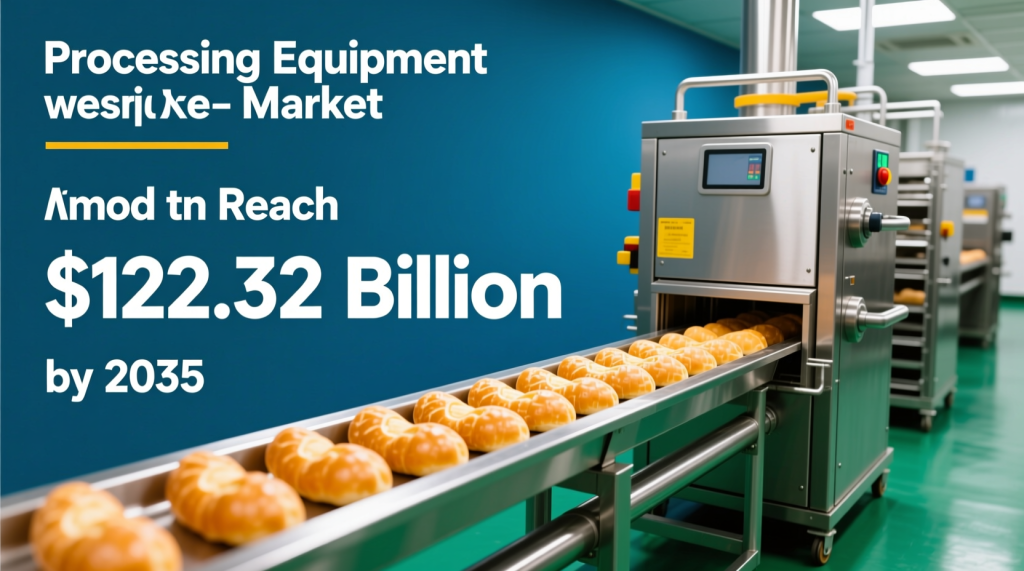
Market sizing context: According to Towards FnB (market research publisher), the market size is reported at USD 79.52 billion (2025), estimated at USD 83.02 billion (2026), and forecast to reach USD 122.32 billion by 2035, implying a 4.4% compound annual growth rate (CAGR) from 2026–2035. (CAGR = the constant annual growth rate that links a starting value to an ending value over a defined period.)
Internal consistency check (CAGR vs. year points): Using 2026 as the base, a 4.4% CAGR yields ~USD 86.7 billion for 2027 (83.02 × 1.044 ≈ 86.67) and ~USD 98.6 billion for 2030 (83.02 × 1.0444 ≈ 98.62), which aligns with the year projections provided. Over nine years, 83.02 × 1.0449 ≈ 122.3, consistent with the 2035 figure.
Authoritative background frameworks that shape equipment demand include global food hygiene and safety systems such as Codex Alimentarius and HACCP (Hazard Analysis and Critical Control Points), plus region-specific rules like the U.S. Food Safety Modernization Act (FSMA).
TL;DR: Market growth is steady and math-consistent with the stated 4.4% CAGR (2026–2035), with demand increasingly shaped by automation, digitalization, and compliance-driven equipment upgrades.
Key Market Highlights
- Market size (2025): USD 79.52 billion
- Market size (2026): USD 83.02 billion
- Forecast (2035): USD 122.32 billion
- Growth rate (2026–2035): 4.4% CAGR
- Leading region by share (2025): Asia Pacific (~37%)
- Fastest-growing region: North America
- Dominant type (2025): Pre-processing equipment
- Fastest-growing type: Processing equipment
- Dominant application (2025): Bakery and confectionery
- Fastest-growing application: Non-alcoholic beverages
- Dominant operation mode (2025): Automatic systems
TL;DR: Asia Pacific leads by share, North America grows fastest, and the mix is shifting from pre-processing dominance toward faster growth in core processing and automated lines.
Structural Demand Drivers (What’s Pulling the Market)
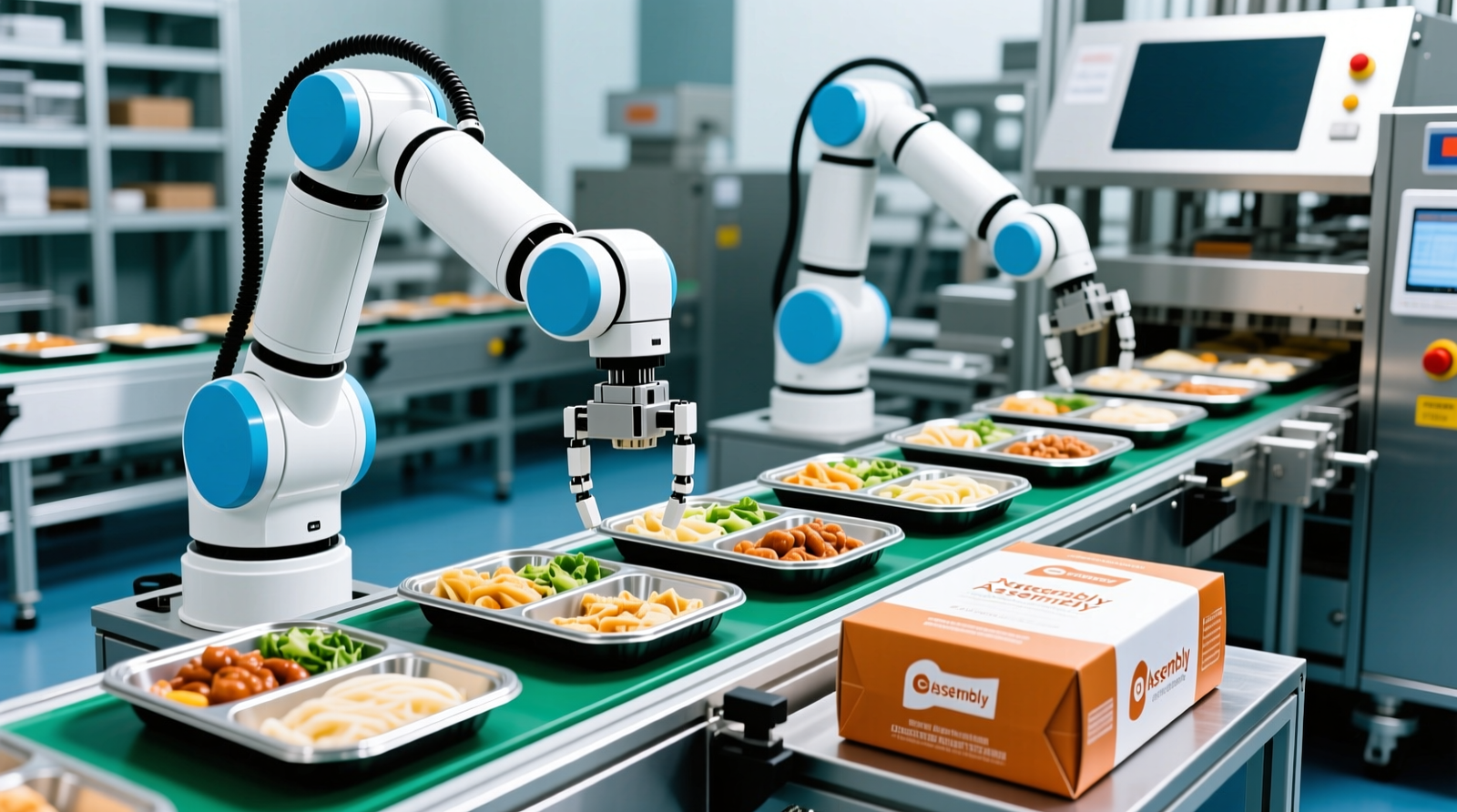
Structural drivers describe the underlying “why” behind equipment investment—consumer demand, supply-chain shifts, and compliance pressures—independent of the specific technologies used.
Processed, Packaged, and Convenience Foods
Urbanization, dual-income households, and e-commerce grocery growth continue to push volume and variety—driving demand for flexible, high-throughput lines for cutting, mixing, cooking, filling, and packaging. The operational requirement is not only speed, but also frequent changeovers as SKU counts rise.
Food Safety, Hygiene, and Traceability Requirements
Processors are upgrading equipment to meet stricter hygienic design, validation, and documentation expectations. Common compliance-driven features include CIP (clean-in-place: automated cleaning without equipment disassembly), sanitary valves/fittings, drainability, allergen changeover verification, and digitally recorded critical limits.
Regulatory approaches differ by region and influence equipment design choices:
- United States (FSMA): stronger emphasis on preventive controls, documented hazard analysis, and verifiable sanitation/traceability records (often pushing digital recordkeeping and auditable control logic). See the FDA’s FSMA overview: fda.gov.
- European Union: hygiene requirements are closely tied to equipment/material compliance and harmonized rules for food-contact materials and machinery safety. For food-contact framework, see Regulation (EC) No 1935/2004.
Sustainability and Resource Constraints
Sustainability requirements increasingly translate into measurable equipment KPIs: reduced energy use, less water for cleaning, lower product loss, and improved heat recovery. In thermal systems (e.g., pasteurization and UHT), well-designed heat recovery and high-efficiency heat exchangers can deliver meaningful energy reductions versus legacy configurations, particularly when paired with process integration and optimized cleaning cycles. Sustainability goals are also motivating lower-water cleaning strategies and more recoverable product pathways (e.g., pigging for viscous lines).
TL;DR: The market is pulled by (1) convenience-food volume and SKU complexity, (2) compliance-driven hygienic upgrades and digital traceability, and (3) sustainability/resource efficiency demands that increasingly show up as hard specifications in RFQs.
Technology Enablers: Automation, AI, and Industry 4.0 in Food Manufacturing
This section covers “how” growth is enabled—particularly food processing automation and digital architectures that improve throughput, quality, and uptime. Industry 4.0 refers to connected, data-driven manufacturing using sensors, industrial networks, analytics, and software to optimize performance across assets and plants.
Automation and Robotics (Throughput, Consistency, and Hygiene)
Automation is expanding beyond packaging into upstream processing and hygienic zones where labor is constrained and variability is costly. Typical benefits reported by processors and OEM case studies include:
- Throughput gains: often 5–20% from reduced micro-stoppages, improved line balancing, and faster changeovers (highly dependent on baseline OEE and product mix).
- Waste reduction: improved dosing/portioning can cut giveaway and rework, especially in high-volume beverage and dairy filling where overfill control directly affects margin.
- Safety and ergonomics: fewer manual interventions in high-heat, cold, or repetitive tasks.
OEE (Overall Equipment Effectiveness) is a standard metric combining availability, performance, and quality. It is commonly used to quantify the operational impact of automation upgrades.
AI and Digitalization (Optimization, Inspection, and Reliability)
AI (artificial intelligence) and ML (machine learning) are increasingly applied to real-time control, inspection, and maintenance:
- AI-enabled process control: models adjust temperature, pressure, flow, or residence time to stabilize product attributes and reduce variability-driven losses.
- Vision-based quality control: inspection for seal integrity, fill level, label correctness, and defect/foreign material detection—supporting faster response and fewer manual checks.
- Predictive maintenance: analyzing vibration, current draw, acoustics, and temperature signatures to predict failures and schedule interventions. Many plants target downtime reductions in the 10–30% range on constrained assets once data quality and workflows mature (results depend on failure modes, sensor coverage, and maintenance discipline).
Edge vs. Cloud Architectures (Latency, Data Ownership, Cybersecurity)
Digital plant architectures typically combine:
- Edge computing: analytics performed near the machine/line (often in an industrial PC or gateway). Advantages: low latency for control and alarms, continued operation during connectivity outages, and better control over sensitive production data.
- Cloud computing: centralized analytics, benchmarking across plants, advanced model training, and remote collaboration. Advantages: scalability and easier fleet-level visibility, but requires strong governance for data ownership and cybersecurity.
For food plants, edge-first designs are common for critical control loops and hygienic zones where latency and uptime are non-negotiable, while cloud layers are used for reporting, cross-site optimization, and OEM remote service (when permitted by policy).
TL;DR: Industry 4.0 in food manufacturing is enabling measurable gains in throughput, quality, and uptime; edge computing supports low-latency control and data control, while cloud adds scale and fleet analytics—together accelerating adoption of smart food and beverage processing equipment.
Market Constraint: Capital Intensity and Integration Complexity

Advanced food and beverage processing equipment can carry high upfront cost due to automation hardware, hygienic design requirements, controls/software, and commissioning. Beyond capex (capital expenditure), projects often include utilities upgrades (steam, chilled water, compressed air), plant layout changes, and workforce training.
For SMEs, the barrier is frequently less about willingness and more about financing and project risk. This is driving interest in modular “phased automation” roadmaps, leasing, and stronger OEM service contracts to de-risk uptime and spare parts.
TL;DR: The biggest brake on adoption is not value creation, but the combined burden of capex, integration, and commissioning risk—especially for smaller processors.
Recent Developments (Supplier Moves That Reflect Market Direction)
Recent announcements and product platforms underscore the shift from hardware-only to lifecycle, software, and services-led models:
- Alliances and collaboration: Multi-supplier collaborations are increasingly aimed at sustainability, interoperability, and compliance-ready digitalization rather than standalone machines.
- Digital factory platforms: OEM operating systems and data layers are being positioned to integrate processing, packaging, and analytics for traceability, efficiency, and faster troubleshooting.
TL;DR: OEM strategies are converging on platforms and partnerships that bundle equipment, data, and service—reflecting customer demand for integrated outcomes (uptime, compliance, efficiency), not just machinery.
Product Landscape: Key Categories of Food and Beverage Processing Equipment
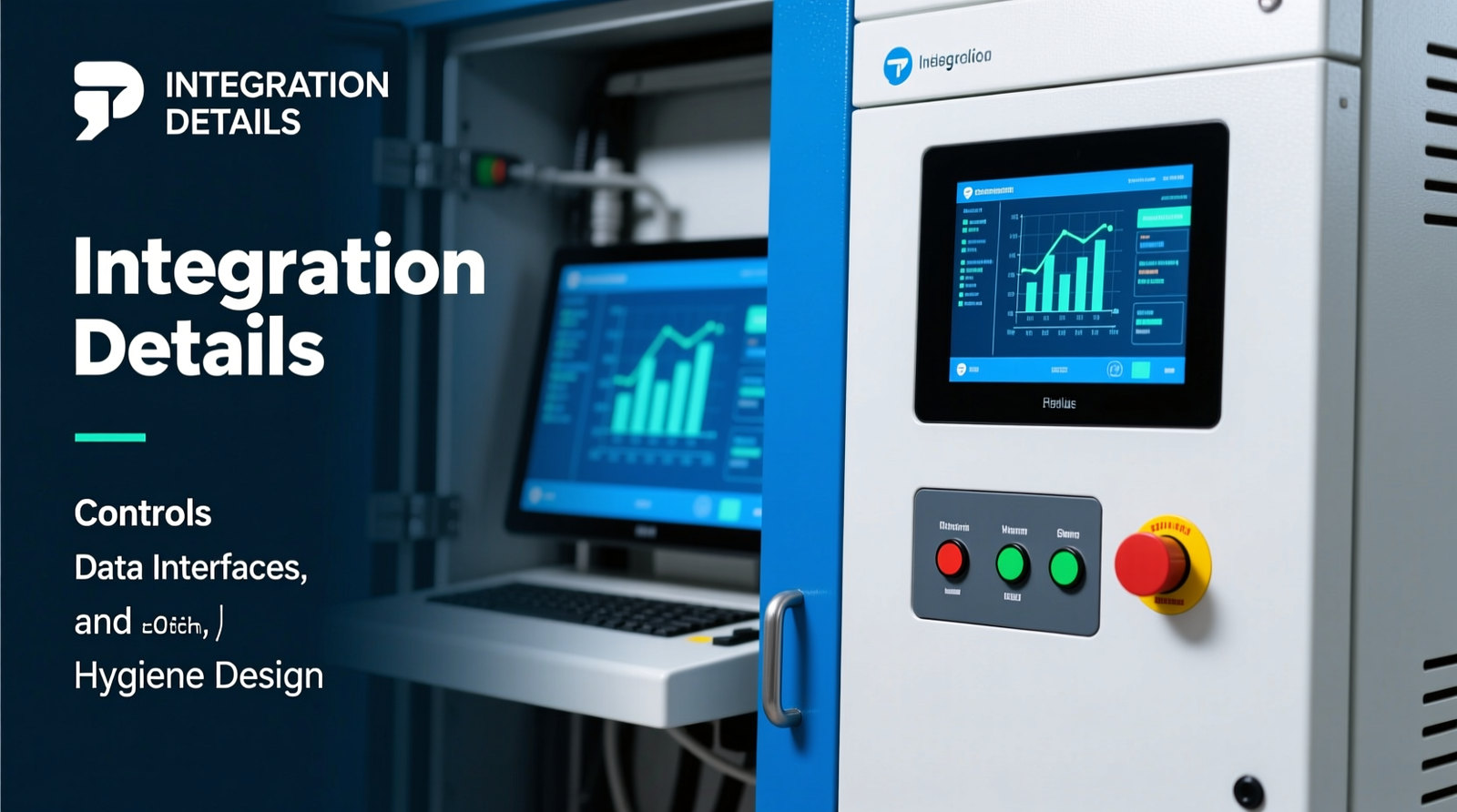
Food and beverage processing equipment spans preparation through packaging. Core categories include mixing/blending, size reduction, thermal processing, separation, extrusion, forming/shaping, filling/dosing, drying/dehydration, cooling/freezing, and packaging lines.
For technical guidance on hygienic engineering expectations, many global buyers reference organizations such as the European Hygienic Engineering & Design Group (EHEDG) and U.S.-based 3-A Sanitary Standards.
TL;DR: The equipment stack is broad, but purchasing decisions increasingly prioritize hygienic design, automation readiness, and data connectivity across the entire line—not single machines in isolation.
Market Segmentation (With Orientation Snapshot)
Quick orientation (table-like summary):
- By type: Pre-processing is the largest today; processing equipment is expected to grow faster, especially in beverages and emerging product formats (e.g., plant-based proteins).
- By application: Bakery/confectionery leads; non-alcoholic beverages is the fastest-growing due to SKU proliferation and high-speed filling/quality demands.
- By product form: Solids lead; liquids are growing faster in many markets due to functional beverages and dairy alternatives.
- By operation mode: Automatic dominates; semi-automatic grows steadily among SMEs upgrading in phases.
By Type
Pre-processing equipment (sorting, washing, cutting, peeling, grading, early-stage mixing) remains the largest base because it is broadly required across categories and is often the first modernization step for hygiene and labor reduction.
Processing equipment (thermal processing, forming, extrusion, coating, drying/freezing, homogenization/filtration) is forecast to expand faster where complexity and validation requirements are highest—particularly beverages, dairy, ready meals, and plant-based proteins.
By Application
Bakery and confectionery leads due to global staple consumption and continuous demand for high-volume mixing, proofing, baking, cooling, and packaging with allergen management.
Non-alcoholic beverages is the fastest-growing application, driven by functional drinks, RTD (ready-to-drink) formats, and the need for high-speed, hygienic processing and filling with strong traceability and quality controls.
Other applications include dairy, meat/poultry, seafood, alcoholic beverages, and niche specialty foods—each with distinct sanitation, temperature control, and yield requirements.
By End Product Form
Solid products lead (snacks, bakery, confectionery, cereals, processed meats), supported by automation-friendly handling and packaging.
Liquid products are growing strongly due to plant-based drinks, functional beverages, juices, and dairy alternatives—driving investment in hygienic fluid handling, clarification/filtration, and validated thermal treatment.
By Mode of Operation
Automatic systems dominate in high-volume production where consistency, labor constraints, and data capture matter most.
Semi-automatic systems continue to expand among SMEs as a bridge strategy—often paired with targeted digital add-ons (sensors, basic condition monitoring) that prepare for future full automation.
TL;DR: Pre-processing remains the biggest base, but growth is shifting toward core processing and beverage lines where automation, hygienic design, and data-driven validation deliver the strongest ROI.
Regional Outlook (Including Operating Constraints in Emerging Markets)
Asia Pacific leads market share (reported ~37% in 2025), underpinned by population scale, rapid urbanization, and expansion of modern retail and cold-chain capacity. Investment is strong in snacks, bakery, noodles, dairy, and fast-growing beverage categories.
In parts of the region, equipment specifications must also account for practical constraints such as variable utilities quality (power stability, steam quality), uneven water availability, and workforce skill gaps—often increasing the value of ruggedized designs, remote support, and simplified sanitation/maintenance routines.
North America (Fastest Growth)
North America’s growth is driven by modernization cycles, labor scarcity, and advanced adoption of Industry 4.0 in food manufacturing. FSMA’s emphasis on preventive controls and documented verification strengthens demand for traceable, validation-friendly equipment and digitally captured sanitation/production records. See FDA FSMA resources: fda.gov.
Europe (Regulation- and Engineering-Led Modernization)
Europe remains a major technology and demand center with strong hygienic engineering norms. Regulatory expectations related to hygiene, machinery safety (e.g., CE marking), and food-contact materials influence equipment documentation and design decisions. Food-contact framework reference: EU 1935/2004.
Latin America and Middle East & Africa (Growth with Infrastructure Considerations)
Latin America continues upgrading in meat, poultry, beverages, and snacks for domestic and export demand. Middle East & Africa investment is supported by food security initiatives and localization of dairy/beverage processing.
Across many emerging markets, infrastructure constraints—energy reliability, water scarcity, and service/spares availability—can be as important as machine performance. As a result, buyers often prioritize supplier service footprint, robust CIP performance under variable water quality, and designs tolerant of power fluctuations.
TL;DR: Asia Pacific leads in scale, North America accelerates via automation and FSMA-driven modernization, Europe is shaped by stringent compliance and engineering norms, and emerging markets require equipment choices that account for utilities, water, and service constraints.
Trade and Regulatory Landscape (HS Codes, Standards, and Documentation)
What Is Traded: Product Forms and HS Codes
Food processing machinery is commonly traded under Harmonized System (HS) codes such as:
- HS 8438: machinery for industrial preparation/manufacture of food or drink (broad category: mixers, grinders, cookers, separators, etc.).
- HS 8434: more specific dairy machinery (e.g., milk processing, butter/cheese-making equipment).
- HS 8422: packing, wrapping, filling, and related packaging machinery (often integrated with processing in turnkey lines).
Note: HS 8434 is a subset-like category focused on dairy machinery, while HS 8438 covers a broader range of food machinery; both may apply depending on the equipment’s primary function.
Regulatory and Hygienic Design References
Equipment must meet a mix of safety, electrical, and hygienic design requirements. Common reference points include:
- EU food-contact framework: Regulation (EC) No 1935/2004
- U.S. FSMA: FDA FSMA overview
- Hygienic design guidance: EHEDG (Europe) and 3-A Sanitary Standards (U.S.)
These frameworks influence documentation and validation protocols (e.g., cleaning validation evidence, material certificates, weld records, control-system audit trails) and can materially affect equipment selection and commissioning timelines.
TL;DR: HS codes differ by equipment scope (8438 broad food machinery; 8434 dairy-specific), and regulatory expectations (FSMA vs. EU frameworks) directly shape documentation, validation, and hygienic design requirements.
Competitive Landscape and Strategic Positioning
Competition is increasingly about integrated solutions (processing + packaging + software + service), not individual machines. Market dynamics also include consolidation (M&A), OEM–system integrator partnerships for turnkey delivery, and a strong role for regional mid-tier manufacturers that compete on cost, lead time, and localized service.
Alfa Laval (Sweden)
Positioning: Strong in hygienic heat transfer, separation, and fluid handling for dairy and liquid foods; often selected for energy efficiency and heat recovery upgrades. Strategic angle: sustainability-oriented modernization (thermal efficiency, separation yield) and global service support.
Bucher Industries AG (Switzerland)
Positioning: Yield- and quality-focused systems for juice, fruit/vegetable processing, and beverage applications. Strategic angle: premiumization and minimal processing trends (high yield, gentle handling), with strengths in beverage/produce segments.
SPX FLOW (United States)
Positioning: Hygienic mixing, pumping, homogenization, and thermal systems; modular skids common for phased upgrades. Strategic angle: modernization of legacy plants through modular deployments and compliance-ready hygienic designs.
The Middleby Corporation (United States)
Positioning: Bridges foodservice and industrial processing, benefiting from ready-to-eat growth and centralized kitchen expansion. Strategic angle: automation for high-throughput cooking/handling and protein-focused systems where labor and consistency are key ROI levers.
Krones AG (Germany)
Positioning: End-to-end beverage lines (processing through filling/packaging) with high-speed performance and digital factory tooling. Strategic angle: beverage-led growth (including non-alcoholic beverages) and lifecycle efficiency programs (energy, utilities, line optimization).
Tetra Laval Group (Tetra Pak)
Positioning: Aseptic processing and packaging ecosystems for dairy and liquid foods with strong validation and traceability requirements. Notable direction: expanding digital platforms (e.g., factory operating systems) to integrate performance, quality, and compliance data. Strategic angle: emerging-market resilience and shelf-stable demand where aseptic capability is a competitive moat.
Marel
Positioning: Protein processing (meat, poultry, seafood, alternative proteins) with vision systems and software integration. Strategic angle: yield optimization and labor reduction through automation and in-line inspection—critical in protein segments where giveaway and trim losses are material.
GEA Group
Positioning: Broad portfolio across processing, refrigeration, separation, and automation—often used in large-scale projects. Strategic angle: energy-efficient systems and decarbonization pathways (refrigeration efficiency, heat integration) aligned with sustainability-driven capex.
Bühler
Positioning: Grain milling, ingredients, chocolate/coffee, and plant-based processing technology with strong R&D orientation. Strategic angle: plant-based and sustainable nutrition technology platforms, influencing standards for new product formats and flexible manufacturing.
TL;DR: The competitive edge is shifting to integrated platforms (equipment + software + service), with consolidation and partnerships accelerating turnkey delivery; regional mid-tier OEMs remain important where cost and local support dominate decisions.
Implications for Equipment Buyers (Plant Managers, Ops Leaders, and Investors)
For decision-makers purchasing food and beverage processing equipment, the most consistent winners focus on lifecycle outcomes, not just the bid price:
- TCO vs. capex: Evaluate total cost of ownership (TCO: capex + energy/water + labor + downtime + spares + software) rather than lowest upfront quote.
- Modularity and phased expansion: Skid-based modules and scalable controls reduce commissioning risk and support staged automation for SMEs.
- Interoperability: Require clear integration scope (PLC compatibility, data tags, historian connectivity). PLC = programmable logic controller, the industrial computer that runs machine control logic.
- Data ownership and cybersecurity: Define who owns operational data, retention rules, and remote access governance—especially when OEM cloud services are used.
- Service footprint: Local parts availability, response SLAs, and technician coverage often determine real uptime more than equipment spec sheets.
- Future-proofing for regulation: Favor designs that simplify validation (cleaning verification, audit trails) and support evolving documentation expectations.
ROI context: Payback periods vary by segment and baseline performance, but automation/digital projects are often justified by a mix of labor savings, yield improvement (less giveaway/scrap), energy and water reductions, and downtime avoidance (predictive maintenance and faster troubleshooting). In practice, many plants target payback in the ~18–36 month range for well-scoped upgrades on constrained lines, while greenfield or fully integrated transformations may take longer.
TL;DR: Buy for lifecycle performance: prioritize TCO, modularity, interoperability, data governance, and service coverage; ROI is typically driven by labor, yield, utilities savings, and reduced downtime rather than “automation for its own sake.”
Market Scope and Forecast Overview

- Base year: 2025
- Forecast period: 2026–2035
- CAGR (2026–2035): 4.4%
- Market size (2026): USD 83.02 billion
- Implied market size (2027): USD 86.67 billion
- Implied market size (2030): USD 98.62 billion
- Forecast market size (2035): USD 122.32 billion
Covered regions: North America, Europe, Asia Pacific, Latin America, and Middle East & Africa.
TL;DR: The forecast set is internally consistent with a 4.4% CAGR from a 2026 base of USD 83.02B, reaching ~USD 122.3B by 2035.
Conclusion
The food and beverage processing equipment market is moving toward compliance-ready, connected, and resource-efficient production—where food processing automation and Industry 4.0 in food manufacturing directly support uptime, traceability, and cost stability. While capital intensity remains a real barrier, ROI is increasingly quantified through yield, labor, utilities, and downtime improvements.
Next-wave innovation is likely to concentrate in modular skid-based systems, plug-and-play connectivity, and low-water CIP solutions that reduce utilities exposure while simplifying validation and audits.
TL;DR: Growth is steady and technology-led; the next frontier is modular, interoperable, low-resource equipment that makes compliance and performance easier to prove—not just easier to operate.
FAQ

Q: How does Industry 4.0 in food manufacturing change equipment requirements?
A: Industry 4.0 in food manufacturing pushes buyers toward connected machines with sensors, standardized data outputs, and software-ready controls. Equipment increasingly needs built-in diagnostics, audit-ready records (for sanitation and critical limits), and integration capability with plant historians and MES (Manufacturing Execution Systems) to improve OEE, traceability, and troubleshooting.
Q: What’s the difference between edge and cloud analytics for food processing automation?
A: Edge analytics runs near the machine for low-latency alarms and control decisions, and can keep operating during network outages—useful in hygienic, high-availability areas. Cloud analytics supports benchmarking across plants, large-scale reporting, and model training, but requires stricter governance for data ownership, remote access, and cybersecurity.
Q: How do FSMA requirements influence food and beverage processing equipment design in the U.S.?
A: FSMA increases emphasis on preventive controls and verifiable records, so plants often prioritize equipment that supports hygienic design, validated cleaning (CIP), and digitally captured process/sanitation documentation. This can affect instrumentation choices, control system audit trails, and how easily the equipment can be inspected and cleaned.
Q: What are the most common ROI drivers when investing in food and beverage processing equipment?
A: The most common ROI drivers are labor savings, reduced product giveaway/overfill, higher yield (less scrap and rework), utilities savings (energy and water), and fewer unplanned stops through predictive maintenance. The best business cases tie these benefits to a constrained line where incremental throughput and uptime have immediate value.
Q: Which equipment segments are expected to grow fastest within the food and beverage processing equipment market?
A: Processing equipment is generally expected to grow faster than pre-processing—especially in non-alcoholic beverages, dairy and liquid foods, ready meals, and plant-based proteins—because these categories demand validated thermal processing, high-speed hygienic filling, and advanced automation/quality inspection.