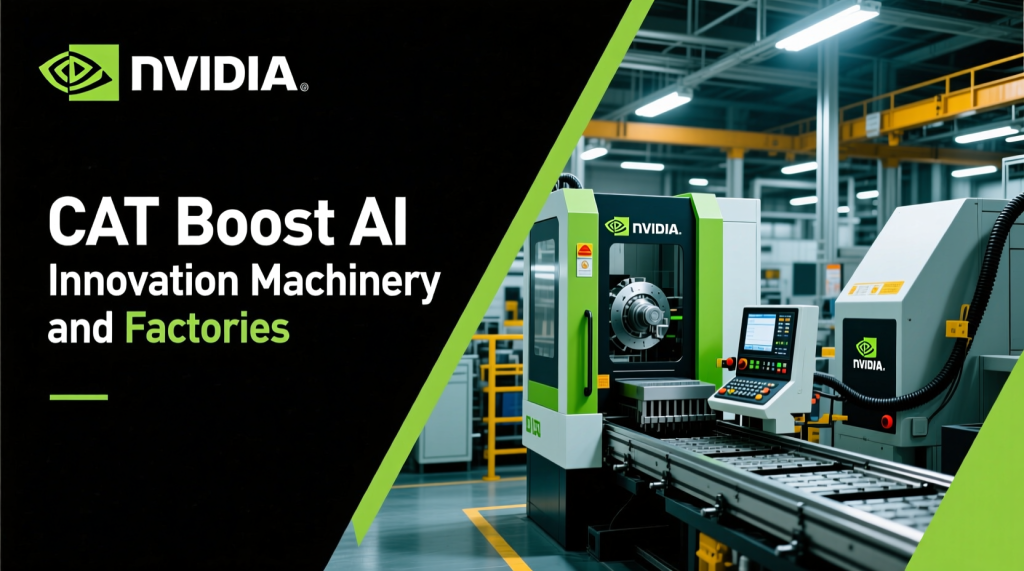
Caterpillar’s expanded NVIDIA partnership matters most to construction, mining, and industrial manufacturing leaders asking a practical question: what changes in uptime, safety, productivity, and factory KPIs can AI realistically deliver in the next 3–5 years—and what does deployment look like on real machines and legacy plants? Below is a technical, operations-focused breakdown of what Caterpillar has announced, where NVIDIA platforms fit, and what to watch when rolling out industrial edge computing and smart factory optimization at scale.
Authoritative references for context include NVIDIA’s public industrial and edge AI platforms such as NVIDIA Omniverse, the NVIDIA Jetson edge computing family, and NVIDIA AI infrastructure used for training and deploying models. Standards mentioned later reference widely used frameworks such as ISO 13849 (safety-related control systems), IEC 61508 (functional safety), and NIST Cybersecurity Framework.
TL;DR: This partnership is less about a single “AI feature” and more about connecting (1) on-machine inference at low latency, (2) a unified telemetry layer, and (3) factory digital twins and AI scheduling to measurable outcomes like reduced unplanned downtime, fewer safety incidents, and improved throughput.
AI integration across Caterpillar’s machines, services, and factories
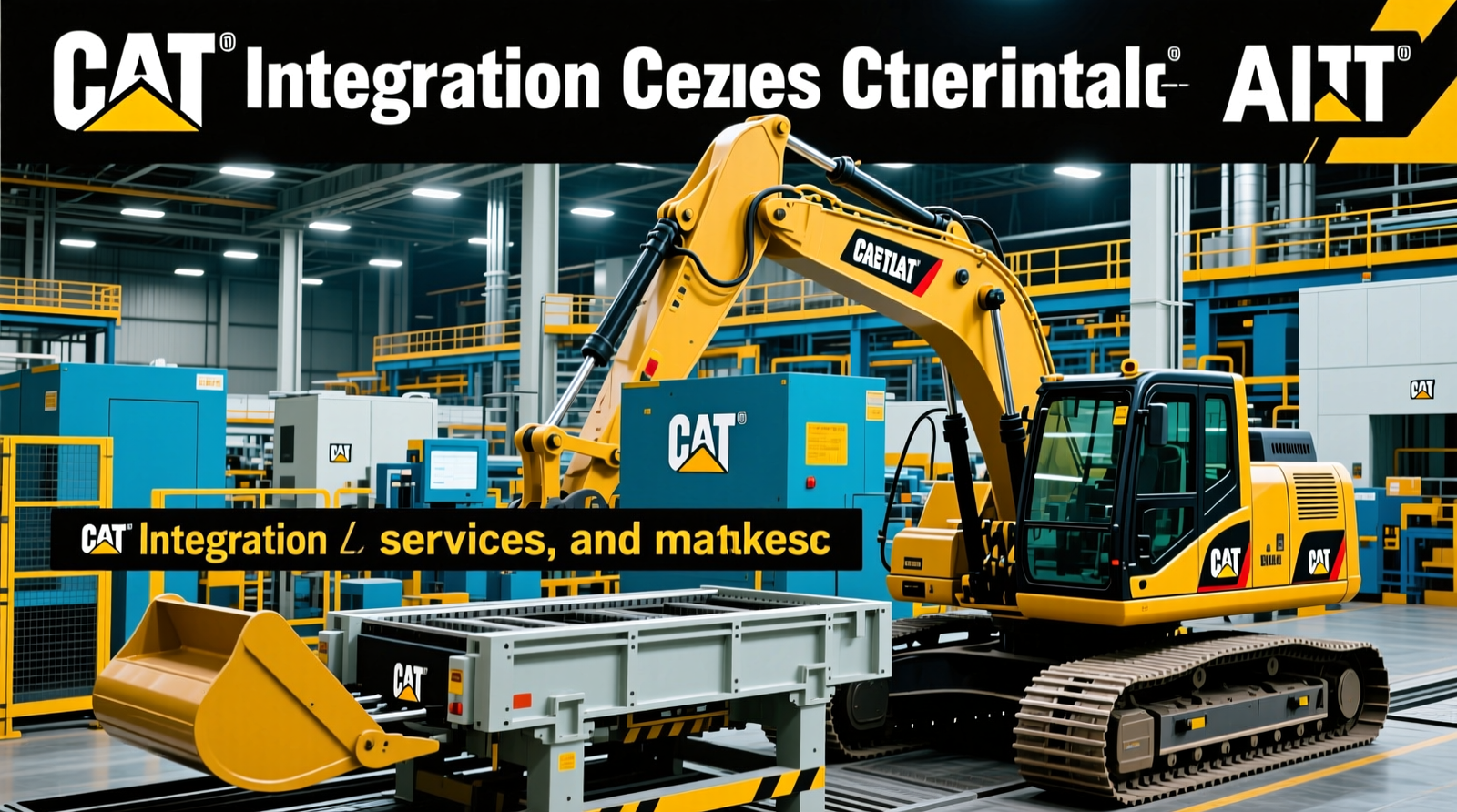
The Caterpillar–NVIDIA collaboration spans three operational layers:
- On-machine AI (industrial edge computing): Perception, diagnostics, and assistance running locally to meet latency and connectivity constraints on job sites and in mines.
- Fleet and service intelligence: Aggregating telematics (machine data transmitted off-board), service history, and parts usage to improve predictive maintenance for heavy equipment and dealer workflows.
- Smart factory optimization: AI-driven quality inspection, scheduling, and digital twins to reduce scrap, shorten changeovers, and improve line balancing.
What’s notable versus a generic “AI modernization” story is Caterpillar’s scale: a large installed base, established dealer service networks, and mature autonomy programs in mining. That combination changes deployment economics because model performance can improve with broader operational datasets—while also increasing the need for strong governance, cybersecurity, and human-in-the-loop validation.
TL;DR: The initiative connects edge AI on equipment, fleet/service analytics, and factory AI—so gains can show up in uptime, safety, and manufacturing KPIs rather than “AI features” alone.
Cat AI Assistant: conversational access to machine knowledge, service steps, and fleet context
At CES 2026, Caterpillar introduced the Cat AI Assistant, a conversational interface designed for operators, technicians, and fleet managers. It uses NVIDIA Riva (a speech AI framework for automatic speech recognition and text-to-speech) to support voice and text interactions. See NVIDIA Riva background here: NVIDIA Riva.
For industrial users, the difference between a “chatbot” and a useful assistant is whether it can safely combine:
- Static knowledge: OEM manuals, torque specs, lubrication charts, lockout/tagout (LOTO) procedures.
- Asset context: Specific serial number configuration, installed options, firmware versions.
- Live state: Fault codes, temperatures, pressures, fluid levels, aftertreatment status, load cycles.
- Maintenance history: Prior repairs, parts substitutions, inspection findings, oil analysis results.
Mini-scenario (field technician): A technician arrives at a wheel loader with an intermittent hydraulic overheat complaint. Instead of searching PDFs, they ask the assistant: “Show likely causes for hydraulic overheat on this exact unit, considering last week’s pump replacement.” The assistant pulls recent temperature trends, notes a higher-than-normal fan duty cycle, checks recent fault codes, and recommends a step-by-step diagnostic path (e.g., verify cooler delta-T, inspect debris, check bypass valve behavior). It can also list the required test ports and compatible gauges for that machine family.
Trust and supervision: In safety-critical equipment, conversational outputs should be treated as recommendations, not commands. A realistic workflow is “AI suggests → technician validates → action is recorded,” creating traceability and a feedback loop that improves future recommendations.
TL;DR: The assistant is valuable when it combines manuals + asset configuration + live telemetry + service history, while keeping a human expert responsible for final decisions.
Voice-enabled in-cab experience: reducing distraction without lowering safety standards
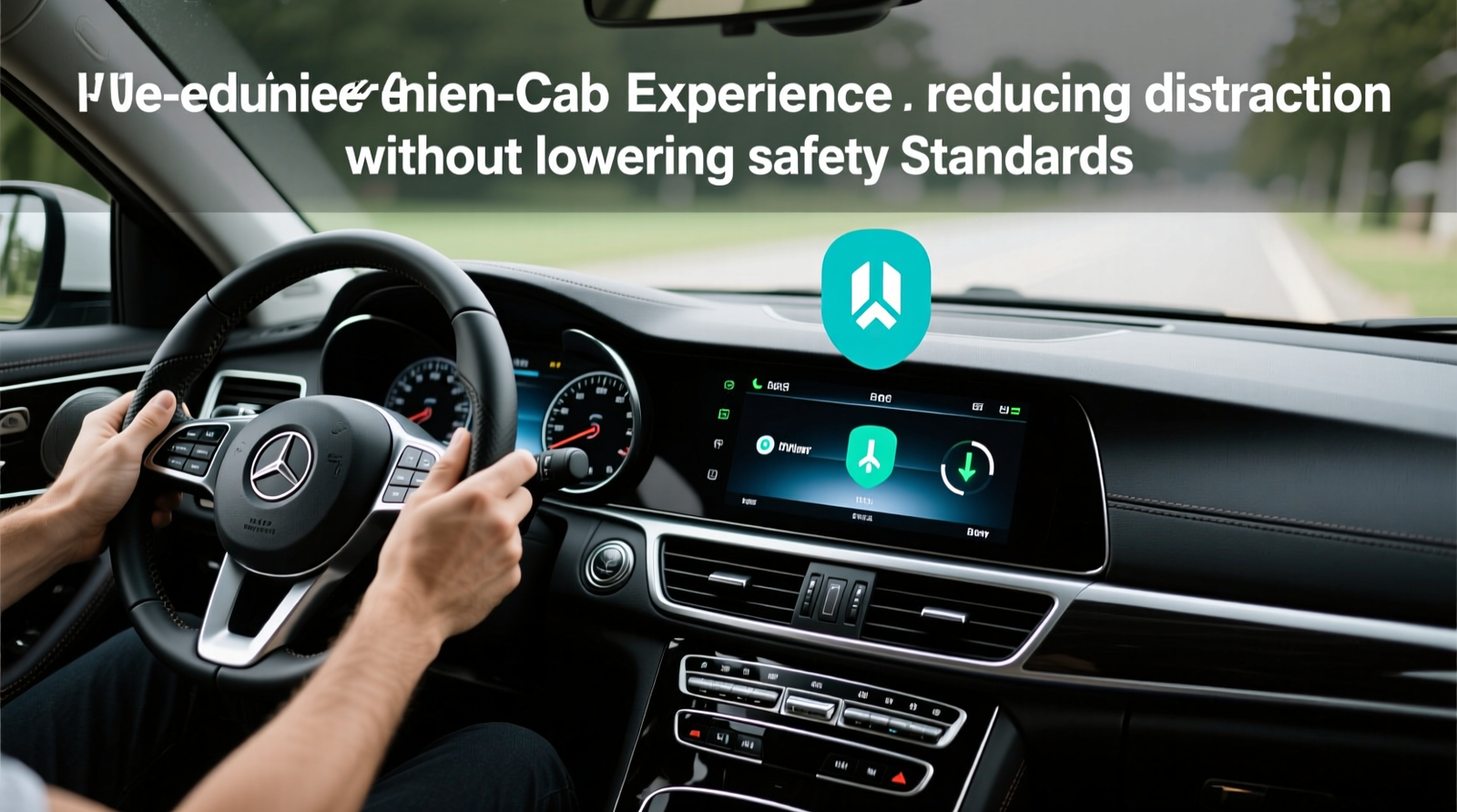
Voice control can reduce distraction, but heavy equipment introduces constraints that consumer voice assistants don’t face: high cabin noise, PPE (personal protective equipment) that muffles speech, accents, and intermittent connectivity. Riva’s on-device or edge-deployed speech pipeline can help by avoiding reliance on cloud round-trips where latency and bandwidth are uncertain.
Practical in-cab voice use cases include:
- Safety queries: “What’s the exclusion zone for this lift configuration?” or “Show the next step for LOTO.”
- Operator coaching prompts: “What’s my idle time this shift?” or “How does my average bucket fill factor compare to target?”
- Guided troubleshooting: “Explain fault code X in plain language and list checks in order.”
Standards context: Voice interaction should not become a safety function unless it is engineered and certified as such. Safety-related control functions typically reference frameworks like ISO 13849 or IEC 61508. In practice, many OEMs keep voice in the “advisory” layer while safety interlocks remain in proven control systems.
TL;DR: Voice can lower cognitive load and speed access to procedures, but it should stay advisory unless validated under functional safety standards.
Helios unified data platform: telemetry sources, architecture, and data-quality controls
Caterpillar’s Helios platform is positioned as the data backbone feeding the Cat AI Assistant and broader fleet analytics. “Unified platform” matters because predictive maintenance models fail quickly when signals are inconsistent across machine families or when timestamps, units, and calibration differ by subsystem.
Typical Helios-grade data sources (what’s collected):
- Powertrain: engine load, RPM, coolant temp, oil pressure, fuel rate, aftertreatment status.
- Hydraulics: pump pressure/flow estimates, oil temperature, filter restriction indicators.
- Structures & implements: cycle counts, payload estimates, lift/tilt events, shock events.
- Electrical & networks: battery voltage, alternator status, network health metrics.
- Diagnostics: fault codes, derates, event logs, operator acknowledgments.
- Location & utilization: GPS, idle time, geofenced zones, shift segmentation.
Latency and connectivity constraints: Some signals are useful only if acted on in seconds (e.g., collision warnings), while others tolerate minutes or hours (e.g., trending an oil temperature rise). A practical architecture splits workloads:
- On-machine edge: sub-second to a few seconds latency for perception/alerts and closed-loop advisory logic.
- Near-edge/site: local Wi‑Fi/LTE/5G backhaul at the mine or plant for higher bandwidth uploads when available.
- Cloud analytics: longer-horizon modeling, fleet benchmarking, and retraining.
Data quality for safety-critical recommendations: For high-consequence guidance (e.g., “stop operation” recommendations), data quality controls typically include timestamp synchronization, sensor plausibility checks, missing-data detection, and “confidence gating” (the model outputs a recommendation only when inputs meet quality thresholds). Cybersecurity hygiene is equally important; common alignment points include the NIST Cybersecurity Framework and secure update practices (signed firmware, role-based access control).
TL;DR: Helios-style platforms win by standardizing signals across fleets, separating low-latency edge decisions from cloud analytics, and enforcing data-quality gates for high-impact recommendations.
Predictive maintenance for heavy equipment: concrete impacts and how models change MTBF/MTTR
Predictive maintenance uses condition and usage data to estimate failure risk before a breakdown occurs. In heavy equipment, even modest improvements can be material because unplanned downtime hits production, hauling cycles, and contractor schedules.
Case-like scenario (autonomous haul trucks / mining fleet): A mine runs a mixed fleet of haul trucks and loaders. Historically, a recurring failure mode is hydraulic pump degradation that escalates into overheating and unplanned shutdowns. After deploying condition-based models that watch temperature rise rates, pressure ripple signatures, and filter restriction trends, the site shifts from reactive to planned interventions.
- Unplanned downtime reduction: A realistic target in mature programs is a 10–20% reduction in unplanned downtime for specific failure modes (results vary heavily by baseline maturity and data quality).
- MTBF impact: Mean Time Between Failures (MTBF) can increase when early symptoms trigger scheduled repairs before secondary damage occurs.
- MTTR impact: Mean Time To Repair (MTTR) drops when diagnostics become more precise (right technician + right parts + correct procedure on first visit).
How the assistant and platform contribute: The AI assistant can translate model outputs into actionable work orders (“inspect X, replace Y”), attach evidence (trend plots), and pre-stage parts kits. The key operational benefit is not just “prediction,” but planning: bundling maintenance with other downtime windows and avoiding expensive field failures.
Human validation: A common trust-building pattern is staged deployment: (1) “silent mode” predictions scored against reality, (2) advisory recommendations reviewed by reliability engineers, (3) gradual automation of low-risk suggestions (e.g., lubrication reminders) while keeping high-risk actions supervised.
TL;DR: Predictive maintenance pays when it reduces unplanned downtime and improves MTTR through better diagnostics and parts planning—validated in stages with reliability engineers in the loop.
NVIDIA Jetson Thor on equipment: deployment realities, compute profile, and machine interfaces
Caterpillar plans to deploy NVIDIA Jetson Thor for on-machine AI inference. Jetson is NVIDIA’s embedded edge AI platform family; Thor is positioned for higher-performance robotics and edge workloads. Reference: NVIDIA Jetson platform overview.
Compute capabilities (rough orientation): NVIDIA positions Jetson-class devices for running multiple neural networks (computer vision, sensor fusion, and planning) with low power draw compared to data center GPUs. Exact throughput depends on configuration and model choice, but the practical takeaway is the ability to run multi-camera perception + sensor fusion + in-cab assistance locally with real-time response.
Environmental hardening considerations: Heavy equipment edge computers face vibration, dust ingress, wide temperature ranges, voltage transients, and EMI/EMC (electromagnetic interference/electromagnetic compatibility). A production deployment typically uses automotive/industrial-grade enclosures, secured connectors, conformal coating (where required), and robust power conditioning. These details matter as much as peak TOPS (tera operations per second) because intermittent resets or connector failures negate AI value.
How Jetson-class edge AI interfaces with machine control:
- CAN bus: Controller Area Network (CAN) is a common in-vehicle network used to exchange messages between electronic control units (ECUs). Many machines also use higher-layer protocols (e.g., J1939) on top of CAN.
- Ethernet: Increasingly used for cameras, high-rate sensors, and diagnostics.
- I/O and gateways: Edge computers often connect through a gateway ECU that enforces message filtering and safety constraints.
Safety separation: For autonomy or advanced driver assistance, OEM architectures typically separate “AI compute” from “safety controller” layers. AI can propose actions (slowdown, stop request, re-route), while safety-rated controllers handle the final actuation logic and enforce constraints consistent with functional safety practices (see IEC 61508).
Deployment challenge (legacy fleet integration): New machines can be designed with the wiring, sensors, and network bandwidth needed for AI. Retrofits are harder: camera placement, calibration, power availability, and older ECUs with limited bandwidth can restrict what edge AI can do. Expect mixed strategies—full capability on new models, partial capability (diagnostics/assistant) on legacy units.
TL;DR: Jetson Thor enables low-latency AI on the machine, but real success depends on ruggedization, clean integration with CAN/Ethernet networks, and safety separation between AI recommendations and control actuation.
Autonomy and advanced assistance: from perception to autonomous haul trucks
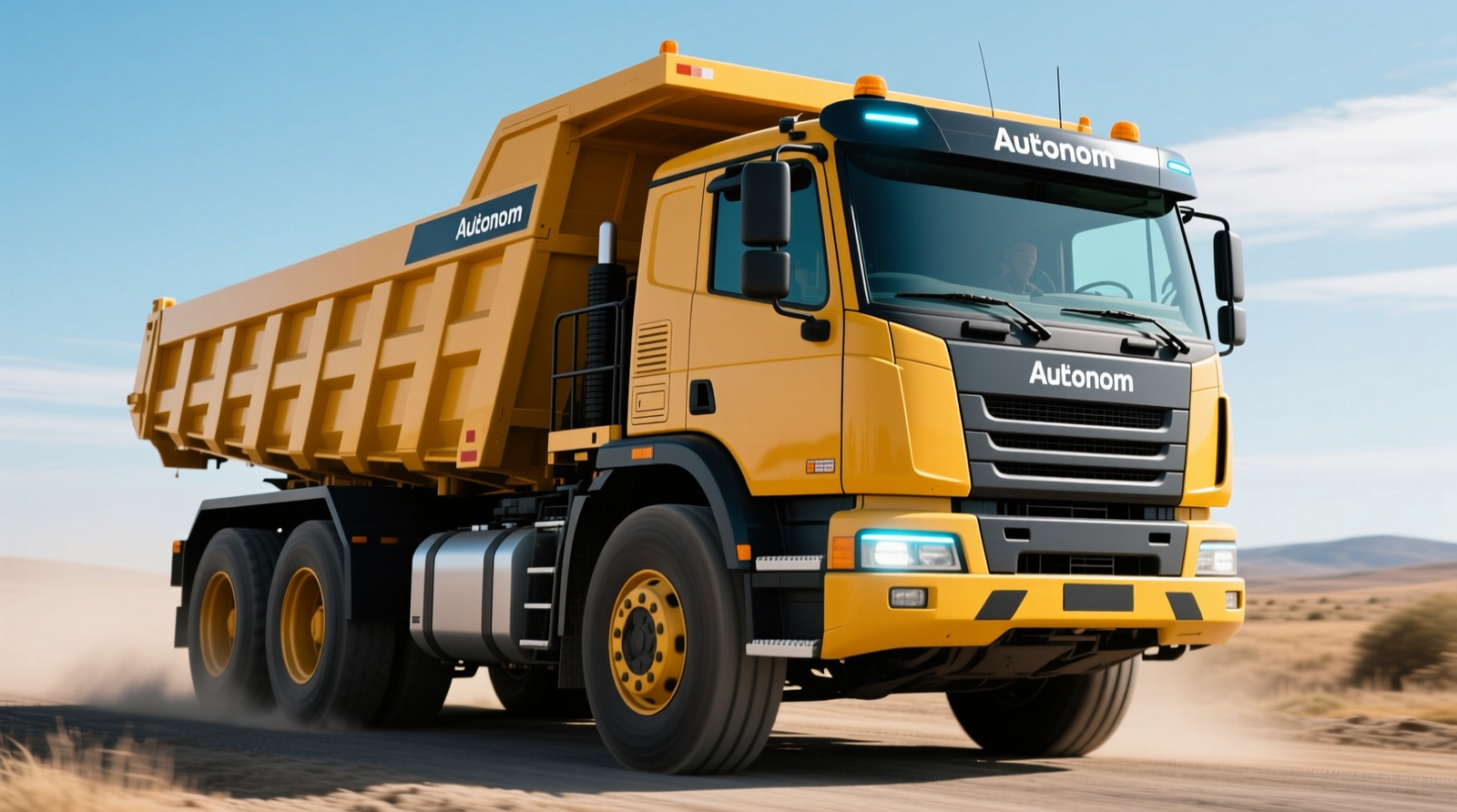
Mining remains one of the most immediate arenas for autonomy because sites are controlled, routes are repeatable, and the ROI of autonomy can be large—especially for autonomous haul trucks operating in high-volume material movement.
With on-board AI, equipment can support:
- Perception: multi-camera object detection, free-space estimation, and operator hazard alerts.
- Sensor fusion: combining cameras, radar, and other sensors to reduce false positives.
- Operational coaching: cycle-time analysis, payload consistency prompts, idle reduction guidance.
Mini-scenario (mine operations “day in the life”): A shift supervisor monitors haul road congestion and loading queue times. Edge AI flags that Truck Group B is slowing near a berm due to repeated “uncertain object” detections at dawn. The system correlates detections with sun angle and camera glare, recommends a camera hood adjustment and a calibration check, and temporarily adjusts speed policy for that segment. The supervisor confirms the change, maintenance installs the hood, and the false positives drop—protecting both throughput and safety without disabling detection logic.
TL;DR: On-board AI supports autonomy and advanced assistance, but real productivity gains come from tuning perception and policies to site conditions (lighting, dust, berms) with supervised changes.
NVIDIA AI Factory for manufacturing: targeted KPIs and MES/ERP integration
In factories, “AI” becomes useful when it ties to measurable KPIs and integrates with plant systems rather than living in dashboards. NVIDIA’s AI infrastructure stack is commonly used for training, deploying, and scaling models; see NVIDIA’s enterprise AI overview: NVIDIA AI & data science.
High-value manufacturing KPIs Caterpillar can target:
- Scrap and rework reduction: vision-based inspection and root-cause clustering for defects.
- Changeover time: AI-assisted sequencing and constraint-aware scheduling.
- Line balancing: identifying bottlenecks and re-allocating labor or buffers.
- OEE improvement: Overall Equipment Effectiveness (OEE) combines availability, performance, and quality into a single metric used widely in manufacturing.
- Energy intensity: kWh per unit and compressed-air efficiency tracking (often a hidden cost driver).
Process-level integration (how models meet operations):
- MES: Manufacturing Execution System (MES) dispatches work orders, tracks WIP (work in process), and captures production events; AI outputs should feed back into MES as recommended actions or parameter limits.
- ERP: Enterprise Resource Planning (ERP) manages orders, inventory, and procurement; AI-driven forecasts and parts demand signals should update planning parameters and reorder points.
- Quality systems: Nonconformance workflows should ingest AI inspection evidence (images, confidence scores, traceability IDs).
TL;DR: Factory AI delivers value when it drives scrap, changeover, and OEE improvements—and when its outputs integrate into MES/ERP workflows rather than remaining standalone analytics.
Digital twins with NVIDIA Omniverse and OpenUSD: what gets simulated and why it matters
Caterpillar is using digital twins to test factory changes virtually before implementing them physically. NVIDIA Omniverse is a platform for building and simulating physically based digital worlds (Omniverse overview). OpenUSD (Universal Scene Description) is an open framework for describing 3D scenes and assets; the Alliance for OpenUSD provides additional background: Alliance for OpenUSD.
Practical factory twin use cases (beyond “pretty 3D”):
- Material flow simulation: validate buffer sizes, forklift routes, and WIP accumulation risk.
- Ergonomics and safety: model reach envelopes and pedestrian-vehicle interactions in aisles.
- Capacity and takt time: test if a proposed line change meets takt under variability (machine downtime distributions, changeovers).
- Commissioning support: rehearse PLC (programmable logic controller) sequence changes and sensor placements before downtime windows.
Data connection challenge: Twins only stay useful if they’re refreshed with real plant data (cycle times, downtime codes, quality yields). That requires governance: consistent identifiers for assets, disciplined event tagging, and integration with MES historians.
TL;DR: Digital twins earn their keep when they predict bottlenecks, validate safety and flow changes, and stay linked to real MES data—not when they exist as static models.
AI capabilities mapped to measurable business outcomes
| AI capability | Where it runs | Operational metric | Business outcome |
|---|---|---|---|
| Predictive maintenance for heavy equipment (condition/risk scoring) | Cloud + edge summaries | Unplanned downtime, MTBF, MTTR | Higher equipment availability; fewer catastrophic failures; better parts planning |
| In-cab operator coaching (idle, payload consistency, cycle timing) | On-machine edge | Fuel burn per hour, cycle time, idle % | Lower fuel cost; improved productivity; reduced wear |
| Perception & hazard detection (vision/sensor fusion) | On-machine edge | Near-miss rate, collision alerts, safety interventions | Reduced safety incidents; better compliance and reporting |
| Factory vision inspection and anomaly detection | Edge + AI infrastructure | Scrap %, rework hours, FPY (first-pass yield) | Lower cost of poor quality; faster root-cause isolation |
| Scheduling/line balancing optimization integrated with MES/ERP | AI infrastructure | OEE, changeover time, on-time delivery | Higher throughput; reduced expediting and WIP; improved service levels |
TL;DR: Tie AI projects to specific metrics (downtime, MTTR, scrap, OEE, fuel) and require system integration (MES/ERP/telematics) to convert “insight” into operational action.
Competitive and legal context: why IP disputes matter for autonomy, telematics, and machine control
Heavy equipment innovation is increasingly concentrated in a few technology domains: autonomy stacks (perception, planning, control), telematics platforms, machine control (grade control, payload, implement automation), and data/analytics services. Patents in these areas can influence who can deploy certain autonomy or machine-control workflows at scale—or how quickly features roll out across regions.
Doosan Bobcat’s North American unit filed patent infringement lawsuits against Caterpillar and dealer Holt Texas. Public reporting on such disputes often centers on machine control, autonomy-related functions, and connected equipment/telematics—domains that overlap with AI deployment because autonomy requires robust sensing, data pipelines, and control integration. (For readers tracking filings, primary sources are typically accessible via PACER Monitor or court dockets; availability varies by case and jurisdiction.)
Strategic implication: Partnerships like Caterpillar–NVIDIA can accelerate compute and AI tooling, but intellectual property (IP) positioning affects which features can be commercialized broadly and how competitors respond. In practice, OEMs often build modular autonomy stacks and region-specific feature sets to manage IP risk while continuing innovation.
TL;DR: Legal/IP disputes in autonomy, telematics, and machine control can shape deployment timelines and feature availability—so they matter to AI roadmaps, not just legal teams.
Challenges of deploying edge AI on heavy equipment—and how programs typically mitigate them
- Connectivity limits: Mines and remote sites have dead zones. Mitigation: edge-first inference, store-and-forward uploads, and site backhaul upgrades.
- Harsh environments: Dust, vibration, and thermal cycling. Mitigation: rugged enclosures, validated connectors, and reliability testing (HALT/HASS where applicable).
- Legacy fleet variation: inconsistent sensors and ECUs. Mitigation: retrofit kits for select signals; focus on high-ROI use cases first (e.g., maintenance analytics) where sensor needs are modest.
- Model drift: operating conditions change (new materials, new operators, seasonal effects). Mitigation: monitoring, periodic retraining, and “confidence gating” that prevents overconfident recommendations.
- Safety and accountability: AI can suggest wrong actions. Mitigation: keep safety functions in certified control layers; require human confirmation for high-consequence actions; maintain audit trails.
TL;DR: The hard parts are connectivity, ruggedization, legacy integration, and safety governance—mitigated by edge-first design, staged rollout, and strict separation between AI advice and safety actuation.
Conclusion: concrete takeaways for fleet owners, mine operators, and plant leaders
- Uptime gains will come from planning, not prediction alone: the best ROI is when failure-risk signals trigger parts staging and scheduled maintenance, improving MTTR and reducing unplanned downtime.
- Jetson Thor-class compute makes autonomy and assistance practical on-machine: low latency matters for perception and hazard alerts where connectivity is unreliable.
- Helios-style unification is a prerequisite: standardized, quality-controlled telemetry is what makes recommendations credible across mixed fleets.
- Factories benefit when AI integrates with MES/ERP: target scrap, changeovers, OEE, and scheduling—and push outputs into the systems that run production.
- IP and safety governance shape the rollout: functional safety separation, cybersecurity practices, and patent realities influence how quickly features reach the field.
TL;DR: Expect the most tangible 3–5 year impact in predictive maintenance, assisted operations, and factory scheduling/quality—backed by edge compute, unified telemetry, and disciplined safety + IP governance.
FAQ
Q: What does “predictive maintenance for heavy equipment” look like in practice?
A: It typically combines telematics (fault codes, temperatures, pressures, utilization) with service history to identify rising failure risk early. The practical win is fewer unplanned breakdowns and faster repairs because diagnostics and parts are pre-planned—improving MTTR and, over time, MTBF for certain failure modes.
Q: How would Jetson Thor connect to a machine’s existing controls and CAN bus network?
A: In most architectures, the edge AI computer reads data via gateways that expose CAN (Controller Area Network) messages and/or Ethernet diagnostics, then produces advisory outputs (alerts, recommendations). Safety-critical actuation remains in dedicated control systems; AI suggestions are filtered through safety and network rules rather than directly commanding actuators.
Q: What data does Helios (a unified data platform) typically need to make useful recommendations?
A: Useful recommendations usually require synchronized timestamps, consistent units, and a mix of powertrain, hydraulics, diagnostics, and utilization signals—plus maintenance and parts history. Data-quality checks (missing-data detection, plausibility checks) are essential when recommendations could affect safety or high-cost repairs.
Q: How do digital twins and smart factory optimization tie into KPIs like scrap and OEE?
A: Digital twins simulate changes to layouts, flow, and capacity before physical rework, which reduces commissioning risk and helps address bottlenecks. When connected to MES data, AI can target scrap reduction (vision inspection), improve OEE (availability/performance/quality), and reduce changeover times through better scheduling and line balancing.
Q: What does implementation cost look like, and can these AI capabilities be retrofitted to existing fleets and factories?
A: Costs vary by scope: software-only analytics can be deployed faster, while on-machine edge AI may require sensors, rugged compute hardware, wiring, calibration, and network integration. Many organizations start with retrofit-friendly use cases (predictive maintenance, utilization analytics) and roll advanced perception/autonomy primarily on newer machines designed with the necessary sensor and compute architecture.