Introduction: What’s Driving Investment in Industrial Bakery Packaging Machines

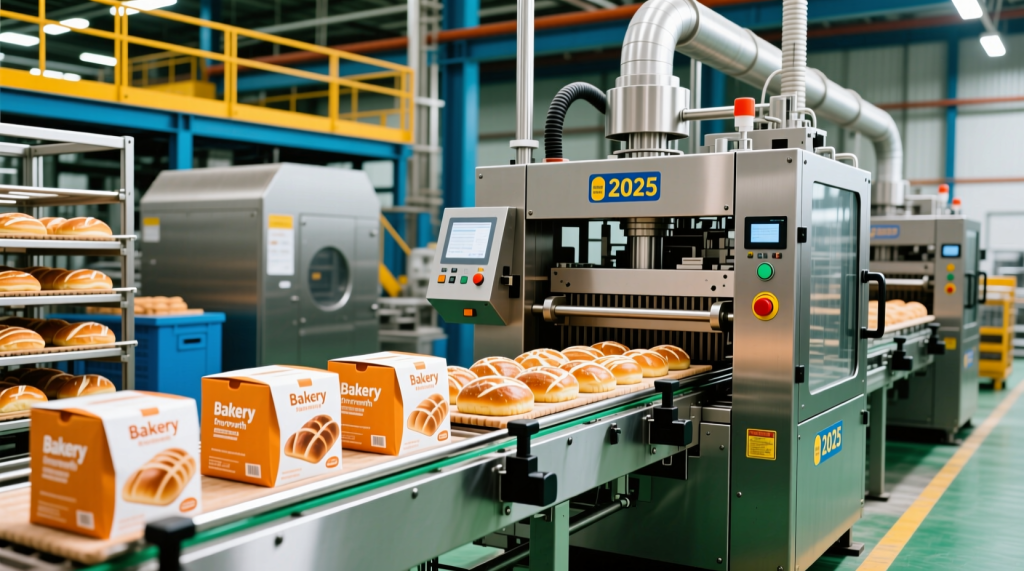
Industrial bakery packaging machines sit at the point where product quality, food safety, and plant economics meet. As bakeries push higher throughput (more units per hour), more stock-keeping units (SKUs), and tighter shelf-life targets, packaging equipment decisions increasingly focus on measurable outcomes: fewer leakers, lower film consumption, higher OEE (Overall Equipment Effectiveness), and faster changeovers.
According to QY Research, the global industrial bakery packaging machine market was valued at approximately US$ 1,450 million in 2024 and is projected to reach around US$ 2,060 million by 2031 (about 5.0% CAGR from 2025–2031). Unless otherwise stated, market values are typically presented in constant currency and generally refer to new equipment sales (aftermarket service, spare parts, and refurbishment may be treated separately by different publishers).
For readers comparing sources, it helps to anchor terminology and compliance context early. HACCP (Hazard Analysis and Critical Control Points) is a food-safety management framework used globally, while U.S. plants may also align packaging programs with FSMA (Food Safety Modernization Act). In the EU, machinery and hygiene expectations are shaped by regulations and harmonized standards, including safety requirements commonly referenced via ISO/EN machinery safety standards. For hygiene and washdown suitability, many buyers rely on IP (Ingress Protection) ratings such as IP65/66/69K for electrical enclosures (definitions are set by IEC 60529).
External references for context: HACCP overview from the FAO (Food and Agriculture Organization), FSMA information from the U.S. FDA, and IP code basics from the International Electrotechnical Commission (IEC).
TL;DR: Packaging investment is being pulled by throughput, SKU complexity, shelf-life expectations, and stricter hygiene/traceability—especially where plants need higher OEE and lower material waste.
Market Overview: Practical Growth Drivers (and What They Look Like on a Bakery Floor)
Demand growth isn’t abstract—buyers are upgrading specific bottlenecks. A typical example is a bread line where slicing runs reliably, but bagging and closure becomes the constraint. Upgrading from a semi-automatic bagger with twist-tie to an automatic bagger + clip/tie + checkweigher can shift the “line stop” point downstream and stabilize output.
- Packaged bakery demand and channel mix: Retail-ready presentation and consistent weights matter more as modern trade expands. E-commerce adds another layer: packs must survive parcel handling, which often increases demand for secondary packaging (cartons or right-sized cases) and better sealing integrity.
- Labor and ergonomics: Many plants are targeting fewer operators per line by adding robotic pick-and-place, automatic infeed, auto splicing, and case packing.
- Shelf-life and waste reduction: For soft bread and buns, small gains in seal quality and package tightness can reduce staling and returns. For cookies/crackers, better nitrogen flushing in bagging can reduce oxidative rancidity and breakage claims.
- Compliance and audit readiness: “HACCP-compliant bakery packaging equipment” usually translates to hygienic design details: sloped surfaces, minimal horizontal ledges, tool-less access to product zones, food-grade materials, and validated cleaning procedures.
Payback reality check (typical ranges): In industrial bakeries, automation projects often target 18–36 months payback. Faster payback is common when a project removes a chronic labor constraint (e.g., manual case packing) or reduces film waste and rework on a high-volume SKU.
TL;DR: Growth is powered by concrete plant needs—reducing labor dependency, improving seal integrity and shelf life, and adding downstream automation to eliminate packaging bottlenecks.
Technical Differentiation by Machine Type: Flow Wrappers vs. VFFS vs. Tray Sealers vs. Cartoners

“Industrial bakery packaging machine” is an umbrella term. Selection depends on product fragility, required atmosphere, pack style, and line speed. Below is a buyer-oriented breakdown with typical performance ranges (actual speed depends on product handling, film, pack length, and upstream consistency).
Horizontal Flow Wrappers (HFFS): Bakery Flow Wrap Solutions for Bars, Cakes, and Buns
HFFS (Horizontal Form-Fill-Seal) flow wrappers form a film tube around products moving horizontally, then make longitudinal and end seals. In bakery, they’re common for snack cakes, croissants, muffins, tortillas, and “count packs” where product is collated in-lane.
- Typical speeds: roughly 150–800 packs/min depending on product length and infeed. High-speed lines for small bars can exceed this, while delicate pastries may run slower due to gentler handling requirements.
- Film types: OPP (oriented polypropylene), BOPP (biaxially oriented polypropylene), laminates, and increasingly recyclable mono-material structures (where sealant layers and barrier layers are designed to stay within one polymer family).
- MAP capability: Many HFFS machines can support MAP (Modified Atmosphere Packaging) via gas flushing and tight seal control—useful for slowing mold growth in certain products and reducing oxidation for fat-containing bakery items.
- Hygienic design considerations: crumb management (easy-open guards, crumb trays), belt materials compatible with sanitation chemicals, and quick-removal parts for allergen changeovers.
Case-style scenario: A high-volume snack cake producer running 400–500 packs/min on legacy flow wrappers often gains throughput more from upstream infeed control than from wrapper speed alone. Adding an automatic lane distributor + timing belts + vision-based product spacing can reduce micro-stops and raise OEE from ~60–70% into the 75–85% range without increasing nominal wrapper speed.
TL;DR: HFFS is the workhorse for individually wrapped or collated bakery items—fast, flexible, and MAP-capable, but performance depends heavily on infeed control and crumb-friendly hygienic design.
Vertical Form-Fill-Seal (VFFS): VFFS Systems for Cookies, Crackers, and Bakery Snacks
VFFS (Vertical Form-Fill-Seal) machines form a bag around a vertical forming tube, dose product, then seal. They dominate in applications where product is dropped into a bag—cookies, rusks, crackers, mini pastries, crouton-like baked snacks, and inclusions.
- Typical speeds: often 30–200 bags/min (single-lane), with multi-lane configurations and certain bag styles shifting the practical range upward. Speed depends strongly on bag length, sealing time, and the dosing method.
- Dosing systems: multihead weighers for piece goods, volumetric cup fillers for uniform items, and augers for powders (less common for bakery finished goods but relevant for mixes/toppings).
- Film types: PE (polyethylene) laminations, barrier laminates, and emerging recyclable structures—bag stiffness and coefficient of friction can affect tracking and seal quality.
- MAP compatibility: Gas flushing is common for oxidation control and breakage reduction in fragile cookies; achieving consistent residual O2 requires stable product feed and seal integrity.
Integration note: For VFFS in cookies, breakage is often a bigger cost than film. Engineers may add controlled drop chutes, cushioning baffles, or adjust weigh bucket angles to reduce fines/dust (which can also contaminate seal areas and cause leaks).
TL;DR: VFFS is usually the best fit for bagged cookies/crackers and snack mixes—compact and versatile, but dosing, breakage control, and clean seals are the core engineering priorities.
Tray Sealers and Thermoformers: MAP for Fresh Pastries and Premium Presentation
Tray sealing is common when product needs rigid protection (decorated pastries, cream-filled desserts) or when premium shelf presentation matters. A tray sealer seals a lidding film onto a pre-made tray; a thermoformer forms trays from roll stock before filling and sealing.
- Typical speeds: broadly 10–120 packs/min depending on number of cavities, indexing distance, and MAP requirements.
- MAP performance: Tray sealers can achieve strong, repeatable MAP via vacuum/gas cycles; this is often preferred for higher shelf-life targets where residual oxygen control is critical.
- Hygienic design: More common to see washdown-friendly execution here (wet zones), with attention to IP-rated enclosures and tool-less access to sealing frames.
- Film/material direction: Increasing interest in mono-material trays and lidding combinations, and in downgauged lidding films that still meet peel strength and leak requirements.
TL;DR: Tray sealing/thermoforming is the go-to for delicate or premium bakery items—especially where MAP and rigid protection reduce damage and extend shelf life.
Secondary and End-of-Line Bakery Packaging Machines: Cartoners, Case Packers, Palletizing
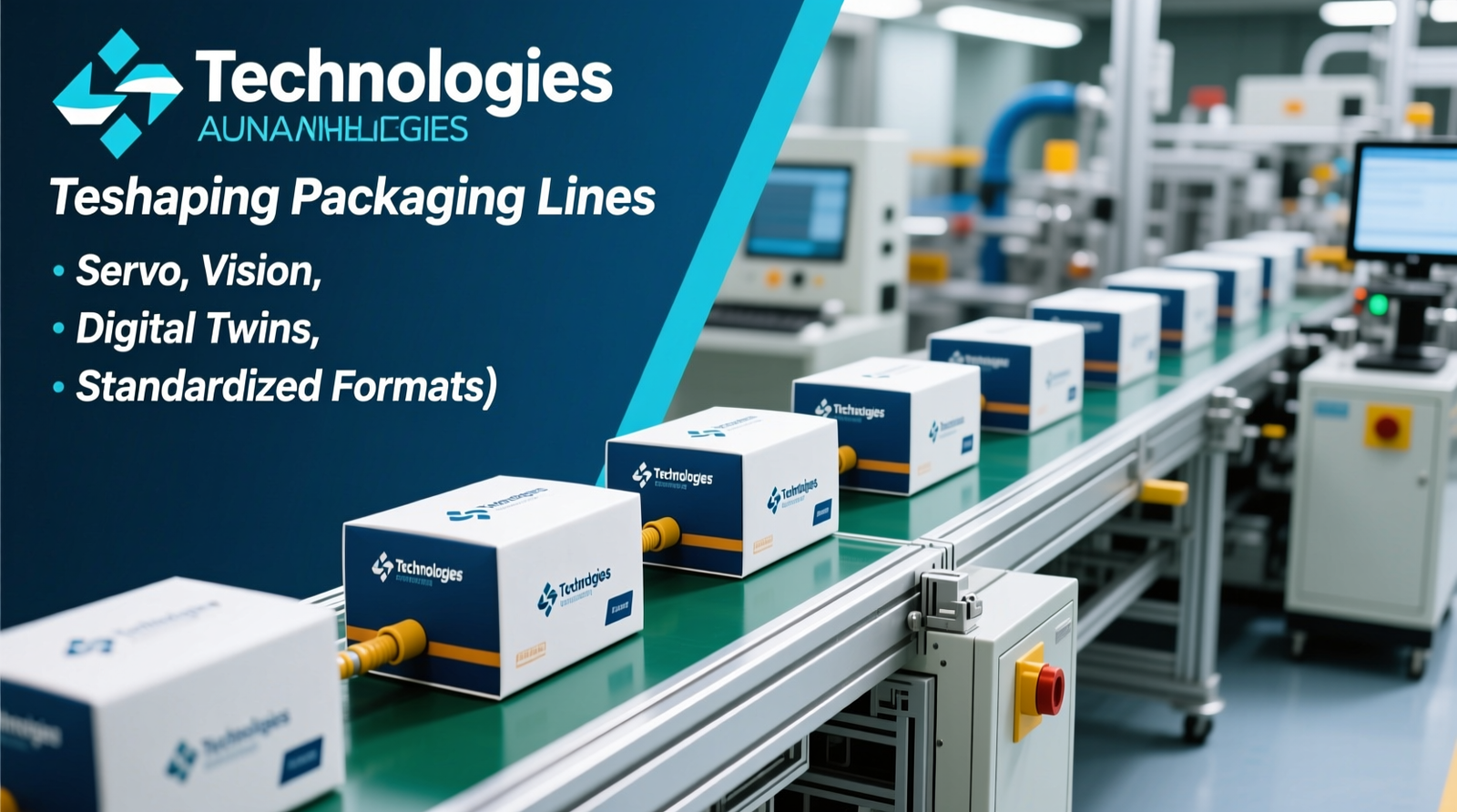
End-of-line automation for industrial bakeries is where plants often unlock step-change labor savings and stability. Cartoners load primary packs into cartons (or wraparound cases), while case packers place cartons/bags into corrugated cases. Palletizers and stretch wrappers finish the line for distribution.
- Typical speeds: cartoners often run 50–400 cartons/min depending on style (horizontal/vertical loading), product collation, and glue vs. tuck closure. Case packing varies widely by case type and pattern.
- Where the value shows up: reduced manual handling, better case counts, fewer mixed-SKU shipping errors, and easier traceability via code scanning and aggregation.
- Robotics: Delta robots and cobots (collaborative robots) are increasingly used for gentle pick-and-place, but success depends on upstream product spacing consistency and vision system robustness.
TL;DR: Cartoning, case packing, and palletizing are often the highest-ROI upgrades because they remove labor-heavy steps and reduce shipping errors—especially in multi-SKU environments.
Market Segmentation: Which Machine Types Dominate (and Which Are Growing Fastest)
In industrial bakery packaging, horizontal flow wrappers are typically the largest segment by installed base and spend, because many bakery products are sold as individually wrapped items or collated flow-wrapped packs. VFFS tends to be dominant in cookie/cracker bag formats and is frequently the fastest path to flexible SKU expansion for snack-style bakery portfolios.
As a practical rule of thumb in many industrial bakery portfolios:
- Dominant spend: HFFS flow wrappers + automated infeeds (often the “heart” of high-speed lines)
- Fastest-growing use cases: VFFS systems for cookies/snacks, plus secondary automation (cartoners/case packers) driven by labor constraints and e-commerce requirements
- Premium/shelf-life-driven growth: tray sealing with MAP for pastries and higher-value desserts
TL;DR: Flow wrappers usually lead by volume, VFFS and end-of-line automation often grow fastest in snack and multi-SKU operations, and tray sealing grows where premium protection or MAP is essential.
Segmentation by Production Capacity: What “Small, Medium, Large” Means in Practice
Capacity labels vary by supplier, but bakery buyers often frame capacity by units/min, required OEE, and number of shifts.
- Small: changeover-heavy, short runs, often <100 packs/min per lane; prioritizes flexibility and ease of cleaning.
- Medium: typically 100–300 packs/min on flow wrap or 50–120 bags/min on VFFS; a balance of automation and footprint.
- Large: engineered for continuous operation, multiple lanes, and integrated inspection; often 300–800 packs/min on flow wrap applications with high-speed infeeds and coordinated end-of-line.
Scenario: 10,000 loaves/hour bread plant: At this scale, bagging/closure and case packing must be designed as a synchronized system. Plants typically require redundancy (e.g., parallel baggers) to protect throughput during planned maintenance and film roll changes.
Scenario: Central kitchen with 50 SKUs, short runs: The priority shifts to fast sanitation and format changeovers, recipe-driven settings, and quick swap parts. A slightly slower machine with a 10–15 minute changeover can outperform a faster machine that takes 45 minutes to convert.
TL;DR: “Right-sized” capacity is about OEE and changeover time as much as top speed—high-volume plants need synchronized redundancy, while multi-SKU kitchens win with fast, clean changeovers.
Segmentation by Application: Fresh vs. Frozen, MAP vs. Ambient, Retail vs. Foodservice vs. E-commerce
Packaging needs vary sharply by product state and channel.
- Fresh bakery (ambient): Focus on moisture management, seal integrity, and presentation. Crumb control and allergen-changeover hygiene are common pain points.
- Frozen bakery: Films must tolerate low temperatures and handling abuse; seals must remain robust through cold-chain distribution. Condensation control and anti-fog lidding (for trays) can matter for retail presentation.
- MAP vs. ambient: MAP adds cost and complexity (gas, sealing performance, leak detection expectations) but can reduce returns and enable longer distribution windows.
- Retail: barcode/GS1 labeling accuracy, tamper evidence, and shelf-ready packs drive equipment requirements.
- Foodservice: Larger pack sizes, simpler graphics, and emphasis on reliable bulk counts and strong corrugated performance.
- E-commerce: Stronger secondary packaging and tighter weight control to reduce shipping claims; case packing and right-sizing become strategic.
TL;DR: Fresh vs. frozen and MAP vs. ambient change the technical “must-haves,” while channel requirements often determine how much secondary packaging automation you need.
Sustainability and Materials: Recyclable Films, Downgauging, Paper Options, and Energy Benchmarks
Sustainability in bakery packaging machinery is less about slogans and more about whether the machine can run tomorrow’s materials at today’s speeds with acceptable scrap rates.
- Recyclable mono-material films: Many brands are moving from complex laminates to mono-material structures (often PE- or PP-based). This can change sealing windows, hot-tack behavior, and friction—so buyers should request film trials and seal-strength data.
- Downgauging: Running thinner film reduces material cost and emissions but increases sensitivity to tension control, sealing pressure, and edge damage. Servo-driven unwind and closed-loop temperature control help maintain seal integrity.
- Paper-based materials: Paper flow wrap or paper-laminate structures can work for some dry bakery items, but they demand careful sealing technology selection and may limit MAP performance depending on barrier needs.
- Energy use: Practical benchmarks are application-specific; engineers should compare kWh per 1,000 packs under comparable operating conditions, including sealing method, compressed air demand, and standby modes.
For broader policy and recyclability context, see the Packaging Europe knowledge base and the Ellen MacArthur Foundation plastics overview (widely cited in packaging sustainability frameworks).
TL;DR: Sustainable packaging success depends on real runnability—mono-material compatibility, downgauging control, and energy-per-pack comparisons—not just material claims.
Buyer/Engineer Guidance: Equipment Selection Checklist, KPIs, and Integration Pitfalls
For teams specifying HACCP-compliant bakery packaging equipment, a structured selection process reduces rework and downtime after commissioning.
- Define the product/pack matrix: SKU count, pack styles, and changeover frequency; include worst-case products (sticky icing, fragile cookies, high-crumb items).
- Set performance targets: line speed range, OEE target (many mature lines aim for 75–85% sustained), acceptable scrap rate (often targeted at <1–3% depending on product and film), and maximum allowable leakers.
- Film and seal validation: specify film types, seal strength, seal contamination tolerance (crumbs/sugar), and MAP residual oxygen targets if relevant.
- Hygienic design and washdown: clarify sanitation method (dry clean vs. wet washdown), target IP rating for enclosures, and requirements like sloped surfaces and tool-less access.
- Line layout and buffering: include upstream cooling dwell time, product spacing control, accumulation conveyors, and reject paths for checkweighers/metal detectors.
- Service and spares: local response time, critical spares list, remote support, and training plan—often as important as machine price.
Common integration challenges (and mitigations):
- Unstable infeed: mitigate with laning, metering belts, and vision-guided spacing.
- Seal contamination from crumbs/sugar: mitigate with improved crumb extraction, air management, seal jaw selection, and cleaning access.
- Changeover time overruns: mitigate with recipe-driven settings, calibrated tooling, and SMED (Single-Minute Exchange of Die) discipline.
- Utilities shortfalls: verify compressed air quality/flow, power availability, and gas supply for MAP before installation.
TL;DR: Specify around the real constraints—SKU mix, seal performance, hygienic design, and line buffering—and manage integration risk early (infeed stability, crumbs, changeovers, utilities).
Regional Market Differences: Buying Criteria and Service Expectations by Geography
Regional differences show up in materials adoption, automation preferences, and the importance of local aftermarket support.
North America
North American plants often prioritize high uptime, robust conveyors, and aggressive end-of-line automation. Robotics integration (pick-and-place, case packing, palletizing) is a common differentiator, and buyers frequently evaluate vendors based on commissioning support and parts availability across wide geographic footprints.
Practical preference: strong OEM or integrator service network and rapid spare parts delivery to protect production schedules.
TL;DR: North America leans into robotics and uptime—local service coverage and fast parts logistics can outweigh small differences in machine spec.
Europe

Europe tends to adopt recyclable packaging structures early, pushing machine builders to demonstrate proven performance on mono-material films and downgauged webs. Regulatory and retailer pressure also elevates traceability and labeling accuracy, and hygienic design expectations are typically high.
Practical preference: validated performance on recyclable films and strong documentation for compliance and audits.
TL;DR: Europe often leads on recyclable materials and compliance documentation—buyers expect film-trial evidence and high hygienic standards.
Asia Pacific
Asia Pacific is diverse: some markets prioritize cost-effective capacity additions, while others invest heavily in premium automation. Modular, scalable systems are popular—plants may start with a basic wrapper/bagger and add cartoning, case packing, and digital monitoring as volumes grow.
Practical preference: fast installation, modular upgrades, and dependable local technicians as lines scale up.
TL;DR: Asia Pacific buyers often value modular growth paths and local technical support—scalability can be more important than maximum speed on day one.
South America
South America’s demand is closely tied to currency and financing conditions. Buyers often focus on total cost of ownership (energy, film waste, maintenance) and the availability of regional service partners to reduce downtime risk.
Practical preference: equipment that tolerates variable operating conditions and has strong local spares coverage.
TL;DR: South America frequently emphasizes cost control and resilient service/spares coverage to manage investment risk.
Middle East & Africa
In the Middle East & Africa, greenfield projects and growing modern retail can drive demand, particularly in Gulf countries and South Africa. Heat, dust, and logistics can place extra weight on ruggedization, reliable sealing, and strong training programs for operators and maintenance teams.
Practical preference: supplier commissioning and training depth, plus reliable aftermarket support.
TL;DR: MEA projects often prioritize rugged reliability and training—aftermarket support is a deciding factor for long-term uptime.
Competitive Landscape: What Separates Leading Bakery Packaging Machine Suppliers
The industrial bakery packaging machine market includes global OEMs and regional specialists. In practice, “who wins” often depends less on brochure speed and more on three operational outcomes: consistent seals at target speed, fast changeovers, and service response that keeps OEE stable.
Prominent suppliers commonly referenced in this segment include Syntegon, Schubert Group, nVenia, IMA, Middleby, ULMA Packaging, ProMach, Reiser, Paxiom, Minipack®-torre, Fuji Packaging GmbH, SR Pack, GHD Hartmann, Omori Machinery, SOMIC Packaging, Delkor Systems, and PAC Machinery.
Service note: For capital equipment, local availability of spare parts, field technicians, and remote diagnostic capability can be as influential as initial price—especially for high-volume bakery lines where an hour of downtime carries a high opportunity cost.
TL;DR: Competitive advantage usually comes from seal reliability, changeover speed, and service execution—not just stated maximum packs per minute.
Standards, Hygiene, and Safety: E-E-A-T Details Engineers Actually Use
When buyers specify hygienic and safe bakery packaging equipment, they often translate “compliance” into checkable design attributes:
- HACCP-aligned design elements: sloped surfaces, minimized harborage points, accessible product zones, and documented cleaning procedures.
- Washdown/IP expectations: selecting appropriate IP ratings for enclosures based on dry-clean vs. wet-clean sanitation regimes (see IEC guidance on IP ratings).
- Machinery safety: risk assessment, guarding, and safety circuits aligned with widely used safety frameworks (often referencing ISO/EN machinery safety standards during CE or equivalent compliance processes).
TL;DR: “Food-safe and compliant” should be specified in design terms—cleanability, IP rating fit, and documented safety/risk controls—so it can be verified during FAT/SAT (Factory/Site Acceptance Testing).
Future Trends: AI Line Optimization, Cobots, Digital Twins, and Predictive Maintenance
Packaging lines are becoming more software-defined. Three trends stand out for industrial bakery packaging:
- AI-driven line optimization: using vision systems and production data to detect upstream causes of wrapper stops (poor spacing, product skew, crumb buildup) and recommend adjustments.
- Cobots (collaborative robots): growing use in end-of-line tasks where flexibility matters, such as mixed-SKU case packing—especially when paired with vision and quick gripper change.
- Digital twins: virtual models of packaging lines used to simulate throughput, buffer sizing, and changeovers before equipment arrives—helpful for greenfield bakeries or major line rebuilds.
- Predictive maintenance: condition monitoring on seal jaw temperature stability, bearing vibration, and servo loads to reduce unexpected downtime.
TL;DR: The next performance gains will come from software + automation—AI diagnostics, cobot flexibility, and digital-twin commissioning that reduces ramp-up time.
Conclusion
Industrial bakery packaging machines are evolving around measurable plant outcomes: higher OEE, reliable seals (including MAP where needed), shorter changeovers for expanding SKU portfolios, and end-of-line automation that reduces labor exposure. Flow wrappers remain central for many bakery formats, VFFS systems expand bagged cookie/cracker capacity efficiently, tray sealing supports premium protection and shelf-life goals, and cartoning/case packing increasingly determines shipping accuracy and labor efficiency.
For buyers, the winning approach is specific: validate film runnability and seal integrity, design the infeed and buffering to protect uptime, specify hygienic design features that match your sanitation reality, and prioritize local service capability as part of total cost of ownership.
TL;DR: Choose bakery packaging equipment based on validated runnability (film + product), OEE and changeover targets, hygienic design fit, and the supplier’s ability to support uptime locally.
FAQ
Q: What’s the best packaging machine type for soft bread loaves—flow wrapper or bagger?
A: For loaves, many plants use dedicated bagging/closure systems (clip, twist-tie, or heat seal) because loaf handling and closure style are critical. Flow wrappers can work for certain bread formats, but the choice depends on loaf shape stability, desired tightness, and required speed. The best approach is to test your actual film and product under production conditions and compare seal integrity, scrap, and OEE.
A: Often yes, but performance depends on the film’s sealing window, stiffness, and friction. You’ll typically need structured film trials to confirm bag tracking, seal strength, and leaker rates at target speeds. It’s also important to control fines/dust so crumbs don’t contaminate seals.
Q: What OEE target is realistic for an industrial bakery packaging line?
A: Many mature industrial packaging lines target sustained OEE in the 75–85% range, but the right target depends on SKU count, changeover frequency, sanitation downtime, and upstream stability. Plants with many short runs may accept lower OEE but optimize changeover time and schedule sequencing to maximize total daily output.
Q: What are the most common integration issues when adding end-of-line automation for industrial bakeries?
A: The most common issues are inconsistent infeed spacing, insufficient accumulation/buffering, utilities (air/power/gas) not matching the new system’s demands, and underestimated changeover complexity. Mitigation usually involves upfront line layout engineering, buffer design, recipe-driven settings, and a clear commissioning plan with the OEM/integrator.
Q: What does “HACCP-compliant bakery packaging equipment” typically include?
A: It typically means hygienic design features that support hazard control: easy-to-clean surfaces, minimal product traps, tool-less access for cleaning, appropriate material selection in product zones, and documented cleaning and inspection procedures. Buyers often also specify washdown suitability and IP ratings based on whether sanitation is dry-clean or wet washdown.