Introduction: What the construction equipment rental market looks like through 2033
The construction equipment rental market (also called heavy equipment rental or construction machinery rental) is expanding as contractors balance tighter project schedules, higher financing costs, and faster technology cycles. Renting excavators, cranes, aerial work platforms (AWPs), dozers, and compact machines helps companies keep bids competitive while avoiding large upfront purchases and the risk of being stuck with aging assets.
Market sizing clarification: HTF Market Intelligence (HTF MI) estimates the global construction equipment rental market at ~USD 120 billion in 2025 (estimated base year), with a projection to ~USD 200 billion by 2033, implying a ~7% compound annual growth rate (CAGR) over the forecast period. (CAGR is the smoothed annual growth rate across multiple years.)
To add context, this pace is generally stronger than many mature industrial equipment categories during “normal” cycles, because rental continues to take share from ownership—especially where projects are shorter, labor is constrained, and customers want predictable uptime. Public infrastructure pipelines (e.g., U.S. federally funded projects) and energy-transition buildouts also support demand. For background on U.S. infrastructure funding programs that indirectly lift equipment demand, see the U.S. Department of Transportation’s overview: Bipartisan Infrastructure Law (USDOT).
- Key Takeaways
- Rental demand is rising as contractors seek flexibility, faster access, and newer tech without owning it.
- 2025 is treated as an estimated base year; projections run through 2033 at ~7% CAGR.
- Electrification, telematics, and digital self-service are shifting how fleets are utilized and priced.
TL;DR: The construction equipment rental market is forecast to grow steadily to 2033, with 2025 as an estimated baseline and technology + infrastructure spend as major tailwinds.
Market definition: What “construction equipment rental” includes (and why buyers choose it)
Construction equipment rental is a service where rental firms provide machinery for a defined period—daily, weekly, monthly, or multi-year—often bundled with maintenance, delivery, and replacement support. Equipment commonly spans:
- Earthmoving: excavators, dozers, wheel loaders, backhoes, motor graders
- Lifting & access: cranes, telehandlers, boom lifts/scissor lifts (AWPs)
- Compaction & roadwork: rollers, pavers, milling machines
- Site support: generators, light towers, pumps, trench shoring
Renting is often chosen to (1) avoid capital expenditure (CapEx), (2) reduce maintenance burden, (3) access specialty machines only when needed, and (4) keep fleets aligned with shifting jobsite requirements. For many contractors, rental also simplifies compliance because the rental provider maintains inspection records and emissions-ready fleets.
TL;DR: Rental covers everything from earthmoving to access and power; customers rent to reduce CapEx, speed deployment, and shift maintenance/compliance load to the provider.
Market size, growth outlook, and regional construction rental trends
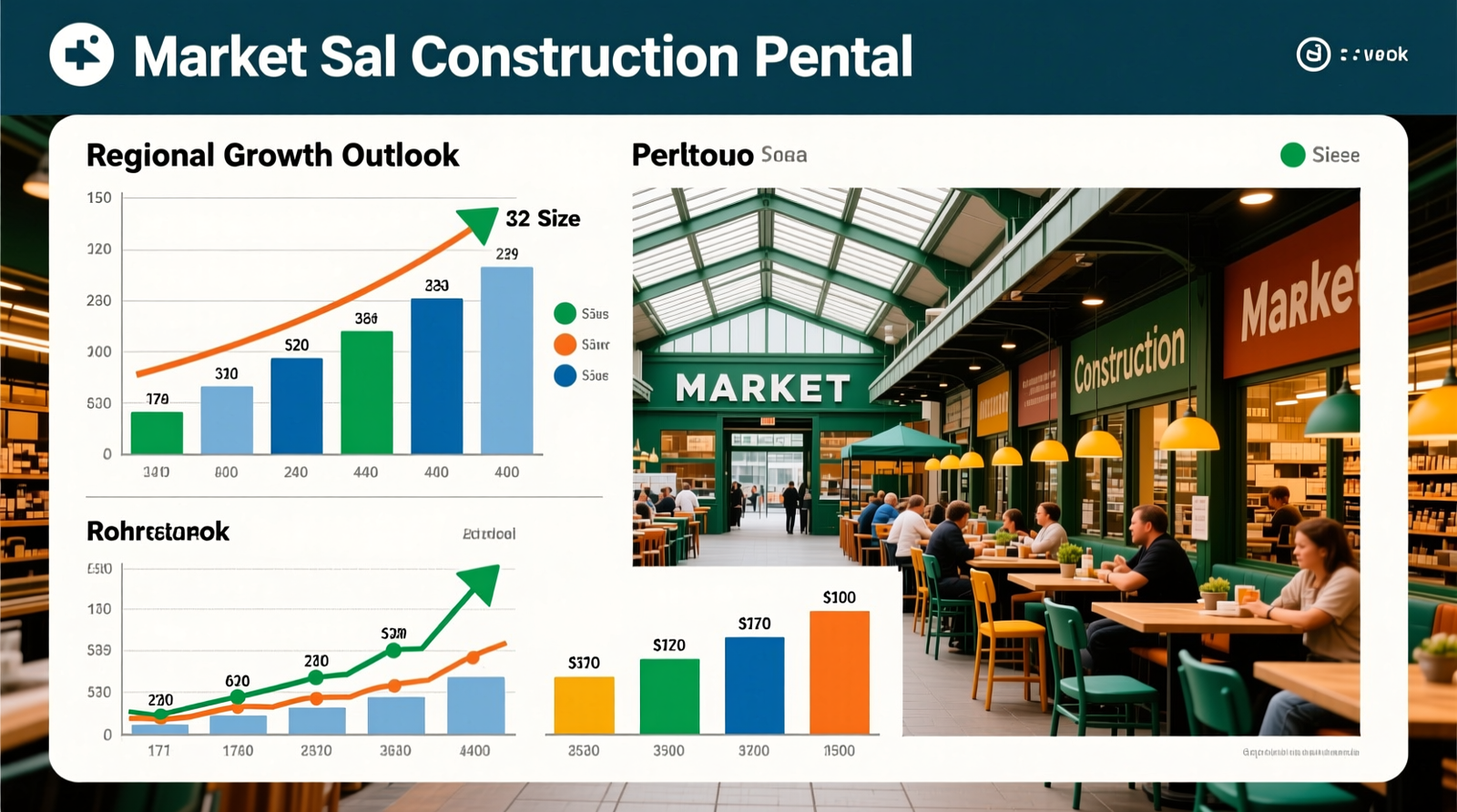
While exact regional shares vary by source and year, the market remains led by North America, with Asia-Pacific growing faster from a smaller base. A practical “order of magnitude” view used by many industry observers is:
- North America: roughly ~35–45% of global rental revenue, anchored by scale players and high penetration of rental in contractor workflows
- Europe: roughly ~25–30%, supported by mature rental culture and stricter emissions rules driving frequent fleet renewal
- Asia-Pacific: roughly ~20–30%, with faster expansion tied to infrastructure buildouts and improving professionalization of rental networks
- Middle East & Africa + Latin America + Oceania: the remaining share, with pockets of high demand driven by megaprojects, mining, and energy
Why North America stays large: dense branch networks, high contractor acceptance of rental, and ongoing infrastructure rehab. The equipment ecosystem is also tightly linked to large-scale project planning and procurement practices.
Why Asia-Pacific grows faster: a rising mix of metro rail, roads, ports, logistics hubs, and industrial parks—plus expanding “organized rental” operators that can guarantee uptime and service.
For a macro indicator of construction demand signals (starts, completions, pricing), national statistical agencies and global institutions are common reference points; for example, the World Bank urban development data can help frame long-run built-environment demand drivers.
TL;DR: North America remains the largest market; Asia-Pacific typically posts the fastest growth. Europe is a strong, regulation-driven rental market with high professionalism.
What’s really driving demand now (beyond “cost savings”)
Cost still matters, but several newer forces are changing the shape of the construction equipment rental market:
- Electrification as a “trial channel”: Contractors increasingly rent electric mini excavators, battery-powered AWPs, and hybrid machines to meet jobsite emissions rules or client ESG requirements without committing to ownership. (ESG = Environmental, Social, and Governance criteria.) Rental lowers technology risk while charging infrastructure evolves.
- Faster tech refresh cycles: Advanced operator-assist, safety systems, and connected diagnostics make newer machines meaningfully more productive—pushing customers toward renting late-model fleets.
- Labor scarcity: With fewer experienced operators/technicians available, rental companies that provide training, swap-outs, and maintenance responsiveness become an operational advantage, not just a supplier.
- Infrastructure + energy transition buildouts: Grid upgrades, renewables construction, and logistics capacity expansions add “non-residential” equipment demand beyond traditional building cycles.
TL;DR: Rental demand is being pulled by electrification trials, faster productivity tech, labor constraints, and infrastructure/energy-transition projects—not only by price.
Technology trends: telematics, IoT, digital rental platforms, and how behavior is changing

Telematics (machine connectivity that transmits location/usage/health data) and the Internet of Things (IoT) are now central to how large fleets are managed. Modern rental telematics typically enables:
- Geofencing: alerts when equipment leaves a jobsite perimeter (useful for theft reduction and misallocation control)
- Idle-time monitoring: tracks non-productive engine time; high idle can signal operator habits, poor scheduling, or undersized/oversized equipment
- Fuel-burn analytics: measures consumption patterns to identify savings and emissions reduction opportunities
- Remote diagnostics: fault codes, battery health, and service intervals to reduce breakdowns and improve first-time fix rates
Mini case example (utilization uplift): Large rental leaders publicly discuss connected-fleet programs and analytics investments aimed at improving utilization and maintenance outcomes. For instance, United Rentals highlights telematics-enabled fleet management and digital tools in its investor materials and annual reporting, describing how connectivity supports equipment tracking, maintenance planning, and customer service at scale (see United Rentals Investor Relations).
Digital rental platforms are also changing buying behavior. Instead of phone-based ordering, more customers expect:
- Online self-service booking with transparent availability and delivery windows
- Dynamic pricing based on region, fleet tightness, and rental duration
- Integration with contractor systems such as ERP (Enterprise Resource Planning) and project management tools for cost codes, jobsite billing, and utilization reporting
As self-service expands, rental firms can reduce quote-to-order friction, while contractors gain faster approvals and fewer “equipment delays” that idle crews.
TL;DR: Telematics (geofencing, idle-time, fuel analytics, diagnostics) is now a utilization and uptime lever, while digital platforms shift ordering toward faster, more transparent self-service and tighter workflow integration.
Operational KPIs that matter: benchmarks and what “good” can look like
For rental companies and contractors, the conversation quickly becomes operational. Common KPIs (key performance indicators) include:
- Time utilization: % of time an asset is on rent (often tracked by category; high-demand categories can outperform the fleet average)
- Dollar utilization: rental revenue generated as a % of original equipment cost (useful for pricing and replacement decisions)
- Downtime & availability: maintenance turnaround time, parts delays, and “ready-to-rent” rates
- Delivery performance: on-time delivery %, swap-out response time
- Idle-time ratio: operational efficiency signal, especially for fuel-intensive machines
Practical benchmark guidance (directional): many mature rental operators target steady improvements in utilization and “ready-to-rent” availability, because small gains compound across thousands of assets. Contractors, meanwhile, often evaluate rental vs. ownership using a blended view of (1) expected hours, (2) maintenance and repair burden, (3) storage/transport, and (4) residual value risk.
Example scenario (why rental can pencil out): a contractor needing a 20-ton excavator for a 10–14 week utility package may rent to avoid capital lock-up and eliminate surprise repair costs during a schedule-critical window. If the machine would otherwise sit idle between projects, the “true cost” of ownership (depreciation + interest + maintenance + downtime risk) can exceed the rental rate even before you price in schedule penalties.
TL;DR: Utilization, availability, downtime, and delivery performance are the KPIs that decide profitability for rental firms and productivity for contractors—often more than headline rental rates.
Competitive landscape and concentration: what HHI and C4 mean in plain terms

The market includes global leaders, regional chains, and independent rental yards. Two common concentration measures are:
- C4 index: the combined market share of the top 4 companies
- HHI (Herfindahl-Hirschman Index): a concentration score calculated by summing the squared market shares of all firms (higher = more concentrated)
Indicative finding: In North America, the top players account for a large share of rental revenue—often described as roughly half of the market or more—suggesting moderate-to-high concentration compared with many other construction supply categories. This tends to increase pricing discipline in tight markets, but it also raises the bar for local competitors on fleet breadth, service levels, and technology.
Mini case example (M&A scale effect): Herc Rentals’ acquisition activity (e.g., its acquisition of H&E Equipment Services announced in 2024) illustrates how scale strategies are used to expand footprint, broaden fleet offerings, and pursue cost synergies. Public deal information can be found via Herc Rentals’ investor communications: Herc Rentals Investor Relations.
TL;DR: North America is relatively concentrated (top players command a large share). Scale and M&A are key competitive levers alongside technology and service performance.
Segmentation: what’s rented most and where it’s used
Most analyses segment the construction equipment rental market by equipment type and end use.
- Heavy equipment rental: excavators, cranes, dozers, wheel loaders, graders—dominant in infrastructure, industrial, and mining workloads
- Compact equipment rental: mini excavators, skid-steer/compact track loaders, compact rollers, small lifts—common in urban construction, utilities, maintenance, and residential work
- Specialty/site equipment: pumps, power generation, trench safety/shoring, concrete equipment, material handling (telehandlers, forklifts)
End-use demand typically clusters into:
- Infrastructure: roads, bridges, rail, airports, utilities, water/wastewater
- Non-residential building: commercial and industrial facilities, warehouses, data centers
- Residential: housing and mixed-use (often compact equipment-heavy)
- Mining & quarry: a mix of heavy earthmoving and support equipment depending on the operation
TL;DR: Heavy equipment dominates big civil/industrial work, compact equipment wins in dense urban and maintenance jobs, and specialty site equipment fills “must-have” support needs like power, pumping, and trench safety.
Key risks and challenges (and how market players are responding)
- Used-equipment competition: When used equipment prices soften, some contractors buy instead of rent. Mitigation: rental firms emphasize service, guaranteed uptime, and newer tech (including low-emission options) rather than competing purely on rate.
- Regulatory shifts: emissions zones, noise limits, and evolving safety standards can rapidly change fleet requirements. Mitigation: faster refresh cycles and targeted investments in compliant engines/battery-electric units; alignment with recognized emissions frameworks such as U.S. EPA nonroad standards (U.S. EPA nonroad engines).
- Labor and technician shortages: service capacity becomes a bottleneck. Mitigation: predictive maintenance, remote diagnostics, technician training pipelines, and standardized maintenance playbooks.
- OEM-direct rental and dealer rental growth: some OEMs (Original Equipment Manufacturers) and dealer networks expand rental offerings. Mitigation: independents differentiate via multi-brand fleets, local responsiveness, and broader site-services bundles.
- Cyber/data exposure: connected fleets introduce new attack surfaces. Mitigation: stronger IT governance, vendor risk management, and segmentation of operational data systems.
TL;DR: Used-equipment cycles, regulation, labor constraints, OEM competition, and cybersecurity are the main risk clusters—winners mitigate through service quality, compliant fleets, predictive maintenance, and stronger digital controls.
Actionable recommendations (for rental firms, contractors, OEMs, and investors)
- Rental companies: Treat telematics as a profit system, not a gadget—standardize geofencing, idle policies, and exception alerts by category, then tie them to maintenance scheduling and branch accountability.
- Contractors: Build a “rent vs. own” threshold by machine class (hours/year and project volatility). For short, schedule-critical packages, prioritize availability guarantees and swap-out SLAs (service-level agreements) over lowest day rate.
- OEMs and dealers: Design rental-ready configurations (quick couplers, durable attachments, easy-to-service layouts) and support connected diagnostics that reduce mean time to repair (MTTR).
- Investors: Underwrite fleet age, re-rent availability, and service capacity as seriously as growth. In downturns, operators with strong maintenance execution and disciplined fleet disposal typically defend margins better.
- All players: Use electrification strategically—deploy battery-electric units in predictable duty cycles (urban, indoor, low-noise sites) and package charging support so the customer experience doesn’t fail at the jobsite.
TL;DR: The best moves are operational: standardize telematics workflows, formalize rent/own rules, design rental-ready products, underwrite service capacity, and deploy electrification where it reliably works.
Methodology, data sources, and update cadence (trust signals)
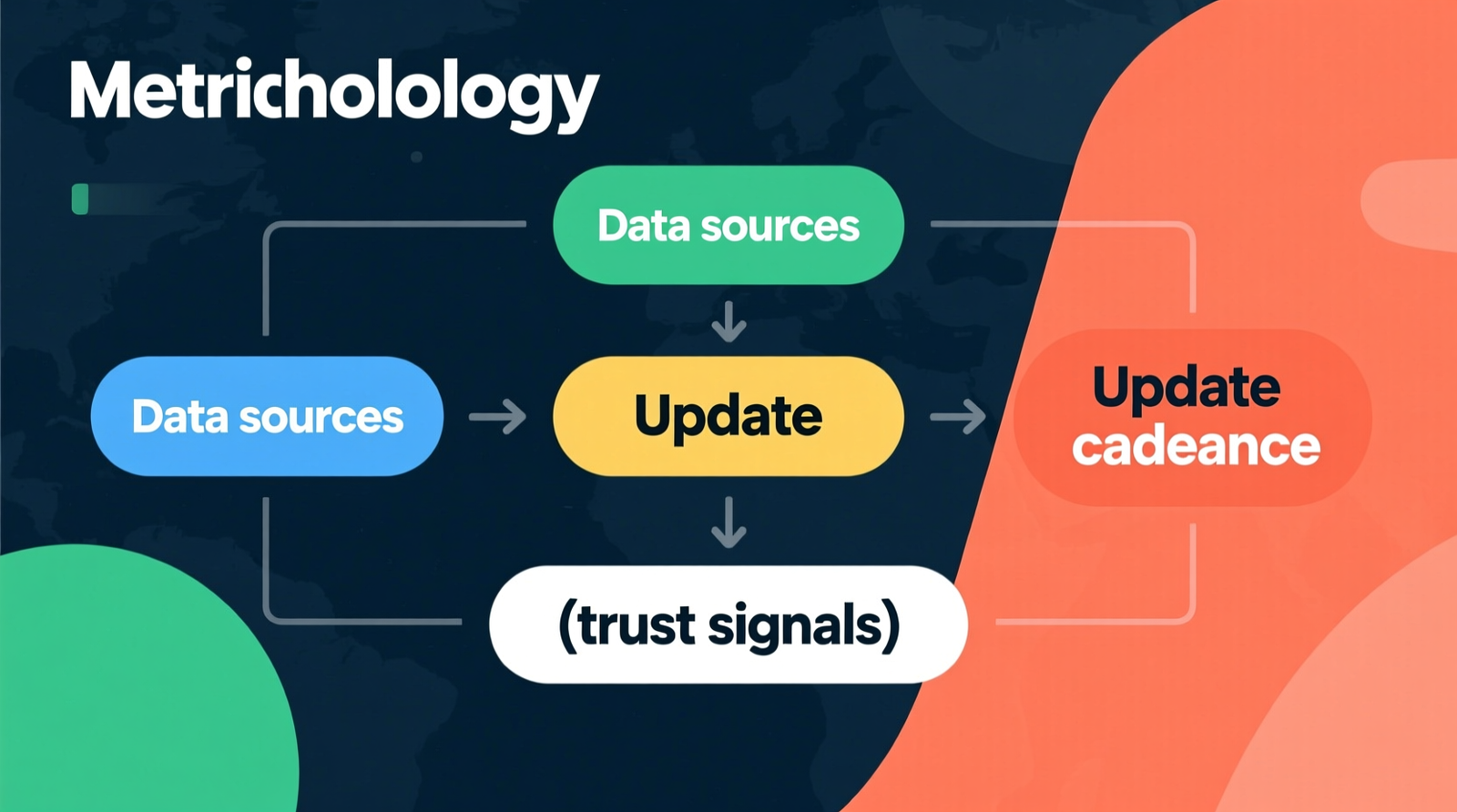
Construction equipment rental market estimates typically triangulate multiple inputs: rental company financial filings and investor presentations, OEM production and dealer channel indicators, equipment price and used-market signals, and government infrastructure pipelines. Primary research often includes interviews with branch managers, fleet/operations leaders, contractors, and industry associations.
Data cut-off and updates: Market models are usually built using the most recent full-year financials available at the time of publication and refreshed as new annual reports, major M&A events, and macro construction indicators emerge.
TL;DR: Credible market sizing uses filings + OEM signals + public infrastructure pipelines, then validates with industry interviews; models are refreshed as new financial years and major events occur.
Conclusion
The global construction equipment rental market is positioned for steady expansion through 2033, with 2025 serving as an estimated base year in the figures cited. Growth is supported by infrastructure programs, higher expectations for uptime and safety, and a clear shift toward connected fleets and digital procurement.
Over the next cycle, differentiation will come less from “having iron” and more from operating excellence: utilization discipline, fast service, transparent digital experiences, and the ability to help customers adopt lower-emission equipment with minimal risk.
TL;DR: Rental growth remains durable, but winners will be the operators who pair fleet scale with telematics-driven execution, digital ordering, and practical electrification offerings.
FAQ

Q: What is the forecast for the construction equipment rental market through 2033?
A: HTF MI estimates the market at about USD 120 billion in 2025 (estimated base year) and projects it to reach around USD 200 billion by 2033, implying roughly 7% CAGR over the period.
Q: How does telematics improve profitability in heavy equipment rental?
A: Telematics can reduce theft and misallocation (geofencing), cut waste (idle-time monitoring and fuel-burn analytics), and prevent breakdowns (remote diagnostics and predictive maintenance). These improvements typically lift utilization and reduce downtime—two core profit drivers.
Q: Is renting construction machinery cheaper than buying?
A: It depends on annual usage hours, project variability, financing costs, and downtime risk. Renting often wins for short-duration work, specialized machines, or when avoiding repair surprises and residual value risk is critical. Ownership may win for consistently high utilization on the same machine class.
Q: Which regions are strongest for construction machinery rental growth?
A: North America is the largest revenue region today, while Asia-Pacific is often the fastest-growing due to infrastructure expansion and a growing base of organized rental providers. Europe remains a major market supported by regulation-driven fleet renewal.
Q: How is ESG influencing the construction equipment rental market?
A: ESG requirements are increasing demand for lower-emission equipment and better reporting. Rental companies are responding by adding newer Tier-compliant engines and battery-electric machines, letting contractors meet jobsite requirements and trial new technology without full ownership risk.