Overview of the End-of-Line Packaging Market (Automation, CAGR to 2035)

The global end-of-line packaging market (the equipment and integration services used to prepare finished goods for shipment) is entering a decade of incremental but durable expansion as manufacturers pursue higher throughput, lower labor dependency, and better pallet load stability across distribution networks. Industry estimates commonly position 2024 as the base year and 2025–2035 as the forecast window.
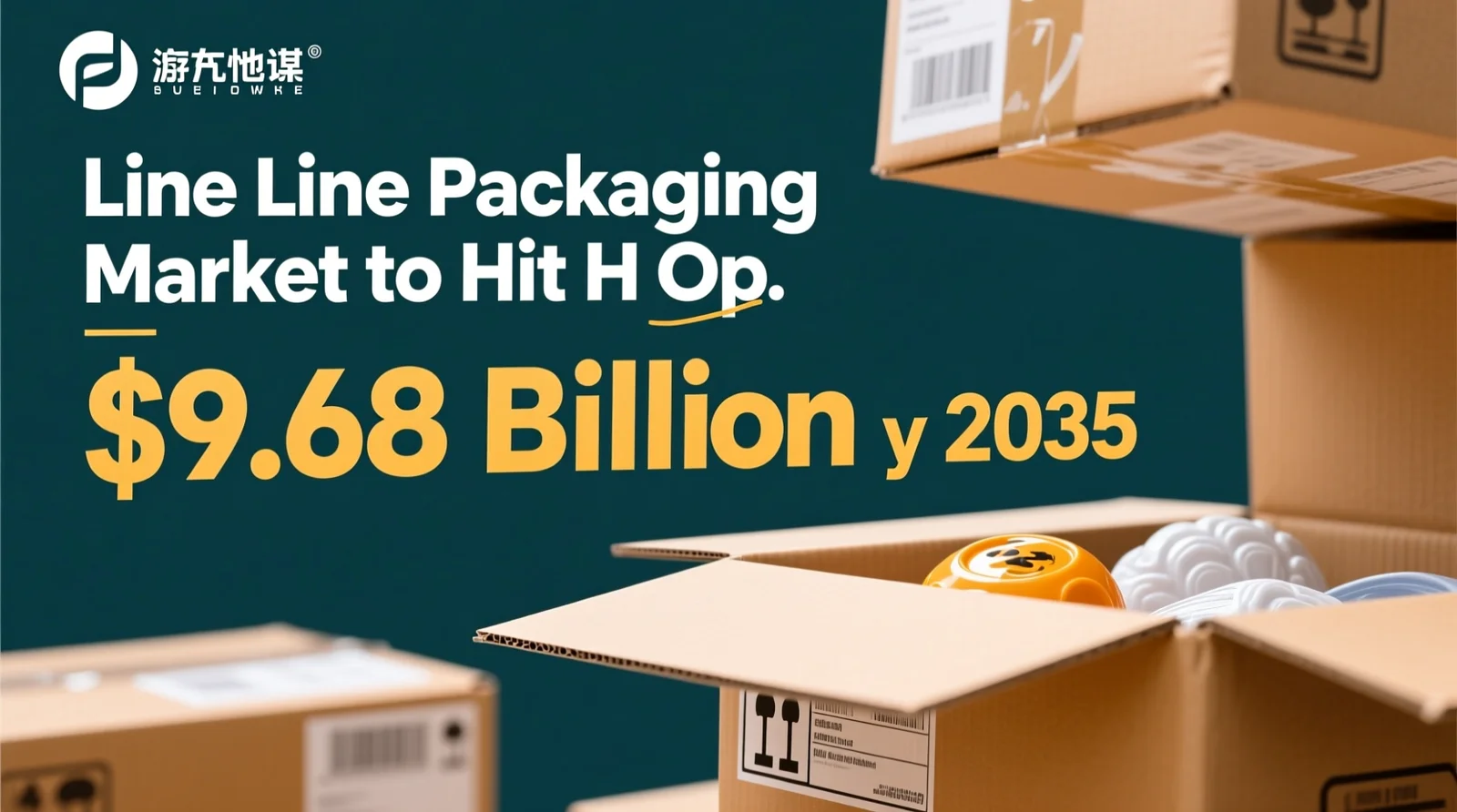
Based on aggregated industry estimates from market research categories covering end-of-line machinery and secondary packaging automation, the market was approximately USD 6.145 billion in 2024, is expected to reach about USD 6.404 billion in 2025, and is forecast to grow to roughly USD 9.675 billion by 2035, at an estimated 4.21% CAGR (2025–2035).
TL;DR: The end-of-line packaging market is forecast to grow steadily through 2035, driven less by hype and more by measurable plant-floor economics: labor availability, throughput constraints, and damage reduction.
What Is End-of-Line Packaging (and Where It Fits in Secondary & Tertiary Packaging Systems)
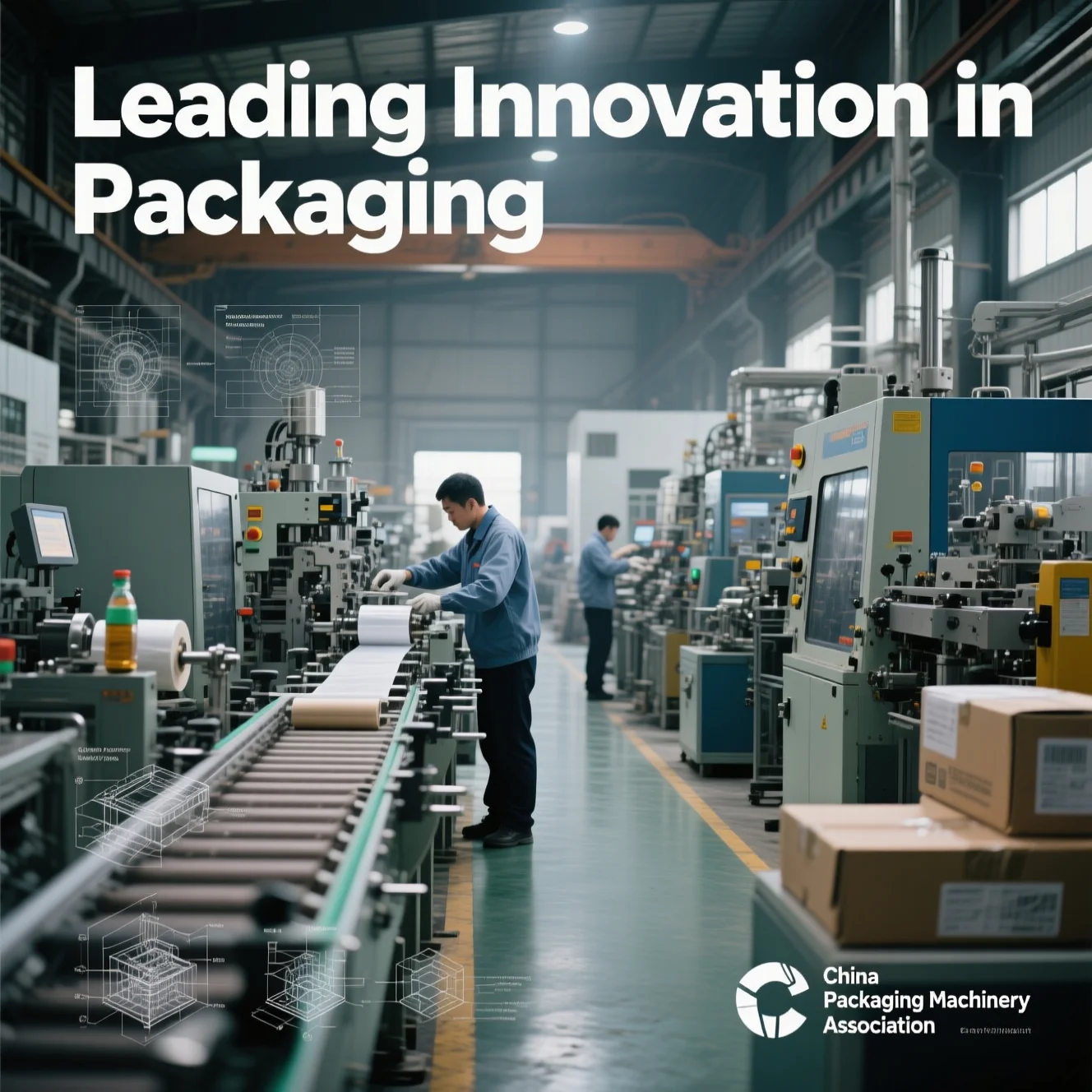
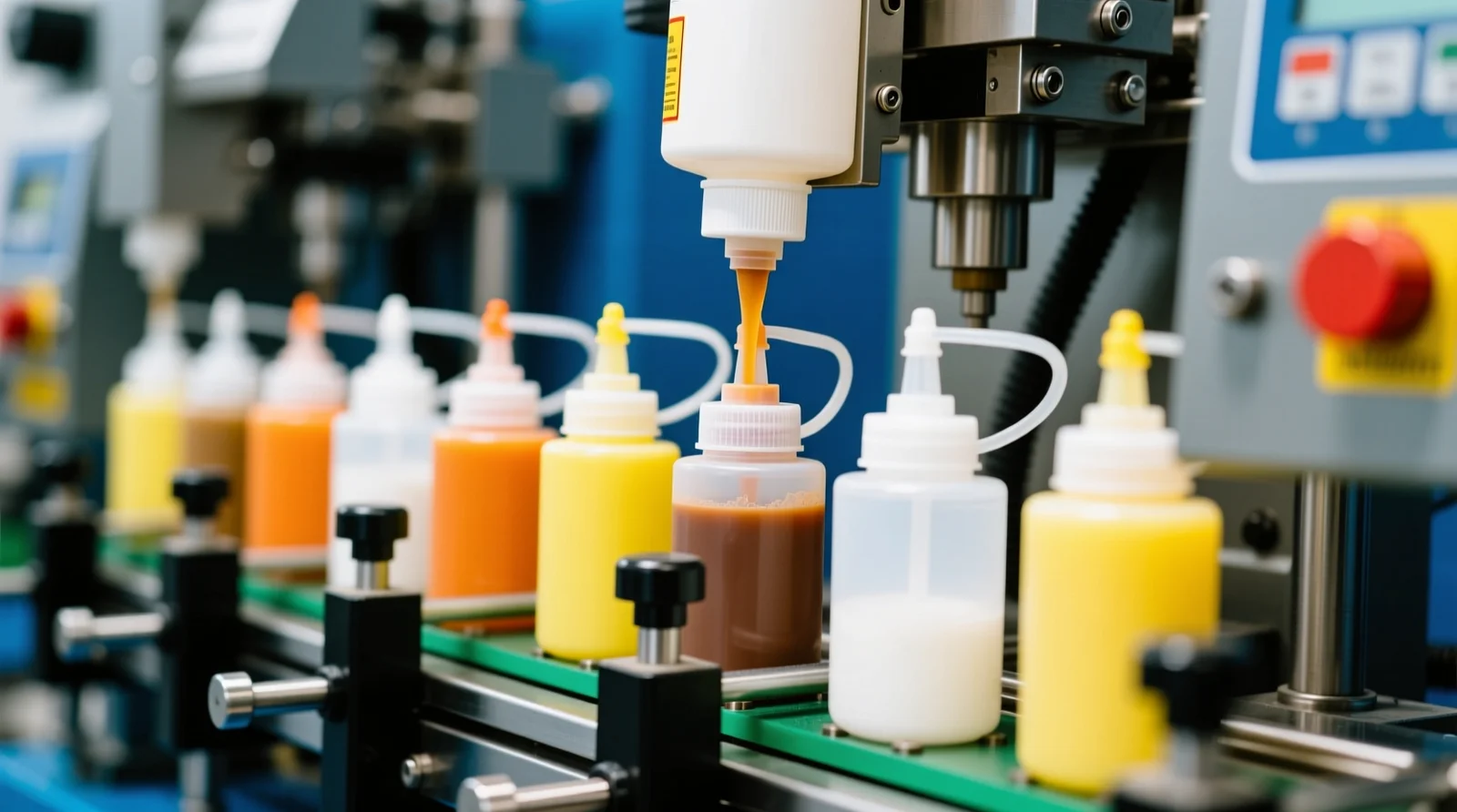
End-of-line packaging is the last stage of a packaging line—after primary packaging (in direct contact with the product) and typically after secondary packaging automation (grouping/boxing)—where goods are made logistics-ready through tertiary packaging systems like palletizing and stretch wrapping.
Common end-of-line equipment includes:
- Case erectors – Form and seal corrugated cases from flat blanks; often upstream of case packing.
- Case packers – Load products into cases/trays (top-load, side-load, or wrap-around). Typical speed classes range from 10–30 cases/min for mid-volume lines up to 40–80+ cases/min for high-speed CPG lines, depending on product handling complexity.
- Palletizers – Stack cases/bags/trays onto pallets. Robotic palletizers commonly run around 5–20 pallets/hour in mixed-SKU scenarios; conventional layer palletizers can be higher for uniform products (application-dependent).
- Stretch wrappers / shrink wrappers – Secure pallet loads with film (stretch) or heat-shrink (shrink) to protect during transport and improve stability.
- Labeling & print-and-apply systems – Apply shipping labels (barcodes/GS1 identifiers) and compliance labels for traceability and logistics scanning.
- Conveyors & sortation – Accumulate, merge, and route units/cases/pallets to lanes, docks, or automated storage.
Most modern systems are coordinated via a PLC (Programmable Logic Controller) and integrated safety controls. Data often flows to MES (Manufacturing Execution System) and ERP (Enterprise Resource Planning) platforms for reporting and traceability.
TL;DR: End-of-line packaging sits where production meets logistics—case forming/packing, palletizing, stabilization, labeling, and conveyance—typically governed by PLC controls and tied into plant IT systems.
Market Size and Forecast (2024 Base Year, 2025–2035 CAGR)

- 2024 market size (base year): ~USD 6.145 billion
- 2025 market size: ~USD 6.404 billion
- 2035 forecast: ~USD 9.675 billion
- Estimated CAGR: ~4.21% for 2025–2035
For analysts and procurement teams, it’s helpful to interpret this CAGR as “industrial replacement plus selective expansion”: many projects are not greenfield lines, but upgrades to reduce changeover time, improve load integrity, or eliminate recurring labor gaps on second and third shifts.
TL;DR: The forecast is steady rather than explosive; growth is supported by modernization cycles and practical ROI cases rather than purely new capacity builds.
Key Market Drivers (With Practical Plant-Floor Examples)
Throughput and Labor Economics (Not Just “Automation”)
Plants invest in end-of-line equipment when the shipping end becomes the bottleneck: manual palletizing limits sustained output, increases ergonomic risk, and makes staffing unpredictable. The business case often centers on higher realized throughput, fewer micro-stops, and reduced rework from damaged packaging.
Mini case example (beverage): A regional beverage producer running two SKUs at high volume replaced manual palletizing and inconsistent wrapping with a robotic palletizer and standardized stretch wrap recipes. The operations team tracked OEE (Overall Equipment Effectiveness) gains primarily from fewer line stops caused by pallet instability and faster shift handovers. While results vary by site, beverage lines often benefit disproportionately because small changes in downtime have large volume impact.
TL;DR: The core driver is measurable throughput stability—especially where labor is scarce and pallet quality affects downstream distribution.
E-Commerce and 3PL Requirements: Mixed-SKU Handling and Pallet Configuration
Distribution and 3PL (Third-Party Logistics) operations need adaptable end-of-line processes: mixed-SKU pallets, late-stage customization, and tighter space utilization in trailers/containers. This increases demand for flexible case packing, dynamic sortation, and pallet pattern optimization that reduces damage and cube inefficiency.
Mini case example (e-commerce 3PL): A 3PL supporting health & beauty brands reworked pallet patterns and stretch wrap containment settings after analyzing damage claims by lane. By tightening pallet configuration rules (layer alignment, corner support) and using pre-stretch optimization on wrappers, the site reduced “soft load” failures during cross-dock transfers—improving service levels without changing the primary package.
TL;DR: E-commerce and 3PLs push the market toward flexible, data-informed pallet builds that reduce damage and improve trailer cube.
Regulatory and Retail Compliance (Labeling, Safety, Packaging Waste)
Compliance influences both labeling equipment and machine guarding/safety design:
- Packaging waste and recyclability rules in Europe continue to shape material choices and equipment capability. The EU’s packaging policy direction is outlined by the European Commission and includes updates tied to waste prevention and recycling goals (see the European Commission overview: https://environment.ec.europa.eu/topics/waste-and-recycling/packaging-waste_en).
- Machine safety expectations frequently reference internationally used frameworks such as ISO 12100 (risk assessment and risk reduction). Overview: https://www.iso.org/standard/51528.html.
- In the U.S., workplace safety requirements are governed through OSHA (Occupational Safety and Health Administration). Packaging lines typically align guarding and lockout/tagout programs with OSHA guidance: https://www.osha.gov/.
TL;DR: Compliance isn’t abstract—label accuracy, traceability readiness, and safety guarding standards directly shape end-of-line equipment specs and purchasing decisions.
Sector Expansion: Food, Beverage, Pharma—Different Constraints, Different Equipment Choices
Food and beverage sites often prioritize washdown compatibility, uptime, and high throughput; pharma and healthcare prioritize traceability and inspection discipline; industrial/chemical applications emphasize robust handling for heavy loads and consistent load containment.
These sectors increasingly request end-of-line integration services (controls, safety validation, data connectivity) rather than standalone machines.
TL;DR: Industry growth matters, but the bigger differentiator is each sector’s operating constraints (hygiene, traceability, heavy-duty handling), which determines the best-fit machine architecture.
Market Challenges (and a Transitional Note on Why Trends Are Evolving)

High Capex and the “Hidden” Integration Cost
Beyond machine cost, buyers often underestimate engineering time for layout modifications, guarding, controls harmonization, and acceptance testing. For SMEs (small and medium-sized enterprises), financing and downtime risk can delay projects even when labor savings are obvious.
Integration Complexity with Legacy Controls and Physical Constraints
Retrofitting into existing lines introduces constraints: uneven floor conditions, limited accumulation length, ceiling heights for high-level palletizers, and mismatched controls standards. Plants may also need to bridge old and new networks (e.g., legacy I/O, older PLC platforms).
Maintenance Skills, Software Lifecycle, and Cybersecurity Risks
Connected lines introduce a nuanced risk: the same remote access that improves diagnostics can expand the cyber attack surface. This is not a reason to avoid connectivity—but it does require governance (network segmentation, access control, patching discipline). NIST (National Institute of Standards and Technology) provides widely used guidance on industrial cybersecurity, including ICS (Industrial Control Systems) considerations: https://csrc.nist.gov/.
These challenges directly explain why market trends emphasize modularity, standardized interfaces, and service-led deployments: trends are emerging as practical responses to capex pressure, integration risk, and skills gaps.
TL;DR: The biggest friction points are capex + integration + skills—and “smart” trends are largely attempts to reduce commissioning risk, sustain uptime, and manage cybersecurity responsibly.
Key Market Trends (More Specific, Less Repetitive)
Connected Performance Monitoring (OEE, Downtime Taxonomy, and Consumables Visibility)
Instead of generic “smart factory” claims, end users increasingly request: standardized downtime reasons, wrapper film consumption by SKU, and automatic alerts tied to maintenance thresholds. Connectivity typically feeds dashboards and historians and can connect to MES/ERP for schedule adherence reporting.
Nuance: Plants with weak master data discipline often struggle to benefit from connectivity; improving downtime coding and operator workflows can deliver quick wins even before advanced analytics.
TL;DR: The most valuable “connected” outcomes are practical: clearer downtime causes, consumables control, and faster troubleshooting—not just more sensors.
Robotics and Cobots for Changeover-Heavy Operations
Cobots (collaborative robots) can fit low-to-mid volume operations where flexibility matters more than peak speed, while industrial robots dominate higher-speed palletizing and case handling. Buyers increasingly evaluate not only robot payload/reach, but also tooling changeover time, gripper validation for packaging variability, and operator training requirements.
TL;DR: Robotics adoption is expanding most where SKU complexity and changeovers drive downtime—flexibility can beat maximum speed in real-world OEE.
Load Containment Engineering: Reducing Damage via Pallet Stability
Pallet load stability has become a design target, not an afterthought. Engineers are tuning: wrap force, film pre-stretch, top sheet usage, corner board application, and pallet pattern rules to reduce in-transit failures.
Practical test methods: Companies may validate stability using standardized approaches such as the ISTA (International Safe Transit Association) test procedures used for transport simulation (overview: https://ista.org/).
TL;DR: Expect more investment in containment tuning and validation because damage reduction often produces faster ROI than purely chasing higher top speed.
Modular Machine Design and “Future-Proofing” via Standard Interfaces
Flexibility now often means modular conveyors, quick-change end effectors, and scalable control architectures that support line extensions. Communication standards frequently requested include EtherNet/IP and PROFINET (industrial Ethernet protocols used for deterministic plant networking), especially when integrating with existing automation ecosystems.
TL;DR: Buyers are paying for modularity and standards-based interfaces to reduce future rework when SKUs, pack formats, or warehouse requirements change.
Key Performance Metrics Packaging Engineers Actually Track
- OEE (Overall Equipment Effectiveness) – Availability × Performance × Quality; often used to locate chronic losses on palletizers, case packers, and wrapper stations.
- MTBF (Mean Time Between Failures) and MTTR (Mean Time To Repair) – Reliability and maintainability indicators used to size spares, plan staffing, and evaluate vendor supportability.
- Line balancing – Matching station capacities (cases/min, pallets/hour) and accumulation to prevent upstream starvation or downstream blockage.
- Changeover time – A major driver of true capacity in multi-SKU plants; often improved through recipes, tool-less adjustments, and standardized parts.
- Load containment KPIs – Damage rate by lane, film usage per pallet, containment force consistency, and pass/fail results from stability testing.
TL;DR: The best end-of-line projects are engineered around metrics—OEE, MTBF/MTTR, changeover time, and pallet stability—rather than equipment specs alone.
Total Cost of Ownership (TCO): What to Model Beyond the Purchase Price
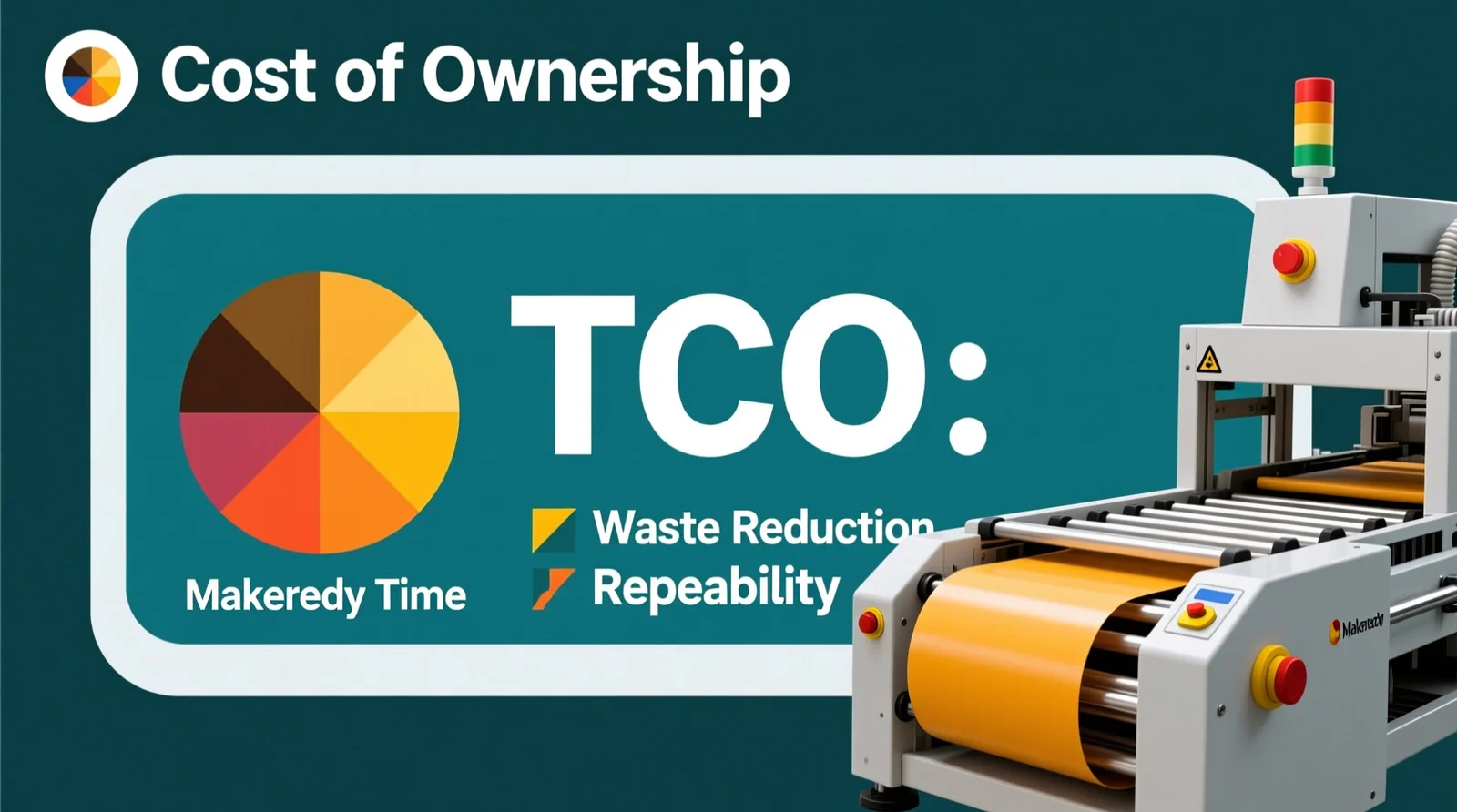
TCO (Total Cost of Ownership) for end-of-line systems is typically dominated by more than capex:
- Capex: machine price, guarding, conveyors, controls, integration, facility modifications (floor, power, compressed air).
- Opex: energy, stretch film/tape/labels, planned maintenance, software support agreements, and training refresh.
- Downtime cost: lost production, overtime, expedited freight, and missed OTIF (On-Time In-Full) targets.
- Changeover cost: labor time, scrap, and startup losses after SKU switches.
- Spare parts strategy: critical spares on-site, parts commonality across lines, and lead-time risk management.
Illustrative payback ranges (not guarantees):
- High-speed beverage line palletizing/wrapping upgrades: ~12–24 months when labor reduction and damage reduction are both significant.
- Mid-volume food plant end-of-line modernization: ~18–36 months depending on SKU complexity and downtime baseline.
- SME contract packer adding flexible robotic case packing: ~24–48 months, often driven by labor variability and the ability to take on new formats.
TL;DR: Model TCO using downtime, consumables, and changeovers; many projects justify themselves through reliability and damage reduction as much as labor savings.
Buyer’s Checklist & Implementation Roadmap (From Line Audit to FAT/SAT)

- Define requirements: throughput targets (cases/min, pallets/hour), SKU mix, changeover expectations, pallet patterns, and load containment needs.
- Conduct a line audit: measure current OEE losses, accumulation constraints, forklift traffic, and safety risks.
- Build an ROI model: include labor, damage/returns, consumables, downtime, and maintenance labor.
- Select vendors and integrators: evaluate not just machines, but end-of-line integration services (controls, safety validation, data interfaces).
- Plan controls & data: confirm protocols (EtherNet/IP, PROFINET), tag standards, and MES/ERP integration boundaries.
- Safety design review: specify safety PLCs, light curtains, interlocks, and lockout/tagout procedures aligned with applicable standards.
- FAT and SAT: run FAT (Factory Acceptance Test) at the supplier site and SAT (Site Acceptance Test) after installation; include load stability validation and changeover trials.
- Train and sustain: operator training, maintenance training, and documented troubleshooting guides; consider e-learning and AR-assisted maintenance for skill retention.
- Maintenance planning: condition-based monitoring where meaningful, standardized spares across lines, and clear escalation paths for controls/robot issues.
TL;DR: Successful projects follow a disciplined path—requirements, audit, ROI, vendor/integrator selection, FAT/SAT, training, and a maintenance plan that protects uptime.
Market Segmentation
By Equipment Type
- Case packers & case erectors: often the primary constraint in secondary packaging automation; selection depends on product orientation, collation, and case style.
- Palletizers: robotic for flexibility; conventional for high throughput with consistent packs; critical for pallet pattern integrity.
- Stretch/shrink systems: increasingly engineered for containment performance, not just “wrap it and ship it.”
- Labeling/print-and-apply: drives traceability and warehouse scan compliance; errors are expensive at shipping.
- Conveyors/sortation: enable buffering and routing logic; often where integration effort concentrates.
By End-Use Industry
- Food & beverage: high throughput, washdown/hygienic needs, uptime focus.
- Pharma & healthcare: traceability discipline, inspection and reconciliation practices.
- Consumer goods: frequent promotions and pack variations; quick changeovers matter.
- Industrial & chemicals: heavy loads, robust guarding, and consistent containment are critical.
TL;DR: Segmentation is less about “industry labels” and more about constraints: hygiene, traceability, variability, and load containment requirements.
Regional Insights (Including a Nuanced View on Regulation Adoption)

Asia-Pacific (APAC)
APAC growth is supported by manufacturing expansion and modernization, but adoption patterns vary widely by country and subsector. Many sites prioritize compact footprints and high uptime, while integration maturity (standards, documentation, service coverage) can differ significantly between industrial hubs and emerging regions.
TL;DR: APAC leads volume growth, but project success depends heavily on local service capability and plant-level integration maturity.
North America
North America emphasizes productivity, labor substitution, and 3PL-driven requirements. End users commonly request standardized controls networks and remote support—while simultaneously increasing scrutiny of cyber risk and access control for connected equipment.
TL;DR: North America buys for throughput and labor resilience, with growing attention to cybersecurity governance for connected lines.
Europe
Europe continues to push packaging waste and recyclability expectations, accelerating demand for material-efficient containment strategies and equipment capable of running evolving substrates. However, a nuance often missed: regulatory interpretation and enforcement cadence can vary across countries, which affects the speed of on-the-ground equipment upgrades.
TL;DR: Europe is a leader in packaging compliance and material efficiency, but adoption timelines can differ by country and sector.
Latin America
Latin America sees modernization driven by food and beverage and improving distribution networks. Buyers often balance automation ambition with maintainability: rugged designs, strong local support, and spare parts availability can outweigh the latest features.
TL;DR: Practical maintainability and service coverage are decisive purchase factors in cost-sensitive environments.
Middle East & Africa (MEA)
MEA demand is strongest in logistics and food processing clusters where investments in manufacturing and warehousing infrastructure are expanding. Projects often start with targeted bottleneck removal (e.g., palletizing + wrapping) before broader line digitization.
TL;DR: MEA growth often starts with focused end-of-line bottlenecks before scaling to fully integrated lines.
Competitive Landscape (More Actionable for Buyers)
The competitive landscape includes global OEMs, specialized equipment builders, and a large role for system integrators and regional OEMs—many end-of-line projects succeed or fail based on integration execution, not just machine selection.
Technology Strategies
- Krones – Strong footprint in beverage lines and high-throughput packaging systems; often positioned for integrated, high-efficiency line concepts in beverage operations. (Company overview: https://www.krones.com/en/)
- ProMach – Broad portfolio across packaging machinery (including end-of-line) and a solutions approach suited to multi-brand manufacturing; often selected for integrated line architectures. (Company overview: https://www.promachbuilt.com/)
- Schneider Electric – Focus on industrial automation architecture, controls, drives, and digital platforms that support packaging line performance and energy management. (Company overview: https://www.se.com/)
- Beckhoff Automation – Known for PC-based control and automation components used by OEMs and integrators for high-performance motion/control applications. (Company overview: https://www.beckhoff.com/)
Service & Integration Strategies
- Regional OEMs often win where localized support, fast spares, and ruggedized designs are critical.
- System integrators translate requirements into working lines—controls harmonization, safety validation, network design, and FAT/SAT execution—especially in brownfield upgrades.
- After-sales programs (remote support, spares agreements, condition-based monitoring) increasingly influence supplier selection as much as machine specs.
TL;DR: Major OEMs differentiate on technology breadth and throughput expertise, but integrators and service capability often determine project ROI and long-term uptime.
Future Outlook to 2035 (Where the Market Is Headed—With a Contrarian Note)

From 2025–2035, the market outlook remains positive as plants modernize end-of-line operations for reliability and logistics performance. Expect continued demand for flexible robotics, improved containment engineering, and standards-based controls integration.
Contrarian/nuanced point: More connectivity is not automatically better. Plants that add remote access without robust governance can increase operational risk. Conversely, plants that first standardize downtime taxonomy, spare parts, and operator workflows often outperform “sensor-heavy” deployments with weak adoption.
TL;DR: Growth is supported by modernization and logistics demands; winners will pair automation with disciplined operations, cybersecurity governance, and containment engineering.
Key Takeaways for Industrial Decision-Makers
- Prioritize projects that remove the true bottleneck—often palletizing/wrapping and accumulation—not just the most visible manual task.
- Engineer for pallet load stability; damage reduction can deliver ROI as fast as labor savings.
- Use OEE, MTBF/MTTR, and changeover time as the backbone of requirements and vendor comparisons.
- Budget integration realistically: controls, safety validation, networking, and FAT/SAT frequently decide schedule and cost.
- Treat connectivity as an operational system (people + process + cyber controls), not a feature checkbox.
TL;DR: The best end-of-line investments are engineered around metrics, stability, and integration execution—then supported with training and maintainability.
FAQ

Q: What equipment is typically included in an end-of-line packaging system?
A: End-of-line systems typically include case erectors, case packers, palletizers, stretch/shrink wrappers, labeling or print-and-apply machines, and conveyors/sortation. The goal is to convert finished products into stable, labeled, shipment-ready loads that meet warehouse and transportation requirements.
Q: What are typical payback periods for end-of-line packaging automation?
A: Payback varies by labor rates, uptime losses, and damage rates. As illustrative (non-guaranteed) ranges, high-speed beverage palletizing/wrapping projects may see ~12–24 months, mid-volume food plants ~18–36 months, and SME contract packers ~24–48 months—especially when changeover time and damage reduction are included in the ROI model.
Q: What common pitfalls should be avoided when integrating new end-of-line equipment?
A: Common pitfalls include underestimating integration and commissioning time, failing to define downtime reasons and performance KPIs upfront, overlooking pallet pattern and containment validation, and not aligning controls/network standards (e.g., EtherNet/IP or PROFINET) with existing plant architecture. Skipping structured FAT/SAT testing is another frequent cause of delayed ramp-up.
Q: How do manufacturers validate pallet load stability and reduce transit damage?
A: Teams typically combine good pallet pattern design, correct stretch wrap settings (containment force, pre-stretch, wrap counts), and stabilization accessories (top sheets, corner boards when needed). Many companies use transport simulation and test protocols such as ISTA procedures to validate that loads survive handling and distribution conditions.
Q: What safety and compliance standards should be considered for end-of-line packaging lines?
A: Requirements depend on region and application, but buyers commonly reference OSHA expectations in the U.S. for workplace safety programs and use ISO frameworks such as ISO 12100 for risk assessment. Safety design often includes safety PLCs, light curtains, interlocks, and documented lockout/tagout procedures, especially around palletizers and high-speed conveyors.