Introduction: January Used Construction Equipment Market Trends (Sandhills Global)
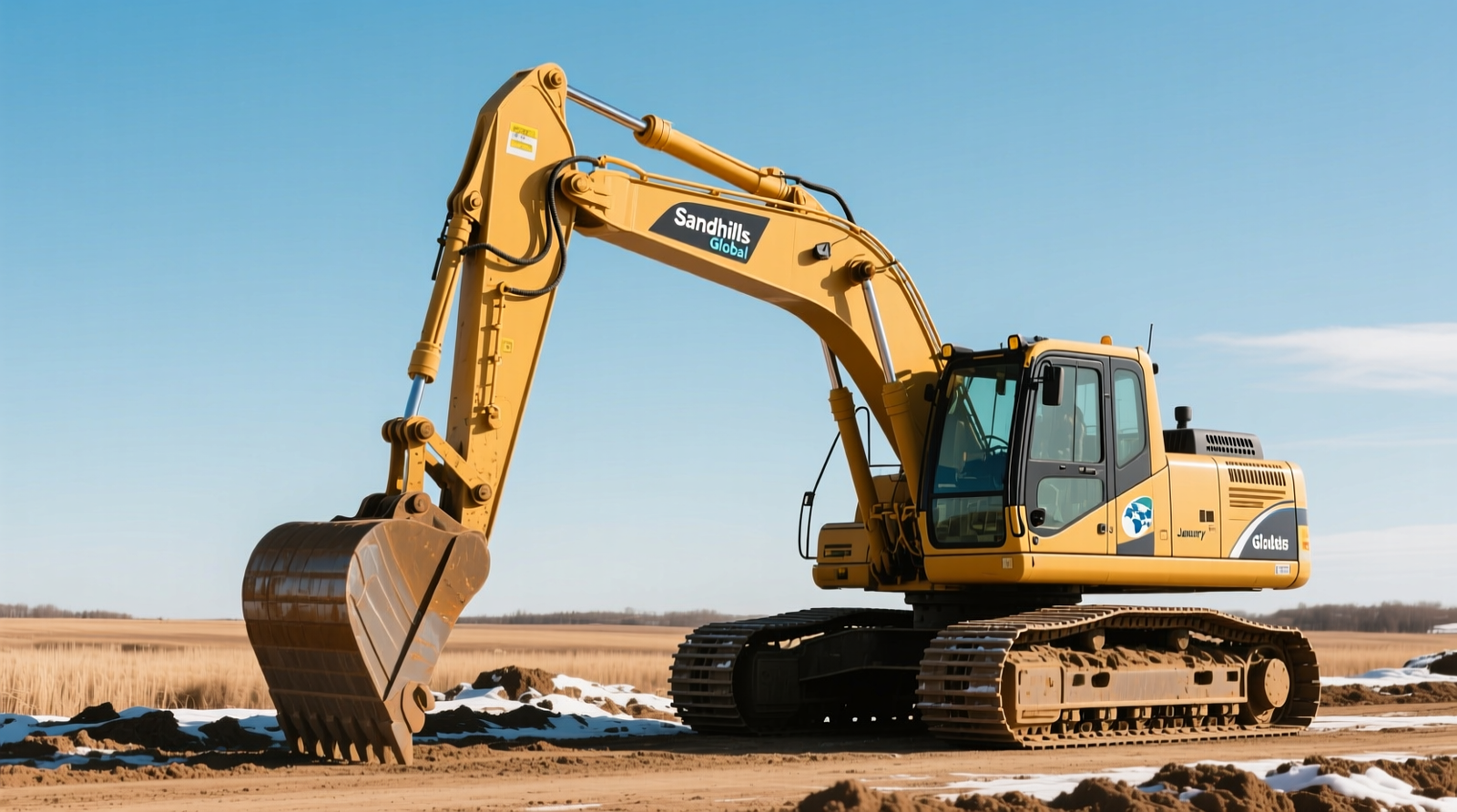
If you’re searching for “used construction equipment market trends January,” “Sandhills Global used equipment report,” or “heavy equipment auction values,” Sandhills Global’s January data points to a tightening supply environment with uneven price movement by machine type.
According to Sandhills Global’s January used equipment market report, inventory across most construction and truck categories continues to contract, while pricing shows a mix of modest month-over-month (M/M) gains and soft year-over-year (YOY) comparisons. In practical terms for construction fleet managers, that means fewer buying options, more time spent sourcing, and a higher penalty for waiting until a machine fails mid-project.
This overview focuses on heavy-duty construction equipment and how the January numbers translate into tactical decisions for equipment owners, buyers, and fleet managers. All statistics cited are drawn from Sandhills Global’s January reporting.
TL;DR: January data shows a tighter used heavy-duty construction equipment market with shrinking inventory and mixed price signals—good for disciplined sellers, challenging for buyers who wait too long.
Key Takeaways (January Sandhills Global Used Equipment Report)
- Inventory: Used heavy-duty construction equipment inventory fell again (down 2.6% M/M and 13%+ YOY), making sourcing slower and more competitive.
- Asking prices: Average asking values rose 1.93% M/M but were down 2.87% YOY—a short-term bump inside a softer annual trend.
- Auction values: Auction values increased 2.91% M/M and were nearly flat (down 0.35% YOY), indicating prices fluctuating within a narrow band (“sideways trend”).
- Wheel loaders: The sharpest inventory contraction (nearly -4% M/M, -14%+ YOY)—expect fewer clean, late-model units available.
- Crawler excavators & dozers: Excavators led M/M value gains; crawler dozers showed mild YOY softening, potentially creating selective buying windows.
TL;DR: Inventory is shrinking, pricing is mixed, and wheel loaders/excavators/dozers are behaving differently—plan category-by-category, not with one blanket strategy.
Who Is Sandhills Global and Why Their Used Equipment Data Matters

Sandhills Global is an information processing and equipment marketplace company based in Lincoln, Nebraska. It operates major industry platforms including TractorHouse, Machinery Trader, Truck Paper, and AuctionTime.
Because these marketplaces capture high volumes of real-world listings and transaction signals (inventory counts, asking prices, and auction outcomes), Sandhills’ monthly reporting is widely used as a benchmark for the used equipment market. It is not a “perfect price guide” for every zip code or machine condition, but it is a useful directional read on supply-demand pressure.
For readers who want additional context on broader equipment pricing signals, the U.S. Bureau of Labor Statistics (BLS) publishes producer price data that can help frame inflation and equipment cost dynamics over time (see BLS Producer Price Index).
TL;DR: Sandhills data is credible because it’s rooted in large marketplace activity, and it becomes more powerful when combined with macro indicators and local comps.
Used Heavy-Duty Construction Equipment Market: Inventory Keeps Shrinking in January
The “mixed picture” in January becomes clearer in heavy-duty construction equipment: supply is tightening (inventory down), while prices are not uniformly rising. That combination often creates friction—buyers feel the squeeze first (fewer choices), while sellers only benefit if their machines match what the market wants (hours, condition, specs, and location).
Definition: In Sandhills reporting, “heavy-duty construction equipment” generally refers to core earthmoving and loading assets such as excavators, dozers, and wheel loaders (the same machine families highlighted in the January category breakouts). These are the machines that materially drive production rates and jobsite cost per hour.
Macro drivers to keep in view: Inventory pressure doesn’t happen in a vacuum. Lingering supply chain disruptions, uneven original equipment manufacturer (OEM) lead times (OEM = original equipment manufacturer), and ongoing infrastructure and utility work can all keep fleets holding machines longer than planned. Public spending signals (e.g., U.S. infrastructure funding) can also support demand for earthmoving assets—see the U.S. Department of Transportation’s infrastructure resources at transportation.gov/BIL.
TL;DR: Heavy-duty inventory is still contracting, and broader lead-time/infrastructure dynamics help explain why fleets aren’t releasing as many machines into the used channel.
January Inventory Levels: What 7 Months of Declines Means in the Field
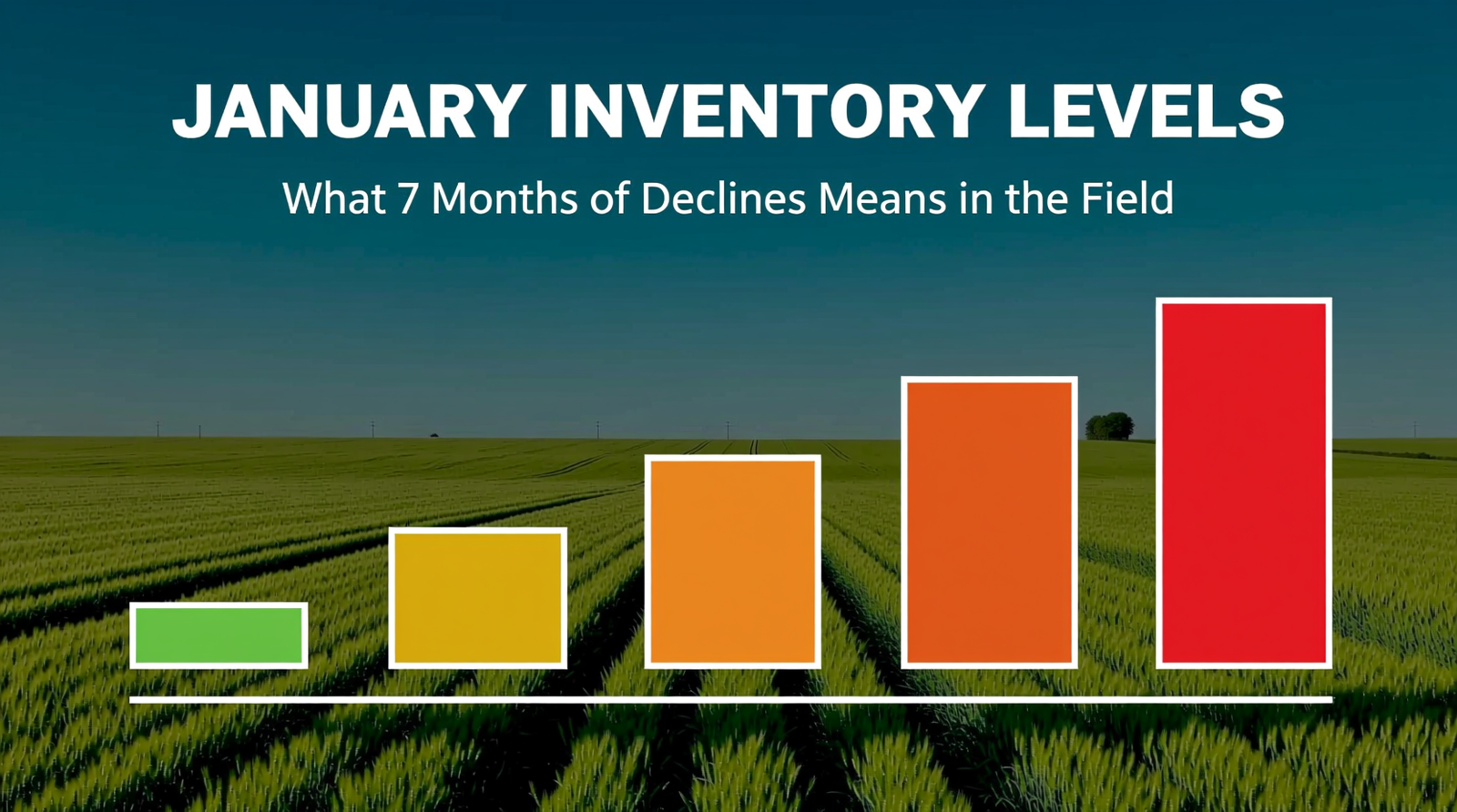
According to Sandhills Global, total used heavy-duty construction equipment inventory decreased 2.6% M/M in January and more than 13% YOY. A 13%+ annual contraction is not just “a little tighter”—it changes buyer behavior: more pre-purchase travel, fewer like-for-like comparisons, and less leverage when a seller has documentation and a clean machine.
Wheel loaders saw the sharpest pullback. Used wheel loader inventory dropped nearly 4% M/M and more than 14% YOY. For a mid-sized civil contractor running multiple crews, this can force a practical adjustment: instead of replacing a loader at a fixed hour mark (e.g., rotating out at a certain utilization threshold), they may run the unit longer and budget for a mid-life rebuild (pins/bushings, hydraulics, tires) simply because comparable replacements aren’t showing up in the local market.
Forward-looking scenario (3–6 months): If inventory continues to fall for another quarter, expect longer sourcing lead times and a higher probability that “good” units sell quickly—sometimes before a buyer finishes internal approvals. That tends to pull more buyers toward dealer channels for speed, financing options, and reconditioning, while auctions become more competitive on clean, late-model machines.
TL;DR: Inventory contraction is now large enough to change replacement cycles—especially for wheel loaders—and if it continues, buyers should expect longer lead times and faster sell-through on clean units.
Asking Values in January: Short-Term Firming, Softer Annual Comparison
Across heavy-duty construction categories, average asking values rose 1.93% M/M in January but declined 2.87% YOY. That pattern is common in a tightening supply market where sellers test higher pricing, but the broader annual baseline is still normalizing from prior peaks.
Crawler excavators led the M/M pricing improvement, with asking values up 2.6% M/M. This aligns with how excavators are used: they’re highly versatile (utilities, mass grading, trenching, site development), so utilization rates tend to stay healthier across mixed project portfolios. Higher utilization supports stronger resale behavior because owners can justify holding firm on price when the machine is “earning” and alternatives are scarce.
Benchmark for decision-making: In many fleet purchasing models, a “mild” YOY price decline is often in the low single digits (roughly 1–5%). At that level, the savings may be real but can be quickly erased by downtime risk, inspection costs, or deferred maintenance on a used unit—especially if you’re substituting for a machine that is already failing in the field.
TL;DR: Asking prices are up slightly month to month but down modestly year over year; excavators are holding up better due to strong utilization and versatility.
Heavy Equipment Auction Values in January: Sideways Trend Defined
Sandhills reported that auction values rose 2.91% M/M in January and decreased slightly 0.35% YOY, “maintaining a sideways trend.” A sideways trend means prices are fluctuating within a relatively narrow band with no sustained upward or downward trajectory.
Sandhills attributed much of the M/M movement to used crawler excavators (up 4.93% M/M) and noted used crawler dozers down 1.13% YOY.
How to interpret this as an operator: When auction values are sideways, the spread between “great buy” and “overpay” often comes down to inspection discipline and spec nuance (undercarriage life, hydraulic performance, emissions system condition, attachments, and transport logistics). For crawler dozers specifically, mild YOY softening can be an opportunity—but only if your utilization plan supports it. A dozer with low annual hours may look cheap and still be expensive on a cost-per-hour basis if it sits, while a dozer tied to steady grade work can amortize ownership costs and protect resale later.
TL;DR: Auction prices moved up slightly in January but remain essentially flat YOY; in sideways markets, inspection quality and utilization planning decide whether a “deal” is real.
Category Contrast: Wheel Loaders vs. Excavators vs. Dozers (What’s Actually Different)
January’s category split matters because these machines behave differently in both supply and value:
- Wheel loaders: Inventory contraction is the headline. That usually results in fewer late-model options and more “compromise purchases” (higher hours, older emissions tier, or non-ideal bucket/aux hydraulics).
- Crawler excavators: Strong M/M pricing suggests demand is still outpacing supply for the configurations contractors want. Expect faster decisions and less negotiating room on clean units.
- Crawler dozers: Slight YOY softness can create targeted buying opportunities—especially for fleets that can keep the machine utilized and maintain undercarriage proactively (a major ownership cost driver).
TL;DR: Loaders are getting harder to find, excavators are retaining momentum, and dozers may offer selective value—each needs a different sourcing strategy.
Market Interpretation: Balancing Inventory Pressure and Value Trends

Put together, the January data describes a market where availability is falling faster than values are rising. That often leads to two simultaneous outcomes:
- Buyers feel the pinch first: fewer comparable units, longer search cycles, and more “take it or leave it” situations for well-documented machines.
- Sellers only benefit if they’re selling the right asset: clean, late-model, correctly spec’d machines with records can command attention, but tired units don’t automatically gain value just because inventory is down.
Case-style example: A regional sitework contractor with a mixed fleet (excavators + loaders) might choose to sell a late-model crawler excavator now if their pipeline is shifting toward subcontracted excavation. If auction and asking values are firming M/M, that sale can fund a wheel loader replacement—because loader inventory is shrinking faster and may take longer to source. That’s not “timing the market”; it’s rebalancing the fleet based on what’s hardest to replace.
Forward look: If inventory continues contracting into the next 3–6 months, expect higher variance in transaction outcomes: top-condition units may trade at surprisingly strong numbers, while average machines will still require pricing concessions to move.
TL;DR: The market is tightening on supply, not uniformly inflating on price—so strategy should prioritize replaceability, condition, and utilization rather than headlines alone.
How Fleet Managers Should Respond to January Used Equipment Trends
Construction fleet managers can translate the January Sandhills Global trends into concrete actions that reduce downtime risk and improve total cost of ownership (TCO = total cost of ownership, including purchase price, maintenance, repairs, fuel, and downtime).
- Build longer sourcing lead times into your plan:
- Wheel loaders: consider starting a search 60–120 days ahead of need in tight regions, given the sharper inventory contraction.
- Crawler excavators: for late-model, low-hour units, plan 45–90 days to evaluate multiple options (attachments, hydraulics, emissions tier, transport).
- Crawler dozers: plan 30–90 days, but reserve time for undercarriage evaluation (often the swing factor in ownership cost).
- Use simple decision rules for auction vs. dealer pricing:
- If auction prices are within ~5–10% of dealer asking for low-hour excavators, many fleets prioritize dealer purchases for warranty options, service support, and faster issue resolution—unless you have strong internal inspection and repair capability.
- If a unit is older/higher-hour and the discount is >10–15% at auction, auctions can make sense—provided you budget for immediate reconditioning and accept higher variability in condition.
- Match sell/hold decisions to utilization:
- When excavator values firm M/M, consider selling underutilized units while demand is strong and reallocating capital to harder-to-source assets (e.g., wheel loaders).
- For dozers showing mild YOY erosion, buying can be attractive only if you can keep annual hours high enough to spread fixed ownership costs.
- Risk management when buying in a tightening market:
- Inspection checklist: verify hours/ECM (engine control module) consistency, hydraulic drift/leaks, final drives, slew bearing play, pins/bushings, tire/undercarriage wear, and evidence of structural repairs.
- Documentation: request maintenance records, oil sample history (if available), and recent repairs.
- Third-party inspections: when buying remotely, consider an independent inspection to reduce “surprise repairs” after delivery.
- Warranty options: where available, compare dealer-backed coverage or service agreements against your internal repair capacity and job criticality.
Finally, use market reports as guardrails—not autopilot. Combine Sandhills benchmarks with your own telematics (machine data on hours, idle time, fuel burn), maintenance history, and utilization forecasts to time disposals and purchases with fewer regrets.
TL;DR: Start sourcing earlier (especially loaders), use clear auction-vs-dealer rules, tie decisions to utilization and TCO, and reduce risk with disciplined inspections and documentation.
Conclusion

Sandhills Global’s January used equipment data shows heavy-duty construction equipment inventory continuing to tighten (down 2.6% M/M, 13%+ YOY), with wheel loaders contracting the most and crawler excavators posting the strongest short-term value gains. Auction values rose M/M but remain essentially flat YOY—consistent with a sideways pricing environment.
If inventory keeps falling through the next 3–6 months, buyers should expect longer lead times and faster sell-through on clean machines, while sellers with documented, job-ready assets may find stronger negotiating positions. The best outcomes will come from fleets that align Sandhills market signals with internal telematics, maintenance records, and utilization targets before committing to buy/sell timing.
TL;DR: Supply is tightening faster than prices are rising—plan ahead, act by category, and validate timing with your own fleet performance data.
FAQ
Q: Is 2025 a good time to buy used heavy-duty construction equipment?
A: It can be, but it depends on inventory in your region and the specific machine class. In a market where used heavy-duty construction equipment inventory is shrinking, buyers often face fewer options and less negotiating room—especially for wheel loaders and late-model crawler excavators. If your alternative is downtime on a live job, a “fair” price today can beat a cheaper machine later that arrives too late. Use Sandhills Global benchmarks and compare auction vs. dealer pricing alongside your utilization and maintenance outlook.
Q: How do rising auction values affect trade-in strategies for construction fleet managers?
A: When heavy equipment auction values rise month-over-month, trade-in expectations often increase—but not every machine benefits equally. Construction fleet managers can use auction vs. dealer pricing comparisons to decide whether to trade in (speed and simplicity) or sell outright (potentially higher return, more effort). The best trade-in strategy is typically tied to replacement availability: if inventory is tight for the replacement machine, locking in the replacement first can be more valuable than chasing a slightly higher sale price.
Q: Why is used construction equipment inventory shrinking even when some prices are down year-over-year?
A: Inventory can fall even with softer YOY pricing because fleets may be holding machines longer due to OEM lead times, uncertain replacement availability, and steady workload in infrastructure, utilities, and site development. Fewer disposals reduce listing volume, tightening supply. That’s why Sandhills Global can show contracting inventory alongside only modest YOY price declines.
Q: Should I buy a crawler excavator at auction or from a dealer right now?
A: Use an “auction vs. dealer pricing” rule tied to risk. If auction pricing for a low-hour crawler excavator is within roughly 5–10% of a comparable dealer machine, many construction fleet managers prefer the dealer route for support, reconditioning, and warranty options. If the auction discount is larger (often >10–15%), auctions may pencil out—but only if you have strong inspection capability and budget for immediate repairs.
Q: What should buyers prioritize when shopping for used wheel loaders in a tight market?
A: With used wheel loader inventory contracting, prioritize condition and documentation over cosmetic appearance. Focus on drivetrain performance, hydraulic function, tire condition, articulation wear, service records, and any evidence of structural repairs. In a tightening used heavy-duty construction equipment market, the “cheapest” loader can become the most expensive if it triggers downtime and unplanned repairs—so compare total cost of ownership, not just the purchase price.