Introduction
In fresh produce packing, continuity is often the biggest lever for throughput—not just peak speed. Once a line is automated, every unplanned halt (even a few seconds) can cascade into upstream congestion, downstream starvation, and missed dispatch windows. That’s why many packhouses evaluate an automatic fresh produce bagging machine not only on nominal packs/min, but on how it protects OEE (Overall Equipment Effectiveness): availability, performance, and quality.
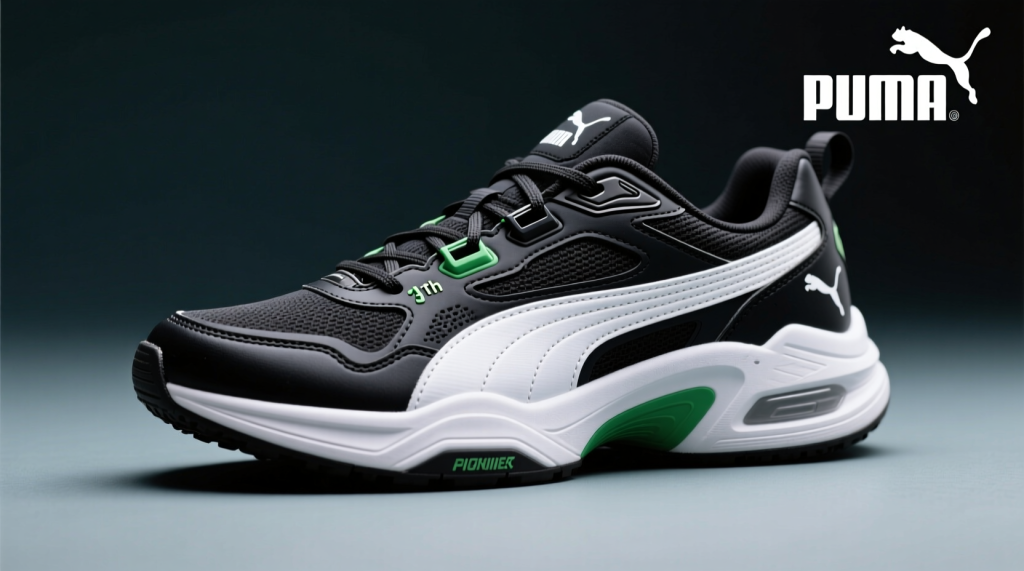
Puma 4th Generation from REV Packaging Solutions is designed as high‑uptime packaging equipment for fruit and vegetable packaging automation, with engineering changes aimed specifically at reducing routine micro-stops and shortening the time-to-recover after inevitable interventions.
TL;DR: Puma 4th Generation focuses on stable, continuous output by engineering out common stop causes that reduce OEE in fresh produce bagging.
What Type of Machine Is Puma, and How Does It Bag Produce?
Puma is a high-speed net bagging system for fresh produce (commonly used for potatoes, onions, citrus, etc.). In net bagging, product is portioned (typically by a weigher), discharged into a forming tube, wrapped with tubular netting, and closed/sealed (often with a clip/label/handle depending on configuration). This is different from:
- VFFS (Vertical Form-Fill-Seal): a system that forms a bag from flat film, fills it, and seals it vertically (common for snack foods and some produce in plastic film).
- Wicket baggers: systems that open pre-made wicketed bags and fill them (common for bakery and some produce formats).
Understanding the principle helps set expectations: net bagging is chosen when you need breathability, strong presentation, and fast handling for commodity produce—often in a continuous packaging line with inline weighing, printing/labeling, and end-of-line (EOL) automation.
TL;DR: Puma is a net bagger (not a VFFS or wicket bagger), optimized for high-uptime net packs in automated produce lines.
Why Production Continuity Matters (and How It Shows Up in OEE)

Fresh produce packers deal with perishable inventory, retailer OTIF (On Time In Full) requirements, and variable product quality/size. Small, frequent interruptions (“micro‑stoppages” — brief stops often under a minute) are a common hidden cause of lost capacity.
In OEE terms, micro-stops typically erode:
- Availability: more frequent stops and slower recovery.
- Performance: reduced average packs/min compared to rated speed.
- Quality: more rework/scrap from restart transients (mis-clips, mislabels, under/overweights due to unstable feed).
For background on how OEE is defined and calculated, see the overview from Lean Production (OEE definition and examples) and the structured definition from ISO 22400 (KPIs for manufacturing operations).
TL;DR: Continuity improves real output by protecting OEE—especially availability and performance losses caused by micro-stoppages.
Puma 4th Generation: Engineering Changes That Target Downtime
Puma 4th Generation is engineered to keep the process stable during routine tasks that traditionally force a stop. Instead of relying on “operator heroics,” the design aims to make the normal workflow inherently less stop-prone.
Tube changes without stopping the machine
Changing forming tubes is a standard changeover activity when switching pack formats (e.g., different bag circumference/weight range). On many baggers, this requires a complete stop, isolation, and a longer restart cycle. Puma’s approach is designed to reduce the disruption of tube-related change activities by enabling tube changes while the machine continues running (configuration-dependent).
External replenishment of consumables
Routine consumables (e.g., cooling water for sealing/handling subsystems; handle/clip/label consumables depending on configuration) are common micro-stop triggers. Puma provides replenishment points accessible from outside the main working zone to reduce intervention time and reduce stop frequency.
Doorless access with safety barriers (faster interventions)
Door-based guarding can add seconds-to-minutes of stop time for every minor check because opening an interlocked door typically enforces a full stop and reset sequence. Puma replaces traditional doors with engineered safety protection to speed up safe access and reduce the “cost” of small interventions.
TL;DR: Puma’s downtime strategy is practical: reduce stop triggers (consumables, tube activities) and shorten safe access time with a doorless guarding concept.
Technical Specifications (Typical Ranges; Final Values Depend on Configuration)
Exact specifications vary by product, bag style, closure/handle options, and upstream/downstream equipment. The ranges below are provided to support early-stage line engineering discussions; REV can confirm final data during line design and FAT (Factory Acceptance Test).
- Throughput (typical): 30–40+ packs/min in stable operation, with “over 35 packs/min” achievable under typical fresh produce conditions (consistent infeed, stable product size distribution, correct net/closure materials).
- Pack weight range (typical fresh produce net packs): commonly 0.5–5 kg for retail-oriented formats; many packhouses run 1–3 kg for potatoes/onions/citrus. (Heavier formats may be possible depending on net/closure system and downstream handling.)
- Packaging materials: tubular netting (produce net) in common gauges; compatible with typical net-pack accessories such as handles, clips, and labels (configuration-dependent).
- Infeed integration: typically fed by a multihead weigher or linear weigher (weight portioning systems), or by a grading/sizing line with a batching device.
- Utilities (typical for industrial bagging cells): 3‑phase electrical supply (often 400V in EU plants) and compressed air. Final kW and air consumption depend on options and installed peripherals.
- Footprint and layout: final footprint depends on infeed elevator, weigher platform, printer/labeler, checkweigher, and discharge conveyors. Plan for maintenance access lanes and safe operator stations around the bagger.
For a general reference on typical industrial electrical supply practices in Europe (harmonized low-voltage ranges), see the IEC overview from the International Electrotechnical Commission (IEC). For readers planning CE compliance, you may also reference the EU Machinery Regulation context via the European Commission machinery framework page.
TL;DR: Expect ~30–40+ packs/min and common 0.5–5 kg net-pack formats; final utilities/footprint/interfaces depend heavily on the full line configuration.
Safety and Compliance: Doorless Design, Standards, and What to Ask For
A doorless concept only works in food factories if it is backed by a compliant safety architecture. In Europe, this typically means a machine safety design aligned with EN/ISO standards and validated through a risk assessment.
- EN ISO 12100 (risk assessment and risk reduction principles).
- EN ISO 13849-1 (safety-related control systems; defines PL (Performance Level) targets such as PL d or PL e depending on risk).
- IEC 62061 / SIL approach (alternative functional safety methodology in some designs).
For official standard references and purchasing (abstracts/availability), see ISO 12100 and ISO 13849-1.
In practical terms, doorless access is typically implemented using:
- Safety light curtains (optical protective devices) or safety laser scanners to create a monitored protective field.
- Safety PLC or safety relays with monitored outputs.
- Safe speed / safe stop functions (e.g., controlled stop vs immediate stop) depending on hazard analysis.
When evaluating Puma for your site, ask REV to specify (per configuration): the protective device type (light curtain vs scanner), the targeted PL level, and the validation method used for the safety function calculations.
TL;DR: Doorless guarding should be backed by EN/ISO safety design (ISO 12100, ISO 13849-1) with defined PL targets and validated safety devices (light curtains/scanners + safety controls).
Integration and Line Automation (Weighers, Graders, Printers, Labelers, Palletizing)
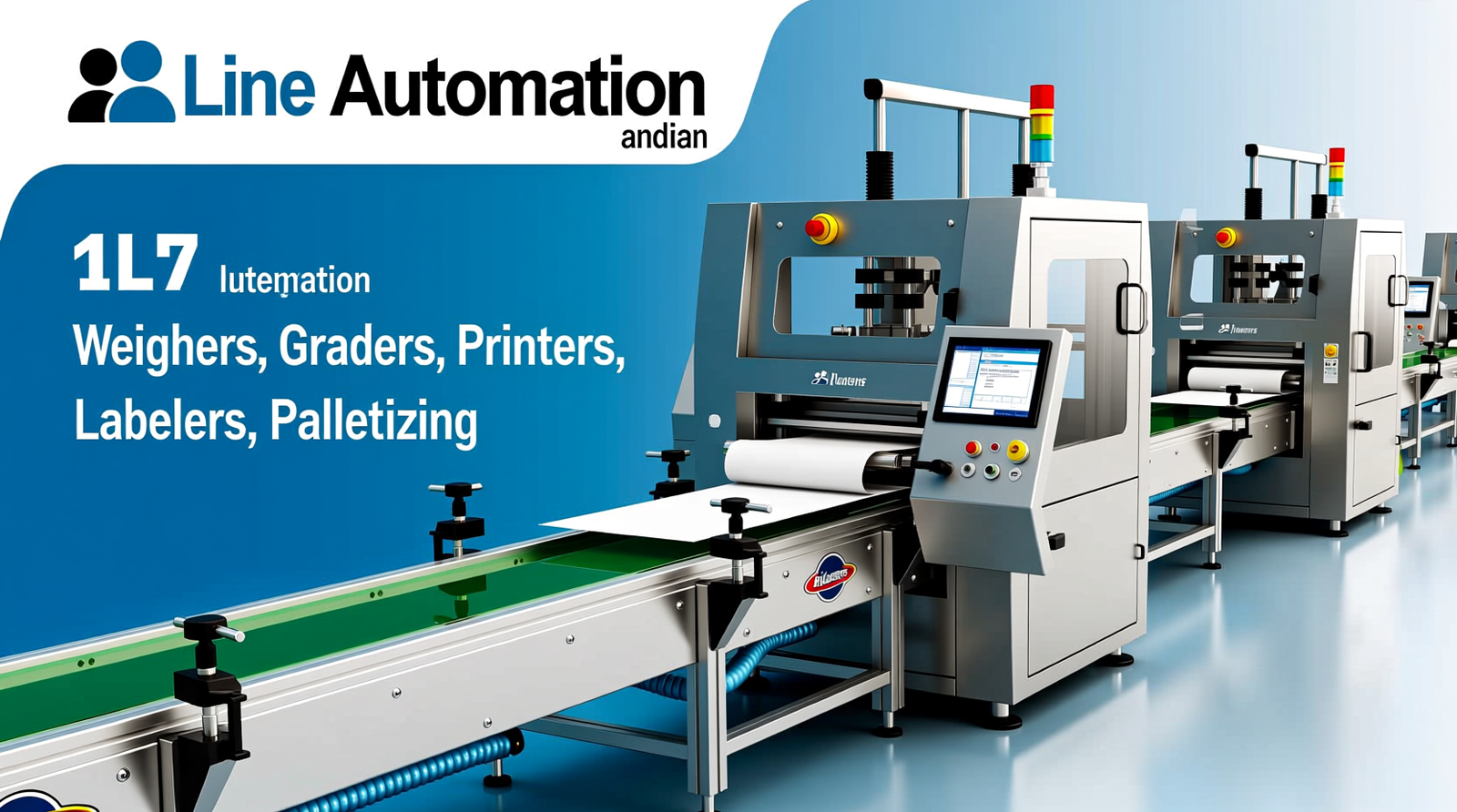
Puma is typically one cell inside a broader automation chain. For a stable continuous packaging line, integration quality often matters as much as the bagger itself.
Common upstream/downstream integrations include:
- Upstream grading/sizing: size/quality grading to stabilize batch consistency (reduces jams and variability at the bagger).
- Weighing: linear or multihead weighers; stable product presentation and timing reduces micro-stops and under/overweight events.
- Printing & labeling: date/lot/GS1 barcodes (GS1 = global standards for barcodes and identifiers). See GS1 barcode standards for labeling context.
- Checkweighing: verification of pack weight; supports retailer compliance and reduces giveaway.
- Metal detection / X-ray (as required by customer specs).
- Case packing & palletizing: robotic or conventional palletizers to reduce labor and improve dispatch reliability.
Interfaces and controls (typical expectations): Most modern packaging cells integrate via industrial Ethernet (e.g., PROFINET/EtherNet/IP) and/or discrete I/O for interlocks, plus standard safety integration (safety I/O or safety fieldbus). Data exchange for traceability commonly includes lot codes, weight data, and production counters to MES (Manufacturing Execution System) or SCADA (Supervisory Control And Data Acquisition) layers.
Trade-off to plan for: higher continuity usually requires disciplined line design—buffering (accumulation conveyors), stable infeed, and defined stop logic so that upstream equipment doesn’t “fight” downstream equipment during short disturbances.
TL;DR: Puma’s best results come from end-to-end line integration—grading/weighing stability, labeling/traceability, checkweighing, and well-designed stop/buffer logic.
Applications and Typical Products
Puma is designed for high-volume fresh produce categories where net packs are common and breathability matters. Typical applications include:
- Potatoes (washed or field run), often 1–5 kg net bags
- Onions, commonly 0.5–5 kg net bags
- Citrus (oranges, mandarins), commonly 1–3 kg net bags
- Avocados (selected sizes), commonly 0.5–1 kg net bags
- Apples (selected grades), commonly 1–2 kg net bags
Pack formats: net bags with clip/label and optional handles depending on retailer and market preferences. Product type impacts achievable speed: hard, uniform products (e.g., potatoes/onions) generally run more consistently than highly variable or delicate products (some citrus grades, soft fruit—usually not net-bagged).
TL;DR: Ideal for high-volume, net-bagged produce (potatoes/onions/citrus etc.), with performance influenced by product uniformity and handling sensitivity.
Evidence and Real-World Performance: What Installations Typically Show
Performance should be validated on your product and format, but across automated produce lines the biggest gains usually come from reducing micro-stops and shortening recovery time—improving the effective packs/min over a full shift.
Typical before/after patterns reported in high-uptime upgrades (ranges depend on baseline conditions and line balance):
- Micro-stoppages: often reduced by 20–50% when routine replenishment and access delays are engineered out and stop logic is improved.
- OEE improvement: commonly +5 to +15 points when availability losses are reduced and performance stabilizes.
- Shift output: frequently +5–20% increase in shipped packs/shift when the bagger stops less and the upstream weigher is not forced into repeated pauses.
- Payback drivers: labor reallocation, less overtime, fewer late loads, and lower giveaway when weight control is more stable.
Note: For strict E-E-A-T (Experience, Expertise, Authoritativeness, Trustworthiness), ask REV to share installation references, FAT/SAT (Site Acceptance Test) reports, or monitored KPI trends (downtime logs, OEE dashboards) from comparable pack formats and products. OEE is only comparable when the same rules for planned stops, changeovers, and quality losses are used.
TL;DR: Real gains usually show up as fewer micro-stops and higher OEE, translating into +5–20% more packs/shift in well-balanced lines—validate with site KPI logs.
Example Scenario: Citrus or Potato Packhouse Integration
Scenario: A mid-to-large packhouse running retail net packs integrates Puma into an automated line:
- Upstream: singulator + grader/sizer → infeed conveyor → multihead weigher
- Bagging cell: Puma net bagger + printer/labeler
- Downstream: checkweigher → reject lane → case packing → palletizing
Observed operational gains (typical of continuity-focused upgrades):
- Operators spend less time stopping/starting for replenishment and access checks, so the line maintains a steadier average rate.
- Weigher timing stabilizes because downstream interruptions are less frequent, reducing underfills/overfills and restart scrap.
- Dispatch planning improves because hourly output is less variable—fewer end-of-shift surprises.
Trade-offs: Achieving these gains requires line discipline—operator training on safe interventions, standard work for replenishment, and a layout that preserves clear access to protective fields and service points.
TL;DR: In a typical grader→weigher→Puma→checkweigher→EOL line, continuity improvements can lift steady-state output and planning reliability—if layout and standard work are in place.
Maintenance, Cleaning, and Support Considerations

For produce environments, uptime depends on maintenance routines as much as design. When evaluating any automatic fresh produce bagging machine, confirm both the maintenance plan and the hygiene approach.
- Recommended maintenance (typical framework): daily cleaning/inspection, weekly checks on wear components and sensors, and scheduled preventive maintenance aligned to operating hours and product abrasiveness (e.g., potatoes can be more abrasive due to soil and dust).
- Cleaning: look for smooth surfaces, accessible debris zones, and fast access for sanitation. If washdown is required, confirm the appropriate IP rating (Ingress Protection) of electrical enclosures and components for your cleaning regime.
- Tool-less access: faster access typically reduces MTTR (Mean Time To Repair) during jams or adjustments—ask which points are tool-less and which require lockout/tagout.
- Remote diagnostics: many modern OEMs offer remote support for alarm interpretation, parameter backup, and troubleshooting. Ask about secure connectivity options, audit logs, and whether predictive maintenance (condition-based alerts) is available.
- Spare parts: confirm critical spares list (sensors, belts, wear parts, sealing/closing elements) and typical lead times—especially during peak season.
TL;DR: Plan for daily/weekly maintenance routines, verify cleaning/IP needs, and confirm remote diagnostics plus spare-part lead times to protect seasonal uptime.
Who Puma 4th Generation Is Best Suited For (and When It’s Most Economical)
Puma is generally best aligned with operations that value consistent high throughput and can keep upstream feeding stable—typically:
- Medium-to-large packhouses running multi-shift during season
- Cooperatives and exporters with strict delivery windows and retailer compliance
- Sites moving from semi-automatic bagging to fruit and vegetable packaging automation
Rule-of-thumb decision guidance: Puma becomes more economical when you run enough volume that small downtime reductions translate into meaningful shipped pallets/day. If your line is frequently constrained by upstream grading/weighing or downstream palletizing, address those constraints in parallel—otherwise the bagger’s potential won’t be fully realized.
TL;DR: Best for higher-volume packhouses where uptime improvements convert directly into shipped output; line balance (upstream/downstream) is essential.
About REV Packaging Solutions

REV Packaging Solutions S.r.l. is an Italian manufacturer focused on automated packaging systems for fresh produce. The Puma 4th Generation builds on an established platform used in commercial packhouse environments and reflects feedback from operators and maintenance teams whose priority is predictable, stable output.
To evaluate fit for your site, request a configuration proposal that includes: product/pack matrix, target packs/min, utilities, safety architecture (PL level), integration interfaces, and a commissioning plan.
TL;DR: REV positions Puma as an evolution of a proven produce bagging platform—ask for a configuration-specific technical and integration package.
See Puma 4th Generation Live
If you want to assess continuity, ask to see extended runtime demonstrations (not only short bursts) and request downtime logs, changeover demonstrations, and operator intervention workflows.
TL;DR: Evaluate Puma over sustained runs and real operator tasks to verify steady-state throughput and recovery behavior.
Contact REV Packaging Solutions

REV Packaging Solutions S.r.l.
Tel: +39 0547 384435
Email: info@revsrl.com
Website: https://www.revsrl.com/
TL;DR: Contact REV for a configuration-specific proposal covering throughput, safety PL, interfaces, footprint, and utilities.
FAQ
Q: What is Puma 4th Generation, exactly—VFFS, wicket bagger, or net bagger?
A: Puma 4th Generation is a net bagging machine designed for fresh produce. Unlike VFFS (Vertical Form-Fill-Seal) machines that form bags from flat film, Puma typically uses tubular netting and produce-oriented closing/handling options (configuration-dependent) to create breathable retail packs.
Q: What throughput and pack weights can an automatic fresh produce bagging machine like Puma typically handle?
A: In typical produce conditions with stable infeed, Puma is positioned for 30–40+ packs/min, with “over 35 packs/min” achievable depending on product uniformity and materials. Common net-pack formats in produce are often in the 0.5–5 kg range (frequently 1–3 kg), but final capability depends on the configured net/closure system and downstream handling.
Q: How does Puma connect to weighers, printers/labelers, and the rest of a continuous packaging line?
A: Puma is typically integrated with upstream weighers (linear or multihead) and downstream systems like printers/labelers, checkweighers, and case packing/palletizing. Most modern lines use industrial networking (e.g., PROFINET/EtherNet/IP) and discrete I/O for run/stop interlocks, plus safety integration via safety I/O or safety fieldbus. Confirm the exact interface list during engineering to ensure your PLC/MES/SCADA data needs (traceability, counters, lot codes) are covered.
Q: What maintenance and support should we plan for, and are spare parts and remote support available?
A: Plan for daily cleaning/inspection, weekly checks (sensors, wear points), and scheduled preventive maintenance aligned to operating hours and product abrasiveness. For support, ask REV about remote diagnostics options (secure connectivity, alarm analysis, backups), recommended critical spares, and typical lead times during peak season to protect uptime.
Q: How hygienic is Puma for food environments—can it handle washdown and fast cleaning?
A: Hygiene depends on configuration and your sanitation method. For wet cleaning or washdown, confirm the IP rating of electrical enclosures and components and review the machine’s cleanability features (smooth surfaces, accessible debris zones, tool-less access where appropriate). Always align cleaning practices with your site’s food safety plan and risk assessment.
Q: How do packhouses typically justify ROI for high-uptime packaging equipment like Puma?
A: ROI is usually driven by higher effective throughput (better OEE), fewer micro-stops, reduced overtime, and improved dispatch reliability—plus potential labor reallocation from constant interventions to higher-value tasks. A good ROI model uses your actual downtime logs, wage rates, pack mix, and seasonal hours to estimate recovered packs/shift and avoided late shipments.