Key Takeaways (Monash SRL Station in 2026)
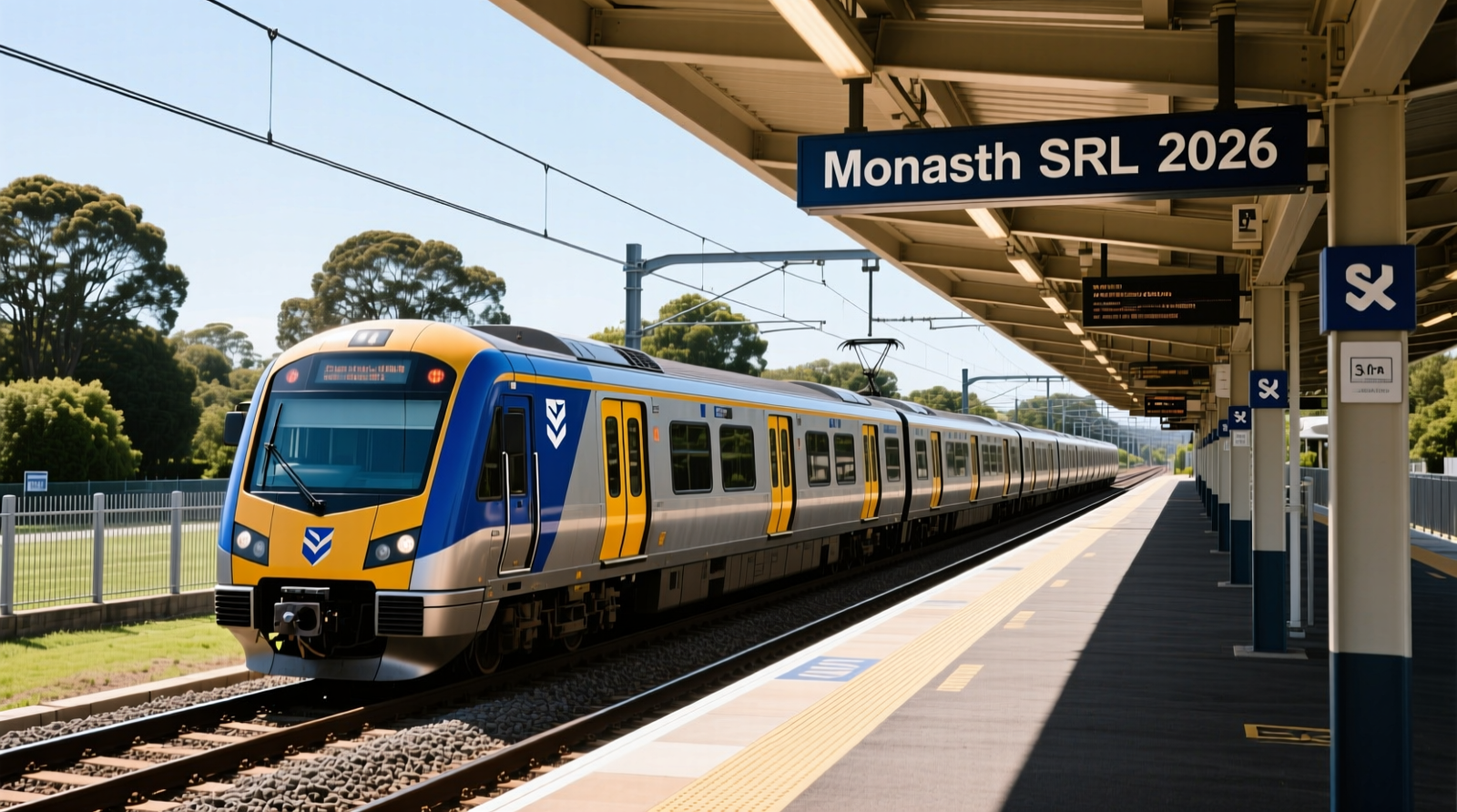
- Location: Proposed to be at/near the corner of Normanby Road and Howleys Road, Notting Hill—north of Monash University’s Clayton Campus.
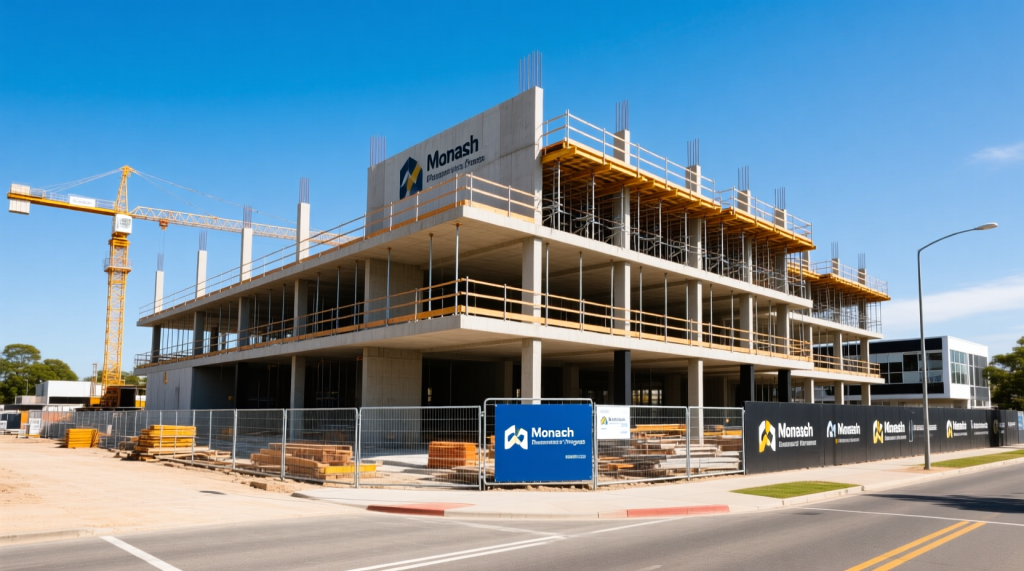
- Construction status (2026): Early works are established and heavy civil works are progressing; tunnelling activity for SRL East is moving through its planned sequence (timing can shift as approvals, utilities and ground conditions are confirmed).
- Why it matters: A rail station at Monash is planned to reduce dependence on shuttle buses and car trips for the university/innovation precinct and improve cross-suburban connectivity.
- Official updates: Use the Suburban Rail Loop Authority (SRLA) website and Victoria’s transport channels for the latest Monash Suburban Rail Loop construction updates.
TL;DR: The Monash SRL station is planned near Monash Clayton, construction activity is active in 2026, and the most reliable timing/details come from SRLA and Victorian Government channels.
Introduction
A new underground Suburban Rail Loop (SRL)—a proposed orbital rail line designed to connect middle suburbs without travelling through Melbourne’s CBD—includes a planned station at Monash (Notting Hill/Clayton precinct). The aim is to create a direct rail link to Monash University’s Clayton Campus and the surrounding innovation precinct, where travel demand is currently dominated by buses, car trips, and station-to-campus shuttles from places like Huntingdale and Clayton.
Because SRL is a state-led megaproject with multi-year delivery and evolving staging, schedule and scope details can change. For the latest public information, refer to the Suburban Rail Loop Authority (SRLA) and the Victorian Government’s transport updates via Big Build.
TL;DR: SRL proposes an underground station at Monash to improve rail access to a major education-and-jobs precinct; official SRLA/Big Build channels are the best source of current detail.
About the New Monash SRL Station (Location + Precinct Context)
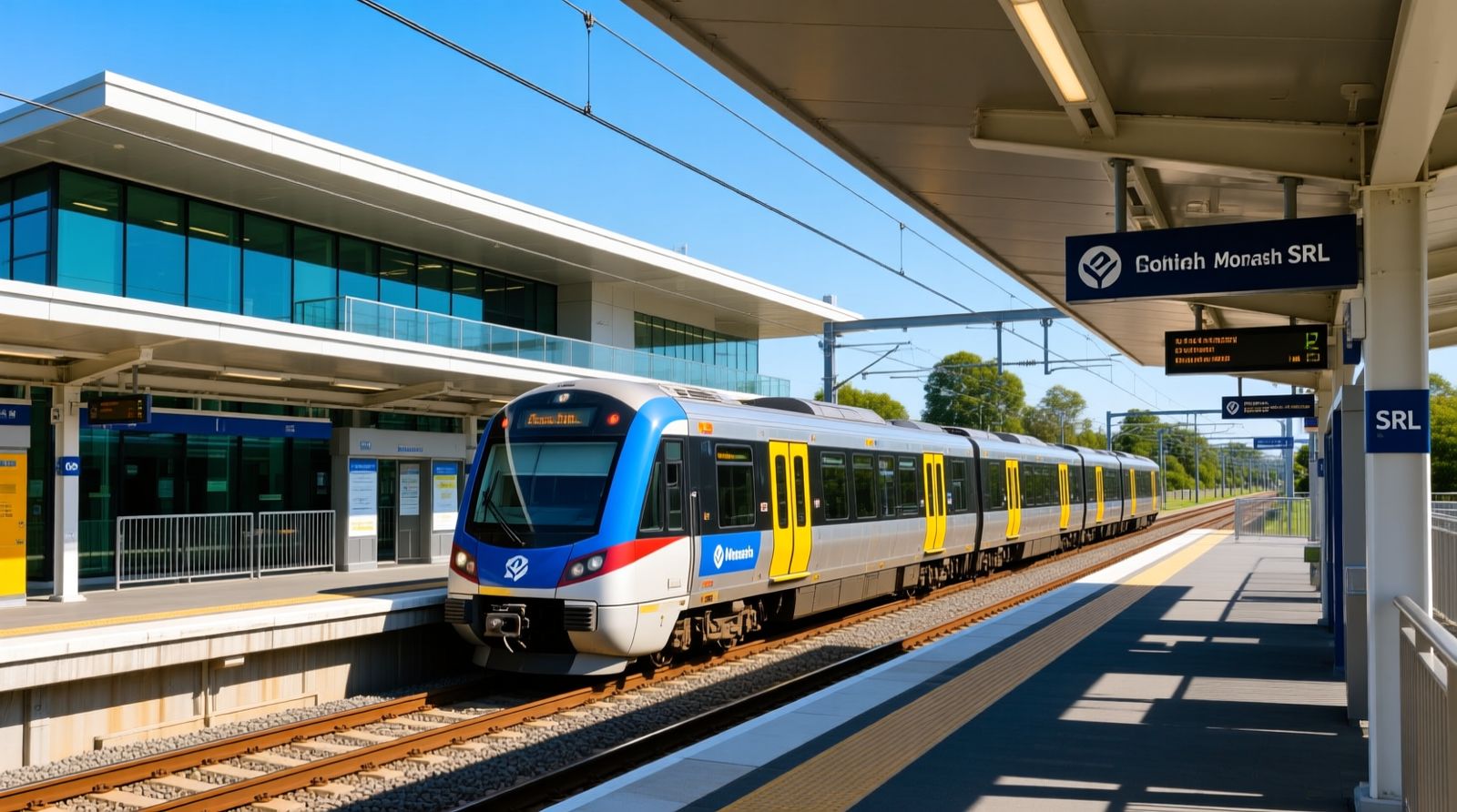
The Monash SRL station is publicly described as being located north of Monash University’s Clayton Campus, around Normanby Road and Howleys Road in Notting Hill. This places the station within the broader Monash National Employment and Innovation Cluster (NEIC)—a planning term used in metropolitan strategies to describe high job-density precincts anchored by universities, hospitals, and research facilities.
In practice, that means the station is being planned to serve multiple trip purposes: university travel, research/industry commuting, and visitors accessing nearby health and specialist services. It is also intended to connect with local bus services and active transport links, so “public transport to Monash University Clayton” is not only about trains—interchange design and walking/cycling access will materially affect real-world travel times.
For precinct planning context, see Victorian Government planning strategy references such as Plan Melbourne (metropolitan strategy): Plan Melbourne.
TL;DR: The station is planned near Normanby/Howleys in Notting Hill to serve a large university-and-innovation precinct and to work as a bus/walk/cycle interchange—not just a train stop.
Why the Monash Underground Station Matters (With More Specific Outcomes)
- Fewer forced transfers: Today many rail users must transfer to a shuttle bus (e.g., from Huntingdale) or use multiple buses. A station at Monash is designed to reduce the “last-mile” transfer penalty for the campus and surrounding employers.
- Network-style travel: SRL is designed for suburb-to-suburb trips (for example, between major centres such as Box Hill, Burwood, Glen Waverley, Monash/Clayton and Cheltenham). This can change route choice away from CBD-routed journeys.
- More resilient access during peak periods: Rail capacity can complement bus corridors that experience crowding or traffic delay during class change peaks, shift changes, and major campus events.
- Road network relief (directionally): Where rail attracts trips that would otherwise be made by private vehicle, it can reduce peak parking demand and some arterial turning movements around the campus edge—although the magnitude depends on service frequency, fare integration and interchange convenience.
Figures and forecasts: SRLA and Victorian Government business case-style outputs are the right place to source definitive numbers such as expected daily boardings, travel time savings between stations, or road-traffic reductions. If you are publishing for decision-makers, cite the exact forecast tables/chapters once SRLA releases the relevant station-level patronage and modelling outputs in public documentation. Start here: SRLA.
TL;DR: The core value is fewer transfers and better suburb-to-suburb connectivity; exact passenger and time-savings figures should be taken from SRLA’s published modelling when available.
2026 Construction Status: What “Underway” Typically Means at Monash
In 2026, on-the-ground activity around the Monash SRL station precinct generally falls into staged packages—early works, excavation preparations, tunnelling setup/operations, and (later) station fit-out. When people search for “tunnelling works at Monash SRL station” they are usually looking for which stage is active, what’s happening nearby, and what impacts to expect.
SRL East refers to the eastern section of the Suburban Rail Loop program that includes stations such as Cheltenham, Clayton, Monash, Glen Waverley, Burwood, and Box Hill (as publicly described by SRLA). The overall delivery sequencing and the exact target opening windows can change based on procurement, approvals, and construction conditions.
For SRL East program descriptions and current works, use: SRL East (SRLA).
TL;DR: “Construction in 2026” is best understood as a set of staged civil packages; SRLA’s SRL East page is the most reliable place to verify what’s active now.
What Works Have Already Been Completed (or Commonly Completed First) at Monash
Before deep construction starts in earnest, projects of this type typically complete enabling works to make the site safe and buildable and to protect existing services. At Monash, these activities are commonly described as “early works” and can include:
- Utility relocations: Moving or protecting water, power, gas, sewer, and telecommunications assets so future excavation and tunnelling do not interrupt essential services.
- Site establishment: Installing secure fencing/hoarding, site sheds, worker amenities, lighting, and controlled access points.
- Road/intersection modifications: Adjusting lanes, signals, or turning geometry to manage construction vehicle access and maintain safer pedestrian routes.
- Environmental controls: Dust suppression, sediment controls, and noise monitoring set-ups to meet regulatory requirements.
These steps reduce the risk of unplanned outages, improve safety, and shorten the critical path once major excavation begins.
TL;DR: Early works are about relocating services, securing the site, and setting up environmental/traffic controls so heavy construction can proceed with less risk.
Current Construction Activities in 2026 (Separated for Scanability)
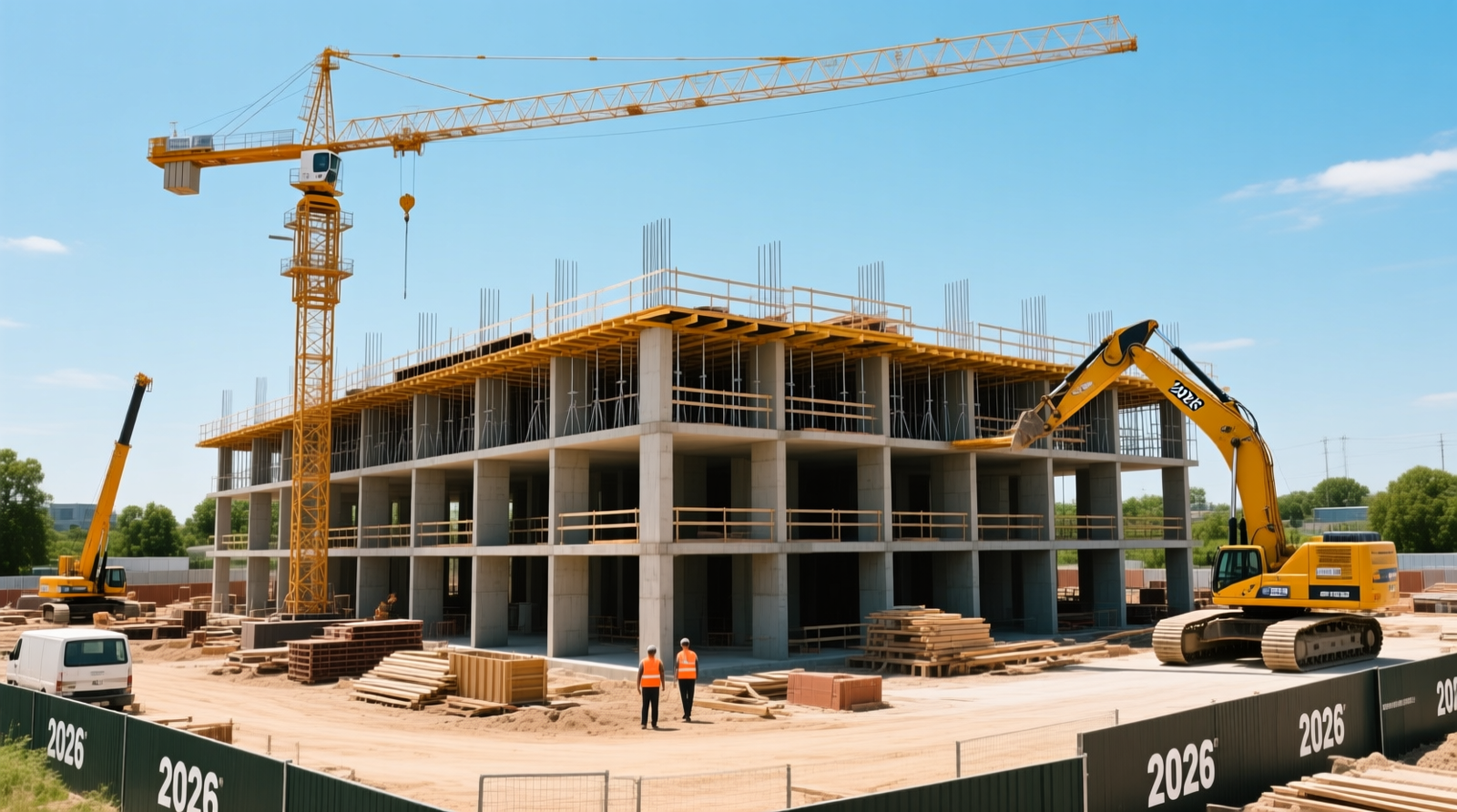
Early Works and Enabling Packages
- Final utility diversions and protection works
- Temporary traffic arrangements and pedestrian detours
- Ongoing environmental monitoring (dust/noise/vibration)
Major Excavation and Ground Support
- Bulk earthworks and ground preparation
- Retaining structures and ground support (methods depend on soil/groundwater conditions)
- Staged excavation to manage safety and minimise disruption
Tunnelling Preparation and Operations
- Setting up launch/support infrastructure for tunnel boring machines (TBMs—large machines that excavate circular tunnels and install lining segments)
- Spoil (excavated material) handling and haulage logistics
- Worksite access management for heavy vehicles
Station Structural Works and Fit-Out (Later Stage)
- Station box structure, concourse, and platform construction
- Rail systems installation (power, signalling, communications)
- Passenger systems: lifts, escalators, fire-life-safety, and wayfinding
Engineering details (publicly confirmed vs. to be confirmed): Station depth, platform configuration (e.g., island vs. side platforms), number of entrances, and interchange layouts are typically published as designs mature through planning and procurement. If you need definitive Monash station engineering parameters, reference SRLA’s released designs and fact sheets as they are updated: SRLA.
TL;DR: 2026 activity can be split into enabling works, excavation/ground support, TBM-related tunnelling logistics, and later fit-out—check SRLA for confirmed station design specifics.
SRL East Monash Station Timeline (Indicative, Subject to Change)
Large underground rail projects typically follow a multi-year timeline from early works to opening. Based on publicly stated program sequencing for SRL East, 2026 is positioned as a period where major civil activity is progressing and tunnelling works are a focal point. However, the exact “start of tunnelling,” “station structure complete,” and “opening” dates can move due to procurement, approvals, and construction constraints.
- 2024–2026 (indicative): Early works, service relocations, site establishment, and initial groundworks.
- 2026 onward (indicative): TBM mobilisation/tunnelling sequence and major station excavation/structural works (staged).
- Late 2020s–early 2030s (indicative): Systems installation, testing & commissioning, and progressive readiness for operations (subject to government staging decisions and contractor delivery).
For the most current “SRL East Monash station timeline” information and milestone announcements, refer to SRLA’s official channels and project updates: Suburban Rail Loop Authority.
TL;DR: Treat all dates as indicative—2026 is a major civil/tunnelling period, while opening is expected later and depends on program staging and delivery updates from SRLA.
Planning, Approvals and Environmental Oversight (What Underpins the Project)
Major rail infrastructure in Victoria is typically delivered under a combination of planning approvals, environmental assessment requirements, and ongoing compliance frameworks. These processes are designed to identify impacts (noise, vibration, traffic, ecology, heritage) and to specify mitigation and monitoring during construction.
For context on environmental assessment in Victoria (including Environmental Effects Statements—EES, where applicable), see the Victorian Government resource: Victorian Environment Assessment (Planning).
SRLA also undertakes community and stakeholder consultation (e.g., residents, local businesses, and Monash University users) through information sessions, notifications, and project communications. Where formal consultation documents are published, link directly to SRLA-hosted pages to ensure readers can access the latest versions.
TL;DR: SRL works are backed by planning and environmental oversight frameworks; readers can verify the regulatory context via Victorian planning environment assessment resources and SRLA updates.
Accessibility and Passenger Experience (Design Standards to Expect)
New underground stations are generally designed for step-free access, including lifts, escalators, and accessible paths of travel. In Australia, accessibility is guided by the Disability Discrimination Act 1992 (DDA) and the Disability Standards for Accessible Public Transport 2002 (DSAPT), which set requirements for features such as boarding assistance, signage, and continuous accessible routes.
For an authoritative reference, see the Australian Government information on the transport accessibility standards: Disability Standards for Accessible Public Transport 2002 (Australian Government).
TL;DR: Expect step-free access and accessibility-led design; DDA/DSAPT standards provide the baseline requirements for accessible public transport infrastructure.
Monash vs Other SRL East Stations: Why It’s a Key Node
While each SRL East station is planned to serve a distinct activity centre, Monash stands out because it is anchored by a high-intensity university campus and an adjacent innovation/employment precinct. That creates a different travel pattern to primarily residential catchments:
- Peak demand is multi-modal and event-driven: University timetables, exam periods, conferences, and shift-based employment generate pronounced peaks that put pressure on bus corridors and parking supply.
- Interchange quality matters more: A large share of trips will still start/end by bus, walking, cycling, or shuttle—so entrances, wayfinding, and safe pedestrian routes can have outsized impact on perceived travel time.
- Precinct integration requirements: Station planning must consider campus access points, major desire lines, and opportunities for future land-use change around the station (subject to planning controls).
If you want additional planning context, review Monash University’s campus/estate planning publications where available (and ensure you link to current official pages hosted by the university): Monash University campuses and facilities.
TL;DR: Monash is a high-demand “trip generator” station where interchange design and campus integration are especially critical compared with more residential-focused stations.
How to Travel to Monash During Construction (Practical Guidance)
If you’re commuting during active works, the most reliable approach is to plan around changing traffic conditions and bus reroutes. Options typically include:
- Train + shuttle/bus: Use existing rail lines to key interchange stations (e.g., Huntingdale/Clayton) and connect via bus routes or university shuttles where available.
- Bus corridors: Check for route diversions, stop relocations, and temporary bus priority measures near the worksite.
- Driving: Allow extra time for delays on Normanby Road/Howleys Road and surrounding arterials; expect changing parking conditions and signed detours.
- Walking/cycling: Follow temporary pedestrian/cyclist detours and allow extra minutes for changed crossing points.
For live public transport service information, disruptions, and travel planning, use Public Transport Victoria (PTV): PTV journey planner and disruptions.
TL;DR: During construction, rely on current train-to-bus connections, expect detours/stop changes, and check PTV for live disruptions before you travel.
Local Impacts in 2026 (Noise, Traffic, Parking) and Typical Mitigations
Major underground construction can affect nearby communities and campus operations, especially through:
- Noise and vibration: From piling/retaining works, excavation, truck movements, and TBM-related logistics.
- Dust and air quality: Managed through water carts, covered loads, wheel wash systems, and monitored controls.
- Traffic and detours: Changed lanes, altered signal phasing, and temporary footpath/cycle path diversions.
- Parking changes: Temporary loss of kerbside parking, relocated loading zones, or altered campus access routes depending on staging.
Working hours and out-of-hours activities (when required) are typically managed under approvals and contractor environmental management plans. Where night works are unavoidable (e.g., to minimise daytime traffic impacts or complete tie-ins safely), projects usually provide advance notice to affected residents and businesses.
TL;DR: Expect noise/vibration, dust controls, traffic changes and some parking impacts; mitigation is typically delivered through monitored environmental controls and staged traffic management.
How to Get Updates or Raise Concerns
For the latest construction notices, timelines, and community updates, start with SRLA’s official website and sign up to any available local update channels where offered. If you need to report an issue (e.g., after-hours noise, access problems, or safety concerns), use SRLA’s published contact pathways on their site so your report goes to the correct project team.
Official sources:
TL;DR: Use SRLA/Big Build for verified updates and the correct contact channels to log issues or ask questions about local construction impacts.
Looking Ahead

The Monash SRL station is planned to change how the Clayton/Notting Hill precinct connects to the rest of Melbourne by adding a high-capacity rail option into a campus-and-employment node that currently leans heavily on road-based access. In the near term, 2026 remains a period where construction visibility is high—particularly around site logistics, traffic changes, and the ramp-up of tunnelling-related activity.
If you’re tracking progress, follow SRLA releases for confirmed engineering details (entrances, platform arrangement, interchange design), milestone announcements, and any revised delivery timeframes.
TL;DR: Monash is positioned to become a major rail-access point for the precinct; the most dependable future details will come from SRLA as designs and schedules are confirmed.
FAQ
Q: Where exactly is the SRL East Monash station planned to be built?
A: SRLA has described the Monash station location as north of Monash University’s Clayton Campus, around the corner of Normanby Road and Howleys Road in Notting Hill. For the most current maps and any refinements to entrances or site boundaries, check SRLA’s official SRL East updates.
Q: What should I expect to see in 2026 around tunnelling works at Monash SRL station?
A: In 2026, you can generally expect a mix of enabling works, ground preparation, major excavation support activities, and TBM (tunnel boring machine) logistics depending on the exact staging. That can include heavy vehicles, temporary traffic changes, and increased on-site activity. SRLA construction notices are the best source for week-to-week changes.
Q: How can I get to Monash University Clayton while SRL construction is happening?
A: The most reliable approach is to plan a train-to-bus/shuttle trip via existing stations and then check PTV for live disruptions and bus stop relocations. If driving, allow extra time for detours and potential parking changes near the worksite.
Q: Will the new underground station be accessible for people with disability and prams?
A: New stations are typically designed for step-free access, including lifts and accessible paths of travel. In Australia, accessibility is guided by the Disability Discrimination Act (DDA) and the Disability Standards for Accessible Public Transport (DSAPT). As SRLA publishes detailed designs, look for confirmed information on lifts, escalators, wayfinding and accessible entries.
Q: Where can businesses and residents find verified Monash Suburban Rail Loop construction updates or lodge a complaint?
A: Use SRLA’s official website for construction updates, notifications and the project’s listed contact channels. For broader Victorian infrastructure updates, Big Build is also a useful reference. These official channels are the best way to receive verified information and ensure issues are logged with the correct project team.